I’ve spent years building technology solutions for complex industries, and when I started helping couples plan weddings, I realized the same principles apply: break big projects into manageable tasks, centralize your information, and automate what you can. In this guide, I’ll share practical strategies that actually work, whether you’re planning a backyard celebration or a destination extravaganza.
Why Wedding Organization Matters More Than You Think
According to The Knot’s 2024 Real Weddings Study, the average couple spends over 12 months planning their wedding and coordinates with 13+ vendors. That’s a lot of moving pieces. Meanwhile, research from Brides magazine shows that 96% of engaged couples report feeling stressed during the planning process.
The couples who sail through with minimal drama aren’t necessarily the ones with unlimited budgets or professional planners. They’re the ones with solid organizational systems. When you know exactly where every contract lives, when every payment is due, and what needs to happen next week versus next month, the whole process becomes manageable.
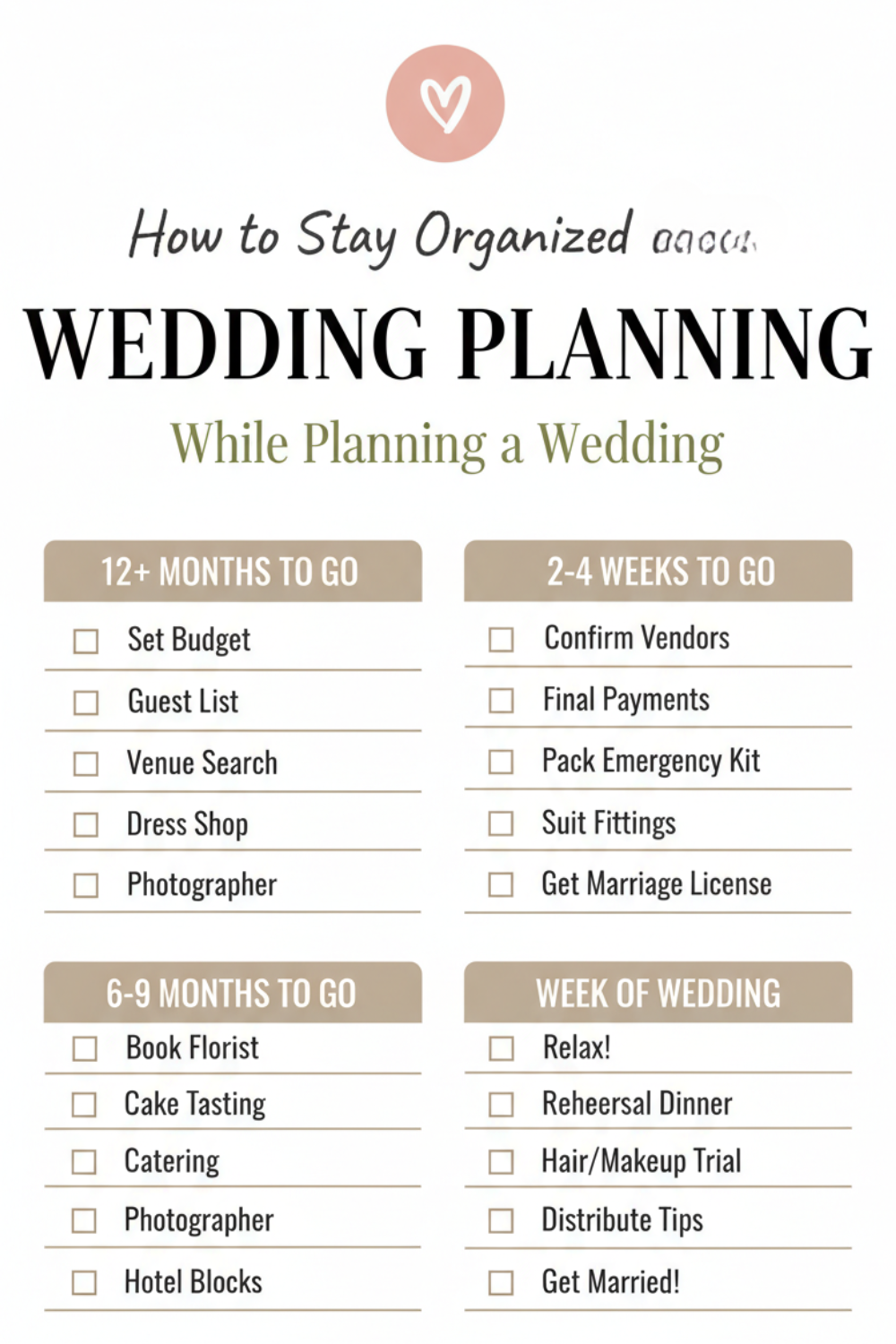
Start With a Master Timeline (Not Just a To-Do List)
The biggest mistake I see couples make is treating wedding planning like one giant to-do list. Instead, you need a timeline that works backward from your wedding date. This approach, recommended by the Association of Bridal Consultants, ensures you’re tackling time-sensitive tasks (like booking popular venues and photographers) before they become emergencies.
Here’s a simplified breakdown of what your timeline should include:
- 12+ months out: Set your budget, determine guest count range, book venue and photographer
- 8-10 months out: Book remaining major vendors (caterer, DJ/band, florist, videographer)
- 6-8 months out: Send save-the-dates, begin dress shopping, plan honeymoon
- 4-6 months out: Finalize guest list, order invitations, book officiant
- 2-3 months out: Send invitations, finalize menu, arrange transportation
- Final month: Confirm all vendors, create seating chart, finalize day-of timeline
The key is checking this timeline weekly and adjusting as needed. Life happens. Vendors get booked, priorities shift, and that’s okay. A good timeline flexes with you.
Centralize Everything in One Place
If your wedding information is scattered across email threads, text messages, sticky notes, and three different spreadsheets, you’re setting yourself up for chaos. The most organized couples keep everything in a single centralized system: contracts, inspiration photos, vendor contacts, budget tracking, all of it.
This could be a dedicated wedding planning app, a shared Google Drive folder with a strict naming convention, or a physical binder if you’re old school. What matters is that both partners know exactly where to find any piece of wedding information at any time.
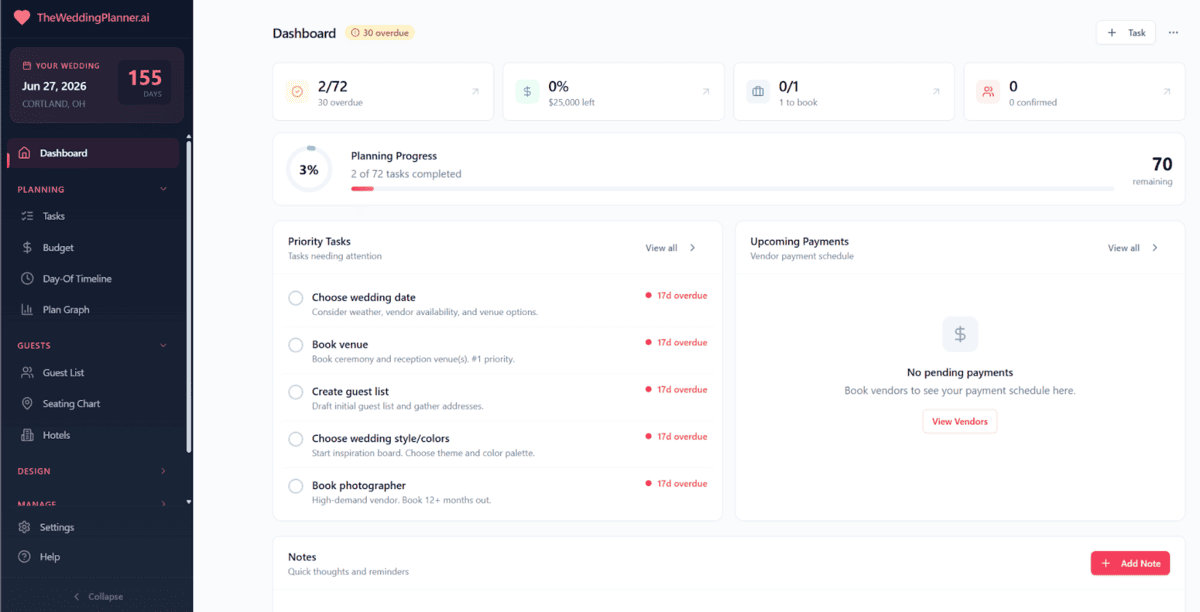
Modern wedding planning tools like TheWeddingPlanner.ai take this a step further by connecting your guest list to your seating chart to your budget. When you add a guest, your per-person costs update automatically. This kind of integration eliminates the manual busywork that eats up your evenings.
Master Your Budget Before It Masters You
Budget overruns are the number one source of wedding stress. According to WeddingWire’s annual survey, 45% of couples exceed their original budget, often by thousands of dollars. The culprit? Poor tracking and unexpected costs that snowball.
Here’s how to stay on top of your wedding finances:
- Set your total budget first, then allocate percentages. A common breakdown is 50% for reception (venue, catering, rentals), 10% for photography/video, 10% for flowers and décor, 10% for music and entertainment, 10% for attire and beauty, and 10% for everything else.
- Track every expense immediately. That $50 for invitation stamps? Log it. The $200 tip for your hair trial? Log it. Small expenses add up faster than you’d expect.
- Build in a 10-15% contingency. Something will cost more than quoted. Something will come up that you didn’t anticipate. Having a buffer prevents panic.
- Review your budget weekly as a couple. This keeps both partners aligned and prevents “I didn’t know we spent that much” surprises.
Tackle the Guest List Early (It Affects Everything)
Your guest count is the foundation of almost every other decision. Venue capacity, catering costs, invitation quantities, seating arrangements: they all depend on how many people you’re inviting. Yet many couples put off finalizing their guest list because it involves difficult conversations.
Get this done early. The Emily Post Institute recommends creating an A-list (must invites) and B-list (invite if space allows) to help manage numbers. Be realistic about who you actually want there versus who you feel obligated to invite.
Once your list is set, keep it organized with clear categories: invited, RSVP yes, RSVP no, awaiting response. Track plus-ones, meal preferences, and any accessibility needs. This information becomes critical when you’re building your seating chart and finalizing catering numbers.
Whether you’re planning a local celebration or destination wedding, having task lists tailored to your situation keeps you focused on what matters.
Create Systems for Vendor Communication
With 13+ vendors to coordinate, your inbox can quickly become a nightmare. Establish clear systems from the start:
- Use a dedicated email address or folder. Whether it’s a new Gmail account (yournames.wedding@gmail.com) or just a “Wedding” label, keep vendor emails separate from your daily inbox clutter.
- Keep a vendor contact sheet. List every vendor’s name, company, phone, email, contract amount, and payment schedule in one document. When you need to reach your florist quickly, you shouldn’t be digging through emails.
- Confirm everything in writing. Verbal agreements get forgotten. After every phone call or meeting, send a quick email summarizing what was discussed and agreed upon.
- Set calendar reminders for payment deadlines. Missing a payment can mean losing a deposit or even your vendor entirely during peak season.
Don’t Neglect the Day-Of Timeline
Months of planning come down to one day, and that day needs its own detailed timeline. This isn’t just “ceremony at 4, reception at 5.” It’s a minute-by-minute schedule that coordinates every vendor and every key moment.
Your day-of timeline should include: when hair and makeup artists arrive, when the photographer starts shooting getting-ready moments, when the florist delivers arrangements, when the DJ begins setup, first look timing (if applicable), ceremony start time with buffer for late guests, cocktail hour activities, grand entrance, first dance, dinner service, toasts, cake cutting, bouquet toss, and last call. According to Martha Stewart Weddings, building in 15-30 minute buffers between major events prevents the domino effect when one thing runs late.
Share this timeline with every vendor at least two weeks before the wedding, and designate someone (a coordinator, family member, or friend) to keep things moving on the day itself.
Delegate and Let Go
Here’s a truth that organized couples understand: you can’t do everything yourself, and you shouldn’t try. Identify tasks that can be delegated to trusted friends, family members, or professionals.
Your maid of honor can research bachelorette party venues. Your mom can handle the rehearsal dinner logistics. Your tech-savvy cousin can manage the wedding website updates. The key is delegating clearly. Give them the task, the deadline, and the authority to make decisions within defined parameters.
Equally important: once you delegate, resist the urge to micromanage. If you’ve chosen reliable people and given clear instructions, trust them to deliver.
Final Thoughts: Progress Over Perfection
Wedding planning is a marathon, not a sprint. The couples who stay organized aren’t obsessing over perfection. They’re making steady progress, staying flexible when plans change, and keeping sight of what actually matters: marrying the person they love.
Set up your systems early, check in on them regularly, and give yourself grace when things don’t go according to plan. With the right organizational foundation, you’ll walk down that aisle feeling calm, confident, and ready to enjoy every moment of your celebration.
About the Author
John Progar is the CEO and Founder of TheWeddingPlanner.ai, an AI-powered wedding planning platform helping couples manage budgets, timelines, guest lists, and vendor coordination in one place. With a background in building technology solutions for complex industries, John is passionate about bringing modern tools to life’s biggest moments.
Don’t forget to pin this to your Wedding Planning Board for later!