They forget the systems. The timing. The cue sheet that tells someone when to actually press play. You could pick the most perfect track for your walk down the aisle, but if the volume is at zero when the doors open? That’s not a vibe anyone is going for.
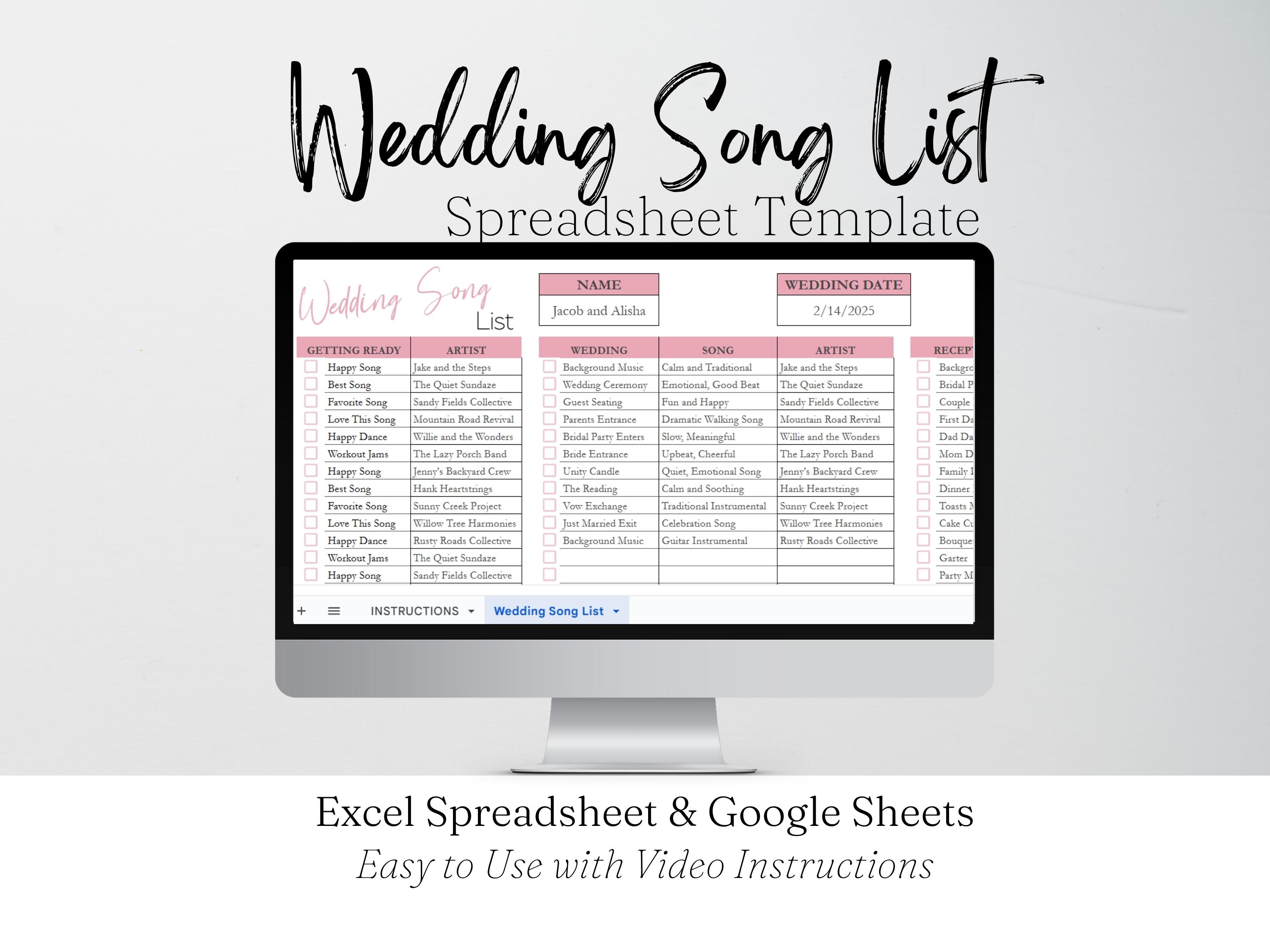
We have a music cue sheet and playlist templates to keep your day running on time, whether you’re working with a pro DJ or doing a brave DIY Spotify setup. Consider this your complete wedding music checklist, from the getting-ready playlist all the way to your grand exit.
1. The Getting-Ready Playlist: Setting the Vibe Before You Even Put the Dress On
Is your bridal suite giving doctor’s waiting room or Vogue shoot? The difference is the playlist you put on at 8am. Your morning-of music is an emotional thermostat, and also the backdrop for every getting-ready Reel that ends up on your Instagram forever.
What to Aim For
Plan for 30 to 90 minutes of music, enough to cover hair, makeup, and the inevitable “where is my other shoe” spiral. Pick one lane and commit:
- The Chill Lane: Indie folk or lo-fi for a calm, floaty start
- The Hype Lane: Early 2000s pop if you need energy and nostalgia in equal measure
- The Throwback Lane: Whatever you and your girls were obsessed with in high school
Choose one anchor song to play exactly five minutes before you leave for the ceremony. It’s your personal “bride mode activated” cue. Keep it lyric-appropriate if flower girls or future in-laws are in the room. And designate someone else as the Bluetooth DJ so you’re not scrolling through Spotify with freshly painted nails.
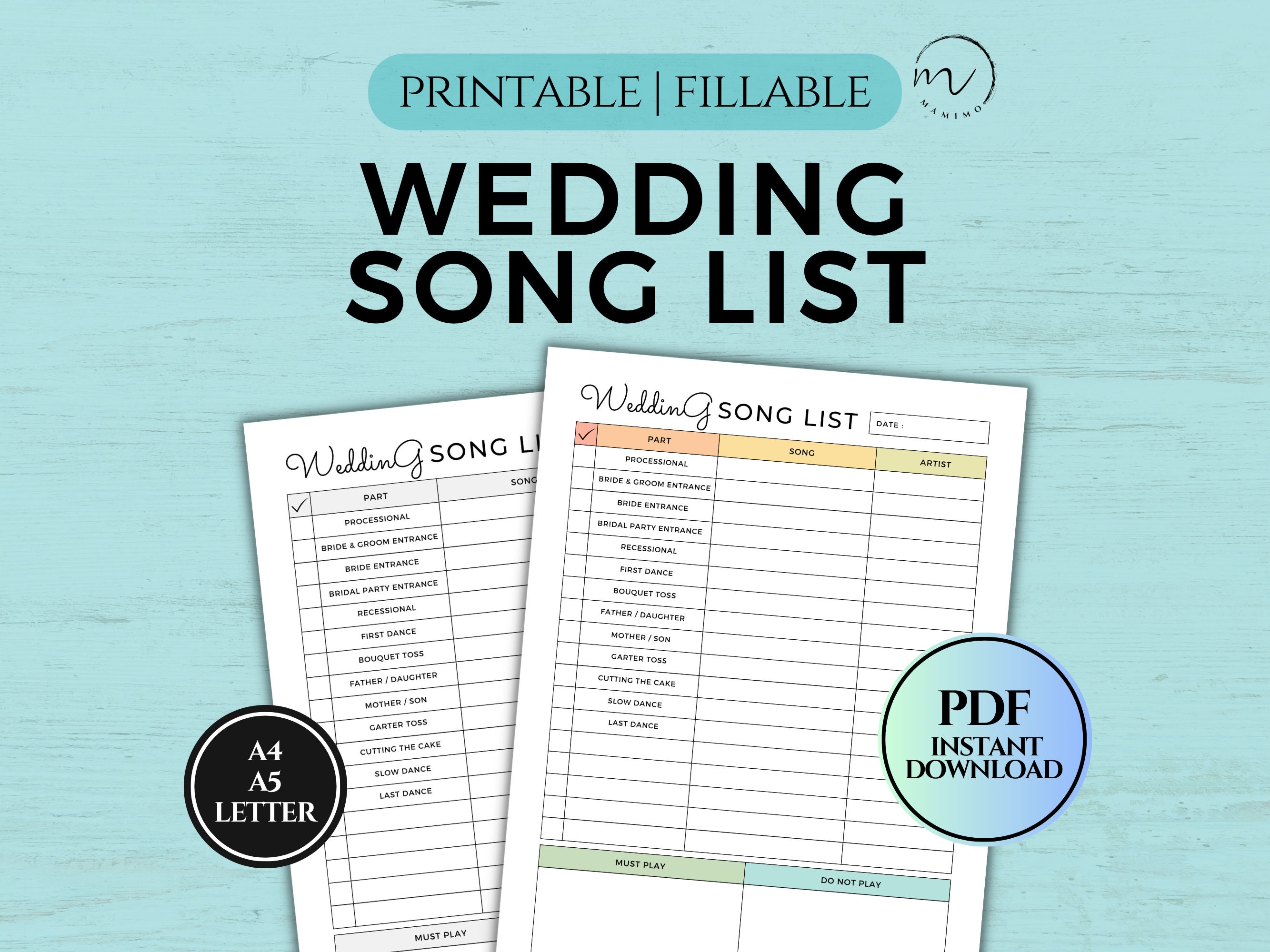
Fillable Wedding Playlist Planner
2. The Prelude: The 20-Minute Window Nobody Plans For
Nothing is more awkward than 150 people sitting in total silence waiting for something to happen. The prelude is the music that plays while guests find their seats, and it does a lot of quiet, underappreciated work setting the emotional tone before you even appear.
Queue up 20 to 30 minutes of music, kept at conversation volume so your guests aren’t shouting over strings to catch up with the cousins they haven’t seen in two years. Mid-tempo tracks with clean lyrics are your safest bet. And always tack on three extra songs at the end as a buffer because if the limo is stuck in traffic or the flower girl is having a moment, you’ll be grateful for the breathing room.
Note on your cue sheet exactly who is responsible for fading the prelude out when the processional is ready to begin. That handoff matters more than people realize.
3. The Processional: Treat It Like a Cue Sheet, Not Just a Vibe
Ever watched someone stand at the back of an aisle while music plays but nobody moves because no one knows when to actually start walking? Don’t let that be your wedding. Your processional needs to be mapped out like a series of clear cues, not a general playlist you hope resolves itself.
Map Your Entrances
Every person who walks down that aisle needs a designated starting point. Modern ceremonies have moved well past the old gendered scripts. Plan your processional around who is actually moving and in what order, whether that’s a wedding party, both sets of parents, or just the two of you.
- Time it for real: Most processionals run two to five minutes, but walk the actual distance at your rehearsal with a stopwatch. Don’t guess.
- Choose your starting point: Decide whether the track starts at 0:00 or a specific timestamp. Long intros can kill the momentum before anyone takes a step.
- Assign the “Go” signal: Whether it’s a nod from the officiant or a cue from your coordinator, the person controlling the music needs one clear trigger to hit play.
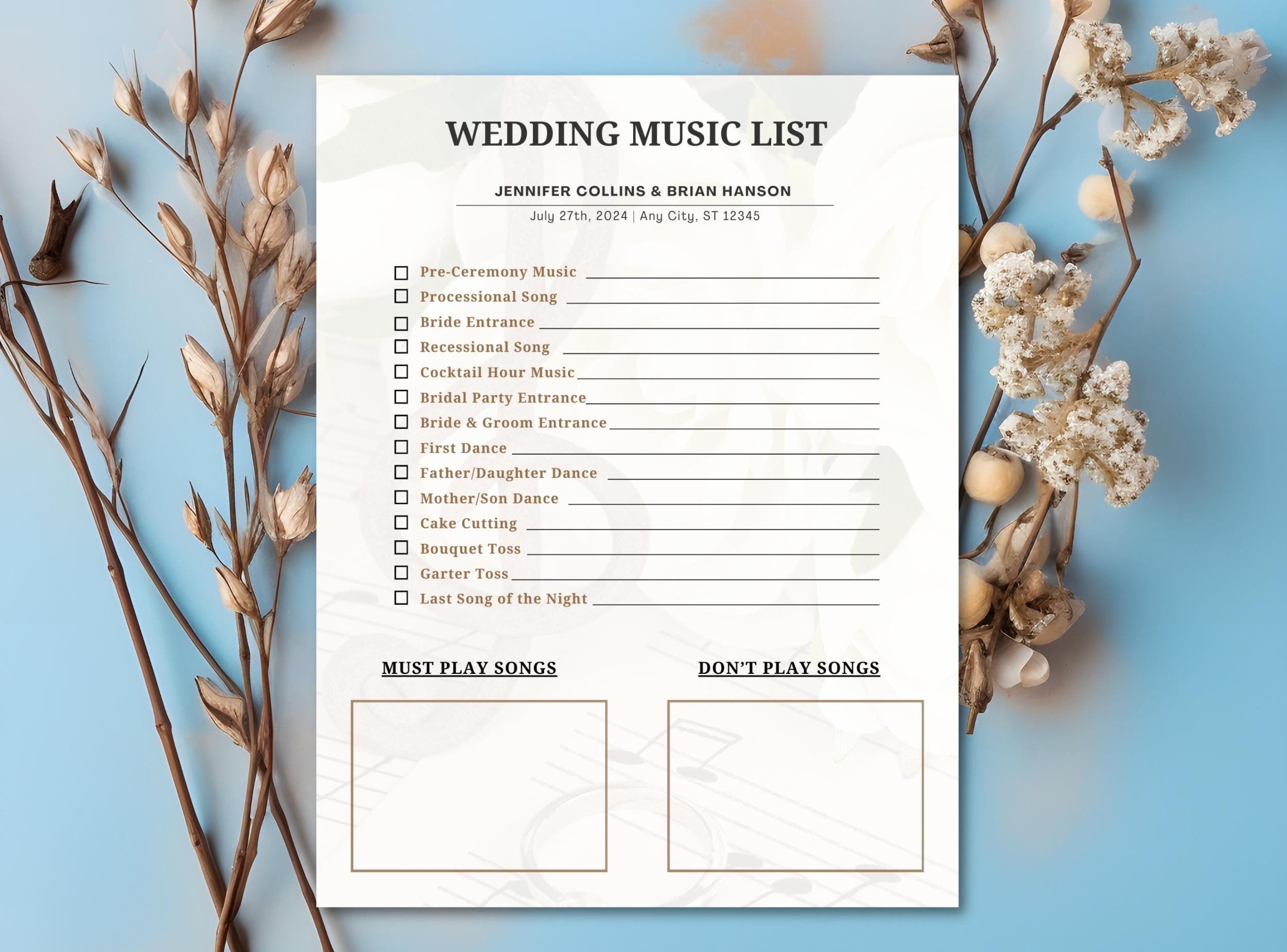
Keep volume soft while guests are settling, then bring it up to full feature level once the entrances begin. A simple cue table with each person’s name, their song, the timestamp, and the trigger removes all the guesswork on the day.
4. The Interlude: The Signing Moment Nobody Scores
Vows are done. Rings are on. And now you’re both leaning over a table signing paperwork while your guests stare at your backs. Without a soundtrack, this transition can feel like a very romantic trip to the DMV.
Pick one or two songs, and keep a third queued just in case. Witnesses get chatty, pens run out of ink, it happens. Soft instrumental versions often work better than lyric-heavy originals here since you don’t want the music competing with the officiant wrapping up remarks. Label this section clearly on your cue sheet, and include the exact trigger and fade cue so your tech person knows when to bring it down again once you stand back up.
5. The Recessional: Your Victory Lap Deserves a Proper Anthem
You said your vows, you kissed, and now it’s time to sprint back up the aisle while everyone loses their minds. The recessional is the official signal that the formal bit is over and the party has started. This is not the moment for a slow build.
Pick something with a punchy opening that hits within the first 10 seconds. Your guests need an immediate cue to start cheering, not 45 seconds of gentle piano before anything happens.
- Confirm the track is long enough for you and the full wedding party to clear the aisle
- Coordinate any confetti or petal toss timing with your photographer, and budget about 30 seconds at the top of the aisle for the victory shot
- Specify on your cue sheet whether the song starts on the kiss or the announcement, so there’s no awkward silence before the music kicks in
- Assign someone to fade the track once you’ve all exited so your anthem isn’t blasting into an empty room while guests head for the bar
6. The Ceremony-to-Cocktail Gap: The Forgotten Window
You’ve just done the recessional and disappeared for champagne and family photos. Meanwhile, your guests are wandering a hallway with nothing happening and nowhere obvious to be yet. This is the gap where wedding energy quietly dies, and almost nobody plans for it.
Build a 10 to 20 minute transition playlist for the space between ceremony and cocktail hour. Keep it upbeat but not fully “dance floor” energy yet. Think lounge-y and social rather than a full DJ set.
Also confirm whether your DJ or band is moving their setup during this time. If they’re breaking down and relocating, there could be a dead zone of no music at all. A secondary battery-powered speaker is a simple, underrated fix. Add a “music coverage during venue flip” line to your timeline and you’ll thank yourself for it later.
7. The Cocktail Hour: High Social Energy, Low Shouting Matches
The goal of cocktail hour music is to keep the energy warm and social without turning your guests into people miming conversations at each other. You want atmosphere, not a volume competition.
How to Make It Work
- Pick one lane: Upbeat jazz, acoustic indie, classic soul. Consistency keeps the energy steady. Genre whiplash is a real thing and it’s weird for everyone.
- Plan for overtime: Build a 60-minute set even if your cocktail hour is 45 minutes. Timelines slip, and running out of music while guests are still looking for appetizers is not a vibe.
- For live music: Confirm power and setup requirements with your venue well in advance.
- For playlists: Use crossfade transitions so there’s no jarring dead air between tracks.
Update your cue sheet with the exact start time and location. Music should begin the moment guests arrive from the ceremony so the atmosphere is already set when the first drink is poured.
8. The Grand Entrance: Map It or Risk the Hostage Situation
You know that moment where a couple stands behind a closed door for an uncomfortable stretch of time, waiting for a beat that isn’t quite dropping, while guests stare at an empty frame? That’s what happens when the entrance isn’t planned properly. Don’t let it happen to you.
Decide upfront whether you want one combined entrance or separate “stingers” for the wedding party and then yourselves. Multiple tracks add energy but require a DJ who can mix them without gaps. Either way, confirm these things on your cue sheet:
- The drop point: If the chorus is the hype moment, don’t start the track at the beginning. Mark the exact second you want the volume at 100.
- MC name pronunciation: Make sure your MC has phonetic spellings for every name and knows where the applause beats fall.
- The 10-second rule: If a song takes 45 seconds to get interesting, it’s going to feel endless. Fast openers only.
9. Dinner and Speeches: Background Music That Actually Stays in the Background
Is anything more distracting than your Maid of Honor pouring her heart out while a pop song fights her for attention? Dinner music should be familiar enough to create atmosphere and quiet enough that your guests can actually hear each other talk. Save the singalong anthems for later in the night.
The Speech Logistics
- Confirm that music volume won’t compete with wireless microphones. Voices always win.
- Decide if your band sets up during dinner or before. Drum kits rolling past your head table mid-meal is an experience nobody needs.
- Designate one person whose only job is to signal the DJ to bring the volume down before each toast begins.
Update your cue sheet with the speech order and note whether you want complete silence or a low underscore between toasts. The last thing you want is guests missing punchlines because of a clumsy fade-up.
10. The First Dance: Keep It Tight, Keep It Magical
Here is something nobody tells you until it’s too late: a six-minute first dance is a long time to be watched by everyone you know. Pick something in the two to three minute range. You’ll have plenty of time for the moment and plenty of time for the photos. Your guests will love you for getting them back to the bar.
A few things to lock in on your cue sheet:
- The version: Radio edit, acoustic, or instrumental? Be specific so your DJ doesn’t pull up the wrong one.
- The ending: Natural ending or programmed fade-out? Decide in advance and note it.
- Special effects timing: If you’re doing fog or sparklers, practice so the effect hits during the chorus, not while you’re still walking to the floor.
11. Parent and Family Dances: Make Them Yours
The father-daughter dance script was written a long time ago, and it doesn’t fit every family. Two moms, a stepparent who raised you, a mentor who showed up when it counted, there’s no rule that says this moment has to look a certain way. You’re in charge of this one.
A few flexible options to consider:
- Use “Parent-Child Dance” or “Family Spotlight” framing if the traditional labels don’t fit
- Combine everyone into one track or do separate songs depending on the dynamics
- Skip it entirely if it doesn’t feel right for your family. That’s allowed.
- Keep each dance to 90 to 150 seconds to maintain the energy in the room
Give your DJ a clear cheat sheet with exact names, relationship labels, and the cue for transitioning back to open dancing once the family moments are done.
12. The Stinger Moments: Cake, Tosses, and Quick Traditions
Cake cutting, bouquet toss, anniversary dance: these are the photogenic quick-hit moments of the reception, and they work best when treated like 60-second music cues rather than full productions. You don’t need a six-minute ballad to cut a cake. You need a great opening hook.
- Cake cutting: Pick something with a recognizable lyric that hits the moment the knife does
- Bouquet or garter toss: High-energy or playfully ironic works great here
- Cultural traditions: Dollar dance, anniversary dance, whatever applies: keep it snappy to protect the dance floor momentum
A word on skipping traditions you don’t want: put a “do not do” note in writing for your DJ. If you hate the garter toss, say so explicitly. A well-meaning DJ who surprises you mid-reception is not the kind of surprise anyone wants. Every tradition that stays should have a song, a timestamp, and an assigned announcer on your cue sheet.
13. Guest Requests: Governance Before the First Guest Arrives
Some weddings feel like a legendary club night. Others feel like a middle school gym dance. The difference is usually the governance established before anyone showed up. One rogue uncle with mic access and a polka request can unravel a whole night.
Three lists to build into your wedding music checklist:
- Must Play: Your non-negotiables. Cap this at 15 songs so your DJ actually has room to read the room.
- Do Not Play: Specific songs or artists that make you cringe or carry bad associations. Be detailed.
- Guest Requests: Suggestions, not demands. Your DJ has final say.
A clever way to manage requests before the day: add a “song that gets you dancing” line to your RSVP, or put a QR code at the bar that links to a request form you control. Requests go to a list you review, not directly to the speakers. Also assign a point person for all announcements so random mic grabs don’t happen.
14. The Dance Floor Ignition: Your First 15 Minutes
An empty dance floor while the DJ plays to no one is one of the most demoralizing things that can happen at a wedding reception. The good news: it’s almost entirely preventable with a simple three-song strategy.
The Three-Song Ramp
- Song 1 (The Universal): Something everyone knows, Motown, classic disco, whatever crosses generations at your specific wedding
- Song 2 (The Taste-Maker): Now that they’re on the floor, play something that reflects who you actually are
- Song 3 (The Singalong): A cross-generational anthem that forces people to scream the lyrics together
Also: you and your partner have to be on the floor first. Guests follow the couple. If you’re at the bar, your guests will be too. Get out there.
15. The Exit: Give It a Proper Ending
A wedding that just fizzles out is a wedding that ends on a whimper. Your exit is the final memory of the night, and it deserves an actual plan rather than a random shuffle track while guests awkwardly look for their coats.
Choose your format first:
- Big Last Dance: One final floor-filler with the whole crowd
- Private Last Dance: The room clears and it’s just the two of you
- Formal Send-Off: Sparklers, bubbles, confetti tunnel
Pick a final song with a clear, definitive ending. Avoid long slow fades if you need guests moved outside quickly. Confirm venue rules for sparklers or confetti early. Coordinate the cue sequence: MC announcement, then song start, then exit line formation. Add your exit tracks and the person managing the lineup to your cue sheet. The last photos of your night should look intentional, not like everyone was trying to figure out where to stand.
How to Run the Whole Thing: A 7-Step Plan
You’ve picked the songs. You’ve built the playlists. Now let’s make sure the tech actually performs when the spotlight is on.
Step 1: Choose Your Setup Honestly
A professional DJ handles the flow, reads the room, and manages the microphone without things getting weird. A wedding band brings live energy that a playlist can’t fully replicate, but they need breaks, so you’ll still need a backup playlist to cover those gaps. DIY streaming is absolutely doable, but treat it like a production, not a casual afternoon project.
Step 2: Build Segmented Playlists
Don’t run the entire day off one mega-playlist. Break it into distinct folders so accidental skips or wrong-section tracks can’t derail a moment:
- Getting Ready and Prelude
- Processional, Interlude, and Recessional
- Cocktail Hour and Dinner
- Grand Entrance and Special Dances
- Late Night and Exit
Step 3: DIY Tech Prep
If you’re going the streaming route: download every playlist to two separate devices for offline use so buffering is never a factor. Put both phones on airplane mode so a random call doesn’t come through your vows. Set a 5 to 10 second crossfade for party sets and zero crossfade for ceremony cues. Pack an emergency kit with the cables and adapters your venue needs, plus a local backup on a USB drive.
Step 4: Confirm Venue Constraints
Ask about sound limiters before you sign the contract. Some venues use automatic decibel caps that cut the power if music gets too loud. Confirm outdoor power availability. Check the band’s footprint and equipment needs. A green room where musicians can change and eat is a small thing that makes a real difference.
Step 5: Build a One-Page Cue Sheet
Create a simple table with these columns: Moment, Track Name, Version, Timestamp, Who Cues It, and Notes. Note exactly when specific fades happen, like the music coming down as you reach the altar so it doesn’t play awkwardly through the opening remarks. Add your Must-Play and Do-Not-Play rules at the bottom. This is the document that keeps everyone on the same page, literally.
Step 6: Assign a Music Point Person
This person is not you. It’s a calm friend or coordinator who knows your taste, can follow a cue sheet, and handles pressure without spiraling. Their one job is volume levels and playlist transitions. Give them a printed copy of the cue sheet so they’re covered even if their phone dies or the lighting is dim.
Step 7: Do a Real Rehearsal Run-Through
Walk the actual aisle at your rehearsal with a stopwatch. If the song is four minutes but the walk takes 30 seconds, you need to plan that fade now, not figure it out in front of 150 people. Test all audio levels the morning of the wedding before guests arrive, and walk to the back of the room to confirm the volume is audible everywhere, not just near the speakers.
Frequently Asked Questions
How many songs do I actually need?
For a standard six-hour wedding day, plan for roughly 110 to 130 songs total. A useful breakdown: 15 tracks for the ceremony prelude and processional, 25 for cocktail hour, and 70 to 90 for the dance floor. Always build in at least 30 minutes of extra music for each segment. If the ceremony runs long or the shuttle is late, you don’t want your playlist looping back to the beginning while guests are still finding their seats.
Can I DIY wedding music with Spotify or streaming?
Yes, with caveats. Download your playlists for offline use so Wi-Fi glitches aren’t a factor. Use two separate devices with all notifications silenced because a phone call through the venue speakers during your vows is a moment nobody recovers from easily. Make sure you have the correct cables and adapters for your venue’s sound system before the day arrives.
How do I time my processional so it doesn’t end too early?
Do a literal timed walk-through at your rehearsal. Measure how long it takes for the full wedding party and couple to reach the altar at your actual venue. If your chosen song has a long intro, tell your DJ the exact timestamp to start from so the music hits its peak when the doors open, not 45 seconds before.
What goes on a Do Not Play list?
Overplayed wedding clichés you can’t stand, songs that remind you of exes, tracks with lyrics that would make your grandparents uncomfortable, anything that would bring up a “nope” memory in the middle of a celebration. Be specific with exact artist names and song titles, not just general categories. Your DJ is not a mind reader.
What if my venue has a sound limiter or noise restrictions?
Ask about this before you sign the contract, not after. Sound limiters can automatically cut power if music exceeds a set decibel level, which is as disruptive as it sounds. Discuss the restrictions with your DJ or band early so they can adjust speaker placement or equipment. If the limits are strict, an acoustic set for cocktail hour or a playlist that leans toward vocals over heavy bass can help avoid triggering the sensors.
Don’t forget to pin this to your Wedding Planning Board for later!