Here’s the secret the couples whose photos you keep saving aren’t telling you: they’re not models. They had a handful of poses to fall back on and a photographer who knew when to say “okay, now look at each other and laugh about something.” That’s the whole trick. A few reliable setups, the right thing said out loud, and the in-between moments take care of themselves.
So we pulled the wedding couple poses that show up again and again in our favorite real weddings, grouped them by what they actually are, and added the one cue that shakes each one loose, so you’re not standing there stiff as a board. Whether you want something tender and still, something with a little motion, or the big dramatic dip, there’s a pose here worth trying. And if you fall in love with any of these looks, click through to see the full wedding. For even more inspiration, browse our Real Weddings directory.
Our Favorite Wedding Couple Poses
Each pose below comes with a few real couples who pulled it off and the one cue that shakes it loose. Pick a handful you love, bring them to your shoot, and let the moments in between be the candid ones.
The Kiss
The one pose every couple already knows how to do. Standing, leaning across a table, or settled onto a couch, the only real decision is where you are when it happens, because the backdrop does most of the work. Get close, and let the setting frame the rest.

The elevator doors become an accidental frame, and the kiss lands in the one private second between floors. It shouldn’t work and it completely does.
See Alexandria and Jackson’s Snowbird Wedding →
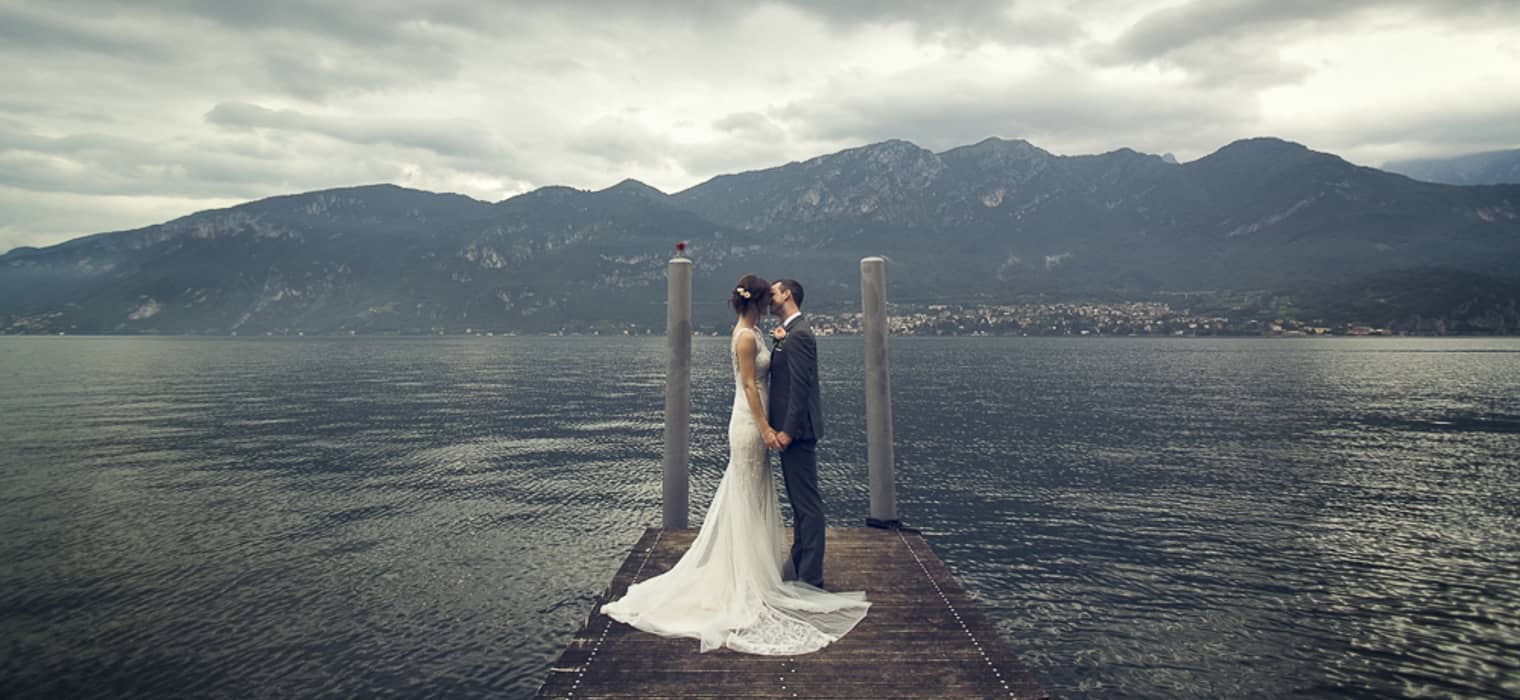
Face to face on the pier with the lake and mountains carrying the whole frame. Water, a skyline, a brick wall: anything worth including works.
See Hilde and Yngve’s Lake Como Wedding →
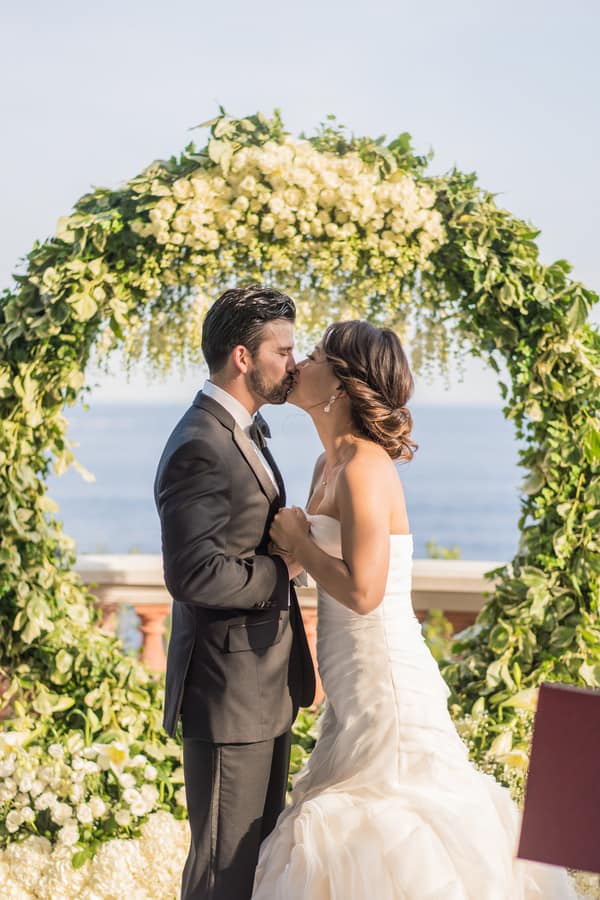
The ceremony kiss, framed by the arch. Swap the open ocean for a barn doorway or a garden hedge and it lands exactly the same.
See Alice and Adam’s Cap Ferrat Wedding →

A kiss and a thank-you card in one shot. Holding the banner gives their hands a job and turns a posed photo into the actual save-the-thanks.
See Thomas and Cori’s Garden Wedding →

They lean in across the table, the vines do the framing, and the whole thing feels like a stolen moment at their own reception.
See Jenae and Steve’s Lavender Inn Wedding →

A vintage couch dropped in a golden field. Settled in and unhurried, with nobody’s feet doing anything nervous.
See Samantha and Bryan’s Putah Creek Wedding →
The Almost-Kiss
Sometimes the gap right before the kiss beats the kiss. Angle your noses slightly past each other so nobody gets a bump, and the half-second of hesitation is the photo.
Try this: Get close like you’re about to kiss, then freeze and grin.
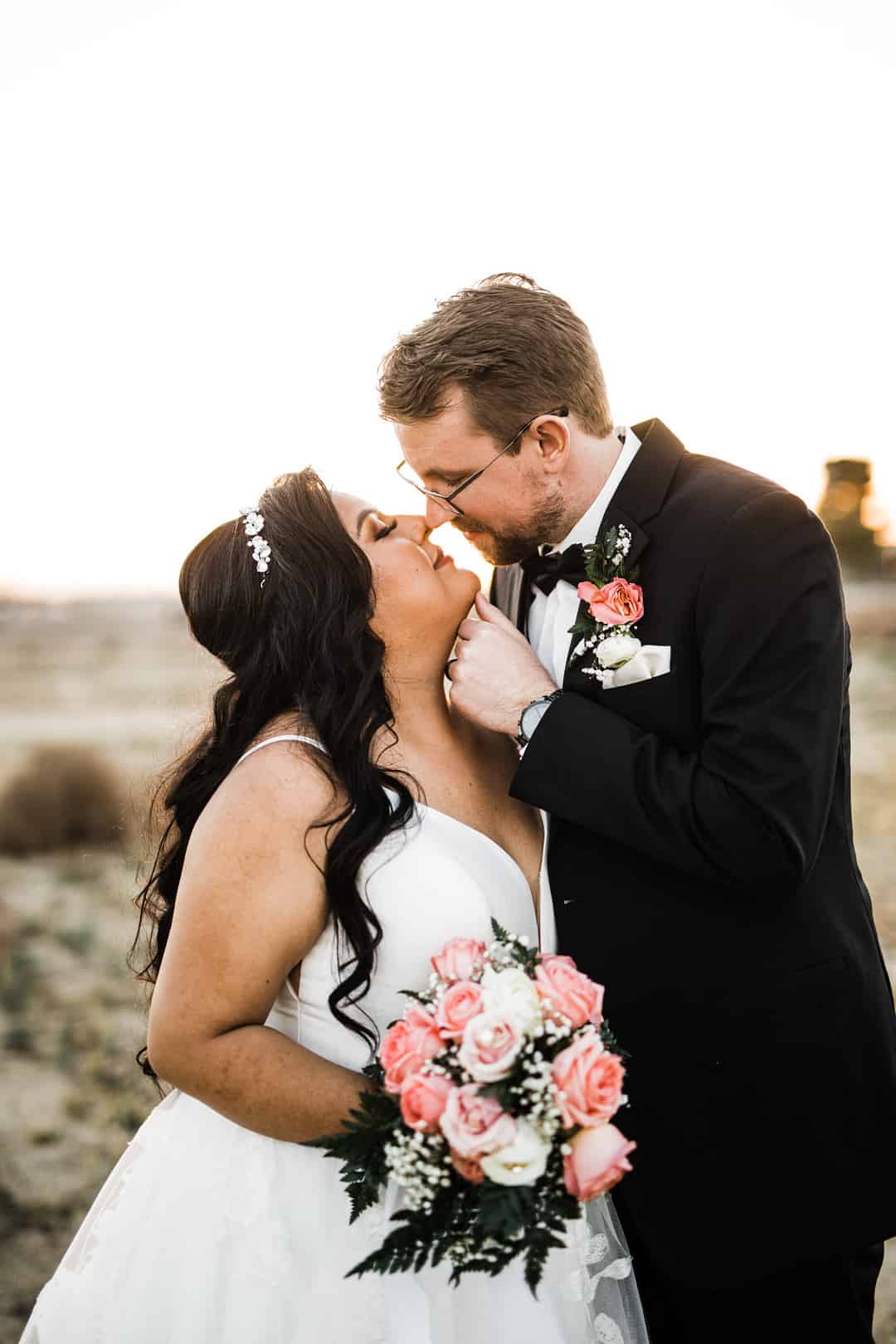
His hand is on her chin, their noses are touching, and the kiss hasn’t happened yet. All anticipation, the pink bouquet glowing just below.
See Kimberly and Jacob’s Fire Station Wedding →
The Dip
Equal parts romance and trust fall. The supporting partner plants a firm hand at the small of the back, and if anyone hesitates, a small confident micro-dip beats a nervous full one every time.
Try this: Slow-dance for two beats, then dip just a little. Almost-kiss, pause, then smile.
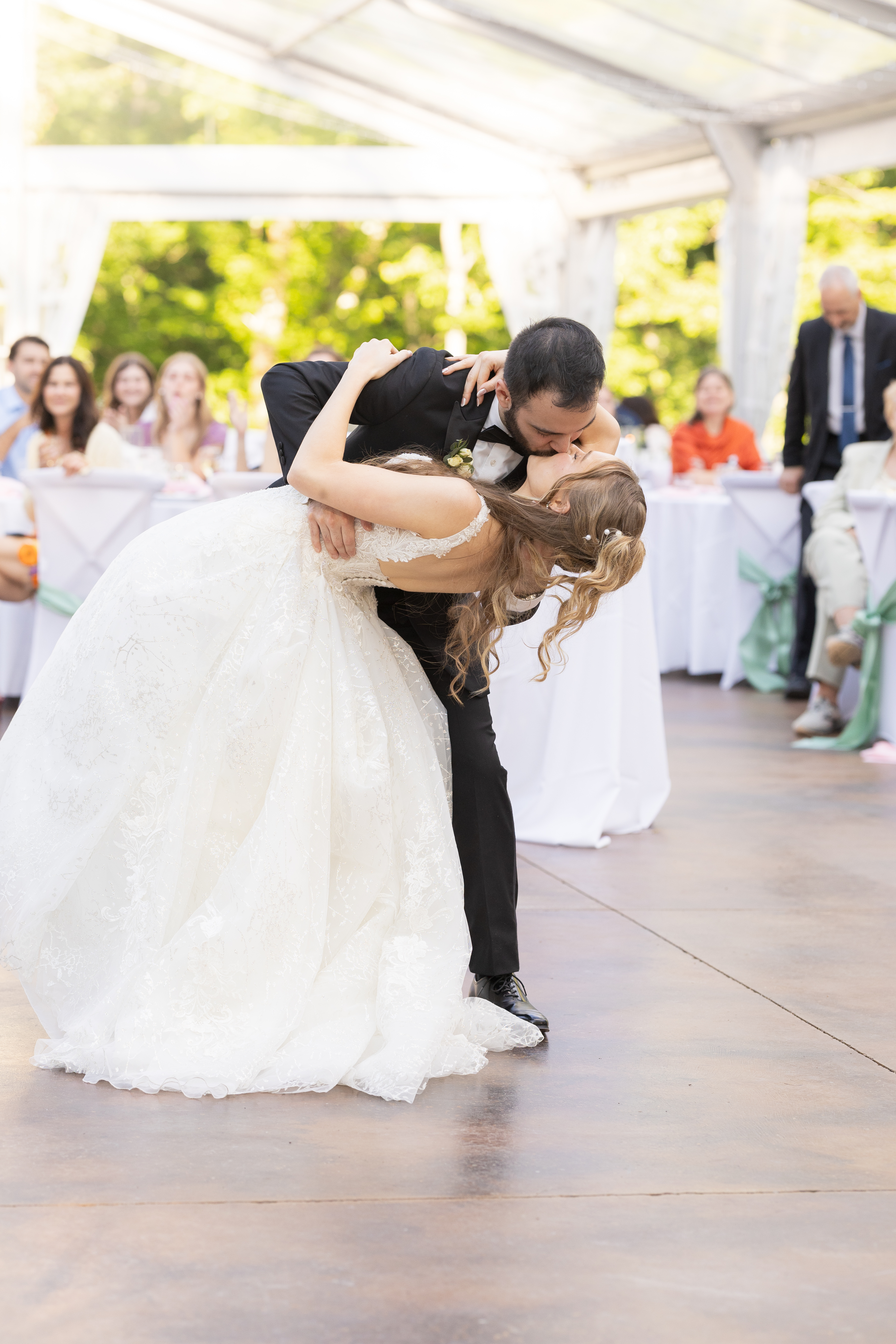
He dips, she trusts him not to drop her, and the whole room reacts. The guests in the background are what make this one.
See Alyvia and Brandon’s Wedding →
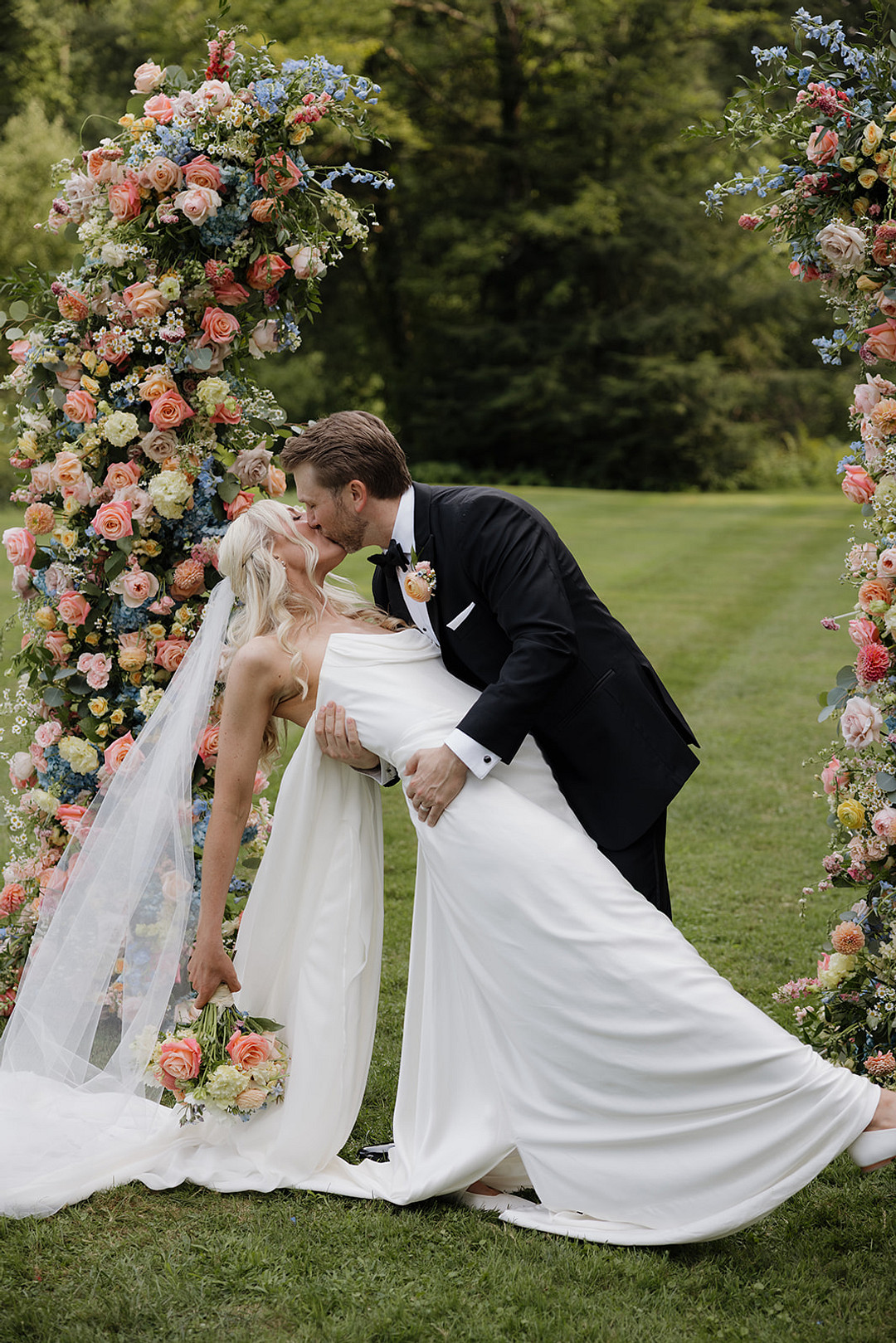
A dip with a flower wall as the backdrop. The arch’s colors frame the whole thing, and the lean looks intentional without anyone toppling over.
See Hannah and Dan’s Hillbrook Garden Wedding →
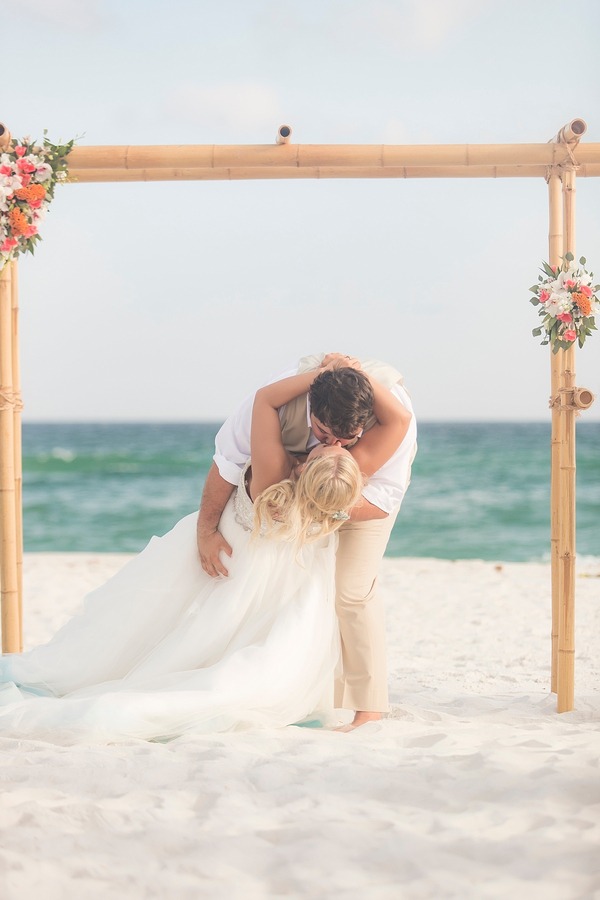
Sand, an ocean, a bamboo arch, and nothing but blue behind them. This is the destination-wedding shot people put on the wall.
See Jessica and Heath’s Pensacola Beach Wedding →
The Forehead Touch
Foreheads together, eyes closed, a quiet second that has nothing to do with the camera. The pose for couples who go shy the moment they’re asked to perform. Keep your noses slightly offset and tuck your chin a touch for the close-up.
Try this: Close your eyes and take one slow breath together.

Her hand on his cheek, the sun doing that thing behind them. No eye contact with the lens, just the two of them in their own light.
See Mark and Bridget’s Cape Town Wedding →

The forehead touch caught mid-laugh, eyes nearly shut. You can tell one of them just said something only the other would find funny.
See Kyle and Layne’s Post Oak Lodge Wedding →

His hand cradles the back of her head, the veil and bouquet blur the edges, and everything narrows to the few inches between their faces.
See Abigail and Nathan’s Utah Mountain Wedding →
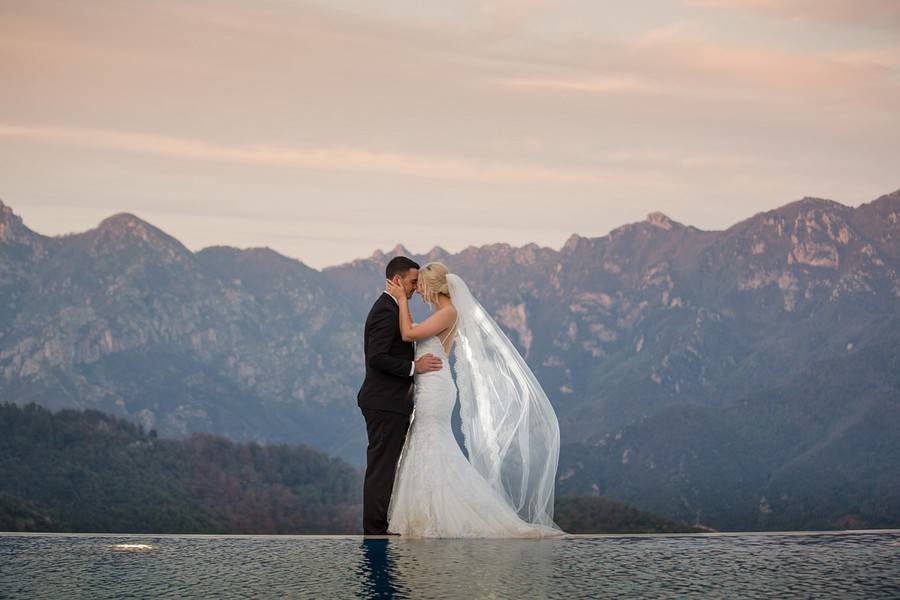
Foreheads together at the edge of an infinity pool, the mountains going pink behind them and her veil drifting off to the side in the breeze. The whole pose lives in the few inches between their faces; the setting just shows off.
See Fairleigh and Mitchell’s Amalfi Coast Wedding →
The Forehead Kiss
A kiss to the forehead instead of the lips: softer, a little protective, somehow more emotional than the real thing. Mind a height gap with a step, a curb, or a soft knee bend.
Try this: One of you kisses the other’s forehead, slow, like you’re calming them down.

Shot as a silhouette against a bright window, so all you get is the shape of it. It also happens to be the most forgiving pose here, since it hides everything.
See Chris and Heidi’s Airport Hangar Wedding →
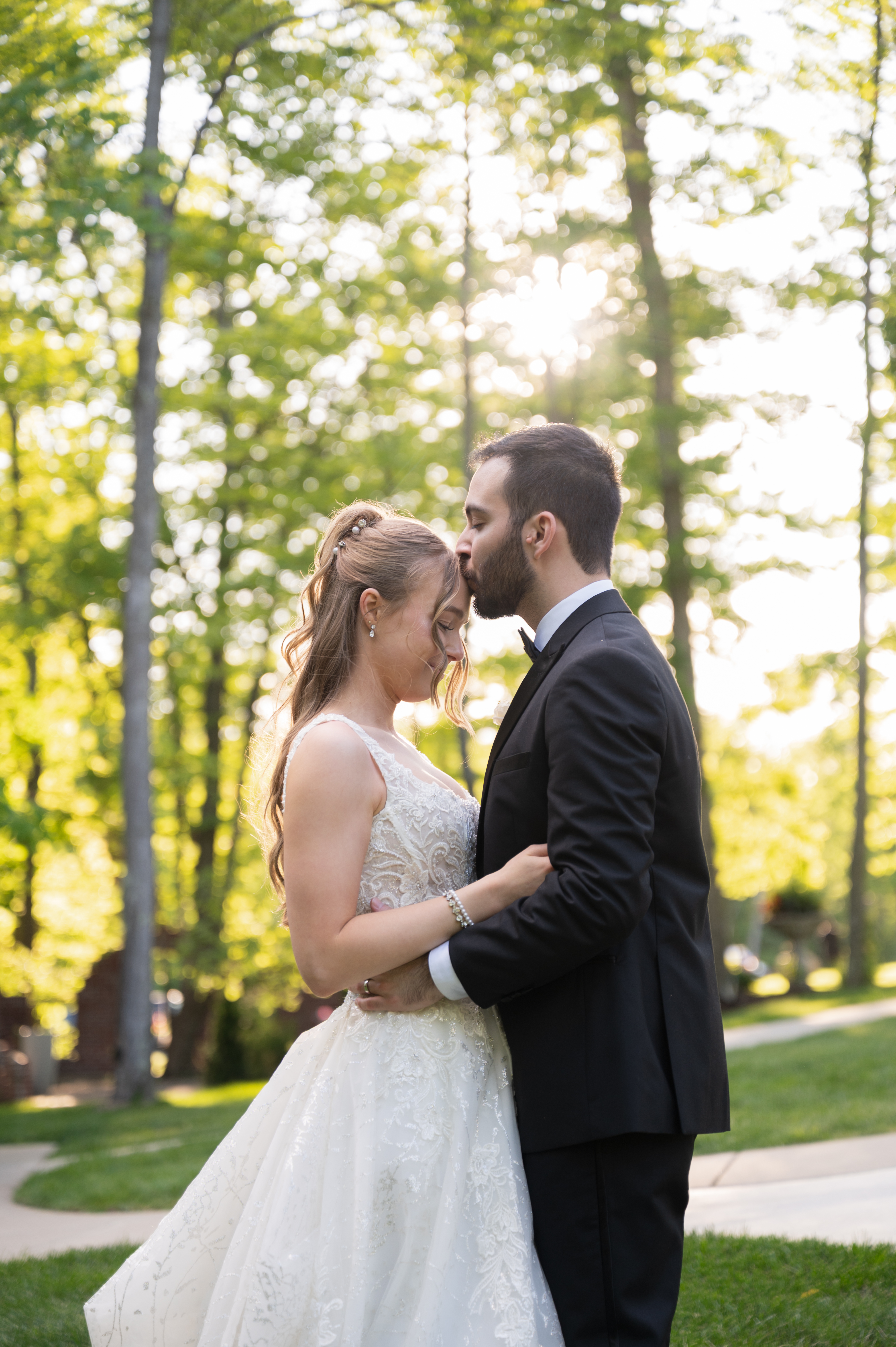
Out in the dappled light, both eyes closed. The quiet, protective version of the kiss, and usually the one couples cry over later.
See Alyvia and Brandon’s Wedding →
Chest to Chest
No dramatics required. Just standing close, arms around each other, looking like two people who actually like each other. Stagger your feet so you’re not standing in a flat mirror, and give every hand a job.


He looks down at her while the light pours in from behind, then she tucks her cheek against his chest, ring hand on his shoulder, and looks straight down the lens. The pose is barely a pose, which is exactly why it works.
See Bridger and Nick’s Carolina Yacht Club Wedding →

Here it’s the bride who faces the camera, wrapped around him in a fur stole and a berry crown with her bouquet still in hand, while he turns into her. Same front-to-front closeness, all the warmth pointed at the lens.
See Alicia and Everett’s Barista Parlor Wedding →
Face to Face
Standing close and eye to eye, arms around each other, the whole pose is just reacting to each other instead of the camera. This is the one to hand a couple who swears they don’t know how to pose: it gives four hands a job and fixes the rest on its own.

Arms looped around his neck, both grinning right at each other. Four hands accounted for, no thinking required.
See Laura and Parker’s Berkeley Garden Wedding →
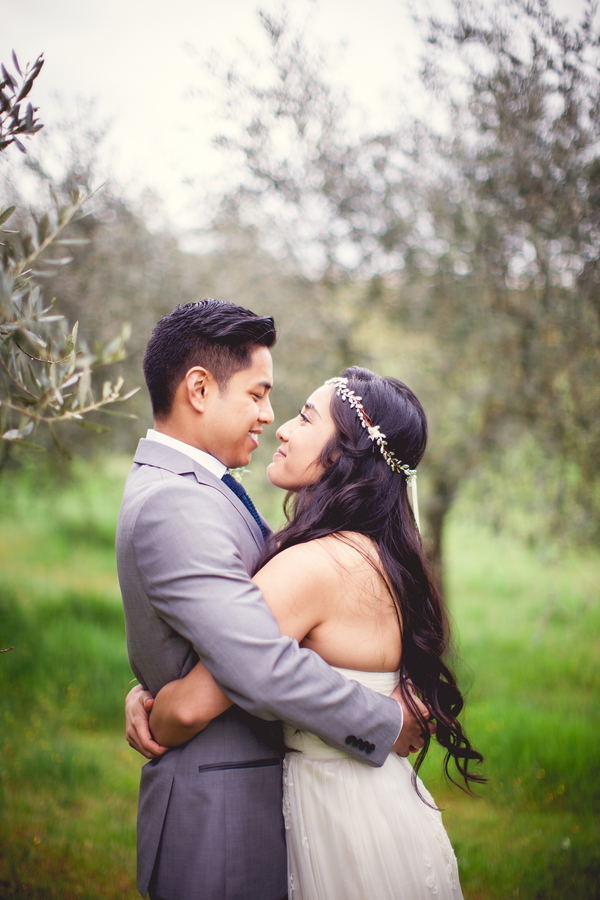
Arms around each other, smiling right into each other’s faces. That genuine look is the entire pose, orchard or no orchard.
See Christina and Jeffery’s Tuscany Wedding →
Lean Against a Wall Together

They lean into the old stone wall, he braces a hand against it, and they just look at each other while the manor sits in the background. Effortless in two seconds, and the wall doubles as balance support if you want it.
See Amy and Sam’s Welsh Castle Wedding →
The Back Hug
One of you wraps around the other from behind, both facing the same way. Relaxed, natural, and a gift to a camera-shy partner. Think soft mittens, not a death-grip, and turn your faces a little toward the camera so you both show.
Try this: From behind, whisper your favorite thing about them today. For a real laugh, make it something ridiculous.
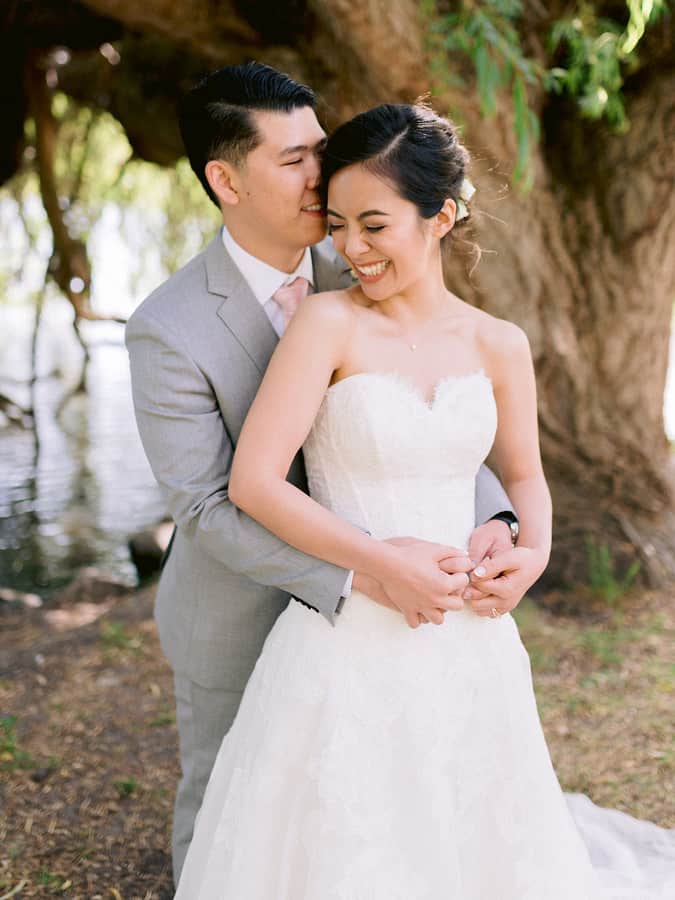
He stands behind her, arms around her waist, both looking toward the water. It gives a nervous partner something easy to do and still reads as completely tender.
See Kim and Jeremy’s Wedding →
The Walk
The pose that fixes everything, because walking gives you something to do. Angle slightly toward the camera instead of marching straight on. Walk toward the lens, walk away from it, or throw a look back over your shoulder: same pose, completely different frames, and the candids show up on their own.
Try this: Forget the camera and tell each other the embarrassing version of how you met. For the look-back, glance over your shoulder like you’re getting away with something.

The recessional, caught mid-step. They’re arm in arm, the guests are a happy blur on either side, and nobody had to be told to smile.
See Thomas and Cori’s Garden Wedding →
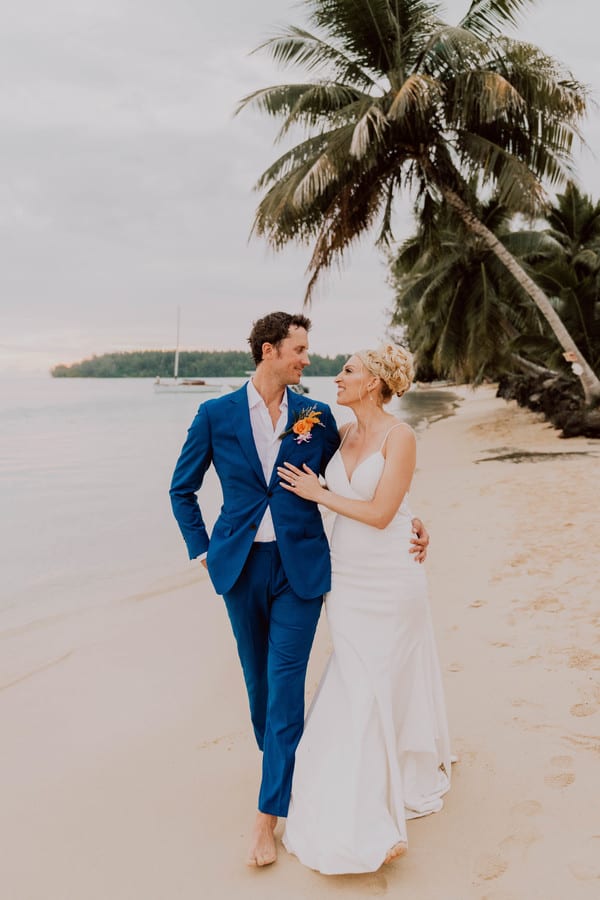
Arm around each other, ambling along the sand with a little scenery. A stroll is the least stiff a couple can possibly look. Beach optional.
See Tara and Matt’s Bora Bora Wedding →

He leads her by the hand along the rocks at the water’s edge. A walking shot in a landscape this big basically poses itself: pick your footing and keep moving.
See Mandy and Eric’s Whytecliff Park Wedding →

Shot entirely from behind as they head off hand in hand through the stone archway. Turning your backs to the lens feels wrong and gives you one of the most cinematic frames of the day.
See Amy and Sam’s Welsh Castle Wedding →

Hand in hand under an arch dripping with pastel blooms, heads down, smiling at the ground. Soft, neutral, and quietly romantic without anyone looking at the camera.
See the Wadley Farms Wedding →

They head off down the path and she throws a look back over her shoulder. Best of both.
See Laura and Parker’s Berkeley Garden Wedding →
The Carry
Someone is getting picked up, and it’s almost impossible to do without laughing. Whoever’s lifting squares up first, and if a real lift feels like too much, a tiny hop-and-squeeze gets the same energy with both feet on the ground.
Try this: On three, a little lift. Laugh if it feels ridiculous.
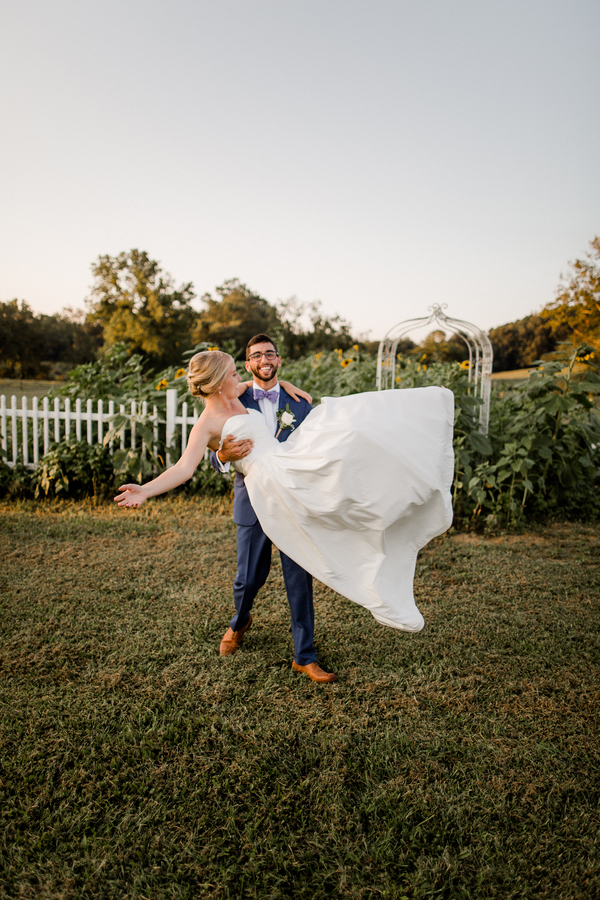
He scoops her up and keeps walking, her dress spilling over his arm. The carry in motion.
See Abigail and Austin’s Georgia Barn Wedding →
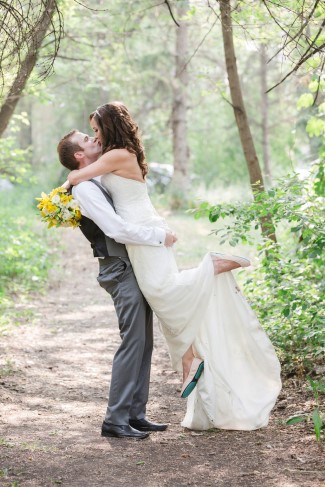
He lifts her clean off the ground and into a kiss, yellow bouquet swinging. Part carry, part kiss, all momentum.
See Nicole and Robert’s Yellowhead Brewery Wedding →
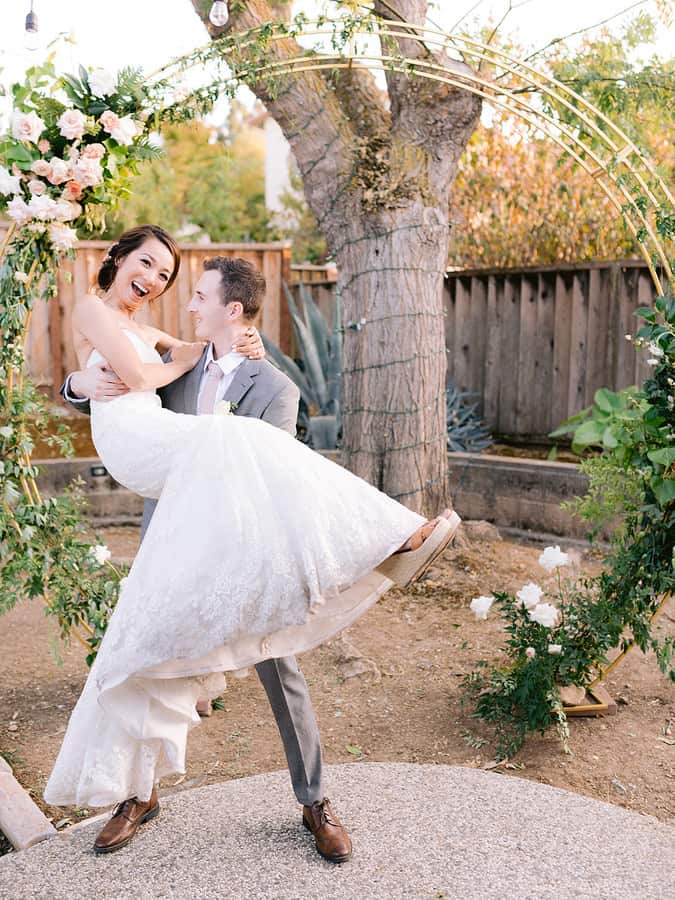
She’s mid-laugh, he’s got her in his arms in front of the floral arch, and neither of them is thinking about the camera. That’s the entire goal.
See Thuy and Brandon’s Backyard Wedding →
The Twirl
Give the dress a job. Arrange the train or veil before you start so it’s already swirling, then keep it controlled. The pause after the turn is where the keeper lives.
Try this: Spin once, stop, and hold still for one breath.
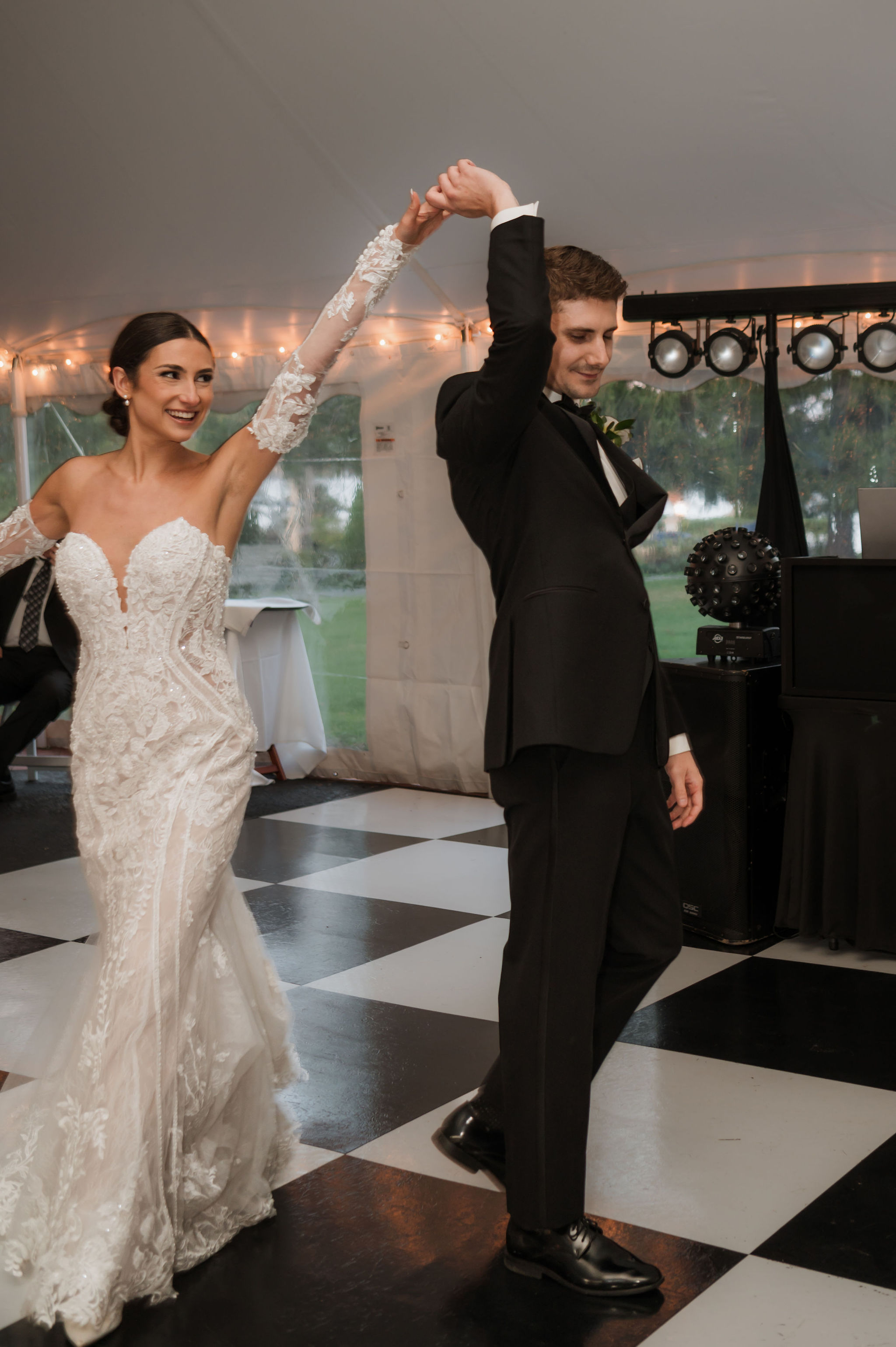
He sends her into a spin on the checkered floor, her hand raised in his. A twirl turns a reception photo into one with actual movement in it.
See Rachel and Christopher’s Geneva-on-the-Lake Wedding →

Out on the hillside he spins her by one raised hand while she sweeps her own skirt out with the other, and the lace flies. Give the dress a reason to move and the photo follows.
See this Dreamy Mountain California Wedding →
The Jump Shot

Both of you airborne, facing each other, gravity briefly someone else’s problem. It takes a running start, a few failed attempts, and zero dignity, which is exactly why nobody manages to look stiff doing it. Any flat wall makes a clean backdrop.
See Maren and Jeremy’s Snoqualmie Ridge Wedding →
The Piggyback

She hops on his back, he grins like he won something, and whatever composure either of you had is gone. It’s the least formal shot of the day and somehow everyone’s favorite. Bonus points for doing it in the full dress.
See Chloe and Ben’s Miami Beach Wedding →
Make a Run for It

They’re not strolling, they’re full-on running across the courtyard, hand in hand, both mid-laugh. Pick a direction and bolt, and the photographer freezes the chaos. It works on any open stretch of pavement, grass, or sand.
See Polly and Jordan’s Paris Wedding →
Throw Your Hands Up
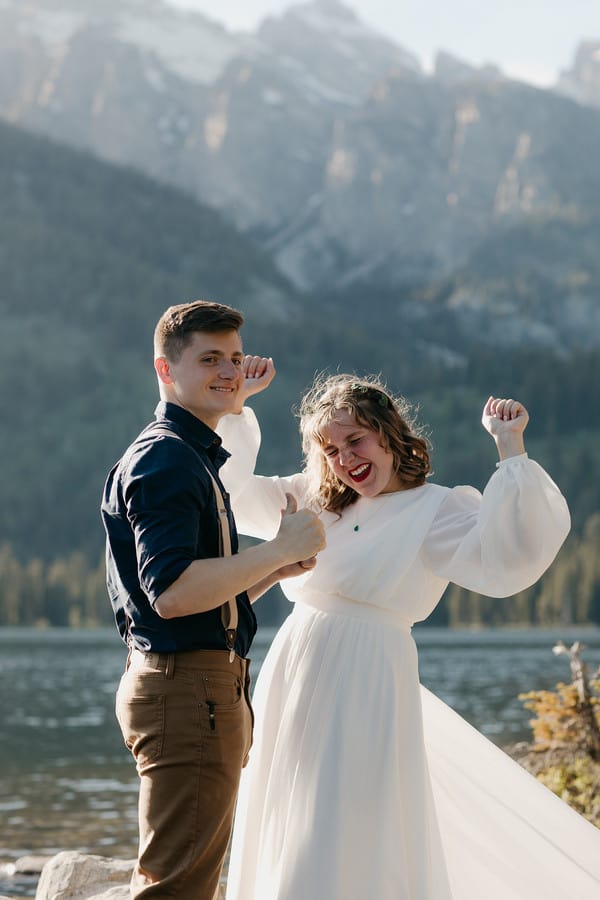
Fists up, heads back, the full “wait, we actually did it” reaction. This one only works caught in the moment right after the big reveal, not posed. Pure adrenaline, no direction required.
See Amanda and Ashton’s Grand Teton Elopement →
The Slow Dance
Your one guaranteed slow dance, with everyone watching and the lights low. The switch from quiet swaying to a sudden laugh is the frame you want.
Try this: Sway for ten seconds without talking, just breathing. Then one of you says the most ridiculous thing you’re thinking.
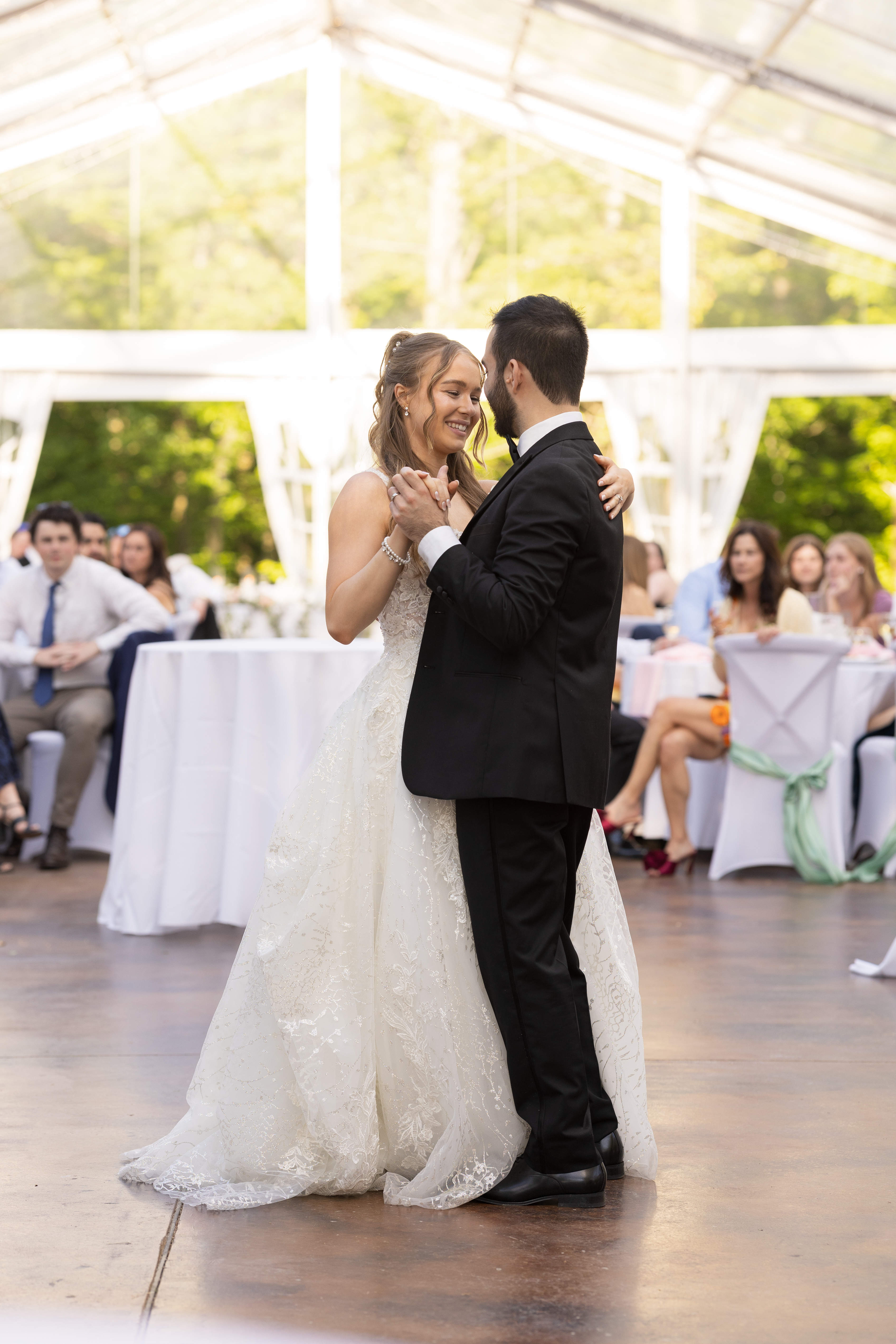
The whole room watching, the lights turned down. You don’t set this pose up: it arrives on its own and the photographer just has to be ready.
See Alyvia and Brandon’s Wedding →
Under the Veil
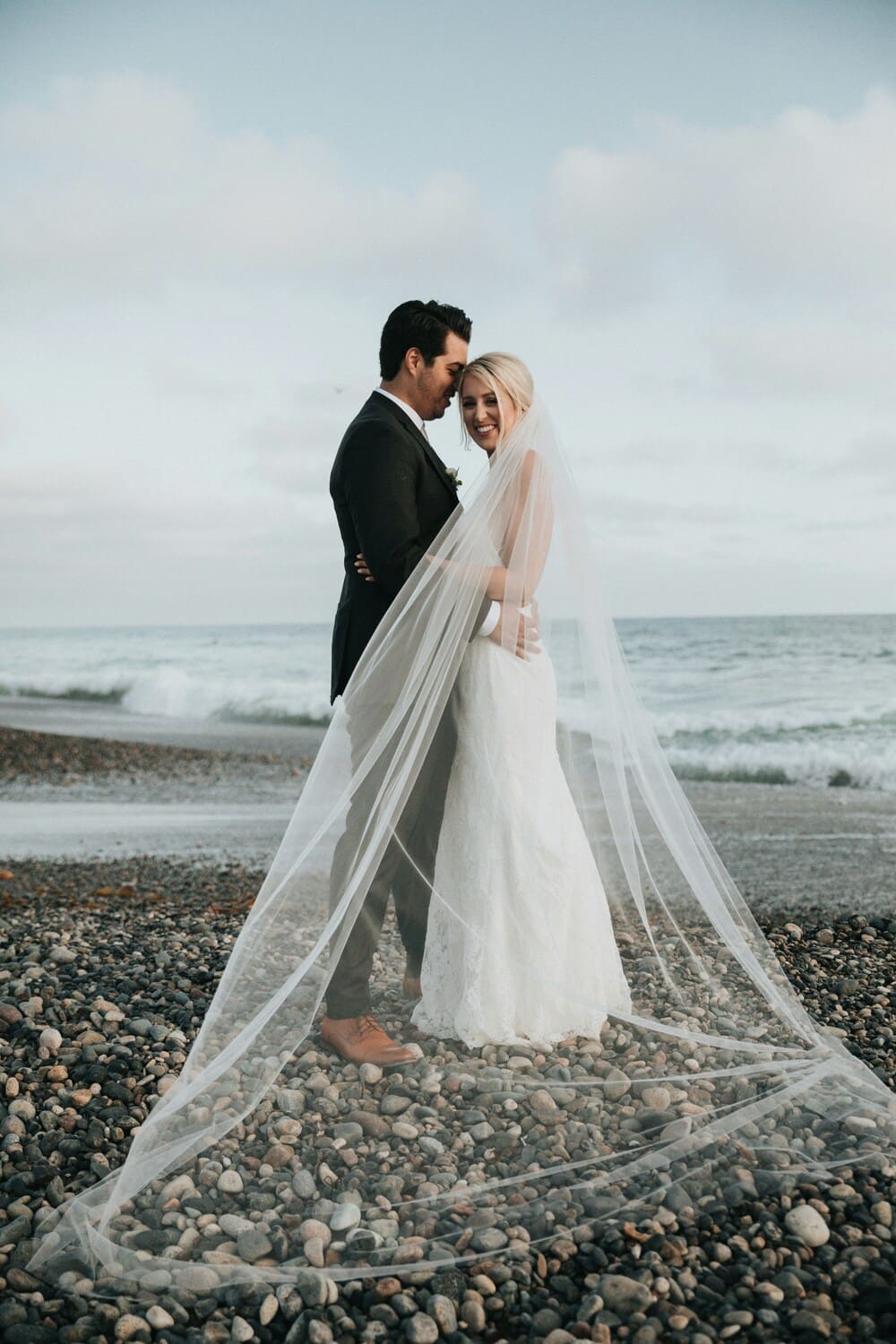
Pull the veil up over both of you and the whole world goes soft and a little blurry. It’s the most romantic framing device you already own, and standing so the light comes through it makes it glow. No veil? A jacket, shawl, or big bouquet held close does the same.
Try this: Under the veil, go nose to nose. Then a forehead kiss. Then one tiny real kiss, and breathe.
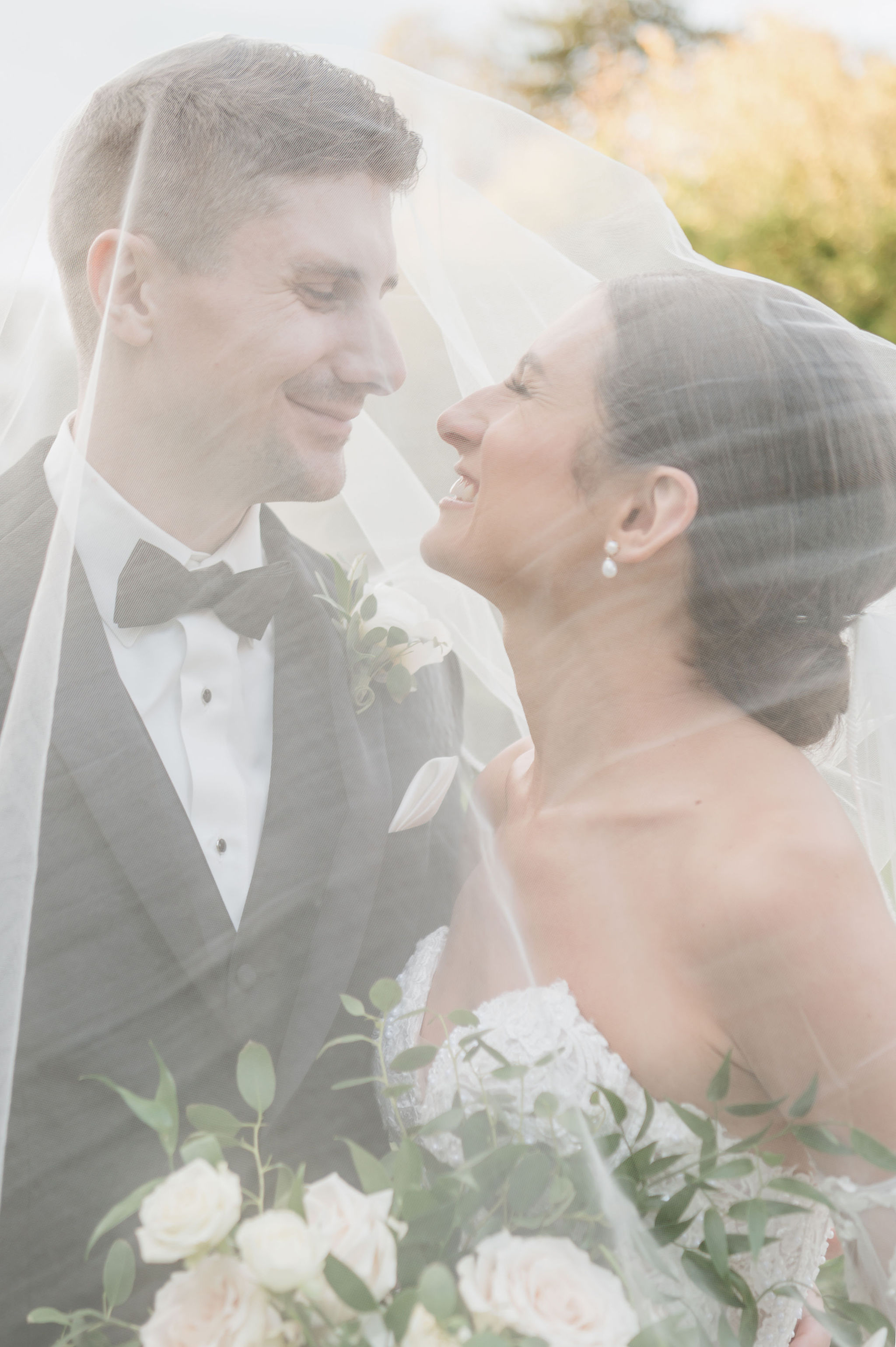
The veil comes up and over both of them, and suddenly there’s a soft little world with just the two of them in it. The most romantic prop you already happen to be wearing.
See Rachel and Christopher’s Geneva-on-the-Lake Wedding →

In black and white, he kisses her temple while the veil falls over both of them like a frame. Quiet, classic, the kind of shot that ages well.
See Lorena and David’s Wedding →
How to Not Freeze Up When the Camera Comes Out
A list of poses is only half of it. The other half is knowing what to do with your hands, how to handle a height gap, and how to move from one setup to the next without the awkward shuffle. These are the universal fixes that apply to almost everything above.
Give Every Hand a Job
The fastest way to spot a nervous photo is the hands. Every hand should be doing one of three things: holding something gently, resting lightly, or touching softly. Nothing hovers. If your fingers go tense, the cue “soft fingers, like you’re holding a flower stem” fixes it in about three seconds. And skip pressing your palms flat against each other, since it reads wide on camera.
Work With a Height Difference
Make the bodies adjust, not the faces. The taller partner staggers their feet or adds a soft knee bend to drop their height naturally. Curbs, steps, and a half-step back all close the gap without anyone craning their neck or going up on tiptoe.
Run a Simple Flow on the Day
You don’t need to memorize all of these. Pick a few and move through them in this order so you’re never standing there wondering what’s next.
- Prep first. Agree on which kisses, dips, or lifts you’re up for, decide who leads each one, and move the train, veil, or bouquet out of the way.
- Start with an anchor. Stand close, weight on your back foot, hands at each other’s waist. Hold it and run through small changes without moving your feet: look at the camera, then at each other, then close your eyes. One setup, a dozen frames.
- Add movement. Walk and talk into a forehead touch. Or, for a guaranteed laugh, whisper something you “can’t legally say during the ceremony” and let your faces do the rest.
- Sit down. Drop onto a bench, the steps, or a low wall for a breather. Sitting settles the nerves and quietly turns into some of the most intimate shots of the day.
- Finish big. End on your showstopper: the veil pulled over both of you, a dip, or a silhouette at sunset.
These Work for Every Couple
Every pose here is built on connection and energy, not on who plays which role. Rotate who initiates the hug, the lean, or the lift based on who feels steadier, not on any assumption. For same-sex couples or partners in similar outfits, build contrast through posture instead: one leaning, one facing forward, one seated taller. And lean on seated poses, walls, and railings any time mobility or balance is a factor. They read as more intimate, not less.
FAQs
How do I pose for wedding photos without looking stiff?
Give yourselves something to do. The poses that look natural almost always involve motion or contact: walking, a forehead touch, an arm around a waist, because they give your hands somewhere to go and your face something real to react to. Pick three or four setups from this list, hand them to your photographer, and let the in-between moments be the candid ones.
What do we do with our hands?
Every hand needs a job: hold, rest, or touch. Avoid pressing your palms completely flat against your partner, because it reads wide on camera. If you feel tension creeping in, cue yourself to use soft fingers instead of a grip.
What if one of us is camera-shy?
Point you both away from the lens. The back hug, the forehead touch, and the walking shots all let a nervous partner look at you instead of the camera, which takes the pressure off completely. Once a few of those are in the bag, the smiling-at-the-camera ones tend to come much easier.
What if we have a big height difference?
Make the bodies adjust, not the faces. The taller partner widens their stance or adds a subtle knee bend, and steps, curbs, and staggered footing close the gap naturally. Intimate poses like the forehead touch barely strain anyone’s neck when the positioning is right.
Do these poses work for same-sex couples and couples with mobility limitations?
Yes, all of them. They’re built on connection, not gendered roles, so rotate who initiates contact and who leads in the protective poses. If your outfits are similar, vary your posture to build contrast: one sitting taller, one leaning. And seated poses on benches, steps, or accessible chairs are not lesser options, they often read as the most intimate of the whole gallery.
When during the day do these poses happen?
Most of the portrait poses, the walks, embraces, and forehead touches, happen during a first look or a dedicated couple’s session after the ceremony, usually timed for golden hour. The dip, the twirl, and the first dance tend to show up at the reception. Knowing which is which helps you and your photographer build a realistic timeline.
How many poses do we actually need?
Fewer than you’d think. A good photographer can spin three to five strong starting points into a full gallery through small changes in hand placement, eyeline, and crop. Walk in with a short list of the looks you love, a kiss, a walk, a dip if you’re feeling brave, and trust them to do the rest.
Should we practice before the wedding?
An engagement session is the best practice there is. It’s a full dress rehearsal for being photographed together, with the same photographer who’ll shoot your wedding. If that’s not in the cards, even ten minutes of trying a few of these at home will make the real thing feel far less awkward.
Pick your favorites, try them in the mirror once or twice, then forget the list entirely on the day. The best frame is almost always the one right after you stop posing. Now go get those photos. You’ve got this.
Don’t forget to pin this to your Wedding Photography Board for later!