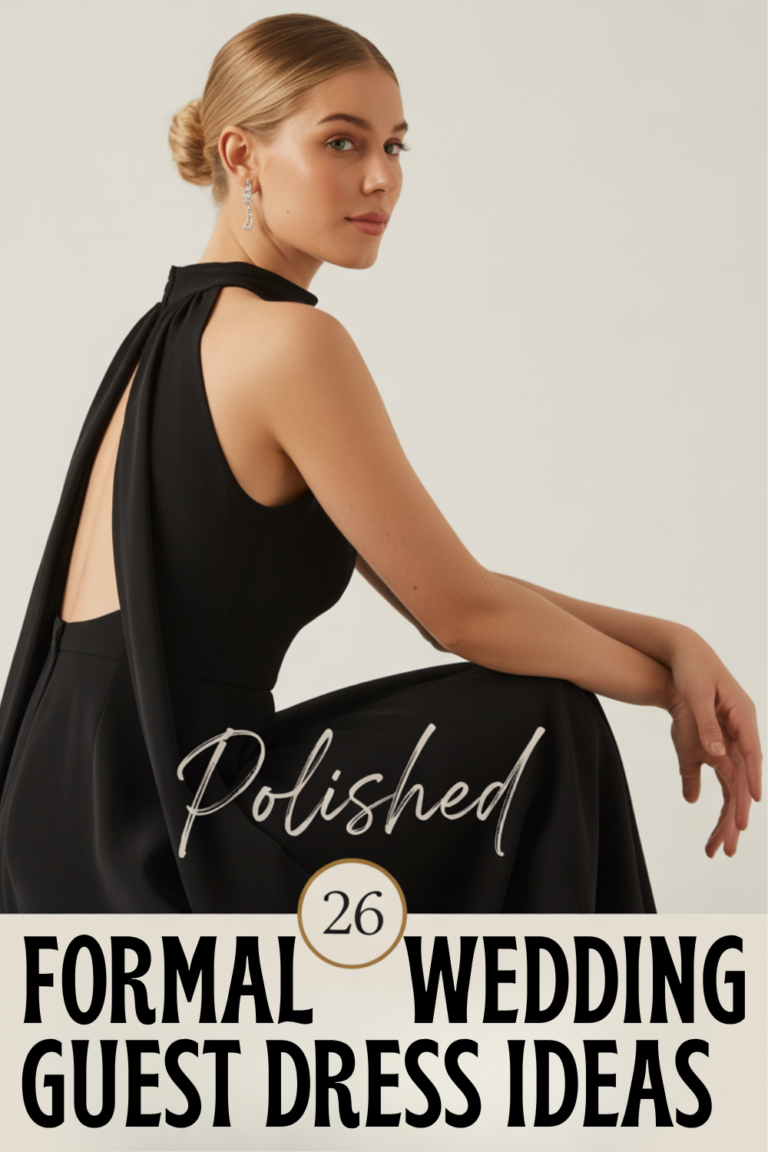
What follows is a foolproof guide covering length, fabric, silhouette, color, venue, timing, accessories, and everything else that determines whether your outfit reads “formal” or “trying too hard.” Specific looks are woven throughout so you can see each principle in action, not just read about it in the abstract.
Whether you’re dressing for an evening ballroom affair, a candlelit cathedral ceremony, or a formal outdoor estate wedding, there is a look here for every guest, body, and situation. For even more wedding inspiration, browse our Real Weddings directory.
1. Formal vs. Black Tie: Decoding the Difference
“Formal” is not a lazy synonym for “black tie.” Think of the formal wedding guest dress as the polished, elevated middle ground. It is more sophisticated than your standard cocktail look but lacks the high-drama requirements of a black-tie gown. It is the sweet spot where you look incredible without feeling like you are auditioning for a film premiere.
Use these quick cues to guide your shopping:
- Evening + Formal: Lean into longer hemlines and richer fabrics like velvet or heavy satin.
- Daytime + Formal: Ankle-length cuts work perfectly if the finish is high-end.
- The Essentials: Look for structured silhouettes, quality fabrics, and accessories that look intentional rather than thrown together.
Blush Satin Wrap Gown with High Slit
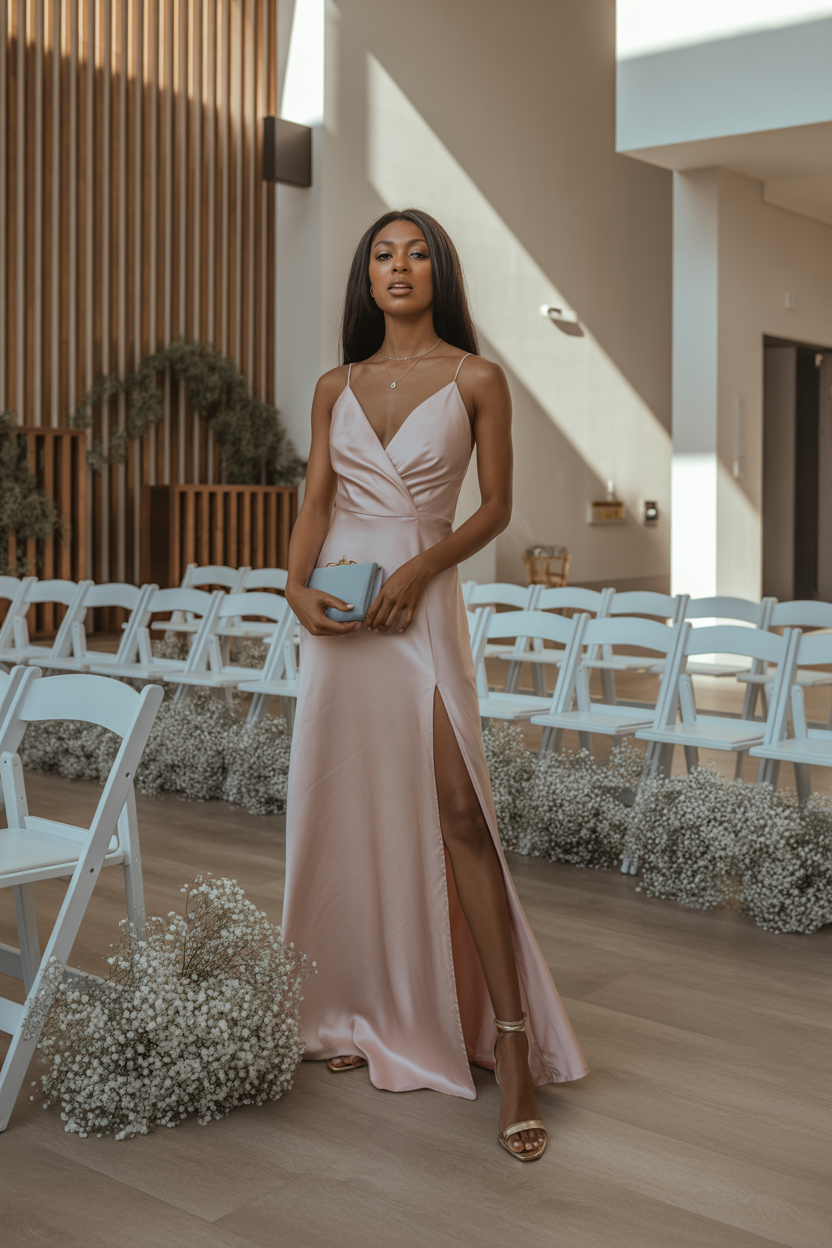
This blush satin wrap gown shows what “formal” looks like in its natural habitat. The deep V neckline, floor-length silhouette, and high slit are all intentional and polished, while blush keeps the color firmly in guest territory. The ceremony venue setting behind her does a lot of the work: white chairs, baby’s breath, natural light streaming in. This is exactly the dress-code energy the invitation had in mind.
Black Sequin Mermaid Gown
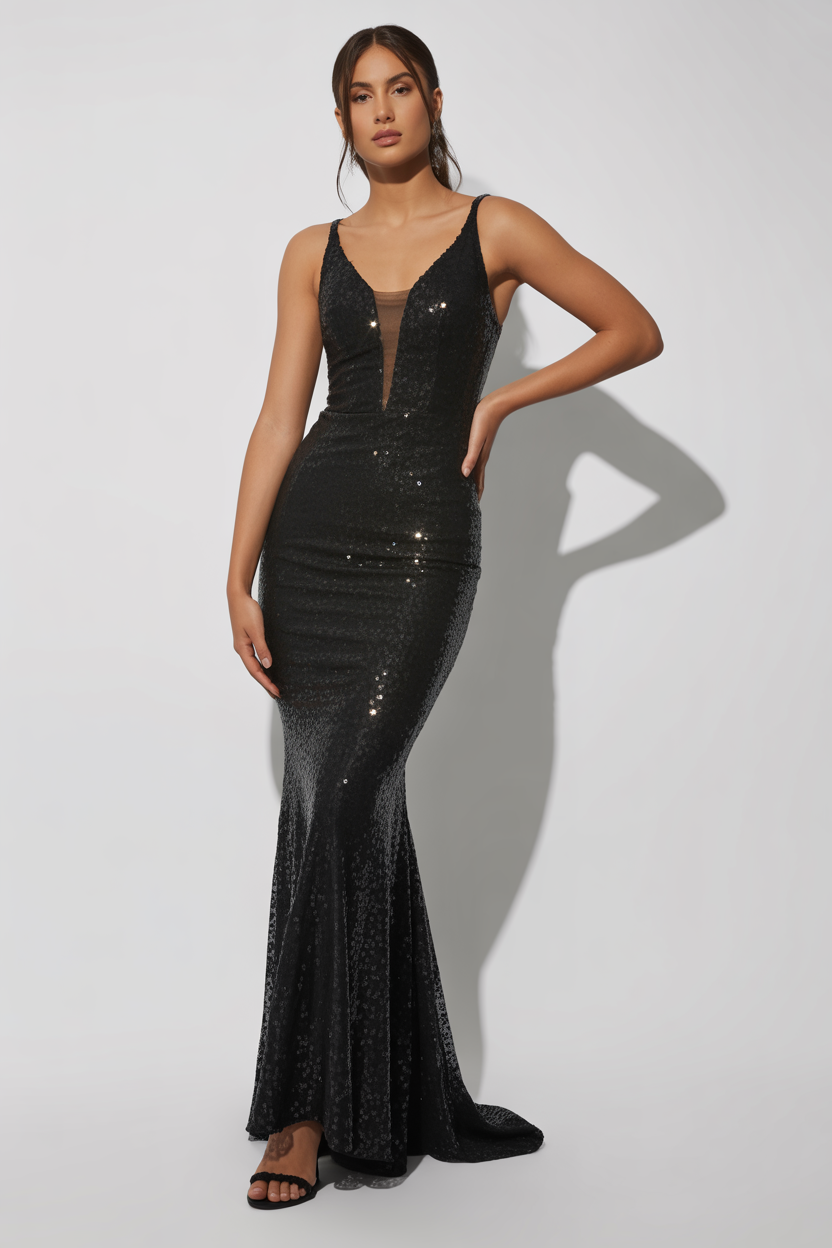
This is the black-tie-leaning end of the formal spectrum. All-over sequins on a mermaid silhouette with a dramatic plunging V-panel is the definition of understood the assignment. If the invitation mentions an upscale hotel, a historic venue, or an evening start time past 7 PM, you have full clearance to bring this level of shine. Note the sleek updo and black strappy stilettos: the styling is as intentional as the dress itself.
2. The Hemline Heuristic: Does Length Actually Matter?
Does a few inches of fabric really dictate your vibe? Absolutely. Hemline length is the ultimate visual shorthand for dress codes. Use the length hierarchy to signal you understood the assignment before you even walk through the door.
- Floor-length or Maxi: Your safest bet for formal evening affairs. It communicates elegance without you saying a word.
- Ankle, Tea, or Midi: These work if the fabric feels luxe. Opt for heavy satins or intricate lace over casual cotton.
- Mini: Save these for the bachelorette party. Unless the invite says “beach formal,” keep the hemline long.
Don’t forget the dance floor test. Can you sit, walk, and move freely without a wardrobe malfunction? If you’re constantly tugging at your skirt, it isn’t the right fit for a long night of celebrating.
Black Satin Cap-Sleeve Column Midi
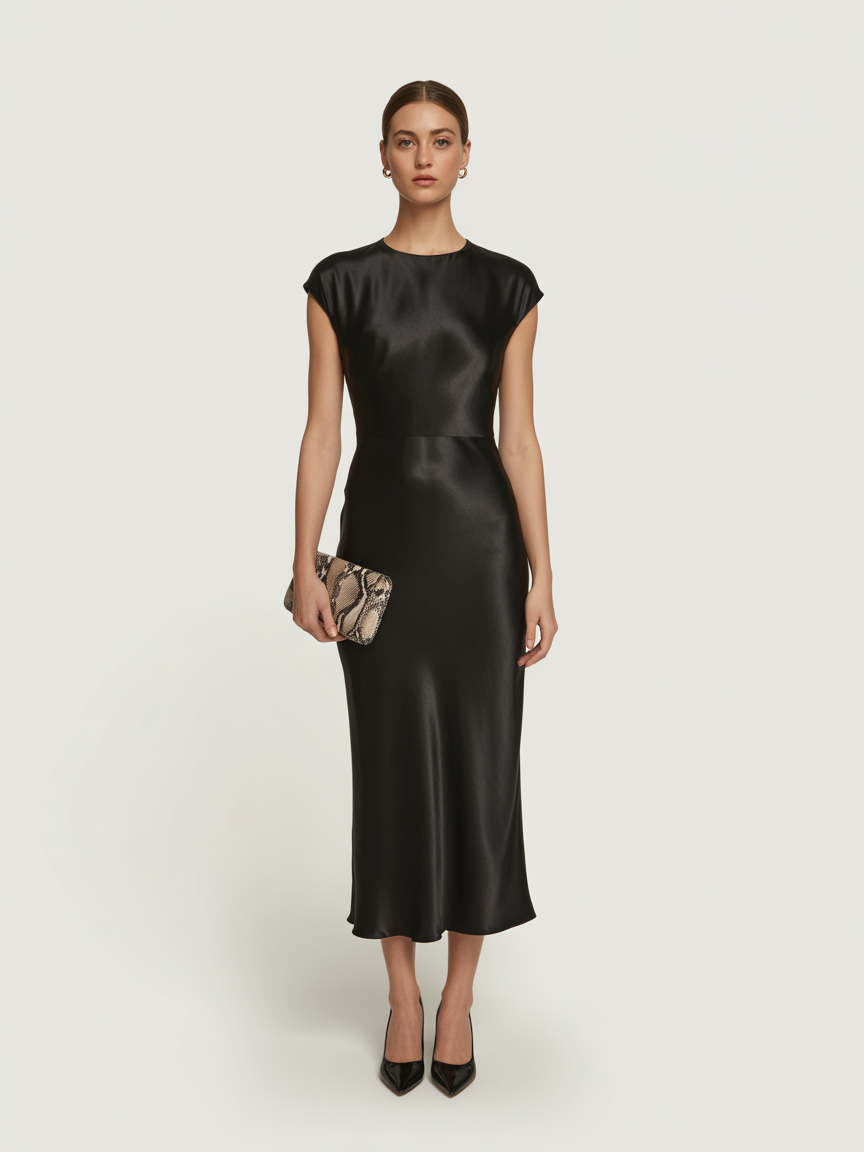
A midi does not automatically mean underdressed. This black satin cap-sleeve column hits just below the knee with a high-sheen finish that reads evening formal even without floor length. The cap sleeves and high crew neckline add structure that pushes it past cocktail territory. The snakeskin clutch adds a subtle texture note without breaking the formality. Pair with pointed-toe heels and a sleek updo to close the look.
Black Strapless A-Line Satin Midi
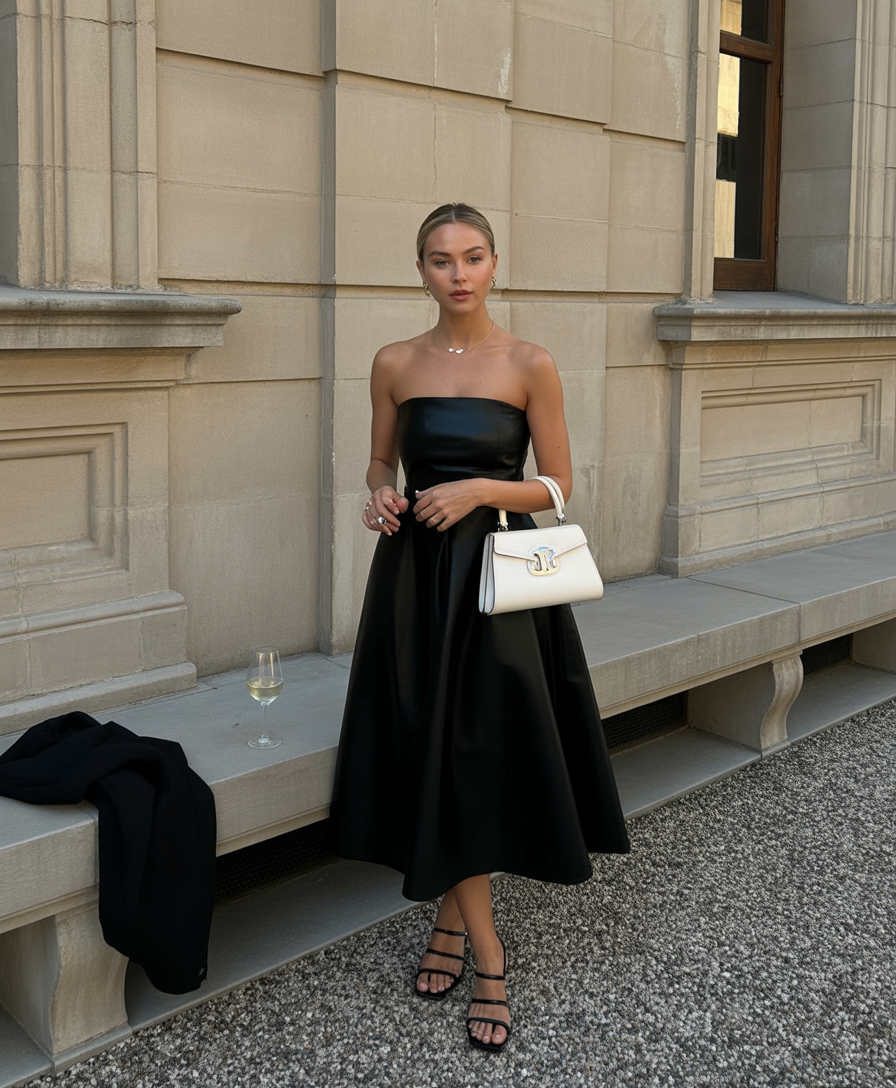
The setting here does a lot of work: champagne in hand, formal stone architecture behind her, white structured bag in arm. This strapless A-line satin midi is a clear example of how context and fabric elevate a below-knee hemline. Heavy satin construction and a full structured skirt give this midi the visual weight it needs to read formal rather than cocktail. The venue energy and the dress energy are perfectly matched.
Black One-Shoulder Draped Floor-Length Gown
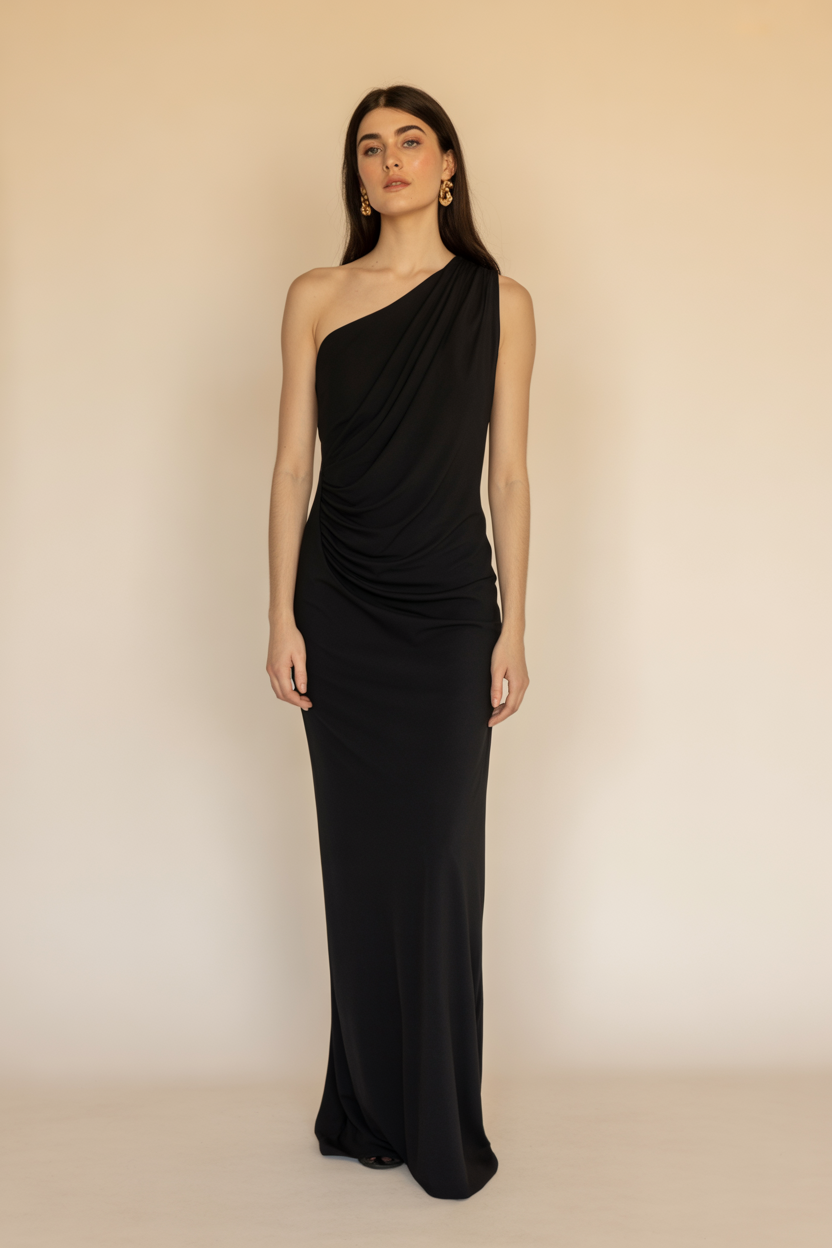
Floor-length is the lowest-risk option for any formal event, and this one-shoulder draped gown shows exactly why. The gathered fabric at the shoulder adds movement and drama without requiring embellishment anywhere else. If you’re uncertain about the formality level, a floor-length gown in a solid dark tone removes all guesswork. Gold drop earrings are the only accessory doing any work here, which is the point.
3. Fabric: The Formal Cheat Code
Ever found a dress that fits perfectly but looks more “Sunday brunch” than “formal event”? It’s a real heartbreak. The same silhouette swings from grocery run to gala-ready based entirely on the textile. Fabric is your cheat code for the formal wedding guest dress.
To look expensive, stick to the “yes” list: satin, crepe, silk, chiffon, velvet, and metallic brocade. Look for materials with enough weight to hang beautifully and quality lining that makes a visible difference. Skip jersey and rib knits, casual cotton poplins, and daytime linen unless it is exceptionally elevated.
Before you commit, run this quick check: do the seams pull at the hips? Does the fabric move with you rather than cling? Does the hem hang weighted rather than wavering? If any answer is no, keep looking.
Forest Green and Gold Jacquard Brocade Midi
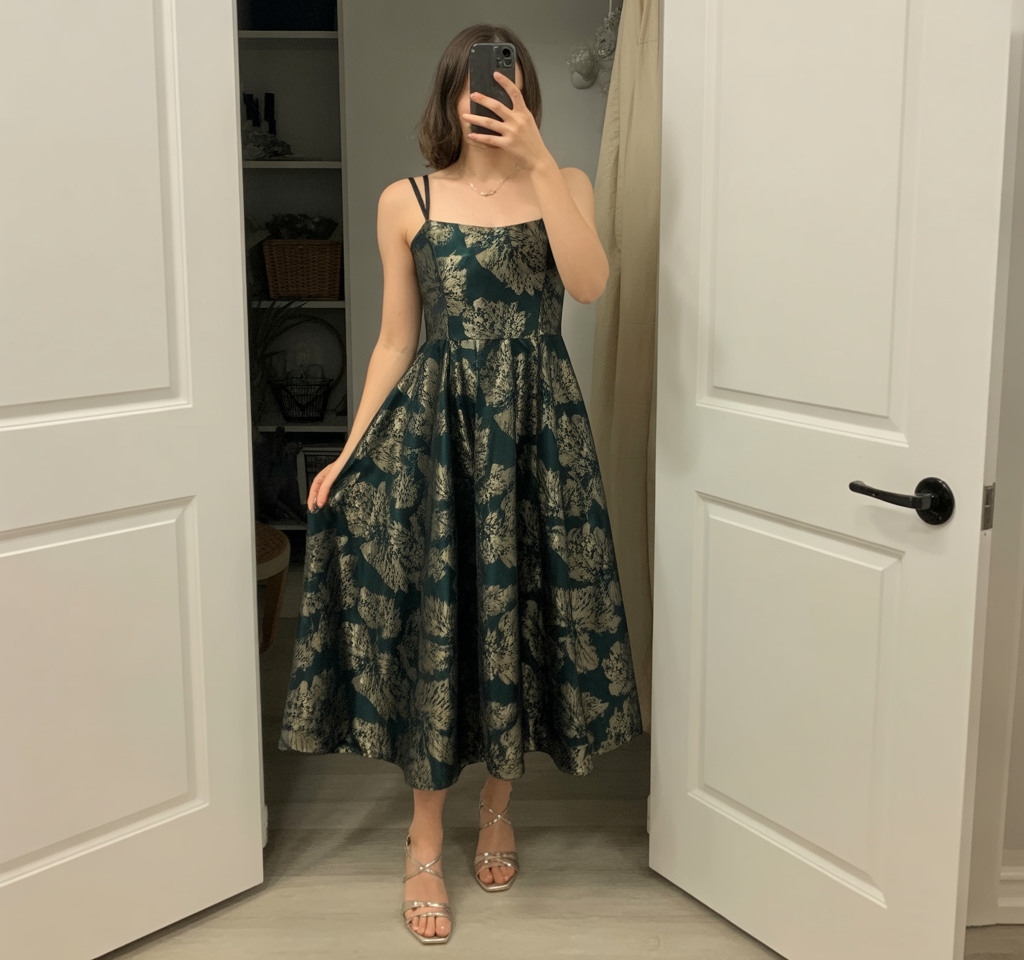
Here is the proof that fabric beats hemline every time. This forest green and gold jacquard brocade sits at midi length, which alone would not be formal enough. But the metallic woven brocade changes everything. That sheen and density signals “evening wear” before anyone clocks the hemline. If you want to wear a midi to a formal event, this is your blueprint: choose a textile that does the heavy lifting so the length doesn’t have to.
Sage Green Satin Slip with Champagne Lace V-Trim
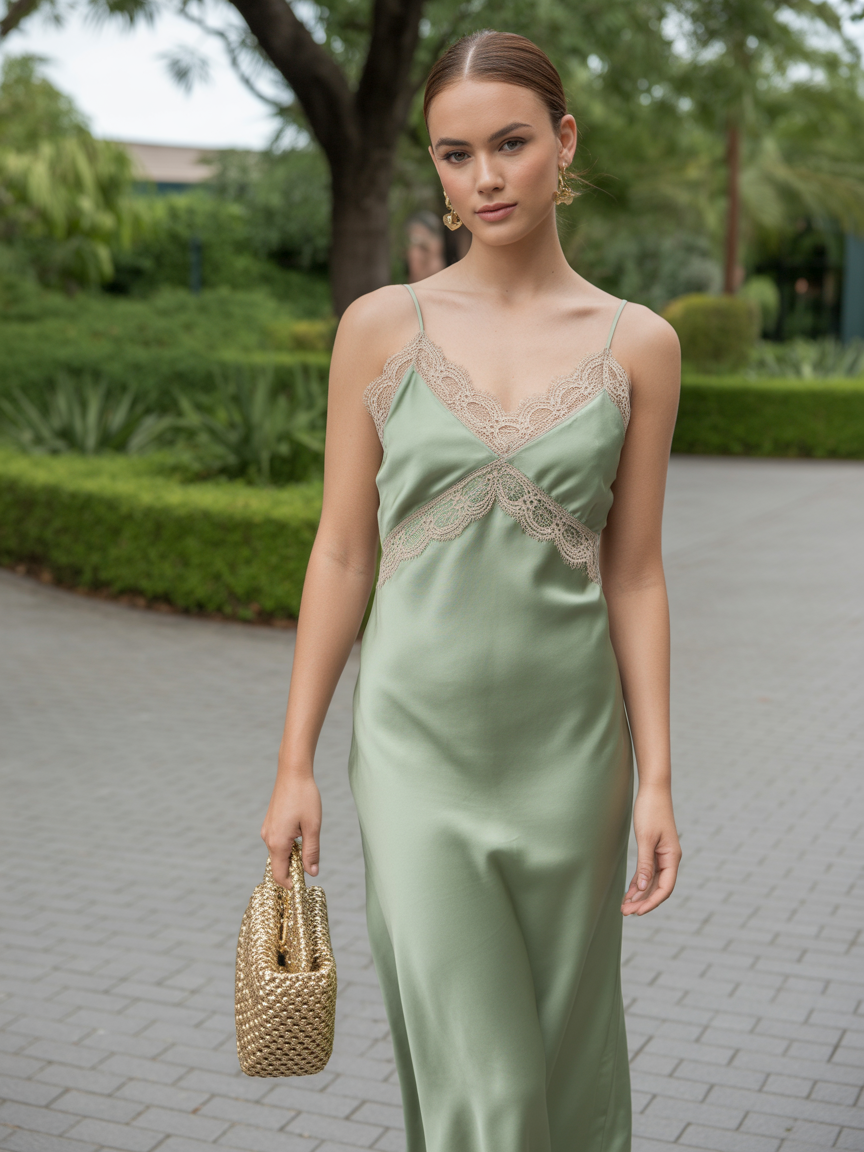
Satin slip dresses belong at formal weddings. This sage green version with champagne lace trim shows how a clean, minimal silhouette carries an entire look when the fabric has this much weight and sheen. The gold drop earrings are the only accessory doing real work here. That’s the power of luxe fabric: it handles the effort so you don’t have to. The garden path setting also shows how this reads in an outdoor formal venue context.
4. The Silhouette Strategy: Shapes That Work for Everyone
Ever squeezed into a formal dress that looked great on the hanger but made you feel like a stuffed sausage the moment you sat down? We’ve all been there. Formal style is about clean lines and intention, not one specific body type. Stick to these reliable silhouettes that look expensive but feel wearable: the column, the A-line, the structured midi, and the luxe wrap.
Run these non-negotiable comfort tests before you commit. Does the fabric dig into your ribs or hips when you sit? Can you raise your arms to hug the bride? Is there room for a three-course meal and bubbly? If any answer is no, keep looking.
Black High-Neck Mermaid Gown
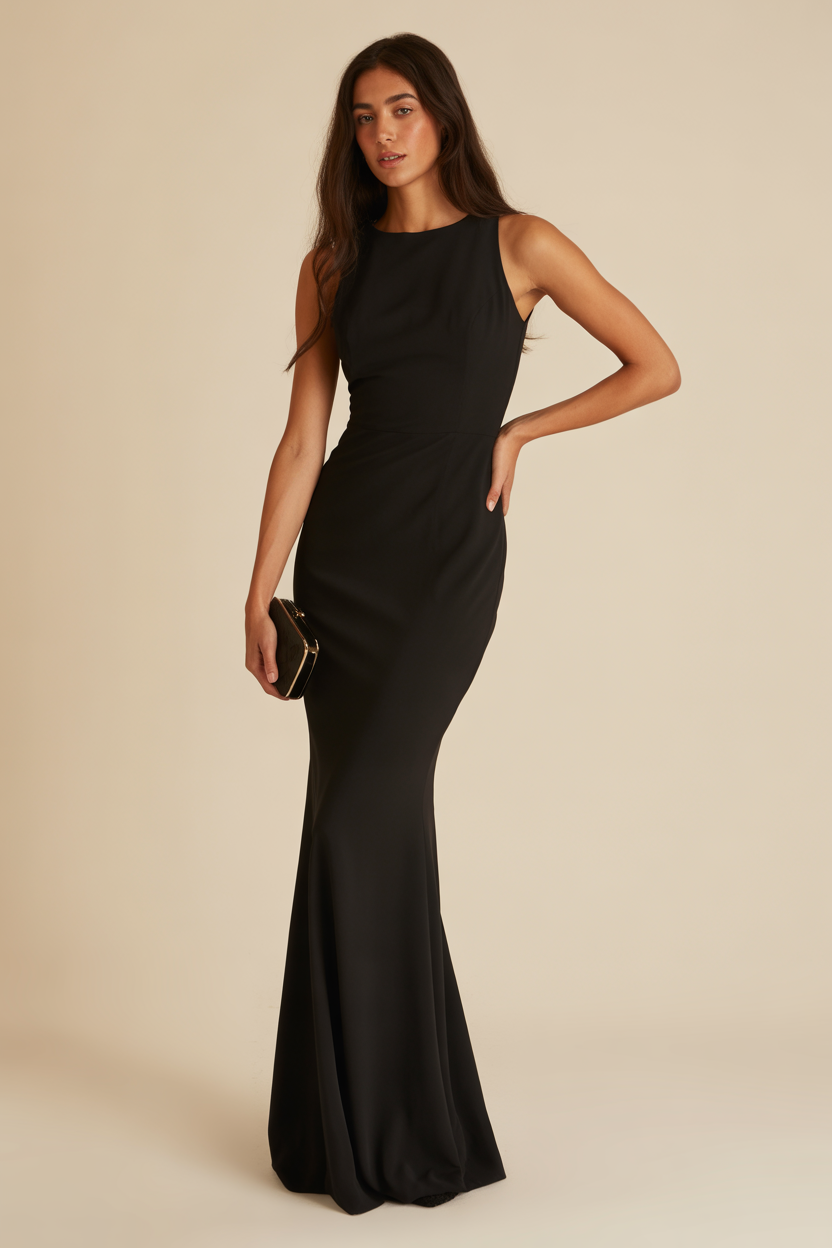
The column-to-mermaid silhouette is the minimalist’s answer to “how do I look formal without overthinking it.” This high neckline paired with a mermaid fit and rich crepe fabric delivers maximum impact with zero embellishment. It’s also a strong choice for religious venues or guests who prefer coverage while staying sleek and modern. Let the silhouette do the talking.
Black and White Asymmetric Peplum Column Gown
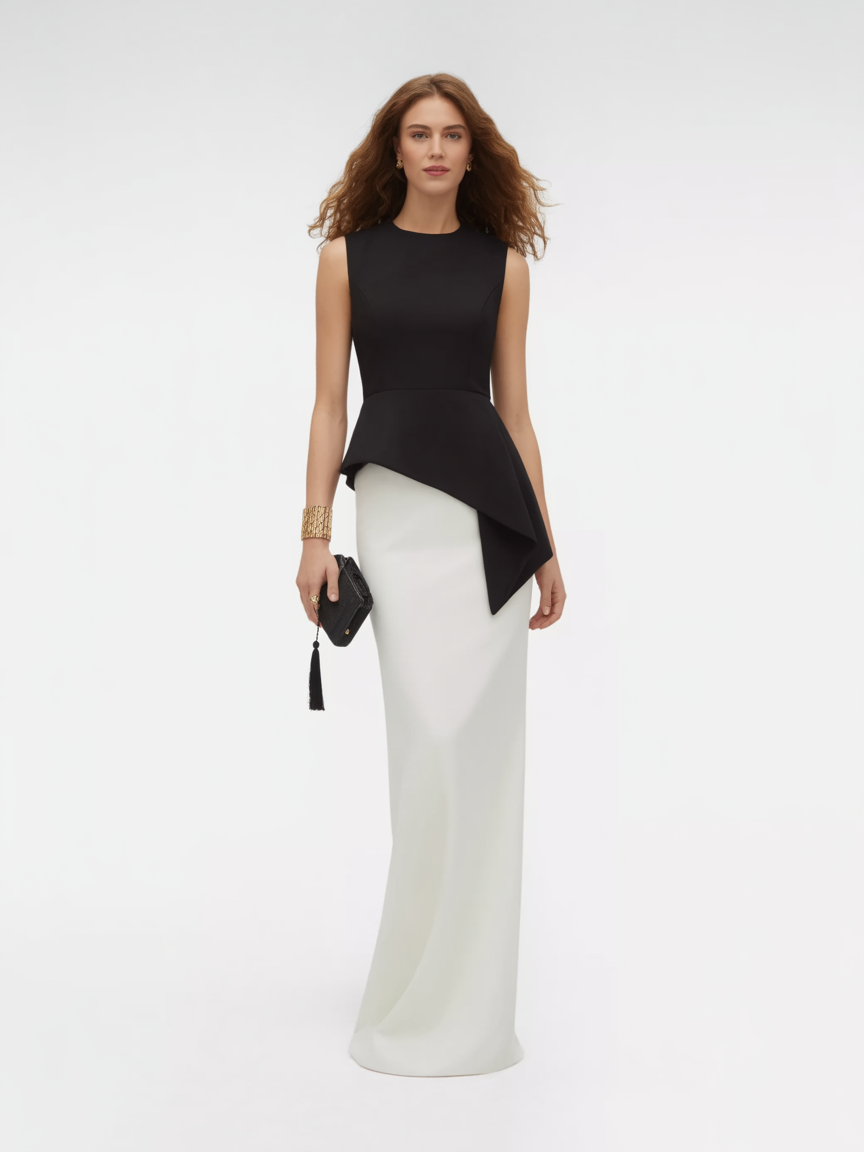
If the column silhouette sounds too safe, this black and white color-blocked version shows how to make it genuinely interesting. The asymmetric peplum that transitions into the white column skirt is architecturally intentional, not accidental. This is the “cool girl formal” option for guests who want something distinctive without sacrificing dress code compliance. Small tasseled clutch, minimal jewelry, and you’re done.
Olive Green Structured Mock-Neck A-Line Midi
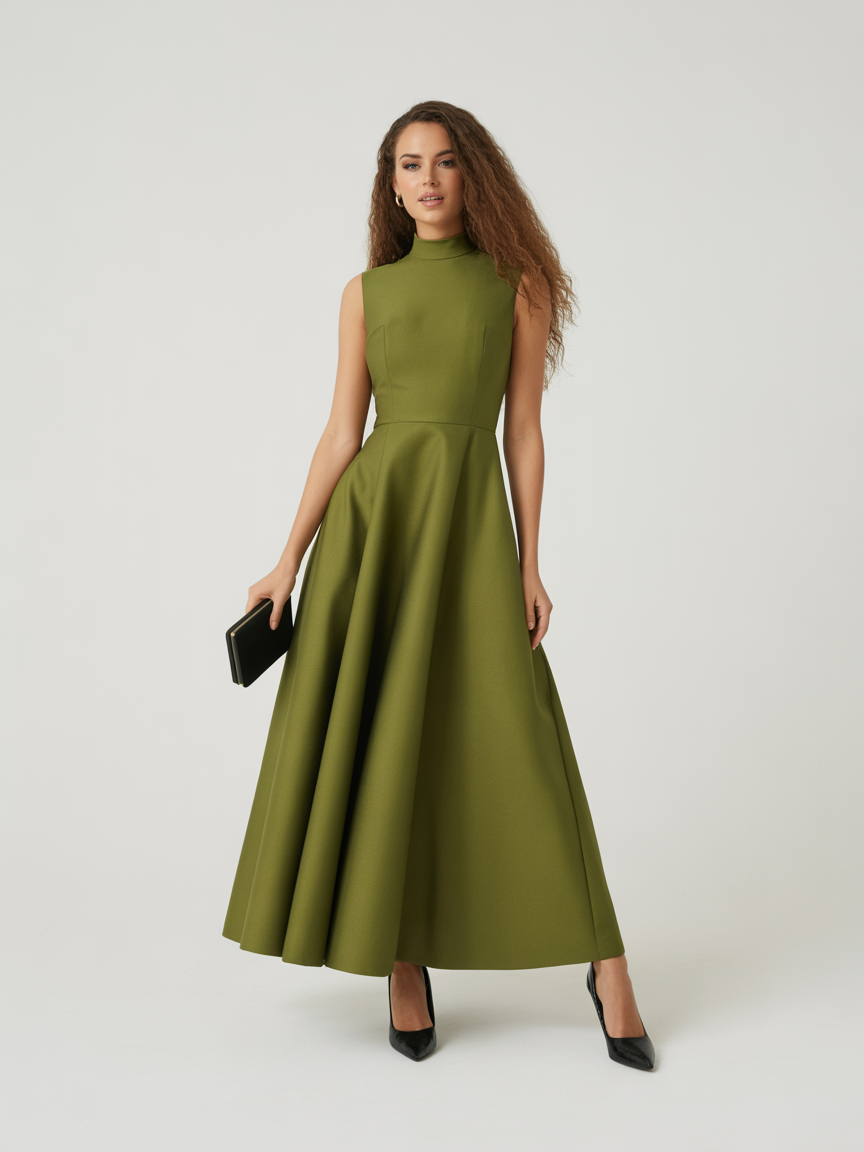
Olive green is one of those unexpected color choices that ends up being the most sophisticated person in the room. This structured mock-neck A-line in a heavyweight fabric reads formal immediately: the full skirt has drama, the funnel neck has authority, and the color says “I know exactly what I’m doing.” Pointed-toe heels and a sleek clutch are the only accessories needed. A great option for daytime formal events at garden estates or boutique venues.
5. Modern Color Etiquette: Choosing the Right Hue
Found the perfect formal wedding guest dress only to realize it might read as “too bridal”? That’s a fashion heartbreak. Modern color rules are part etiquette and part context. Getting it wrong leads to some genuinely awkward photos.
Start with the golden rule: avoid white, ivory, cream, and champagne as your dominant color. Unless the couple explicitly requests an all-white dress code, keep the focus on the bride. Black is a timeless choice for evening weddings: soften it with metallic heels if you’re worried about looking too somber. Red is not technically off-limits, but check the venue vibe before going full crimson. Icy pastels often photograph white, so test your fabric in natural daylight before the event.
Faith and cultural traditions can flip these rules quickly. When in doubt, ask someone close to the couple rather than guessing.
Emerald Green Halter Chiffon Gown
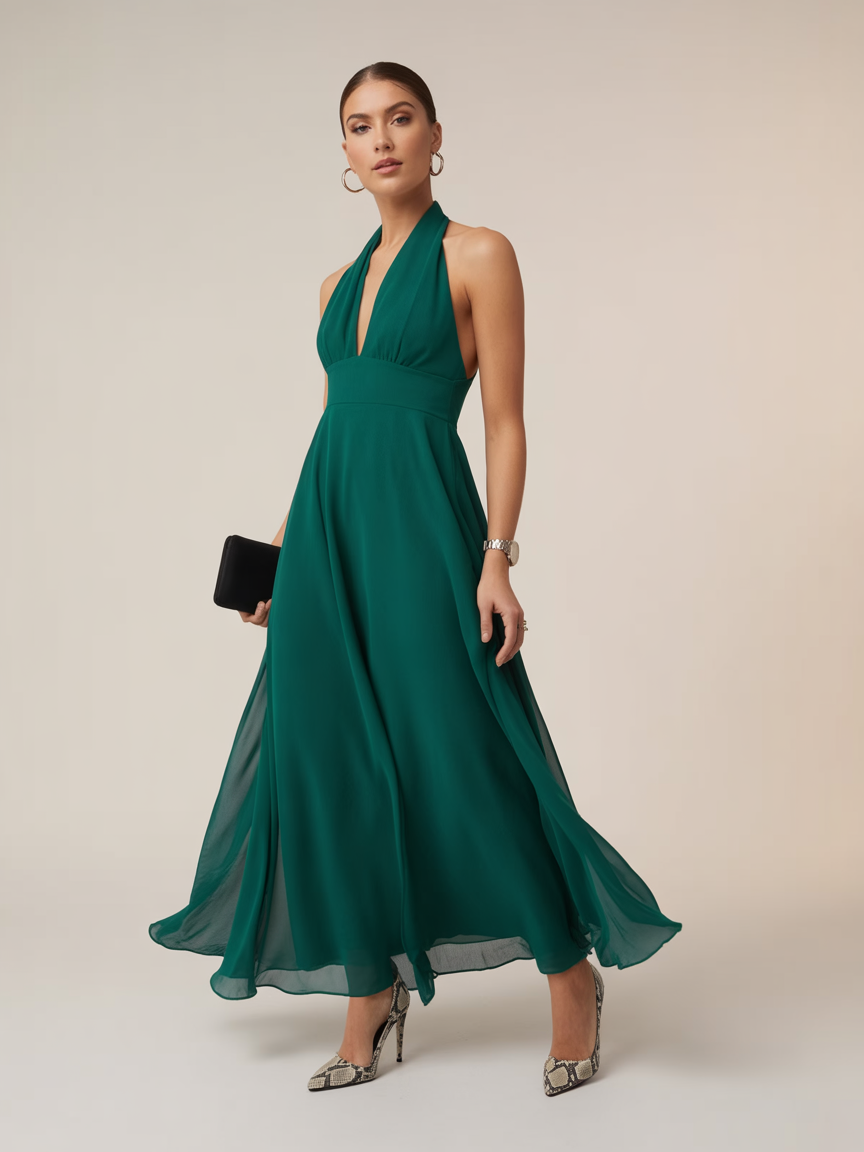
Emerald green in chiffon at floor length is a case study in why jewel tones work so well for formal evening events. The color is rich enough to read formal from across the room, the deep V halter adds drama, and the multi-layer chiffon skirt moves beautifully. This is the safe jewel tone choice that photographs brilliantly in candlelight and requires almost no accessory support to feel complete.
Burgundy and Gold Pleated Ombré Gown
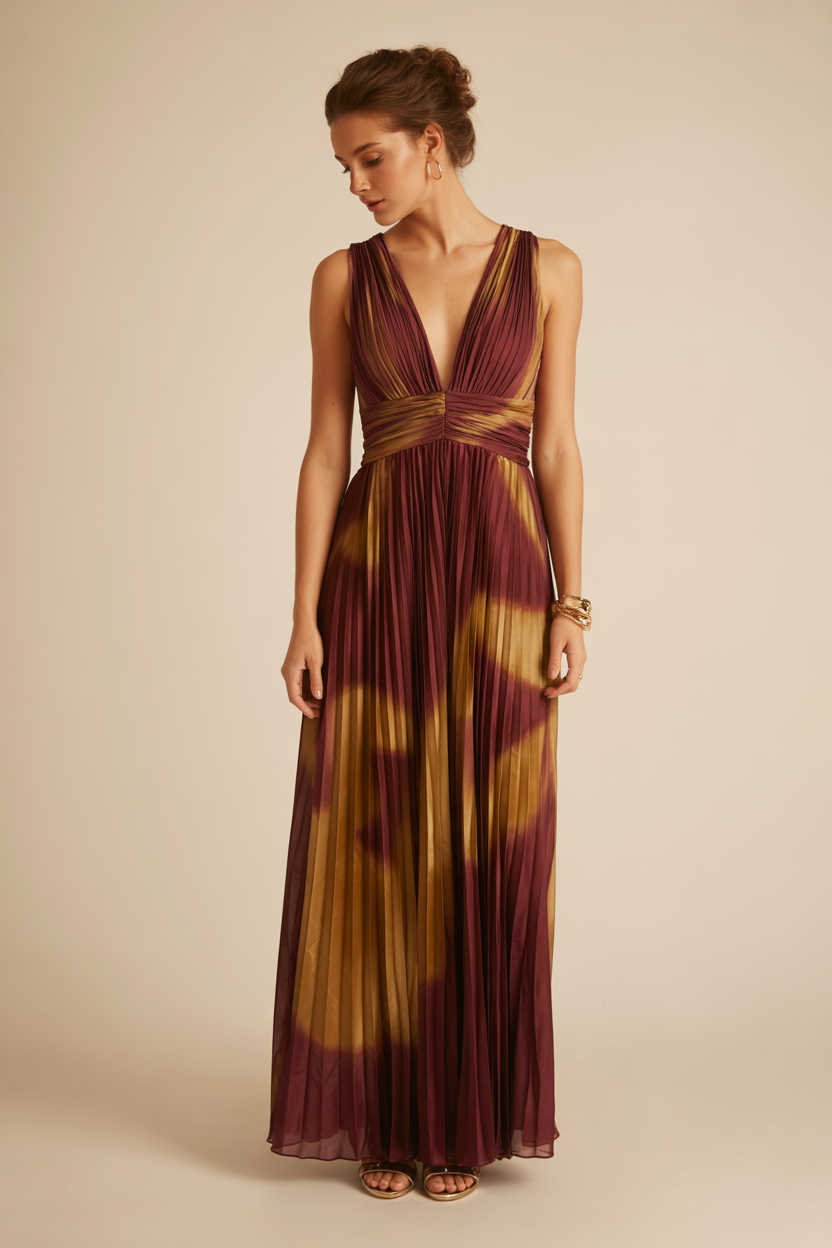
The burgundy-to-gold gradient in this pleated chiffon gown is unexpected and genuinely luxurious. This is one of those dresses that photographs in a way that makes people ask where you got it. The plunging V with empire waist creates a strong vertical line. Burgundy and its jewel-tone relatives (wine, plum, garnet) are among the most flattering choices for formal events: they read evening immediately without the risk of being too bridal.
Navy Sleeveless Boat-Neck Column Gown
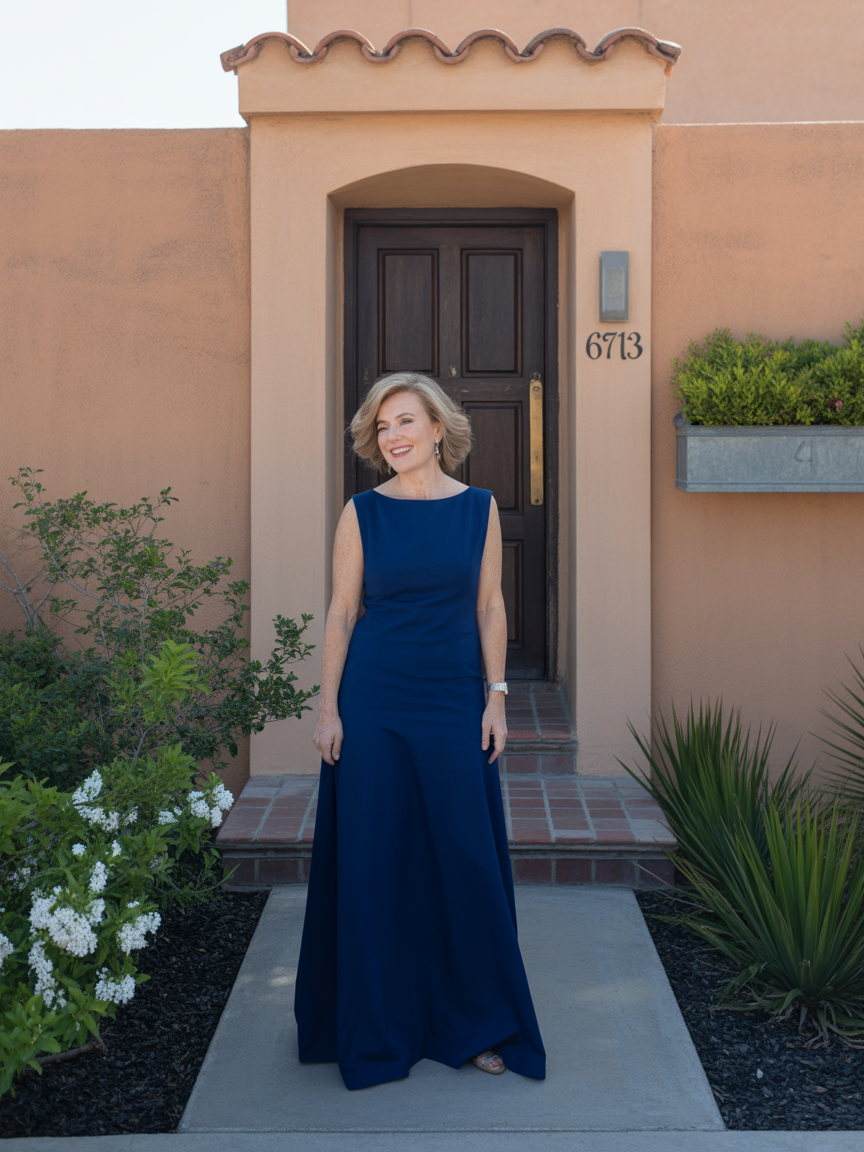
Navy is the closest alternative to black for formal events and often the smarter choice. It photographs with more depth and dimension, it flatters a wide range of skin tones, and it sidesteps the occasional “are you sure about wearing black to a wedding?” question. The boat neck and sleeveless column here are clean and mature, exactly right for any guest who wants to look polished without drawing attention away from the couple.
Chocolate Brown Satin Halter Gown
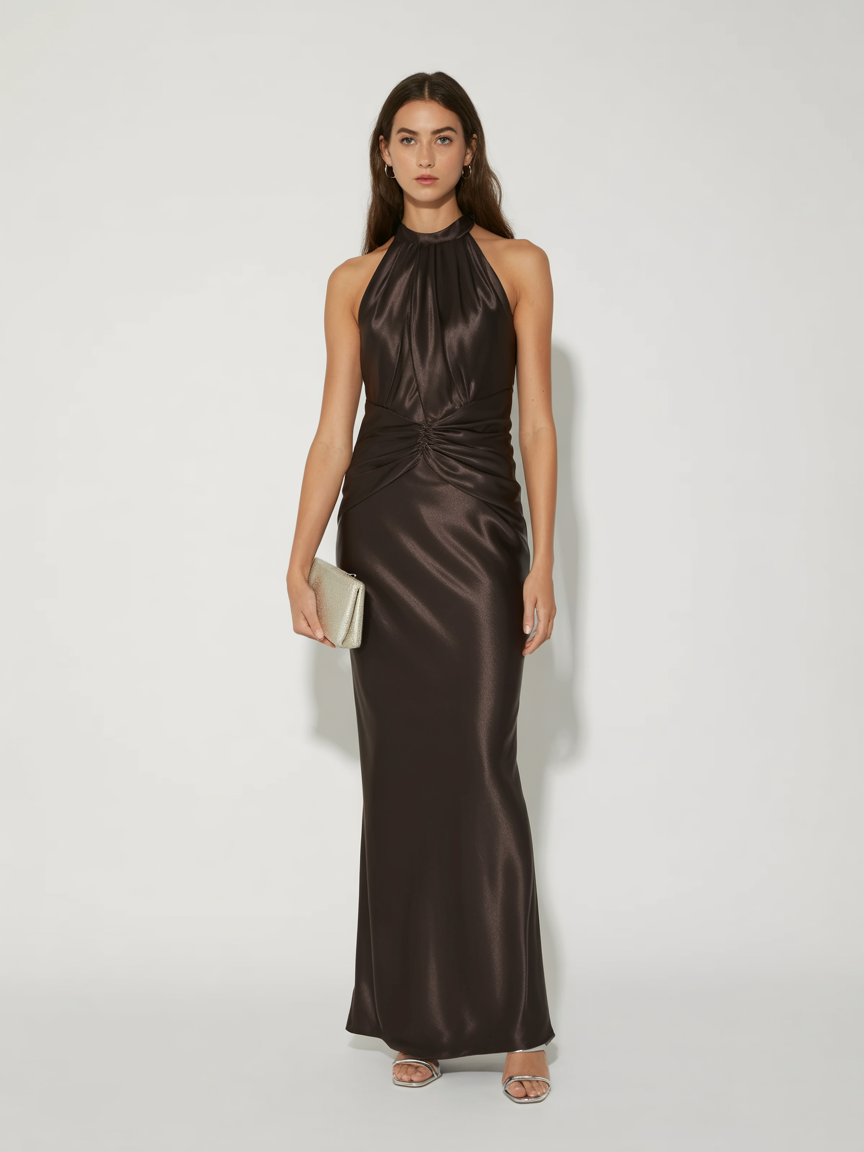
Chocolate brown is having a major moment and the formal wedding is the perfect venue for it. Rich espresso satin with that level of sheen reads completely differently from casual brown: it’s editorial, warm, and deeply sophisticated. The gathered halter neckline adds structure while the floor-length column keeps everything sleek. The contrast of silver sandals and cream clutch against the dark satin is a styling choice worth stealing.
6. The Venue Vibe: Matching Your Look to the Setting
Have you ever worn stilettos to a garden wedding and spent the night aerating the lawn? You can nail the formal wedding guest dress code and still miss the assignment if you ignore the terrain. A formal dress code adapts to its surroundings. Use these guidelines to pivot your style based on the backdrop without abandoning the sophistication of the event.
- Ballroom or Luxury Hotel: Embrace full-on glam. Choose structured gowns, floor-length satin, and your most statement jewelry to match the grand scale.
- Garden or Estate: Choose lighter luxe fabrics like chiffon or organza. Use a dressy block heel or embellished wedge so you do not sink into the grass.
- Industrial or Gallery Space: Lean into sleek minimalism and architectural lines. A bold modern accessory works better here than traditional dainty sparkles.
- Desert or Ranch: Stick to breathable silks and stable footwear. Pack a high-end wrap or shawl for evening temperature drops.
Emerald Green Flutter-Sleeve Chiffon Gown on Grand Staircase
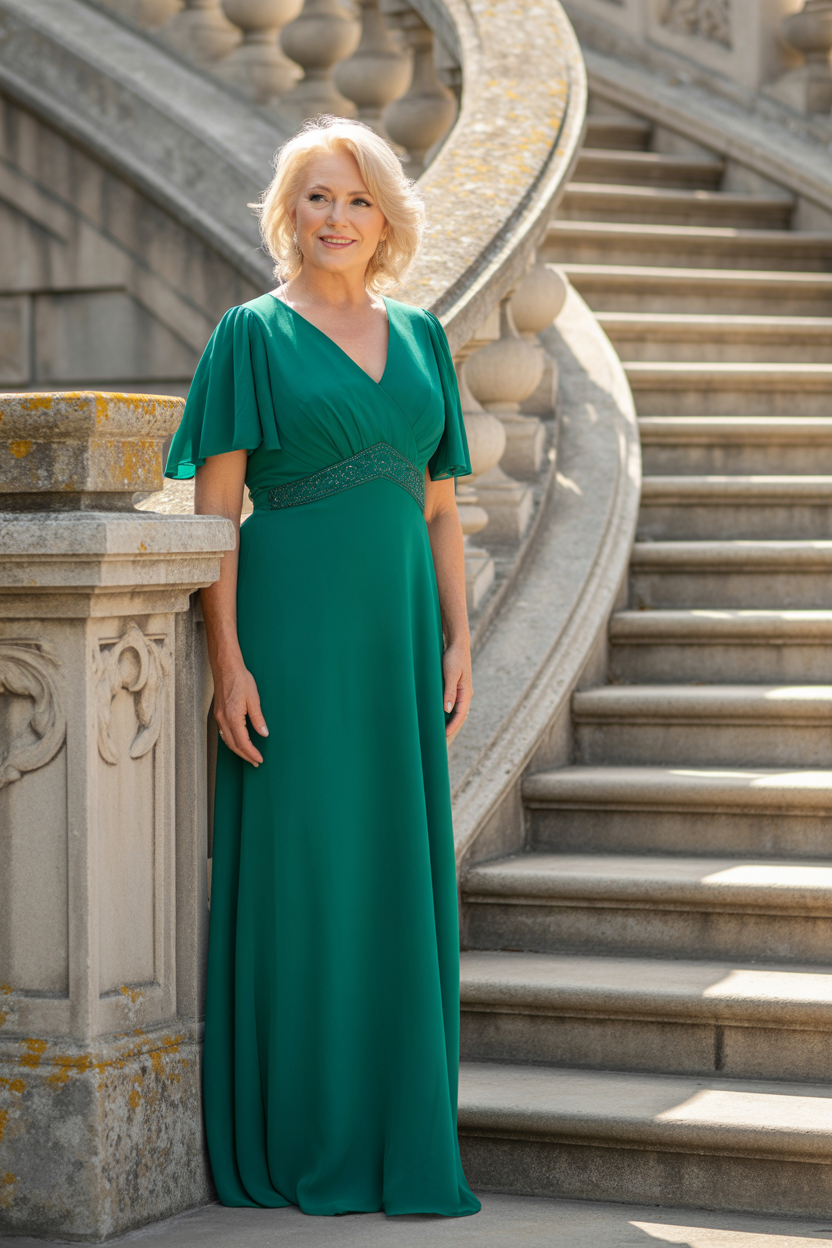
The grand stone staircase does exactly what a ballroom or chateau setting does to a formal dress: it validates everything. The emerald chiffon gown with its beaded empire-waist belt and flutter sleeves is elegant, beautifully scaled to the venue, and utterly confident. The flutter sleeves add coverage without sacrificing movement or femininity. This is what formal looks like when you understand the assignment completely.
Burgundy Long-Sleeve Mock-Neck Midi at Cathedral
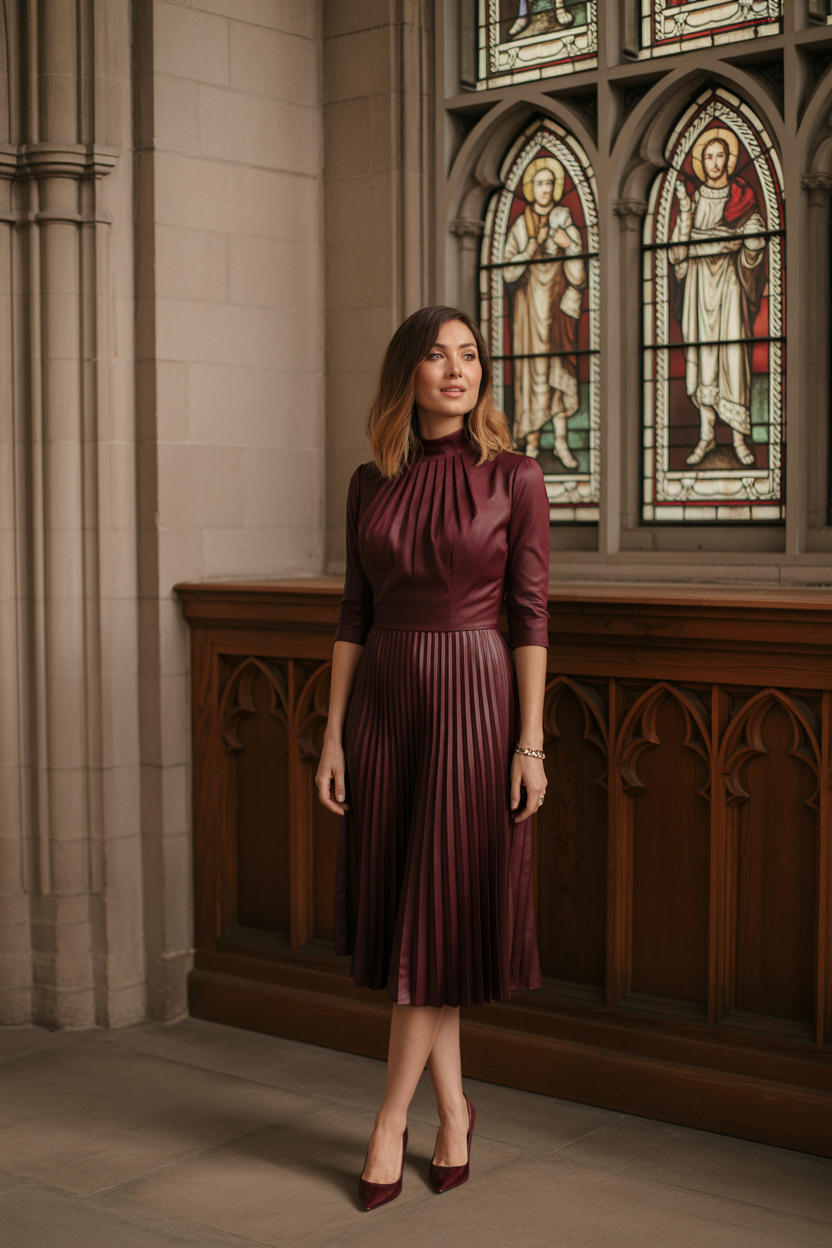
Cathedral weddings have their own vocabulary and this dress speaks it fluently. The long sleeves and high mock neckline satisfy conservative venue requirements, the deep burgundy and structured fabric maintain full formality, and the pleated midi-length skirt is intentional rather than understated. The matching monochromatic heels are a genius styling move: they create an unbroken line that reads far more formal than contrasting footwear would.
Navy to Turquoise Ombré Floor-Length Slip Gown
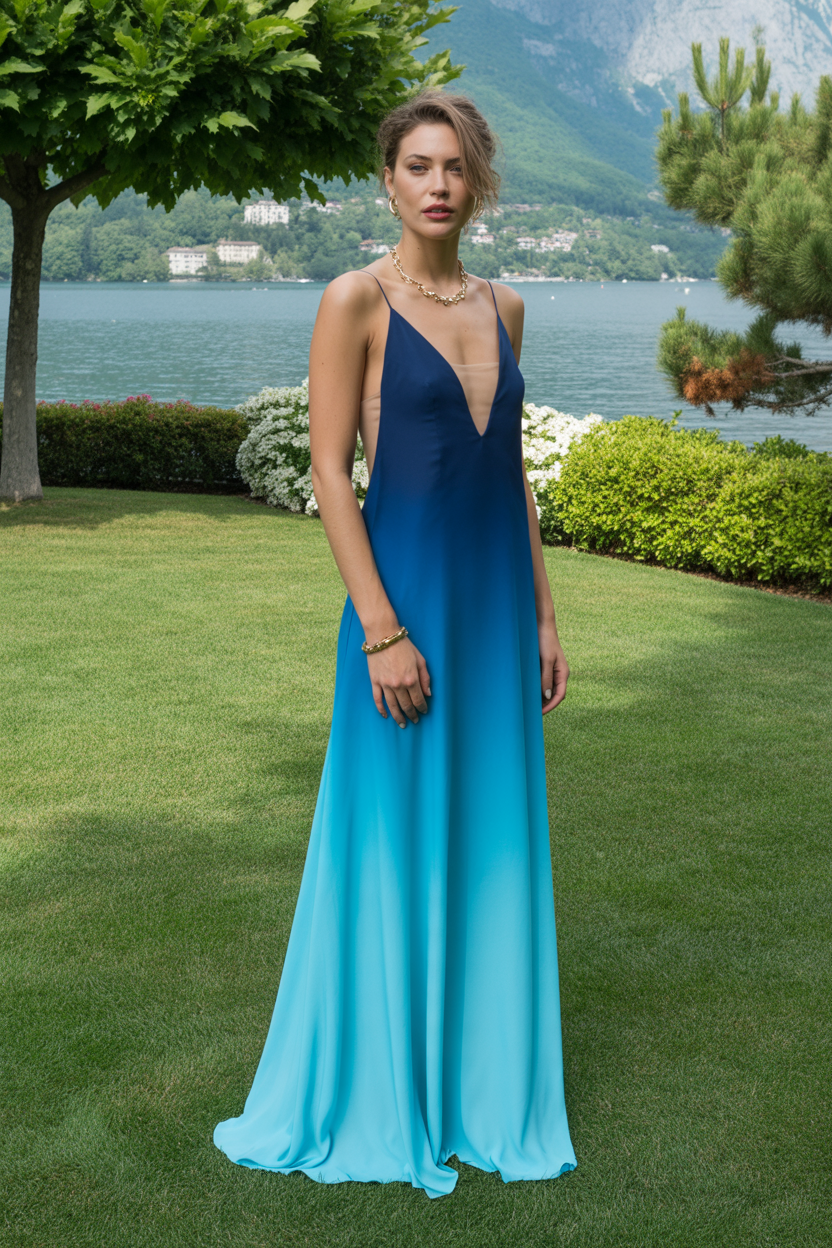
The lakeside European setting shows exactly where this dress lives: formal outdoor or destination weddings at scenic, upscale venues. The navy-to-turquoise ombré is dramatic but controlled, the slip silhouette is clean, and the floor length keeps it squarely in formal territory. If the venue is outdoor but the dress code is still formal (estate grounds, vineyard ceremony, lakeside terrace), this answers the question of what to wear.
7. The 7 PM Rule: Does the Clock Dictate Your Dress?
Ever showed up to a 2 PM ceremony looking like you’re headed to the Oscars? It’s a fashion overcorrection. The start time on your invitation is the secret guide for your formal wedding guest dress. Generally, the later the sun sets, the dressier you should go.
For daytime formal events: stick to elevated midi or ankle-length cuts, softer colors, and lighter fabrics. Minimize sparkle so you don’t look like a disco ball at lunch. For evening formal: floor-length gowns are more expected, deeper tones like navy or emerald read beautifully in candlelight, and sequins are perfectly acceptable after dark.
Dusty Rose Satin Wrap Midi at Daytime Reception
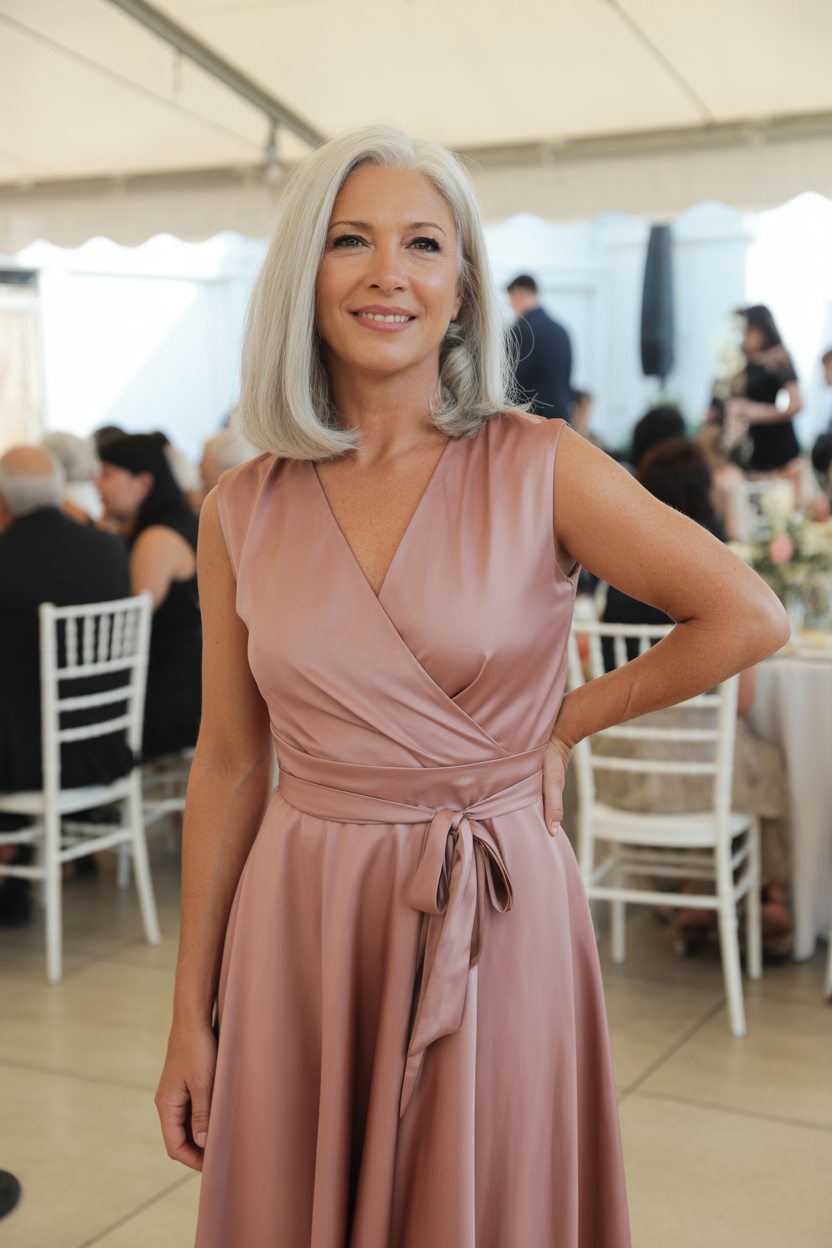
Daytime formal done right. A satin wrap in dusty rose at below-the-knee length is beautifully calibrated: the fabric is clearly evening-quality, the color reads celebration, and the wrap silhouette handles every course of the reception dinner with grace. You look dressed up without looking like you were expecting a red carpet. The daytime wedding venue behind her confirms this is exactly the right formality for an afternoon or early-evening ceremony.
Champagne Satin Halter Floor-Length Gown
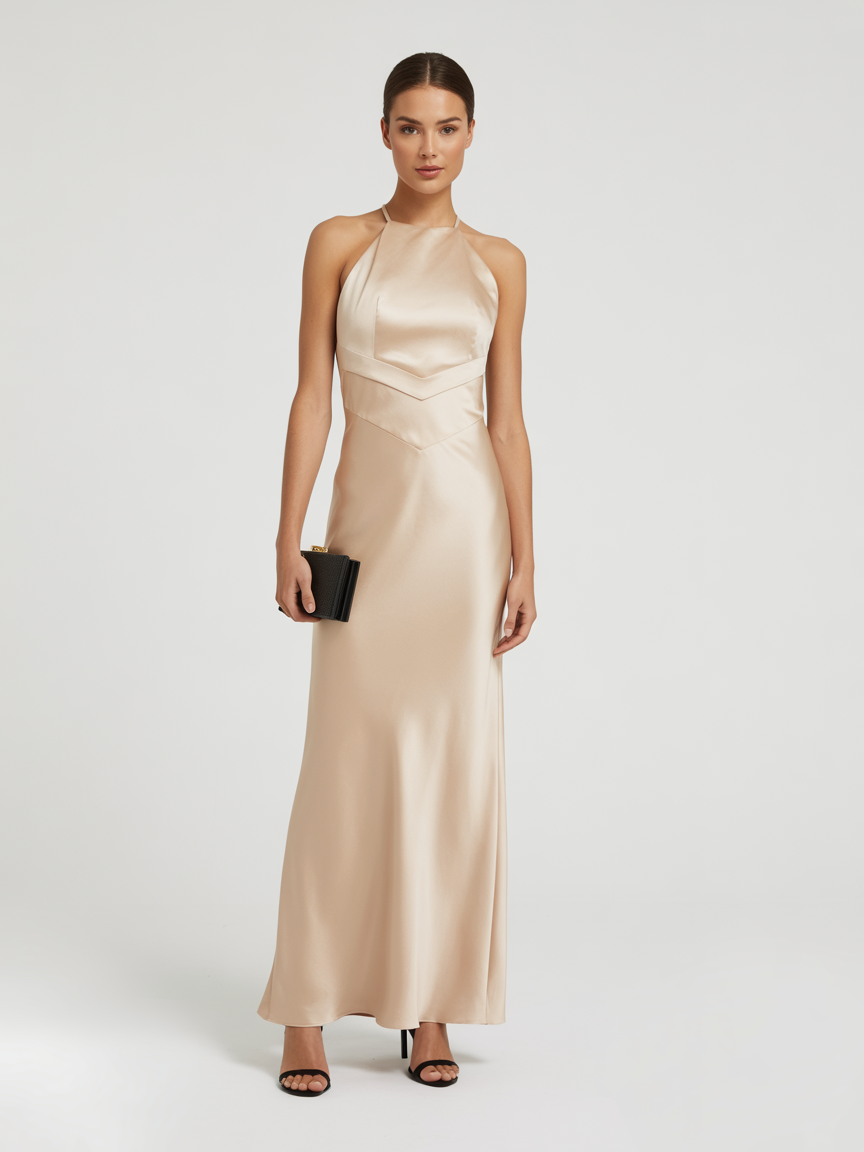
Evening formal calls for floor length, and this champagne halter delivers it. The geometric V-halter neckline is sophisticated and structured, the heavy satin drapes beautifully, and the champagne color sits just warm enough to avoid reading as bridal. For events starting at 6 PM or later: full length, quality fabric, and dark accessories that create contrast and ground the pale tone. The black clutch and black strappy heels here do exactly that.
8. Footwear Fundamentals: Shoes That Read Formal
People judge an outfit from the ground up. Your shoes are the final signal for a formal wedding guest dress. A gorgeous gown loses its impact if your footwear looks scuffed, casual, or like an afterthought.
You don’t have to suffer in six-inch stilettos to look polished. Sleek pumps are the timeless, foolproof choice for any indoor venue. Dress sandals work well for summer ceremonies or tropical destinations. Refined flats (pointed-toe silk or embellished styles) suit floor-length hemlines without demanding heels. Heeled boots are a sophisticated choice for winter or urban settings.
Do a terrain check before you commit. If the ceremony is on grass or gravel, swap needle heels for a sturdy block heel or dressy wedge. Your ankles will thank you during cocktail hour. One styling note worth borrowing from many of the looks in this article: when wearing a pale or neutral gown, dark accessories like black heels and a black clutch create contrast and read more evening than trying to match everything to the dress color.
9. The Accessory Formula: The Rule of Three
Ever caught your reflection and realized you’re accidentally a walking glitter bomb? The fastest way to undermine a formal wedding guest dress is over-accessorizing. Stick to the Rule of Three to stay curated rather than cluttered.
Pick three elements: (1) earrings or a necklace, (2) a sleek bag, and (3) one statement piece. That third element could be a bold lip, a structural cuff, or a chic hairpiece. If you try to add more, you risk entering costume territory.
- Do: Carry a dainty clutch and refined jewelry.
- Do: Choose exactly one clear focal point.
- Don’t: Wear noisy bangles that jingle during the vows.
- Don’t: Bring a massive tote or heavy costume pieces.
Black Off-Shoulder A-Line Gown with Gold Clutch and Updo
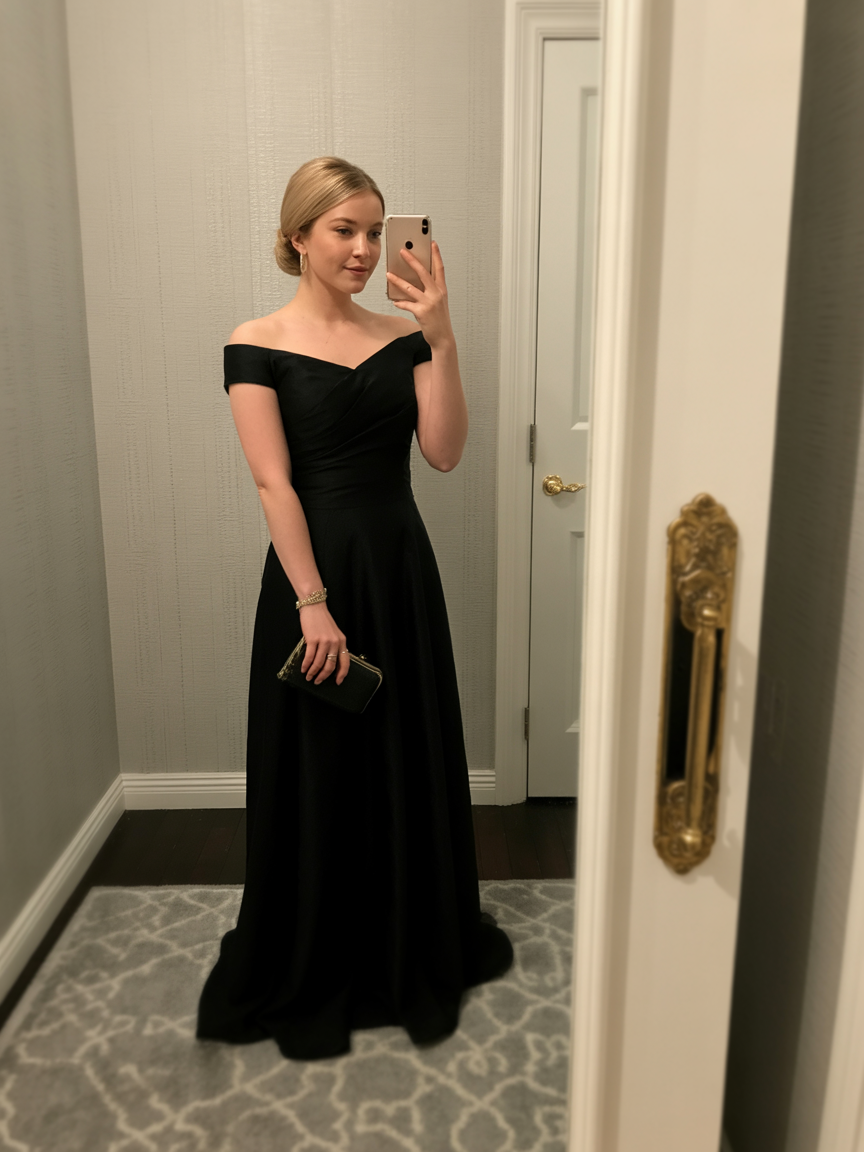
This mirror selfie is a clinic in the Rule of Three. The gold clutch is statement piece one. The updo shows the off-shoulder neckline to full effect and acts as the styling anchor. A gold bracelet rounds out the jewelry without adding noise. Nothing is fighting for attention: the dress wins, the accessories support it, and the whole look reads exactly right for a formal evening event. The off-shoulder neckline with an A-line floor-length silhouette is also one of the most reliably flattering shapes you can choose.
10. Undergarment Foundations: Your Support Strategy
Slinky fabrics and dramatic necklines are total snitches. They reveal every seam and strap, so you need a support plan before you hit the checkout button. Figuring out your bra situation on the morning of the wedding is a recipe for a wardrobe crisis.
For backless or low-back gowns, use low-back converters or adhesive lifting tape. For deep V or plunging necklines, use double-sided fashion tape and perform a lean test before the event. For high slits, apply anti-chafe balm and do a movement test. For strapless styles, invest in a longline strapless bra with a silicone grip to prevent constant tugging throughout the night.
Aim for smoothing rather than squashing. You should feel polished, not like you’re being squeezed into a tube of toothpaste. Prioritize comfort so you can breathe and actually enjoy the wedding cake.
Burgundy Lace One-Shoulder Gown with High Slit
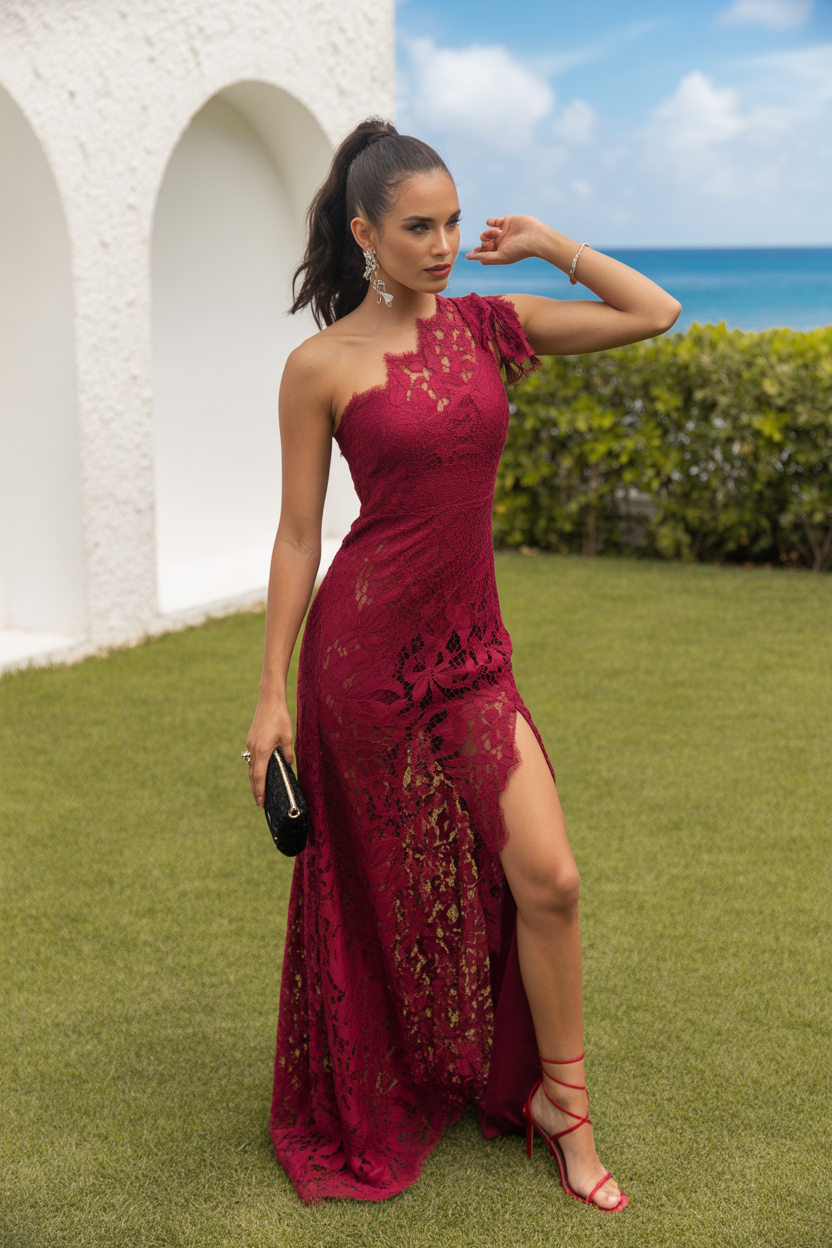
A high slit, a one-shoulder neckline, and intricate lace require planning well before the event. For a slit this high: seamless nude underwear and anti-chafe balm. The one-shoulder neckline works best with adhesive or a convertible bra. The deep burgundy lace itself is formal and genuinely beautiful, especially in a coastal or destination setting where the venue matches the drama of the dress. Red strappy heels against burgundy lace is an intentional, confident styling choice.
Black One-Shoulder Gown with Back Drape Detail
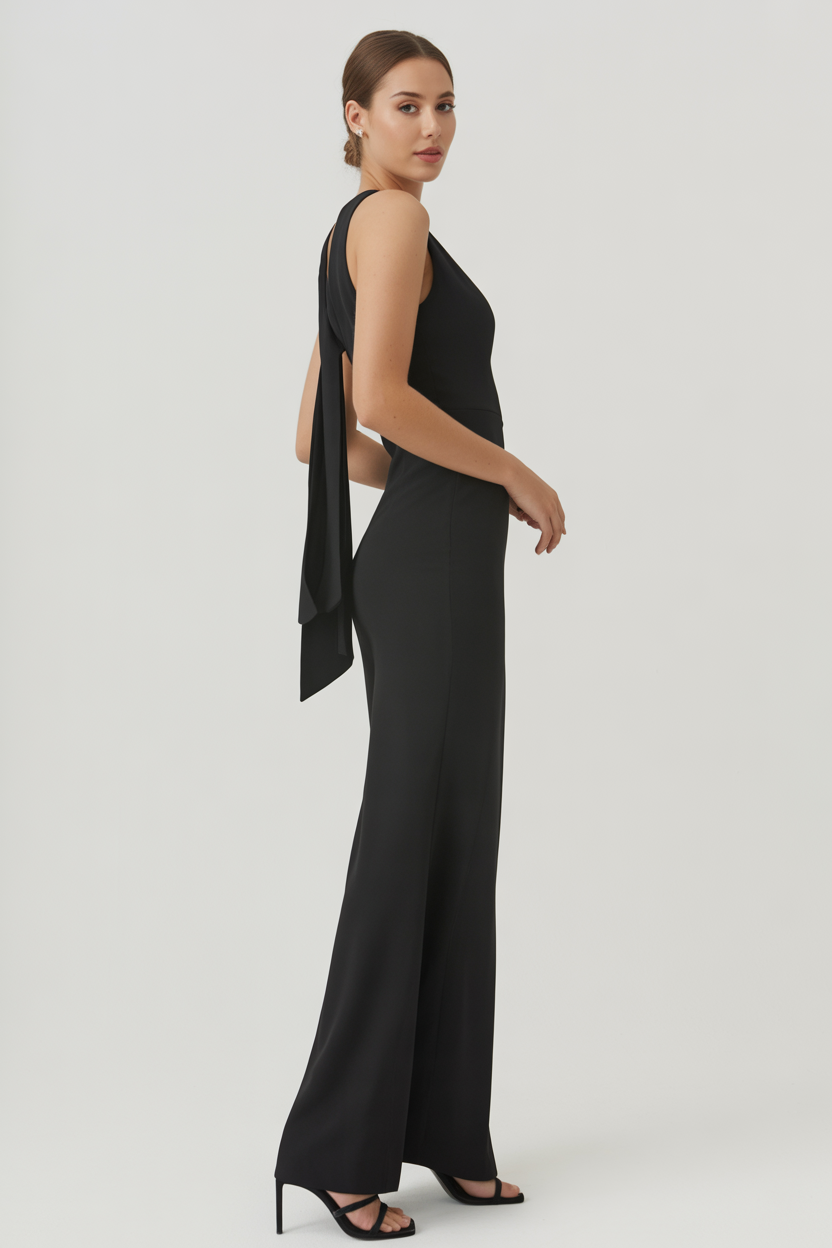
The dramatic back drape on this one-shoulder gown photographs beautifully but requires a clean back to pull it off. Adhesive lifting tape or silicone strips are essential. The flowing drape should also be pinned lightly at the waist before you hit the dance floor so it doesn’t become a trip hazard. Because the drama lives in the back, an updo or pulled-back hairstyle is non-negotiable here: hair down would hide the entire point of the dress.
11. Weather-Wise Wardrobe: Seasonal Fabric Swaps
Check the forecast 48 hours before the event. Sweating through silk or shivering through the ceremony is a vibe killer. Weather is the unexpected wedding crasher, and you can outsmart it with the right fabric choice.
For summer formal: choose airy luxe fabrics like organza or thin silk. Check the lining (heavy polyester turns a gorgeous gown into a personal sweat tent). Avoid heavy beading that traps heat, and choose open necklines with an updo to keep cool. For winter formal: velvet or heavy crepe provides built-in insulation, long sleeves look chic and intentional in the cold, deeper tones like plum, navy, or emerald read beautifully, and a faux-fur wrap or tailored coat handles the walk in. Keep the puffer jacket far away from the photos.
Lavender Embroidered Tulle A-Line Gown
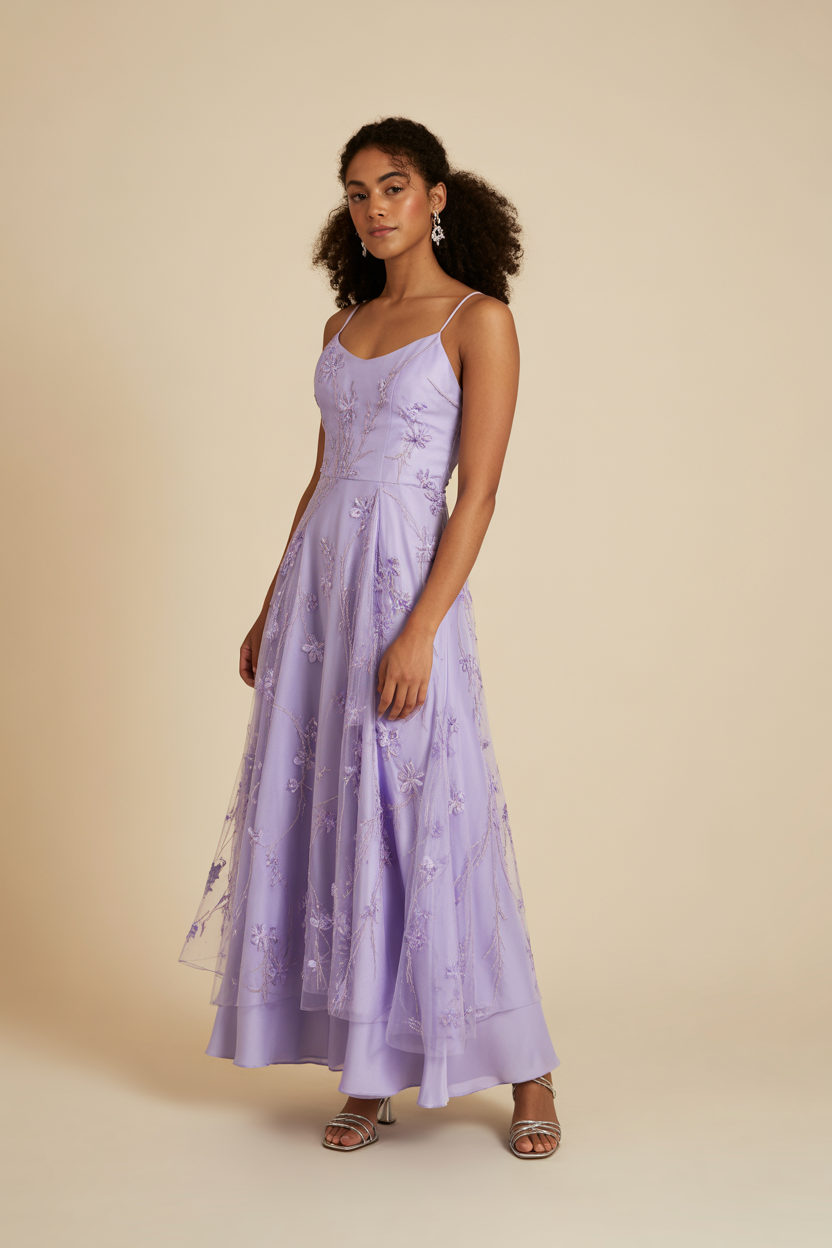
For warm-weather formal events, embroidered tulle is your fabric answer. It’s visually elevated (the floral embroidery reads formal rather than casual), lightweight enough for summer comfort, and lavender keeps it firmly in guest territory rather than bridal. The silver sandals and minimal jewelry let the embroidery do the work. One note: lavender can photograph close to white in bright sunlight. Take a daylight test photo before the event to confirm the color reads correctly.
Black and Champagne V-Panel Satin Slip Gown
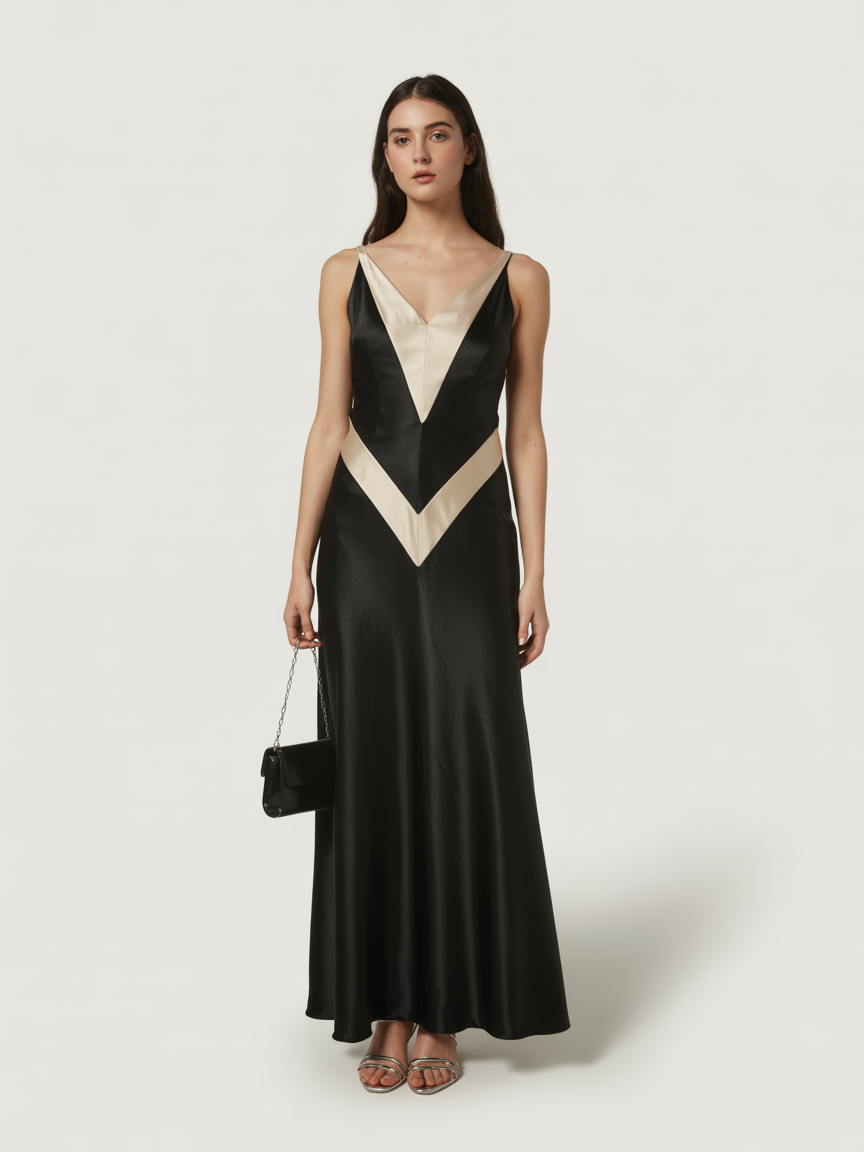
When the forecast is uncertain, reach for structured satin. This black slip with champagne V-panel is sleek enough for an air-conditioned ballroom and substantial enough to layer under a blazer or wrap for a colder outdoor evening. The two-tone V-panel design adds the visual interest that a plain black slip often lacks, moving it from “going out” to “evening formal” with one design detail. Silver sandals and a chain-strap bag keep the styling minimal and intentional.
12. Beyond the Gown: Jumpsuits and Separates
Who says a formal wedding guest dress has to be a gown? If a zipper climbing your spine makes you break out in hives, here is good news: you have full permission to skip the dress entirely.
A well-tailored jumpsuit looks just as expensive and twice as cool as a standard gown. The secret lies in the finish. To avoid “office chic,” focus on: structured fabric (heavy crepe, satin, or architectural silk), clean tailoring (no dragging hems or waist bunching), intentional shoes (pointed-toe pumps or embellished heels are non-negotiable), and an evening bag (swap your daily tote for a structured clutch or metallic micro-bag).
If you prefer separates, use this formula: a dressy silk blouse paired with a high-waisted midi or maxi skirt, or tailored wide-leg trousers topped with a structural bodice or embellished top.
Black Sleeveless Wide-Leg Jumpsuit with Plunging V-Neckline
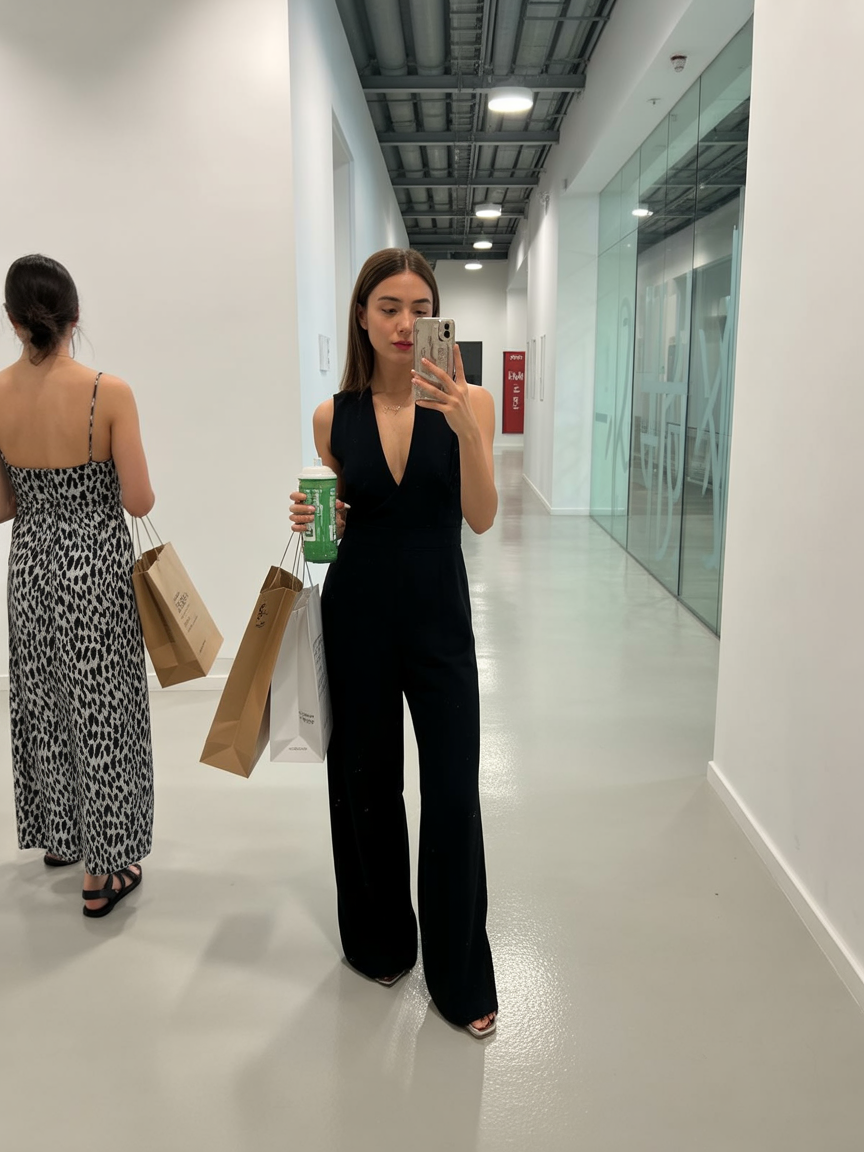
This makes the case for the formal jumpsuit. Black, sleeveless, wide-leg, plunging V: every element is calibrated for formal. The wide-leg silhouette hits the floor and gives the same visual weight as a gown. The setting (a corridor) is not the point; the jumpsuit is the point, and it is doing everything correctly. Add pointed-toe heels and a structured clutch and you are finished. This is the look for guests who want to stand out from the sea of floor-length gowns while still dressing appropriately.
13. The Sustainability Dilemma: Rent, Buy, or Rewear?
Is your closet a graveyard for expensive silk you wore once in 2019? The formal wedding guest dress dilemma is real. Do you spend money on a one-night gown or show up in something that feels “meh”? You don’t have to sacrifice your budget or your ethics.
- Rent the Trend: Craving a high-drama moment? Rent it. The online rental market is growing and it’s the smartest way to wear a statement piece without the long-term storage problem.
- Buy the Classic: Invest in a high-quality, timeless silhouette and get it tailored. A perfect fit makes a mid-range dress look like a custom commission. You can re-style it for the next five years.
- The Remix: Before you hit checkout, shop your own closet. That old bridesmaid gown feels brand new with a modern sleek updo, a bold lip, and updated jewelry.
Black Dark Floral V-Neck Mermaid Gown with Train
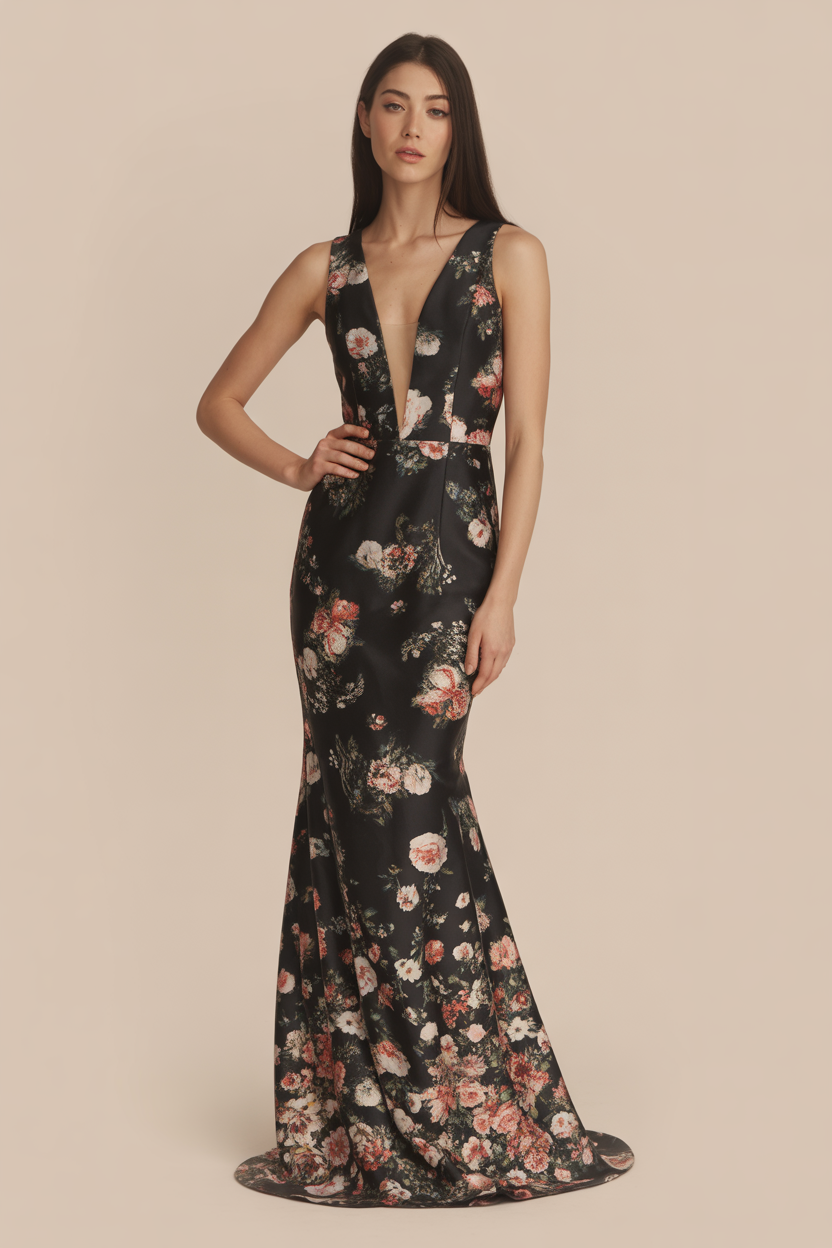
This dark floral mermaid gown is your rent-worthy statement. Dark florals on a black base read very differently from a light garden print: the black absorbs the pattern and keeps the overall register firmly evening formal. The plunging V and dramatic train add impact that is worth wearing once and returning, rather than buying and storing indefinitely. This is exactly the high-drama one-night look the rental market was built for.
Black Off-Shoulder Column Gown with V-Cutout
This is your buy-and-rewear classic. The off-shoulder neckline with a V-cutout is interesting enough to feel intentional, the structured knit holds its shape across multiple wearings, and the clean black column silhouette looks relevant across multiple seasons and events. Get it tailored to hit exactly the right point on your ankle and this dress will serve you at formal weddings, galas, and holiday events for years. No trend dependency, no regret.
14. Inclusive and Adaptive Formal Wear
Formal is about polish and intention, not a gendered template. If you don’t see yourself in a cupcake ballgown or a strict column silhouette, the anxiety is real and valid. You can look exactly right for a formal wedding without fitting into a specific mold.
For gender-neutral guests: a tailored suit paired with a silk camisole, a tuxedo-inspired jumpsuit in structured crepe, or a coordinated velvet set with a statement metallic belt are all completely appropriate at a formal event. For guests with specific physical or sensory needs, look for soft breathable linings, high-waisted tailoring designed for seated comfort, magnetic closures or easy-pull zippers, and embellished block heels or dressy loafers for stability.
If the invitation feels vague, ask. A quick message to someone close to the couple saves hours of second-guessing and is always appreciated.
Black Square-Neck Gown with Asymmetric Lace Skirt
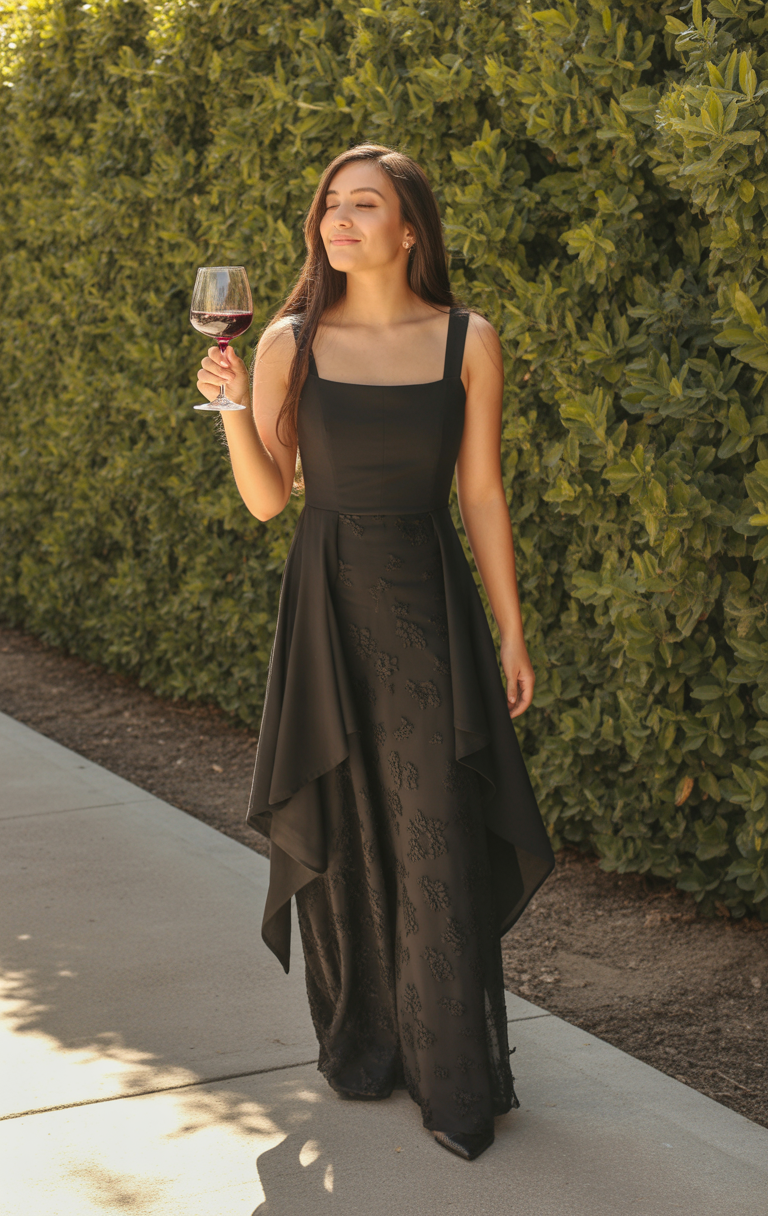
A structured gown with architectural detail is one of the most universally flattering formal options. The square neckline and thick straps create a defined line that works across body types, and the asymmetric lace-overlay skirt adds movement without requiring a specific silhouette to land. The dark brocade layers keep the overall read firmly formal. This is formal dressing that focuses on design interest rather than a particular shape, which makes it one of the more adaptable options in the entire category.
Ice Blue Ruched Chiffon Floor-Length Gown
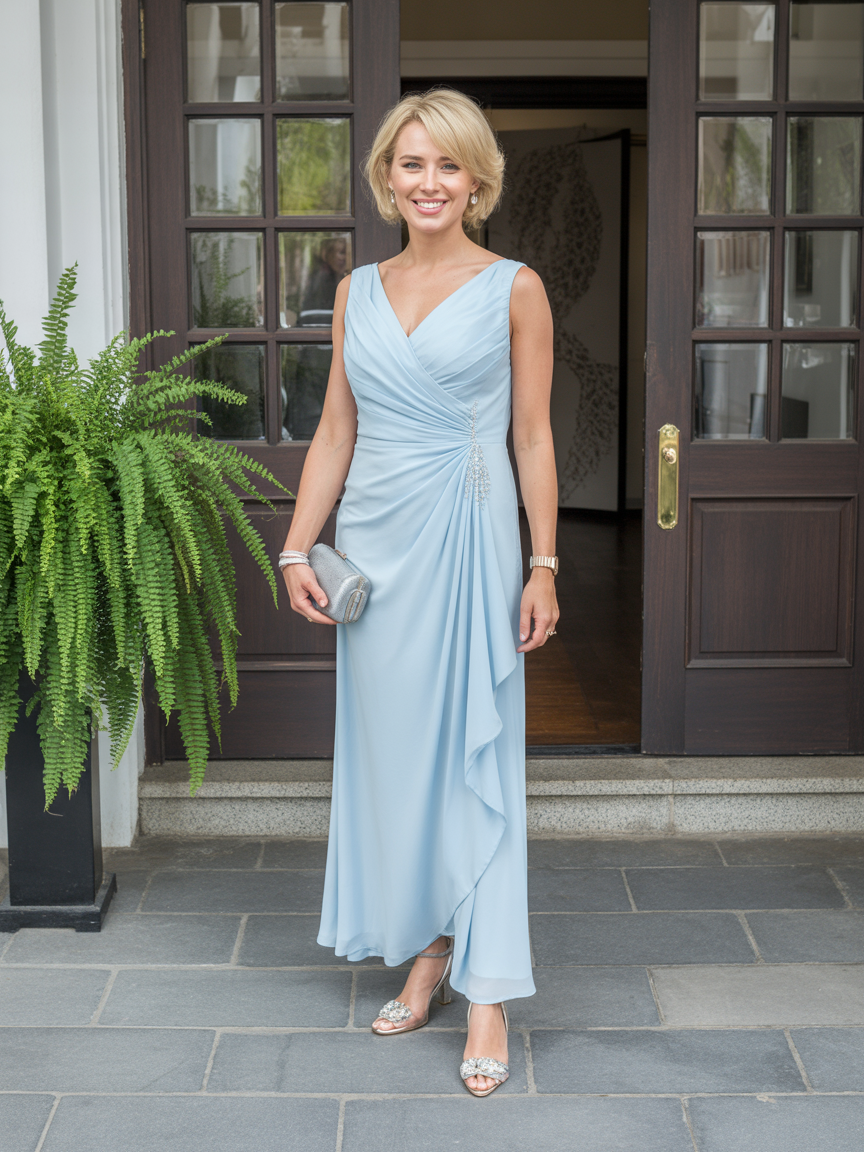
This ice blue chiffon gown is a masterclass in mature formal dressing. The ruched drape, waist brooch, and embellished sandals are all intentional styling choices that add elegance without looking overdone. The floor length is exactly right, the color is formal and universally flattering, and the overall look is confident and complete. Soft blue is one of the safest formal guest colors across cultures and traditions: it reads celebration without any hint of competition with the bride.
How to Choose the Right Formal Wedding Guest Dress in 5 Steps
Before you open another browser tab, grab the invitation and check the basics. Scan for the dress code label, venue type, and start time. Note if the ceremony is indoors or outdoors. Got those details? Follow this decision process to build a look that turns heads for the right reasons.
Black One-Shoulder Ruffle Floor-Length Gown
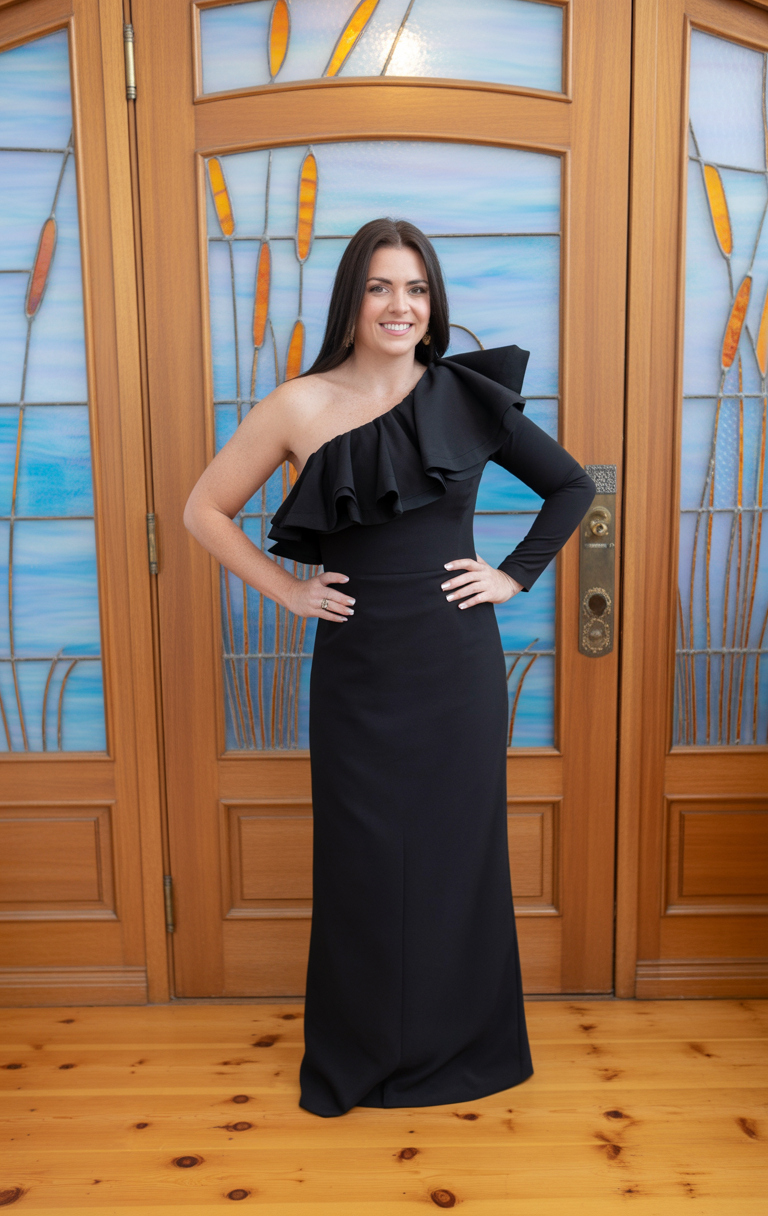
Use this as your benchmark. Heavy structured crepe, floor length, asymmetric one-shoulder with a dramatic ruffle: it passes every formal test without breaking a single rule. Is the dress you’re considering in the same formality neighborhood as this one? If yes, you’re good. If not, keep looking. That’s step one of the process: establish the baseline.
Step 1: Confirm the Baseline Intensity
Determine if the couple wants “Black Tie Lite” or “Elevated Cocktail.” Lean toward a full-length gown if the wedding is at a high-end hotel. Scale back slightly for a vineyard setting. Always assume the couple means “dressier than usual” unless the invitation says otherwise. You’ll avoid the nightmare of being underdressed in a room full of tuxedos.
Step 2: Target the Right Hemline
Aim for floor-length styles as your safest bet for any evening formal event. Choose an ankle-length or structured midi if the wedding starts during the day. Avoid anything hitting above the knee to keep the vibe sophisticated. Longer lengths command more respect in a formal setting without you having to do any additional work.
Step 3: Let the Fabric Do the Work
Pick silk, satin, crepe, or velvet to signal immediate formality. Once you secure the right material, select a silhouette that makes you feel unstoppable. A simple column dress in expensive silk always beats a complex design in cheap polyester. Fabric first, silhouette second, everything else follows.
Step 4: Venue-Proof Your Accessories
Check the terrain before you commit to footwear. Opt for a block heel if the event is outdoors. Always bring a tailored blazer or a pashmina for cold venues or high-blast air conditioning. These are small decisions but they determine whether you spend the evening comfortable or miserable, and comfort is what lets you actually enjoy the wedding.
Step 5: Execute the Intentional Trio
Finish with three elements that make or break your look: polished shoes, a structured bag, and curated jewelry. If these three items look intentional and high-quality, your entire outfit reads expensive regardless of what you actually paid. That’s the formula: one high-quality fabric + hemline + silhouette combination, add the Intentional Trio, and you’re done.
Common Questions About Formal Wedding Guest Dresses
Can I wear a midi dress to a formal wedding?
You can, but you have to be intentional about it. For a midi to pass the formal test, it needs an elevated fabric like heavy satin, lace, or silk. Save the cotton poplin for brunch. If the wedding is during the day, a structured midi is actually a strong choice. Pair it with sophisticated heels and polished jewelry so it doesn’t look like you accidentally ended up at a cocktail party instead of a formal affair.
Is a maxi dress always formal?
Length doesn’t automatically equal luxury. A cotton maxi dress is great for a farmer’s market but will fall flat at a formal event. The fabric and finish are the real deal-breakers. For a formal wedding guest dress, look for chiffon, crepe, or velvet. If the fabric doesn’t have a slight sheen or a weighted drape, it probably isn’t formal enough for the occasion regardless of how long it is.
Can I wear black to a formal wedding?
Yes, and it’s often the chicest person in the room who does. Black is a timeless choice for evening affairs. Check first if there are cultural or religious reasons to avoid it at this particular wedding. Then focus on texture and shine to keep the look celebratory rather than somber: sequins, velvet, or a metallic heel do the job. For a deeper look at navigating this choice, the color etiquette section above covers everything you need.
Is red still off-limits at a wedding?
The old rule that red means you “know the groom” is thankfully dead. However, red is still a high-voltage color. If you’re worried about pulling too much focus from the couple, avoid bright fire-engine shades. Opt for deeper hues like cranberry, ruby, or sophisticated jewel tones instead. They provide the same impact without looking like you’re staging a one-person show at the altar.
What if the invite says formal but the venue is outdoors?
Keep the formality of the dress code while making smart practical pivots. Choose breathable luxe fabrics like silk and swap needle heels for an embellished block heel. A foolproof formula for an outdoor formal wedding: silk ankle-length dress, structured block heel, and a luxe wrap for the evening breeze. You’ll look exactly right and you’ll actually enjoy the evening, which is the whole point.
Don’t forget to pin this to your Wedding Fashion Board for later!