There are exactly two things to nail before you commit to a blue wedding guest dress. First: shade dictates formality. Deep navy in structured crepe reads black tie. Light blue botanical print in chiffon reads garden party. They are not interchangeable, and the invitation will tell you which one you need. Second: blue florals on a white or cream background are a separate category with their own rules — they can veer close to a casual summer dress if the construction isn’t doing its job. When in doubt, reach for a more solid blue or a darker ground with blue accents. Either way, the result is almost always better than you expect.
We’ve pulled together the best blue wedding guest dresses across every shade and every dress code — from navy formal gowns to sky-blue florals that earn compliments at any outdoor ceremony. For more wedding inspiration, browse our Real Weddings directory.
Navy Blue: The Shade That Never Misses
Navy is the most reliable color in the wedding guest wardrobe — and it’s underrated specifically because it’s reliable. It photographs as a rich, deep tone in evening light, reads as formal without being costume-y, and never risks upstaging the bride in the way that ivory or certain reds might. It’s also one of the few colors that works at every dress code simultaneously: navy in heavyweight crepe belongs at a black tie reception; navy in cotton-look prints belongs at a garden ceremony. The silhouette and fabric are doing the formality work — the color gives you maximum range.
For styling, navy is the rare dark shade that works with both warm and cool metals. Gold jewelry adds warmth and contrast; silver keeps things crisp and modern. Nude heels elongate; white or ivory accessories create deliberate contrast. The one thing to skip: very dark accessories that read as black alongside navy — the two colors fight without the context of evening lighting and it just looks muddled. Keep accessories either clearly metallic or clearly a different color family.
Navy Sleeveless Boat-Neck Column Gown
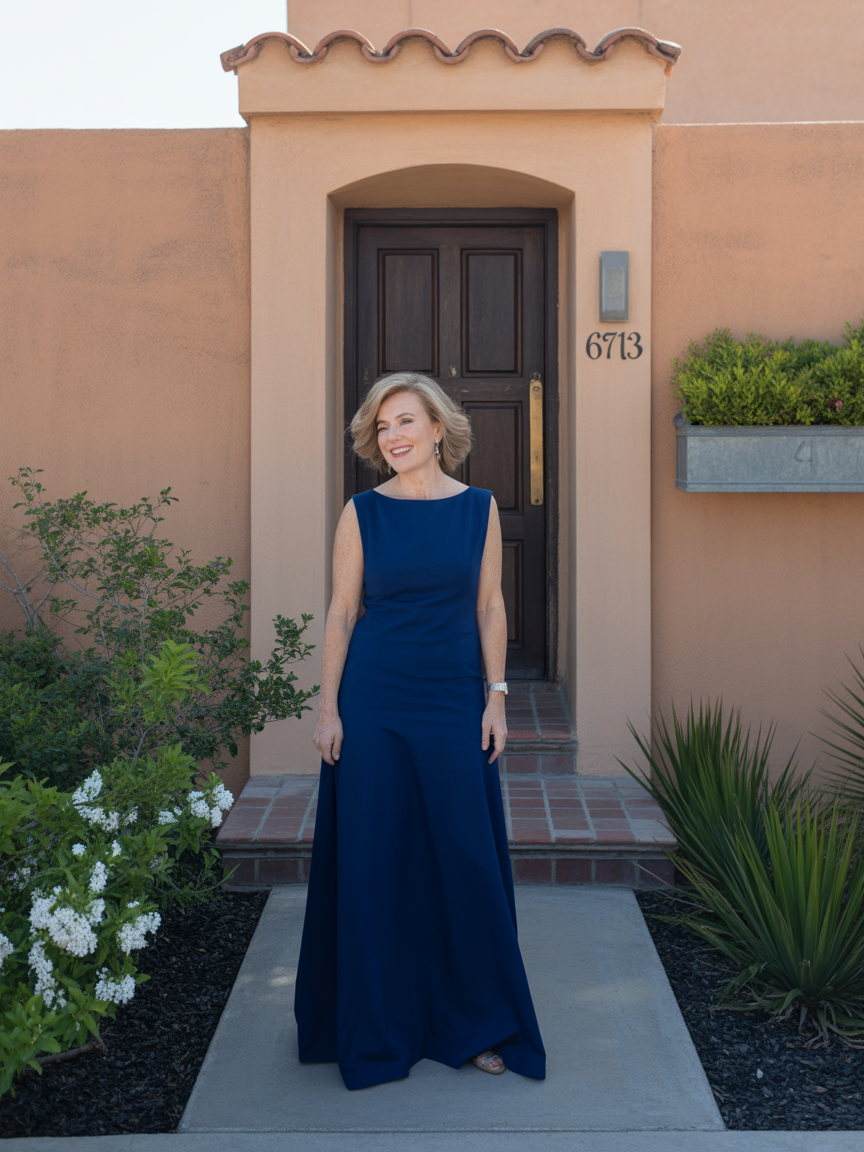
The boat neck is the detail that makes this navy gown quietly exceptional. Most guests reach for plunging necklines or one-shoulder constructions when they want to look formal — but the bateau neckline has a different kind of authority. It’s architectural, it’s modest without a single matronly note, and it creates a perfect horizontal frame across the collarbone that photographs beautifully from every angle. The sleeveless construction keeps the silhouette clean, and the structured column skirt means this holds its shape through a full-length evening without clinging or shifting. The terracotta exterior setting here is a good reminder that this dress reads as “arriving at a formal event” from the first second — no venue props required.
Navy Polka Dot Tiered Maxi
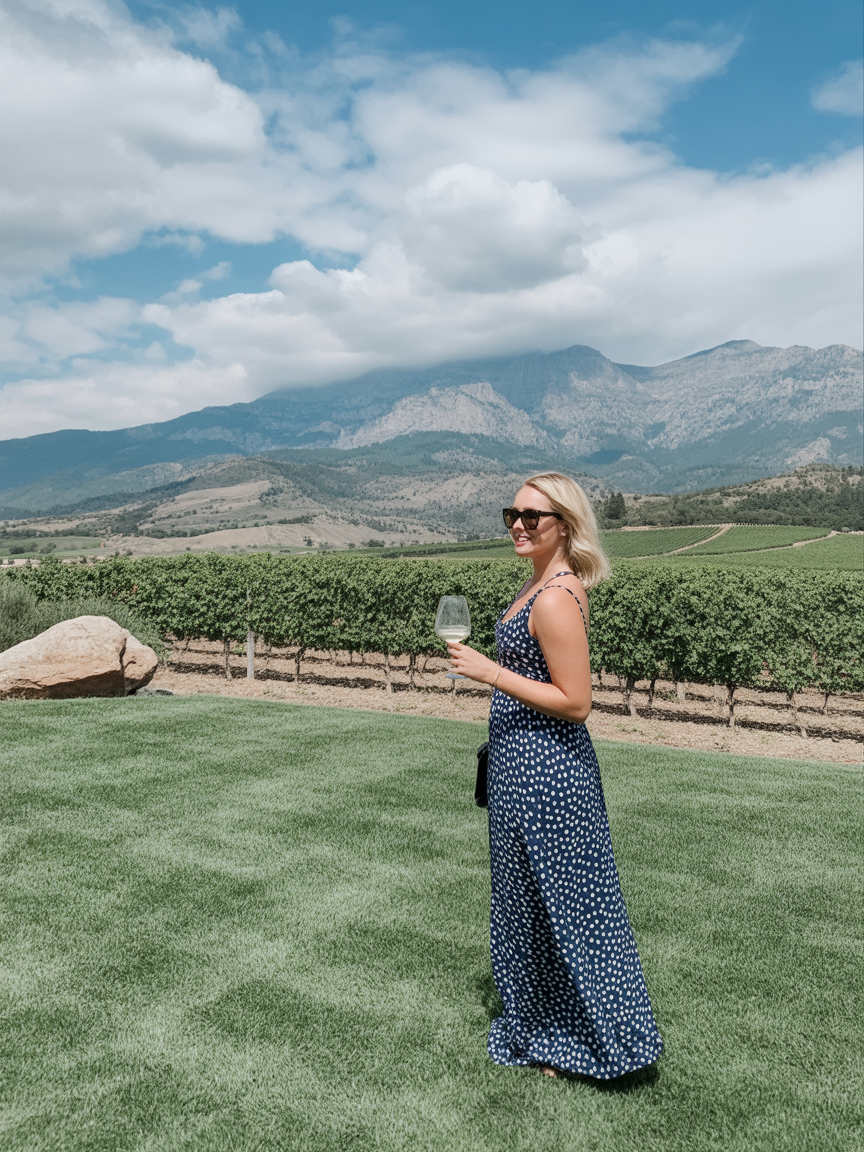
Polka dots on navy occupy an interesting lane: this is not a formal dress, but it is an entirely intentional one. For a vineyard celebration, a destination winery, an outdoor garden party, or any casual-to-cocktail invitation, this is the kind of dress that looks effortless and absolutely deliberate at the same time. The tiered construction adds movement without being fussy, the V-neck keeps it from reading as too casual, and the navy ground means the white dots read as a crisp graphic print rather than a summer sundress pattern. Flat leather sandals or a block heel, a simple gold earring, no bag visible — and you’re done. This is the dress for the guest who wants to look great without appearing to have tried too hard.
Blue Florals: When the Garden Party Asks for Something Showstopping
Blue florals are a genre unto themselves, and the key variable is the ground color. A blue print on a white or ivory base can tip into “casual summer dress” territory fast — it needs a deliberate silhouette (structured bodice, defined waist, intentional length) to read as “wedding guest” rather than “farmers market.” A blue base with white or lighter floral accents works differently: the print recedes and the color leads, which creates a more cohesive, polished result. In either case, fabric weight matters more than it does with solids. A floral in chiffon or satin-look will always read more formal than the same print in cotton or jersey.
For outdoor or daytime venues, blue florals are among the safest choices you can make. They never read as bridal, they photograph beautifully against greenery, stone, and garden settings, and the color family itself reads as warm and celebratory without being as saturated as red or orange. Pair a lighter blue floral with nude or metallic footwear; for a deeper blue base, gold or white accessories add contrast without competing. Avoid white accessories with any blue-on-white print — it muddies the palette.
Light Blue Botanical Print Tiered Maxi at Fountain
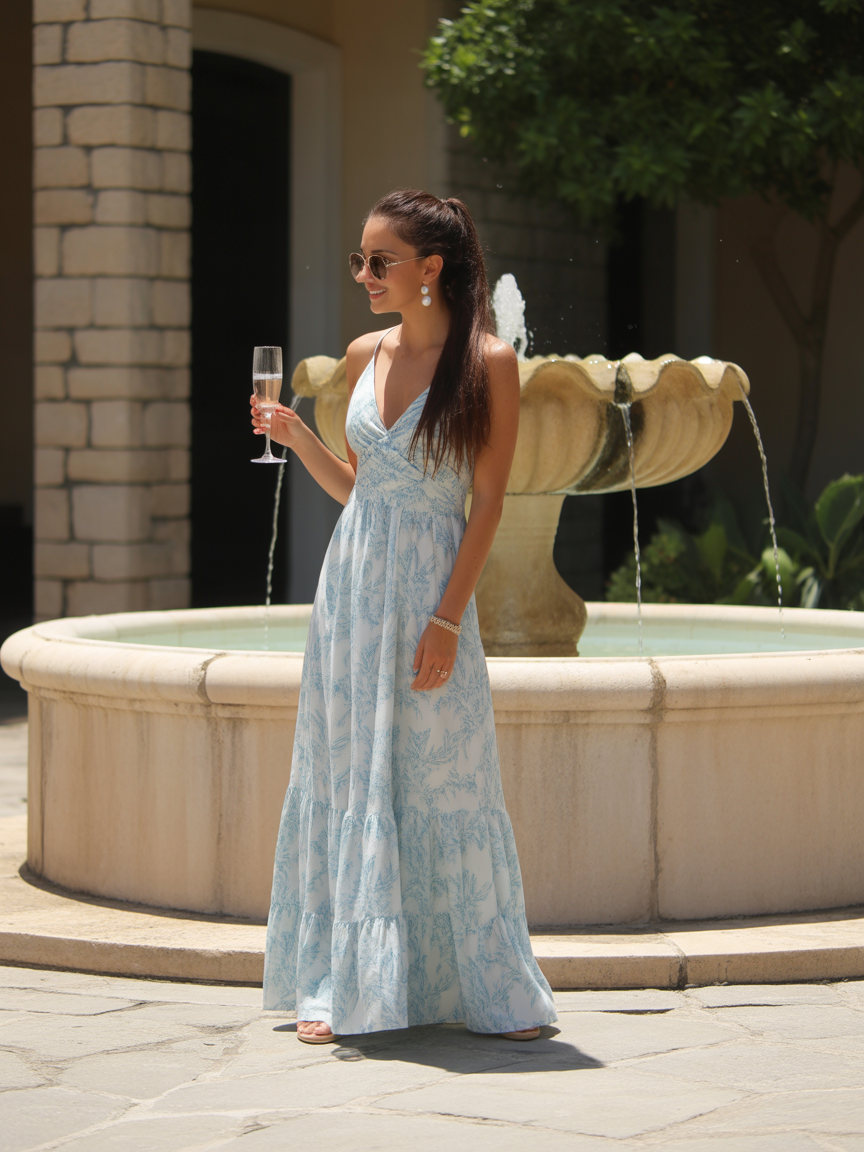
Everything about this image is doing its job. The light blue botanical print against the stone courtyard fountain is the kind of combination that looks like it was styled for a magazine shoot — and yet the dress is completely wearable for an actual outdoor ceremony or garden reception. The wrap V-neck adds shape to what could otherwise be a very casual tiered construction, and the floor-length silhouette takes it out of “sundress” territory and into “this guest clearly dressed for the occasion.” The champagne glass is an honest detail: this is exactly the kind of dress you wear when you want to feel beautiful at an outdoor celebration without being uncomfortable for six hours. A nude or metallic flat sandal, a small gold earring, and you have the right outfit for almost any garden party or outdoor ceremony.
Sky Blue Floral Midi With Twisted V-Neck and Cap Sleeves
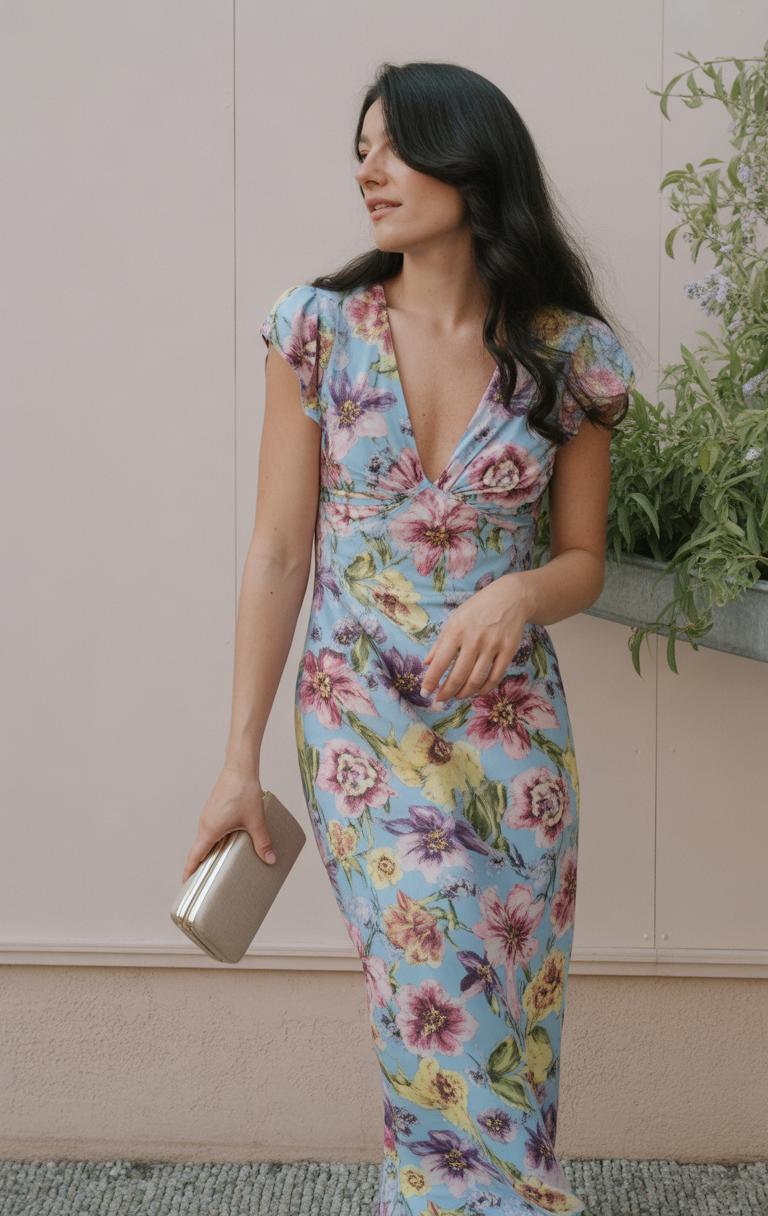
The twist detail at the V-neckline is what elevates this from a nice floral to a genuinely considered outfit. It creates a gathered focal point at the bust that reads as deliberate styling — the kind of thing you notice and then immediately wonder where the dress is from. The cap sleeves are a practical bonus: they make this work in cooler venues or evening events without requiring a wrap, and the slight sleeve adds polish to the silhouette that a fully strapless version wouldn’t have. The sky blue ground with large-scale pink and purple florals is vibrant without being loud — the colors are complementary in a way that photographs beautifully against stone, greenery, or white tablecloth settings. Bring a gold clutch, keep the shoes simple, and let the print be the entire outfit.
Powder Blue and Ombré: When Softer Shades Command a Room
Pale blue — powder, ice, dusty, slate — operates differently from navy or royal blue. It’s softer, more luminous, and often easier to wear across skin tones than the deeper shades. The risk is that it can read as bridesmaid-adjacent if the silhouette isn’t clearly “guest” rather than “party member.” The fix is simple: choose a structured or more individualistic silhouette (a ruched column, a draped V-neck, an asymmetric detail) rather than a simple A-line that blends into the wedding party. Powder blue in a column gown with silver accessories reads as deliberately elegant; powder blue in a generic strapless A-line reads as a bridesmaid who missed a fitting.
Ombré blues — where a deep navy or royal transitions through cobalt and into turquoise or sky — are a different category entirely. The gradient is so visually specific that it never reads as part of any wedding party; it reads as a statement choice made by someone who understood the assignment. Ombré gowns in this color range are also surprisingly versatile: navy at the top reads formal, and the lighter hem reads ethereal and summer-appropriate. They work at black tie, at waterfront venues, at outdoor evening events. The setting in the image amplifies the effect — a lakeside or coastal venue makes the color gradient feel like it belongs.
Powder Blue Ruched V-Neck Floor-Length Gown
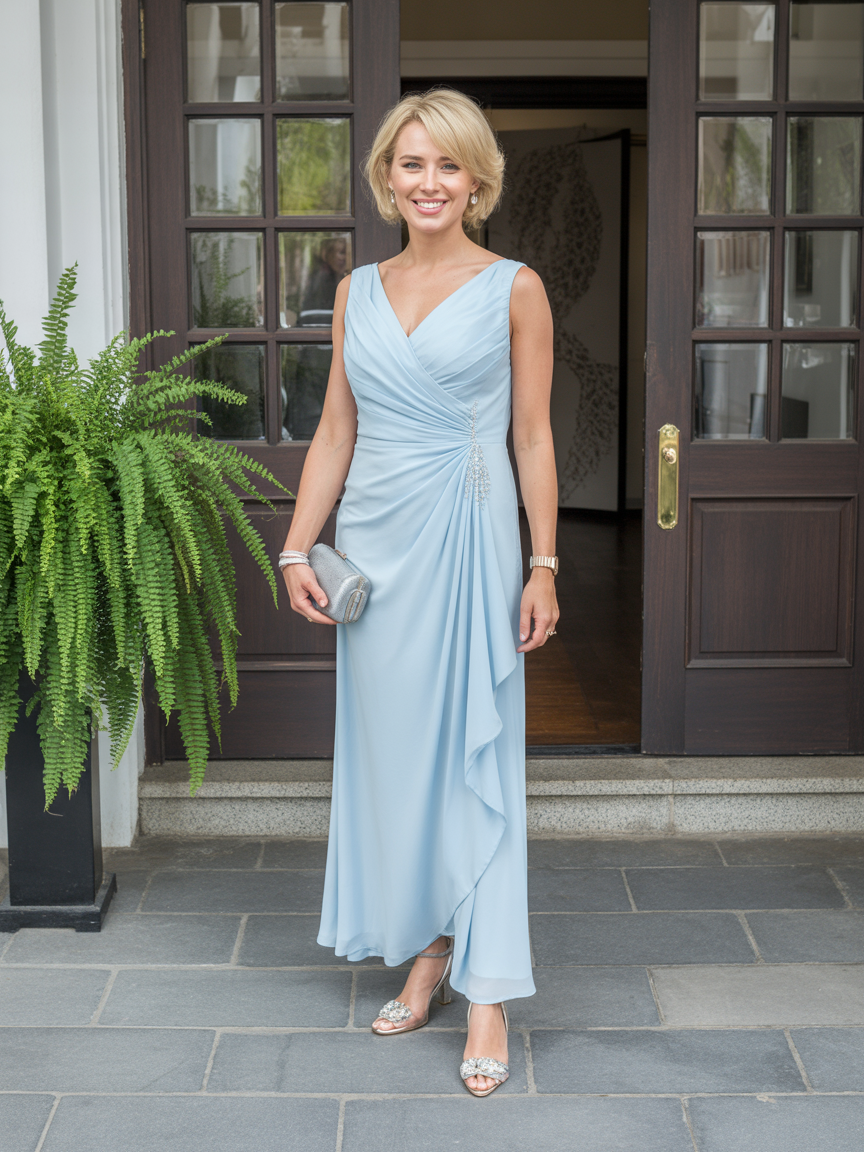
This is a masterclass in how to wear a soft color formally. The powder blue could easily tip into “something delicate” territory if it were paired with a simple silhouette — but the ruched column with the cascading asymmetric drape adds architectural interest that reads as genuinely evening-appropriate. The venue setting does significant work here: dark wood double doors, stone steps, lush fern planters. This is not a garden party exterior; this is a formal event arrival. The accessories are calibrated exactly right — silver structured clutch, embellished open-toe sandals, pearl bracelet, watch. Nothing competes with the dress; everything confirms the occasion. For guests who want something softer than navy but still unmistakably formal, this is the answer.
Navy-to-Turquoise Ombré Slip Gown at Lakeside
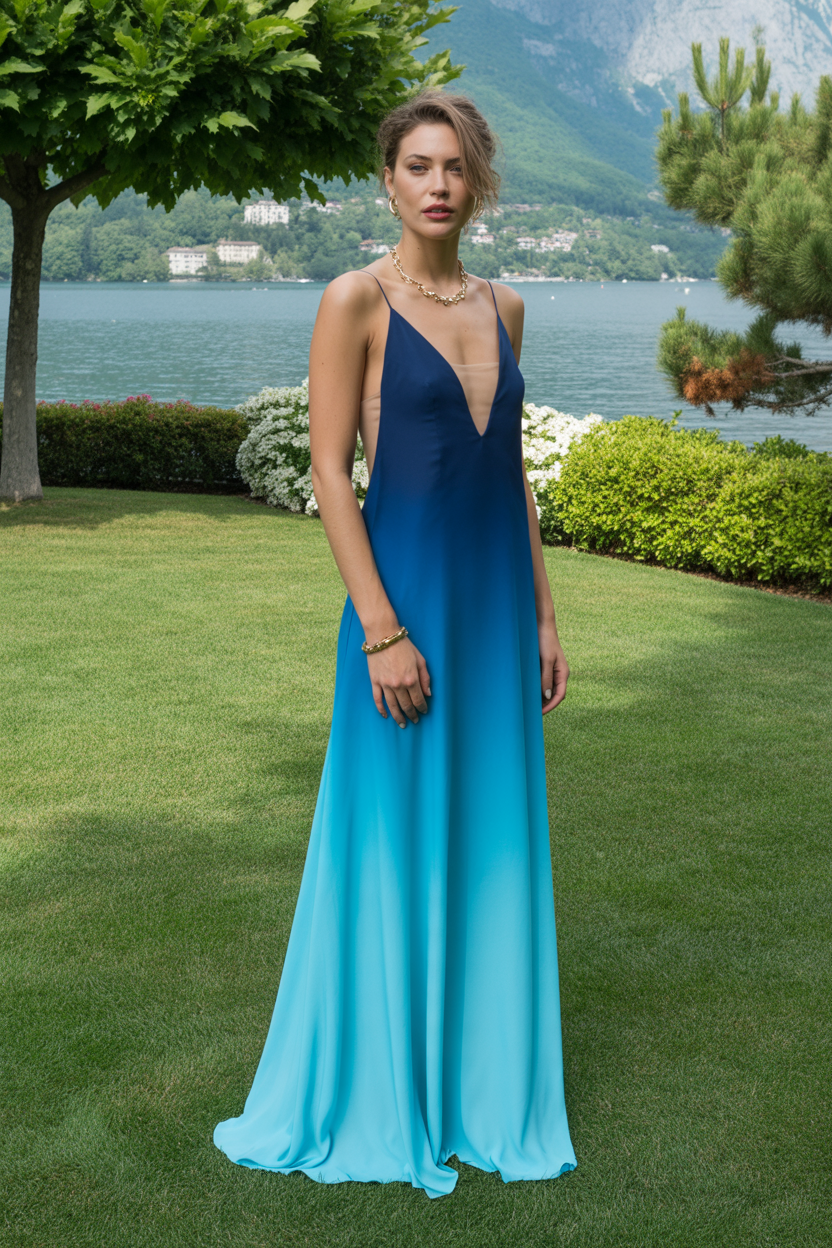
The color story here is the entire outfit — and it earns every bit of the attention it gets. A deep, rich navy at the neckline transitions through cobalt and into vivid turquoise at the hem, creating a gradient that looks like it was designed to be photographed at a lakeside venue with mountains behind it. The slim slip silhouette is the right choice: any more volume and the gradient becomes chaotic; at a clean, fitted column, the ombré can do its work without competition. The plunging V-neck is elegant and appropriately evening-formal. This is the dress for a guest who is confident about wearing color, wants to make a genuine visual impression, and has a venue that will actually do the look justice — a waterfront ceremony, an outdoor reception, anywhere with the kind of landscape that becomes part of the photograph.
FAQs About Blue Wedding Guest Dresses
Is blue a good color to wear as a wedding guest?
Yes — blue is one of the safest and most consistently flattering colors for wedding guests. It reads as celebratory without upstaging the bride, photographs beautifully under both natural and artificial lighting, and covers an enormous range of formality levels depending on the shade. Navy in a structured gown is black-tie appropriate; sky blue chiffon belongs at a garden ceremony. The color itself is almost never the problem; the shade and silhouette do the work of matching the occasion.
Can wedding guests wear navy blue?
Absolutely. Navy is a formal, universally appropriate color for wedding guests across virtually every dress code — from black tie to cocktail to garden party. The one exception: some brides choose navy as their bridesmaid color. If you’re not in the wedding party and you have any reason to suspect this, it’s worth a quick check. Otherwise, navy is one of the strongest default choices a wedding guest can make. It’s classic, it photographs well, and it never reads as too bridal or too casual.
Is light blue too close to bridesmaid territory?
It depends entirely on the silhouette. A simple strapless A-line in light blue can blur the line between “guest” and “bridal party member” — especially if the wedding has light blue as its color palette. The fix is to choose a more distinctive silhouette: a ruched column, a dramatic ombré, a structured bodice with an unusual neckline. The moment the silhouette has a clear point of view, the dress reads as a deliberate personal choice rather than a uniform. Light blue in a wrap maxi with asymmetric draping, for example, is unmistakably a guest’s own dress — not a bridesmaid gown.
What shade of blue is most versatile for a wedding guest?
Navy is the most versatile, because it works at every formality level depending on how it’s styled. For guests who want a lighter option, dusty or French blue tends to be more forgiving than very pale powder blue — it reads as softer than navy without the bridesmaid-adjacent risk of ice blue in a simple silhouette. For guests attending a summer outdoor wedding, sky blue and blue floral prints are strong choices: they’re appropriate for garden party and casual outdoor dress codes while still reading as intentionally dressed up. Royal and cobalt blue sit in the middle — bold, clearly a color choice, and best suited to venues with some grandeur behind them.
What shoes go with a blue wedding guest dress?
For navy and deep blue: nude heels elongate and disappear; gold adds warmth; silver keeps the look crisp and cool-toned. Avoid very dark shoes that compete with the dress. For light blue and powder blue: silver and metallic nude are the most harmonious; white shoes are a strong editorial choice but need the rest of the outfit to be very clean. For blue florals: nude, gold, or a shoe that picks up a secondary color from the print (pink or coral heels with a blue and pink floral, for example) all work well. Avoid chunky sandals with formal silhouettes — they read as an afterthought.
Can I wear a blue dress to a black tie wedding?
Yes — with the right shade and silhouette. Navy in a floor-length structured gown, a navy-to-turquoise ombré slip gown, or a deep cobalt in heavy satin or chiffon are all unambiguously black-tie appropriate. The key requirements are the same as any black tie guest dress: floor-length (or a very elevated formal midi), structured fabric, and no casual construction details. Light blue and blue florals are generally not the right fit for a strict black tie dress code — they read as semi-formal or garden party rather than ballroom formal.
Don’t forget to pin this to your Wedding Fashion Board for later!