Here’s what varies. The dress code sets your formality floor. The venue and the ceremony start time tell you how far above that floor to go. Your calendar and your budget settle the third question: buy, rent, or order made to measure. Those three levers answer almost everything else you’re going to wonder about. The pocket square, the socks, the boutonniere are trim. Fun trim, but trim.
So we’ve laid this out in the order the decisions have to happen. Dress code first, category second, money and timeline third, then fit, then the small stuff, with our deeper suit and tuxedo guides linked where you’ll want them. And if you’d rather see how all of this reads on real people instead of showroom mannequins, start with the grooms in our Real Weddings.
Start With the Dress Code Not the Suit
Swatches are the fun part, which is exactly why they’re the wrong starting point. The shortcut is dress code first, personal style second. You still get to be a person in there, through the cufflinks, the lining, the tie you picked on purpose. The event just sets the baseline you’re decorating.
Here’s what each dress code is really asking for:
- Black tie: a black or midnight blue tuxedo with a bow tie.
- Formal or cocktail: a dark suit, a crisp shirt, polished leather shoes.
- Semi-formal: a tailored dark or mid-tone suit, tie optional.
- Casual, beach, or no stated dress code: chinos, linen, or a sharp blazer. The tux stays home.
The Venue and Time Filter
The dress code is yours to write, not to decode. If you and your partner haven’t landed on one yet, the venue and the start time narrow it to about one sensible answer. A 7:00 PM cathedral or city ballroom pulls the formality up. A 2:00 PM brewery patio or a beach ceremony pulls it down, and a tuxedo in full afternoon sun looks like you wandered in from a different wedding.
Before you spend a dollar, sit down with your partner and answer three questions:
- What exact dress code wording are the two of you putting on the invitations?
- Is any part of the day outdoors, and at what hour?
- Does your formality level match your partner’s?
Suit or Tuxedo: What You’re Really Deciding
This question eats more hours than it deserves, and there’s a single question that settles it: are you dressing for the wedding, or for your closet afterward? A suit is the answer that keeps giving you something to wear. A tuxedo is the answer that makes one night look like an occasion. Neither is the grown-up choice. They’re just aimed at different things.
One caveat before you commit. Family and regional tradition carry real weight here, and a rule you read online at midnight is not the same as what your grandmother is expecting to see walk down the aisle. Ask first, buy second.
Wedding Suits for the Groom
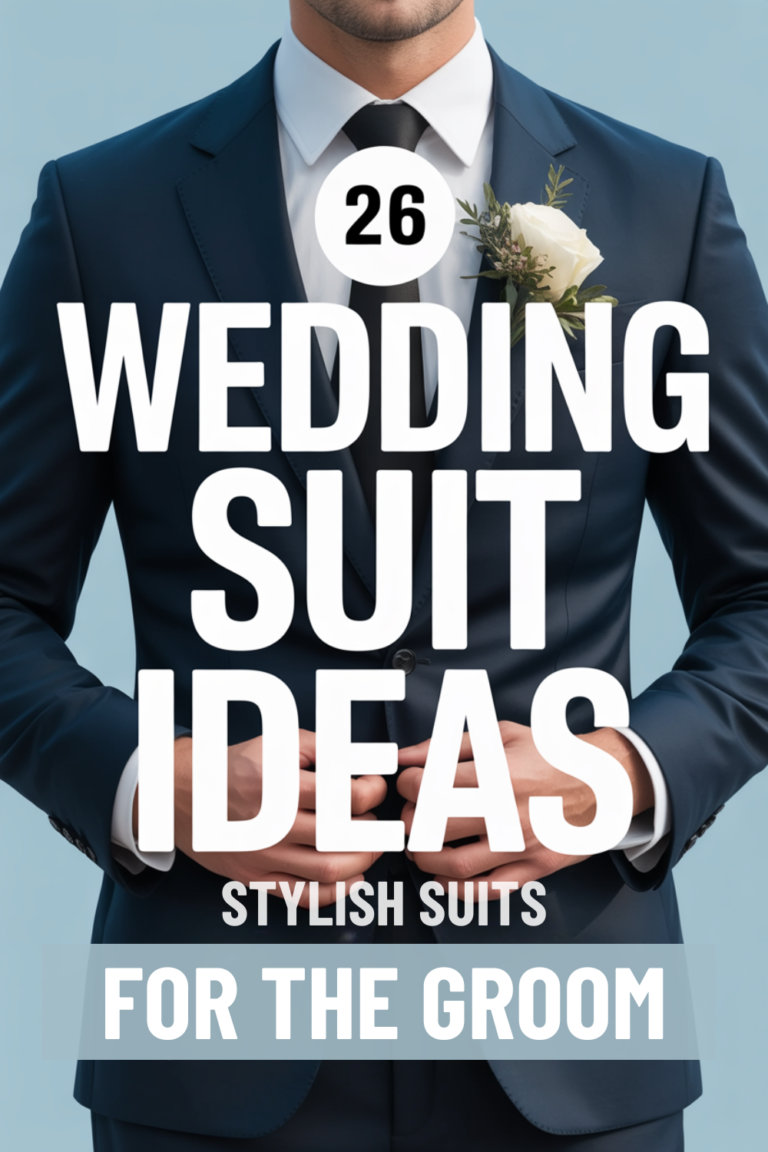
Go with a suit if you want mileage. Navy, charcoal, and light grey clear most wedding dress codes and then keep working for you at every event that comes after. The part grooms underestimate is how far the color range goes once you stop thinking “black rental”: steel blue, forest green, cobalt, cream, warm taupe, slate. Texture does its own work too. Brown herringbone tweed over a plaid double-breasted waistcoat reads richer in photos than a flat black jacket does.
Our suit gallery is all real Love & Lavender weddings, so you can see how each look held up on a real wedding day instead of a showroom rail. It goes as formal as a charcoal morning suit with a cutaway coat, striped trousers, and an ascot.
See our wedding suits for the groom guide →
The Groom Tuxedo
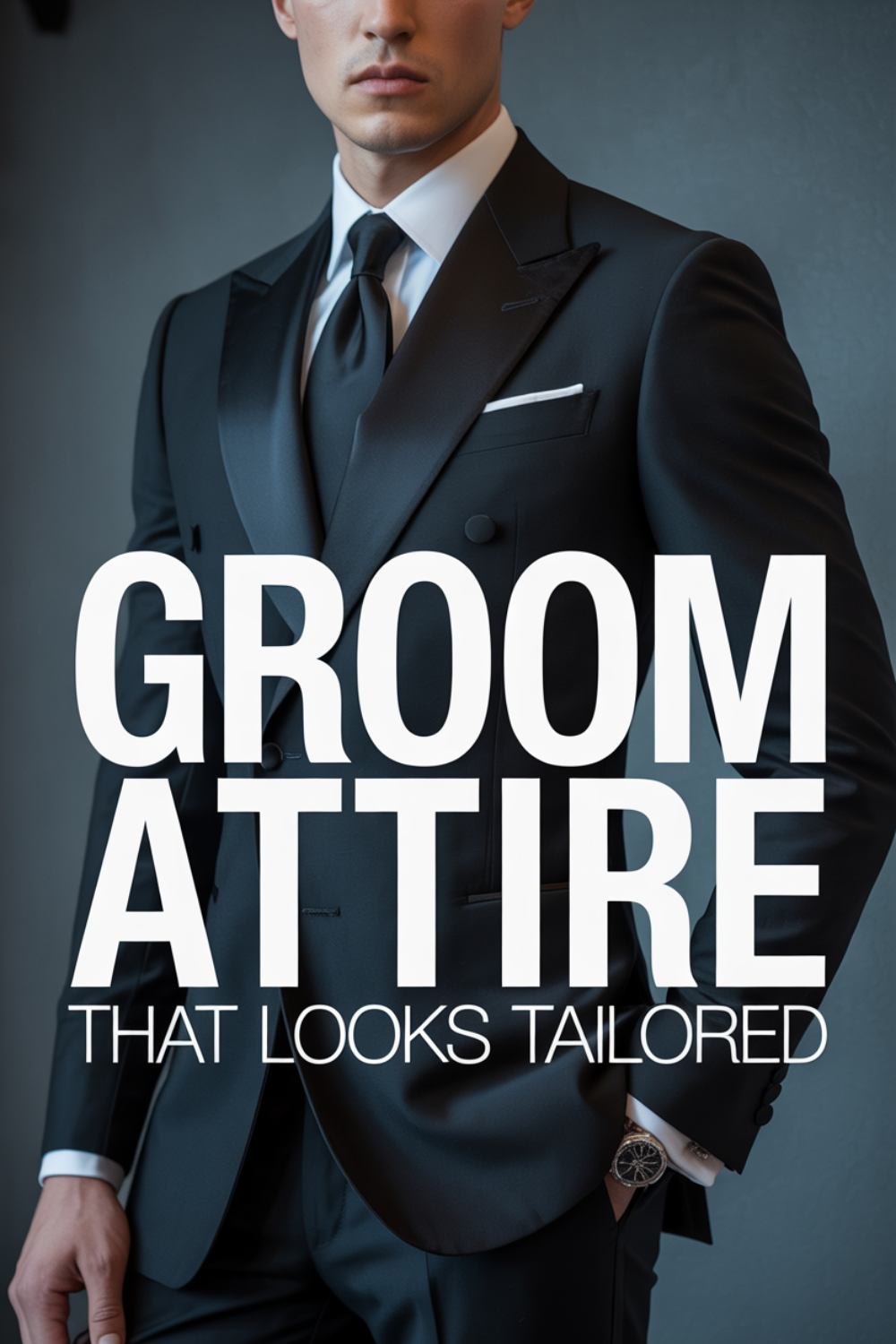
Go with a tuxedo if the day is formal and you want it to look formal. Worth knowing what makes a tuxedo a tuxedo: satin lapels, a satin stripe down the trouser, satin-covered buttons. A black suit with a bow tie is still a black suit with a bow tie.
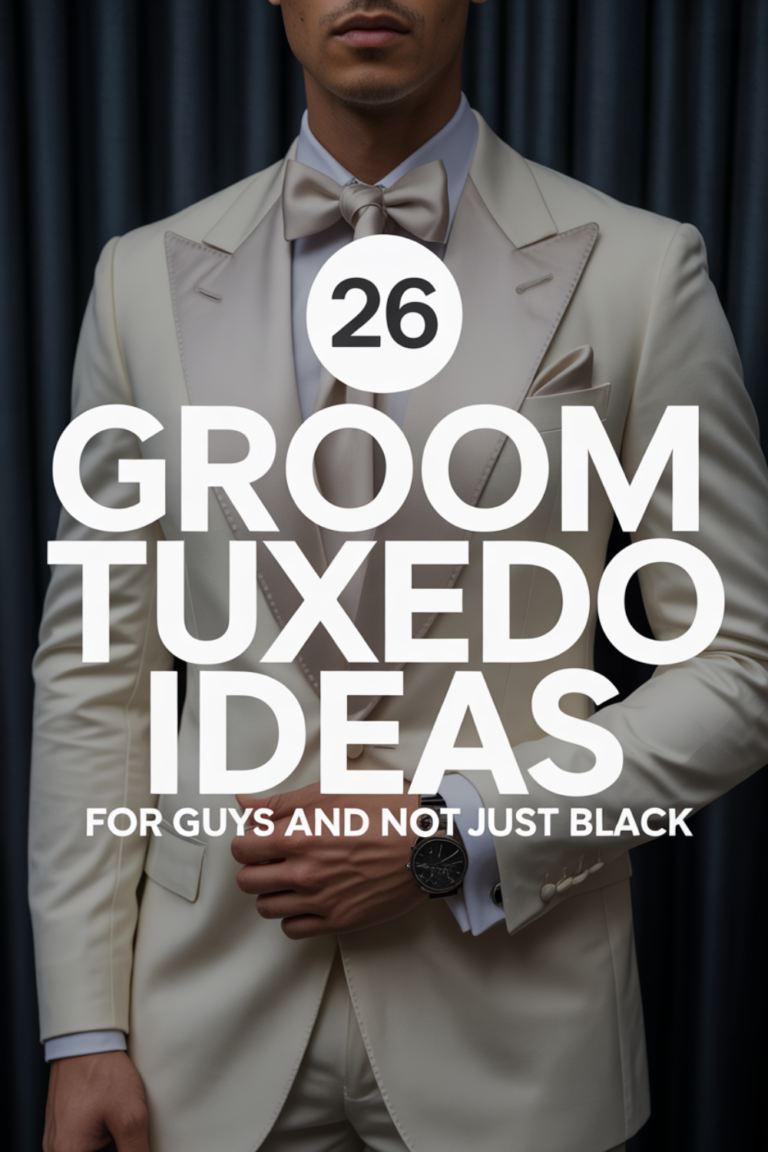
Black is the classic, not the only option. Our tuxedo gallery runs through ivory dinner jackets, burgundy velvet with black satin trim, forest green shawl collars, royal blue, midnight blue, and charcoal, plus the details that separate one black tux from another: cummerbund or not, studded shirt front, shawl versus peak lapel. Treat “after six only” as a guideline rather than a rule, because plenty of those weddings happened on lawns and coastlines in daylight. Take it to your fitting on your phone.
Rent or Buy: The Honest Math
One question decides this: how likely are you to wear this again? Answer it honestly and the rest falls out on its own.
Rent when the budget is genuinely tight, when it’s a formal tuxedo you’ll never put on again, or when your lead time is short and you’d rather not gamble on finding a tailor who takes rush jobs. Buy when you’ll wear it to other weddings, when you want real tailoring instead of rental-shop approximation, or when the thought of dancing in something dozens of other men already danced in makes you itch.
Watch the fees before you sign anything. Rush charges, damage waivers, shoe rental, and mandatory alterations stack up quietly, and the sticker price on the website is rarely the number you pay. Fabric matters too. Cheap synthetics trap heat and go shiny under a photographer’s flash, which is a detail you’ll only notice later, in every single photo.
Our rule of thumb: if renting costs anywhere near half of buying a decent suit, buy. You end up with better fabric, a real fit, and something still hanging in your closet in five years.
The Timeline That Keeps You Out of Trouble
Tailors have a particular expression for the groom whose wedding is next weekend. Shipping delays, alteration backlogs, and peak-season crush are the three things grooms consistently underestimate, and none of them shrink because you’re organized. Starting early is the only lever you actually have.
Your timeline depends on your route. Rentals move fast. Off-the-rack needs a few weeks for tailoring. Made to measure needs three to four months for production alone, before anyone has touched a hem.
- Four months out or more: pick your route and start shopping. Treat four months as the floor if you’re going made to measure.
- Six to eight weeks out: lock in the purchase or rental and book your first alterations appointment.
- Two to three weeks out: final fitting, wearing your actual shoes, shirt, and belt so the hem is right.
- Wedding week: pick it up, steam it, and pack the whole look in a proper garment bag.
If Your Wedding Is Under a Month Away
Skip made to measure entirely. Go to a retail store this week and buy off the rack, then start calling local tailors until one of them says yes to a rush job. Someone will. Bring your shoes to that first appointment so nobody has to guess at the trouser break.
Season Fabric and Color
Comfort is doing more work in your wedding photos than you think. Sweating through your shirt during the ceremony or shivering through the vows shows up on your face, and no amount of good tailoring covers that.
Match the Fabric to the Forecast
The rule is simple. Lighter cloth breathes, heavier cloth holds structure and warmth.
- Warm weather: linen blends, cotton, or tropical wool. They move air and still hold a crisp line.
- Cold weather: flannel, wool blends, or tweed. They hold heat, drape well, and photograph beautifully.
Picking a Color That Photographs Well
Navy and charcoal are staples for a reason. They flatter nearly every skin tone and they hold up in photos, indoors and out. A tuxedo or a true black suit shines at a formal evening wedding and reads oddly funereal at a midday beach ceremony.
If you want something with more personality, forest green, warm terracotta, and rich earthy neutrals with a subtle texture do it without turning you into the most experimental person at your own wedding.
One test before you buy: does this shade sit next to the wedding palette comfortably, or does it fight the flowers? If it fights, save the bold color for the honeymoon.
Fit and Alterations
Nobody can read the price of a suit in a photo. They read the fit. A modest suit with real tailoring beats a three-thousand-dollar tuxedo hanging off the shoulders, every time. Dress the body you have on the day, not the one you’re negotiating with at the gym.
The Four Photo-Critical Fit Points
Check these in your fitting-room photos, not in the mirror. The camera catches what the mirror lets you miss.
- Shoulders: lie flat exactly where your arm meets your shoulder.
- Jacket length: covers your rear without reading as a coat.
- Sleeve length: shows about a quarter inch of shirt cuff.
- Trouser hem: rests on the shoe with one clean break.
A Cheat Sheet by Build
Same rules, different emphasis depending on your frame.
- Tall and slim: add structure with texture. Skip pencil-thin cuts that make you look like a flagpole in a bow tie.
- Shorter build: keep the lines clean and the jacket slightly shorter to lengthen the leg.
- Broad or athletic: fit the shoulders first, then taper the waist. If the button pulls into an X, it’s too small.
- Plus size: matte fabrics with a smooth drape. Skip anything shiny or clingy.
Tight Budget? Fix These First
If you can only afford a few alterations, do them in this order: trouser hem, sleeve length, jacket waist. That sequence buys you the most visible improvement per dollar.
And a hard stop at the fitting: if the shoulders ripple, gap, or squeeze, put it back on the rack. Shoulder work is the most expensive alteration there is. Size up, try a roomier cut, or try a different brand instead.
How to Stand Out From Your Groomsmen
You want to look connected to your wedding party, not cloned from it. Guests should be able to tell at a glance which one of you is getting married, and that takes contrast, not a neon tuxedo.
- Add a layer: wear a three-piece while the group wears two-piece suits.
- Change the neckwear: a bow tie against their neckties, or a tie in a deeper shade of the same color.
- Upgrade the details: a distinct boutonniere from your florist, or a jacket with more texture in the fabric.
On matching your partner, skip swatch-level coordination. Pull one accent shade from the florals or the decor instead. It looks intentional rather than staged.
If you’re buying while your groomsmen rent, that’s a good setup, but compare physical swatches ahead of time so your fabric doesn’t make their rentals look washed out in the group shot. Then run the ten-foot test: stand back with your party in front of a mirror. If you disappear into a wall of matching fabric, add more contrast.
The Dress Shirt Nobody Plans For
The shirt gets treated as background. It isn’t. A badly fitting shirt makes a custom suit look like a hand-me-down, and it does it in every photo where your jacket is off.
When in doubt, white. It photographs clean, flatters every skin tone, and sits beside any palette. Before you cut the tags off, run this check:
- Collar: two fingers slide between your neck and the buttoned collar.
- Shoulders: the seam sits where your arm meets your shoulder bone.
- Torso: no pulling at the chest, no billowing at the waist.
- Sleeve: the cuff lands at your wrist bone.
On cuffs: a French cuff folds back on itself and fastens with cufflinks, which is the move for tuxedos and formal suits. Standard barrel cuffs are right for everything semi-formal and down. If you want texture, keep it to a herringbone or twill weave. Bold patterns read too casual next to formal tailoring.
Do one full trial run with the shirt, tie, vest, and jacket together. Bunching shows up in a trial run so it doesn’t show up on the day.
Shoes and Socks
Stiff new dress shoes have ended more first dances than bad DJs. Footwear comes down to three things: matching the formality, pairing the color, and having a plan so you can still walk at 10 PM.
Lace-up leather is the safe answer. Oxfords have closed lacing and a sleeker line, Derbies have open lacing and a slightly more relaxed, roomier fit. For color, black shoes go with tuxedos, black suits, and dark charcoal. Brown goes with navy, mid-grey, and warm earth tones.
Never debut new shoes on the day. Wear them around the house with thick socks for two weeks first so the leather gives before your heels do. Choose mid-calf or over-the-calf socks while you’re at it, because sock sag turns up in every seated photo.
Two things worth tossing in your suit bag: blister balm or bandages, applied before anything starts rubbing, and an instant shine sponge, because scuffs happen between the car and the aisle.
Ties Pocket Squares and Boutonnieres
The line between styled and prom-adjacent is one focal point. Pick the piece that gets to be interesting, then let everything else stay quiet. If the tie has a bold pattern or a heavy texture, the pocket square is plain white and the boutonniere is small. That’s the whole system.
- Pocket squares: white linen with a straight fold is foolproof for tuxedos and formal suits. Save color and print for relaxed weddings, and keep the fold simple.
- Boutonnieres: left lapel, over your heart, pinned properly. Ask your florist for a single stem so you aren’t wearing a small bouquet.
- Tie or bow tie: tie it to the dress code. Formal tuxedos want a bow tie, suits leave the choice to you.
And skip matching your tie one-to-one with the bridesmaid dresses. Identical swatches photograph costumey. Pull a shade from the wider palette instead and let the two of you look related rather than uniformed.
Casual Weddings Without Looking Careless
Courthouse, backyard, micro-wedding: a relaxed dress code is a relief right up until it turns into no decisions at all. You still need to read as the groom, not as a guy who stopped by on his way somewhere else.
Put these on the do-not-wear list:
- Jeans and sneakers, unless they’re deliberately styled and your partner has signed off.
- Short sleeves. Polos and short-sleeve dress shirts photograph too casual. Wear long-sleeve linen or cotton and roll them later.
- Novelty anything. The joke tie, the graphic socks, the funny cufflinks. Save them for the bachelor party.
Fit and finish matter more when you drop the tuxedo, not less. Watch for wrinkled fabric, belt bulk under thin trousers, and an oversized boutonniere dragging your lapel down. Grooming counts too. Book the haircut five to seven days out rather than the day before, tidy the facial hair lines, and do something about your nails, because your hands are in every ring photo.
The rule we’d give any casual groom: dress one notch above the best-dressed guest in the room.
Your Order of Operations
Most groom style regret traces back to doing things out of order. Buying cufflinks before you’ve decided between a suit and a tuxedo is how you end up with a drawer of accessories that go with nothing. Here’s the sequence.
First a Sanity Check
Before any money moves, confirm four things with your partner: the dress code you’re putting on the invitations, the venue type, the ceremony start time, and the exact shades in the florals and decor.
Then Work Through These in Order
Each step depends on the one before it, so resist the urge to jump ahead to the fun parts.
- Pick the category. Suit or tuxedo, using the venue and time filter above.
- Set the budget and decide buy versus rent. Whatever your cap is, carve out roughly twenty percent for alterations, shoes, and accessories. Tailoring is never the line item people plan for.
- Choose fabric and color for the season. Breathable in summer, heavier in winter, in a shade that sits well with the palette without matching the bridesmaids.
- Lock the fit route. Made to measure needs three to four months. Off the rack plus tailoring needs six to eight weeks. Rental sizing needs two to four weeks with limited alteration options.
- Do a full try-on. Shirt, shoes, belt, pocket square, neckwear, all at once, in natural light. That’s where clashes and collar problems show up.
- Book the alterations milestones. First fitting at eight weeks with your real shoes and shirt in hand. Final fitting at three weeks. Pick-up at one week, onto a thick hanger in a breathable bag.
- Run the wedding-week plan. Steam rather than iron, never hot metal directly on fine wool. Transport it hanging upright. Pack collar stays, a lint roller, safety pins, shine wipes, and a stain pen.
Work through that and you’ll have a one-page plan you can hand to your groomsmen so everyone turns up looking like they’re at the same wedding.
None of this needs to take over your life. Get the dress code right, order early enough that a tailor can help you, and spend your money on fit before you spend it on labels. The rest is trim, and you already know how you want the trim to look.
Frequently Asked Questions
The questions grooms ask us most, answered short.
How far in advance should I sort out my groom attire?
Start three to six months out, depending on your route. Made to measure needs three to four months for production, plus fitting time on top. Off the rack needs six to eight weeks to leave room for tailoring. Rentals can be locked in around two months out, with the garment arriving two to four weeks before the day. If your wedding falls in peak season between May and October, add another month to absorb tailor backlogs and shipping delays.
Should the groom match the groomsmen exactly?
No. You want guests to spot the groom instantly in every photo, which means complementing your party rather than blending into it. Three easy ways to do it: wear a three-piece while they wear two-piece suits, wear a bow tie while they wear neckties, or wear a distinct boutonniere with a contrasting pocket square fold.
Is a black suit okay for a wedding?
It’s fine for evening and formal weddings and harsh for daytime or casual ones. Outside of a proper black tuxedo at a black-tie wedding, plain black tends to read somber in bright outdoor light. Charcoal grey or dark navy do the same job in an afternoon or semi-formal setting and photograph far better in natural light.
My wedding is casual. Do I still need a jacket?
Wear one for the ceremony at least, even at a courthouse, backyard, or brewery wedding. A structured layer reads as intentional in the official photos, and you can ditch it the moment the party starts. The minimum version: a tailored blazer or unstructured jacket, a crisp long-sleeve shirt, well-fitted trousers or dark chinos, and clean leather shoes or loafers.
What do grooms regret most about their outfit?
Underdressing, and a boxy suit that looked fine in the shop and terrible in the portraits. It usually comes from skipping tailoring or choosing comfort over structure. The fix is cheap: do a full dress rehearsal two weeks early, put on every piece, step into natural light, and take test photos. Pull lines and sagging hems are obvious in a photo and invisible in a mirror.
Don’t forget to pin this to your Groom Board for later!