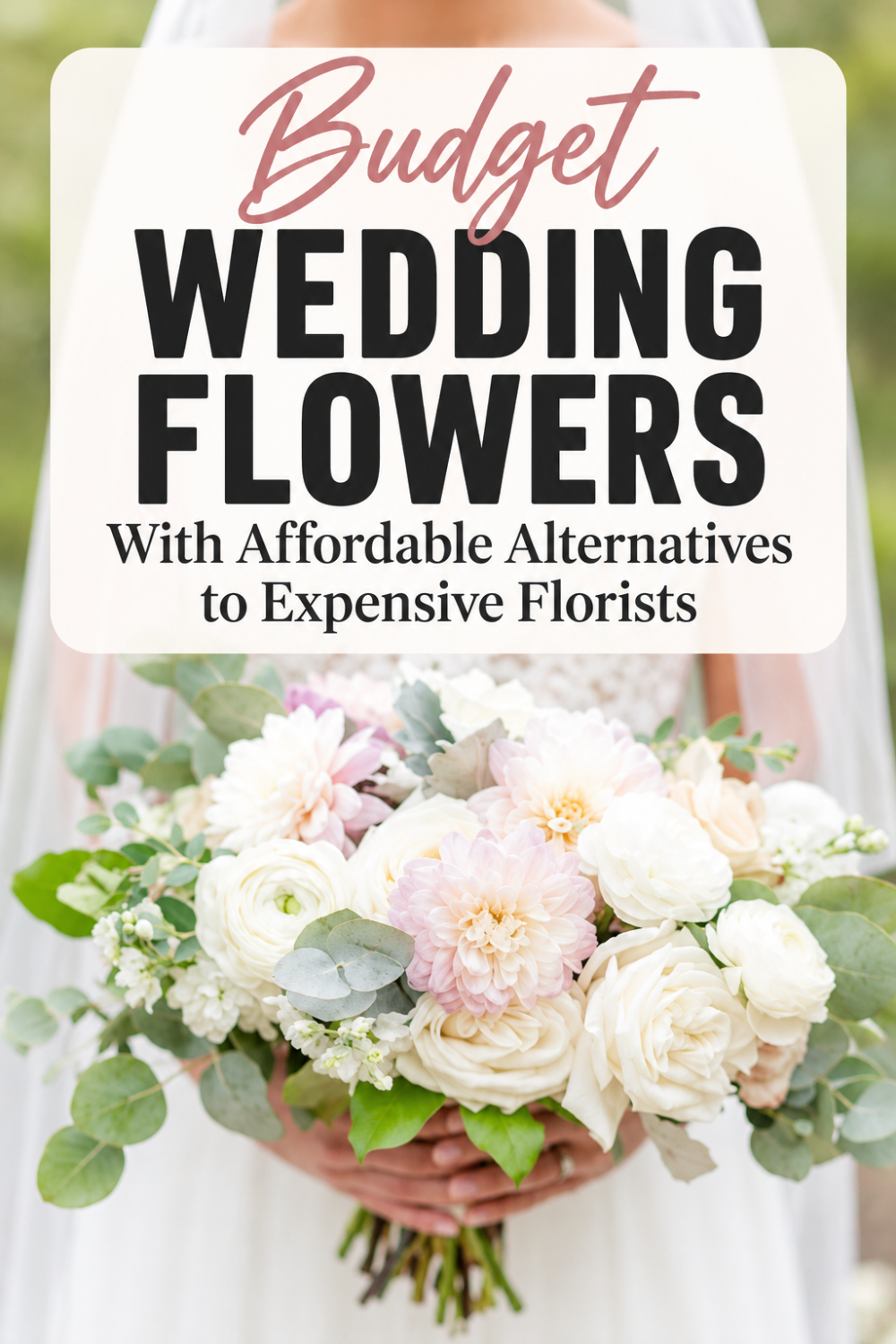
Buy From Warehouse and Grocery Stores
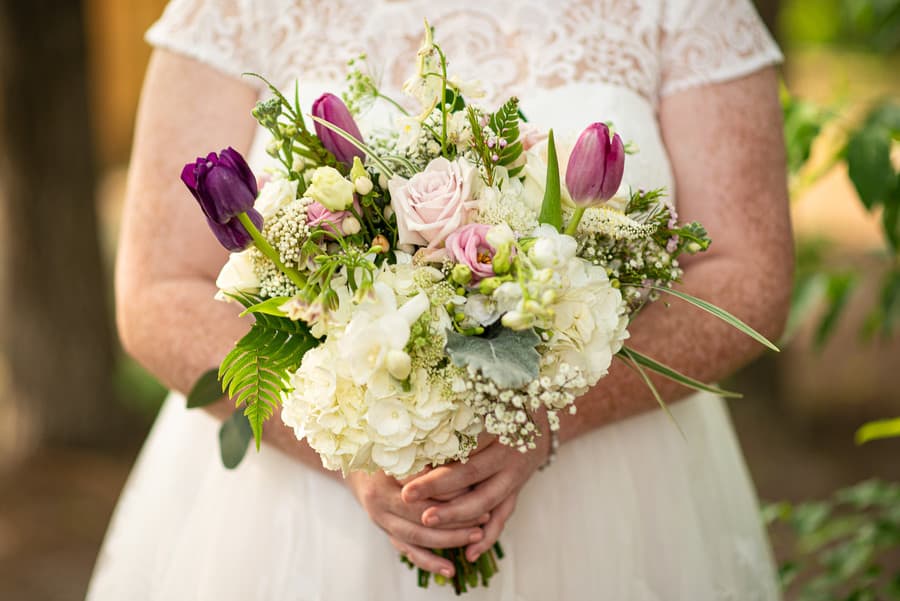
This is one of the fastest ways to cut your total without learning floristry. A warehouse or grocery floral department sells the same stems a florist would mark up for labor, delivery, and cooler time.
- Costco: Expect roughly $110 for pre-made arrangements to cover you and about five bridesmaids, with leftovers for boutonnieres, or about $300 if you buy bulk bundles and arrange them yourself. You will need a membership and a plan to pick up the day before.
- Trader Joe’s: Expect roughly $180 to $300 for enough for a small wedding if you pre-order. Order ahead rather than showing up cold, since stock varies by store, and place it about three weeks out.
- Kroger and other grocery chains: Plan on about $450 for all the personal flowers, bouquets, boutonnieres, and corsages, plus do-it-yourself bud vases for tables. Go lighter, around $250, for a bridal bouquet, a partner flower, eight centerpieces, and potted ferns from the grocery floral department. Publix bundles around 3 for $12 are handy for cheap filler and backup stems.
The tradeoff is time and handling. You will need fridge space, buckets of water, and a car that can sit flat for transport. Quality and pre-order rules vary by location and season, so treat the numbers above as ballpark figures, not a price guarantee, and confirm with your local store.
Order Wholesale Flowers and DIY Them
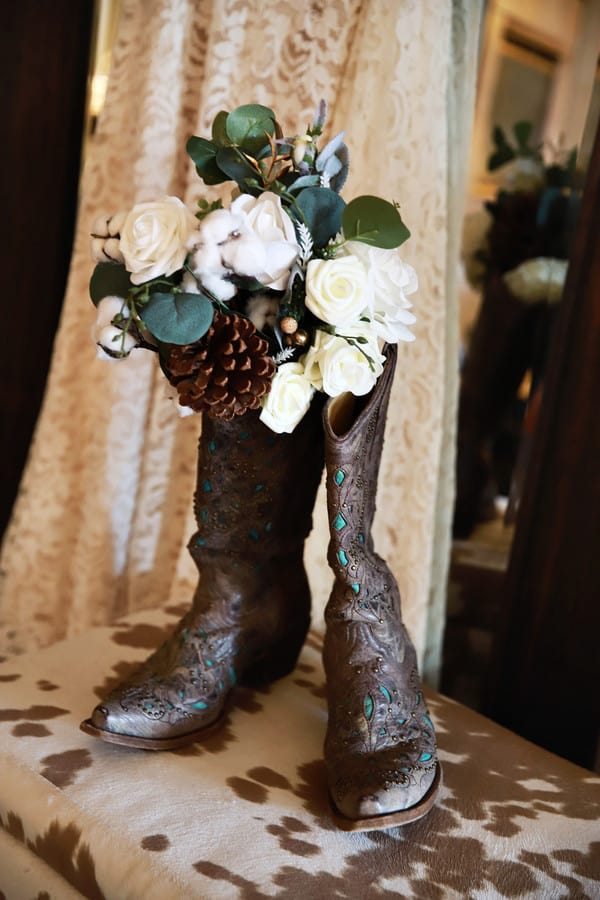
Wholesale online means buying bulk stems directly and assembling them yourself. Sites couples name most often are FiftyFlowers, Global Rose, Bloomingmore, and Flower Moxie.
You order by variety and color, the boxes ship to your door a few days before the wedding, and you trim, hydrate, and arrange them into hand-tied bouquets yourself. You can host a night-before bouquet bar where friends each make a vase or two. The approach works best for simple hand-tied bouquets and bud vases, where a slightly loose style still looks intentional.
Plan for real costs beyond the stems. You will need a cool place to store buckets overnight, shears, vases, and about half a day of hands-on work. Give yourself a test run with one grocery bunch a month before so you learn how long roses or carnations take to open. Large arches and tight, trailing bouquets are hard to do well under time pressure, and that is where paying a pro can be worth it.
Trade Full Centerpieces for Bud Vases

A bud vase is a small single-stem vase, and a cluster of three to five per table plus candles reads modern and full while using far fewer flowers.
The math is what makes this work. A set of three small vases with one to three stems each runs about $50 to $100 per table, compared with $135 to $250 or more for a large low arrangement. Over ten tables that is the difference between about $500 and $2,500.
To keep conversations easy, keep the height low or go clearly high. If a centerpiece sits at face level across the table, guests peer around it. Aim for under about 12 to 14 inches tall, or above about 24 to 30 inches so eyes meet underneath. Three vases of varied height with two or three votives fills a round table without blocking sightlines. I’d hunt thrift stores like Goodwill for the vases in the month before. You can mix shapes as long as you keep the glass clear and the palette tight.
Repurpose Ceremony Flowers for the Reception
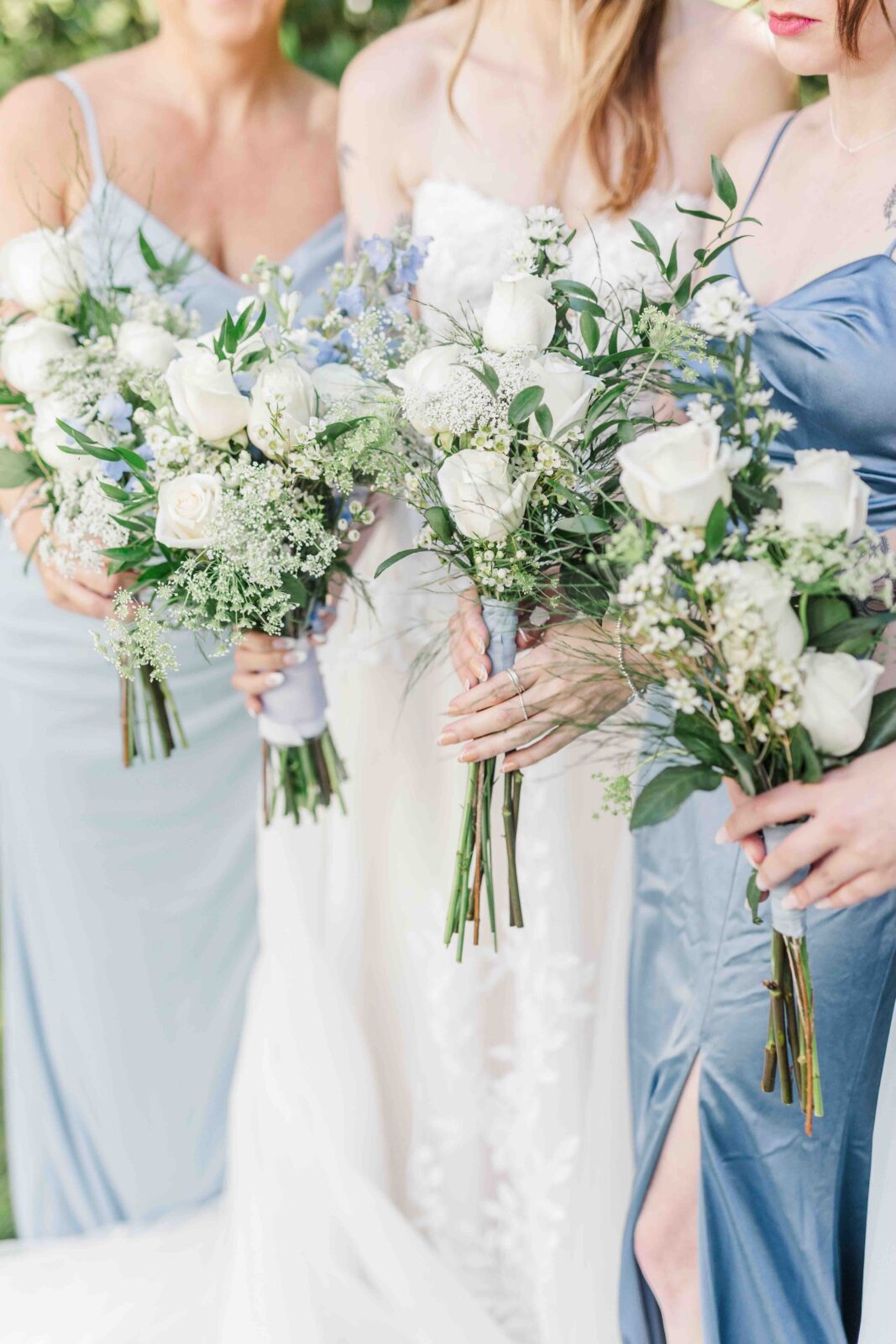
If you pay for flowers for twenty minutes of ceremony, move them to where the party lives for four hours.
The easiest moves are bridesmaid bouquets into vases on the head or sweetheart table, aisle markers grouped on the bar or welcome table, and arch pieces shifted to frame the cake. Repurposing bridesmaid bouquets alone can save roughly $500 to $1,000 versus buying separate centerpieces.
This only works if you plan it. Ask your coordinator or a reliable friend to move each piece right after photos, and ask your florist to design those pieces so they look good from both sides and fit the reception vessels. A flat-backed ceremony spray will show its back on a round table, so mention the second use when you order.
Pick In-Season Blooms and Clever Dupes
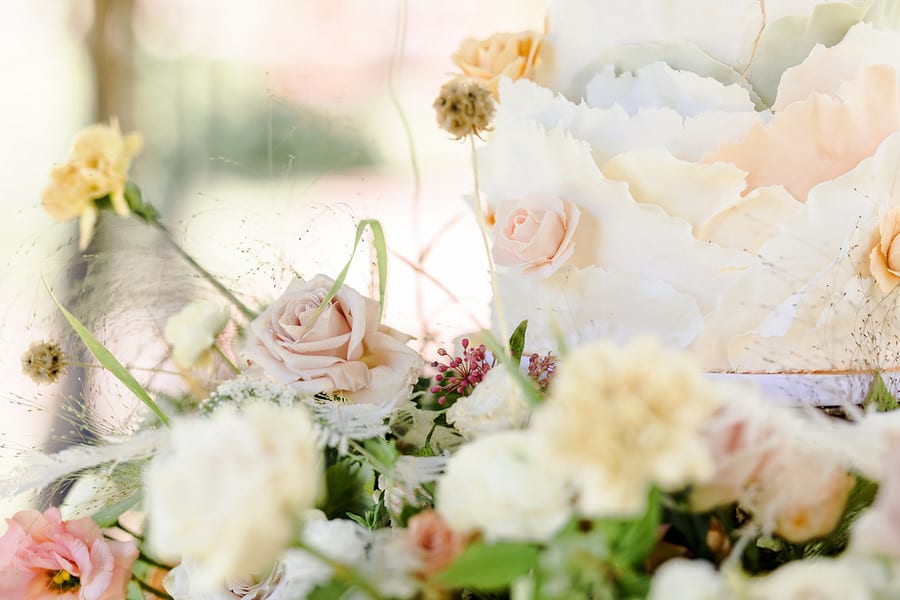
In-season means the flower is naturally blooming at your wedding time in your region or close enough to ship without a premium. Those stems are fresher and usually priced lower because supply is high.
Clever dupes give you a premium look without the premium stem. Try garden roses or double tulips instead of peonies for that soft, ruffled shape. Grouped carnations or Queen Anne’s lace can stand in for hydrangeas and still give you cloud-like volume. For dahlias, some brides use mums with a similar form for a fraction of the cost.
Tell your florist or wholesale order which look you love, then ask what is in-season and closest in color and shape. You will often get a better result saying “peach garden roses, open and soft” than insisting on a specific variety that is out of season in your month.
Let Greenery and Candles Fill Space

Greenery is any foliage used for volume, like eucalyptus, ruscus, or huckleberry. It covers more table and aisle per dollar than most blooms and adds texture that makes a small number of flowers look intentional.
Use greenery where guests scan but do not study. A runner of loose eucalyptus down a long table, a garland across a head table, or bunches tucked into an arch softens the space without needing dozens of focal flowers. Pair it with candles and a few simple objects. White pillar candles, taper pairs, small lamps, or even fruit in compote bowls help a table feel finished.
If you have access to a yard, clipped greenery can be free filler the day before. Just keep it hydrated and out of direct sun. And if you want to skip table flowers entirely, a cluster of candles in varied heights can carry a reception, especially in a dimmer room where flame reads warm in photos.
Consider Real-Touch Silk or Rentals
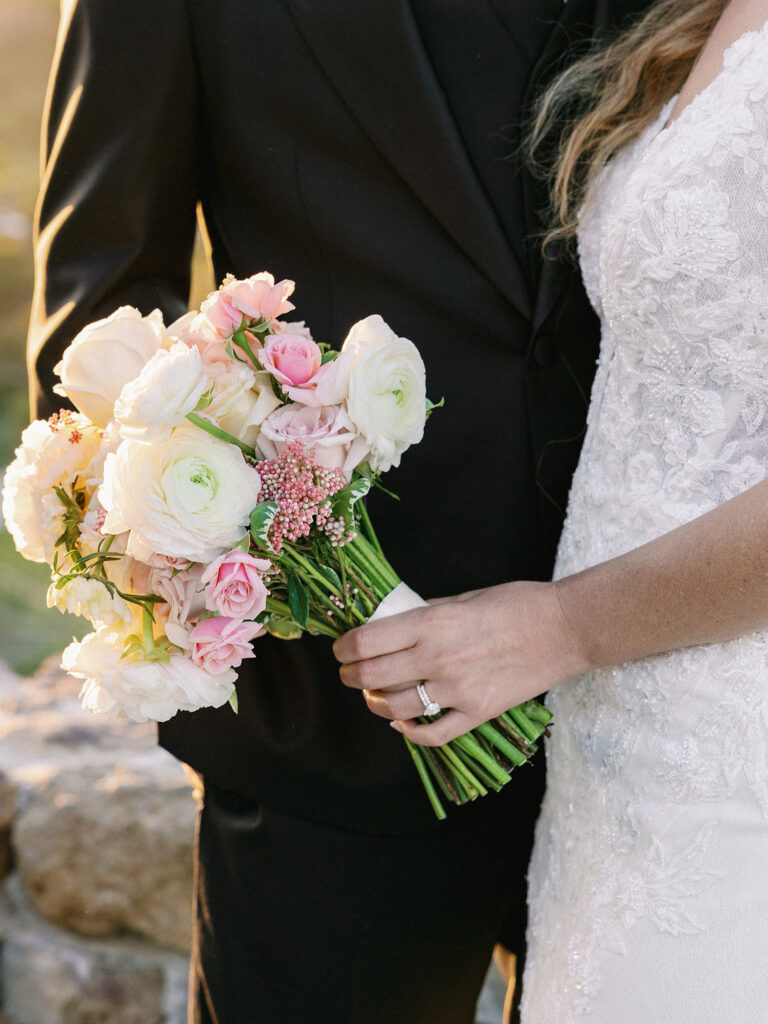
Real-touch silk means faux flowers made with softer petals and color shading so they look closer to fresh. Rentals mean a company ships you pre-made silk arrangements and you return them after.
Expect around $400 on Etsy for a set that covers a cascade bridal bouquet, two bridesmaid bouquets, three corsages, and seven boutonnieres, close enough that guests will not clock it until they touch it. Or rent bouquets, two centerpieces, and a garland from Something Borrowed Blooms and mix in fresh bud vases from Costco.
There are two catches to keep beside the savings. Good silk can cost about as much as fresh, so the saving often comes from reusing rental sets, not from cheaper stems. And samples can miss. If one disappoints, you can still recover cheaply: a mix of $250 in pre-made small centerpieces, $196 in wholesale greenery, and $20 in grocery roses and baby’s breath comes in under $500. Order a sample early if you go this route, and plan a backup.
Shop a Local Flower Farm or Market

A local flower farm sells by the bucket, usually seasonal and freshly cut. A flower market sells wholesale bunches to the public or to designers who will let you buy through them.
Plan on about $430 for buckets plus one professional bouquet if friends do the arranging. Some markets go further: the shop makes the bridal bouquet and arch in-house, then lets you arrange centerpieces in their studio and holds everything in the cooler for a joint delivery, a split that can save thousands off a full-service quote.
The tradeoff is access. Not everyone lives near a farm or market, and summer buckets can sell out during peak wedding weekends. If you are open to it, ask farms about volunteering in exchange for harvesting your own the week of. And wherever you buy, confirm pickup windows, refrigeration, and whether the farm does weddings that exact weekend.
Hire a Florist for the Hard Parts

You do not have to choose between full-service florist and fully do-it-yourself. A lot of couples split the job and get a better result for less stress.
Book a florist with no minimum, or on an a la carte basis, for the one or two pieces that live in every photo and are hardest to do yourself, usually the bridal bouquet and a ceremony arch or backdrop. Then do the simple repeat work yourself, like bud vases and greenery. One version is a no-minimum florist plus your own candle centerpieces and potted mums for a fall wedding. Another is to skip table florals altogether and set out grocery potted orchids on chargers.
When you interview florists, be clear about the split. Ask to see hand-tied bouquets specifically, since that style tends to cost less in labor than wired or trailing styles, and confirm who delivers, sets up, and moves pieces from ceremony to reception.
Where to Splurge and Where to Skip

The trick is to think in zones. Put money where the camera and the eye sit longest, and trim where guests spend less time or notice less detail.
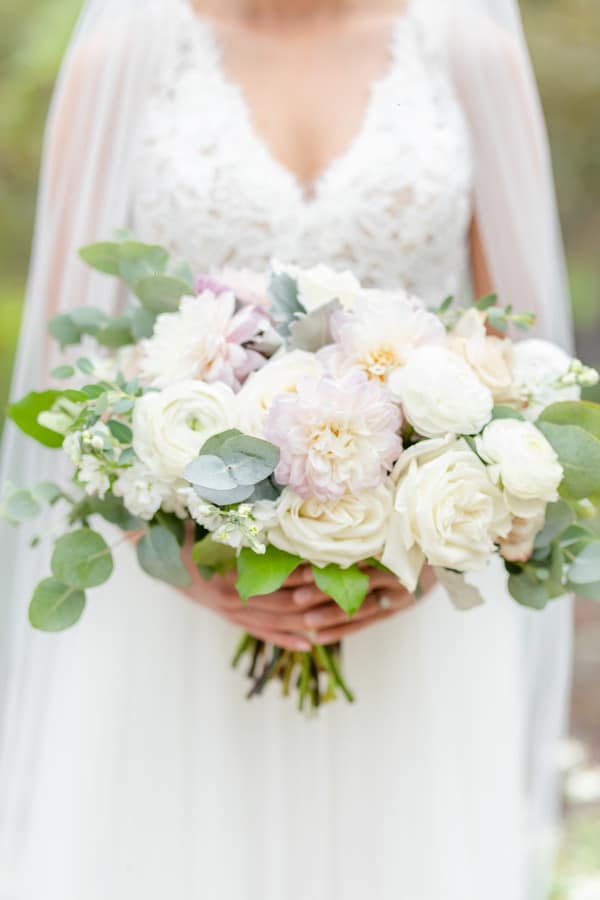
Splurge on the bridal bouquet. It is in every portrait and close-up, and a well-shaped hand-tied bouquet around $150 to $250 photographs well even if you keep everything else simple.
Concentrate on high-visibility zones like the ceremony backdrop, the sweetheart or head table, the bar or cake table, and the welcome display. Those anchors make the whole room feel decorated.
Skip or scale back cocktail-hour florals, aisle markers that are visible for a few minutes, and extra boutonnieres. At about $25 each, five groomsmen boutonnieres add about $125 you will barely see in photos. Keeping just the groom’s boutonniere is a common compromise.
This is also where couples disagree, so name the tradeoff honestly. Some feel boutonnieres mark the wedding party and want every groomsman to have one. If that matters to you, keep them but cut cheaper elsewhere. Low-cost alternates include faux single stems, a pocket square, or thrifted vintage pins at about $1 to $2 each.
Use this quick reference when you draft your numbers. Typical ranges from one US florist are shown for scale. Your market may vary by season and complexity.
| Piece | What You Often See | Choose |
|---|---|---|
| Bridal bouquet | $250 to $350 or more | Splurge, hand-tied |
| Bridesmaid bouquets | $100 to $150 each | Swap, then repurpose as centerpieces |
| Boutonnieres and corsages | $25 to $40 each | Keep groom’s, skip or use a low-cost alternate for others |
| Ceremony arch or backdrop | $300 to $2,000 or more | Splurge only if ceremony is the visual anchor |
| Guest-table centerpieces | $75 to $500 or more per table | Swap to bud-vase trios at $50 to $100 per table |
As a rule of thumb, budget about 10 percent of your total wedding budget for florals, up to about 15 percent if flowers are a top priority for you. It is a guideline, not a rule, but it helps you decide whether to shift dollars from another category.
Frequently Asked Questions
A few more questions come up once you start pricing this out.
What are the cheapest flowers for a wedding?
Greenery is a cost-effective filler, and among blooms, carnations, alstroemeria, baby’s breath, mums, and classic roses tend to be lowest cost when in season. You can stretch them further by mixing in a few premium stems only where they will be photographed up close.
How much should I budget for wedding flowers?
A common starting point is about 10 to 15 percent of your total wedding budget, with the higher end for couples who want flowers to lead the design. If the average near $2,800 feels out of reach, it helps to know couples who buy from grocery stores, warehouses, or online wholesale and keep designs simple report totals in the $200 to $500 range for a small wedding. Your number will move with guest count, season, and how many large installations you want.
What is the 3-5-8 rule for weddings?
You may see it called the 3-5-8 rule as shorthand for 30 percent ceremony, 50 percent reception, and 20 percent personal flowers like bouquets and boutonnieres. It is a budgeting heuristic to keep the three areas in balance, not a strict formula. If your ceremony is minimal and your reception is the focus, it makes sense to shift more toward reception.
Can you do wedding flowers for under $500?
Yes. The usual route is buying from Trader Joe’s, Costco, or a grocery floral department and keeping the design to bud vases, candles, and greenery. You can come in under $500 with eight small pre-made centerpieces plus wholesale greenery and a few grocery bunches, using one centerpiece as your bouquet. To make that work, keep the bouquet hand-tied, reuse bridesmaid bouquets, and confirm lead times and fridge space early.
You get more say over your wedding when flowers are not swallowing the budget. Pick one place to spend where you will see it in photos for years, then let grocery stems, greenery, and a few well-placed candles do the rest. The money you keep can go toward the band that keeps everyone dancing or the extra night on your honeymoon.
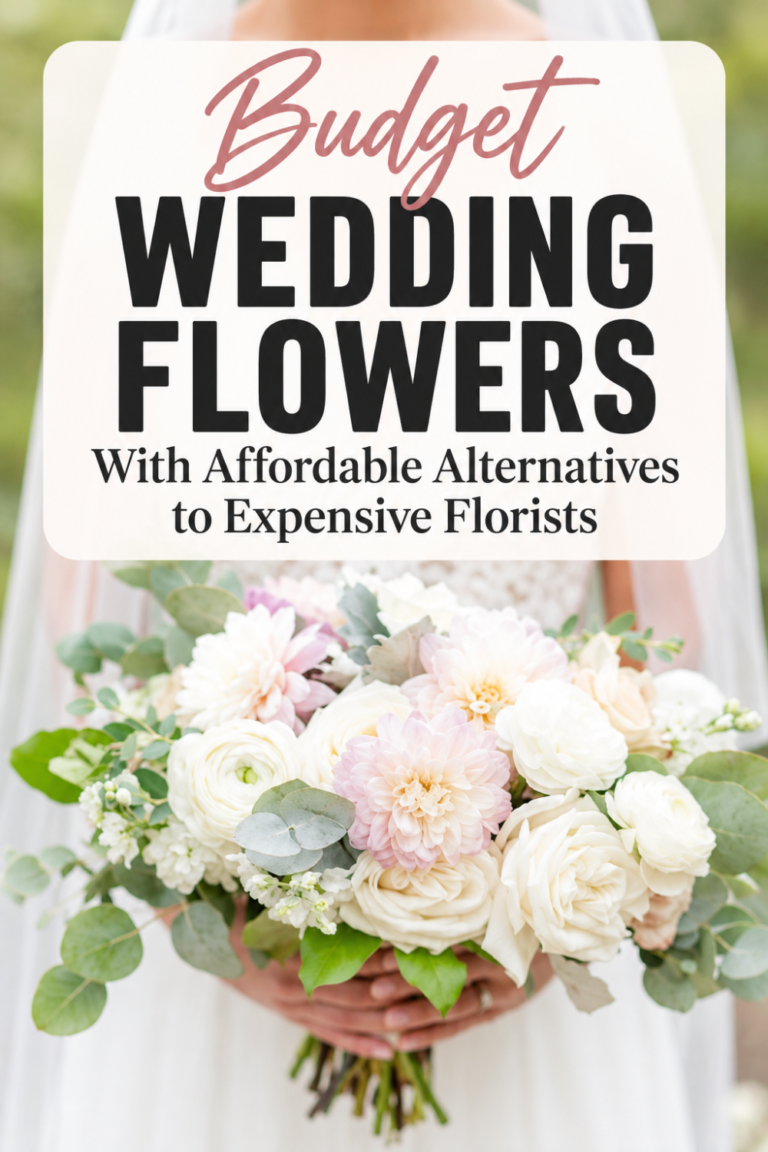
Don’t forget to pin this to your Wedding Bouquets Board for later!