Here’s what the process actually involves, start to finish, and how it differs from clicking through an online ring configurator.

It Starts with a Conversation, not a Catalog
The first meeting is where the whole thing gets defined. A good jeweler asks a lot of questions before showing you anything. What does the person wearing it do with their hands all day? Nurse, rock climber, pianist, someone who never takes it off. That changes the setting height and the metal, often the whole design. You’ll talk budget honestly, because it dictates the center stone more than anything else. You’ll bring photos of rings you love and rings you hate, and both are useful.
By the end you should have a rough direction: metal, stone shape, setting style, a ballpark price. No sketches yet. Just a brief.
The Design Gets Drawn, Then Rendered, Then Modeled
Next the jeweler turns that brief into something you can see. Older studios still start with a hand-drawn sketch, and plenty of couples love that. Most then move to CAD, a 3D render on screen that you rotate and adjust. Prong too chunky? Band too thin? You change it here, on the screen, before anything is made in metal.
Once the CAD is signed off, many jewelers print a wax or resin model of the exact design. You slide it onto the finger. This is the moment people realize the halo they wanted looks enormous in real life, or the low-profile setting they were nervous about is perfect. Cheap to change at this stage. Expensive to change later.
Sourcing The Center Stone
The stone is usually sourced in parallel with the design, and it’s where a bespoke process really separates from a configurator. Instead of choosing from whatever inventory a website has loaded, the jeweler hunts for a stone that fits your brief and budget: a specific cut, a particular color grade, a lab-grown diamond, a sapphire, a reclaimed stone from a family piece.
You’ll get options to compare, often in person, and the jeweler will explain the trade-offs in plain terms. A slightly lower clarity grade you can’t see with your eye versus half a carat more size. This is advice you don’t get from a filter slider.
Working with an Independent Jeweler: What Actually Happens
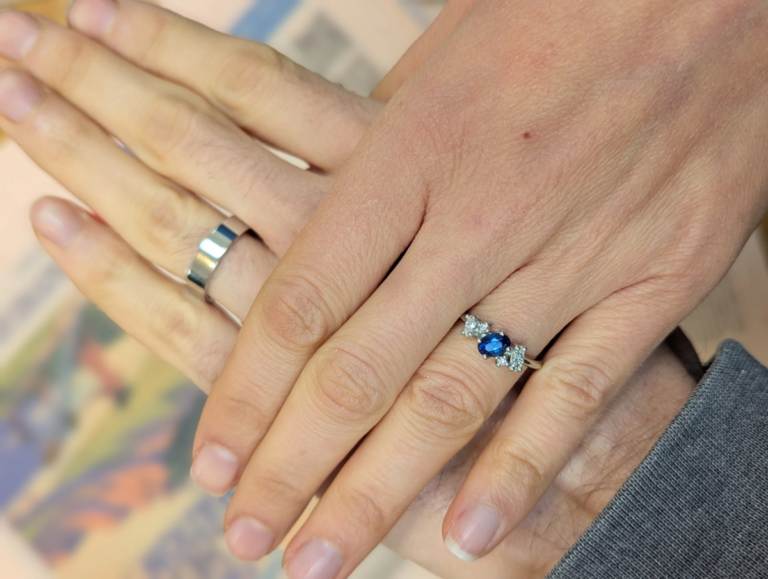
A true bespoke commission is different from an online configurator. Instead of dropping a preset stone into a preset setting, you work directly with the maker: you talk through the brief, approve a hand-drawn sketch or a CAD render, sign off a wax or resin model you can try on, then the ring is hand-set and finished to that exact design. Independent studios run this end to end:
Adelaide-based Harry & Co, for one, hand-makes each engagement and wedding ring in Australia and starts every commission with a one-on-one consultation before any metal is cut. Because the piece is built from your own drawing rather than a template, it is also the natural route for reworking an heirloom stone into something you will actually wear.
That last point matters more than people expect. If you’ve inherited a diamond, or a ring you’d never wear as-is, a bespoke maker can pull the stone and build a new setting around it. A configurator can’t touch that.
Hand-Setting and Finishing
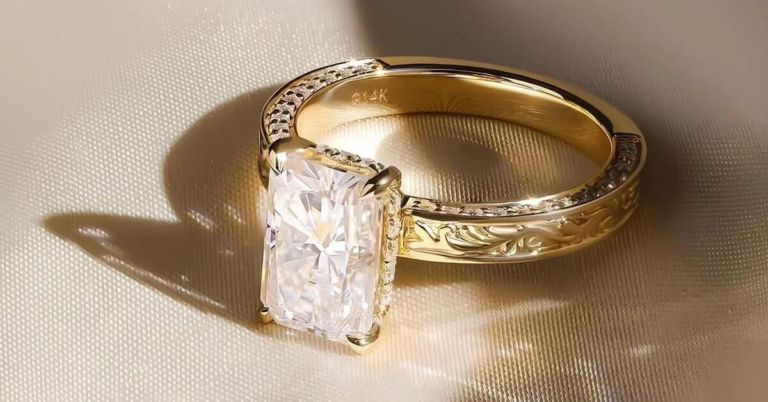
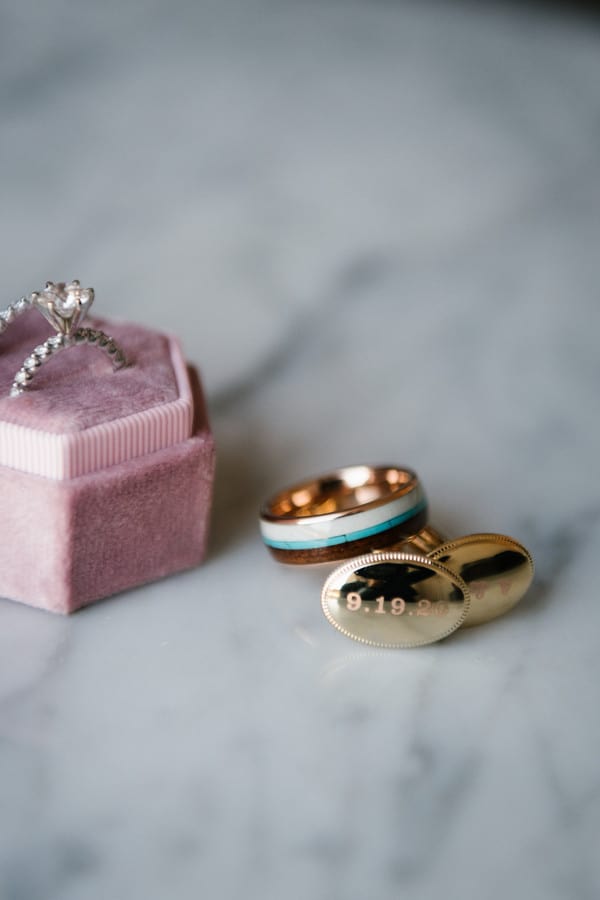
With the stone chosen and the model approved, the jeweler makes the ring. The metal is cast or fabricated, then the stone is set by hand under magnification. The piece is polished and finished. Hand-setting is skilled work. The prongs have to hold the stone securely and disappear visually, and the metal around a pavé band has to be cut so each tiny stone sits flush.
You’ll usually get a final viewing before you take it. Check the stone is straight and the band comfortable. The finish should be what you asked for. Small adjustments happen here.
How Long It Actually Takes
Budget six to ten weeks for most bespoke commissions, sometimes more around the December and Valentine’s rush. Roughly a week or two for design and CAD approval, then two to four weeks of actual making. Add time if you’re waiting on a specific stone to be sourced. Rush jobs exist, but they cost more and give you less room to change your mind.
If you need a ring in ten days, bespoke isn’t your route, and any honest jeweler will tell you so. This is the real trade-off. A configurator ships fast because everything is pre-made. Bespoke is slower because it’s being built for you, once.
Is It Worth It Over a Configurator?
Depends what you want. If you’re happy with a well-made ring from a set menu of shapes and settings, an online configurator is faster and cheaper, and there’s nothing wrong with that. Thousands of people are thrilled with theirs.
Bespoke earns its cost when you want something specific: an unusual stone, a design that doesn’t exist in any catalog, an heirloom reworked, or simply the experience of watching your ring get made. You’re paying for the design time and the hand-work, not just the materials. For a lot of people, that’s the whole point of the ring.
Don’t forget to pin this to your Rings Board for later!