
Black Wedding Guest Dresses That Work at Any Dress Code
Black is the most-reached-for color in every closet — and when the wedding invitation arrives, suddenly a hundred conflicting opinions materialize about whether you’re actually allowed to wear it. The short answer is yes. The more useful answer is: it depends entirely on which black dress you’re talking about and what kind of event you’re walking into.
Not all black dresses are created equal as wedding attire. A floor-length sequin mermaid gown and a knee-length cotton sheath are both technically black dresses. One belongs at a ballroom reception; the other belongs somewhere that isn’t a wedding reception. The dress code, the fabric, and the silhouette are doing the real work here — the color is just giving you a reliable starting point. Get the formality level right and black becomes one of the most versatile and consistently flattering choices a wedding guest can make.
Below, 16 black dresses that cover the full range — from gowns built for formal evening receptions to midi options made for cocktail-attire celebrations. Plus, further down: a breakdown of when black works and when to pause, a quick dress-code decoder for every formality level, and styling notes for shoes, jewelry, and the one trick that makes any all-black look read as celebration rather than obligation. For more guest style inspiration, browse our Real Weddings directory.
Our Favorite Black Wedding Guest Dresses
Black Sequin V-Neck Mermaid Gown
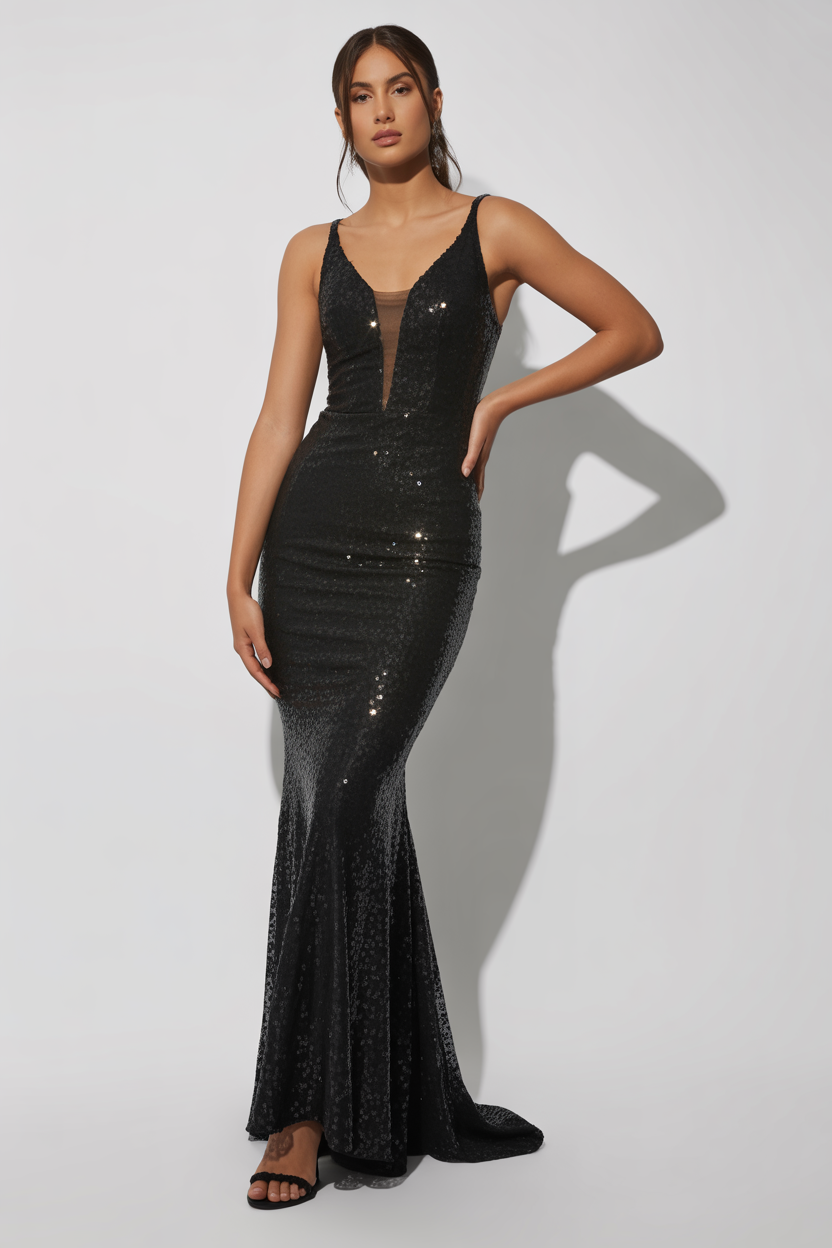
When the dress code is black tie and you want to understand the assignment completely, this is the dress. Head-to-toe micro sequins on a mermaid silhouette with a plunging V and sheer mesh panel — every element is doing exactly what evening dressing is supposed to do. The floor-length train and fitted hip-to-hem silhouette mean you’ll need a tailor involved, and it will be worth every dollar. Sleek updo, black stilettos, one pair of earrings. Let the dress carry the entire conversation.
Black One-Shoulder Gown with Ruffle Cascade
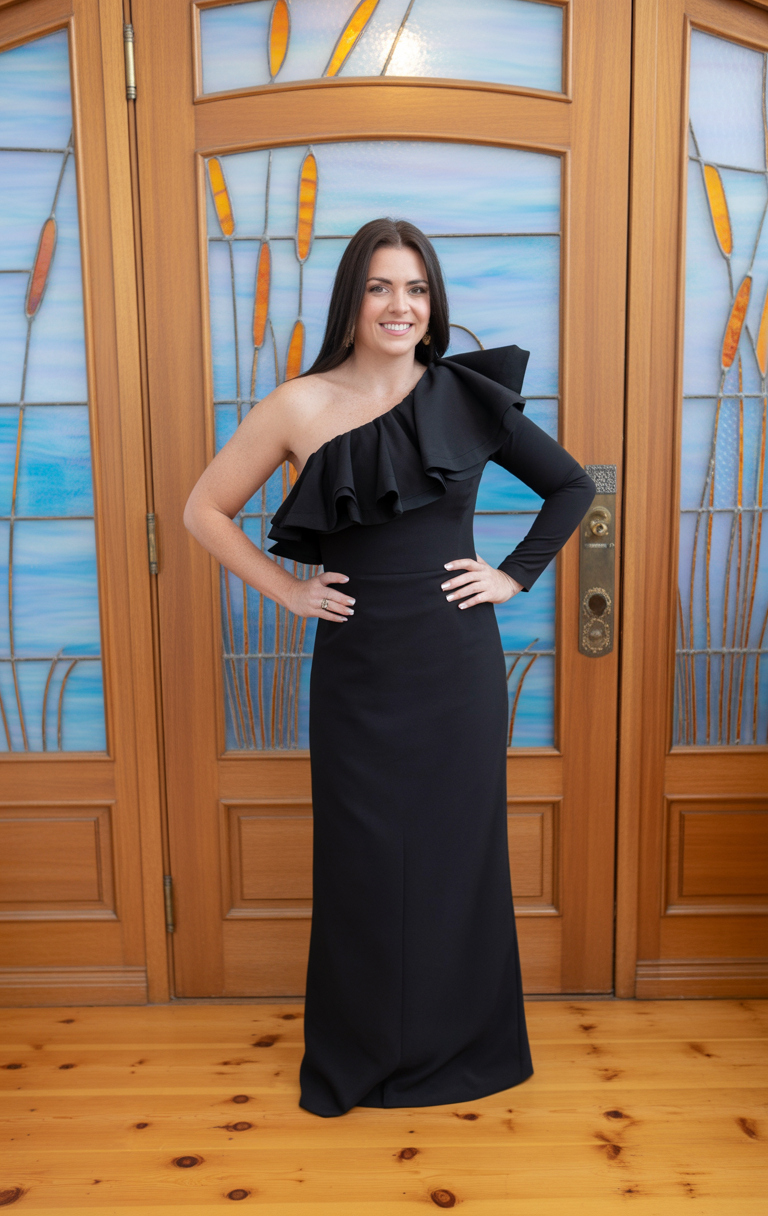
One statement detail is all a black floor-length gown ever needs — and a dramatic ruffle cascade at the one shoulder is one of the strongest choices you can make. It adds movement and volume near the face while keeping the rest of the silhouette clean and structural. The asymmetric design means you’re showing one shoulder and wearing what reads as one long sleeve simultaneously, which is a more interesting and balanced look than it sounds on paper. The stained glass door in the background shows you exactly what kind of venue this dress belongs at.
Black High-Neck Sleeveless Mermaid Gown
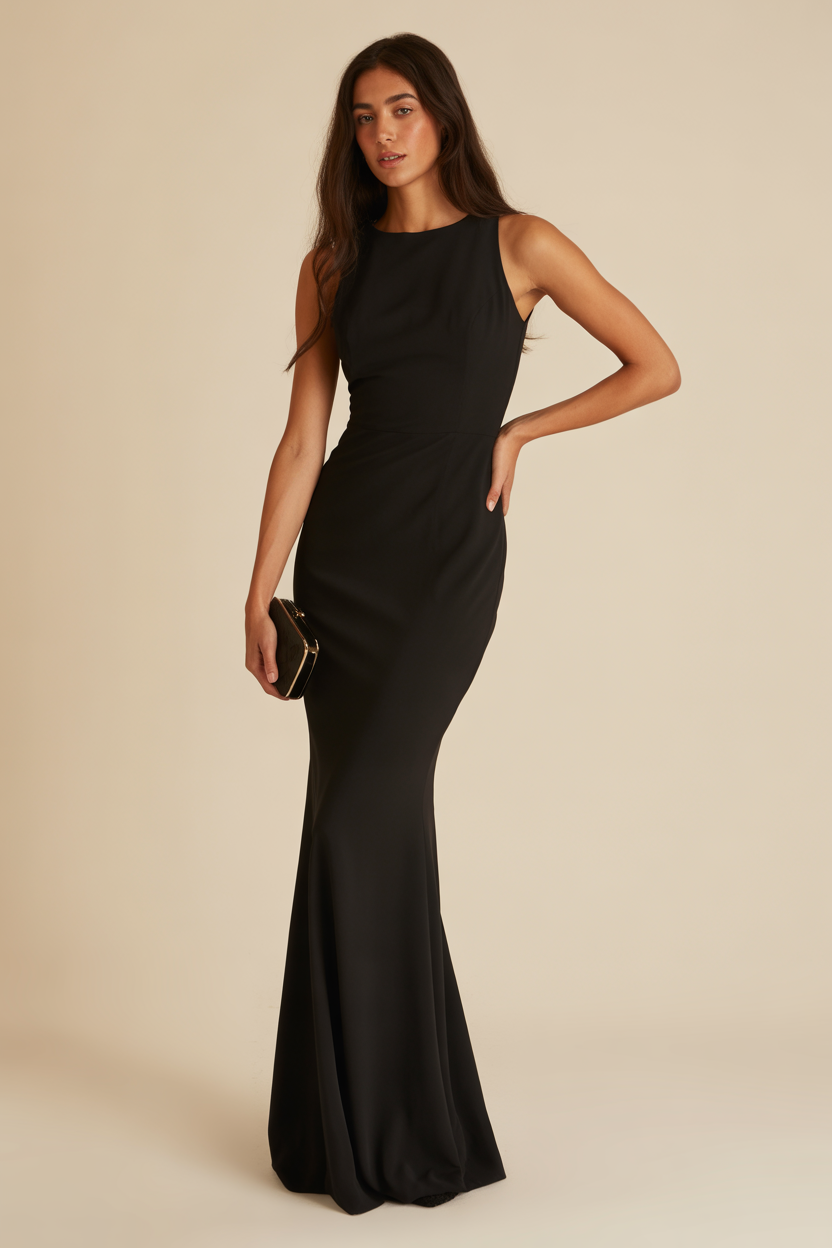
The high neckline paired with a mermaid silhouette is the minimalist’s formal power move. No skin, no embellishment, no print — just rich matte crepe that hugs the body, flares slightly at the hem, and hits the floor cleanly. This works at conservative venues, religious ceremonies, and any event where looking completely deliberate matters more than looking loud. Add a jeweled clutch as the only sparkle you need, and leave everything else at home.
Black Dark Floral V-Neck Mermaid Gown
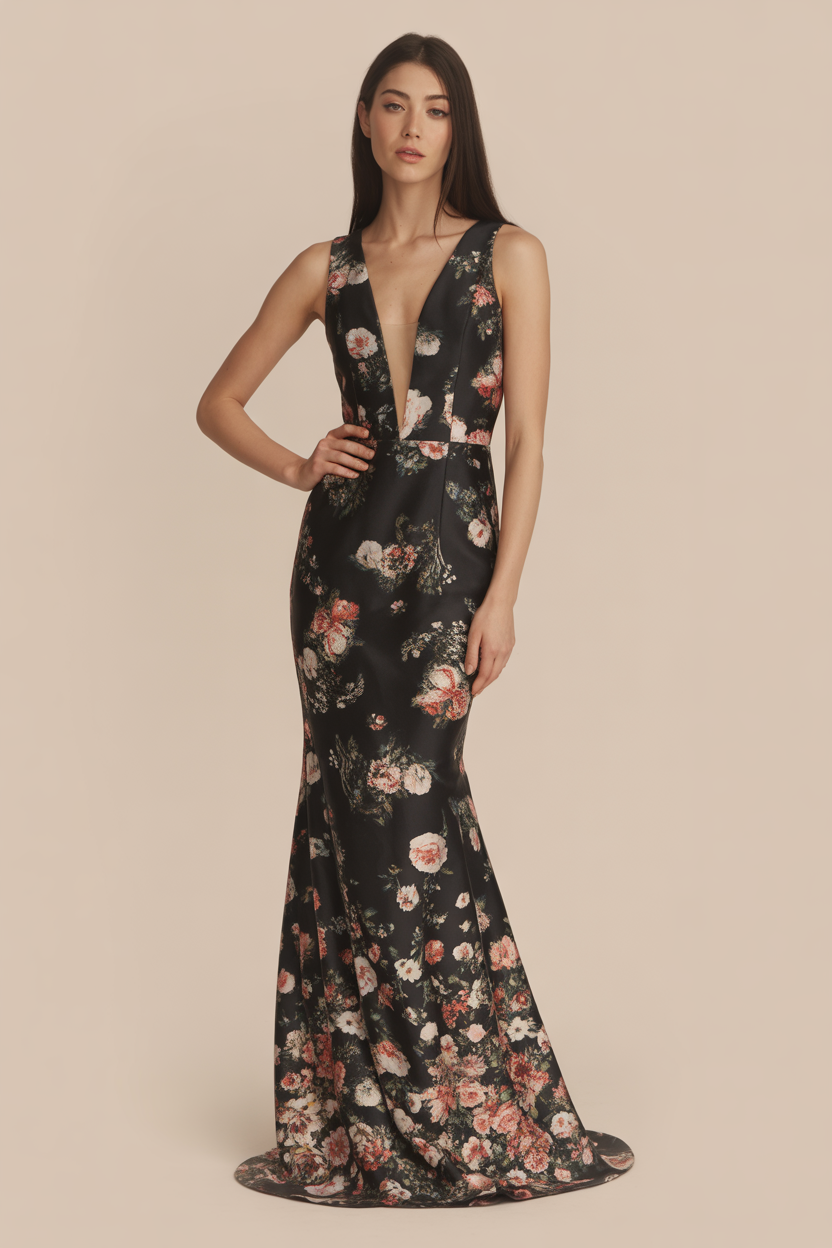
Here’s when a floral print absolutely works for a formal wedding: when the background is black, the pattern is dense, and the silhouette is unambiguously evening. The pink and coral flowers here read as texture from across a ballroom, not as a garden-party print — the black base absorbs the pattern and keeps the overall read squarely formal. Add a mermaid silhouette, a dramatic train, and a deep plunging V, and you have a dress that is visually unforgettable without breaking any dress code. This is for the guest who wants genuine visual interest without sacrificing formality.
Black One-Shoulder Draped Column Gown
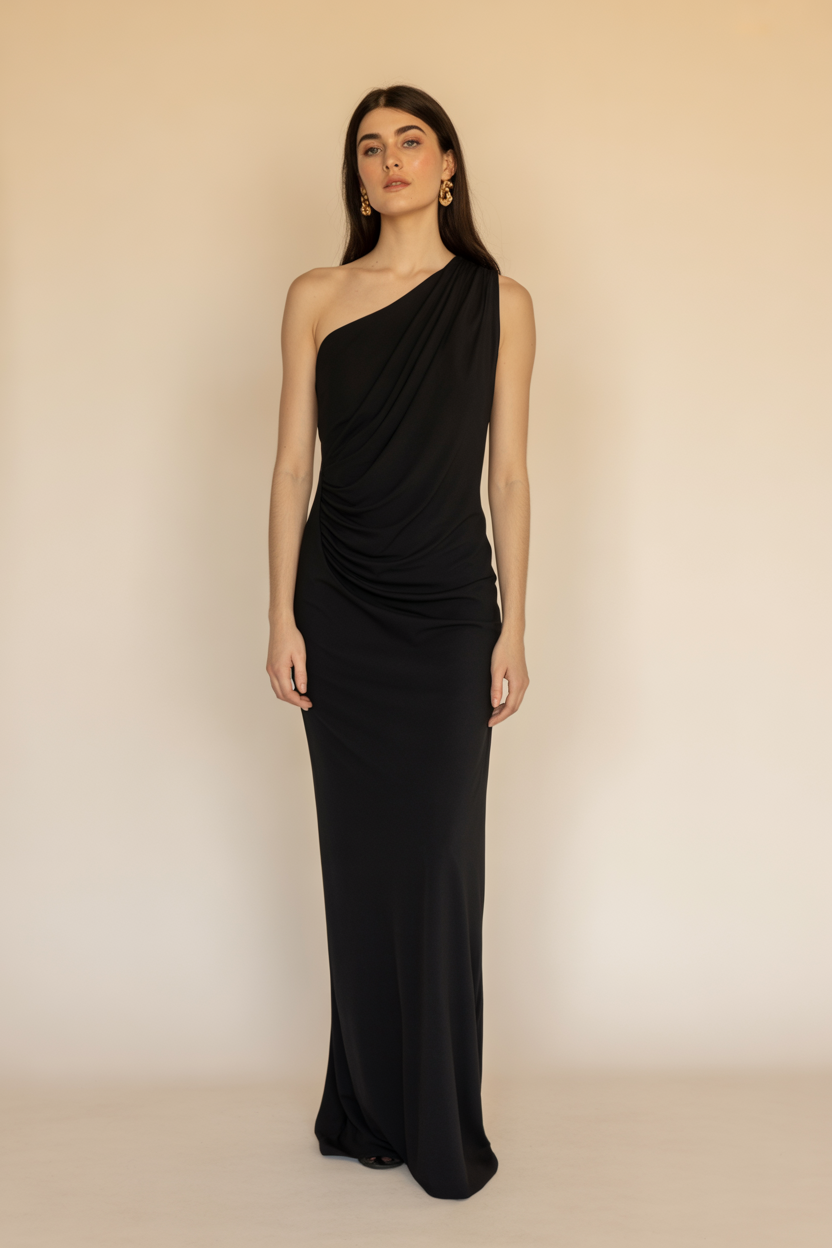
The gathered drape at the one shoulder does what sequins do — it creates movement and makes the dress feel designed rather than simply purchased — but it does it quietly. The fabric has a subtle sheen that catches light differently at different angles without announcing itself. This is the option for guests who want a classic black gown with one understated moment of drama. One pair of gold drop earrings and nothing else. The silence is the whole point.
Black One-Shoulder Gown with Back Scarf Detail
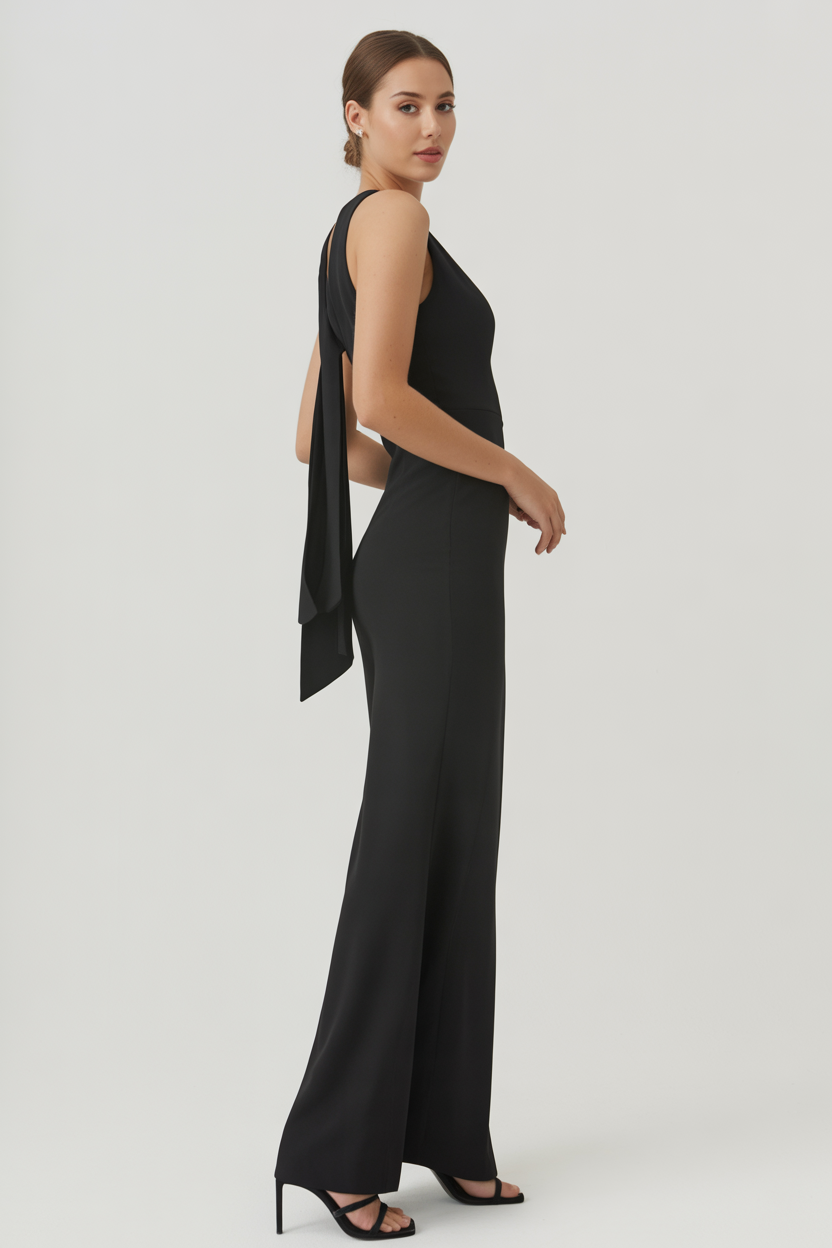
The back of this gown is the entire point of it. A long flowing scarf drapes from the one-shoulder construction down the spine, creating movement every time you turn or walk through a room. The front is a clean matte black column that shows nothing and asks for nothing. It’s the kind of dress that looks better from behind than from the front, which is exactly what you want at a reception where you’ll be in motion all night. The architecture does the work; you just have to show up.
Black Off-Shoulder V-Neck Column Gown
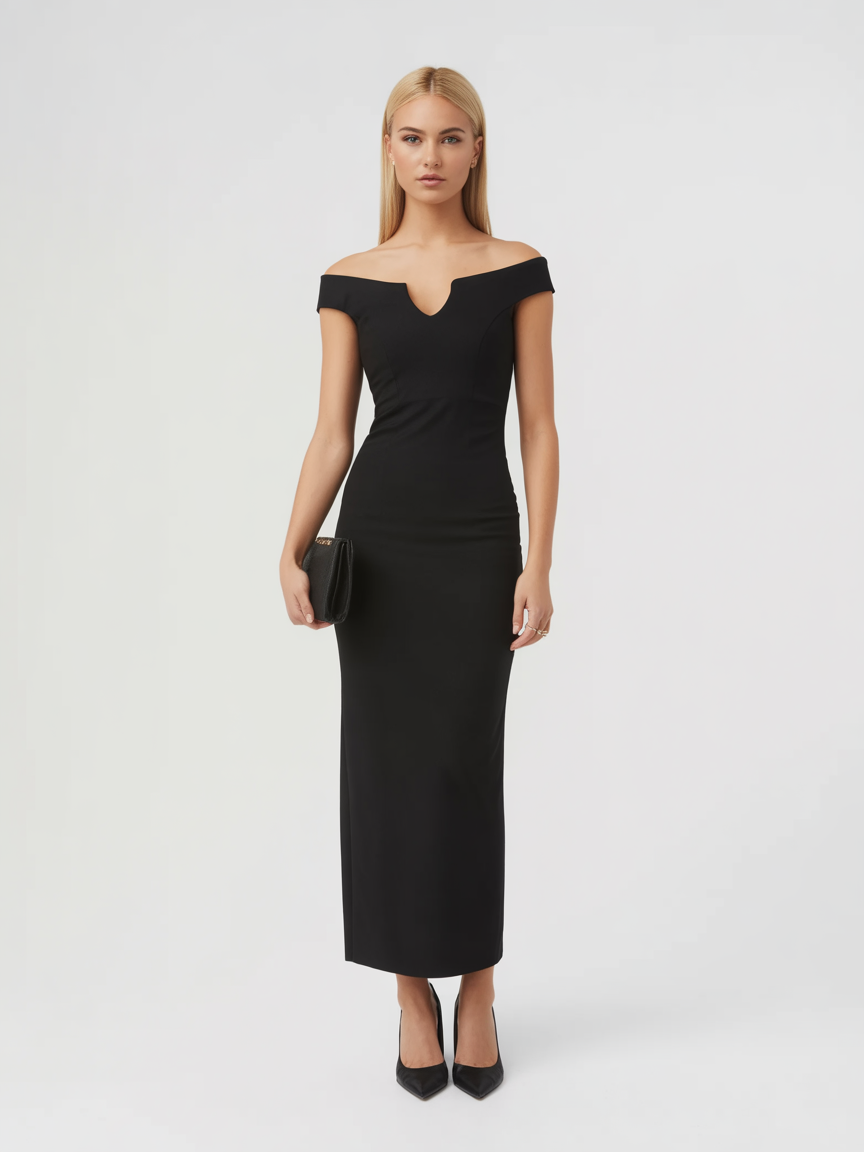
The off-shoulder neckline combined with a deep V cutout creates an interesting geometry that you don’t see on most formal dresses — it’s structured and architectural without looking complicated. The ankle-length is very slightly short of floor-length, but the structured crepe fabric and pointed-toe heels keep the formality intact. This is a sharp, modern take on the classic black formal column for guests who want something clean and purposeful rather than traditionally draped.
Black Off-Shoulder A-Line Floor-Length Gown
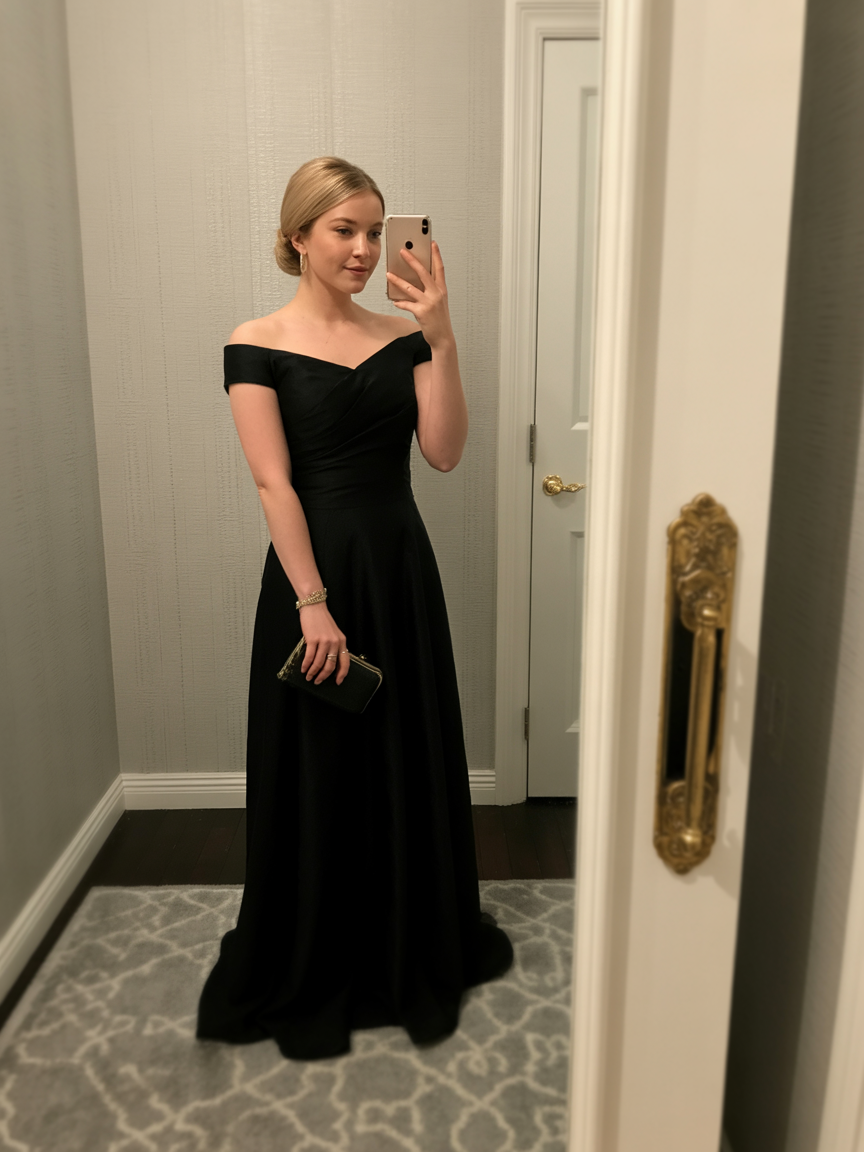
The mirror selfie setting is usually a limitation; the dress here is stunning enough to carry it anyway. The bardot/off-shoulder neckline with a full A-line skirt in heavyweight matte crepe — plus a slight train — is textbook formal wedding guest. The gold clutch and updo in the mirror shot actually do useful work here: they show exactly how to accessorize a black floor-length gown to make it read celebration rather than understated. Study this one for the styling notes, not just the silhouette.
Black and Champagne V-Panel Satin Gown
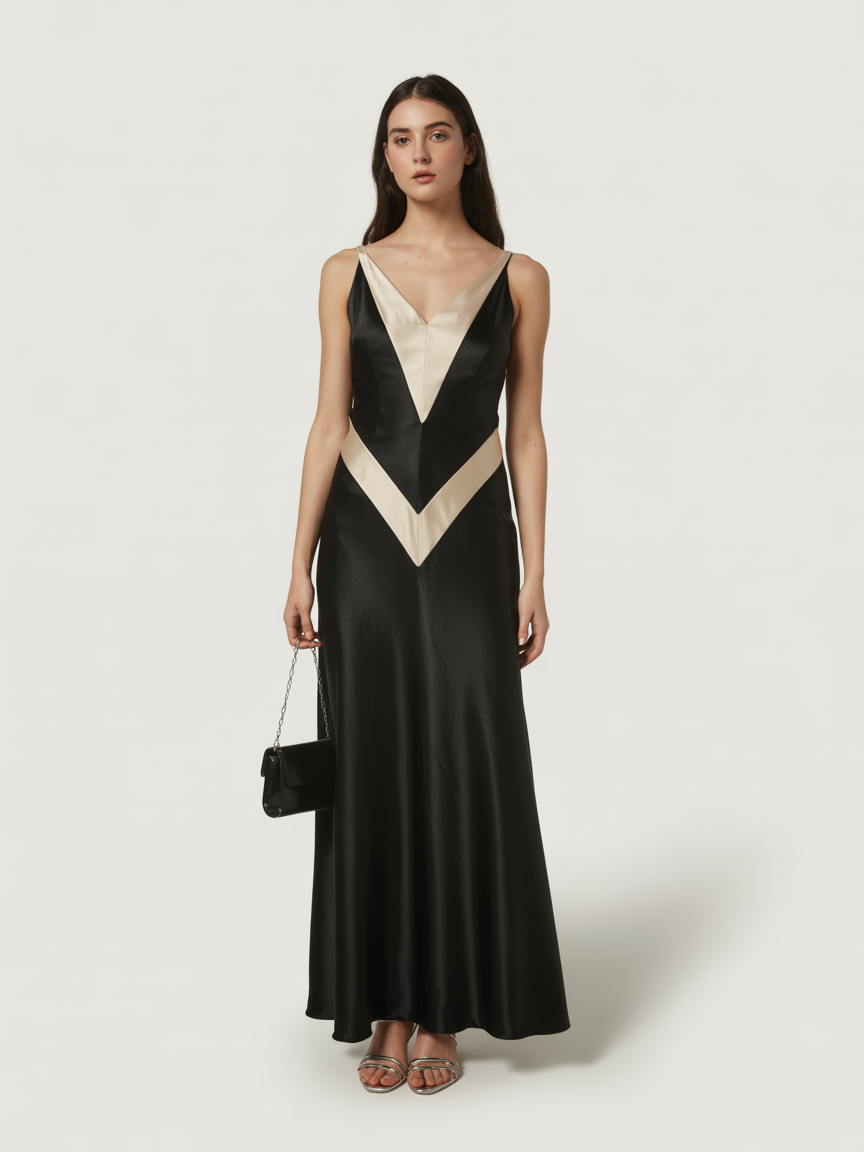
The champagne V-panel set against the black satin is the architectural detail that makes a simple slip dress feel genuinely designed. The contrast draws the eye to the neckline and waist simultaneously, creates the illusion of structure on a slip silhouette, and adds visual interest without a single print or embellishment. If you’re the guest who worries that a plain slip dress looks underdressed, this is the exact version that resolves that entirely — the panel does all the work you were trying to do with accessories.
Black and White Asymmetric Peplum Column Gown
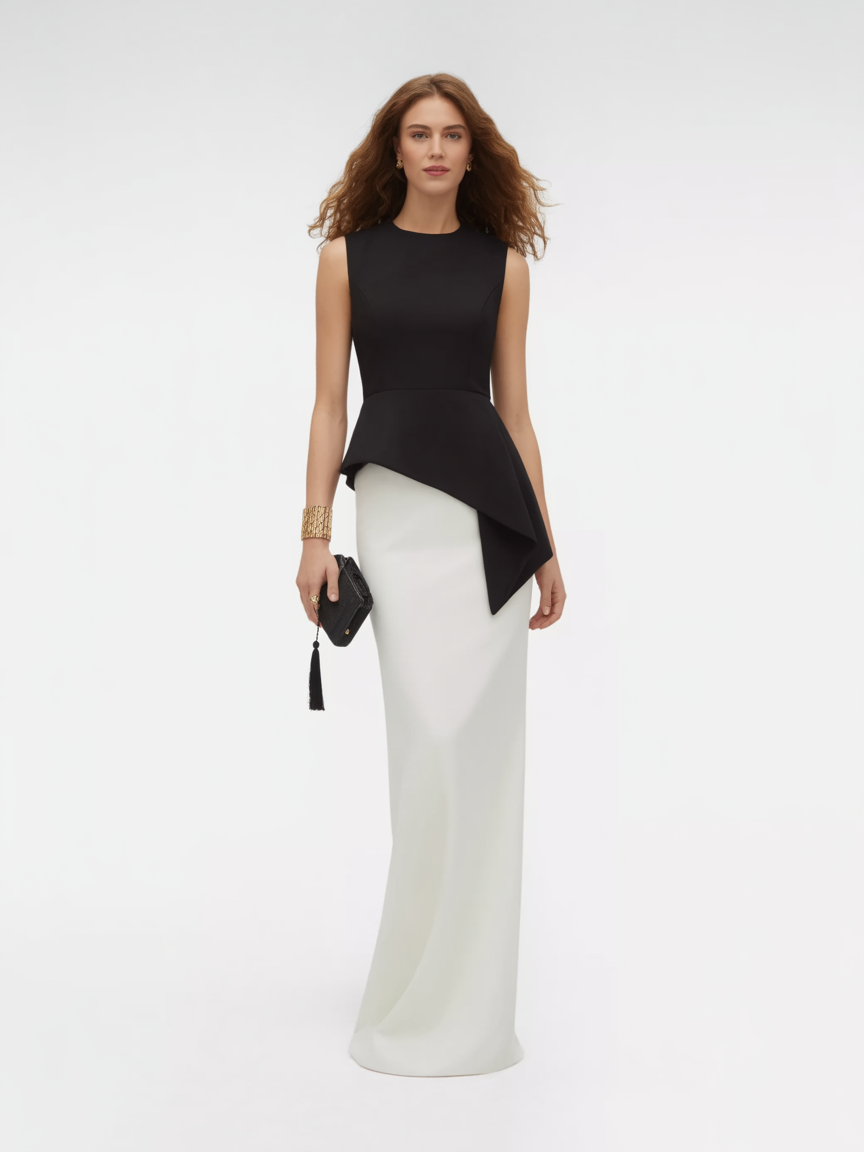
The color-block drama here does everything a print or embellishment would do — but cleaner and more architecturally considered. The fitted black bodice with its asymmetric peplum drape flows into a sleek white floor-length column skirt, creating a silhouette that looks designed rather than purchased off a rack. This works especially well for creative black tie invitations, cocktail-formal hybrid events, or any guest who wants to look deliberately fashion-forward without reading as attention-seeking. The small tasseled clutch is exactly the right understated accessory for a dress this structural.
Black Square-Neck Gown with Lace Overlay Skirt
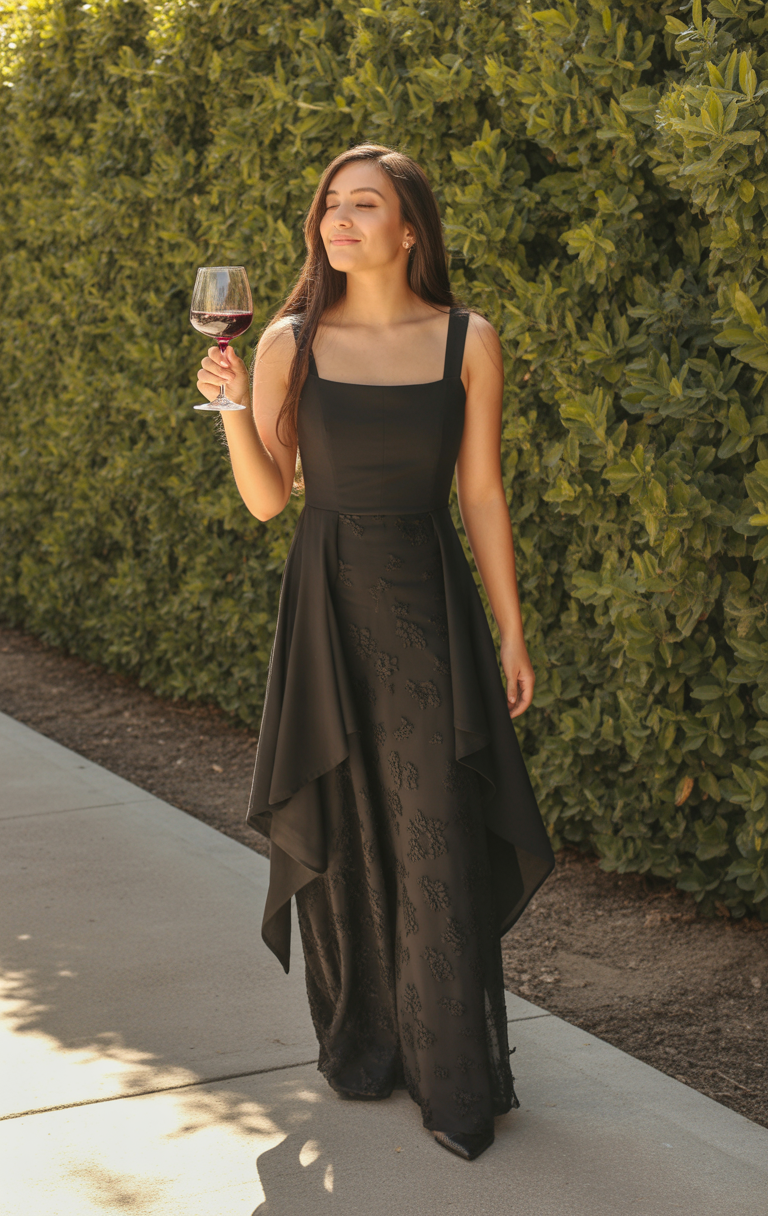
The square neckline with thick structured straps is modern and strong — it frames the face without needing a statement necklace to carry the look. The skirt in layered dark brocade and lace creates an asymmetric silhouette that moves differently from every angle and photographs beautifully at a venue with good lighting. The formal garden setting here is contextually correct: this is a dress for an event worth actually dressing for. Black pointed-toe heels and long hair worn down let the skirt construction be the focus.
Black Satin Cap-Sleeve Column Midi
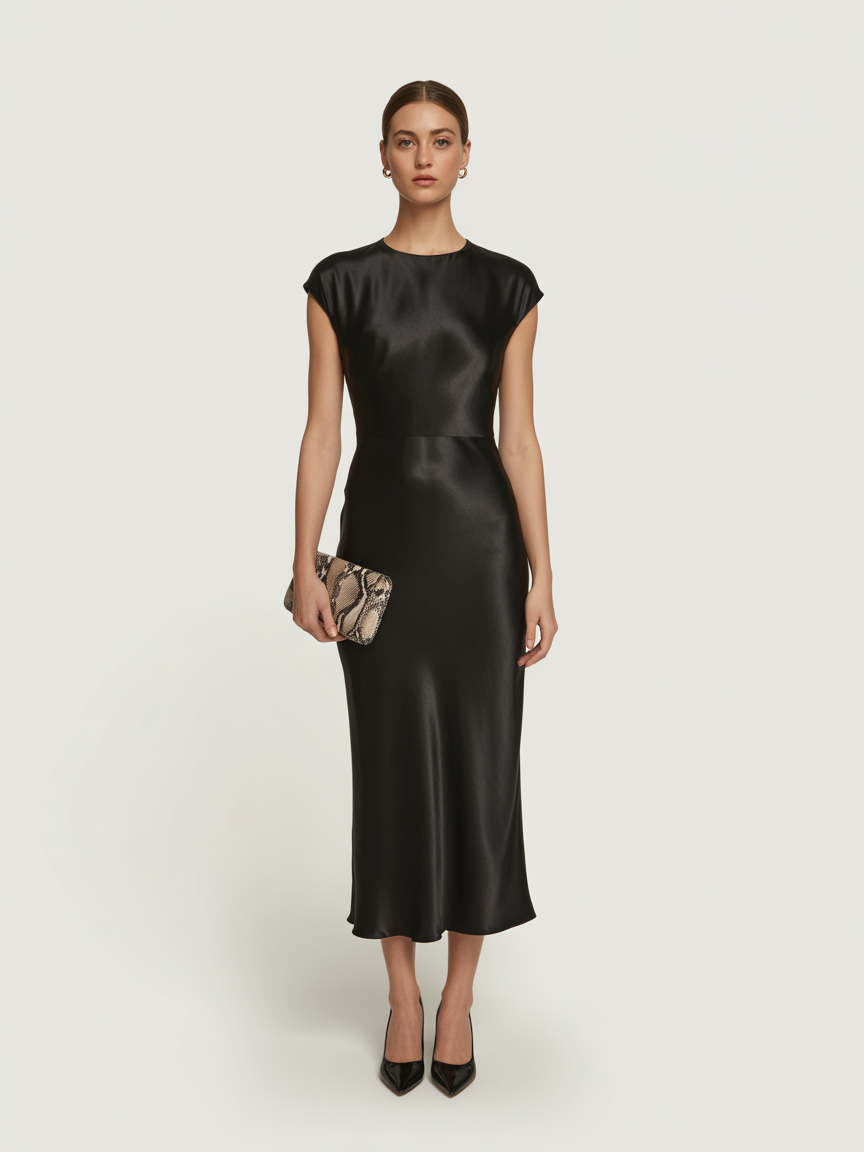
Short cap sleeves on a high-neck black satin column midi might be the single most underrated silhouette in wedding guest dressing. It covers your arms without the bulk of long sleeves, eliminates the strapless bra situation entirely, and the high-sheen satin catches light in a way that reads unambiguously evening at any formality level from cocktail up. The snakeskin-textured clutch adds pattern interest without distracting from the dress. This is the pick for guests who want to be comfortable from the ceremony through the last dance without compromising on elegance once.
Black Bow-Strap Square-Neck A-Line Midi
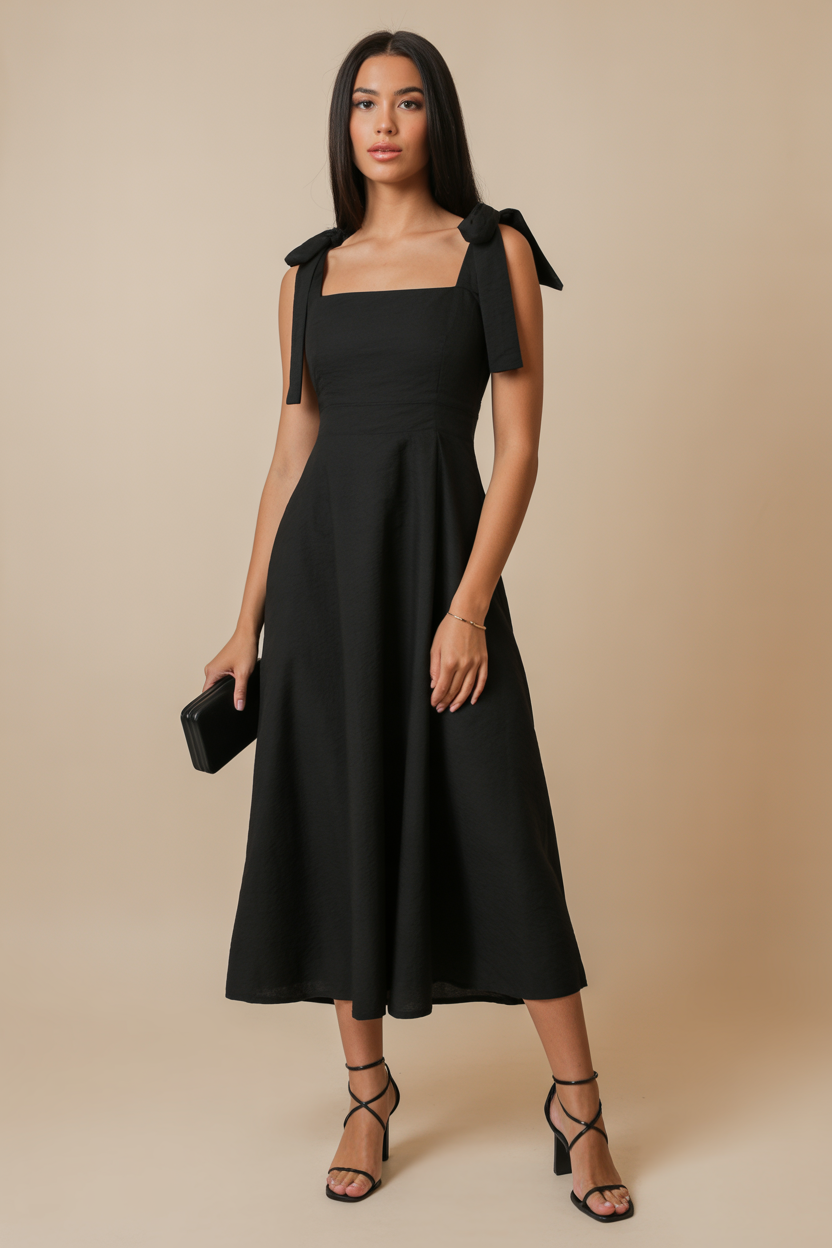
The bow-tie straps with a square neckline are a cocktail-register detail — deliberately playful, clearly intentional, and exactly right when the invitation says “cocktail attire” or “festive formal” rather than full black tie. The A-line skirt in a structured matte fabric lands at calf length with enough volume that it photographs beautifully and moves well on a dance floor. If you’ve been handed a semi-formal occasion and want to wear black, this is the dress that reads as a genuine choice rather than a fallback.
Black Strapless A-Line Satin Midi
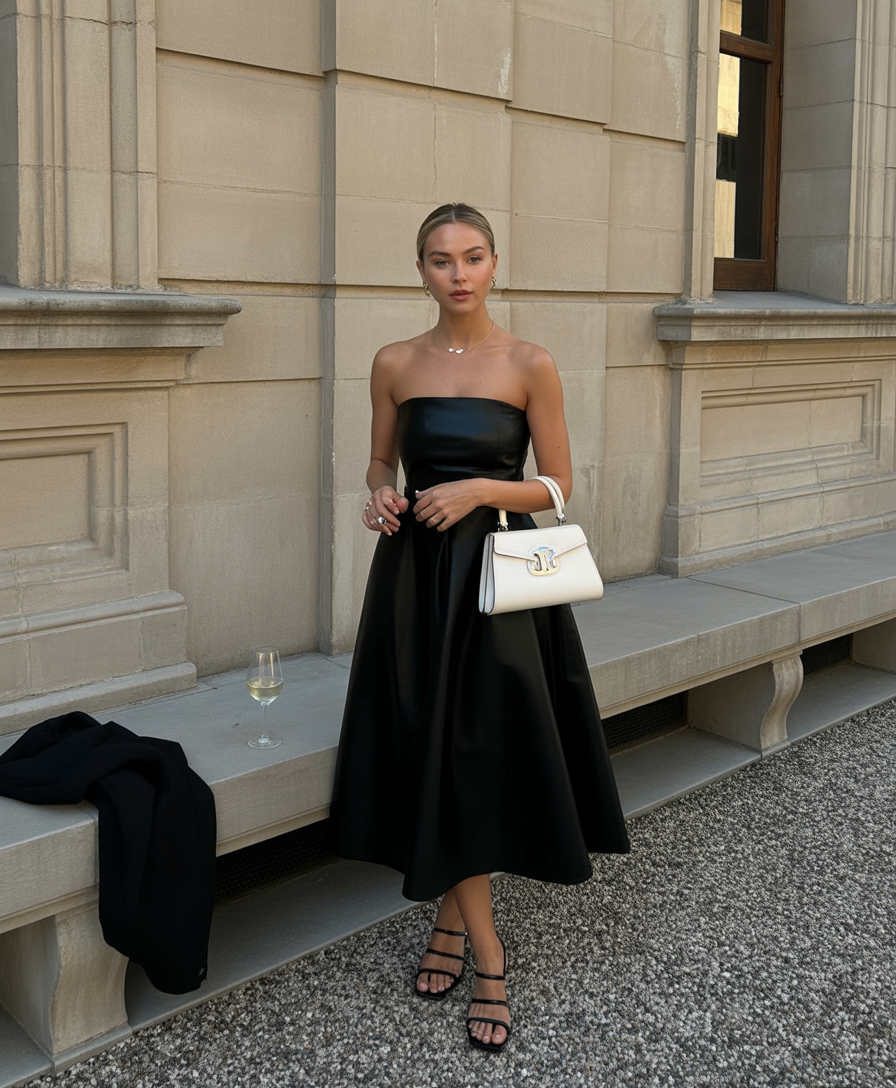
The strapless A-line in heavy black satin is the shorter-hemline option that works when everything else about the dress — and the context — is clearly formal. The full A-line skirt holds its shape across an entire reception, the heavy satin rules out any dress code ambiguity, and the formal stone building in the background shows exactly the caliber of event where this choice lands correctly. Get the strapless situation sorted before you leave the house (silicone grip strips, not prayers), and wear a structured clutch rather than a crossbody. The dress handles the rest.
Black Sleeveless Wide-Leg Jumpsuit
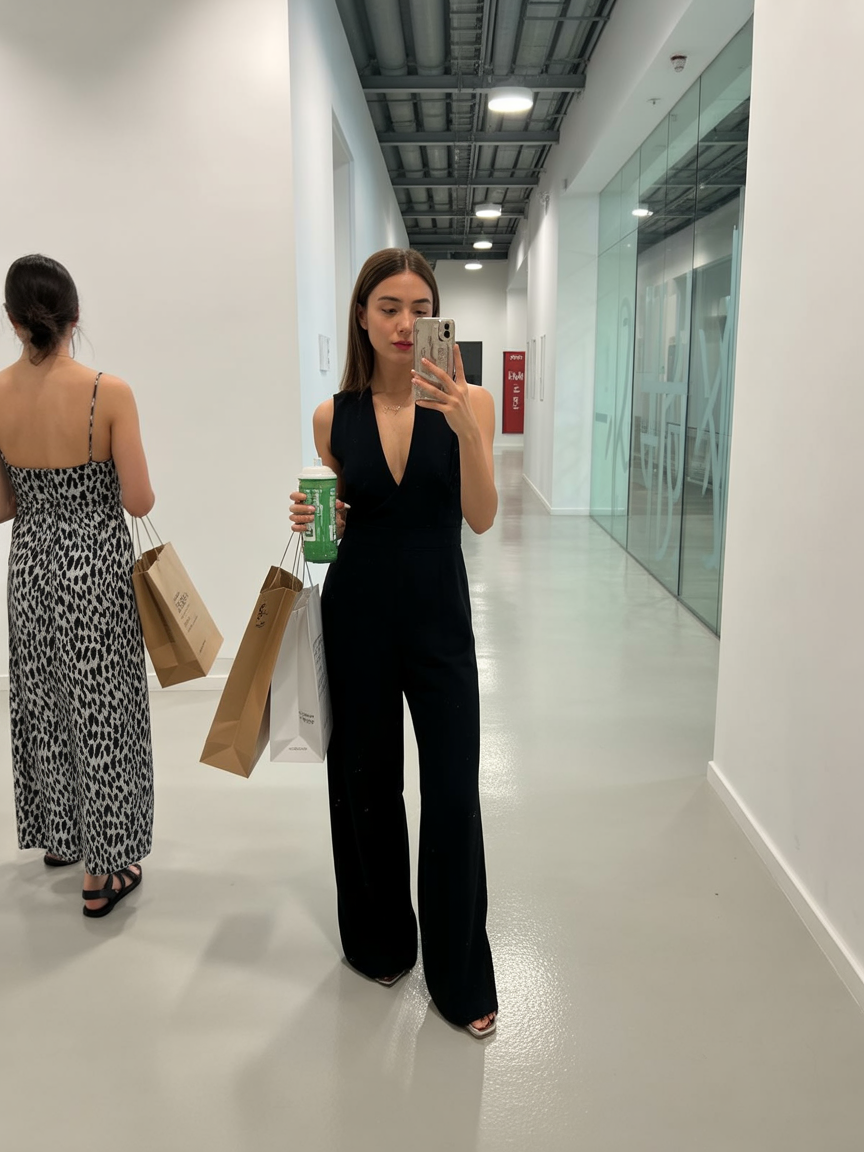
Black wide-leg jumpsuits have officially crossed into accepted wedding guest territory — with the right execution. This one earns it: sleeveless, plunging V-neckline, floor-grazing wide legs in a structured matte fabric that moves the way a gown does. The setting is a corridor rather than a venue, which is the one note, but the garment itself is exactly right. Wear with high heels that extend the leg line, a structured clutch, and bold earrings so the jumpsuit reads as a deliberate style choice rather than an office-party default.
Black Floral Lace Three-Quarter Sleeve Dress
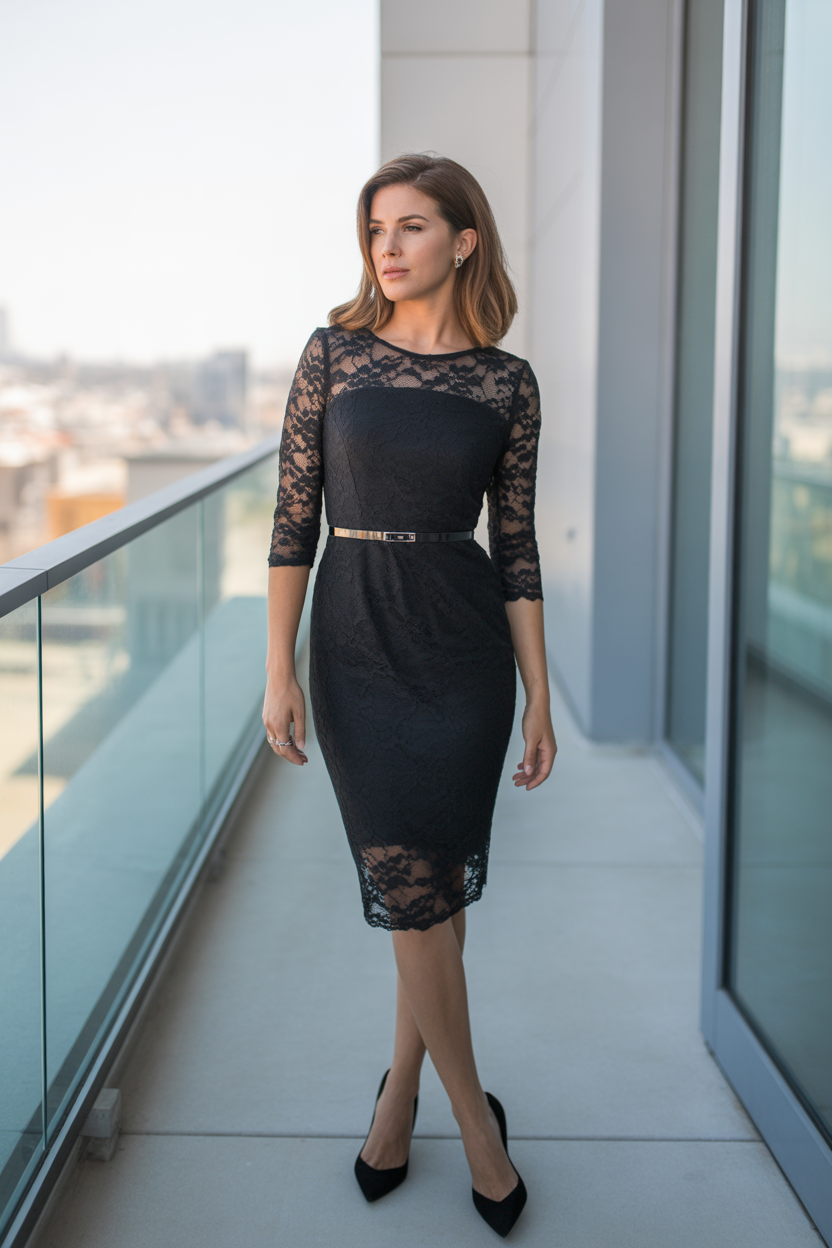
Black lace with a nude underlay and three-quarter sleeves is the cocktail-register option for guests who want coverage, texture, and formality without a floor-length gown. The floral lace overlay creates visual interest across the entire dress, and the fitted pencil silhouette hits just at the knee — correctly calibrated for cocktail attire, afternoon ceremonies, and evening events that don’t specify black tie. The three-quarter sleeves eliminate any layering-in-cold-weather problem and make this a four-season option. A thin belt at the waist (as shown) defines the silhouette without adding bulk.
Is It Okay to Wear Black to a Wedding?
Yes — for most Western weddings, black is completely appropriate guest attire, and has been for well over a decade. The old tradition of avoiding black at weddings (it was associated with mourning) has effectively dissolved in North American and most European contexts. The etiquette concern you occasionally see cited is largely an artifact from an earlier era that doesn’t reflect how most guests, couples, and venues actually think about it now.
That said, context still matters. If the couple has specifically requested no black on the invitation — it happens, though rarely — honor it. Certain cultural and religious wedding traditions also carry specific expectations around black as guest attire, so if you’re attending a wedding from a cultural background you’re less familiar with, it’s worth doing a quick check or asking a friend closer to the couple. And at a very formal traditional daytime ceremony, an all-black floor-length gown can occasionally feel heavier than the room calls for — in which case a colorful accessory or shoe resolves it easily.
The more useful question is never simply “can I wear black?” but rather “is this specific black dress the right choice for this specific event?” A heavy sequin gown is wrong at a garden party whether it’s black, emerald, or blush. A lightweight jersey shift is under-dressed at a ballroom whether it’s black, navy, or ivory. The color is not the variable. The dress code, the fabric, and the silhouette are.
Match Your Black Dress to the Dress Code
The invitation wording tells you exactly how much creative range you have with a black dress — or any dress. Here’s how to read it.
Black Tie and Black Tie Optional
Black is one of the most reliable colors for a black tie event — arguably the most reliable. Floor-length is the expectation, and a black floor-length gown in quality fabric (structured crepe, heavy satin, silk, sequin) is never wrong. For black tie optional, a floor-length gown is still your safest interpretation, but a very formal midi in exceptional fabric (brocade, intricate lace, heavy satin) can also work. Black at black tie requires no explanation or justification.
Cocktail and Semi-Formal
This is black’s strongest category for wedding guest dressing. A black midi in satin, a fitted black dress with lace or structural detail, a sleek black column that hits below the knee — all of these are textbook cocktail attire and require no mental gymnastics. The main watch-out at cocktail level: avoid fabrics that flatten in flash photography (very lightweight matte jersey, for instance) and choose a silhouette with some visual interest — a neckline detail, a texture, a good sleeve construction. Plain black at the cocktail level needs one thing to distinguish it.
Garden Party and Casual Outdoor
Black works for outdoor and garden-party weddings with a fabric adjustment. Heavy satin, velvet, and dense crepe are seasonally wrong for a summer garden event — they trap heat and read as too formal for the setting. For warmer outdoor occasions, choose black in a lighter fabric: chiffon, lightweight jersey, or a cotton-blend in a clean silhouette. The dress code may be casual, but a structured silhouette in a lighter black fabric is always more polished than a shapeless one.
Beach Weddings
Black absorbs heat, which makes it a genuine practical problem for daytime beach ceremonies in warm weather. For beach events, consider whether you’ll be in direct sun for any extended period — and if yes, a lighter color may genuinely be the more comfortable choice. For evening beach events or ceremonies in covered outdoor spaces, a lightweight black dress is fine. The constraint here is thermal, not etiquette.
How to Style a Black Wedding Guest Dress
All-black has a strong point of view. The styling decisions that make it work are actually more focused than with a bolder color, which makes them easier once you understand the logic.
Shoes
Gold, nude, or metallic heels are the clear go-to, and they work reliably because they add warmth and light to an all-dark palette. Black shoes with a black dress are completely intentional and sleek — they also visually elongate the leg, which is particularly effective with floor-length gowns. Silver is clean and modern against black. The one combination to avoid: very casual footwear (block-heeled sandals, flat mules, obviously daytime styles) on an otherwise formal dress — the shoes will drag the formality of the whole look down to their level.
Jewelry
Black absorbs color rather than reflecting it, which means jewelry reads more distinctly against a black dress than against a colored one. One statement piece — a substantial earring, a bold cuff, a layered necklace — reads better than four modest pieces competing for attention. Gold jewelry adds warmth and reads as celebration; silver is precise and modern. For formal events, diamond or crystal accents catch candlelight against black in a way that nothing else does quite as effectively.
Bag
A small structured clutch — in gold, silver, nude, or a deliberately contrasting color — completes an all-black look without competing with it. Matching the bag exactly to the dress is intentional and sleek when done correctly, but it needs to be a deliberate aesthetic choice, not an accident. A metallic clutch is almost always the right call and requires zero mental energy. Avoid crossbody bags with a formal dress; the strap changes the entire visual register of the outfit.
The One-Item Rule for Making Black Feel Celebratory
If you want the all-black look to read unmistakably as “guest at a celebration” rather than anything else, add exactly one item with color, light, or personality: a bright clutch, a metallic shoe, a bold earring in an unexpected color, or a statement lip. You need one — not three, not zero. One deliberate choice is what turns a reliable outfit into an actual look. Whatever you choose, let it be the thing. Resist the instinct to accessorize on top of it.
FAQs
Is it rude to wear black to a wedding?
No — not in most contemporary Western wedding contexts. The old association between black and mourning has largely faded, and most couples today don’t object to black guest attire and many actively expect it. The exception: if the couple has specifically noted on the invitation that they’d prefer guests not wear black, you should honor that. Some cultural and religious wedding traditions also have specific norms around black as guest attire, so it’s worth a quick check if you’re unfamiliar with the couple’s background. In the absence of any specific guidance, black is a completely acceptable choice.
Can I wear all-black to a wedding or do I need to add color?
All-black is fine. You don’t need to add color — but one intentional element that reads as celebration (a metallic shoe, a bright clutch, a bold earring) is the difference between an outfit and a look. All-black without any brightening element can read flat in photos and occasionally gloomy in a candlelit ballroom; one reflective or colorful accent solves this without requiring you to abandon the palette you chose.
What kind of black dress is appropriate for a daytime wedding?
Choose a lighter fabric and a silhouette that reads daytime: a black midi in chiffon or lightweight jersey, a structured black dress with interesting neckline detail, or a black A-line with some movement in the skirt. Avoid heavy satin, velvet, sequins, or floor-length formal gowns at daytime events — the formality and the fabric weight are both calibrated for evening, and they’ll look visually mismatched against a daytime setting and natural light. The same principle applies to any other color; black is not uniquely problematic for daytime weddings.
Can I wear a black floral dress to a wedding?
It depends on the floral. A black dress with a dense dark floral print — where the black is the dominant base color and the print is secondary — reads as formal and is appropriate across most dress codes. A black dress with a bright, light-toned, or large-scale floral print will read as semi-formal or garden-party depending on the pattern scale. The rule of thumb: if you can see the black from across a room, the dress still reads as a black dress. If the print overwhelms the base color, it reads as the print — and you’re dressing to that formality level instead.
What shoes look best with a black wedding guest dress?
Gold strappy heels, nude or blush pointed-toe heels, black patent or satin heels (for a sleek monochromatic look), or silver metallic sandals — any of these work and all are reliable. The monochromatic black-on-black option is particularly effective with floor-length gowns: matching or very dark shoes create a clean vertical line from hem to toe that reads as intentional and elongating. For cocktail-length dresses, a metallic or nude shoe creates better contrast with the hem and gives the legs more visual definition. Match the shoe formality to the dress formality; an otherwise elegant dress paired with casual footwear will have one note off the whole time.