
26 Classic Wedding Invitations for Brides Who Want Timeless
There’s a specific feeling that happens when you pull a classic wedding invitation out of its envelope. The weight of the card, the formality of the wording, the way the calligraphy sits on a clean white ground. It communicates everything about the occasion before you’ve read a single word. Trends come and go every season, but a cream card with a crest and proper wording looks exactly as right in your photos twenty years later as it does the day it arrives.
Classic doesn’t mean plain, though. It means intentional. We’re talking formal typography, traditional phrasing like “requests the honor of your presence,” and color palettes that have been earning their keep for decades: white, ivory, navy, black, gold, burgundy. Some of the invitations here have velvet pocket folders and embossed metallic script. Others carry their formality with a single ornate monogram and nothing else. What they all share is a refusal to follow whatever trend the algorithm is pushing this season.
Whether you’re drawn to a crisp white card with a calligraphy header, a deep navy invitation with silver embossed script, or something with a full illustrated crest that will make guests wonder if you’re quietly a member of the aristocracy, we’ve gathered our favorite classic invitations from real weddings to inspire yours. Click through to see the full wedding behind any invitation you love! For even more inspiration, browse our Real Weddings directory.
Classic White and Ivory Wedding Invitations
The white wedding invitation has been doing its job for a very long time, and there’s a reason it hasn’t been replaced. Clean, formal, and readable at any age, these invitations communicate occasion without having to try hard. From simple calligraphy headers to subtle gold borders, the entries below prove that white and ivory have more range than people give them credit for.
White Suite with Lavender Border and Calligraphy Names

A white suite is about as classic as it gets, and the subtle lavender border here does exactly what a good detail should: it adds something without taking over. The calligraphy names anchor the invitation and give it that handwritten quality that feels personal without being casual. The full suite, complete with coordinating RSVP and enclosure cards, shows how a cohesive soft color story pulls together even the smallest pieces.
See Julie and Dan’s NJ Wedding →
White Card with Gold Calligraphy and “Marriage Of” Header

The phrase “the marriage of” in clean calligraphy at the top is one of those small choices that makes an invitation feel immediately formal. This white card leans into that tradition fully, pairing gold script with crisp text and no ornamentation beyond the wording itself. The wedding bands and engagement ring placed beside it in the flat lay feel entirely appropriate. This is the invitation that goes right back into an envelope and into a memory box.
See Lauren and Justin’s Hunt Country Wedding →
Crisp White Card with Centered Serif Typography

No script. No border. No flourish. Just precise, centered serif text in a traditional column format that has been doing the work for over a century. This is the invitation that signals “black tie” before you’ve read a word of the wording. If your venue is formal and your dress has a cathedral train, this is what you send.
See Shayla and Brett’s Columbia Wedding →
Cream Invitation with Gold Wax Seal and Formal Wording
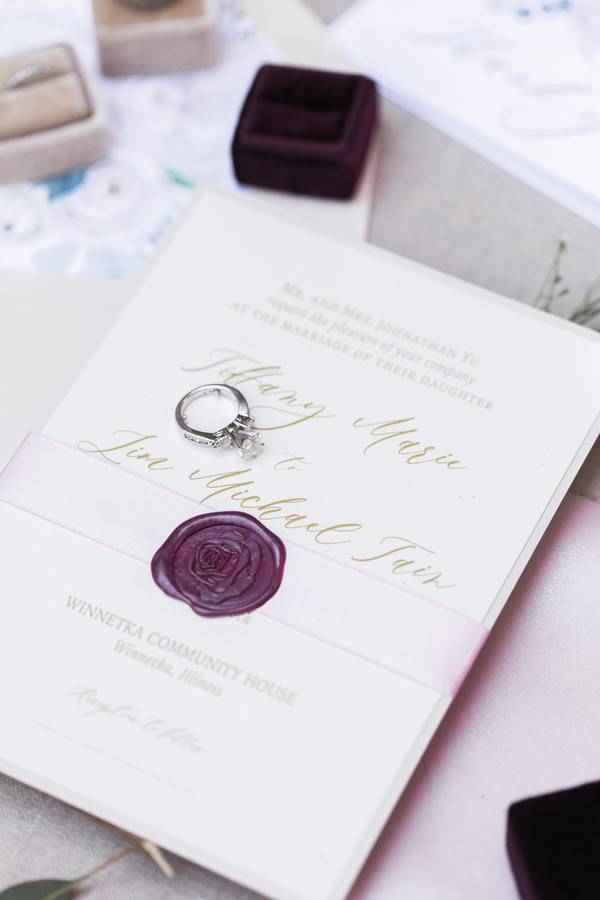
A wax seal is not decoration for its own sake. When it’s gold and stamped with a monogram over a cream card with properly formal wording, it becomes a statement of intention. This one has the proportions right: the seal size, the card weight, the traditional phrasing all working together without competing. Your guests will keep this one.
See this Purple and Gold Wedding Inspiration →
Clean White Card with “The Wedding Of” Calligraphy Header
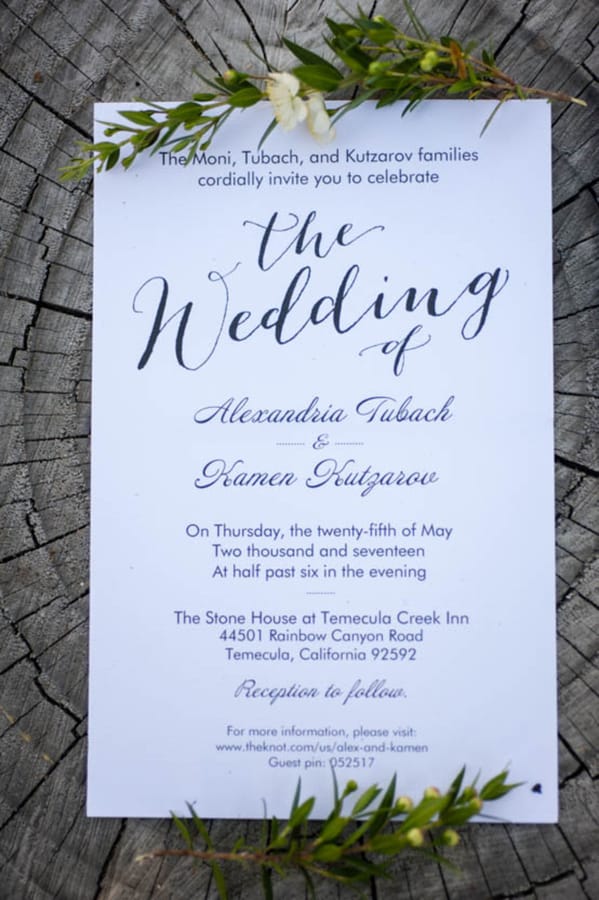
This invitation makes a strong case for doing less. The calligraphy header is elegant, the names follow in clear formal typography, and there’s nothing added that doesn’t belong. It’s the kind of design that still looks exactly right in photos twenty years later, which is precisely the point of choosing classic over trendy.
See Alex and Kamen’s Temecula Wedding →
Simple White Invitation with Gold Envelope Liner
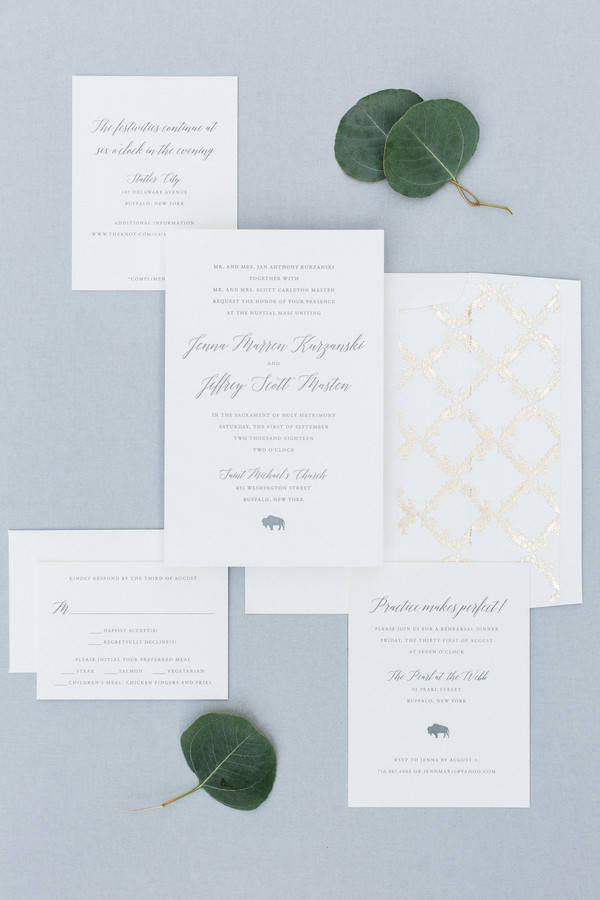
The invitation itself is clean and understated. But open the envelope and there’s a gold foil liner, and suddenly the whole thing feels like an occasion. That’s what a well-considered classic suite does: it builds the experience across multiple reveals. The calligraphy addressing on the outside is just the beginning.
See Jenna and Jeff’s Buffalo Wedding →
White Card with Whisper-Light Botanical Border and Formal Wording
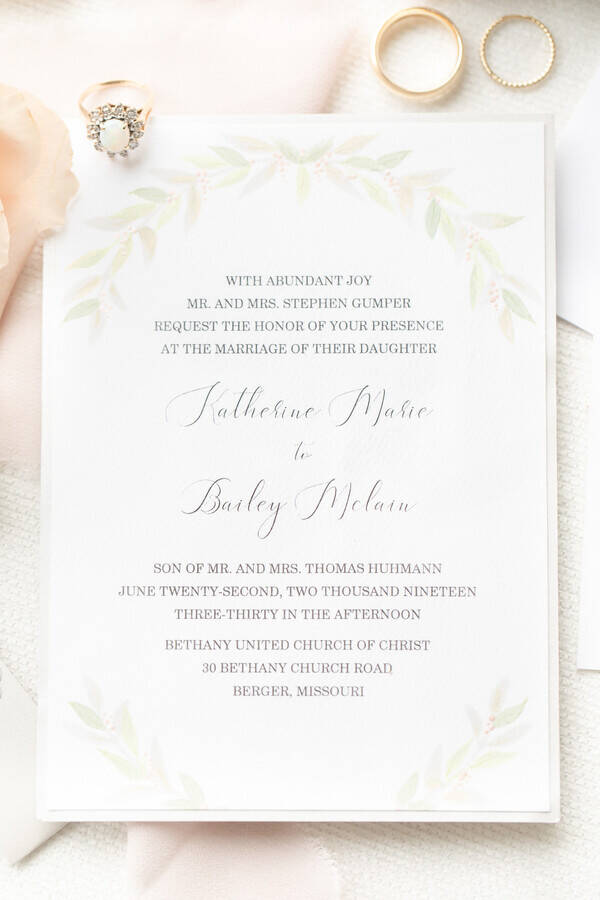
The botanical border here is barely there, which is exactly right for a classic invitation. You notice it, then you read the wording: parents listed by name, the formal request phrasing, the date spelled out completely, the church named in full. The pale green leaf sprigs frame the card without ever distracting from what it says.
See Kate and Bailey’s Hermann Hill Wedding →
White Card with Rose Gold Frame and Mixed Typography
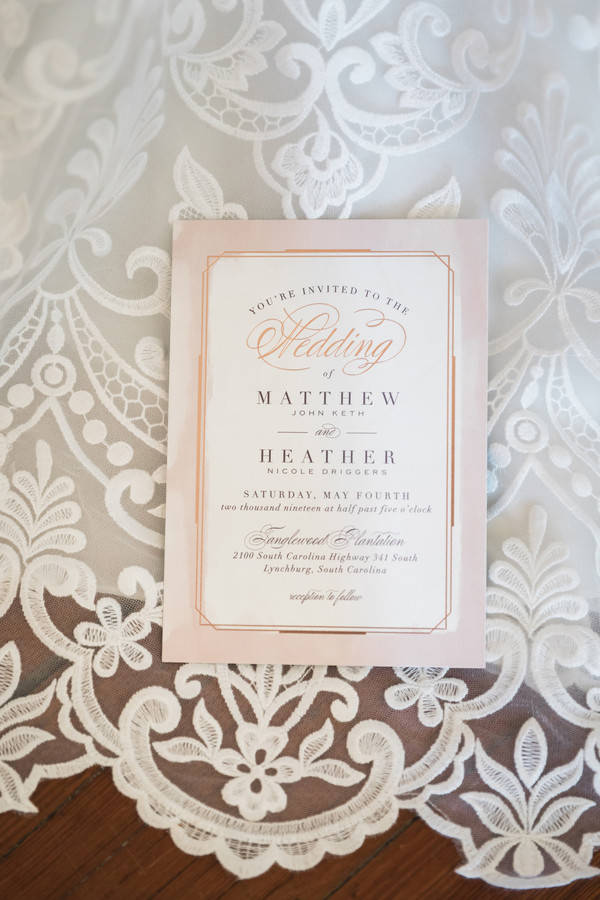
The rose gold rectangular border gives this invitation a slightly warmer feel while keeping the classic structure completely intact. The script “Wedding” header in matching rose gold transitions into formal wording below: spelled-out date, spelled-out time, full venue address. The proportions are confident and the color palette reads as timeless without being cold.
See Nikki and Matthew’s Plantation Wedding →
Pure White Card with Script Monogram and Traditional Wording
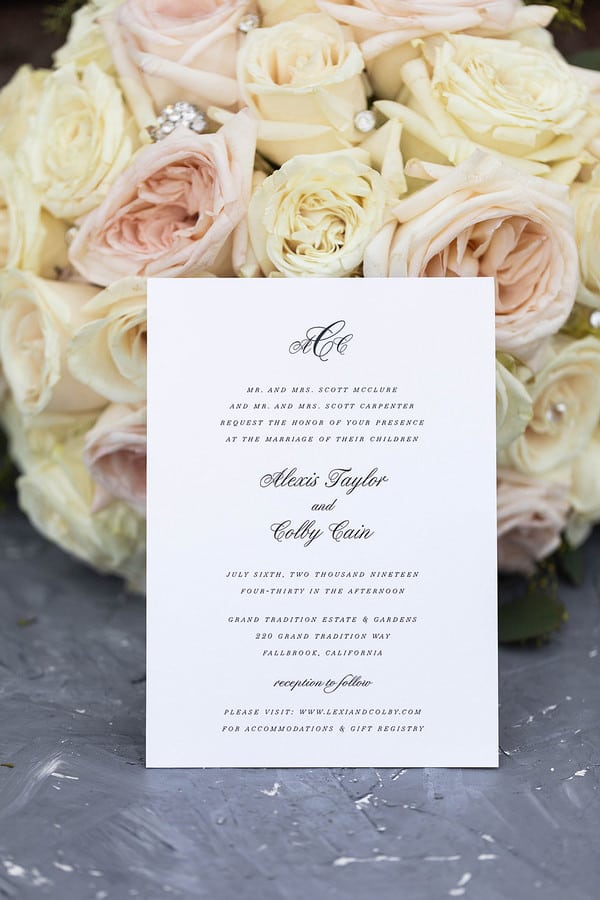
This is a textbook classic wedding invitation, and that’s not a backhanded compliment. The script monogram at the top, the formal parent-hosted wording (“request the honor of your presence at the marriage of their children”), the date and time written out in full. Every element earns its place and nothing is missing. The blush rose bouquet beside it in this image could not be a more perfect companion.
See Lexi and Colby’s Fallbrook Wedding →
Monogram and Crest Wedding Invitations
A monogram or crest on a wedding invitation is not just decoration. It signals that someone gave thought to every detail, and guests notice. These invitations range from a simple calligraphed initial to full illustrated venue engravings, but all of them share the same sense of occasion that comes from centering your identity at the top of the card.
Cream Suite with Pale Yellow Floral Border

A pale yellow floral border sounds soft, and it is. But it’s also structured: the flowers frame the card rather than filling it, which keeps this firmly in classic territory. The full suite coordinates beautifully, the envelope and enclosures sharing the same quiet color story. This is the invitation for a garden wedding that doesn’t lean bohemian or rustic, just genuinely elegant.
See Tamara and Edward’s Virginia Wedding →
Vellum-Wrapped Suite with Custom Monogram Crest

A vellum overlay over a formal invitation with a custom monogram crest is one of those design choices that communicates genuine effort. The crest centers the whole suite and the calligraphy beneath it completes the picture. When guests receive this, they understand immediately that this event has been planned with intention all the way down to how the card is wrapped.
See Catherine and David’s Fairhope Wedding →
Cream Card with Thistle Crest and Gold Monogram
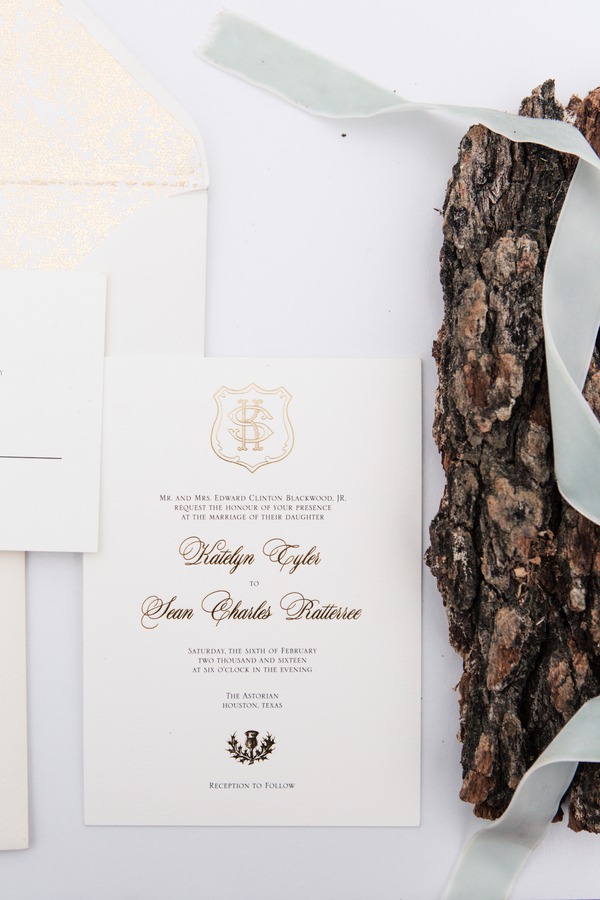
The thistle emblem gives this invitation a distinctly European sensibility, the kind you’d associate with a formal estate or a church ceremony with centuries of tradition behind it. The gold monogram and the structured layout are already doing the heavy lifting. The crest just elevates the whole thing. This one is best seen in person, where the embossing catches the light properly.
See this Olive and Gold Wedding Inspiration →
Peach Stationery Suite with Ornate Single-Letter Monogram

A single ornate letter at the top of an invitation has a long history, and this one does it right. The elaborate “R” is large enough to read as a design element without feeling like a logo. The peach and cream color palette is softer than traditional white and ivory, but the formal column layout and traditional phrasing keep it completely in classic territory.
See Rachel and Wesley’s Tennessee Wedding →
White Card with Encircling Gold Botanical Wreath Crest
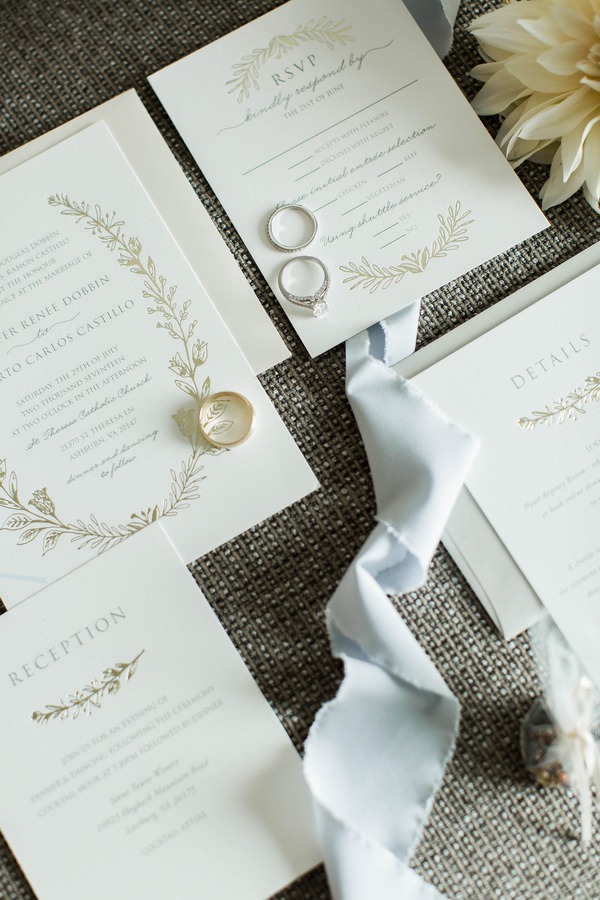
The botanical wreath here functions like a traditional crest: it defines a center, frames the most important information, and gives the eye a place to land. In gold against white, it reads as formal and deliberate. The full suite presentation, spread out with rings and enclosure cards alongside, shows how this invitation belongs naturally in a sophisticated, considered wedding context.
See Jennifer and Alberto’s Stone Tower Wedding →
White Invitation with Serif Monogram and Elegant Typography

This one relies almost entirely on typography, and it works because the monogram and the font choices are both impeccable. The layout is centered, the hierarchy is clear, and nothing is competing for attention. The velvet ring box beside it in the flat lay says everything about the kind of wedding this invitation belongs to.
See this Jonathan Edwards Winery Wedding →
Cream Card with Gold Filigree Scrollwork Crest
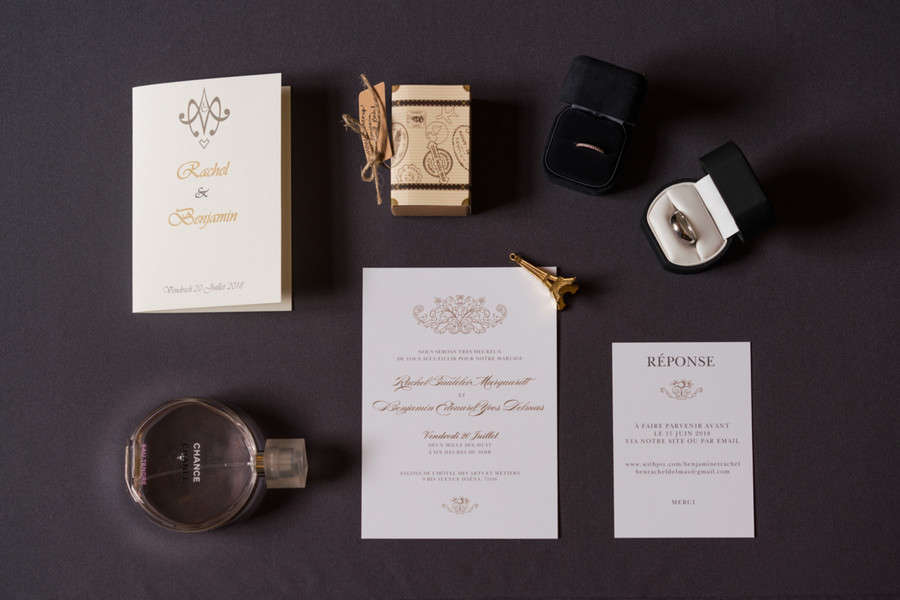
When a wedding takes place in Paris, the invitation should feel like it belongs there, and this one does. The ornate gold scrollwork crest anchors the top of the cream card, the calligraphy names run in elegant script below, and the formal French wording completes the effect. Paired with a matching booklet and RSVP card in the same graphic language, this suite is entirely regal.
See Rachel and Benjamin’s Paris Wedding →
Cream Card with Hand-Illustrated Château Venue Engraving
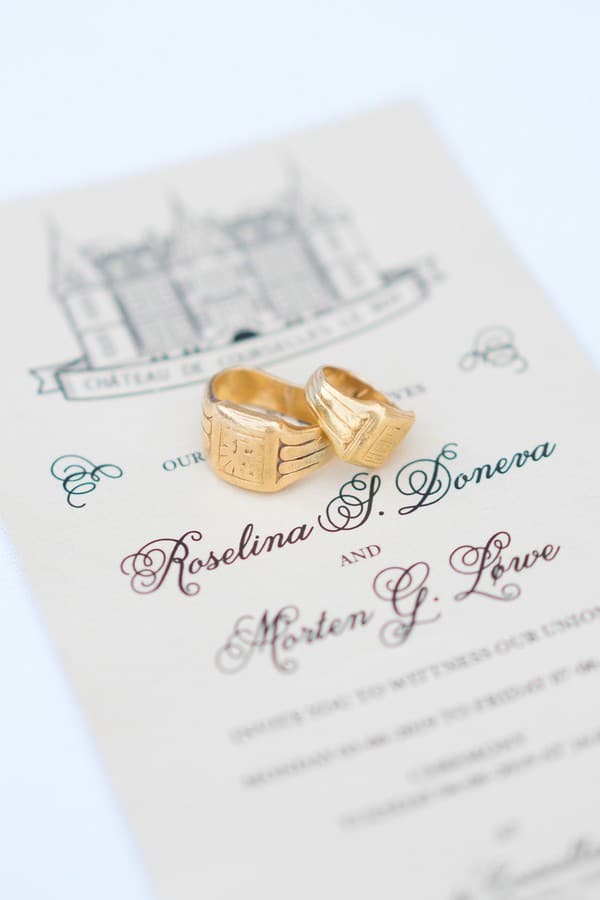
An illustrated venue is one of the oldest design conventions in formal stationery, and this card shows exactly why the tradition has lasted. The château is rendered in careful detail at the top of the cream card, telling guests precisely what kind of occasion they’re being invited to before they read the names. The burgundy calligraphy names and teal accent add character without disturbing the composition’s formal tone.
See Roselina and Morten’s Château Wedding →
Navy and Black Formal Wedding Invitations
If white and ivory feel too quiet for the scale of celebration you’re planning, navy and black invitations are one of the most dramatic moves in classic stationery and still completely traditional. These invitations use deep color to signal formality rather than trend, and every one of them communicates “this is an occasion” before anyone has read the wording.
Navy Card with Silver Embossed Script Typography

Silver script on a deep navy card reads more formal than almost anything else in the stationery world. The embossing gives the text a sculptural quality you can feel with your fingertips, which is half the point. This is the invitation for a black tie wedding at a ballroom, a private club, or anywhere that requires guests to reconsider their wardrobe before they RSVP.
See Nichole and Scott’s Sacramento Wedding →
Black Invitation with Gold Foil Pocket and Burgundy Wax Seal

The combination of matte black, gold foil, and a deep burgundy wax seal is formal in the extreme, and that’s the entire point. This suite has physical weight to it, literally and figuratively. When it lands in the mailbox, guests know before they open it that they’re being invited to something they won’t want to miss. The gold calligraphy addressing on the outside is just the opening line.
See Catherine and Fredrick’s Napa Wedding →
Navy Pocket Folder with White Scrollwork Calligraphy

A navy pocket folder is not a subtle choice, and it’s not trying to be. The white scrollwork calligraphy against the deep navy has a formal, almost theatrical quality, which works perfectly for an evening ceremony or any wedding that has a touch of drama in its design language. This is the invitation guests photograph before they even settle in to read it.
See this Desert Styled Wedding Shoot →
Navy Card with White Calligraphy and Delicate Floral Wreath
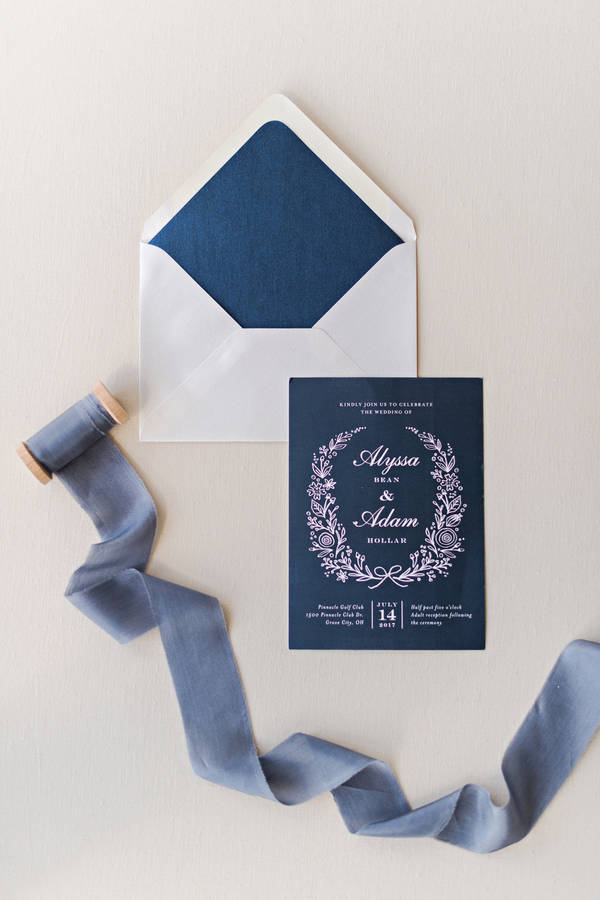
Navy with white calligraphy is a pairing that works because the contrast is so clean and readable. The floral wreath here adds softness without weakening the formality of the dark ground. This is a strong option for couples who want the drama of a navy invitation without going to the extreme of velvet or embossed metallic finishes.
See Alyssa and Adam’s Garden Wedding →
Black-and-White Suite with Bold Border and Ampersand Monogram
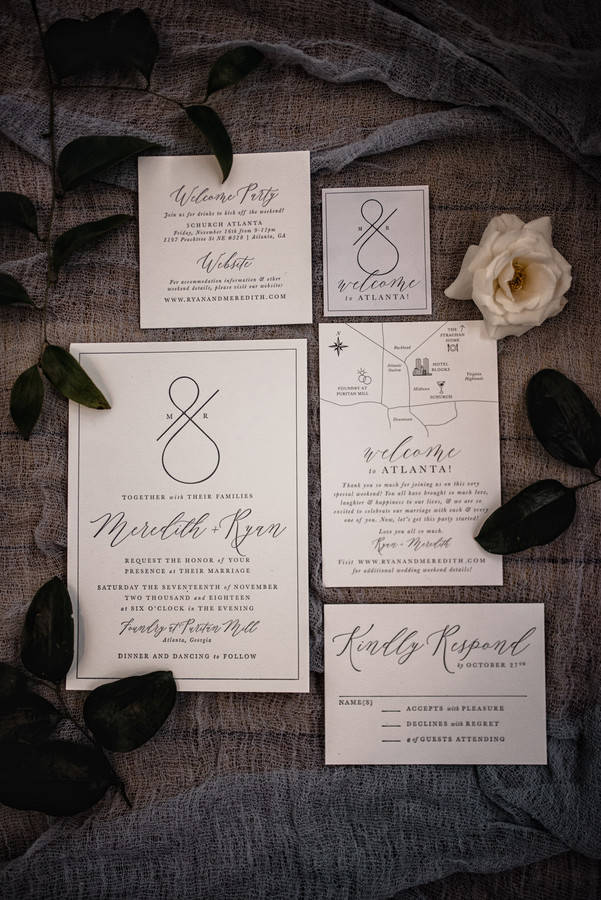
The full black-and-white suite is confident in the way that high-contrast design always is. The bold rectangular border on the main invitation, the ampersand monogram centered above the couple’s calligraphy names, the matching RSVP and details cards. All formal wording, fully spelled-out date and time, traditional phrasing throughout. This is the classic invitation for the couple who doesn’t need color to make a statement.
See Meredith and Ryan’s Puritan Mill Wedding →
Classic Wedding Invitations with Pocket Folders and Specialty Finishes
A pocket folder invitation is an event in itself. You lift the flap and everything inside is organized: the inner invitation, the RSVP card, the details insert. These suites feel substantial in hand, and they tell guests that the wedding itself will be equally well-considered. The finishing details, lace trim, wax seals, deckle edges, and envelope liners, also make an appearance here and deserve their own moment.
White Invitation with Delicate Lace Trim Border

A lace border on a white invitation walks the line between romantic and classic, and this one stays firmly on the classic side because the lace is used as structure rather than decoration. It frames the card neatly, the formal wording is intact, and the overall impression is of careful, traditional elegance. The green leaf styling beside it in the flat lay adds just enough life without steering anywhere rustic.
See Renee and Chris’s Illinois Farm Wedding →
Charcoal-Lined Envelope with Script Monogram and Wax Seal

The invitation itself is clean and white. But the envelope is where the personality shows: a deep charcoal interior lining, a script monogram on the flap, and a wax seal to close it. The full suite laid out shows how every piece shares the same calm, formal language. This is the kind of stationery that makes guests feel like they’ve been personally considered.
See Paige and Haeden’s South Carolina Wedding →
Burgundy Pocket Folder with White Inner Invitation
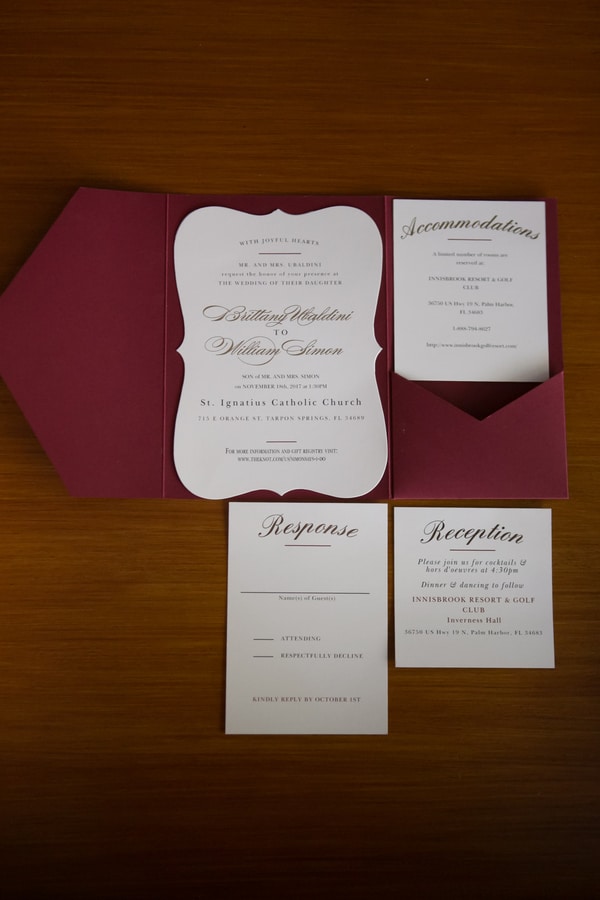
Opening a pocket folder invitation is a small event, and this burgundy folder delivers on that completely. The deep wine color is formal and warm, the white inner card reads cleanly against it, and the RSVP and additional cards are organized exactly as they should be. If your wedding has a burgundy or jewel-toned color story, this suite makes the strongest possible first impression of anything on your table.
See Brittany and Will’s Burgundy Wedding →
Cream Card with Rose Gold Botanical Leaf Ornaments
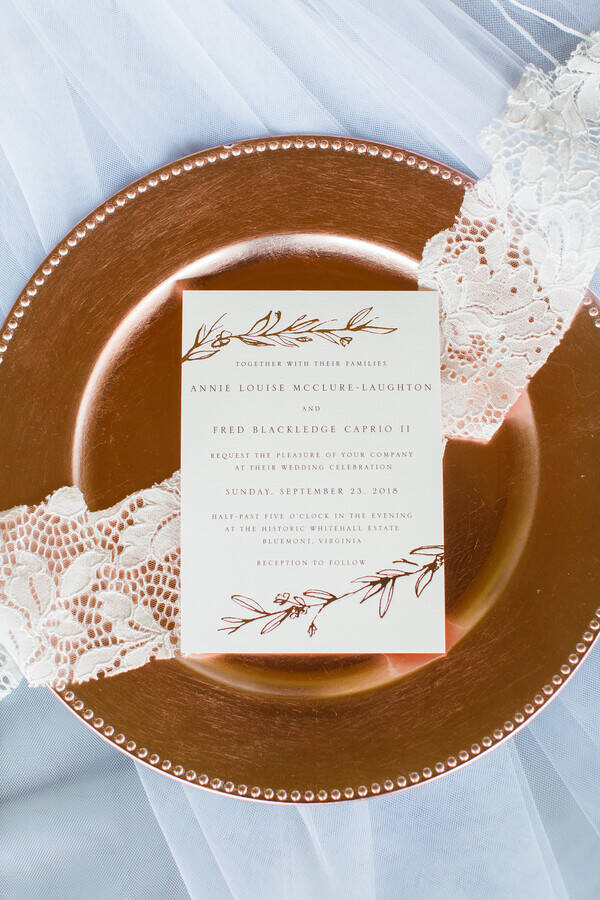
This invitation could have stopped at the cream card and the clean serif typography, and it would have been perfectly respectable. Instead, the small rose gold leaf sprigs at the top and bottom give it quiet warmth. Displayed on a rose gold charger plate, everything in the image rhymes together beautifully. The formal wording, “request the pleasure of your company at their wedding celebration,” anchors it completely in tradition.
See Annie and Fred’s Whitehall Manor Wedding →
Deckle-Edge Paper with Blue Watercolor Wash and Monogram Crest
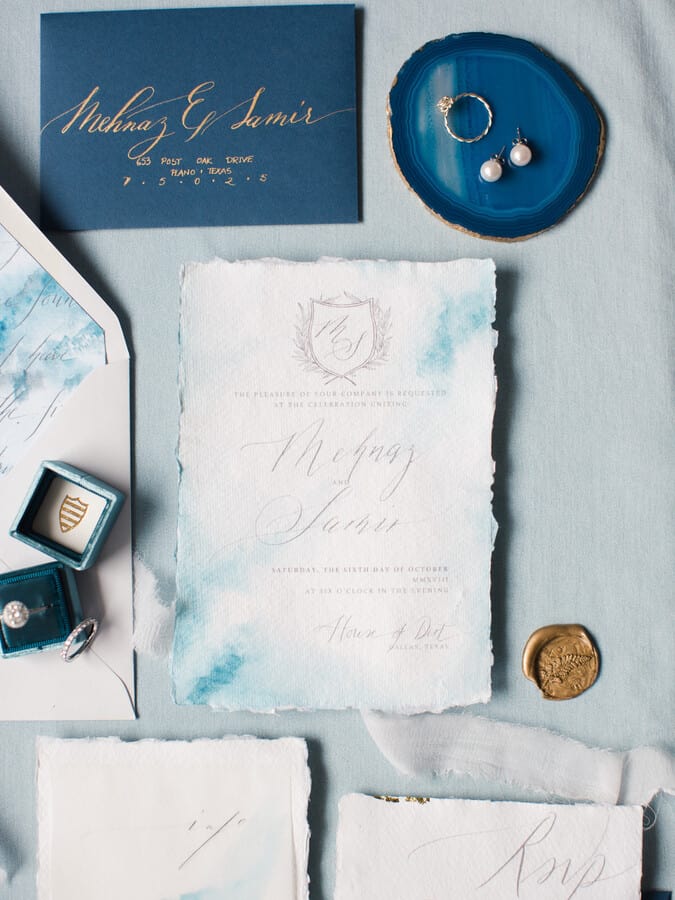
Deckle-edged paper has centuries of formal use behind it, and the blue watercolor wash here adds atmosphere without making this feel artsy or casual. The monogram crest sits at the top, the calligraphy names run in elegant script below, and the gold wax seal closes the suite with intention. The navy envelope with gold calligraphy addressing, visible in the flat lay, is a perfect companion to the main card.
See Mehnaz and Samir’s Dallas Wedding →
FAQs
What makes a wedding invitation “classic”?
A few elements working together create the timeless look: formal or traditional wording (“request the honor of your presence” rather than “join us to celebrate”), serif or calligraphy typography, and a neutral or jewel-toned color palette (white, cream, navy, black, gold, silver, or burgundy). A rectangular format is standard. What it doesn’t have: illustrated novelty motifs, themed colors tied to a holiday, modern geometric shapes, or casual phrasing. Classic invitations read as formal occasions because that’s exactly what they are announcing.
What is the proper wording for a classic wedding invitation?
Traditional invitation wording begins with the host line (the parents or couple hosting the wedding), followed by the formal request (“request the honor of your presence”), the couple’s full names, the date written in full (“Saturday, the fifteenth of June, two thousand twenty-five”), the time (“at half past four o’clock in the afternoon”), and the full ceremony venue name and address. The reception line follows: “Reception to follow” or “Dinner and dancing to follow.” Formal wording never uses numerals for dates or times, and the word “wedding” typically doesn’t appear in the first line because the context makes it obvious.
How far in advance should you mail classic wedding invitations?
The standard is six to eight weeks before the wedding for domestic guests. For destination weddings or guests traveling internationally, aim for eight to twelve weeks. Save the dates go out four to six months before the wedding (or earlier for destination events) to give guests time to plan travel and accommodation. Classic invitations often carry more weight when they arrive with time to spare, rather than landing in mailboxes alongside a deadline notice for RSVPs.
What paper stock is best for a classic wedding invitation?
The paper matters more than most couples realize until they’re holding two options side by side. For a classic look, use heavy cardstock, at minimum 80lb cover weight, though 100lb or 110lb feels considerably more substantial in hand. Letterpress printing benefits from thick cotton or cotton-blend paper (typically 300–400gsm). Thermographic printing creates a slightly raised surface that mimics engraving at a lower price point. If the budget allows, actual engraving on heavyweight stock is the most traditional and luxurious choice. Glossy or coated paper reads as modern and casual, which is exactly the opposite of what you’re going for here.
Can I include registry or website information with a classic invitation?
Yes, with a small caveat. Traditional etiquette says registry information never goes directly inside an invitation envelope because it implies the guest’s gift is the point of the event. Instead, include it on a separate enclosure card (a simple white card matching the suite’s typography) or just on your wedding website, referenced by a small website card inside the suite. A coordinating website card in matching typography slots neatly into any classic suite without disrupting the design, and guests know exactly where to look for the information they need.