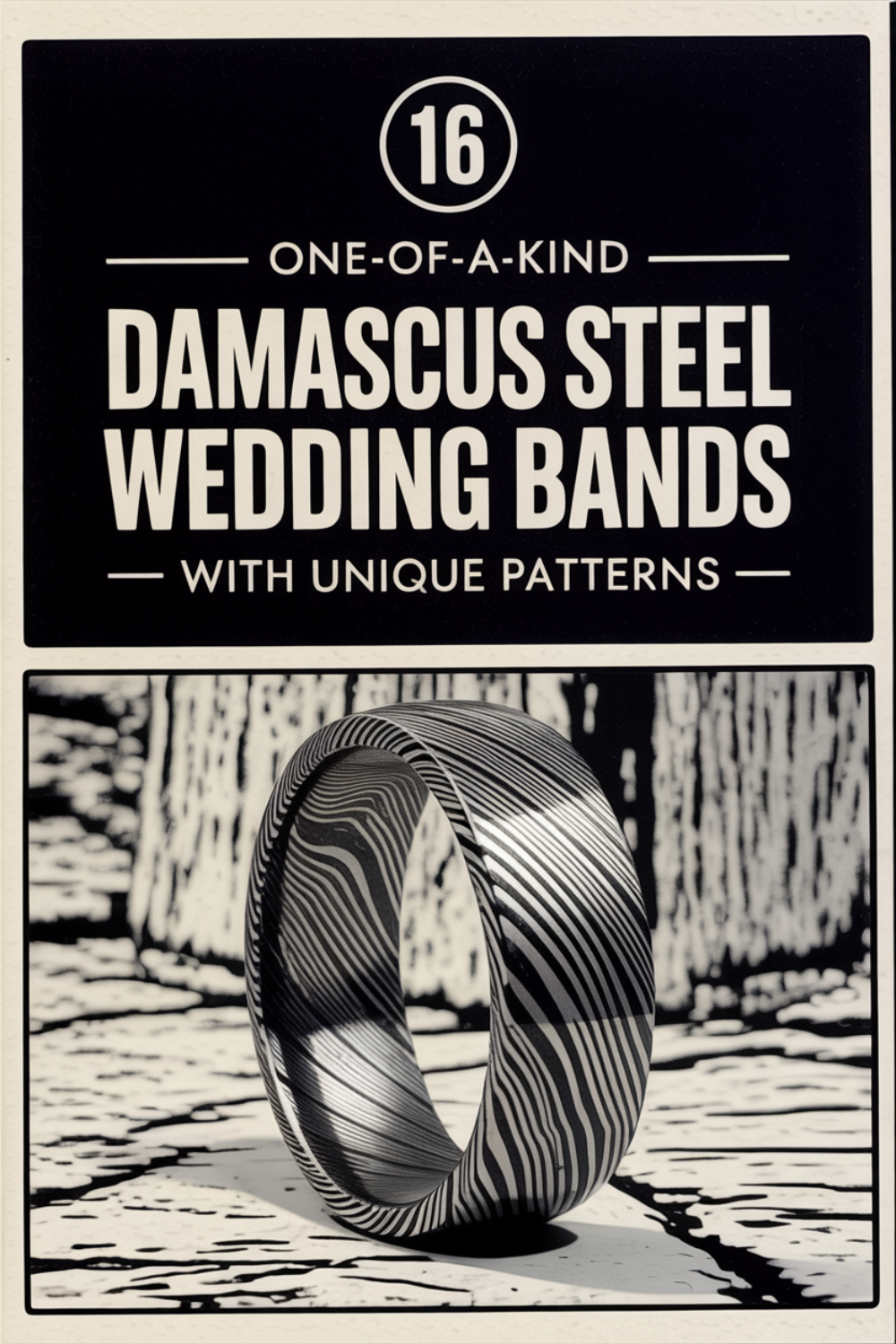
In case you need a refresher, Damascus steel was used by skilled artisans to craft swords in the near east during the third century. Word of the quality of these Damascus steel blades traveled quickly, earning them a reputation throughout the world as exceptionally strong, shatter-resistant, and beautiful.
Damascus steel wedding bands are crafted with the same care as those treasured swords, to reveal its innate combination of strength and beauty. That beauty is created, in part, during the foraging process. The result is a natural, swirled pattern reminiscent of flowing water and you’ll see this feature in the wedding bands we’ve included in this article.
It’s worth mentioning that the same unique pattern was prominent in those third-century swords from the near east we mentioned above. It’s probably not a coincidence the word “damas” is the root word for “watered” in Arabic.
Damascus Steel Wedding Bands
So without further ado, we present:
Beveled Acid-Etched Damascus Ring
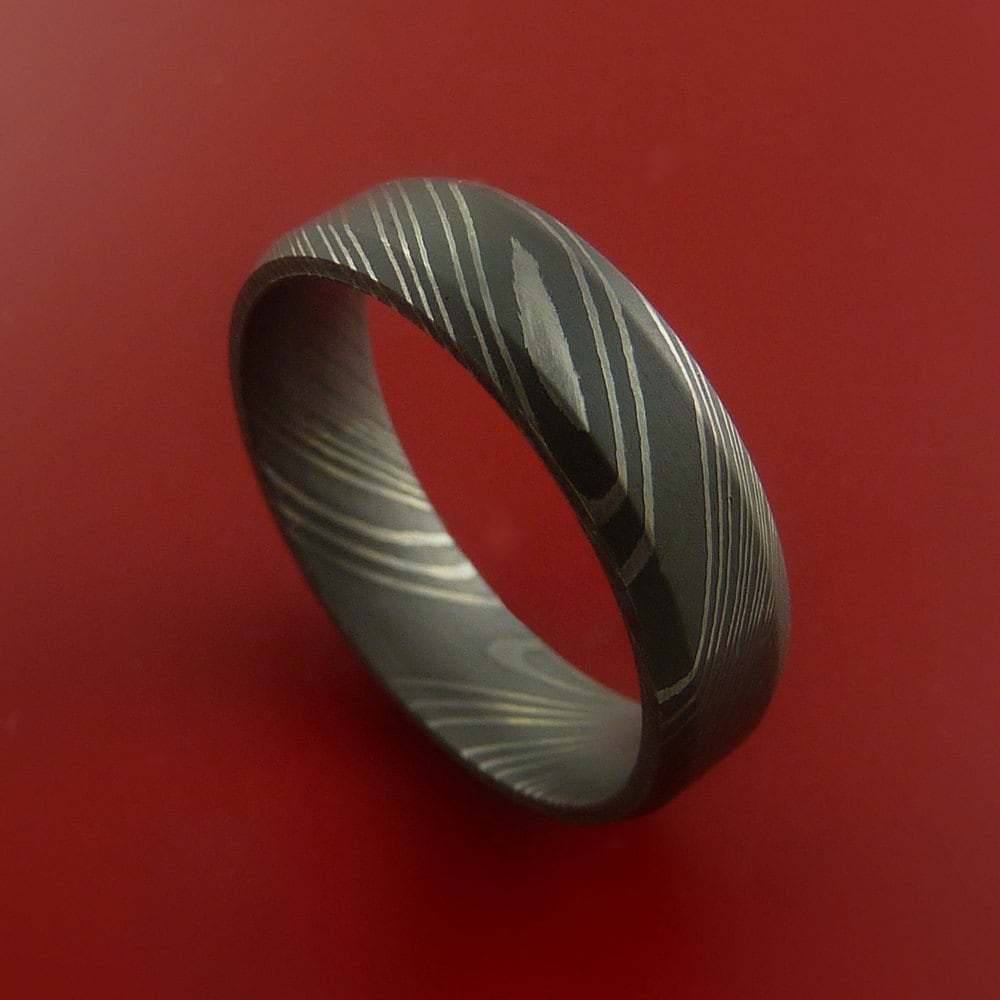
The Beveled Acid-Etched Damascus Ring has a swirled pattern that looks like it was lifted straight from Poseidon’s jewelry box. The acid-etching pulls the Damascus layers to the surface, giving each ring its own unrepeatable design. This is not decorative gimmickry. The pattern traces back to the layered steel techniques behind the legendary Damascus blades, and wearing it on your finger is a reasonable way to carry that history without the ancestral baggage.
Damascus steel is hard. It takes a beating, holds its finish, and develops a patina that only gets better with time. This ring is built for someone who wants an accessory that survives daily life without looking like it barely made it. The bevel keeps the profile clean and wearable, so it sits comfortably without catching on everything you own.
Off-the-rack rings in generic metals are everywhere. This one is not that. The swirled pattern shifts depending on the light, the angle, and the specific ring you receive, because no two acid-etched Damascus pieces come out identical. If the person you are buying for appreciates craft over flash, this ring will land exactly right.
Damascus Steel Whiskey Barrel Ring
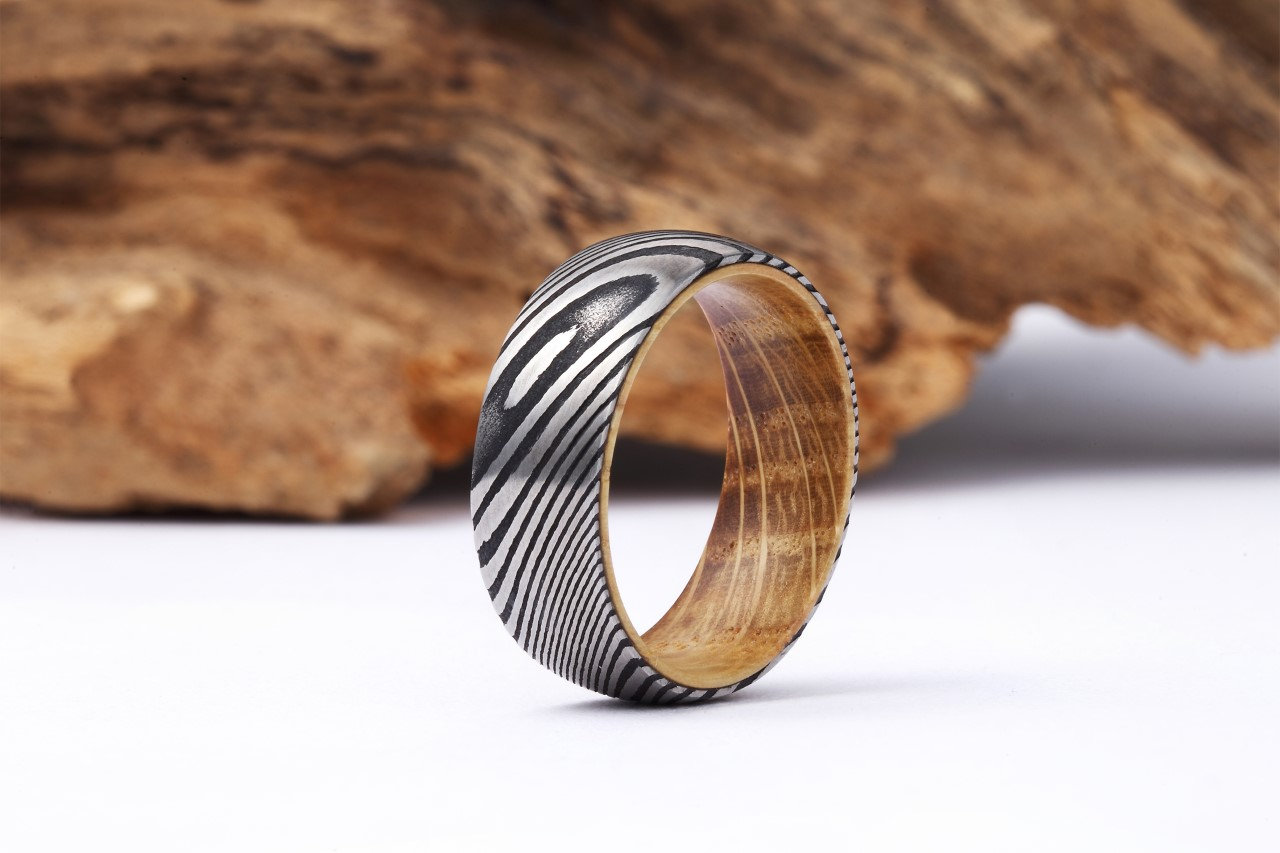
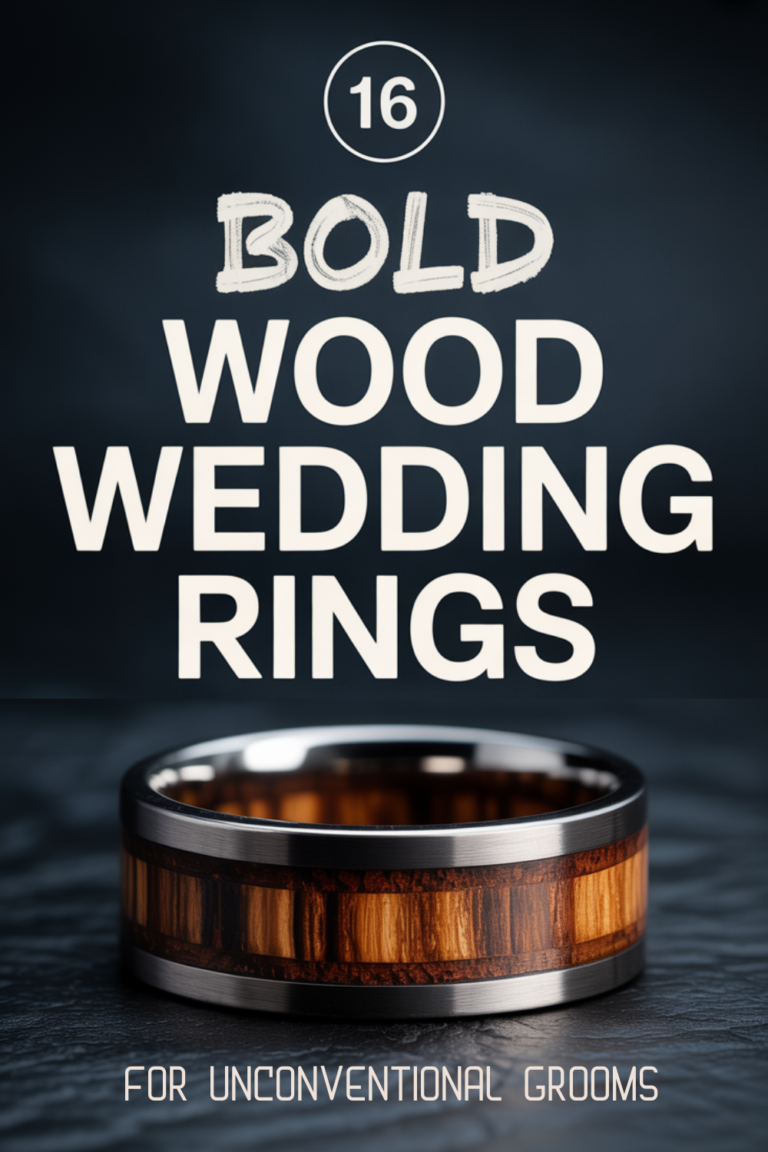
Damascus steel and whiskey barrel wood, together in one ring. The wood grain comes straight from actual whiskey barrels, so that warm, rustic pattern is the real thing, not a print or veneer. Paired with the swirling, layered pattern of Damascus steel, the result is a band that looks like it has a history before you even put it on.
Damascus steel is genuinely strong and no two pieces pattern the same way, which means this ring is one of a kind by default. The wood inlay brings warmth against the cool metal, and the contrast between the two materials does most of the talking without trying too hard.
This is a ring for someone who finds a plain polished band a little dull. It carries real craft in the materials without tipping into costume territory, and it wears well whether the occasion calls for a suit or a flannel shirt. Bold enough to notice, grounded enough to keep.
Hand Forged Damascus Blue Maple Band
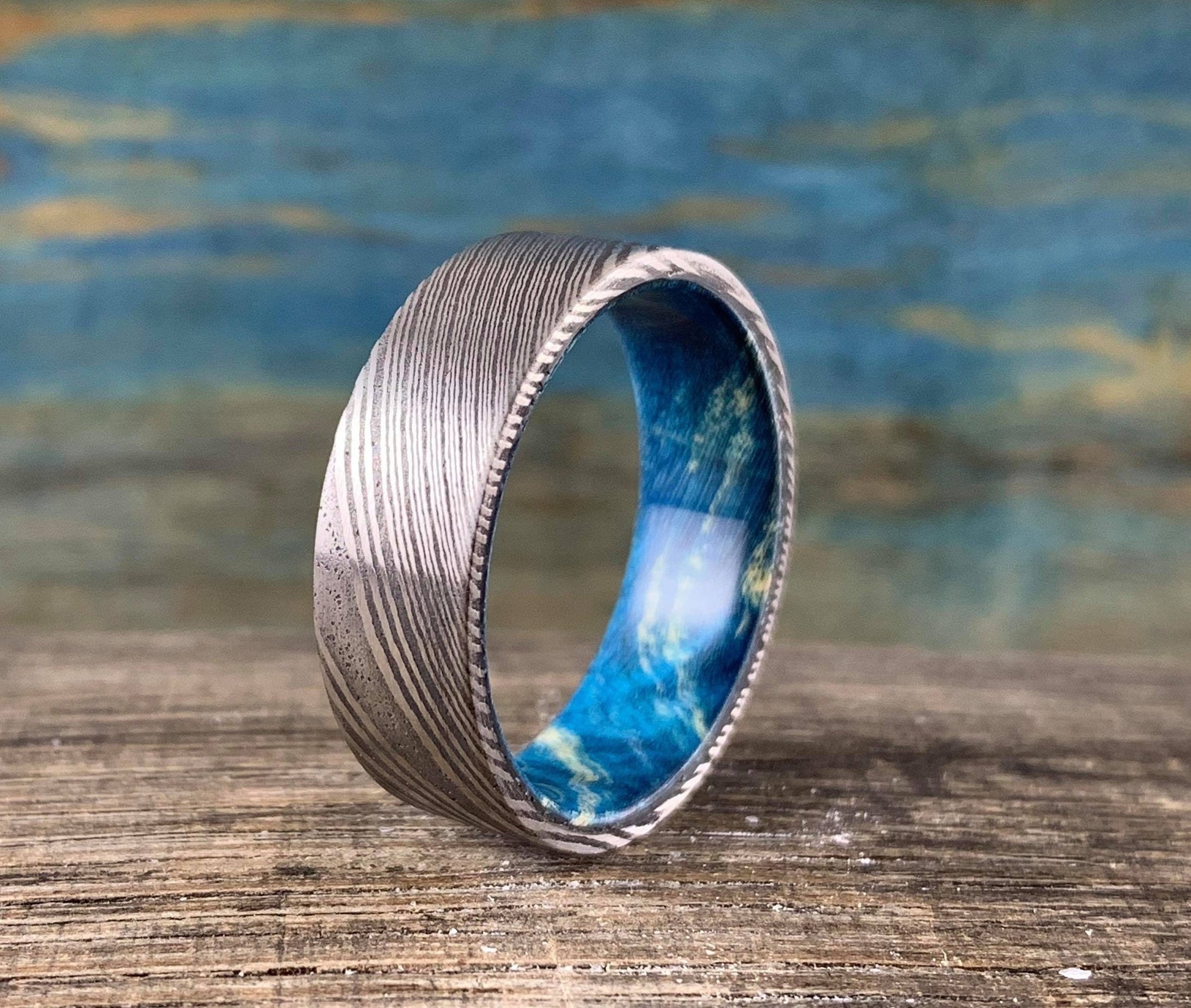
Hand-forged Damascus steel with a blue maple inlay. This wedding band is built for the person who wants something with actual character instead of a generic band pulled off a shelf. The swirled steel patterns come from a centuries-old forging process, and no two rings come out identical. That matters when you’re buying something you’ll wear every day for the rest of your life.
The blue maple inlay cuts through the dark steel with a natural grain that shifts in the light. Rugged material, refined result. It sits in a category well above anything mass-produced, and it looks like it knows that.
If your wedding band is going to mean something, it should at least look like it does. Damascus steel and blue maple together carry real craft history without trying too hard to tell you about it. This ring does the talking on its own.
Handcrafted Damascus Ring With Turquoise
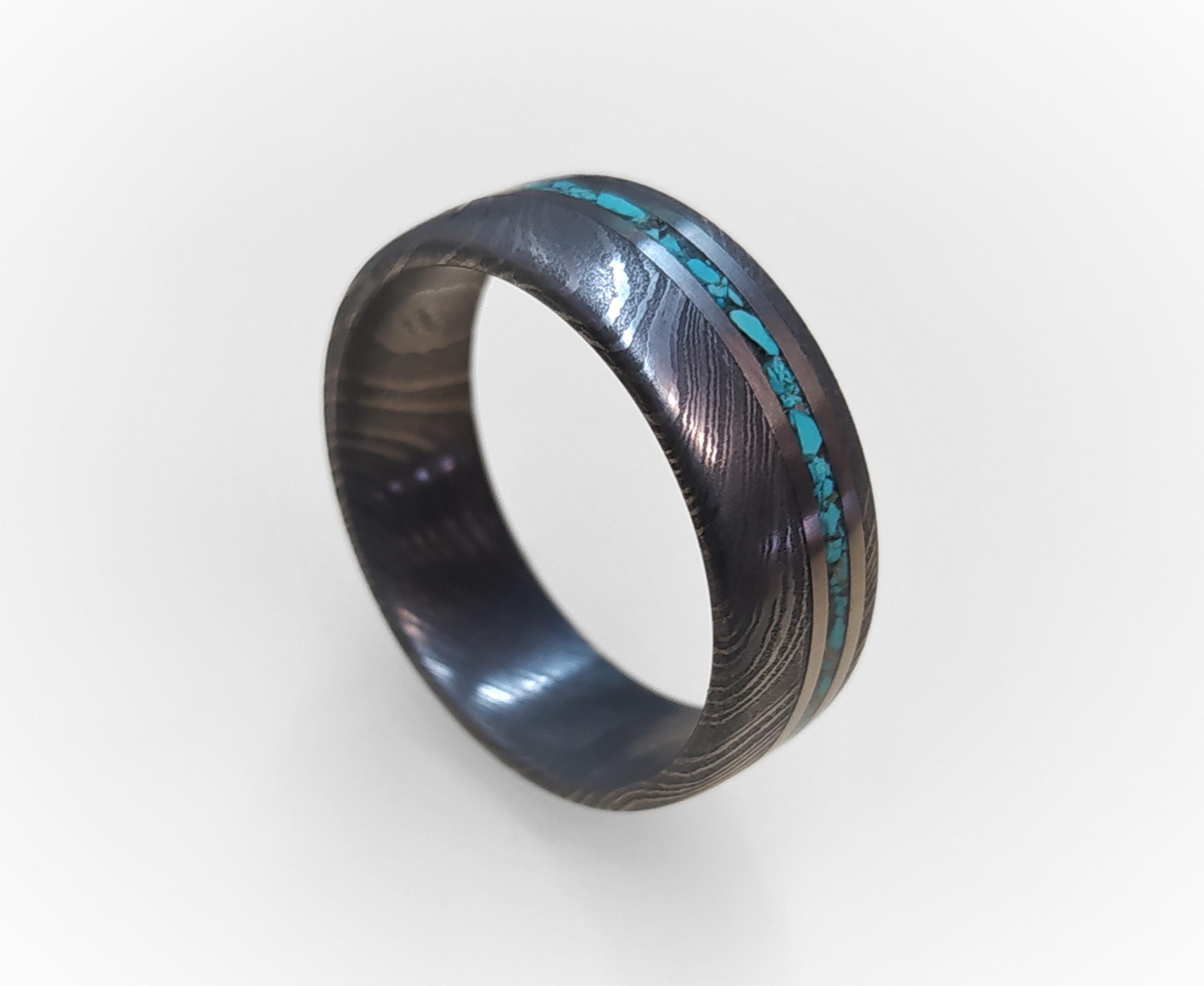
The Handcrafted Damascus Ring with Turquoise opens with those characteristic swirling patterns Damascus steel is known for, the kind that took medieval bladesmiths years to master. The turquoise inlay cuts through all that grey with a shot of color that actually earns its place rather than just sitting there looking decorative.
In a market full of plain metal bands, turquoise reads as a deliberate choice. It signals confidence, a willingness to commit to something with a little personality, and possibly an afternoon spent contemplating your next holiday destination rather than spreadsheets. The combination of ancient forging technique and gemstone inlay is genuinely interesting to look at up close.
This is a ring for someone who has made up their mind about what they like and does not need it to be subtle. The Damascus patterning means no two rings are identical, so you get a piece that is handcrafted in the truest sense. If your usual jewelry leans monochrome and safe, this one will feel like a statement. If you already wear color without apology, it will feel like a natural fit.
Handmade Hammered Damascus Ring
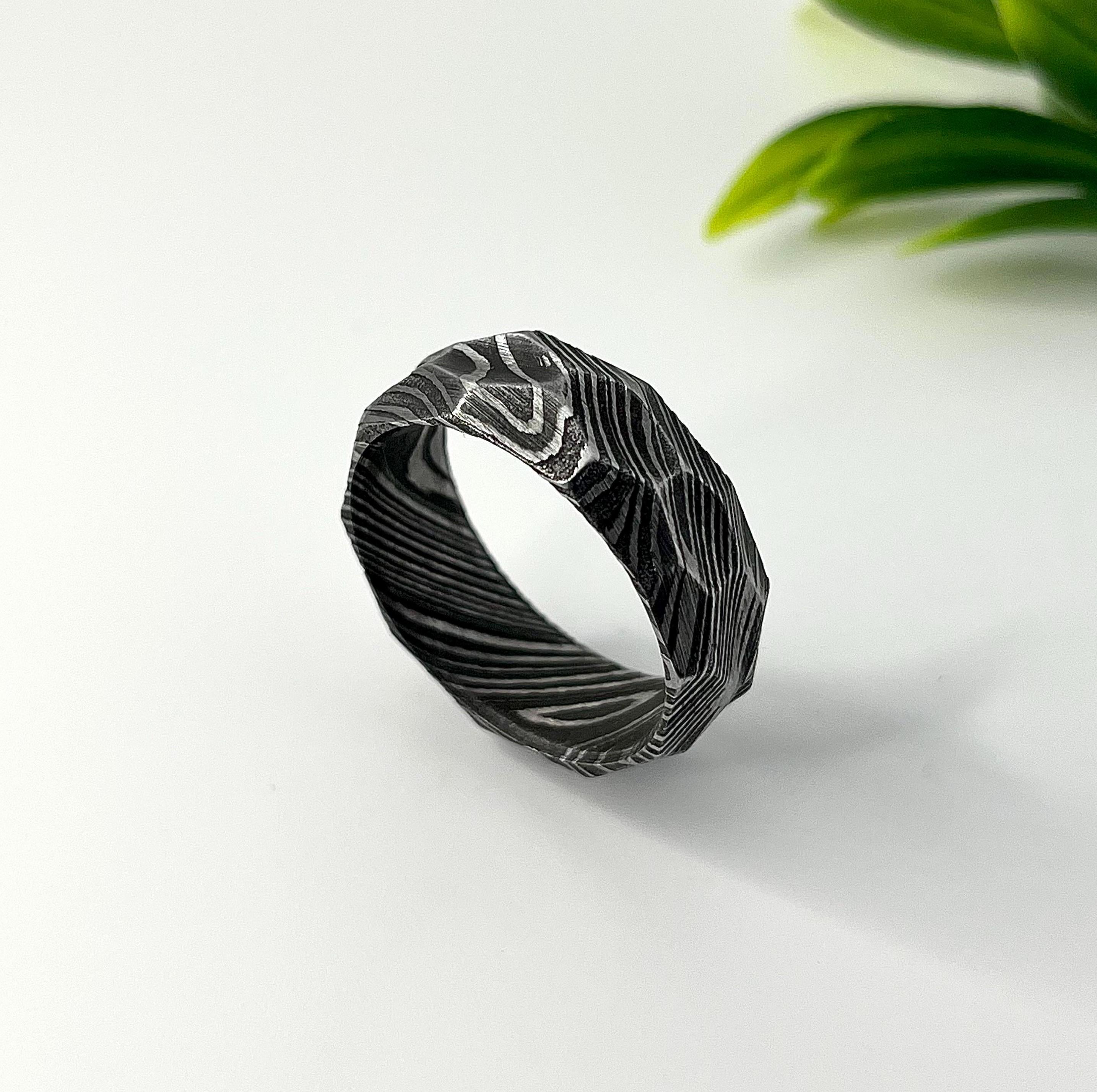
Hammered Damascus steel gives this ring a texture that reads as old as the material itself, referencing third-century forging traditions while holding up to daily wear in 2024. The hammered surface catches light differently at every angle, and that effect only deepens over time as the steel takes on new character with use.
This is a handmade piece, which means no two rings come out identical. The swirls and ripple patterns in the Damascus are a byproduct of the layered steel construction, not a decorative treatment applied on top. That distinction matters: the pattern runs through the metal, not just across it.
It works as a wedding band or a standalone ring, and the rugged finish holds its own against the kind of wear that would scuff a polished band into an eyesore inside a year. If you want something that looks better at ten years than it did on day one, this is a reasonable bet.
Iridescent Titanium And Damascus Zirconium Band
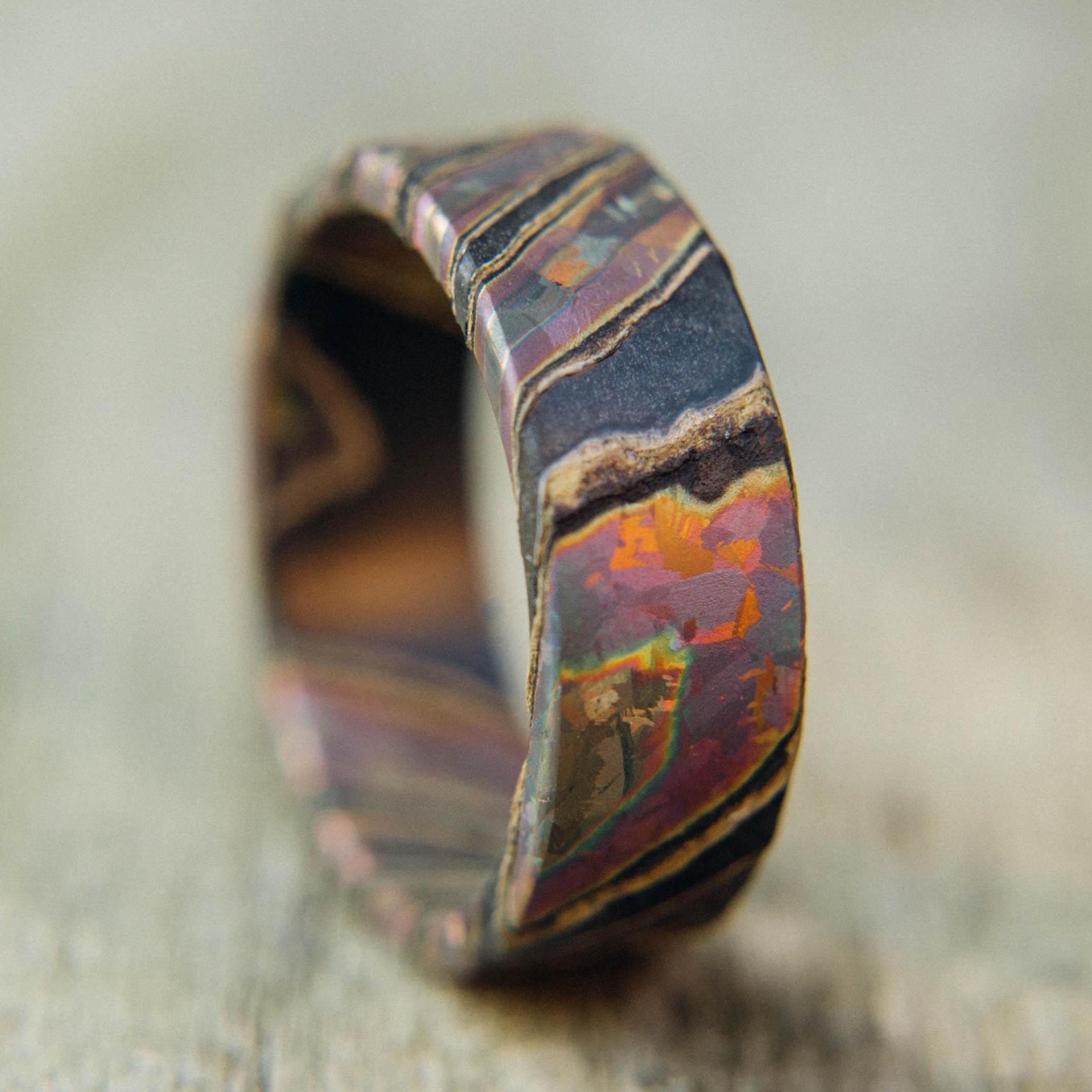
Titanium and Damascus zirconium on the same band, pulling off an iridescent color shift that changes depending on how the light hits it. The titanium keeps the weight down without sacrificing durability, and the Damascus zirconium brings those swirling, layered patterns that come from an actual forging process, not a printed finish. Two very different metals, and somehow they work.
The color play here is genuinely hard to describe in a straight line. Depending on the angle, you get different tones shifting across the surface, all coming from the material itself. The Damascus patterning has roots in centuries-old metalworking, and the result on this band is the kind of thing people notice across a room and ask about up close.
It holds up. Titanium is one of the tougher choices for a wedding band, resistant to scratching and corrosion, and it sits lightly on the finger even after a full day. The Damascus zirconium keeps its look over time rather than dulling into something flat and forgettable. For anyone who wants a ring that actually reflects some personality, this one does the work without needing much explanation.
Marbled Damascus Ring With Snow-White Band
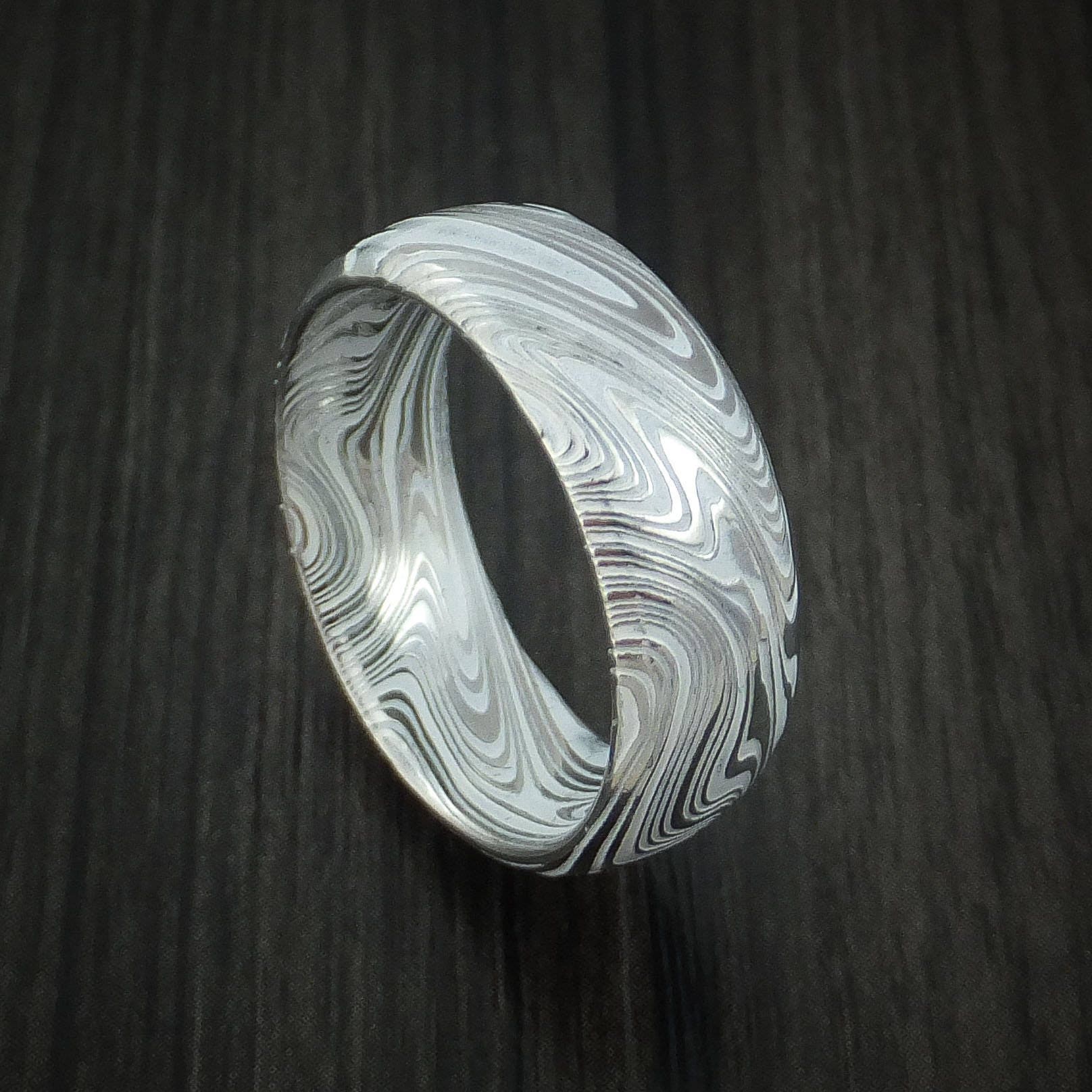
A snow-white Damascus steel band, the swirled marbling comes from the traditional forging process that folds and layers metal until the grain looks almost geological. No two rings come out identical. That alone puts it ahead of most wedding bands sitting in a jewelry case.
Damascus steel has a reputation for a reason. The patterning is not decorative paint or laser etching. It is structural, baked into the metal itself, which means it ages with the ring rather than wearing off. The white coloring keeps it from reading too dark or industrial, so it sits cleanly against a dress shirt or a flannel without looking out of place at either.
This is a wedding band for someone who finds plain polished metal a little dull but does not want to go full blackout or inlay. The craftsmanship is visible without being loud about it. People will notice it up close and ask where it came from. That is usually a good sign.
Meteorite And White-Gold Damascus Ring
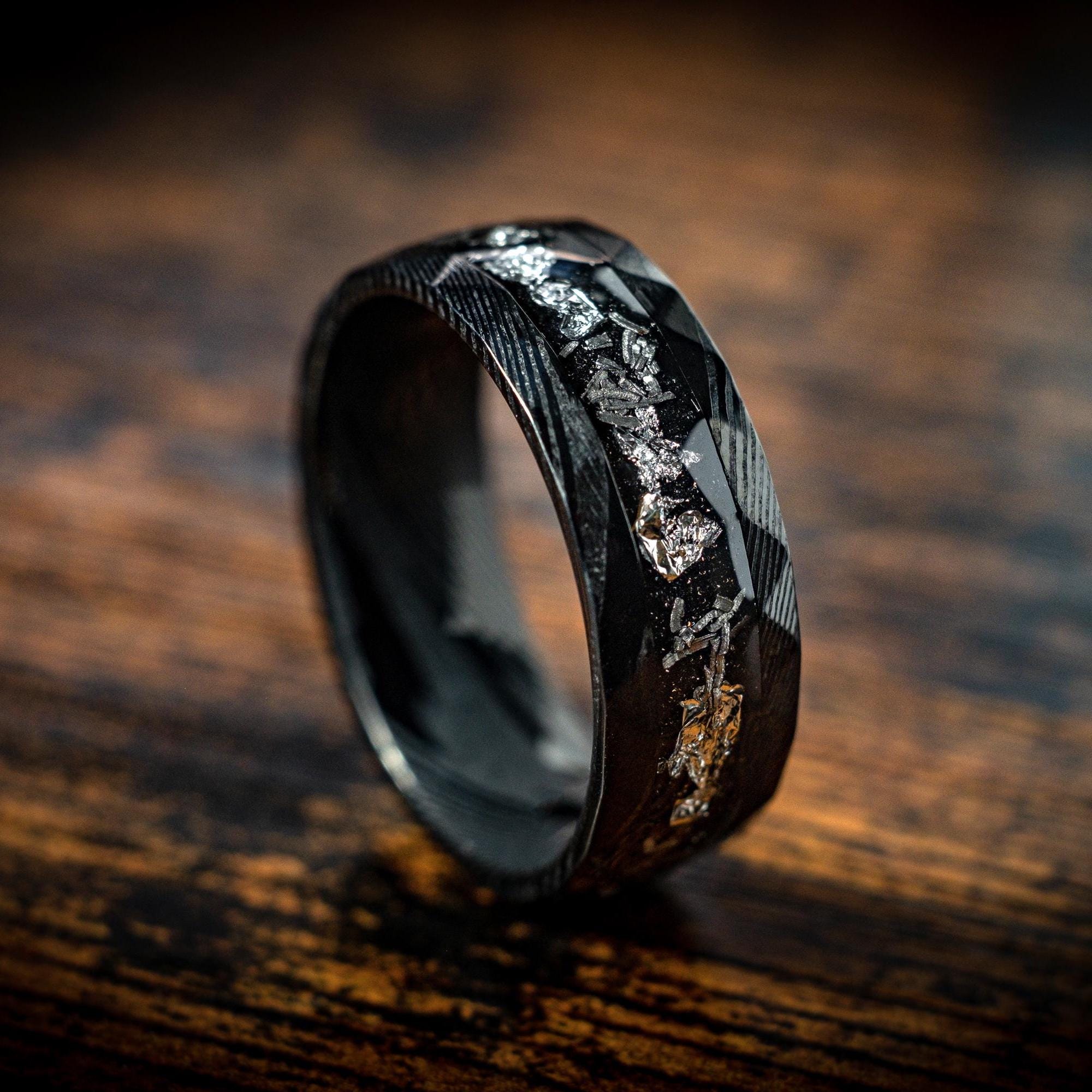
Meteorite fragments set into white-gold Damascus steel: this ring is exactly what it sounds like, and that’s the whole point. The Damascus core gives each band a distinct swirl pattern, so no two are identical. Not a marketing line. Actual metallurgy. The meteorite inlay is older than the planet you’re standing on, which puts most jewelry in a fairly humbling context.
The construction pairs Damascus steel with white gold, balancing the industrial with the precious. Because the Damascus patterning forms naturally during the forging process, the ring one person receives will never match another. That kind of individuality is baked into the material, not applied after the fact.
If you’re going to mark something permanent, cosmic debris and warrior steel make a reasonable argument. This is the ring for someone who finds “timeless” too modest a word and wants their band to have genuinely traveled through space before landing on their finger. Classier than an alien invasion, and considerably more romantic.
Polished Black Zircon Kuro Damast Ring
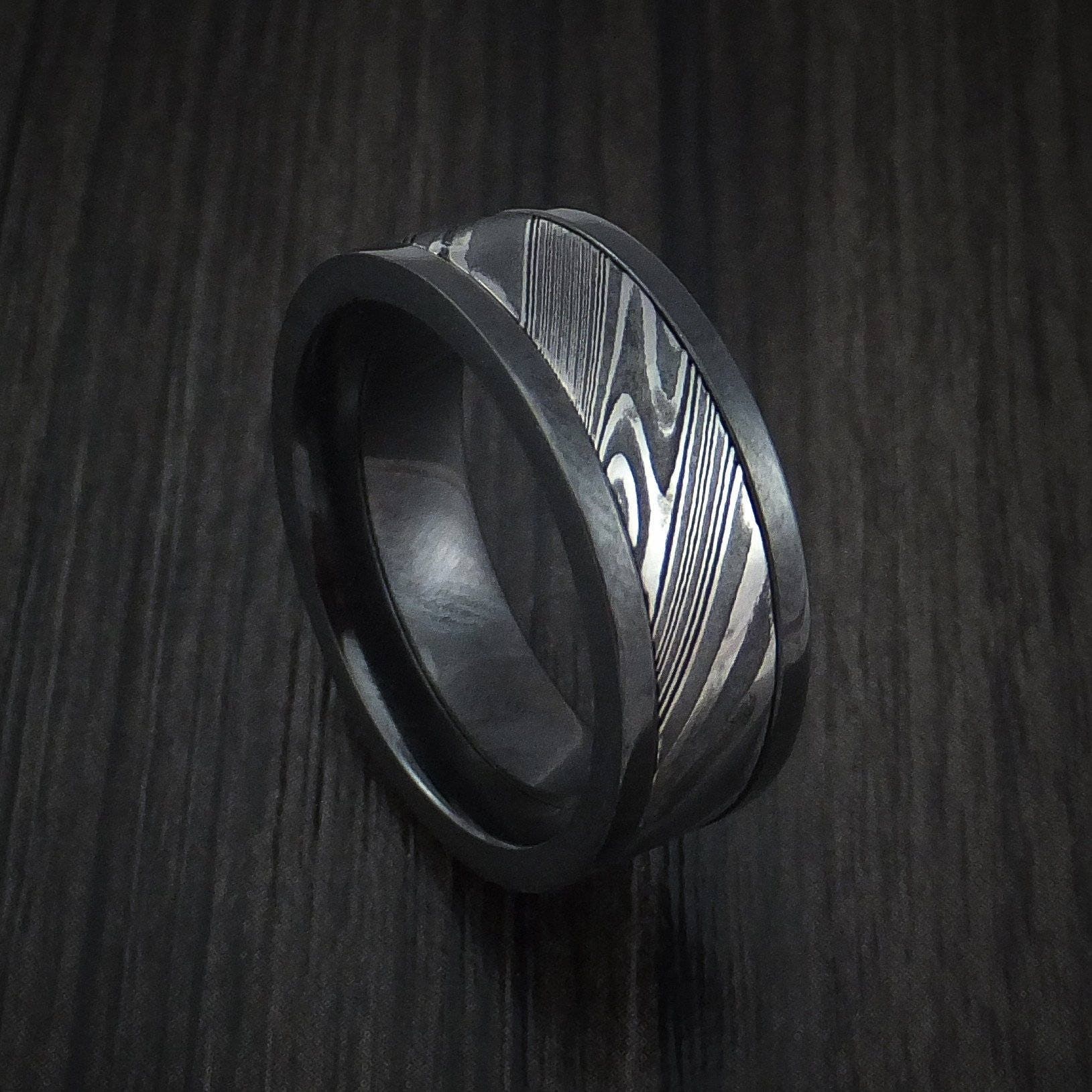
Polished black zirconium paired with Kuro Damascus steel: two materials that have no business looking this good together, yet here we are. The dark, mirror-like surface plays against the swirled Damascus patterns in a way that stops people mid-handshake. It carries the kind of presence a warrior poet would appreciate, without announcing itself to the whole room.
Those patterns come from fusing layers of steel through a process closer to alchemy than standard metalworking. No two rings come out identical. The result is something that sits quietly on your finger and lets the craftsmanship do the talking. Classy, a little mysterious, and built to outlast most things you own.
If you gravitate toward objects that carry real history in their construction, this ring delivers. It reads as a commitment piece that doubles as a conversation starter, the kind of thing you hand down rather than replace. The strength is in the materials. The story is yours to add.
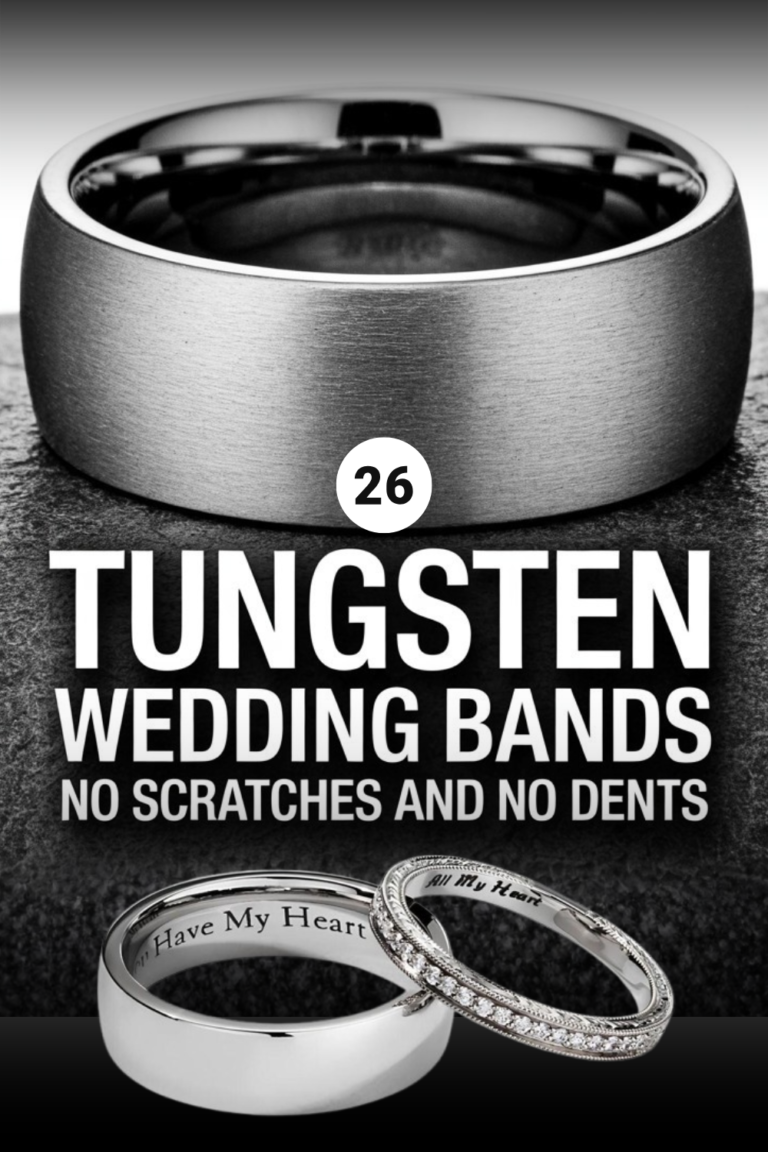
Yellow Gold Mokume Gane Tungsten Ring
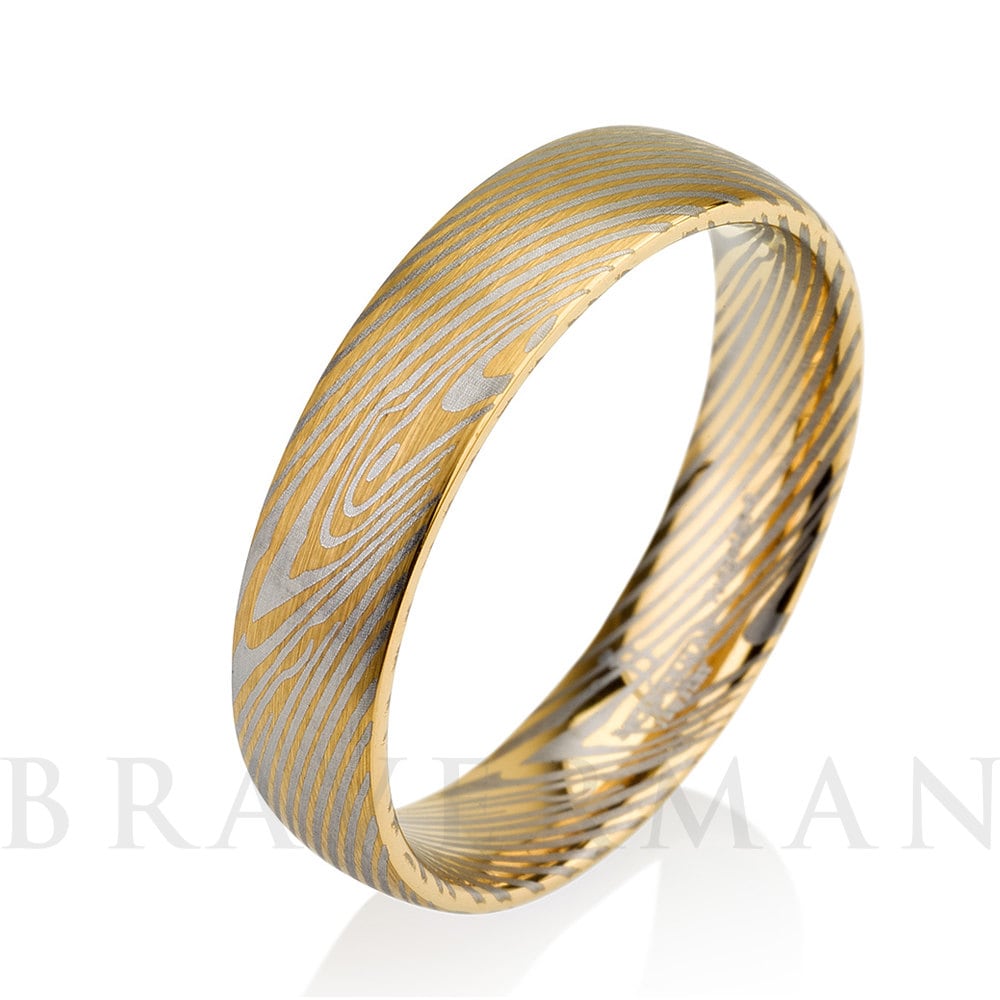
Yellow gold and Mokume Gane patterning on a tungsten band: the combination sounds like it shouldn’t work, and yet here it is, pulling it off effortlessly. The layered wood-grain effect looks artfully chaotic and unmistakably deliberate at the same time, like nature drew it by hand. Tungsten keeps things grounded with the kind of durability that laughs at daily wear and then asks for more.
The Mokume Gane technique is an old Japanese metalworking method built around fusing and manipulating layers of metal until a wood-grain pattern emerges. No shortcuts, no printing, no shortcuts dressed up as printing. The result on this ring is genuinely one-of-a-kind patterning that carries some actual craft history behind it, not just a finish applied at the end of a production line.
So you get a wedding band that is tungsten-tough on the inside and centuries-old technique on the outside, wrapped in yellow gold tones that keep it warm rather than cold and industrial. It reads as a serious piece of jewelry without taking itself too seriously. Wear it at the altar, wear it to the hardware store. It holds up either way.
Domed Damascus Etched Band

Etched with swirling layers of steel that could pass for battle-scarred armor (if battle armor looked this refined), this Domed Damascus Etched Band doesn’t whisper “commitment.” It carves it in metal and dares you to forget. The pattern—unique to each ring—comes from fusing different steel types, then acid-etching them to bring out the layered contrast. So yes, it’s got drama. But of the forged-in-fire variety, not the reality-TV kind.
This is the kind of ring that looks like it came with a story—ancient swords, secret runes, late-night forging under a blood moon. It didn’t. But it *feels* like it did, which is half the point. And unlike most cookie-cutter bands, this one develops slight color shifts over time, responding to your daily wear like a moody, beautiful pet snake. It’s not trying to shine like gold; it’s built to feel timeless—as in, 10,000 years down the line, archaeologists could dig it up and say, “Yep, this guy meant it.”
Tips for Choosing a Wedding Band
For a lot of men, buying their wedding band is almost an afterthought.
It can take so much time and research. Sometimes it’s hard to know where to even start! So you might find it tempting to just walk into the nearest jewelry store, go to the men’s wedding bands, close your eyes, and point.
There. Ring chosen. Box it up.
Luckily, shopping for men’s wedding bands CAN be low-maintenance and stress-free. You just need to prepare a little. Like, say, take half an hour or so to get ‘er done. Thirty minutes is worth a lifetime of wear, right? You know you’re fiancee is nodding her head vigorously at this very moment. Yes, yes, it IS worth.
What Metals Would Work For You?
Ok, so we’ll just say right out of the gate, make sure you’re not allergic to any of the metals or other materials in the bands you’re considering. It would suck to decide on a particular ring, buy it and take it home, only to find out you’re allergic. Then it’s back to the drawing board. Ok, so now that’s out of the way…
What does your average day look like?
Pretty much every guy we know works with his hands in some way or another, whether it’s tinkering with the car on the weekends, earning a living in construction, or hitting the greens every Sunday.
Traditional gold, silver, and platinum are totally suitable for your average Joe and will stand up to most daily wear and tear beautifully.
Do you work with your hands for a living? If so, you’ll want a metal that can take a lot of abuse like cerakote, carbon fiber, and Damascus steel. Although it’s not quite as hardy, cobalt is a pretty tough contender as well.
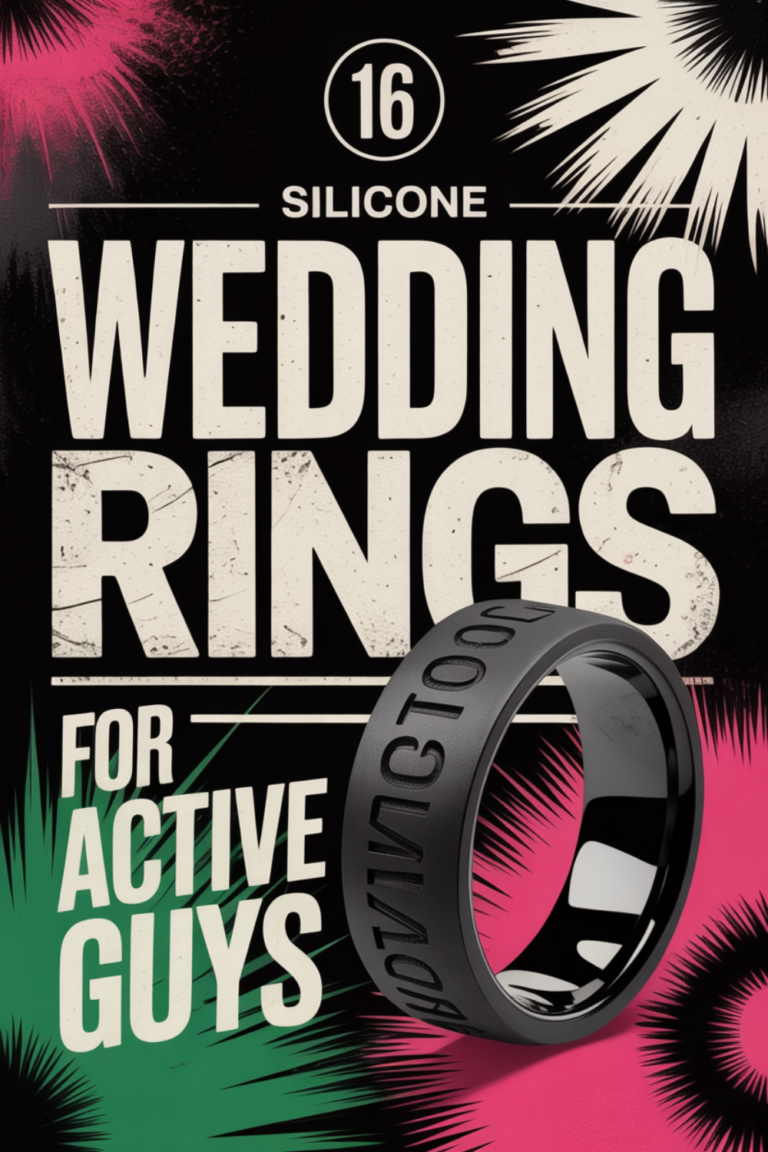
Are you athletic? The flexibility and durability of a silicone ring might be a practical choice for you. In fact, the husband of one of our staff went silicone because his original titanium ring bruised his finger every time he went skateboarding. So there’s that to consider.
What’s your budget look like?
The price of men’s wedding bands are really all over the place. Oftentimes those extra zeroes depend on whether you choose to customize your band or add precious stones.
If we’re talking metal alone, platinum is usually the most expensive, followed by white gold and yellow gold.
Prices for Damascus steel wedding bands range from $150 all the way up to $5000 on ManlyBands.com. It’s worth noting, the $5000 ring is actually solid 14K Gold with acid finished Damascus steel and .01 diamond edges, so yeah, that one’s super fancy.
What do you like?
Yes, it’s really obvious, but we’re still going to point it out because, well, we know how a lot guys choose their socks and boxer briefs (hint: there’s not a lot of research or consideration involved).
Since you’re gonna be looking at your wedding band for the rest of your life, it’s important to pick a ring you like to look at. Like, way more important than what your boxer briefs look like.
Consider Comfort
There are a couple of things to consider when it comes to how comfortable your ring will be (and will stay):
- Have you been properly sized?
Don’t take a guess, and don’t use a string or a tape measure or any other measuring device other than a jeweler. A jeweler should be your measuring device. So pay a visit to one you trust and get sized properly.
Also, keep in mind that the average person’s fingers swell depending on the time of day and/or environmental conditions. Naturally, that’ll affect your ring size choices.
- What’s your width and shape preference?
Wider bands are popular, but they can be uncomfortable depending on the size and shape of your hand. Skinny rings are more comfortable, but keep in mind they’re also more prone to breaking. Common sense, right? Ok, moving on.
Most rings come in domed and flat shapes of varying degrees, domed being raised and rounded on the outside, while flat rings are… flat.
The “fit” of a ring refers to how it’s shaped on the inside of the ring against your finger. These usually come in “comfort-fit” and “standard-fit”. Comfort-fit rings are rounded on the inside against your finger, while standard-fit rings lie flat.
A Final Word About Damascus Steel
From its origins at the hands of ancient Syrian warriors, to the knights who wielded it during the crusades, the adventurous and romantic history of Damascus steel has us mesmerized.
Equally mesmerizing, of course, is its beauty when crafted into a one-of-a-kind Damascus steel wedding band.
If you’re a rugged individualist, Damascus steel could very well be the perfect choice for you. Just expect to turn a lot of heads and attract a lot of compliments. But you’re already used to that anyways, right?
Don’t forget to pin this to your Men’s Wedding Band Board for later!