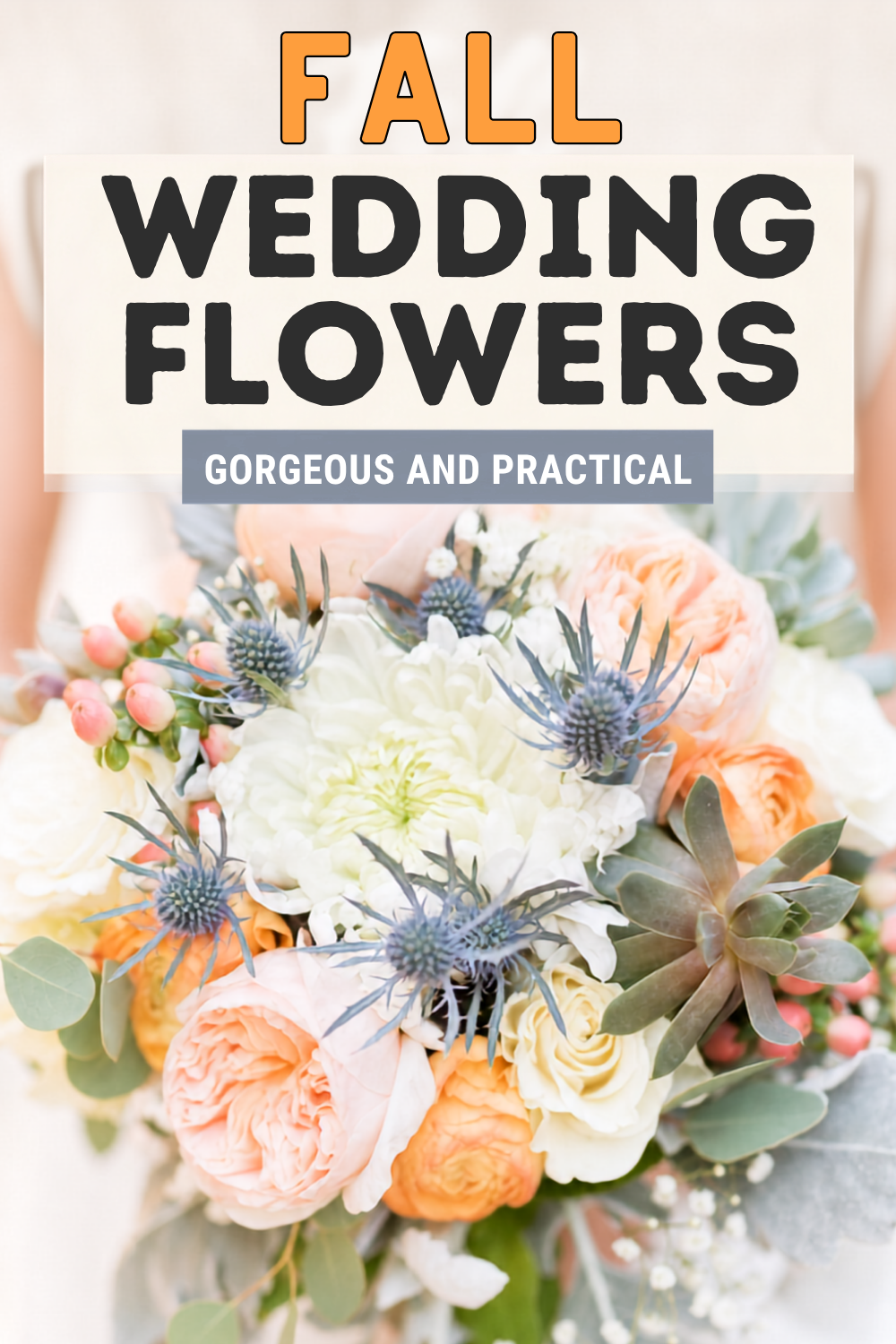
It also comes with a narrow window. Frost that kills a dahlia overnight. Wind that wilts anything delicate. A hero bloom that’s everywhere in October and gone by November. Push one out of season and you pay import prices for flowers that still might not last the day.
We have talked to enough florists, and helped enough brides recover from a wilted mess, to know exactly where fall flowers go sideways.
So let’s start with the blooms themselves: which fall wedding flowers are worth building a bouquet around, and why each one belongs this time of year.
Fall Wedding Flowers Worth Building a Bouquet Around
Fall is not one flower season. It is three. September still pulls from late summer, October is peak harvest, and November tips toward deep, moody, almost wintry blooms. The flowers below are the ones that carry a fall bouquet best, with a note on when each one peaks so you are not asking your florist for the impossible.
Dahlias

If you pick one hero bloom for fall, make it this. Dahlias peak from late summer through the first frost, so they are at their best in September and October, and they come in everything from soft blush to near-black burgundy. Dinnerplate varieties are the size of a salad plate and fill a bouquet with almost no help. One warning: they hate frost, so a late-November wedding is a gamble. Book them early and name a backup.
Dahlia Wedding Bouquet Ideas in Every Color, From Pale Peach to Deep Burgundy
Garden Mums
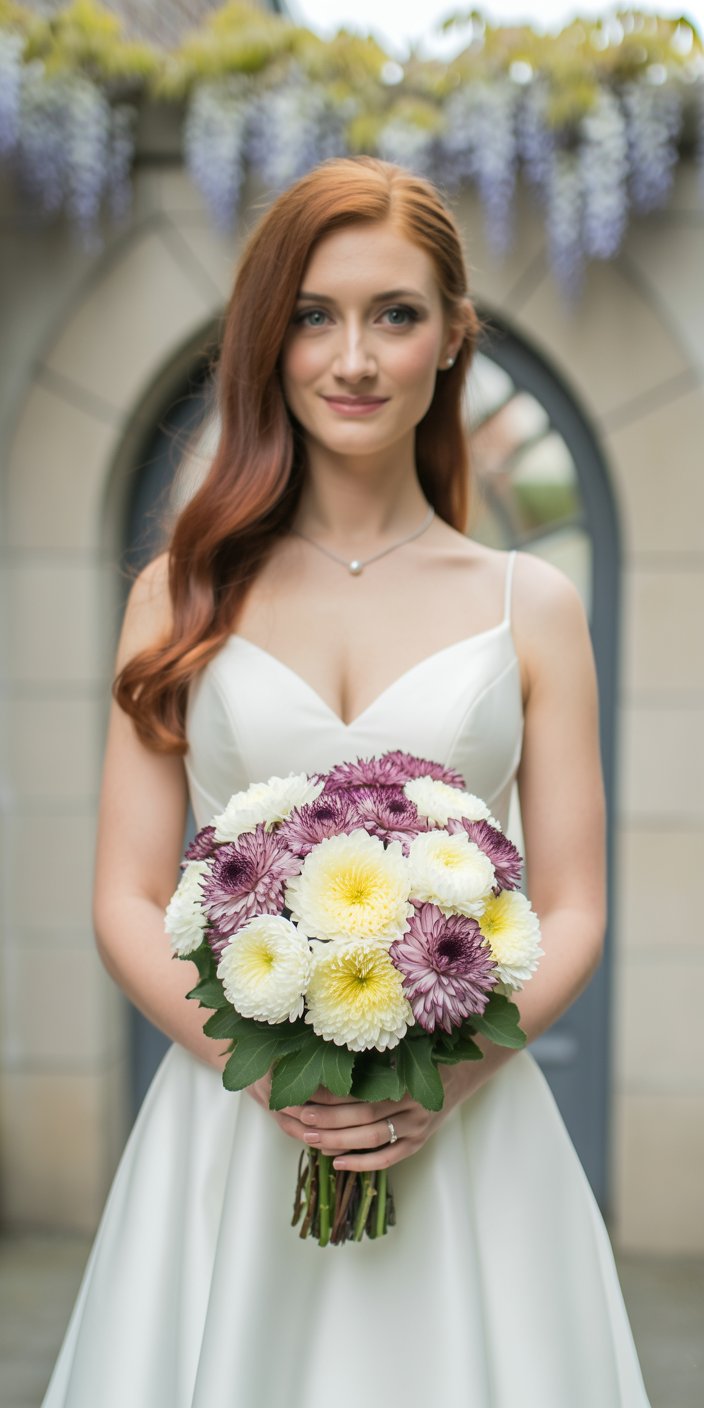
Forget the sad grocery-store pom. Heirloom and garden mums come in rust, gold, bronze, and deep burgundy, with a cozy, layered texture that reads pure autumn. They are hardy, they hold up through a cold snap, and they cost a fraction of a premium import, which makes them the workhorse of a late-fall bouquet when everything else is fading.
Garden Roses
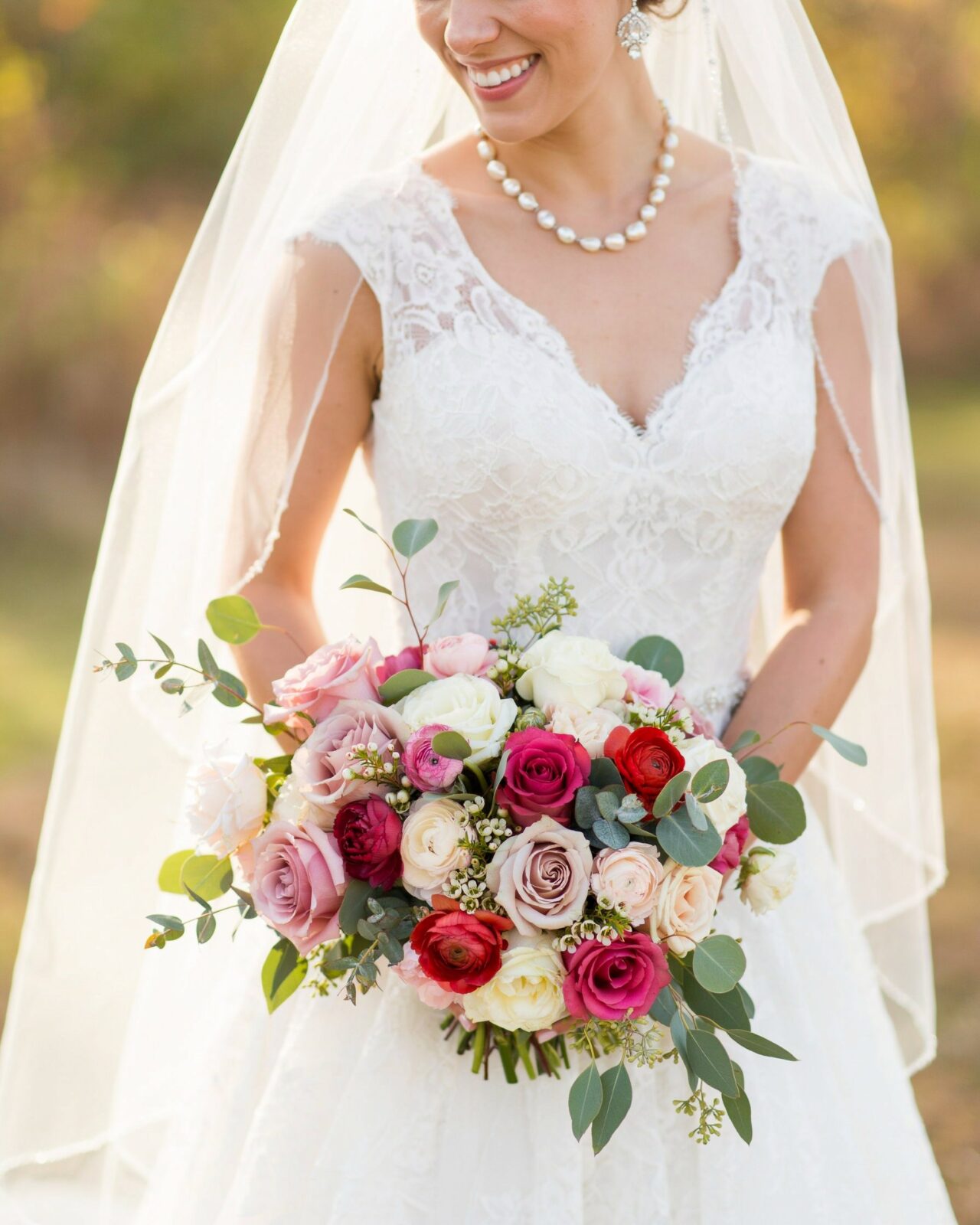
Roses are available year round, but the warm sunset varieties are what make them a fall flower: toffee, caramel, dusty terracotta, deep mauve. They open into a full, romantic ruffle and they hold their shape for hours, so they survive a long ceremony and a longer photo session without wilting on you. Classic without being boring.
Ranunculus

This is your peony substitute, and it is a better one. Ranunculus gives you the same layered, fluffy look without the out-of-season import fee, and it is a cool-season bloom, so it gets easier to source as fall goes on. Best from mid to late fall. The tight, double-petaled heads also happen to be low pollen, which matters more than you think (more on that later).
26 Ranunculus Wedding Bouquets That Look Like Roses, Only Better
Amaranthus
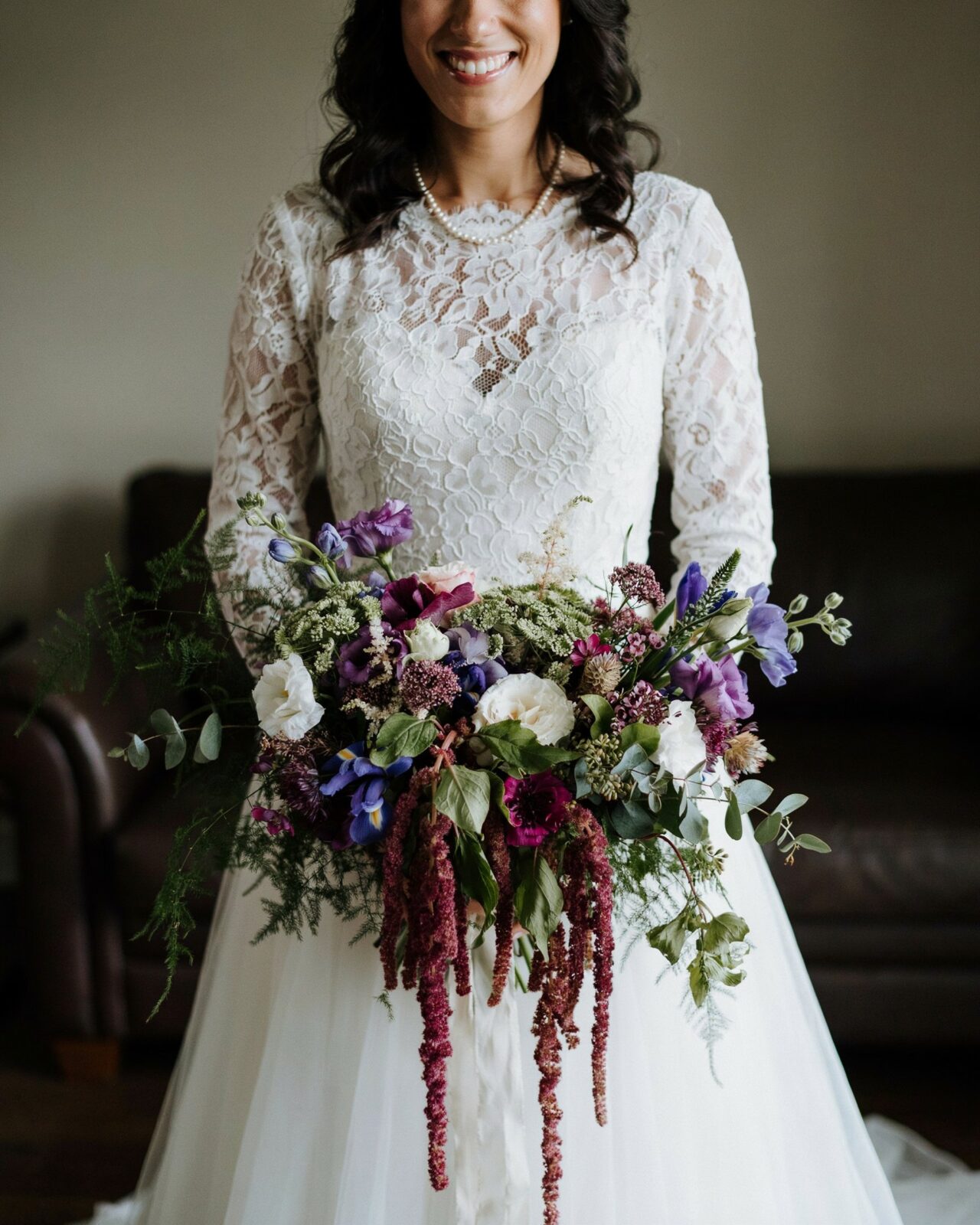
The long trailing red one. Amaranthus spills over the edge of a bouquet in long, dramatic ropes, and it peaks from late summer straight through fall. Deep burgundy and rust tones make it a natural for a moody late-fall look. Use it for movement and drama, not as your main event.
Celosia
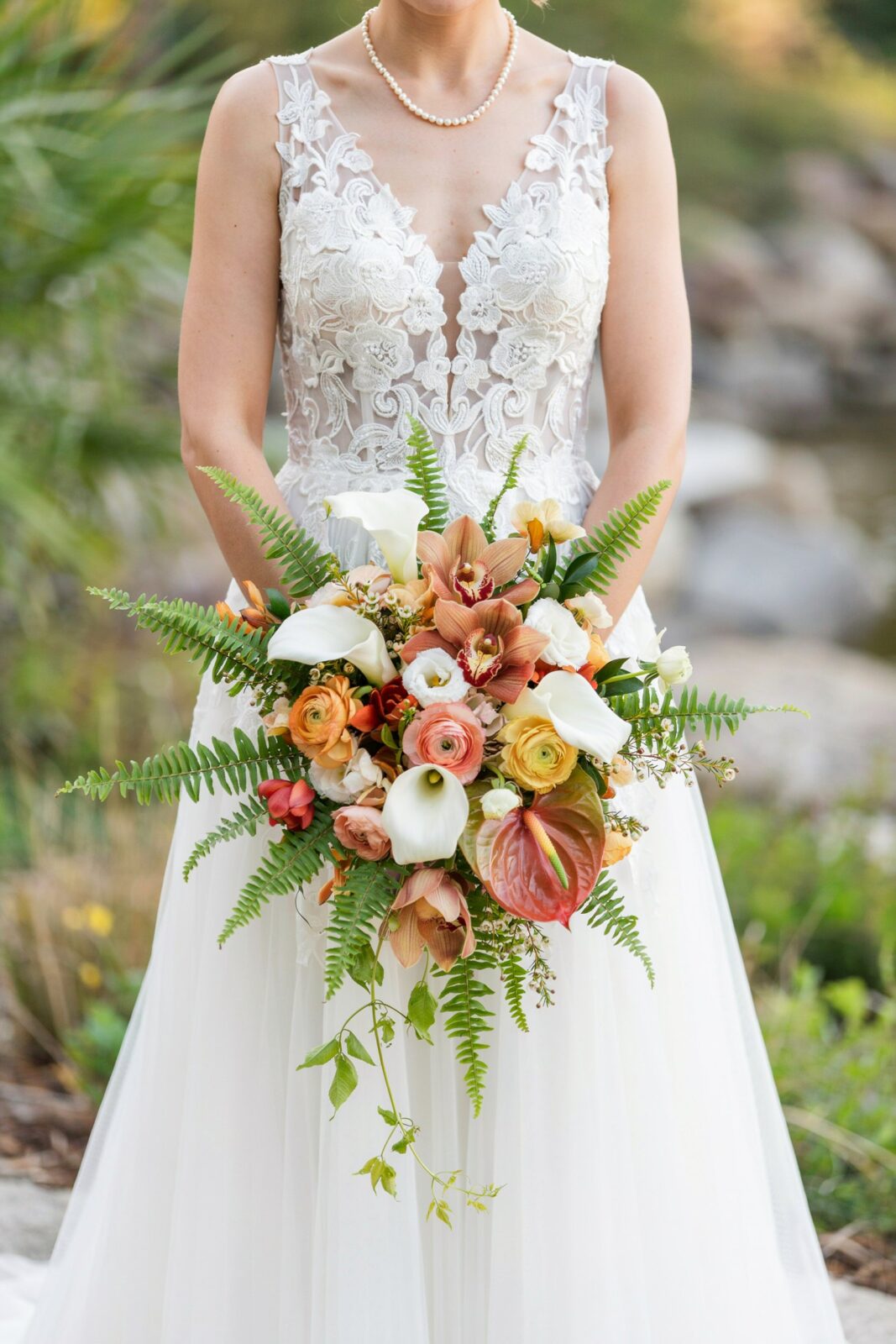
The sleeper pick. Celosia has a velvety, coral-like texture in jewel tones you cannot fake with a rose, it peaks in fall, and it is tough enough to handle heat and travel without bruising. If you want a bouquet that looks nothing like the usual fall lineup, this is where you start.
Sunflowers
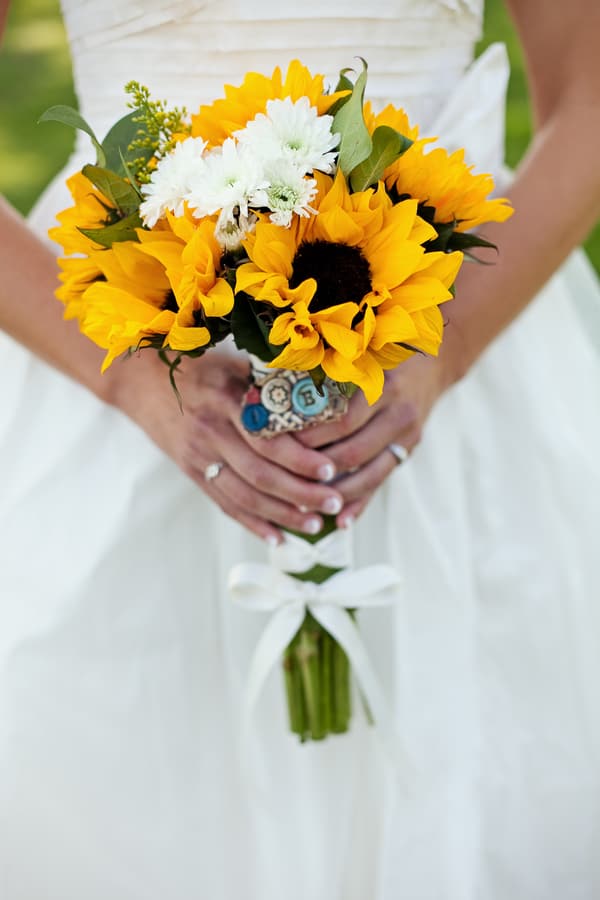
Instant gold, and instantly fall. Sunflowers are at their best in September and early October, they run big and cheap, and their sturdy stems mean they will not flop halfway through the day. Perfect for a rustic or barn wedding. Just know they lean early-fall, so a November date will pay a premium.
Sunflower Bouquet Ideas That Bring the Sunshine to Your Wedding Day
Anemones
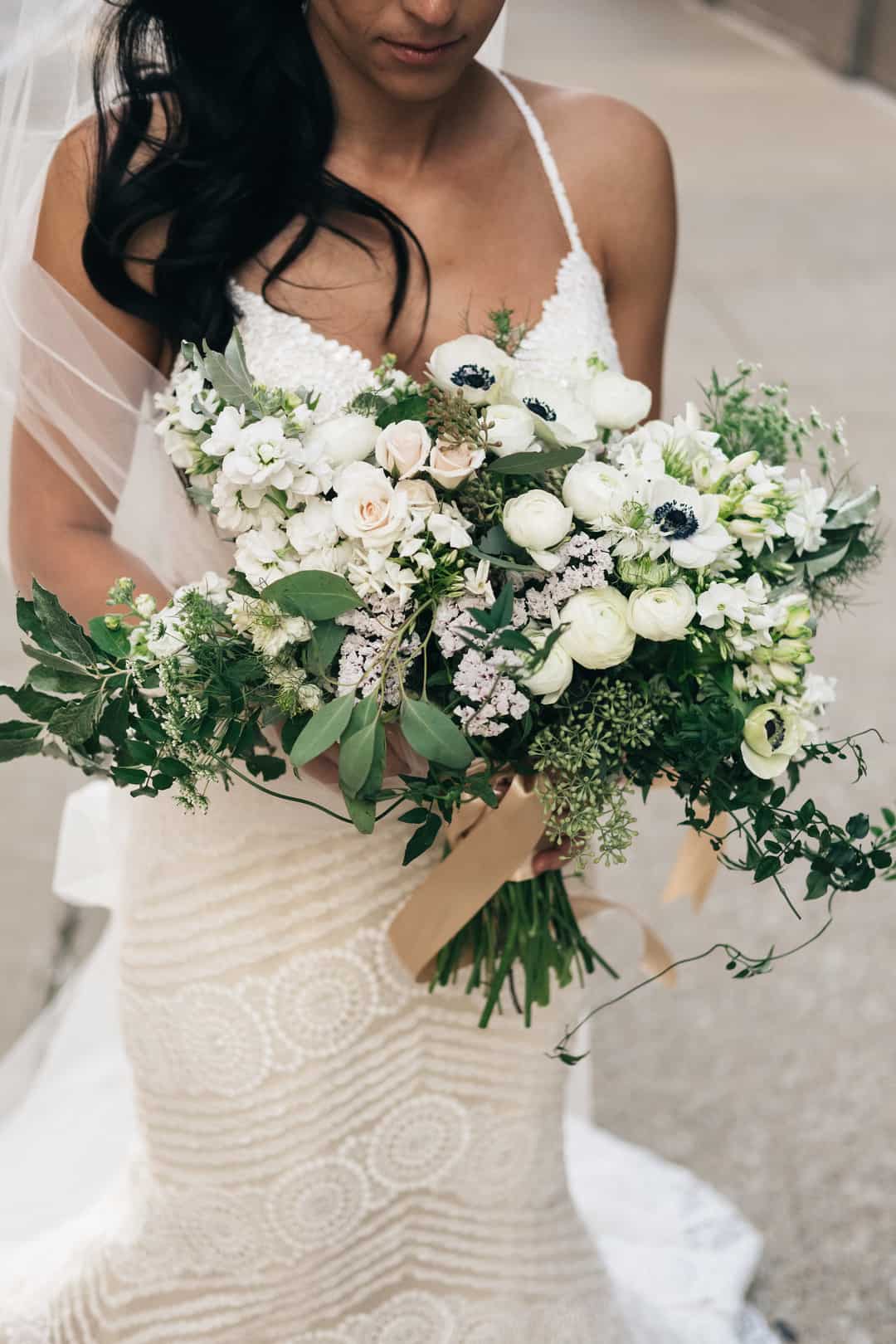
For the moody brides. Anemones have crisp petals and a dark, dramatic center, and as cool-season flowers they come into their own in late fall and early winter. They are on the delicate side, so keep them out of harsh sun and let a sturdier bloom carry the weight of the bouquet.
Anemone Wedding Bouquets We’re Completely Obsessed With
Dried Elements
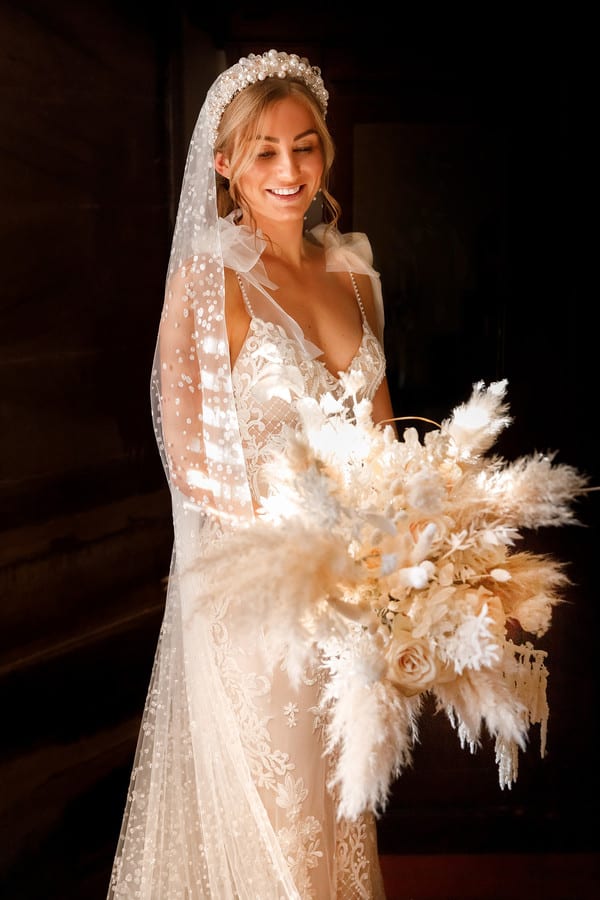
Not a single flower, but worth its own spot. Dried grasses, seed pods, bunny tails, and preserved foliage bring texture and a boho edge, and they last forever, which is half the appeal. They do shed, sometimes onto a dark suit, so use them as accents rather than the whole show unless full boho is the goal.
Boho Wedding Bouquet Ideas with Dried Grasses, Thistle, Loose Texture, and Zero Symmetry
One Hero, One Supporting Cast
It is an easy trap: you walk into the cooler at peak season and want all of it. Dahlias and mums and roses and sunflowers, five heavy hitters fighting for the same six inches. That is how you get chaos instead of a bouquet.
Pick one hero, the flower a guest notices from six feet away. Add one supporting flower and one textural element, like berries or a trailing green. That is the whole formula. Two dramatic blooms pulling the eye in different directions is not a bouquet, it is a wrestling match.
And before you fall hard for any single bloom, check your exact date. September and November pull from completely different buckets, and peonies are the classic example: out of season by fall, which means paying to fly them in from the southern hemisphere at a price that ruins the afternoon. Ask your florist for a date-specific availability list, and name two solid backups for every hero flower. Your budget will thank you.
What Does It Take to Survive the Weather, Not Just the Photos?
Midday sun, coastal wind, or a sudden mountain temperature drop can turn a gorgeous outdoor bouquet into sad, wilted salad before you even say “I do.” A lot of wedding sites only care how it looks on camera. We care whether it makes it that far. A few swaps go a long way:
- Ask your florist for weather-resistant substitutions for any delicate blooms in your inspiration photos.
- Pair sturdier focal flowers with robust seasonal greenery for built-in insurance.
Leave the ultra-delicate, bruise-prone varieties out of your primary bouquet, especially if you are traveling any distance. Schedule delivery or pickup as late as humanly possible, then keep everything hydrated in cool water in a dark room until it is time.
Why Do Some Bouquets Look Editorial and Others Look Like Yard Clippings?
It comes down to a strict color strategy your florist can actually execute. Skip the rainbow. Pick one lane.
- Jewel tones: dramatic, rich, built for evening.
- Harvest warms: rust, marigold, deep burgundy.
- Neutrals and texture: modern, minimal, quietly expensive looking.
- Pastels with moody contrast: soft shades with a dark seasonal edge.
Choose two to three core colors, plus one metallic accent for your ribbon. Extra colors do not read as romantic in photos. They read as messy. Build a six-swatch palette that covers the gown, suits, bridesmaid dresses, bouquet, linens, and venue tones, all in one place, so nothing clashes on the day.
Why Does Your Bouquet Keep Disappearing Into the Backdrop?
A bouquet that looks stunning in a white bridal boutique can vanish completely against peak autumn foliage. Contrast is not optional. It is the difference between a bouquet you can see in your own photos and one you have to point out. Match your palette to what is behind you:
- Intense outdoor foliage: go brighter, or lean into deep jewel accents and crisp light neutrals.
- Dark or indoor venues: pale, reflective blooms that catch what light there is.
Muted flowers, muted foliage, and muted bridesmaid dresses all at once blend straight into the background. Pull up two venue photos on your phone and hold your palette against the screen. You will know instantly if it disappears.
Which Bouquet Shape Works With a Fall Gown, Not Against It?
Fall weddings tend to bring long sleeves, lace overlays, and heavier fabric, not a strapless summer slip. The wrong bouquet silhouette turns a walk down the aisle into a fabric-snagging workout, and fall dresses give a cascade a lot more to catch on.
- Rounded: classic, controlled, formal.
- Loose hand-tied: organic, garden style, easy to carry.
- Asymmetrical: editorial, modern, a real statement.
- Cascading: pure drama, highest snag risk.
Match the bouquet volume to your height, dress shape, and sleeve details. A dramatic cascade against heavy lace appliqué near your hands is a direct ticket to snag city. Do a carry test before you commit: hold a similarly sized object around the house for ten minutes and see how your arm feels.
What Is Your Texture Doing, Besides Filling Space?
Sometimes a bouquet looks like the florist swept the floor and stuffed the clippings straight in. That is the risk with random filler. Expensive-looking bouquets treat texture as a decision, not an afterthought.
Add one or two textural elements, deliberately:
- Berries, for lush and soft.
- Thistle, for moody and spiky.
- Grasses or pampas, for airy and bohemian.
One texture lane, chosen on purpose, does more for a simple neutral palette than five random elements ever will. Too many prickly, branchy pieces ruin a soft, romantic look fast. Pick one lane from the list above and stay in it.
How Hard Is Your Greenery Working for Your Fall Palette?
In fall, your foliage does not have to be flat, generic green. Copper beech, bittersweet, and seeded eucalyptus already carry warm tones on their own, which makes greenery your biggest style and budget lever this time of year.
Use leafy branches to build a lush, high-end look without paying for more focal blooms. Match the foliage to your vibe: clean, structured leaves for modern, cascading vines for wild and woodsy.
Skip heavy, one-note greenery that buries your hero flowers. Do not drown your dahlias in a swamp of basic leatherleaf. Ask your florist for two greenery options in your palette, polished and wild, and compare them side by side.
What Turns a Neutral Bouquet Rich Instead of Washed Out?
We love a neutral palette, but there is a fine line between timeless and a giant beige ball of lint in photos. A few rules keep it on the right side.
Push past white. Cream, beige, taupe, caramel, soft brown, and muted green all count as neutral. From there:
- Blend two to three neutral shades with at least two textures, like foliage plus a dried or seeded element.
- Upgrade the wrap. A velvet or silk ribbon signals the season instantly.
A single shade with zero texture photographs like nothing is happening. Ask your florist for one edge element, bleached foliage, berries, or a dark accent bloom, to keep things from going flat.
Pastels Can Read as Spring If You Skip This One Step
Pastels are not only for Easter. You can work soft shades into a fall bouquet just fine. Without proper grounding, though, your autumn walk down the aisle will read like a spring rehearsal.
Build a soft base in blush, peach, or warm cream. Then pair it with exactly one moody accent: rich burgundy dahlias, plum ranunculus, deep mauve roses, or dark, textured foliage.
Skip pairing all pastel blooms with bright, lime-green greenery. That combination screams April showers, not cozy autumn romance. Pick one shadow color and introduce it through a velvet ribbon, dark foliage, or a single moody accent bloom.
How Far Can a Single Fall Color Carry a Bouquet?
Fall lends itself to a monochrome bouquet. Burgundy alone runs from deep wine to dusty blush. Rust runs from copper to terracotta. You do not need five colors when one has that much range.
A single-color arrangement can look high fashion, or it can look like a boring blob. The difference is how much you vary the shapes and sizes.
The rule: one color family, wild variation in texture. Two things make it work:
- Mix massive focal blooms with medium flowers and tiny accents, all in the same hue.
- Add tonal berries or foliage for depth. Still counts as monochrome.
Flowers that are all the same size are how you end up with a floral soccer ball instead of a bouquet. Ask for three distinct sizes: one large hero, one medium support, one small detail stem.
Why Do Your Metals Keep Clashing Without You Noticing?
A gorgeous bouquet can still look disconnected from the bride holding it. Usually the culprit is a mismatch in metal tones.
Pick one direction: warm (gold, copper, brass), cool (silver, pewter), or a deliberate, structured mix.
- Warm metals amplify the cozy harvest and jewel tones of autumn.
- Cool metals sharpen neutrals for a crisp, modern look.
Skip mixing metals randomly across your ribbon, jewelry, and tablescape. Random is never the same thing as intentional. Pick one metal and repeat it three times: your earrings, a pin on the bouquet wrap, your reception candle holders.
How Could Your Fall Bouquet Ruin Your Own Photos?
You walk down the aisle. The music swells. Your eyes start streaming.
You are not just moved. Fall is peak ragweed season, and mums, one of the season’s signature blooms, run pollen heavy. Your bouquet just triggered an allergy attack, and your makeup is done for.
If you or your partner are allergy prone, choose your flowers with that in mind, especially for close-up bridal portraits. Two swaps help most:
- Ask your florist for low-pollen lookalikes, or tighter, double-petaled options like ranunculus.
- Lean on foliage, eucalyptus, and berries instead of pollen-heavy daisy shapes.
Do not wait until the wedding day to find out about a floral allergy. Red, watery eyes in your gallery is not the look anyone wants. Tell your florist up front that you need an allergy-aware bouquet, and list your known triggers.
Fresh, Dried, or Both?
Dried flowers scream fall. They also shed, sometimes right onto a dark suit. Your route changes the whole feel of the bouquet.
- Fresh only: softer, classic, traditionally romantic.
- Mixed: fresh petals with seasonal texture. The easy middle ground.
- Dried heavy: maximum boho, modern texture, serious longevity.
Use dried elements as accents if you want autumn drama without anything scratchy. Skip ultra-fragile dried pieces if you are traveling or doing a lot of portraits. Nobody wants a bald bouquet before the ceremony even starts. Decide now if you want to preserve the bouquet afterward. Mixed or dried heavy makes that step easy.
When Does an Inspiration Photo Turn Into a Budget Problem?
Nothing kills the buzz like a surprise floral invoice. Translate that gorgeous photo into a real stem count before you fall for it.
A standard bridal bouquet runs 15 to 30 stems, depending on bloom size. Fall gives you an edge here: dahlias and sunflowers run bigger than spring ranunculus, so you need fewer stems for the same visual size. Two ways to stretch it further:
- Go big with massive focal flowers, like dinnerplate dahlias, for volume with fewer stems.
- Use textured foliage and filler to expand the size without doubling the cost.
Do not fall for a photo without considering scale. That “simple” hand-tied bunch online often hides dozens of premium stems and a budget you did not sign up for. Send your florist the screenshot and ask directly: about how many stems is this?
What Do You Do If You Are Getting Married Between Thanksgiving and Christmas?
Late November can feel like a styling trap. Stuck between leftover gourds and premature tinsel, with nothing that feels like you.
You do not have to settle for a holiday cliche. Go for a sophisticated late-fall look where warm tones meet a crisp winter edge:
- Shift the palette to deep burgundy, plum, and forest green, paired with cream.
- Add texture with dark berries and wild seed pods.
- Bring in glossy, deep-toned foliage for structure.
Skip forcing bright orange into a design meant to feel like late-November chill, not October harvest. Ask your florist for a fall-to-winter transition mood board with two palette directions to compare.
How Long Can You Realistically Carry That Dramatic Fall Bouquet?
Giant dried pampas fans and oversized protea arrangements keep showing up in fall wedding photos. Hold one for thirty minutes and the drama fades fast.
A statement bouquet works beautifully with a short aisle, a lot of staged editorial photos, and a fashion-forward vibe you want. Before you commit, run three quick checks.
- The weight: how steady is your arm after carrying it single-handed for the whole walk down the aisle?
- The vows: how do you hold it when it is time to exchange rings?
- The reception: where does this giant piece even sit during dinner?
Skip a massive statement piece with no storage plan. Someone has to hold it eventually, and it should not be a surprise who. Assign a bridesmaid to handle it during key transitions, like the ceremony exit and family photos.
What Happens When You Hand Your Florist a Giant Fall Mood Board?
Fall bloom availability can swing from week to week as the first frosts move in. Hand your florist a big, unstructured inspiration board and you can end up with a bouquet that feels “similar but not really” what you wanted. A four-part brief fixes that.
Start with your single non-negotiable. Pick the palette, the silhouette, or one hero bloom, then let everything else adapt around it. That is how your florist captures your intent even with seasonal substitutions.
Keep the brief simple:
- Must haves: one or two real priorities.
- Must avoids: specific colors, shapes, or textures.
- Vibe words: three adjectives that describe your style.
- Substitution rules: what can change if the market shifts.
Then send your florist exactly five photos: two yes, two no, one this is exactly it.
Your Five Decisions, Before You Touch a Single Stem
The gorgeous, filter-heavy fall bouquets are easy to fall for. Real-world execution is where they tend to fall apart. Lock in these five things first and everything downstream gets easier.
- Date window: early, peak, or late fall, to match local bloom availability.
- Palette strategy: jewel tone, harvest warm, neutral, or pastel with contrast.
- Silhouette: rounded, loose hand-tied, asymmetrical, or cascading.
- Texture lane: soft berries, spiky thistle, or airy grasses.
- Resilience needs: indoor heat, heavy wind, early frost, whatever your venue throws at you.
Which Recipe Matches Your Vibe?
We did the floral math so you do not have to reverse-engineer it the week of. Three recipes, each built to look lush, expensive, and intentional.
The Rustic Harvest (medium bouquet, about 30 to 35 stems)
- Hero: sunflowers, 3 to 5 stems
- Support: roses or similar focal blooms, 6 to 8 stems
- Texture: autumn berries, 4 to 6 stems
- Filler: small accent blooms, 6 to 8 stems
- Greenery: eucalyptus or seasonal greens, 8 to 12 stems
The Moody Jewel Tone (medium bouquet, about 28 to 34 stems)
- Hero: dahlias, 5 to 7 stems
- Support: roses or ranunculus, 8 to 10 stems
- Texture: amaranthus or trailing elements, 2 to 4 stems
- Filler: small accent blooms, 4 to 6 stems
- Greenery: dark, moody foliage, 8 to 10 stems
The Modern Neutral and Texture (medium bouquet, about 25 to 32 stems)
- Hero: large neutral blooms, 5 to 7 stems
- Support: smaller neutral flowers, 8 to 10 stems
- Texture: dried pampas or seeded elements, 3 to 5 stems
- Greenery: airy modern greens, 8 to 10 stems
Most professional bouquets built from these ratios land between $150 and $350, depending on stem count and how many premium imports sneak in. Stay local and in season and you stay closer to the low end.
One Day Is All It Has to Survive
If you are hiring a pro, show them these stem ratios, then let them swap in specific blooms based on what is fresh and affordable at the market. That is the golden rule: match the counts, flex the flowers.
If you are going the DIY route, a few rules keep your stems flawless.
- Keep it cool. Store the finished arrangement in a dark, chilly room.
- Hydrate constantly. Submerge stems in fresh water until the last possible second.
- Assemble late. Build it as close to the ceremony as you can.
- Mist lightly. A light spray of cool water keeps petals crisp.
If you want to keep it after the wedding, decide that now, not on your way out the reception doors. Air drying, pressing, silica gel, or a professional preservationist all work, but someone needs to get your bouquet into fresh water the second the reception ends, or the petals will not make it to the preservation step at all.
The inspiration got you this far. The right fall wedding flowers, picked for your real date and your real weather, are what get you down the aisle holding something that still looks like it.
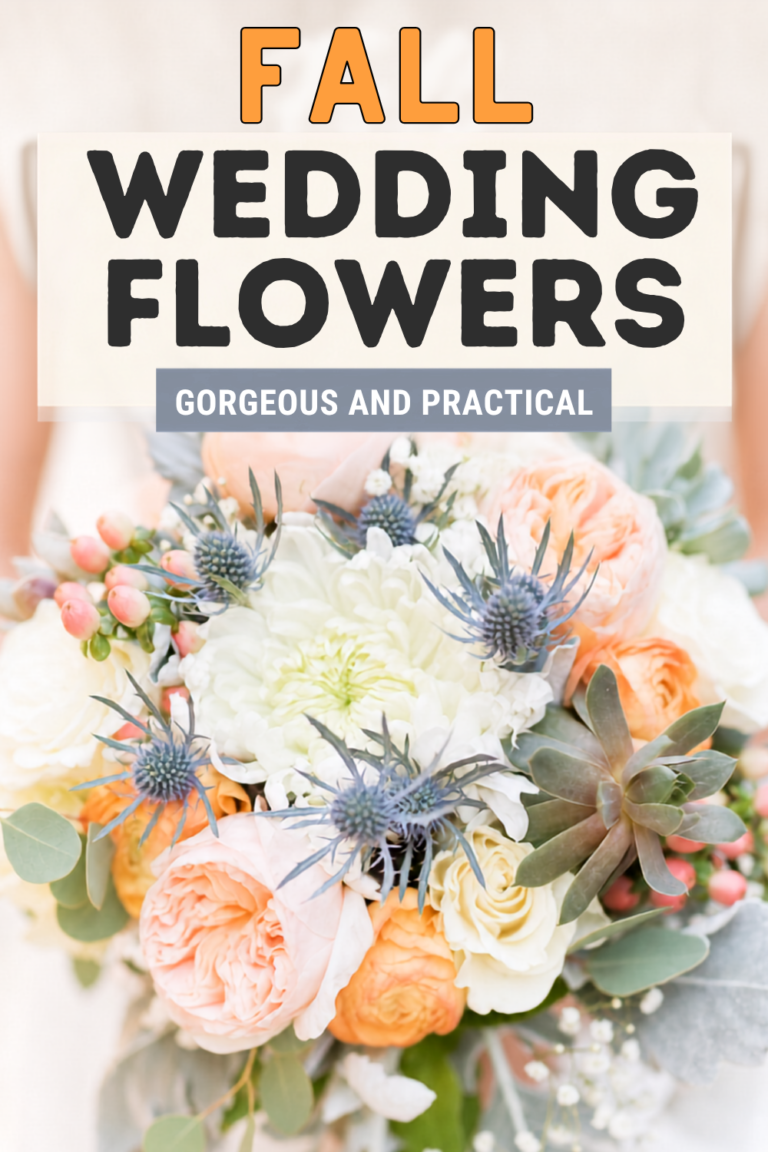
Don’t forget to pin this to your Wedding Bouquets Board for later!