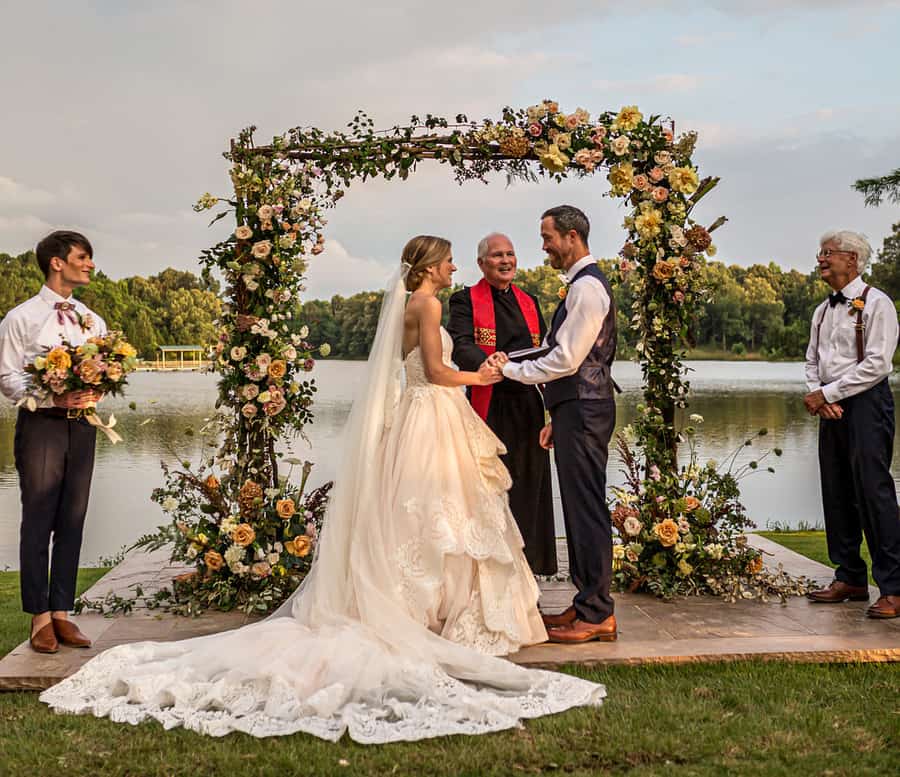
The best way to avoid last-minute problems is to identify the practical details early and confirm responsibilities with your venue and vendors. Here are seven outdoor wedding logistics couples should plan for before the big day.
1. Have a Detailed Weather Backup Plan

Weather is one of the biggest variables at an outdoor wedding. Even if the forecast looks favorable, conditions can change quickly, so couples should decide in advance how they will handle rain, strong winds, excessive heat, or cold temperatures.
Start by asking the venue what options are available if the weather changes. Can the ceremony move indoors? Is there space for a tent? Are tents permitted on the property, and are there restrictions on where they can be installed?
If you plan to use a tent, arrange it well in advance rather than waiting for the forecast to change. Ask about sidewalls, flooring, lighting, fans, heaters, and other equipment that may be needed depending on the weather.
It is also helpful to establish a decision-making process. Decide who will monitor the forecast, when the final weather decision will be made, and who will communicate any changes to vendors and guests. A backup plan is most effective when everyone knows the plan before the wedding day.
2. Make Sure Restrooms Are Adequate and Accessible
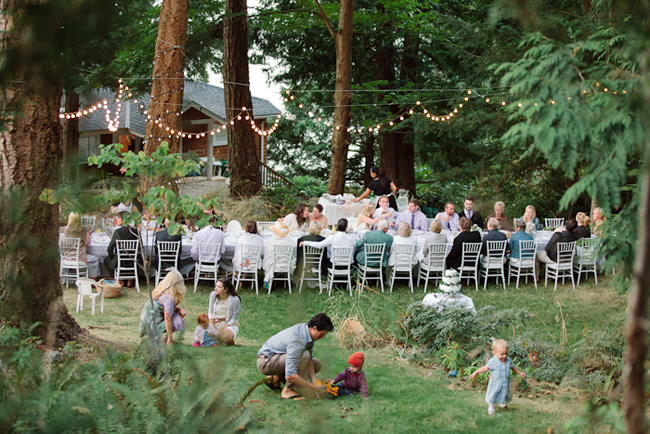
Restrooms are easy to overlook when the ceremony and reception are taking place outdoors. First, confirm whether the venue has permanent restrooms that guests can use throughout the event. If not, you may need portable restrooms or a restroom trailer.
When arranging temporary facilities, consider the number of guests, accessibility, location, lighting, handwashing facilities, and the distance guests will need to travel from the main event area.
The placement of the restrooms matters, too. They should be convenient for guests without being positioned directly beside dining or entertainment areas. Ask the provider about delivery access, water and power requirements, servicing, and any site restrictions.
For couples who want a more traditional restroom experience, luxury restroom trailers may be an option. Companies such as Platinum Potty Rentals provide bathroom trailers designed for events and may be worth considering depending on the venue and guest count.
3. Check Power, Lighting, and Vendor Requirements

Outdoor venues do not always have enough electrical capacity for a full wedding setup. Before finalizing your plans, ask the venue what power is available and where electrical connections are located.
Then check the requirements of your vendors. Caterers may need electricity for refrigeration or cooking equipment, while DJs and bands may require power for sound systems. Lighting, fans, heaters, photo booths, and other equipment can add to the demand.
If additional power is required, ask whether a generator is permitted and what size is appropriate. Confirm where it can be placed, how it will be fueled, and whether the venue has restrictions concerning noise or equipment.
Do not forget about temporary lighting. Paths between the reception area, restrooms, parking areas, and other important locations should remain visible after dark. Cables and equipment should also be secured so they do not create trip hazards.
4. Plan Parking, Transportation, and Vendor Access

Outdoor venues can have limited parking or difficult access roads, particularly at private properties, farms, gardens, and other remote locations.
Walk through the arrival process before the wedding and determine where guests will park, where vendors will unload, and how far people will need to walk to reach the ceremony and reception.
If parking is limited, consider arranging shuttles or another transportation solution. Give guests clear directions before the event and use visible signage when they arrive. Do not assume everyone will recognize the same landmarks or know which entrance to use.
Vendor access requires separate planning. Confirm where rental trucks, catering vehicles, florists, entertainment companies, and other suppliers can unload. Ask how close vehicles can get to the event area and when they need to be moved.
These details may seem minor during planning, but they can cause significant delays when several vendors are arriving at the same time.
5. Review Insurance and Venue Requirements

Ask the venue whether you are required to purchase event liability insurance and whether individual vendors must provide their own coverage.
Do not assume that a standard insurance policy covers every situation. Before purchasing coverage, ask the insurer exactly what the policy includes and excludes. Depending on the policy, relevant considerations may include guest injuries, property damage, vendor-related incidents, cancellation, or certain weather-related losses.
The venue may also require a certificate of insurance or specific coverage limits. Confirm these requirements early so there is enough time to obtain the correct documentation.
Keep copies of important insurance documents and make sure the venue and relevant vendors receive them by the required deadline.
6. Check the Ground, Paths, and Accessibility
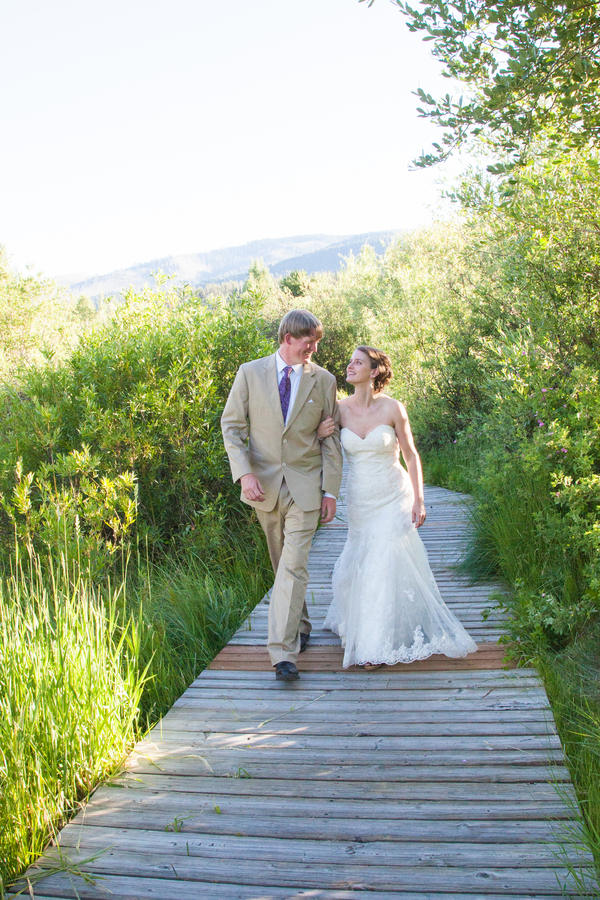
A beautiful outdoor setting can create practical problems if the ground is uneven, muddy, steep, or difficult to walk across.
Visit the property and inspect the areas guests will use, including parking areas, ceremony spaces, reception areas, restrooms, and paths between them. If possible, walk the site at approximately the same time of day as the planned event.
Think about what could happen after rain. Grass and soil that seem perfectly manageable in dry conditions can become soft or slippery after a storm.
Accessibility should also be part of the planning process. Consider guests who use wheelchairs, walkers, or other mobility aids, as well as older guests and anyone wearing formal footwear that may be difficult to use on uneven ground.
If necessary, ask the venue or rental company about temporary flooring, mats, ramps, or other solutions. Addressing these issues in advance is much easier than trying to fix them after the ground becomes muddy.
7. Prepare for Emergencies and Unexpected Problems
Even a carefully planned wedding can encounter unexpected problems. Outdoor celebrations should have a basic emergency plan covering severe weather, medical needs, power failures, transportation delays, and other disruptions.
Make sure key members of the wedding team know where emergency exits, first-aid supplies, fire extinguishers, and accessible routes are located. Keep important vendor contact information together and designate someone other than the couple to handle urgent logistical issues during the event.
It is also worth checking the venue’s rules concerning generators, heaters, candles, tents, amplified music, and other equipment. Ask about noise restrictions and event curfews if the celebration will continue into the evening.
Other practical details should not be overlooked. Plan for trash collection, lighting after dark, temperature control, and insects if the location or season makes them a concern.
Final Checklist
Outdoor wedding planning is not about preparing for every possible problem. It is about identifying the issues most likely to affect your particular venue and making decisions before the wedding day.
Before the event, confirm your weather backup plan, restroom arrangements, power requirements, parking and transportation, insurance requirements, site accessibility, vendor access, and emergency procedures.
When these details are handled in advance, the couple and their vendors have a clearer plan for dealing with unexpected changes. That allows the wedding day to focus on what matters most: celebrating with family and friends.
Don’t forget to pin this to your Wedding Planning Board for later!