The good news is there are far fewer rules than you fear. Most of what mattered the first time still matters, a few things shift, and permission is the real theme. Here is what usually changes for couples, plus what to know if you are attending as a guest. What follows are prevailing US secular norms, not laws, and your family or faith tradition may handle a detail differently.
Throw the Size of Wedding You Want
Any size of second wedding is fine in modern etiquette. A big celebration with dinner and dancing is just as appropriate as an intimate gathering for 30, and you do not need to scale down to prove you are being modest.
Second weddings often skew smaller because couples know what they want and who they want there, but that is preference, not a rule. Plenty of couples choose a smaller celebration, or a ceremony followed by a restaurant dinner, and rarely wish they had gone bigger. If a large party feels right instead, have it.
One common wrinkle: it is a first wedding for one of you and a second for the other. That can stir up quiet disagreement about how big is appropriate, since one partner may picture the full celebration they never had while the other feels they should keep it low-key. There is no rule that the person on their second marriage has to shrink the day to match. Talk through what each of you actually wants and build the size from there, not from what either of you assumes a second wedding is supposed to look like. Guests, for what it is worth, tend to be glad to celebrate a marriage no matter whose second it is.
Wear Whatever You Want, White Included
There is no rule that says your second wedding dress cannot be white. You can wear white, ivory, blush, blue, a jumpsuit, or sequins head to toe.
The old idea that white was reserved for a first wedding is outdated and most couples ignore it now. Wear what feels like you and makes you feel confident and comfortable on the day. Veil or no veil, traditional gown or something non-traditional, the choice is yours.
Make the Ceremony and Vows Your Own
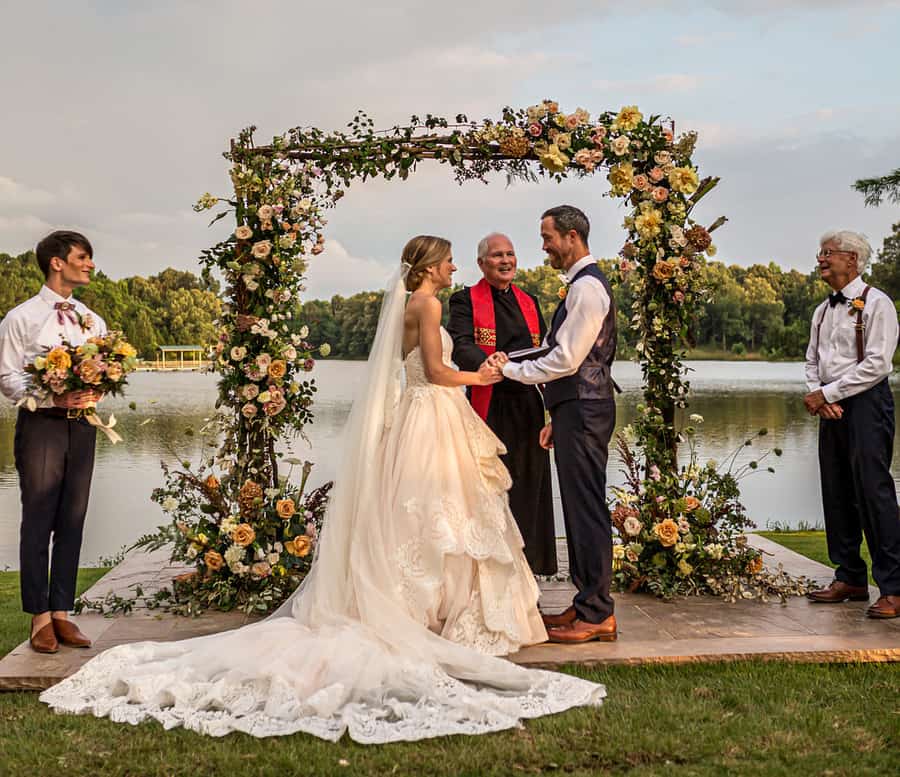
A second wedding ceremony can be as traditional or as modern as you want, and many couples find it more meaningful the second time.
You are not bound to the format, readings, or wording you used before. Personal vows, a story told by your officiant, or music that reflects this relationship often lands well because you know exactly what you are promising now. There is also no obligation to be given away or to follow a formal processional if you prefer to walk in together or with your kids.
Build the Guest List You Actually Want
You do not have to re-invite everyone from your first wedding. A second wedding gives you a genuine redo on the guest list.
Invite the people who support this marriage and who you want with you now. Close friends from a previous chapter who are still close to you can be included, and it is fine to leave off people you felt obligated to invite last time. Keep it honest and kind, and let the list reflect your present, not your past.
Think Twice Before Inviting an Ex
In most cases, it is wiser to leave an ex-spouse off the guest list, even if you are on good terms. The focus of the day belongs on the new couple, and an ex in the room can create discomfort or divided attention even with the best intentions.
That gets more nuanced when you co-parent. Your shared children will naturally connect the two households, and your ex will likely be aware of the wedding through them. Handle that with maturity and a heads-up where it is respectful to do so, but you do not need to turn it into an invitation out of obligation. If you are considering it, talk it through privately as a couple first.
Fold Your Kids Into the Day
If one or both of you has children, include and consider them from the start. The wedding becomes a family event in a deeper way.
Ask kids what role feels comfortable rather than assigning one. Younger kids might like being a flower girl or ring bearer, or standing nearby for a family moment. Older kids or teens might prefer a junior attendant role with light responsibility, a reading, or just sitting in the front row with a grandparent or trusted adult.
A family vow, a unity candle that includes the kids, or a small pendant for them during the ceremony can mark the formation of the new family if everyone wants it. Give kids room for mixed feelings, too. You can celebrate the marriage without forcing enthusiasm, and that sensitivity makes the transition easier.
Rethink the Registry, or Skip It
A traditional registry of starter housewares often does not fit a second wedding. Most couples already have towels and a toaster.
A lot of couples rethink it as an experience or cash fund, a honeymoon fund, cooking classes or travel, or a request for upgrades to nicer sheets and cookware. Some choose a charitable donation option instead, and some skip a registry entirely. All of those approaches are considered fine. If you do create one, keep it small and focused on what you will actually use.
Plan to Pay for It Yourselves
Couples usually pay for their own second wedding in the US. Parents may offer to contribute and that is welcome, but there is no expectation that they will or should.
Because of that shift, invitations typically come from you as a couple rather than listing parents as hosts, though you can word them however suits your families. Talk about budget early between the two of you, then loop in parents only if they offer or if you want to discuss it directly. Clarity now prevents awkwardness later.
Keep Showers and Parties Low-Pressure
Traditional pre-wedding events like a bridal shower, engagement party, or bachelorette are not expected for a second wedding.
That does not mean you cannot have anything. A low-key gathering that friends genuinely offer to host, like a dinner, cocktail night, or spa afternoon, is completely welcome. Do not request or expect a repeat of the full party circuit, and be prepared to cover it yourselves if you want one. People are often happy to celebrate, they just do not want to feel obligated to throw the same events twice.
Go Easy on Your Guests
Gifts are not expected for a second wedding, though many guests will still give something meaningful. Some couples head this off by asking for no gifts at all, which is especially common when the same friends already gave at the first wedding. Either way is completely normal, and it is also why your thank-you notes matter even more.
Every gift and every gesture of support deserves a prompt handwritten note. Beyond that, keep demands on guests low. Choose a date that is not on a major holiday if you can, pick a location that is easy to reach without burning vacation days, and do not ask the wedding party to buy matching expensive outfits or travel twice. A lot of couples let attendants choose their own dresses within a color range, which saves money and stress, especially for friends who were in the first wedding too. Respect that your circle may have tighter schedules now with kids, careers, and limited time off.
What Guests Should Keep in Mind
Guests generally should not bring up the first wedding or a previous spouse at a second wedding. Comparisons about the food, the dress, or who was there last time, even when meant kindly, pull focus from the couple in front of you.
Be ready for a celebration that may not follow a fully traditional script. You might be invited to take part in a reading, a candle lighting, or a family moment, and there may not be a bouquet toss or garter toss at all, since many couples skip those traditions the second time around. The best move is to celebrate wholeheartedly, keep the past in the past, and meet the day on its own terms.
A second wedding is still a wedding, with the same reason to get dressed up and cheer loudly. Give yourself permission to want what you want, handle the tender parts with care, and throw the day that feels true to the two of you now.
Don’t forget to pin this to your Wedding Planning Board for later!