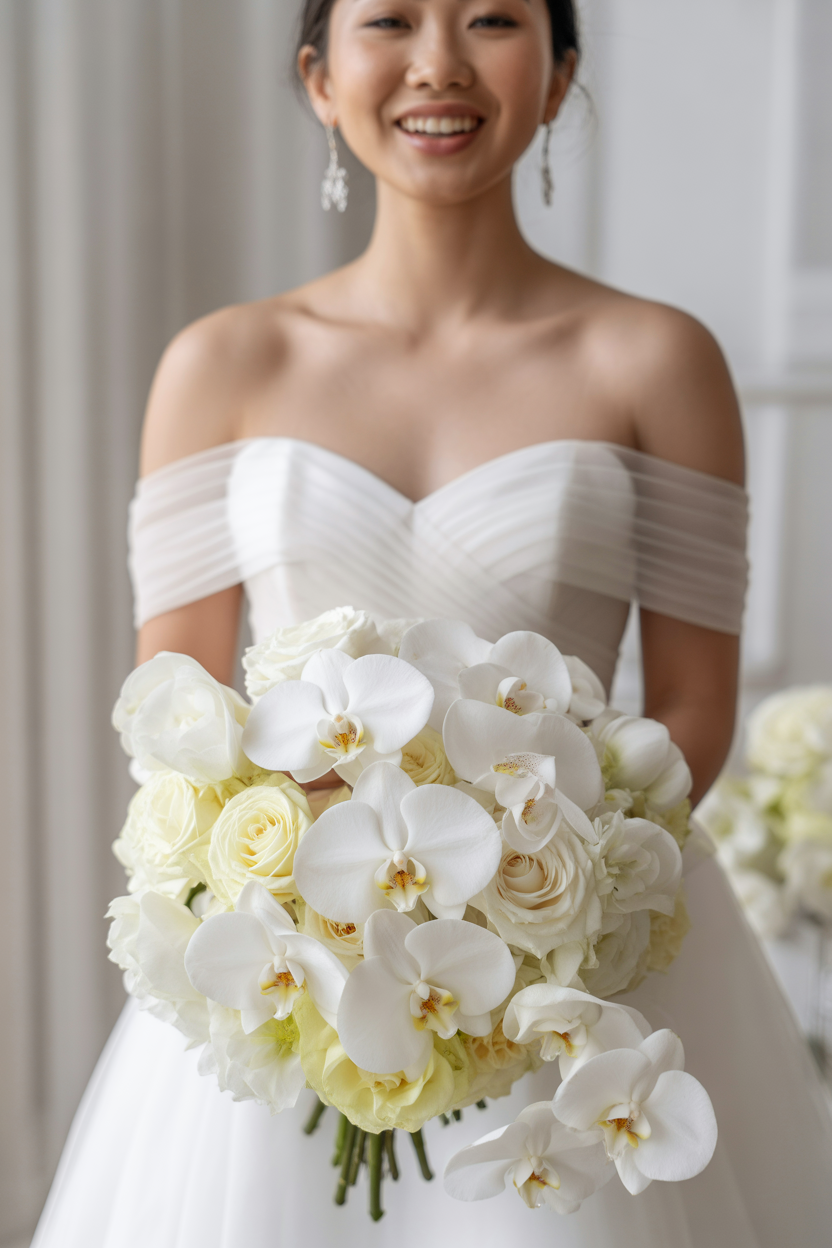
Silk Roses for Wedding: Budget Savvy or Tacky?
Silk roses get a bad rap – and to be fair, they’ve earned it. We’ve all seen the crunchy plastic kind stuffed into a dollar-store vase, usually next to a sad scented candle and a broken clock.
But not all faux is tragic.
Used well, silk roses can save your budget without sacrificing the vibe. Used badly, they’ll make your tables look like an afterthought and show up in every photo as a slightly-too-shiny reminder of what could’ve been.
This guide breaks down where silk actually works, where it doesn’t, and how to fake it without looking like you did.
Let’s start with the #1 factor guests actually notice…
1. Deploy Silk Roses Where Distance is Your Friend
Using silk roses is budget-savvy when they are viewed from a few feet away – not when they are positioned to be seen from close. The core strategy is to maximize the visual volume of your wedding decor by treating the venue like a theatrical production: deploy faux items for maximum impact at a distance, minimizing the cost per stem.
Certain spots demand size and height, and that makes them perfect candidates for quality faux roses. Guests rarely get close enough to spot the difference; the sheer volume sells the illusion.
- Ceremony arch or altar backdrop
- Large swags on a mantel, welcome table, bar, or signage
- High centerpieces that sit at or above eye level
If guests are going to interact with, touch, or closely examine a floral element, you need to go real – or use the absolute premium-grade silk roses you can find. These are your high-scrutiny zones.
- Bridal bouquet: It lives in your hands and is in every close-up photo. Do not skimp.
- Anything guests pick up: Bud vases on small bistro tables, favors, or aisle petals (go real, unless you enjoy vacuuming).
If cocktail tables are tight and guests lean in, go real or premium faux. But here’s the biggest don’t: never put low-quality faux roses on your sweetheart table. Every camera lens focuses there – save those high-scrutiny moments for the real deal.
2. The Secret Behind “Real Touch”: Faux Flower Materials Explained
If you’ve been shopping for silk roses lately, we need to drop some real talk: Most aren’t silk at all. That’s the industry’s worst-kept secret – and it’s actually a good thing. The majority of quality faux blooms on the market are crafted from modern polyester, polymer, or foam blends. These materials offer durability and texture that real silk simply cannot match.
So, what is the holy grail of modern faux – the elusive “Real Touch”?
It’s simply marketing speak for a superior finish. This means petals are softer, often molded (not just cut fabric), and sometimes coated in latex or polymer to mimic the fleshy feel of a live bloom. They are incredibly lifelike but, as you’d expect, come at a higher cost.
Faux Flower Material Cheat Sheet
When you’re comparing quality (and prices), here’s the quick breakdown of what you’re likely seeing:
- Basic Polyester: The cheapest option. Look for cut edges, flat color, and a stiff, slightly shiny texture. Skip these for anything guests will see up close.
- Latex or PU-Coated: These are polyester petals dipped or coated in polyurethane (PU) for better thickness and realism. This process eliminates tell-tale fabric edges, reducing flimsiness.
- Silicone/Molded Petals: The top tier. These are molded into realistic shapes and display excellent, non-flat color gradients. Quality is brand-dependent, but the best are nearly indistinguishable from real flowers.
Strategically allocate your budget once you know the material differences.For items where you want high quality, focus on petal softness, adequate thickness (not stiff), realistic color blending, and leaves that don’t look like plastic lettuce. If the silk roses are destined for a high ceremony arch or sitting 8 feet up on a beam, a mid-tier PU-coated option will work perfectly.
3. The Flash Test: The 5-Minute Protocol That Exposes Your Faux Flowers
The true nemesis of your perfectly planned silk roses isn’t daylight – it’s low reception lighting coupled with flash photography. Low-grade materials, fine in soft light, bounce the flash like plastic mirrors, revealing a fake, reflective sheen. This is where your savings strategy pivots from savvy to silly.
The 3-Step Faux Photo Protocol
Catch this failure before the wedding. This five-minute protocol is required for any faux stem intended for a centerpiece or bouquet:
- Mock It Up: Assemble a small, representative sample (a single stem or cluster).
- Light It Up: Take three photos on your phone: one in daylight, one under dim warm light, and one with the camera flash on.
- Zoom In: Review the flash photo, focusing specifically on the petal edges and surface texture. If it fails here, it will fail in your professional wedding gallery.
What gives them away? Look for these specific red flags in the zoomed-in flash photo:
- Shiny Highlights: If the petals have a slick, oil-like gleam, the material is too reflective.
- Stiff Shadows: Unnatural, deep shadows created by overly stiff, unnatural petal shapes.
- Fabric Flaws: Edges that look frayed, cut, or resemble cheap felt.
If the faux fails the flash test, it fails the wedding gallery. If your arrangement looks like a clearance item, don’t panic. Swap the worst stems for higher-quality blooms (focusing on reduced sheen) or use more organic greenery and texture to break up the repetition. Faux works best supporting real flowers, not standing solo in the spotlight.
4. Selecting Realistic Color and Avoiding the Crayon Look
The quickest way to ruin your silk roses is poor color selection. Nothing screams “fake centerpiece” faster than a bright, flat, single-tone bloom. We call these the “crayon roses”: saturated, uniform colors (think electric blue, bold purple, or hot pink) that instantly betray the bloom’s artificial nature. Real roses are dimensional – their colors shift, shade, and feature gradients. Your faux flowers need this same subtlety.
For impeccable realism, remember these rules:
- Muted Tones Only: Stick to classic shades (blush, ivory, champagne) or select slightly muted versions of your primary palette colors. This softening minimizes unnatural sheen.
- Demand Dimensional Color: Realism requires petals featuring 2–3 tones – look for darker edges, paler centers, or natural striations. If the dye is entirely flat, walk away.
Crucial Tip: Avoid glitter, metallic sheen, or overly uniform dye at all costs, especially on inexpensive red and white faux flowers.
If your wedding palette is inherently bold – think deep emeralds or electric fuchsia – here is your major tactical pivot: keep the faux roses neutral.
Let intensity come from your accents: vivid ribbons, colored linens, or signage. For a striking lilac moment, use lilac in cocktail napkins and keep the bulk of your silk roses a safe blush or ivory. This strategic contrast ensures luxury, allowing guests to admire your beautiful wedding decor, not a cheap dye job.
5. The In-Hand Inspection Checklist: Three Places Faux Flowers Always Fail
You can forgive a slightly fake rose from ten feet away, but the final test happens when you hold the stem. Realism hinges on minor structural details that separate cheap craft-store filler from genuine real-touch quality. Use this checklist on any stem you receive or inspect in-store. It focuses on the specific points where low-grade manufacturing always collapses.
These are the realism criteria you need to inspect closely before trusting the quality of your silk roses:
- Petal Edges: High-quality cuts are clean but appear soft or molded, not laser-sharp. Avoid: Fuzzy fraying or a stiff, felt-like texture.
- The Calyx/Base: This is the green structure where petals meet the stem. It shouldn’t be a conspicuous, hard plastic “donut” holding everything together. Look for: Layered, natural transitions with varied texture that minimize the seam.
- The Stem Itself: Real rose stems are rough and rarely perfectly straight. Avoid: Shiny, glossy green plastic. Demand: A matte finish and an interior wire, allowing you to bend and shape the stem for realistic arrangement.
Don’t forget the supporting details. Check the leaves – they should have visible veining and varied sizes. Crucially, a dozen stems shouldn’t look like identical clones. Slight irregularity between blooms (tighter buds, looser flowers) is essential for realism.
Don’t commit your budget sight-unseen. If you find a promising vendor online, order just 1–3 stems first as a “try-on” sample. If they pass your flash test and this physical inspection, then you can confidently commit to the bulk order for your wedding decor.
6. How To Make Fewer Faux Stems Look More Expensive
Big, dense faux arrangements are where realism goes to die. That’s the hard truth about working with high-quality silk roses.
You’ve sourced beautiful stems, but the most common mistake is cramming 50 of them into one vase just because they were cheap. This immediately makes your decor read as cheap, mass-produced filler. Density forces symmetry, exposing the repeating, identical nature of faux stems and resulting in a perfect, cheap-looking dome.
When working with faux flowers, minimalism is your most powerful budget ally. Fewer stems read as higher quality. This trick leans into the idea that a sparse design must be intentional, curated, and expensive.
What does the budget-savvy, high-end look require?
- 3–5 Blooms Per Vase: Keep it simple. Grouping a single variety (like three identical roses) in a small, weighted vase looks chic.
- Negative Space: Allow air and light around the blooms. They shouldn’t be touching their neighbors.
- Intentional Shape: The arrangement must look loose, airy, and asymmetrical – never like a perfect, tight ball.
Avoid these arrangement crimes when styling your silk roses:
- Overstuffed, tightly packed domes that leave no breathing room.
- Perfect symmetry that highlights the artificial repetition.
- Massive, disproportionate blooms crammed into tiny vases.
To combat the repetitive look, add 1–2 texture stems – think eucalyptus-style greenery or simple berry sprigs. The varied, organic texture distracts the eye from the manufactured shape of the roses, creating visual flow and depth. This prevents the common ‘too much faux at once’ look and saves you money on stem count.
7. The Hybrid Strategy: Where to Splurge and Where to Fake It
The best weddings are never 100% real or 100% faux – they use the hybrid approach. This ultimate budget-meets-glam solution ensures the flowers guests interact with are flawless while maximizing visual volume everywhere else. Your guests will be too busy admiring the sheer scale of your decor to conduct a stem-by-stem inspection.
These areas demand high scrutiny. Always prioritize real blooms here, or invest in the absolute highest quality faux flowers available.
- Bridal Bouquet, Boutonnieres, and Corsages: These are handled, smelled, and are inches from faces in every photo. Go real.
- Sweetheart/Head Table Centerpiece: This is the backdrop to all key reception photos; it requires your best investment.
These spots require visual impact and volume but are rarely inspected at close range. They are perfect for mid-to-high quality silk roses or greenery.
- Cocktail and Bistro Tables: Guests are standing and moving; they won’t scrutinize the florals.
- Large Backdrop Installations: Ceremony arches, photo booths, or wall swags need bulk, not detail.
- Accent Pieces: Florals tucked into signage or draped over seating charts.
How do you physically blend the real and fake without drawing attention?
- Real Focal, Faux Supporting: Use high-quality real blooms at main tables (like the head table), then deploy premium faux flowers with matching color and greenery for the bulk of guest tables.
- Faux Base, Real Hero Blooms: Build large arrangements with budget-savvy silk roses. Then, tuck 3–5 real, dramatic roses or peonies right at the center top. Photos will capture the real “hero blooms,” lending instant legitimacy to the arrangement.
If a guest does happen to clock that those beautiful faux flowers aren’t fresh? Don’t stress. Their brain will say, “Oh, fake,” and immediately move on to thinking about the open bar. You nailed the look, and you kept your honeymoon fund intact. That’s the real win.
8. The Container Crisis: Why Clear Glass Kills Your Silk Rose Vibe
You bought the gorgeous silk roses, shaped the stems, and arranged them perfectly. Then you dropped them into a generic $1 clear glass vase – and bam! – the entire illusion shatters. Why does this happen? The clear vase is transparency’s cruel joke on faux florals.
Live flowers have organic, imperfect stems, but clear glass instantly spotlights the fake mechanics you need to hide: the floral foam block, the shiny wire stems, and the inconsistent, hack-job cuts at the bottom. That screams “fake flowers” immediately.
To make your silk roses look genuinely high-end, you need a vessel that acts as a magician’s curtain, ensuring sophistication through total concealment. This isn’t just about hiding the stems – it’s about boosting the perceived value of the arrangement itself.
What containers work best for high-end wedding decor?
- Opaque Ceramics or Metal: A creamy ceramic pitcher or a reflective silver julep cup is the industry standard for luxe arrangements. They add texture and reflection while perfectly concealing all mechanics.
- Colored Glass: Choose muted tones like smoked gray, deep emerald, or vintage milk glass. This softens the entire look and eliminates any harsh view of the internal structure.
Switching to an opaque container gives you total freedom to manage the interior chaos. Use a weighted piece of floral foam (or even gravel) hidden below the lip of the container, then add a small, inexpensive collar of faux greenery to seamlessly cover the foam edges.
Crucial Tip: Always trim your stems to a consistent, uniform height before arranging. This small, deliberate detail separates a messy DIY project from a professional-level display.
Remember the budget strategy: Spend more on fewer, better containers. A single high-quality silver julep cup holding three perfect silk roses looks infinitely more expensive than a cheap, giant pitcher stuffed with twenty flimsy stems.
9. When Faux is the Strategic Choice: Operational Reliability Over Romance
You’ve planned every detail, but logistics don’t care about romance. When the schedule is tight or the environment is demanding, silk roses aren’t the cheap choice – they are the strategic decision. They guarantee perfection, whether your arrangements are enduring 100-degree heat or being transported across state lines.
For operational reliability, faux often wins. Real blooms are liabilities when facing specific logistical challenges:
- Extreme Heat: Real petals droop and brown long before the reception ends. Faux maintains perfect structure and vibrant color under pressure.
- Cold Transport: Sub-zero temperatures can instantly freeze and destroy sensitive blooms during transit, leading to last-minute flower replacement chaos.
- Destination Weddings: Long travel times make reliable, fresh sourcing a nightmare. Faux arrives perfect and passes customs hassle-free.
- Venue Restrictions: Historic or high-end venues often ban the water, soil, and complex setup required by fresh floral deliveries, forcing you to scale back your vision.
Faux flowers buy you the one thing every bride desperately needs: calm and time. You can finalize grand installations weeks in advance, eliminating rushed hydration, emergency calls for wilted stems, or messy water buckets flooding the venue floor. This predictability is a worthy investment in your overall well-being.
Love the scent and delicate romance of fresh blooms? Go for the hybrid approach. Reserve real roses for high-touch items, like your bouquet and boutonnieres – the flowers you actually hold and smell. Use flawless silk roses for large-scale decor where logistics matter more than perfume. You get the best of both worlds without the day-of panic.
10. Mastering the Silk Rose Budget: Stop Pricing Per Stem
Assuming silk roses are automatically cheap is the biggest financial mistake you can make. If you choose premium real-touch blooms for every surface, you risk spending more than you would on seasonal fresh flowers. Faux flowers only deliver savings when you shift your mindset from “cheap replacement” to strategic asset – meaning you must price per arrangement, not per stem.
Before you bulk order stems, map your needs based on where they will be placed:
- Count Your Spots: Tally the exact number of tables, the ceremony arch, and all accent locations (bar, restrooms, welcome sign).
- Prioritize Realism: Decide which few spots truly require the most premium faux flowers or real blooms (like your personal bouquet).
- Price Per Arrangement: Estimate the total cost for each complete centerpiece, including filler greenery and containers, before committing to bulk purchases.
Savings on the stems can vanish if you don’t account for the necessary supporting mechanics.
- Containers: Cheap vessels ruin the look; invest in quality opaque ceramics or silver julep cups – their cost adds up quickly.
- Mechanics: Don’t forget the floral foam, tape, and internal supports needed to stabilize and shape your arrangements of silk roses.
- Shipping and Backup: Shipping large boxes of florals is substantial. Always order 10–15% extra stems to account for bending or breakage during construction and transport.
You are acquiring reusable assets, which is the luxury real flowers can never offer.
First, you can resell your high-quality arrangements after the wedding for immediate cash back. Alternatively, reuse them instantly as home decor. Those beautiful faux roses can add a sentimental touch to a bookshelf or be pulled out seasonally for parties.
If an inquisitive guest asks, “Are these real?” avoid defensiveness. Respond casually, emphasizing your intentionality:
“We mixed real and faux so we could spend on the things we actually cared about.”
It’s the truth, and it sounds wonderfully confident. You nailed the wedding decor look without sacrificing the honeymoon budget.
11. Maintenance and Care: Protecting Your Faux Flower Investment
You ordered premium silk roses, only for them to arrive looking totally smushed. Don’t panic – that’s standard. Faux flowers are shipped tightly packed to save space, but unlike real blooms, they don’t need emergency hydration. They just need styling and proper care to activate their expensive potential and protect your investment.
To achieve maximum realism, the unboxing process needs patience.
- Let Them Breathe: Unpack your faux flowers at least two weeks before the wedding. This allows compressed petals to relax and unfold naturally.
- Shape the Structure: Bend the wired stems! Gently curve the stems and angle the flower heads slightly differently. Identical structure is the fastest way to signal “fake.”
- The Snip Check: Spot-check for factory glue strings or stray, frayed edges. Carefully use small scissors to trim these away.
Since you bought these for long-term reuse, durability is paramount for your beautiful wedding decor.
For basic cleaning, keep the process cool and gentle:
- Dusting: Use a soft, clean makeup brush or a hair dryer set to cool and low to gently blow away accumulated dust.
- Spot Cleaning: Heavier polymer materials might handle a slightly damp cloth, but always test a hidden petal first before cleaning the entire bloom.
Keep stems out of harsh direct sunlight during staging to prevent yellowing or fading. For long-term storage, use breathable cardboard boxes – don’t crush your beautiful silk roses in a trash bag or tight tote. Well-prepped faux flowers always read as expertly styled, not something pulled hastily from storage.
Frequently Asked Questions About Faux Flowers
For those final concerns about swapping real for silk roses, we’ve covered the most common questions that keep brides up at night. The good news? You can absolutely fake it beautifully without sacrificing your vision – or your integrity.