Fortunately, art deco engagement rings remain as stylish today as they were a century ago! If you’re captivated by the glitz and glamour of exclusive Chicago speakeasies and opulent parties at the Gatsby mansion, stick around. We’ll show you some art deco engagement rings that’ll knock your garters off.
What Makes an Engagement Ring “Art Deco”?
There are a few discerning characteristics that make an engagement ring unmistakably art deco style:
Streamlined forms and geometric shapes – Clean lines are where it’s at, so you’ll often find emerald, shields, pear, and marquise-shaped cut gemstones accented by settings with smooth lines. Graceful circular shapes courtesy of cushion cuts and halo-style rings are popular.
Since the style is all about complementary yet contrasting forms, it’s common to see a round center cut stone featuring a halo set with small square or rectangular gemstones instead of circular ones.
- Diamonds and platinum – The art deco period was about all that glitters, so it’s no surprise that diamonds and platinum were the pairing of choice when it came to selecting an engagement ring for your best girl back then.
- Bold colors and contrasts – Diamonds and platinum don’t have to be monochromatic, though! Art deco engagement rings often feature splashes of gorgeous, contrasting colors courtesy of vibrant gemstones.
Our Favorite Art Deco and Vintage Wedding Bands
First up: art deco and vintage-inspired bands spotted on real L&L weddings. Click any link to see the full day. Scroll further for shoppable options.
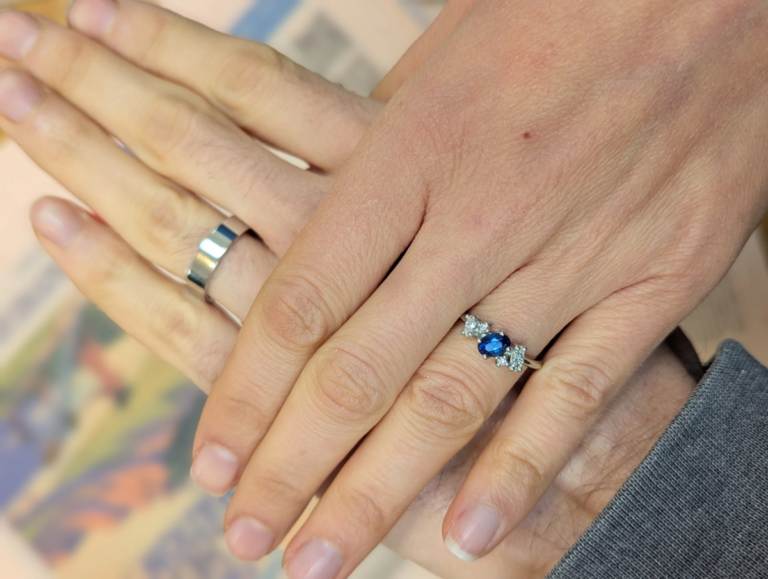
Geometric Sapphire and Diamond Band

This is the one that does art deco the most literally. Square blue sapphires alternate with round diamonds in a neat milgrain row, so the whole band reads as pattern rather than one big stone. It’s geometry you can wear, and it photographs beautifully sitting in a stack with a sapphire flower cluster ring and a pair of plain silver bands.
Dawn and Chris kept things laid back and family-first at Morning Glory Farm, and the peach-and-mint palette gives a blue-and-white band plenty of room to stand out.
See Dawn and Chris’s Vintage Wedding at Morning Glory Farm →
Hand-Engraved Filigree Band
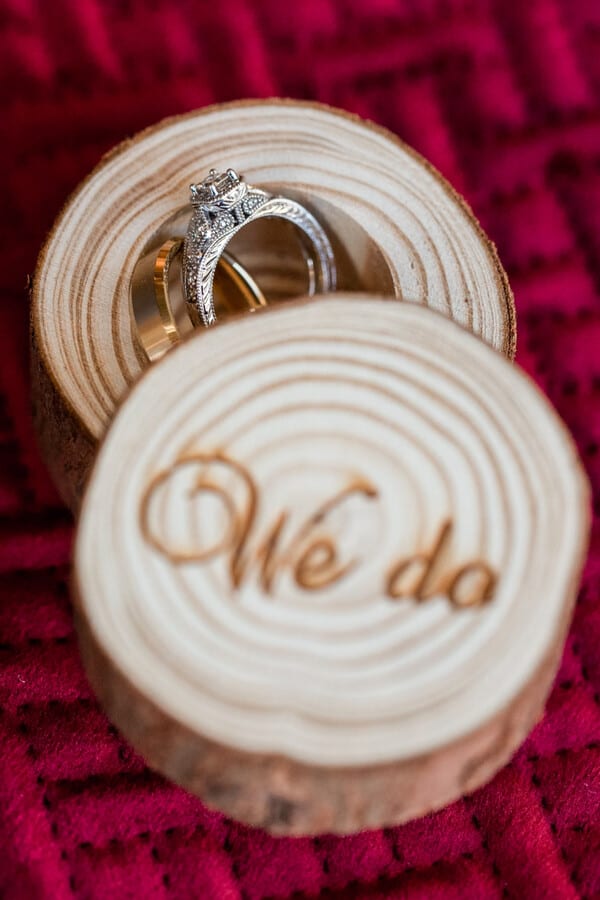
All the detail here lives in the metalwork. The white-gold band is hand-engraved down the shoulders with fine scrollwork and milgrain beading, the kind of craftsmanship that costs nothing in stones and everything in patience. Next to it sits a simple yellow-gold band for him, so the contrast does the talking.
The shot itself is pure Halley and Braden: both rings tucked into a wood-slice box engraved with ‘We do,’ photographed against deep burgundy. It’s the fall rustic vintage look in miniature.
See Halley and Braden’s Vintage Rustic Fall Wedding →
Yellow Gold Band with Marquise Milgrain Detail

If platinum and white gold feel too cool for you, this is the warm-toned version of the look. The yellow-gold band has marquise-shaped accents and tiny milgrain dots running along it, a vintage detail that softens the oval solitaire above it without competing with it.
We caught it mid-doughnut, which tells you most of what you need to know about how laid-back her Texas wedding was.
See Katie and Ryan’s Jewel-Toned Vintage Wedding in Texas →
Square Halo and Pavé Band Stack
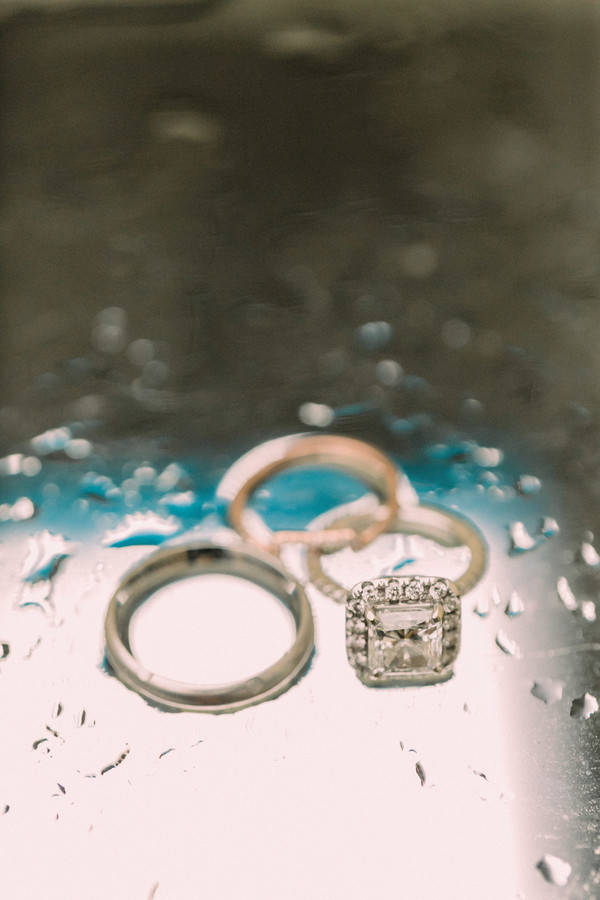
The art deco signature here is the squared-off halo. A step-cut center stone sits inside a tidy frame of small diamonds, giving you those clean right angles that rounder settings just can’t. Pair it with the thin pavé band beside it and a plain band for him, and you’ve got a three-ring set that works hard without shouting.
Christy and Peejay built their whole California coast day around vintage details, so a moody, low-light ring shot on a dewy surface tracks.
See Christy and Peejay’s California Coast Wedding →
Delicate Halo and Diamond Band Stack

This is the subtle end of the spectrum, for the bride who wants vintage softness more than hard geometry. A round halo engagement ring stacks with a thin, diamond-lined band so the two read as one delicate sparkle rather than two separate rings.
It’s understated on purpose, and the styling makes the case: shot on a bride’s hand as she cups the groom’s face, it’s less about the stones and more about where her hand is. Sometimes that’s the whole point.
See This Romantic Vintage Styled Shoot →
14K Floral Ruby Cluster Ring
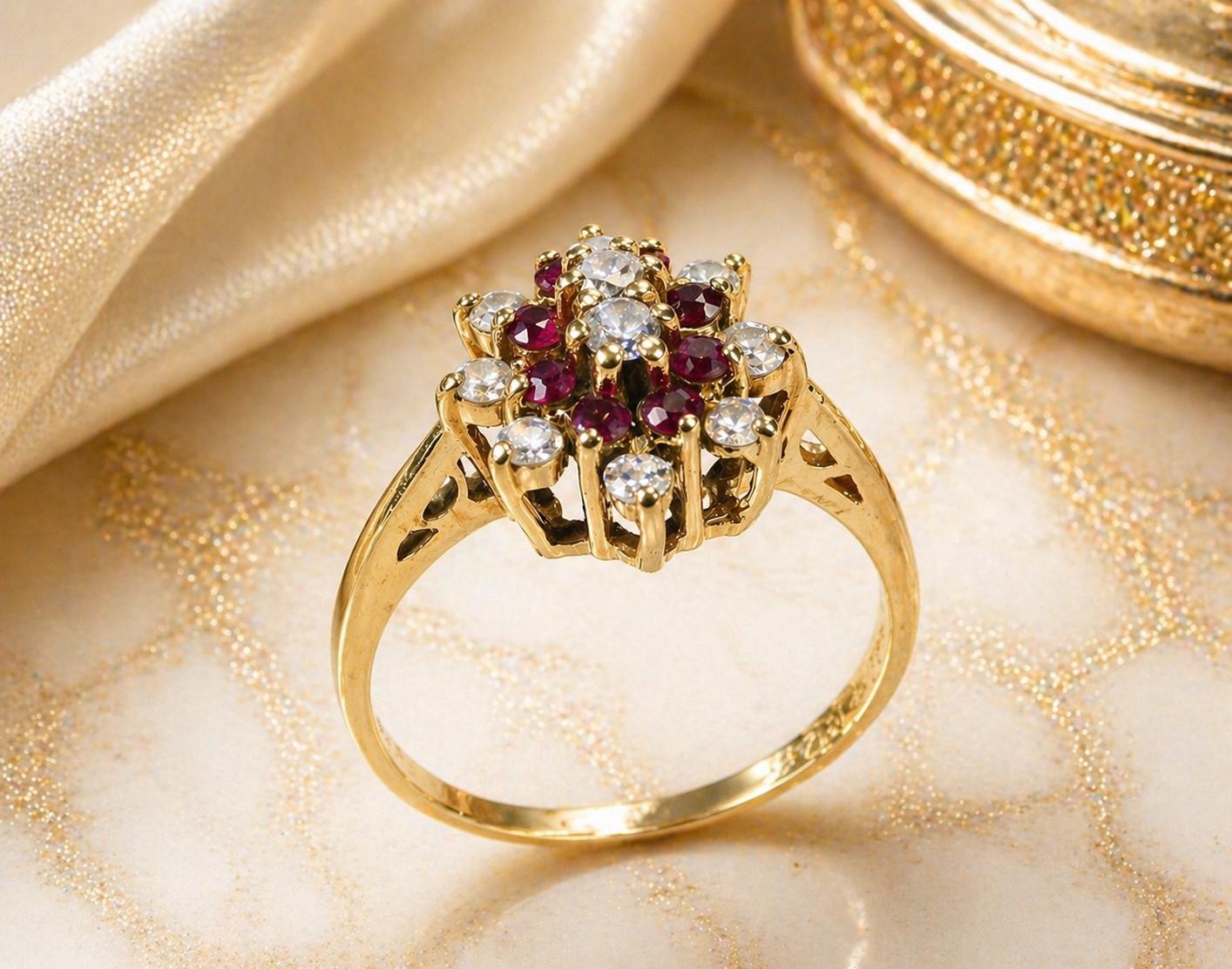
Fourteen-karat gold and a floral ruby cluster: this ring earns its second glance. The rubies sit in a floral arrangement that pulls from 1920s garden party aesthetics, giving it a vintage character without tipping into dusty. Color, structure, and a little drama, all on one finger.
This is the ring for someone who looked at a plain diamond solitaire and felt nothing. The floral setting does real work here, framing the rubies in a way that reads as considered rather than costume. It carries the kind of personality that comes from actual design history, not a trend cycle.
The 14K gold keeps it solid and wearable, not just decorative. If your jewelry tends toward the unexpected and you have zero interest in blending in, this one fits. Sophisticated rebellion has a pretty good look in fourteen-karat gold.
Art Deco Akoya Pearl Moissanite Ring
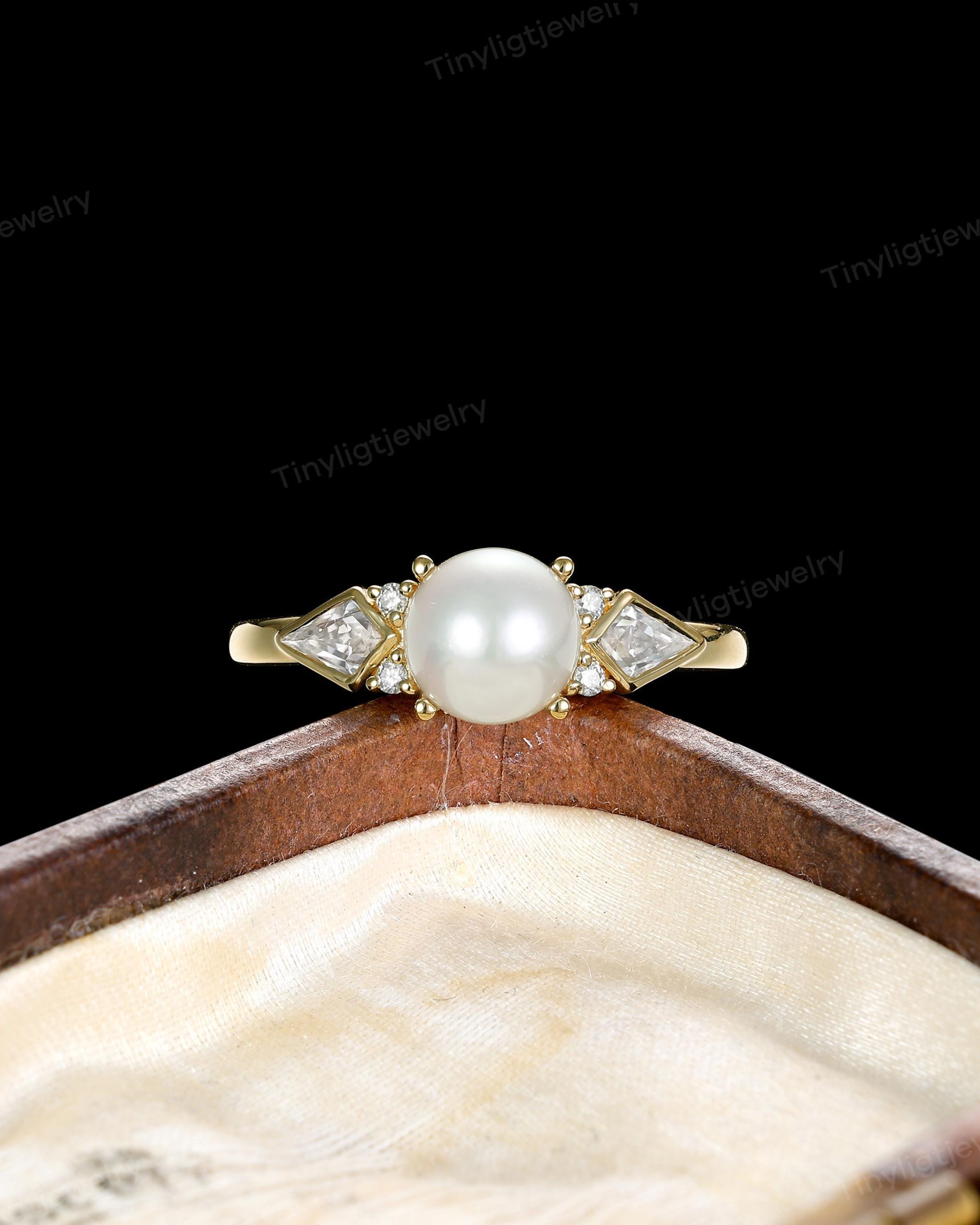
An Akoya pearl sits at the center of this Art Deco ring, flanked by moissanite triangles that catch light from every angle. The geometry is deliberate and sharp, pulled straight from the 1920s playbook, and it works exactly as intended. Cool, classic, and with just enough sparkle to remind you that vintage design knew what it was doing.
The Art Deco styling brings old-world structure without feeling like a museum piece. Moissanite side stones keep it current, the pearl keeps it grounded, and together they land somewhere between heirloom and statement. This is the kind of bridal ring that reads as considered rather than trendy, which tends to age a lot better.
If you want something with actual visual logic behind it, not just a solitaire with a shrug, this delivers. The pearl-and-moissanite pairing is uncommon enough to turn heads at an engagement party without requiring an explanation every time someone asks about it. Wear it as a bridal ring or stack it for everyday use. Either way, it holds its own.
Art Deco Asscher Aqua Ring
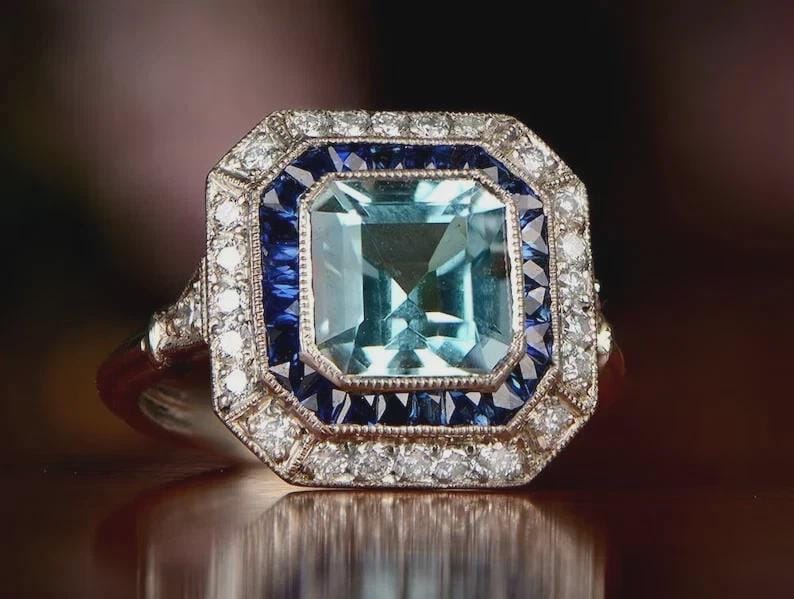
A 3.40-carat Asscher-cut Santa Maria aquamarine sits at the center of this 1930s Art Deco ring, the stone’s color so saturated it borders on surreal. Six French-cut sapphire accents frame it, and the whole thing is a clinic in geometric precision. Art Deco did this kind of thing well, and this piece is one of the better examples of why that era still has a hold on people.
The Asscher cut was practically built for Art Deco. Its stepped facets and clipped corners pull every bit of depth out of a stone like this aquamarine, and pairing it with the cool blue of French-cut sapphires keeps the palette tight and intentional. The result is a ring that reads as bold without trying too hard.
Vintage pieces from the 1930s at this quality level are genuinely hard to come by. The aquamarine alone would turn heads, but the sapphire accents and the overall geometry give it a coherence that a lot of modern rings spend a lot of money failing to achieve. Wear it if you want people to ask about it, because they will.
Art Deco Asscher Moissanite Ring
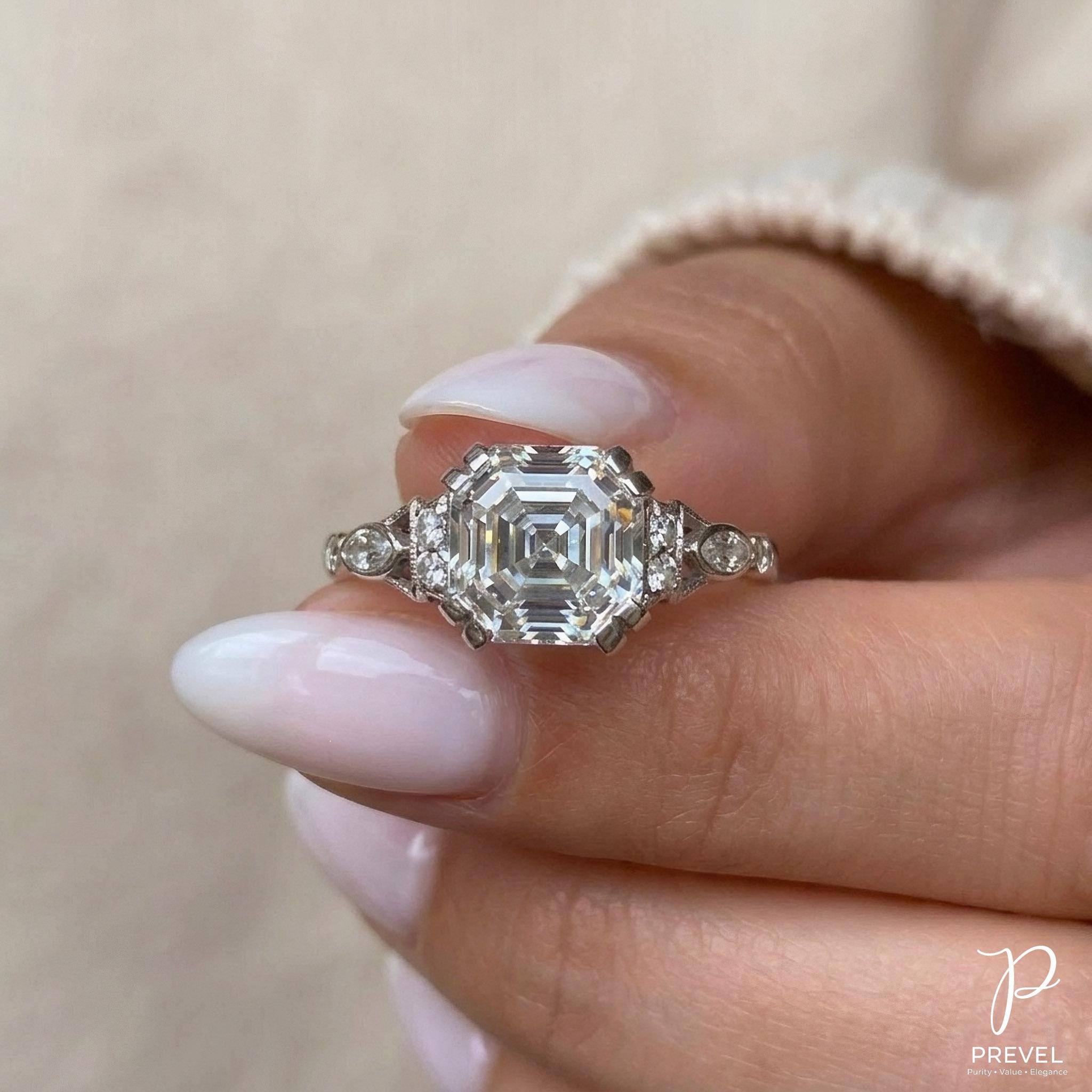
An Asscher-cut moissanite sits at the center of this Art Deco halo ring, and the geometry alone is worth stopping for. The step-cut facets pull light into deep, mirrored flashes that diamonds rarely match, and the surrounding halo amplifies that without tipping into excess. Hard lines, square symmetry, Old Hollywood bones.
The structural design does real work here. Art Deco rings live or die by their proportions, and this one gets them right: the angular silhouette frames the center stone cleanly instead of competing with it. It reads vintage without the vintage-store asterisk, and the moissanite origin means you get that depth of brilliance without the ethical headache that comes with mined stones.
Moissanite is also genuinely hard (9.25 on the Mohs scale), so this is a ring built to be worn daily, not stored. If your partner gravitates toward pieces with architectural weight and a bit of history baked into the design, this one delivers. The fire is real, the geometry is sharp, and it will not blend into the background.
Art Deco Asscher Ring
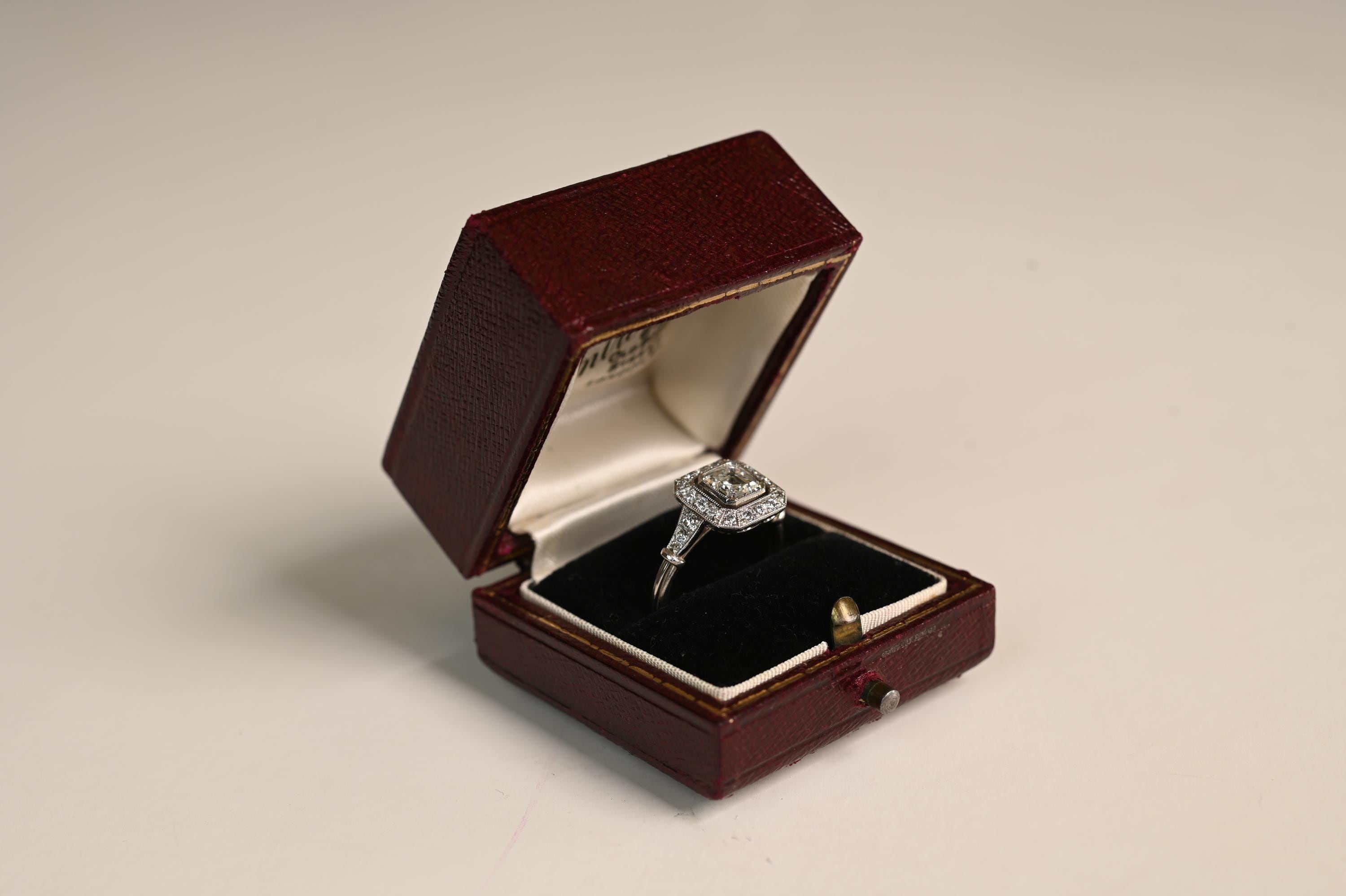
A 3.40-carat Asscher-cut Santa Maria aquamarine sits at the center of this Art Deco ring, flanked by six French-cut sapphires arranged in the kind of geometric precision that defined 1930s jewelry at its most disciplined. The cut alone is worth noting: Asscher cuts were engineered for depth and symmetry, and a Santa Maria stone brings an intensity of blue that most aquamarines simply don’t reach.
The sapphires aren’t decorative afterthoughts. French-cut stones have flat, angular facets that play off the Asscher’s hall-of-mirrors interior, so the whole composition reads as a single graphic object rather than a center stone with accessories bolted on. It’s period-correct geometry, not a loose interpretation of the era.
This is the ring for someone who finds modern solitaires boring and vintage reproductions unconvincing. The aquamarine’s cool blue against the deeper sapphire tones gives it enough contrast to read across a room, while the overall silhouette stays tight and architectural. Wear it as an engagement ring or a right-hand statement piece. Either way, it holds its own.
Art Deco Colombian Emerald Ring
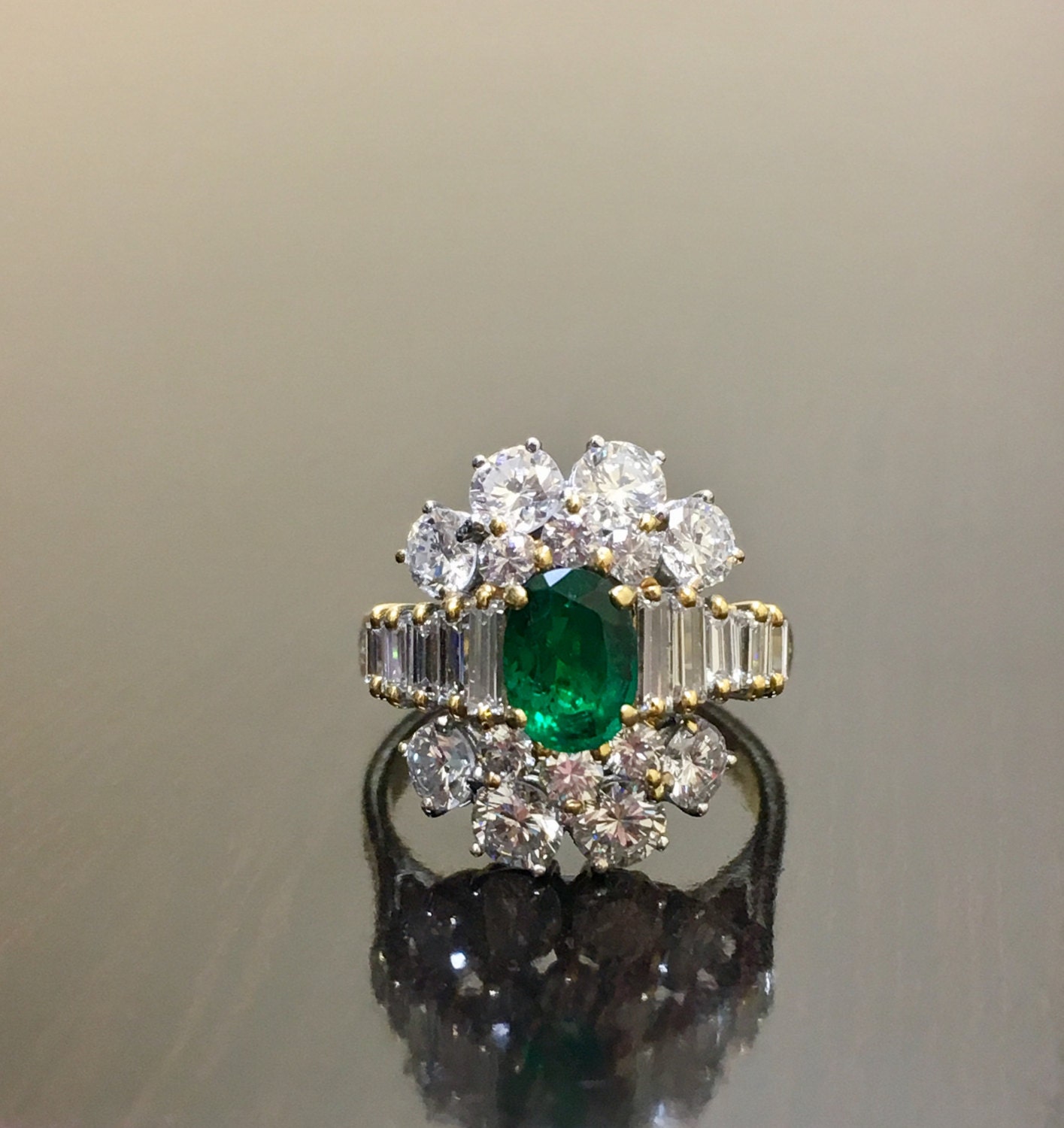
Colombian emeralds and 18k yellow gold, shaped into the geometric lines of Art Deco. This ring pulls off the Roaring Twenties without the costume-party vibe, each facet catching light the way only a well-cut stone can. The Great Gatsby had his green light across the bay. You get yours on your finger, which is a considerably better arrangement.
Emeralds earn their reputation the hard way. The depth of color in a Colombian stone puts your average gemstone to shame, and the rarity is real, not marketing copy. In a world drowning in diamond solitaires, an emerald in an Art Deco setting reads as a deliberate choice, the kind that says you did your research and liked what you found. It whispers “vintage” louder than any Instagram filter can shout.
Pop the question with it, wear it to a Tuesday lunch, or buy it for yourself because you spotted it and knew. This ring has the geometric bones of a serious antique and enough personality to carry a room. Timeless sophistication with a streak of boldness baked right in. The emerald has no notes.
Art Deco Green Sapphire Engagement Ring
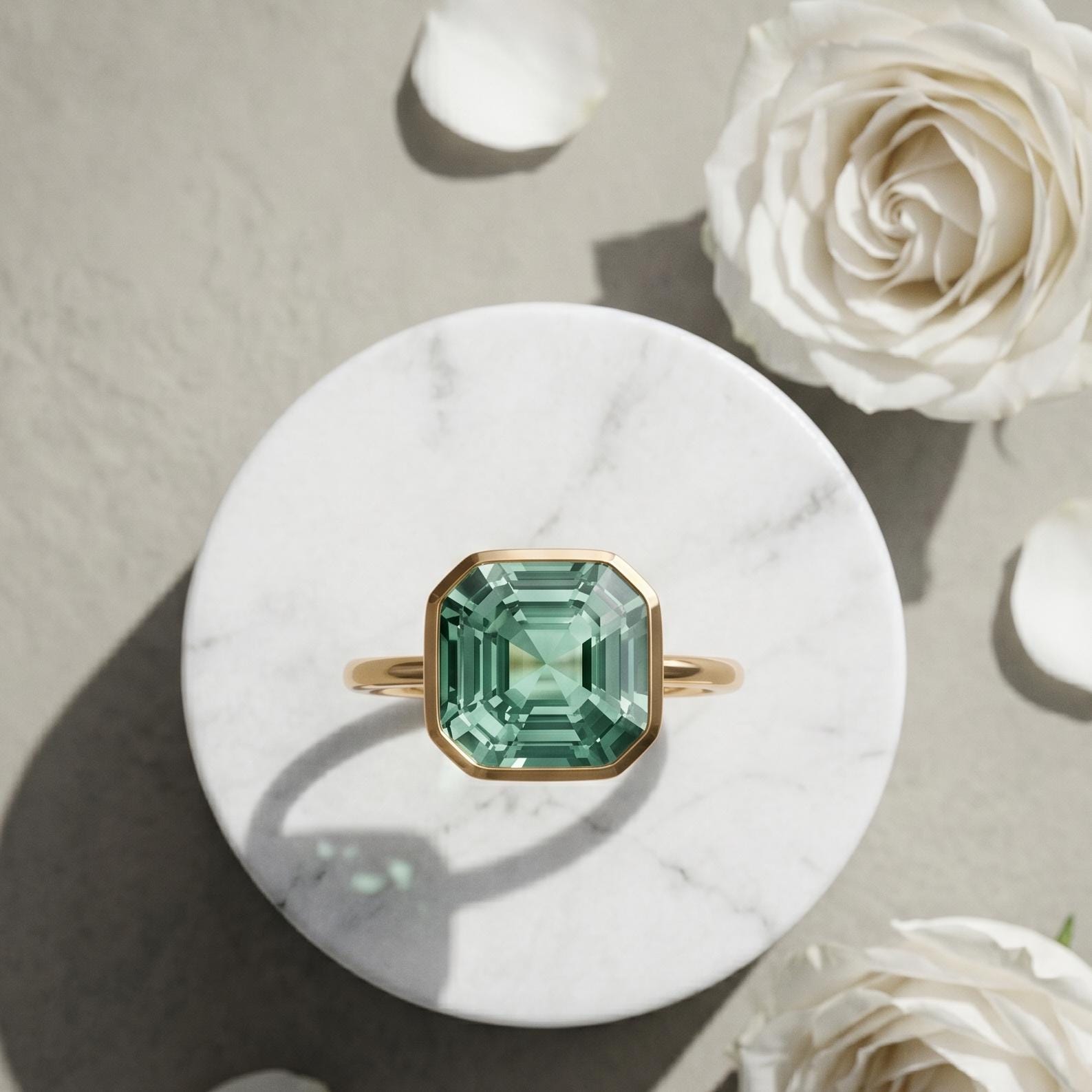
A 4-carat green sapphire in an Asscher cut, set in platinum, is the kind of piece that reads sophisticated without trying too hard. The Asscher cut is all geometry and depth, and on a green stone it looks less “garden party” and more genuinely serious.
The sapphire comes in at VVS1 clarity, so the color comes through clean with no cloudiness getting in the way. You choose the metal: 10K, 14K, or 18K solid gold in white, yellow, or rose. That flexibility matters when you’re buying something meant to last decades, not just a season.
Green sapphires sit in an interesting spot. They carry the durability of corundum (second only to diamond on the Mohs scale) with a color that reads more unusual than the standard blue. This ring leans into that. It has the bones of an heirloom and the personality to back it up.
Art Deco Hand Engraved Asscher Ring
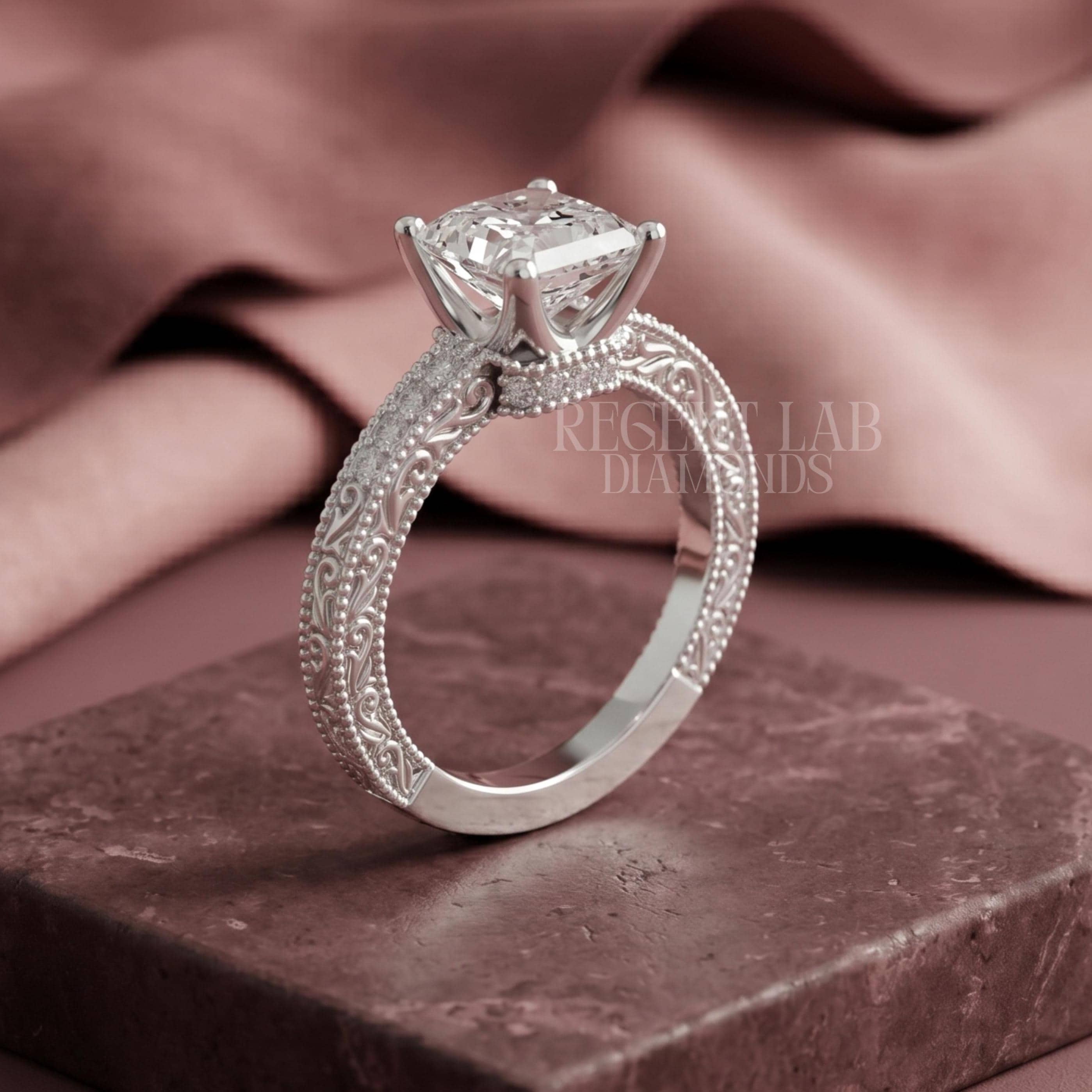
Hand engraving and an Asscher cut in the same ring. This Art Deco piece has a hand-engraved band with unmistakable 1920s character, the kind of detail you’d expect from a jeweler who took their time. No shortcuts, no shortcuts hiding behind flash.
The Asscher cut diamond at the center is all step-cut facets, which means depth over sparkle, geometry over glitz. It reads as deliberate. The engraved band around it ties the whole thing to a specific era without feeling like a costume piece. Old-school craft, worn on a real hand in the present day.
This is the ring you buy when you want something with actual history baked into its design. Pop the question with it, wear it yourself, or just hold it and feel smug about your taste. The 1920s had genuinely good ideas about jewelry, and this ring is proof of that.
Art Deco Pearl Starburst Ring
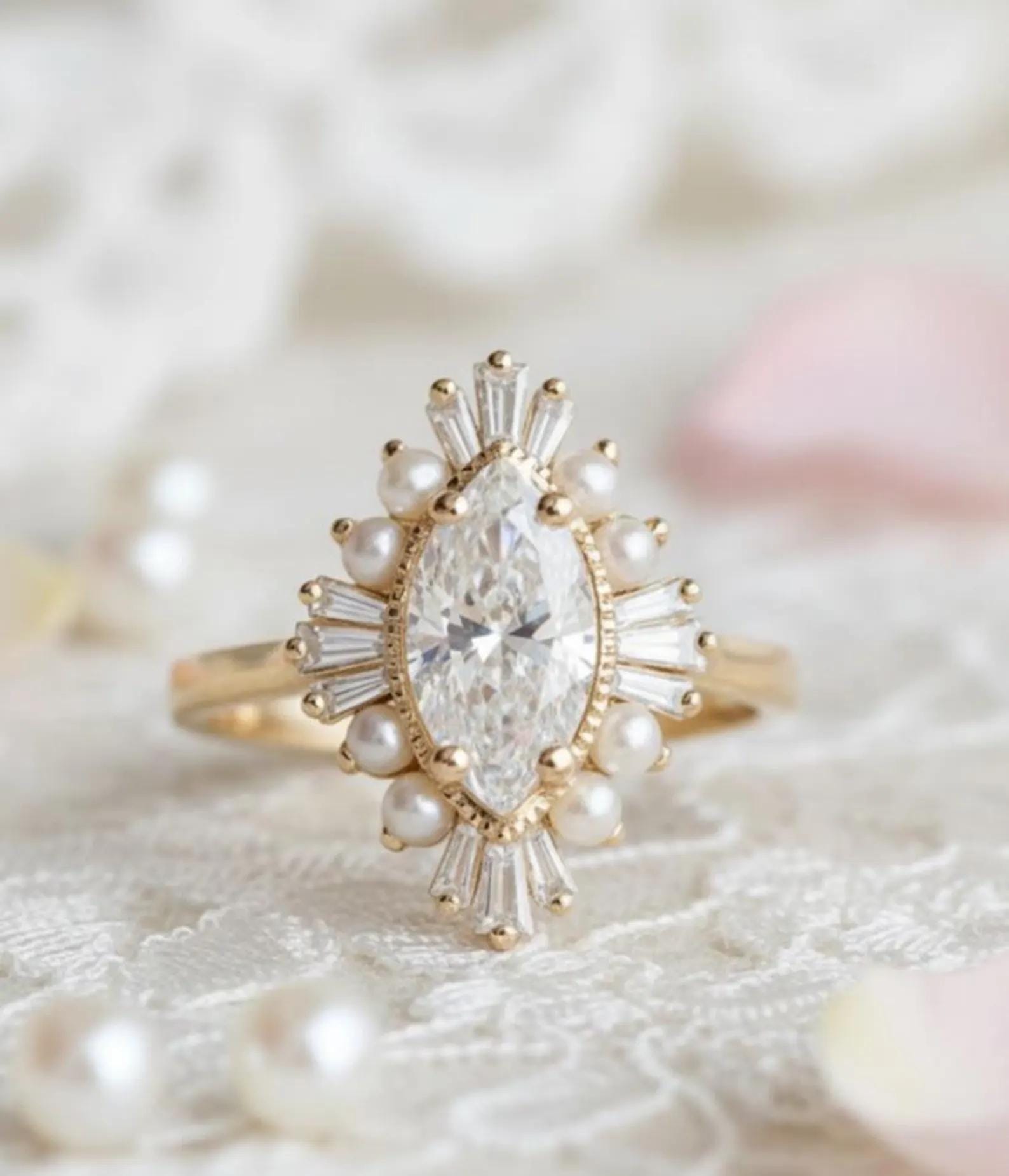
An Akoya pearl sits at the center of this Art Deco Starburst Ring, ringed by marquise-cut moissanites that radiate outward in a classic 1920s starburst pattern. The geometry is sharp, the stones are bright, and the whole thing reads like it belongs on someone who actually knows what Art Deco means rather than just saying so.
This is the kind of engagement ring that gets noticed before the story behind it does. The pearl gives it softness, the moissanites give it fire, and the starburst setting ties both to a specific moment in jewelry history when maximalism was the point. It works as a bridal ring or a right-hand statement piece with equal conviction.
If the standard solitaire feels too safe and the modern halo feels too expected, this one lands somewhere more interesting. Vintage in its bones, current in its materials, and specific enough that nobody else at the party will be wearing one.
Asscher Engagement Ring With Trillion Accents
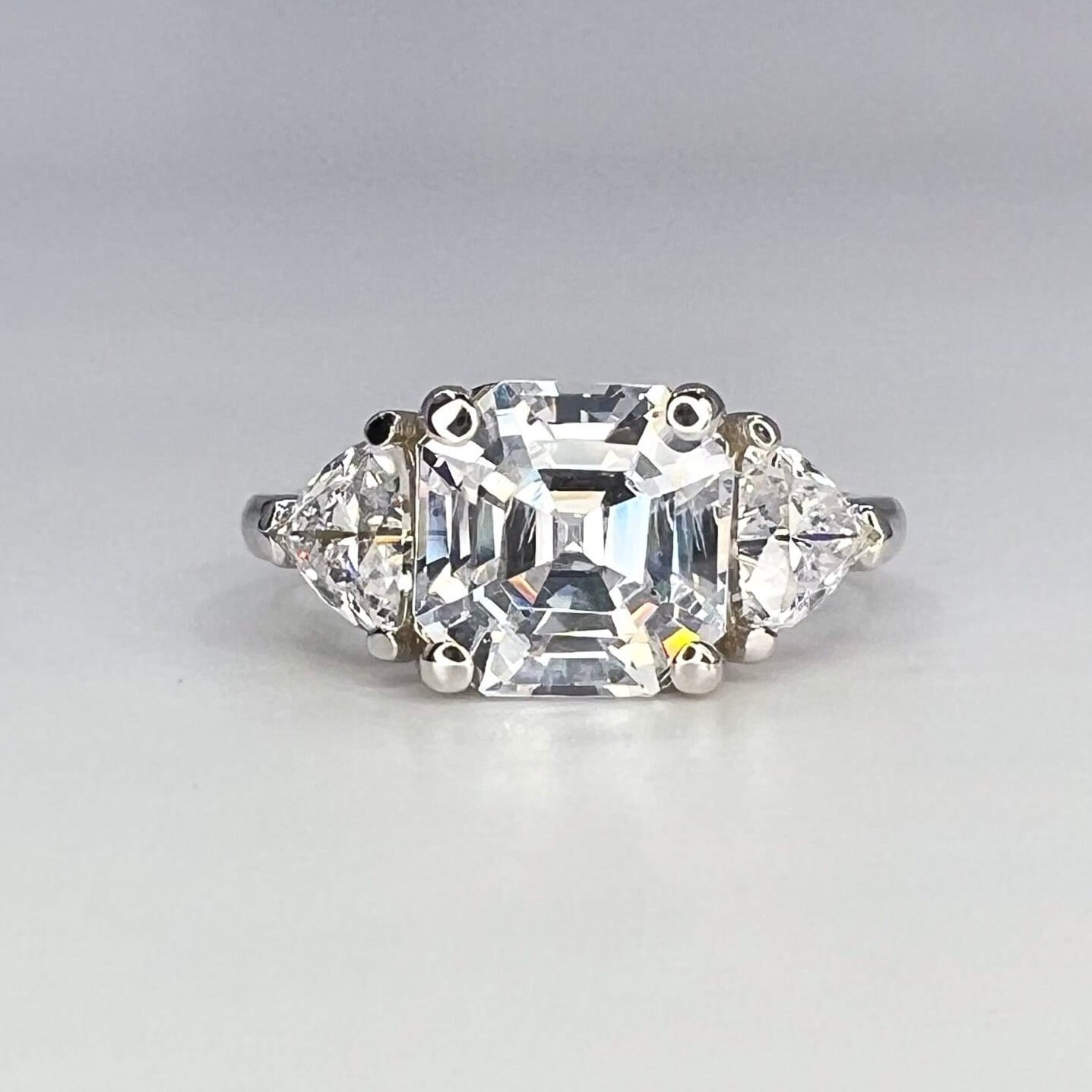
Emerald-green geometry at its most deliberate: this Asscher Engagement Ring pairs a 2-carat Asscher-cut diamond with trillion-cut side stones on each flank. The Asscher’s deep, hall-of-mirrors faceting sits in sharp contrast to the pointed drama of the trillions, and the whole thing is set in platinum. It’s a combination that reads as vintage without being fussy, and modern without trying too hard.
The layout works because the tension is built in. That square step-cut center pulls the eye straight down into the stone, while the trillions angle outward like they’re mid-argument with it. The result is a ring that has actual visual movement rather than just sitting there looking expensive. Platinum keeps the metal from competing with the stones, which is the right call here.
This is the ring for someone who finds a round solitaire a little too obvious but still wants serious presence on the finger. The Asscher cut has a long history in Art Deco design, and pairing it with trillion accents updates that lineage without apologizing for it. Sharp facets, strong geometry, platinum setting. It knows exactly what it is.
Pear Sunstone Art Deco Ring

Petite Art Deco Akoya Ring
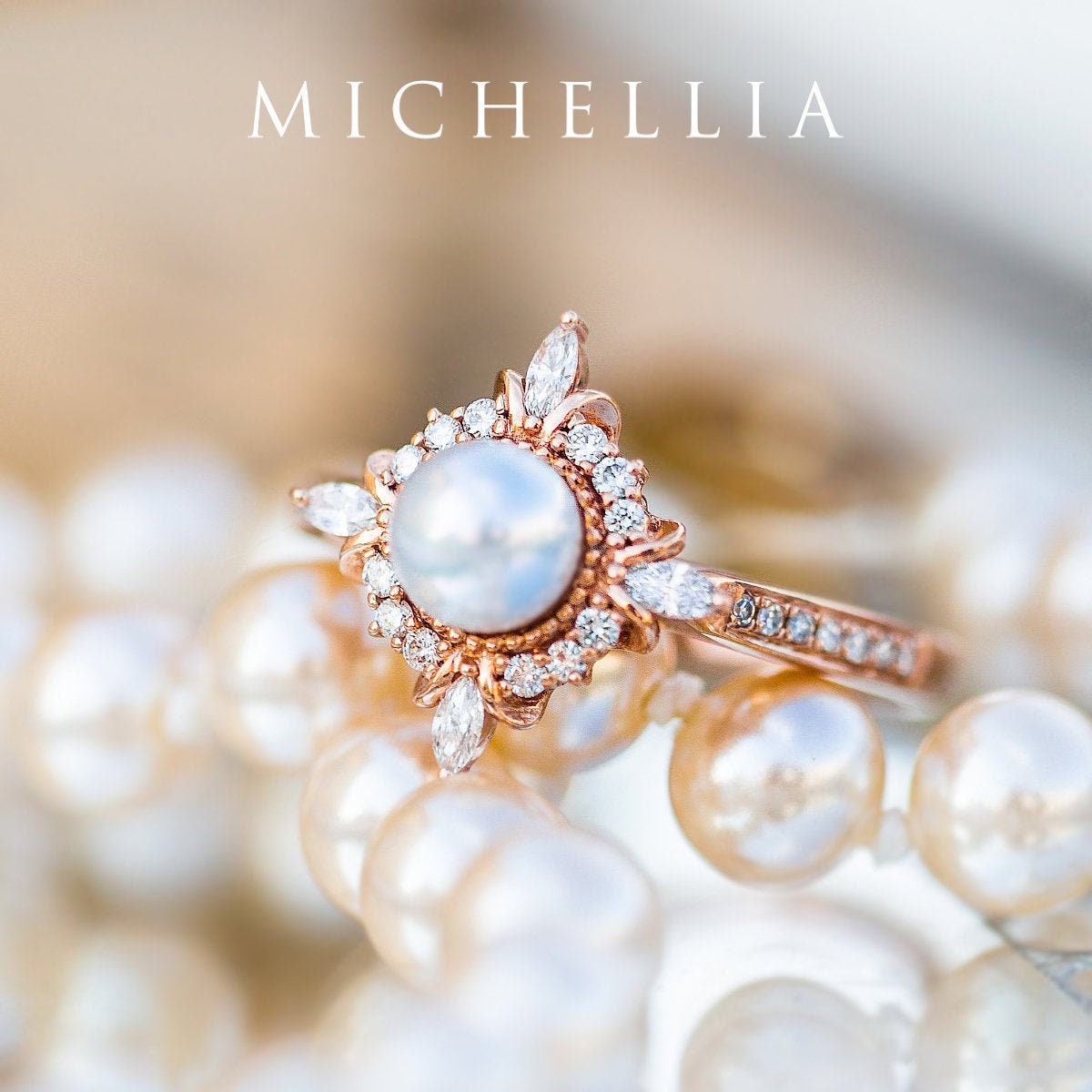
Four millimeters of Akoya pearl set in an art deco band that looks like it escaped from a 1920s jewelry box. The Petite Art Deco Akoya Ring pulls from that era without costuming itself in it: the geometry is sharp, the scale is delicate, and the whole thing sits on the finger like it was always meant to be there. A strong choice for a bride who finds solitaire diamonds a little too obvious.
Akoya pearls earn their reputation on luster and roundness, and this one delivers both. The setting frames it the way a good frame handles a painting: you notice the pearl first, then realize the metalwork is doing a lot of quiet work around it. Old-world structure, wearable proportions.
This is a ring with a point of view. The art deco lines give it enough presence to hold its own as an engagement ring, while the petite scale keeps it from tipping into costume territory. If you want something that reads as considered rather than conventional, this is a solid place to land.
Victorian Two Tone Pearl Halo Ring
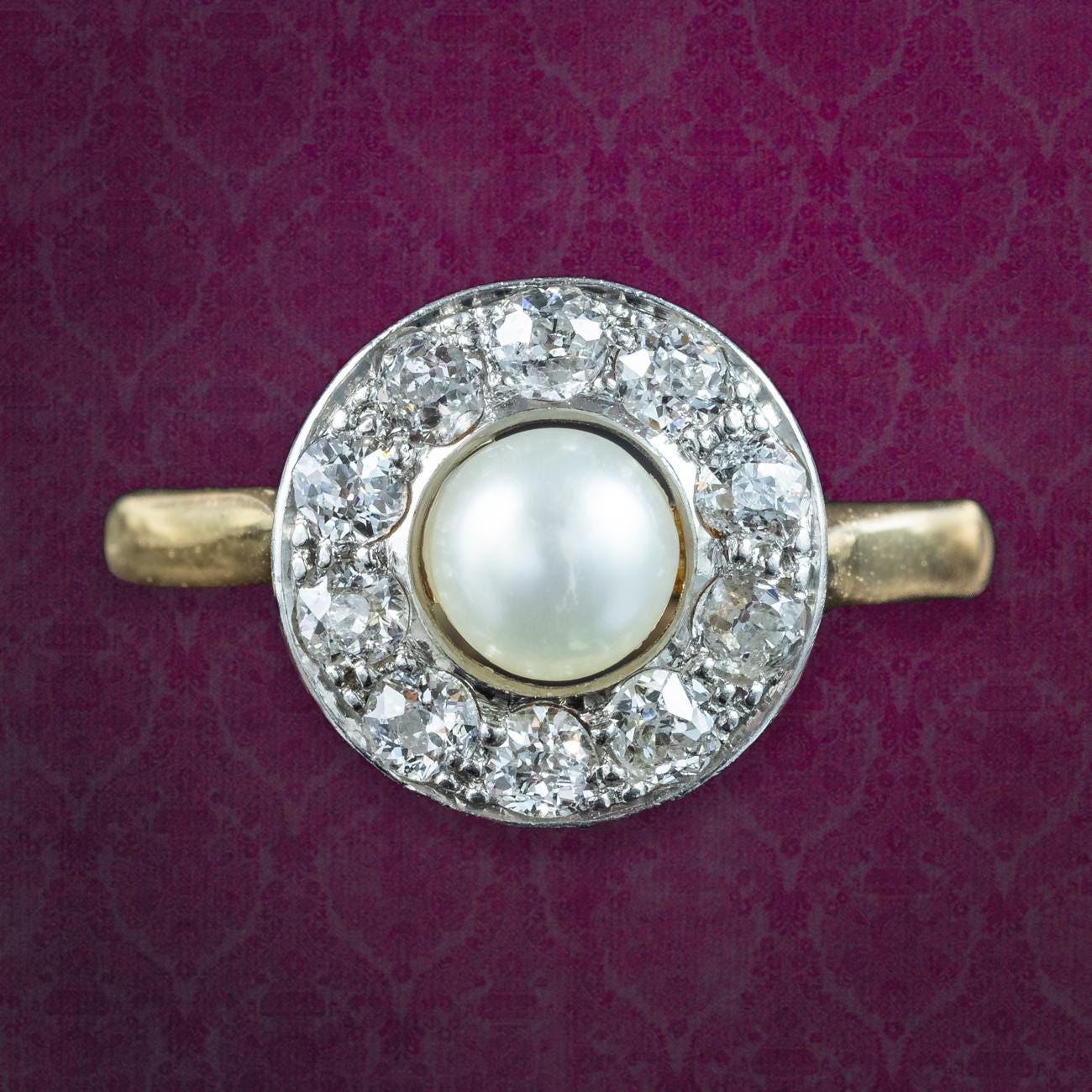
The Victorian Two Tone Pearl Halo Ring is built around genuine pearls, set in two tones of precious metal that frame the stone with period-appropriate formality. The halo silhouette pulls straight from Victorian jewelry tradition, where layered metalwork and organic gemstones did the heavy lifting that diamonds do now.
Pearls have been quietly holding their ground against the diamond monopoly for centuries, and this ring makes the case without apology. The vintage styling gives it a specificity that a solitaire diamond simply cannot replicate. It reads as a deliberate choice, which is exactly the point.
Wear it as an engagement ring, a right-hand statement, or just proof that you know your jewelry history. The two-tone setting keeps it from reading as a costume piece, and the genuine pearl at the center means it ages with you rather than against you. Classics survive because they were never trying to be trendy in the first place.
Vintage Asscher Leaf Shoulder Ring
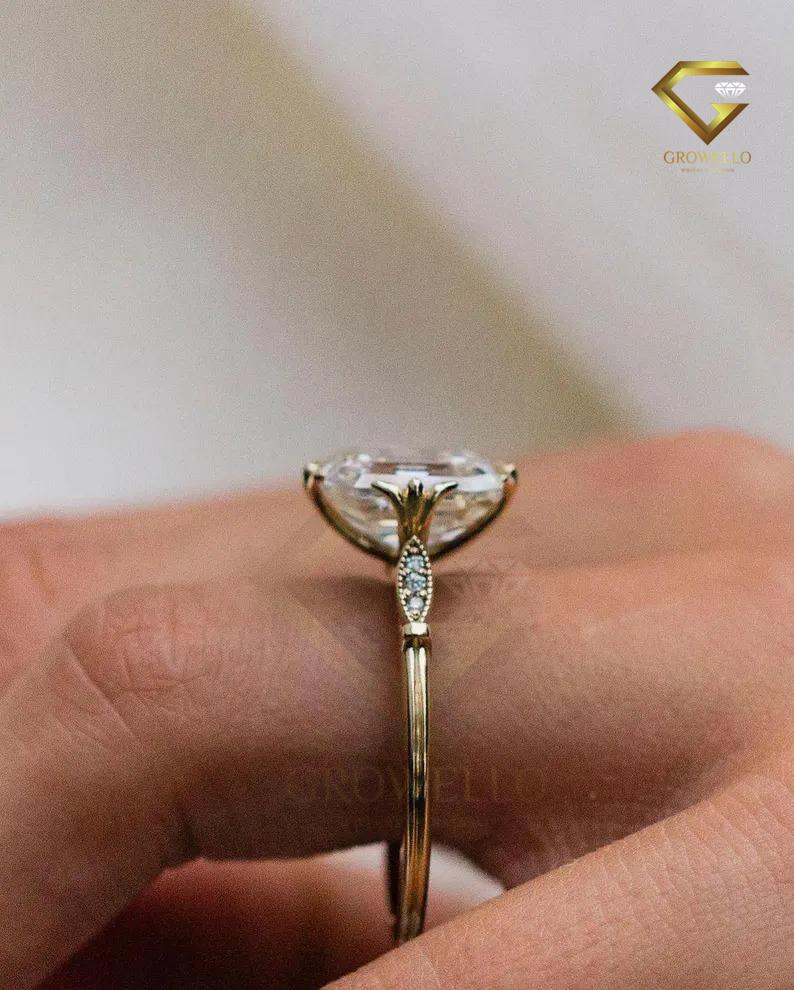
The Vintage Asscher Leaf Shoulder Ring puts an Asscher-cut center stone at the center of a leaf-detailed band that leans hard into Old Hollywood glamour without taking itself too seriously. The Asscher cut has been turning heads since the 1900s, and for good reason: 58 facets arranged in a geometric step pattern catch light in a way that feels less like sparkle and more like depth.
The band itself is carved with a leaf motif that frames the center stone on both shoulders. It’s a small detail that does a lot of work, giving the ring a botanical, almost art deco quality that sets it apart from the usual solitaire. The kind of thing you notice up close and can’t stop noticing after that.
If your partner has a weakness for vintage-inspired design and the kind of ring that rewards a second look, this one earns it. The combination of the Asscher cut and the leaf shoulders is specific enough to feel personal, which is exactly what an engagement ring should be.
Vintage Pear Labradorite Leaf Ring

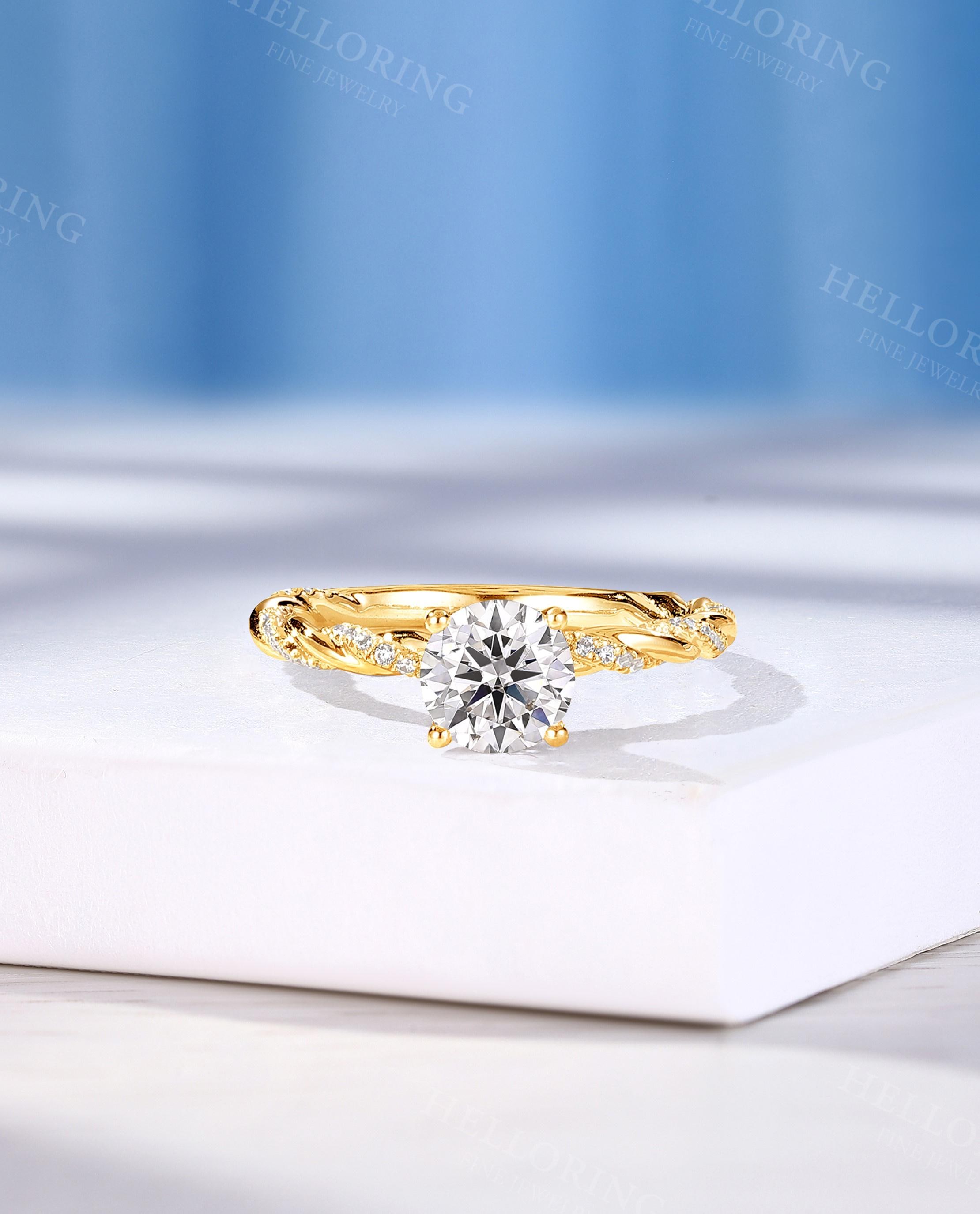
Vintage Twist Moissanite Ring
Radiant Center Millgrain Halo Ring
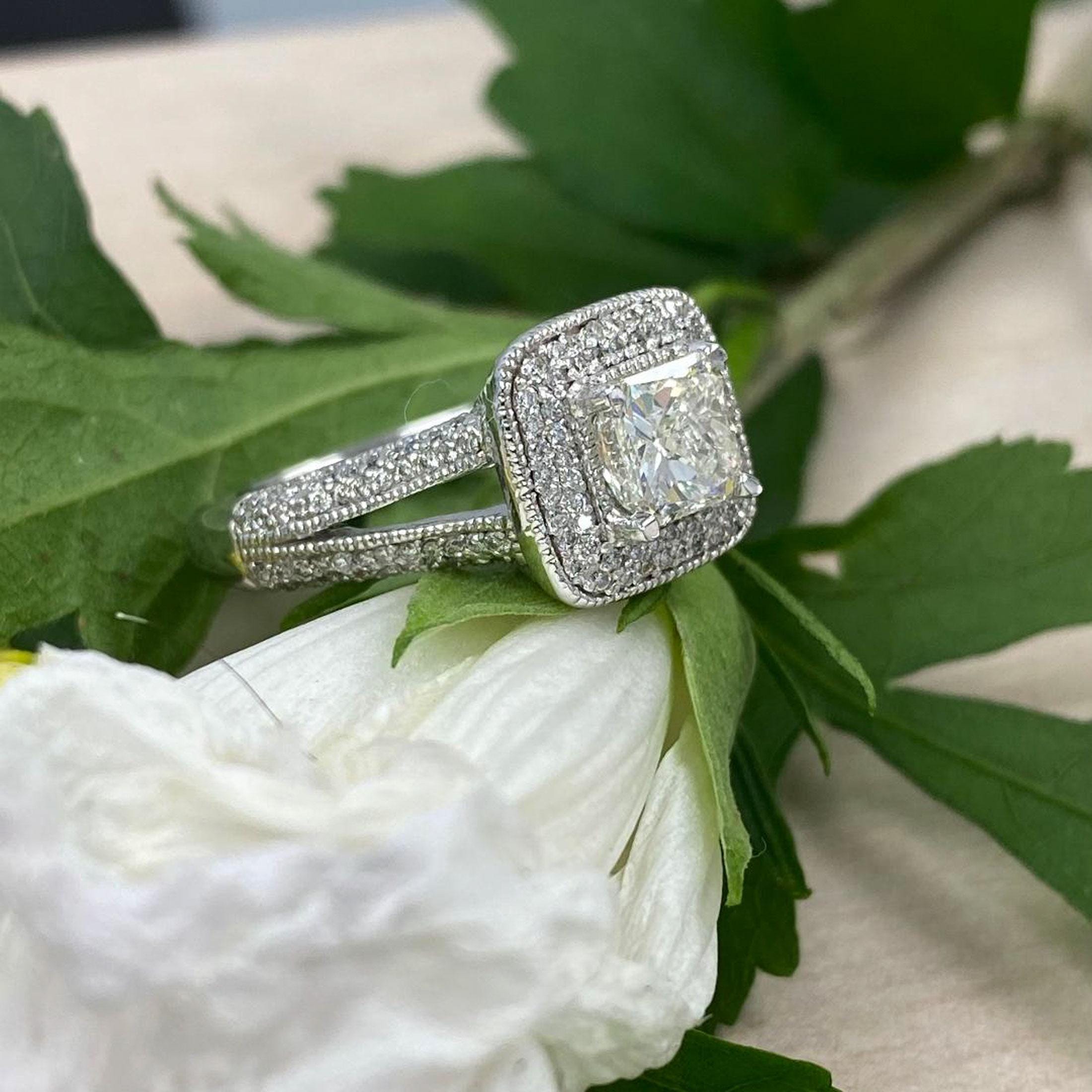
This ring’s got a radiant cut diamond sitting pretty, surrounded by a delicate millgrain halo that whispers vintage vibes. Wrapped in understated elegance, this sparkler channels an old-world charm that doesn’t shout but knows exactly how to catch the light just right.
Why should this matter to you? Well, for starters, the millgrain detailing adds that touch of intricate charm without being over-the-top. It’s like the subtle wink in your wardrobe that piques interest without screaming for it. And if you’re into a ring that’s equally at home with ripped jeans or at a five-star dinner, this one’s pulling double duty.
In the vast universe of square engagement rings, this piece stands out by being understated yet undeniably impactful. It’s not just about the bling; it’s about the balance. Perfect for those who appreciate diamond glory with a side of refined vintage flair.
Marquise Moissanite Vintage Art Deco
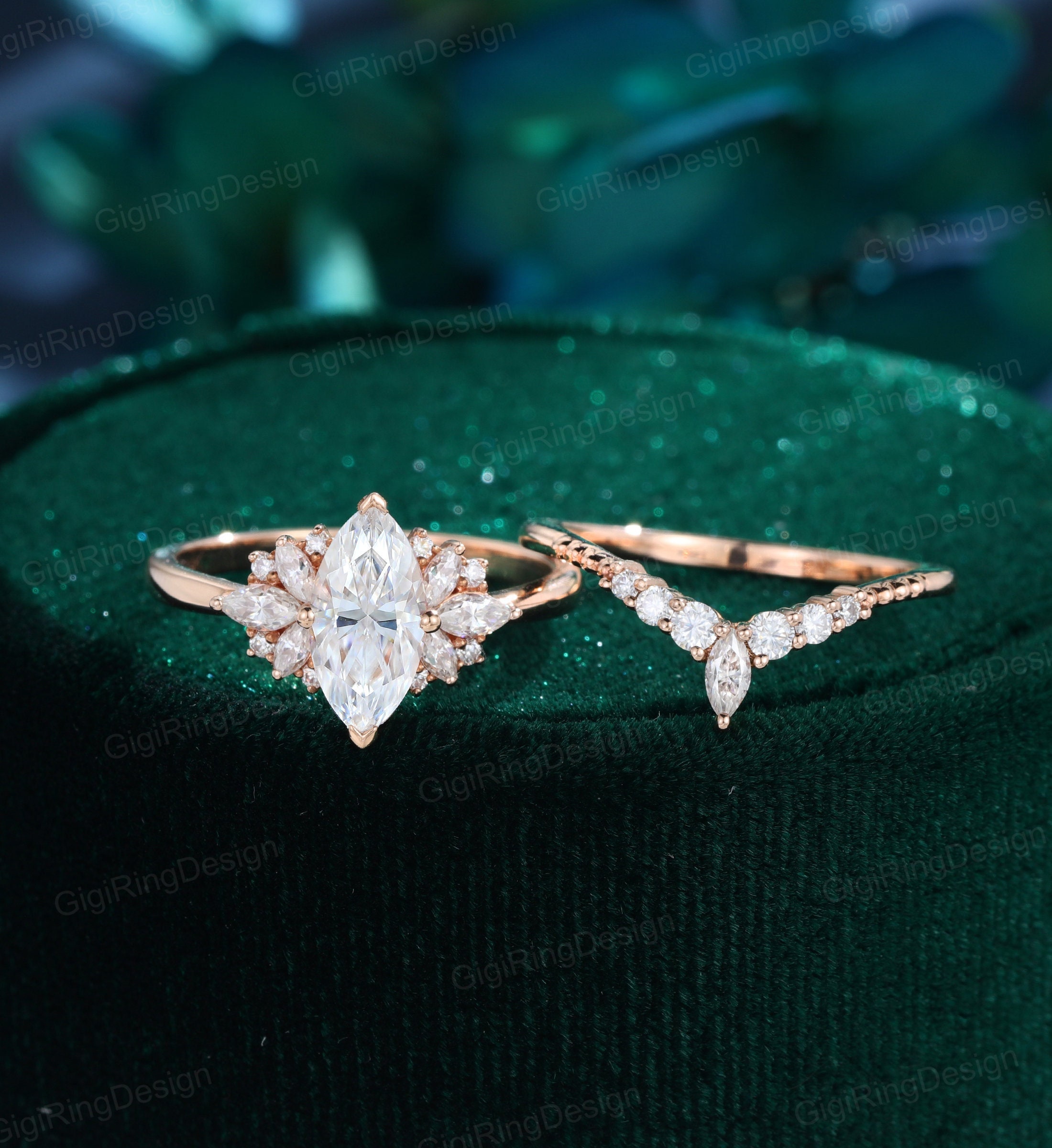
Another beautiful and uniquely shaped diamond is the marquise. The marquise shape is believe to have been commissioned by King Louis XIV of France which reminded him of his true love perfectly shaped mouth and smile.
Hmm … romantic?
I suppose so. In any event, this diamond offers a very dramatic shape and makes a dazzling choice for an engagement ring.
Vintage Pear Opal Ring Set

Know Your Gemstone C’s Before You Buy
Usually, when talking about how to choose a great gemstone, jewelers refer to “the four c’s”. That’s cut, clarity, color, and carat. When choosing a quality stone, however, carat doesn’t have a whole lot to do with it, actually. Here are a few things to consider about the most important c‘s:
Cut
Different gemstones have their own inner glow and a great cut will accentuate and showcase that. Stones like sapphires and diamonds will feature cuts that show off how the light filters through it, while opaque stones like onyx and opal are usually cut to display the detail within the stone’s opacity.
Clarity
A stone’s clarity is measured by how the natural light reflects through it, but not all clarity is judged equally. For instance, the best quality diamonds will have no inclusions, flaws or color when penetrated with light. However, the beauty of many gemstones is optimal when the natural light reveals internal inclusions like lines, spots, and other so-called “flaws”.
Color
Perhaps the most critical factor when choosing gemstones like sapphires, emeralds, rubies, etc. is their color quality. Consider the gem’s hue (the pureness of the gem’s dominant color), its tone (its range from light to dark), and its saturation (the intensity or purity of the stone’s color) when shopping for gemstones.
Art Deco is Here to Stay
A lot has changed since the roaring 20s – after all, trends come and go. Thankfully, some go permanently and some get rebooted for another generation to call their own. And then there are the trends that appeal to us on such a base level that they’ll never go out of style. Art deco is among them.
We adore all things art deco, but perhaps the art deco engagement ring most of all. To us, it represents the spirit of the flapper: independent, fun, and thoroughly modern.
Sound like someone you know and love? Fantastic! Give her the ring, pop open some bubbly, and let’s raise a toast to your fun-loving free spirit!
Don’t forget to pin this to your Rings Board for later!