
The Ultimate Wedding Budget Breakdown: Real Numbers for 2026
Trying to “stay on budget” is a pipe dream if you don’t know what’s actually in the budget. Most guides hand you vague percentages that crumble the second a caterer sends a real quote, and suddenly that dreamy Pinterest wedding feels very, very far away.
We’ve spent years helping couples plan weddings at every budget level, and we’ve cross-referenced that experience with real couples’ numbers to give you a realistic wedding budget breakdown you can actually use. Think of this as your wedding expenses checklist for building a real plan without losing your mind (or your relationship). Ready to stop guessing and start planning? Let’s start with the baseline so you know what you’re working with.
1. Build a Baseline (Then Make It Yours)
A good wedding budget template is a starting point, not a legally binding document. You need a baseline before you can start moving the chess pieces around, but you should absolutely expect to move them.
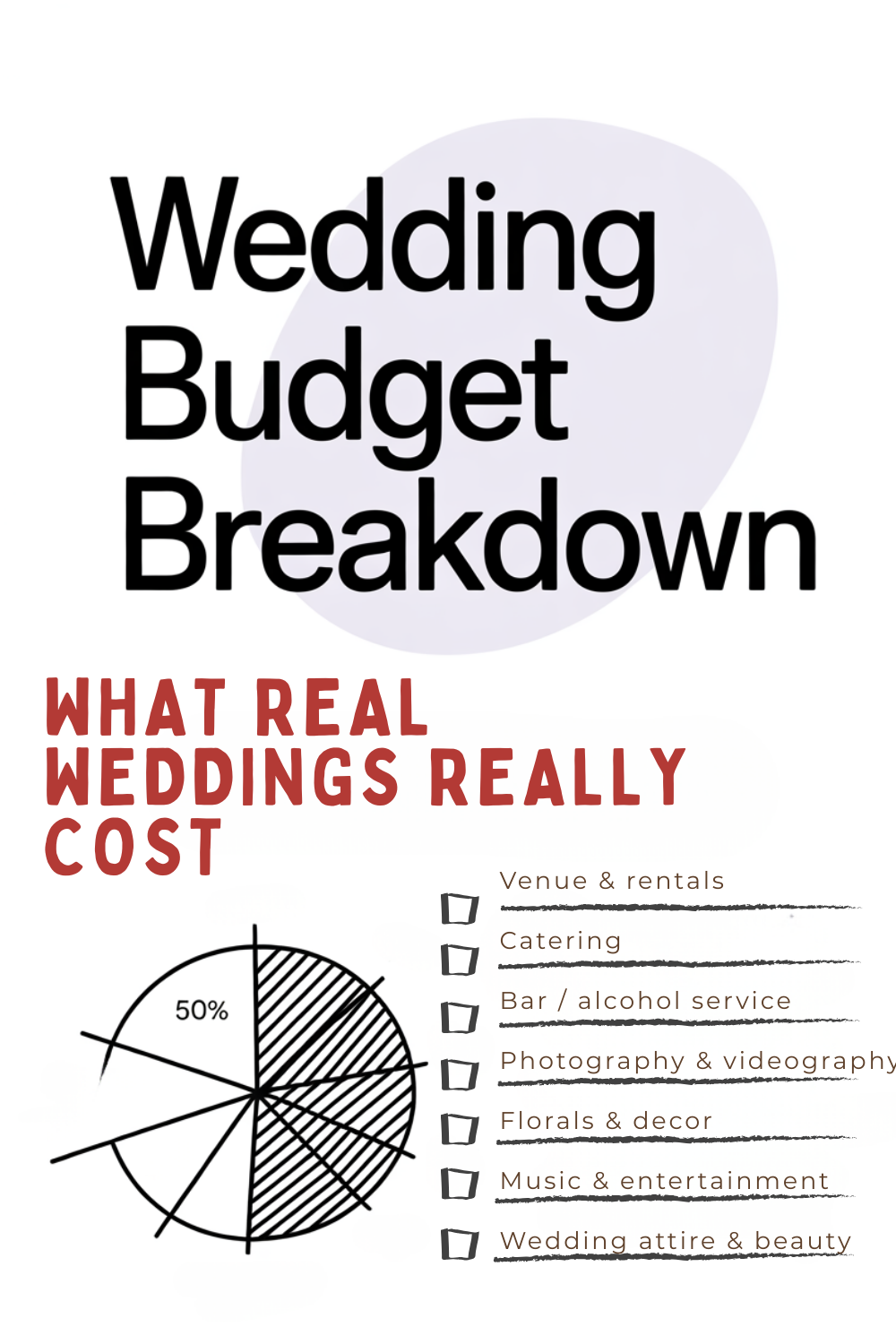
Here’s the baseline we recommend: roughly 40% for venue and rentals, 23% for catering, and 10% for photography, with a mandatory 5% emergency fund tucked away for those “oh no” moments (more on that later). That leaves the remaining 22% to flex toward whatever matters most to you, whether that’s florals, a live band, or an incredible honeymoon suite. If your heart is set on a killer live band and five-star food, you’ll need to steal that cash from somewhere, usually florals, paper goods, or those little favors guests always leave behind anyway.
Need a reality check? We’ve seen wedding budget breakdowns where catering and rentals eat up $26,000 of a $54,000 total. That’s nearly half the budget before anyone even bought a dress. Pick your “Big Three” priorities and be ruthless with everything else.
All In One Wedding Budget Planner
2. The Micro-Wedding Trap: Why Fixed Costs Fight Back
Think a smaller guest list is a magic wand for your bank account? We hate to break it to you, but the micro-wedding trap is very real. While you save on steak and champagne, fixed-cost vendors stay stubbornly expensive. A professional photographer or a designer dress costs the same whether you have 10 guests or 200.
Here’s what real-world micro-wedding budgets look like. The Boutique Bash (about 40 guests, $19k total) broke down like this: venue at $4,500, food and rentals at $6,428, a jazz band at $3,300, and photo/video at $3,000. The Restaurant Bundle (about 57 guests, $14k total) looked like this: venue, buffet, and a 3-hour open bar bundled for $8,398, photographer at $1,700, and florals at $190. In both cases, photography became a much larger slice of the pie than it would in a traditional wedding budget breakdown. Plan your micro ratios accordingly.
ADHD Friendly Micro Wedding Budget Tracker

3. The Venue & Rentals: Don’t Get Blindsided by the Fine Print
Ever found a “perfect” venue price only to realize chairs aren’t included? Total buzzkill. In our experience, venue and rentals typically devour around 40% of your wedding budget, and that number climbs fast once the fine print enters the chat.
You aren’t just paying for the room. Make sure your checklist covers all the sneaky extras: separate ceremony and reception site fees (we’ve seen couples spend $5,620 for the reception plus $3,600 for the ceremony), furniture and linens (does the space include tables, or are you renting every single fork?), and the boring-but-essential stuff like insurance, security, parking, and cleanup.
Want to pull a budget lever? Choose off-peak dates like a Friday or Sunday morning. Better yet, find a venue that provides its own furniture. Before you sign anything, grill them on what’s mandatory versus optional, what triggers overtime fees, and whether venue minimums could turn your intimate 20-person dinner into the cost of an 80-person gala.
Editable Wedding Venue Spreadsheet

4. Food & Drink: The “Per Person” Pricing Myth
Ever seen a catering quote and wondered if the chicken was gold-plated? It’s almost never just the food. Here’s what we tell every bride we work with: the per-person price is just the beginning. The real number is that figure plus service charges, taxes, and staffing, and those extras add up brutally fast.
We’ve heard from brides who were genuinely floored when a 22% gratuity hit their entire contract, rentals included. Your total needs to account for plated or buffet service, cocktail hour and tastings, staffing and dietary upgrades, and any rentals not included in the venue package.
Want to trim the bill without it looking cheap? Simplify the service. Swapping passed hors d’oeuvres for a stationary display can save thousands and honestly, a well-styled grazing table photographs beautifully. Just make sure it matches your vibe. And never, ever accept a quote without an all-in estimate. Insist on seeing every tax, fee, and administrative charge listed before you sign.
Printable Wedding Budget Checklist
5. The Bar Bill: Two Costs, One Line Item
Ever wonder why your open bar quote looks like a phone number? It’s usually because two very different costs are mashed together into one terrifying line item. Here’s how we recommend splitting it: think in two separate buckets, and suddenly the whole thing gets a lot less scary.
The first bucket is bar service: bartenders, glassware, mixers, and corkage fees. The second is the alcohol purchase itself. If your venue allows BYO, you’ve genuinely hit the jackpot. Couples who scale back strategically can keep their booze budget to under $2,000 on a $54,000 wedding. Planning a micro-wedding? We’d budget around $600 for 40 guests as a realistic starting anchor.
Before you sign anything, ask about minimum spend requirements, whether soda and coffee are included, mandatory per-person packages, and where tips and service fees land. And here’s a budget lever we don’t talk about enough: skip the champagne toast. Most guests take one sip and let the rest go flat. A signature cocktail plus beer and wine keeps the party moving without the pricey waste.
Complete Wedding Planning Spreadsheet
6. Photography & Video: Capture the Memories (Not the Debt)
Why do some couples pay $2,000 while others drop $10,000 for the same eight hours? It usually comes down to the deliverables you’ll actually use versus the fluff that gathers digital dust. We recommend budgeting around 10% of your total here, but the smarter move is to let your priorities drive the number rather than the other way around.
Some couples spend $4,000 on photography for a $54,000 wedding. Others pull off a $10,700 total wedding by booking two shooters for $1,795. The key questions to ask yourself: Which moments matter most (do you really need 50 shots of your shoes)? Do you want a cinematic highlight reel or a raw documentary edit? Will you actually use the engagement session or a physical album?
Looking for a budget lever? Shorten coverage to focus on the ceremony and early reception. Skip the expensive prints now and buy them for your first anniversary instead. Honestly, that’s a beautiful way to revisit the day anyway.
Customizable Per Person Budget Tracker
7. Florals & Decor: Why Petals Cost as Much as a Sedan
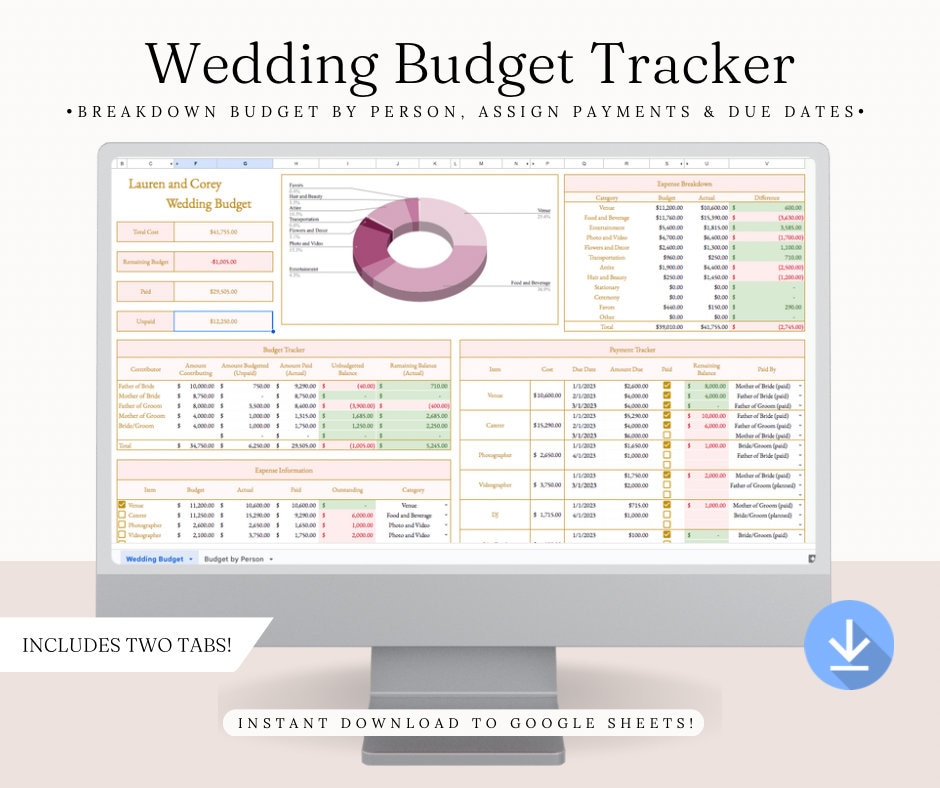
Why do petals cost as much as a sedan? It’s rarely just the peonies. The “invisible” labor and installation fees are what really catch you off guard, and most couples don’t realize florals and decor are two separate expense buckets until a quote lands in their inbox.
Floral and decor costs for a $54,000 wedding can easily hit $7,000 combined. If you DIY, you might spend only $360 on wholesale flowers and $350 on decor for 40 guests, but before you buy the shears, weigh the real ROI. DIY saves you from 300% retail markups and labor fees. What it costs you is 20+ hours, supply runs, and a very messy car trunk the morning of your wedding.
Your spend tracker should include personal flowers and centerpieces, ceremony installs and repurposing plans, candles and linens and signage, plus delivery, setup, and strike fees. And a gentle reminder: a micro-wedding doesn’t make a complex floral arch any cheaper to build.
Modern Editable Wedding Decor Checklist
8. Music & Entertainment: Why Your Vibe Is a Budget Lever
Ever sat through a wedding where the silence was so heavy you could hear the caterers whispering? Total vibe killer. Music does more than fill the air. It dictates your lighting needs, equipment rentals, and your entire schedule flow.
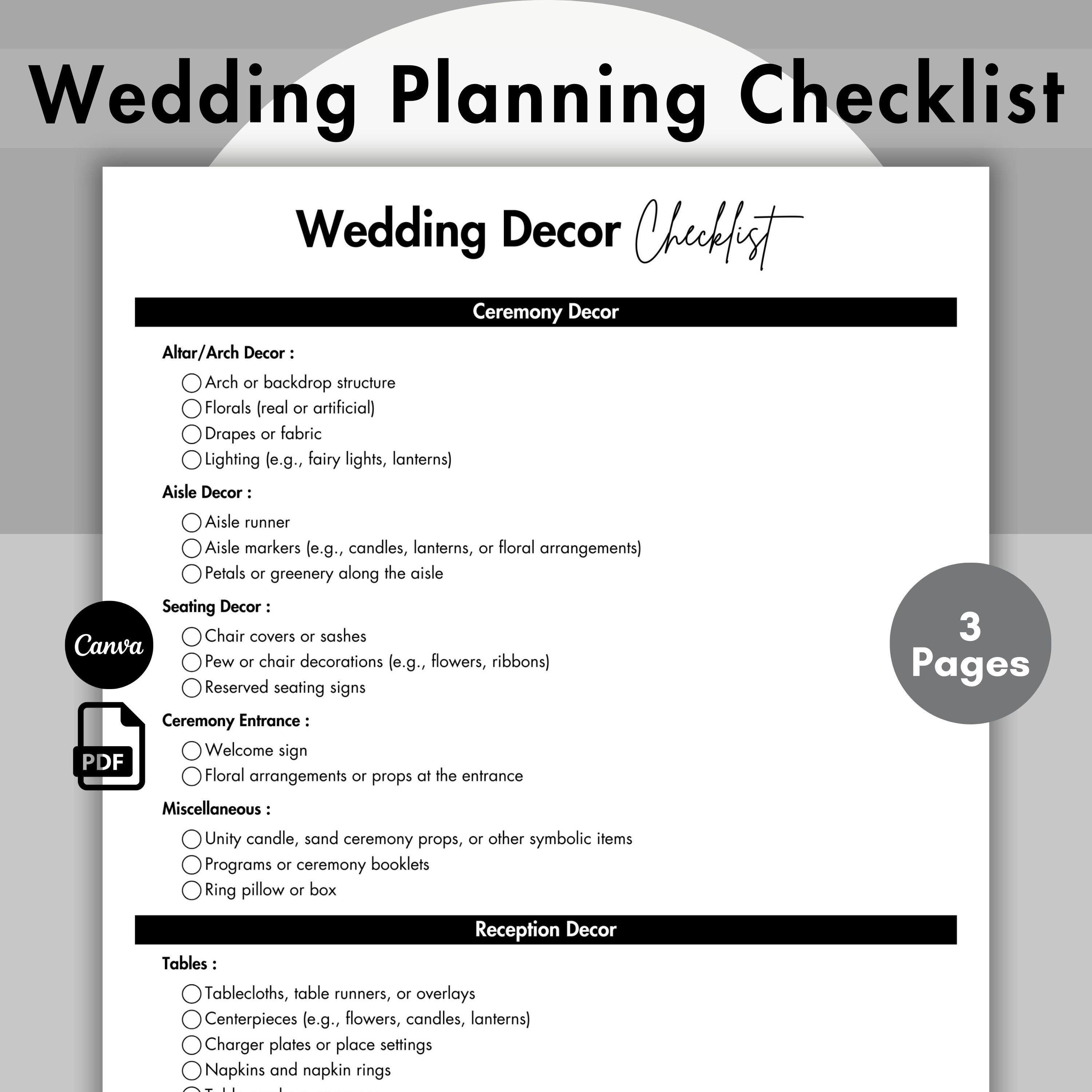
We recommend keeping music and guest entertainment as two separate line items in your budget so neither one sneaks up on you. A flat 5% of your total is a reasonable starting point, but this is one category where spending more often pays off in the feel of the whole day. Real-world numbers vary wildly: some couples spend $3,150 on a DJ for a $54,000 wedding, while others splurge $3,300 on a jazz band for a $19,000 micro-wedding. Your checklist should cover ceremony and reception music, MC services and audio equipment, and any lighting add-ons or photo booths.
Want to save? Pick one “wow” factor instead of three. You don’t need a live band, a photo booth, and professional uplighting to have a legendary party. And if you DIY a playlist, please assign a human to hit play. Don’t let your walk down the aisle depend on an unmonitored iPad.
Wedding Budget Tracker With Savings Plan
9. Wedding Attire & Beauty: The Hidden Cost of Looking Iconic
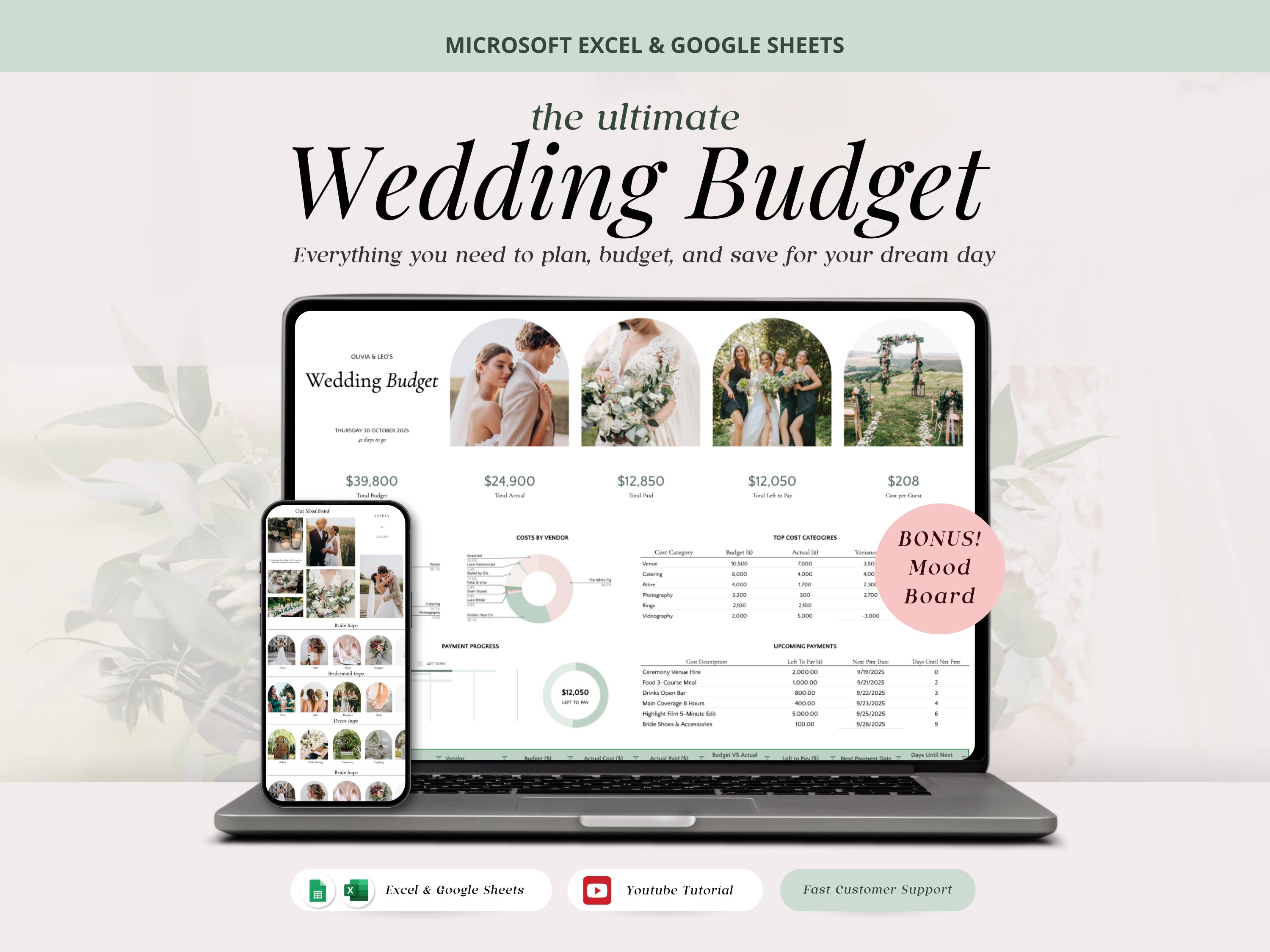
Think the price tag on the hanger is the final word? Not even close. “Attire creep” is when a dozen tiny expenses mug your bank account before you reach the altar, and it happens to almost everyone.
The price range is massive.
A $1,425 gown can still require $413 for alterations and $559 for salon services on top. Add in shoes, accessories, trials, and day-of glam and you can easily spend $5,000+ on this category alone. Your full checklist needs to cover ceremony and reception outfits, professional tailoring, shoes and accessories, hair and makeup trials plus day-of glam, grooming and nails, and vendor tips. Grooms, you are not safe either. Custom tailoring, shirts, and groomsmen coordination all add up fast.
The sanity-saving strategy? Pick one splurge (the dress, the glam team, or a second reception look) and be genuinely ruthless with the rest. If you’re covering your bridal party’s hair and makeup, build that into this category from the start. It balloons fast.
10. Wedding Coordination: Sanity Insurance You Actually Need
Can you manage a three-stop shuttle, a grumpy florist, and your future mother-in-law’s seating preferences while wearing fifteen pounds of tulle? We love your optimism. But professional coordination is the operational expense that quietly prevents expensive meltdowns, and it’s often the most undervalued line in a wedding budget breakdown.
Don’t Get the Tiers Tangled
Before you book, make sure you understand what level of service you’re actually getting. Full-service coordination handles every detail from mood boards to guest lists. Partial coordination steps in for specific logistical hurdles. Day-of coordination is usually “month-of” support in disguise, and no pro can fix a disaster in ten minutes flat.
Our honest take on budget? Somewhere between 5% and 12% is the right range depending on how complex your day is. In the real world, a coordinator can run as little as $1,200, while some venue bundles include a coordinator in the package price. Budget for help if your venue requires it or your logistics are genuinely complex. Here’s our favorite lever: hire coordination and DIY your design. You can fix a lopsided centerpiece. You cannot fix a missing officiant.
11. Stationery & Postage: The Tiny Budget Assassins
Did you know a stamp is the secret assassin of your floral fund? It feels dramatic until you realize those gorgeous custom-shaped invitations require double postage. We all obsess over heavy cardstock while completely ignoring the logistical weight of actually mailing it.
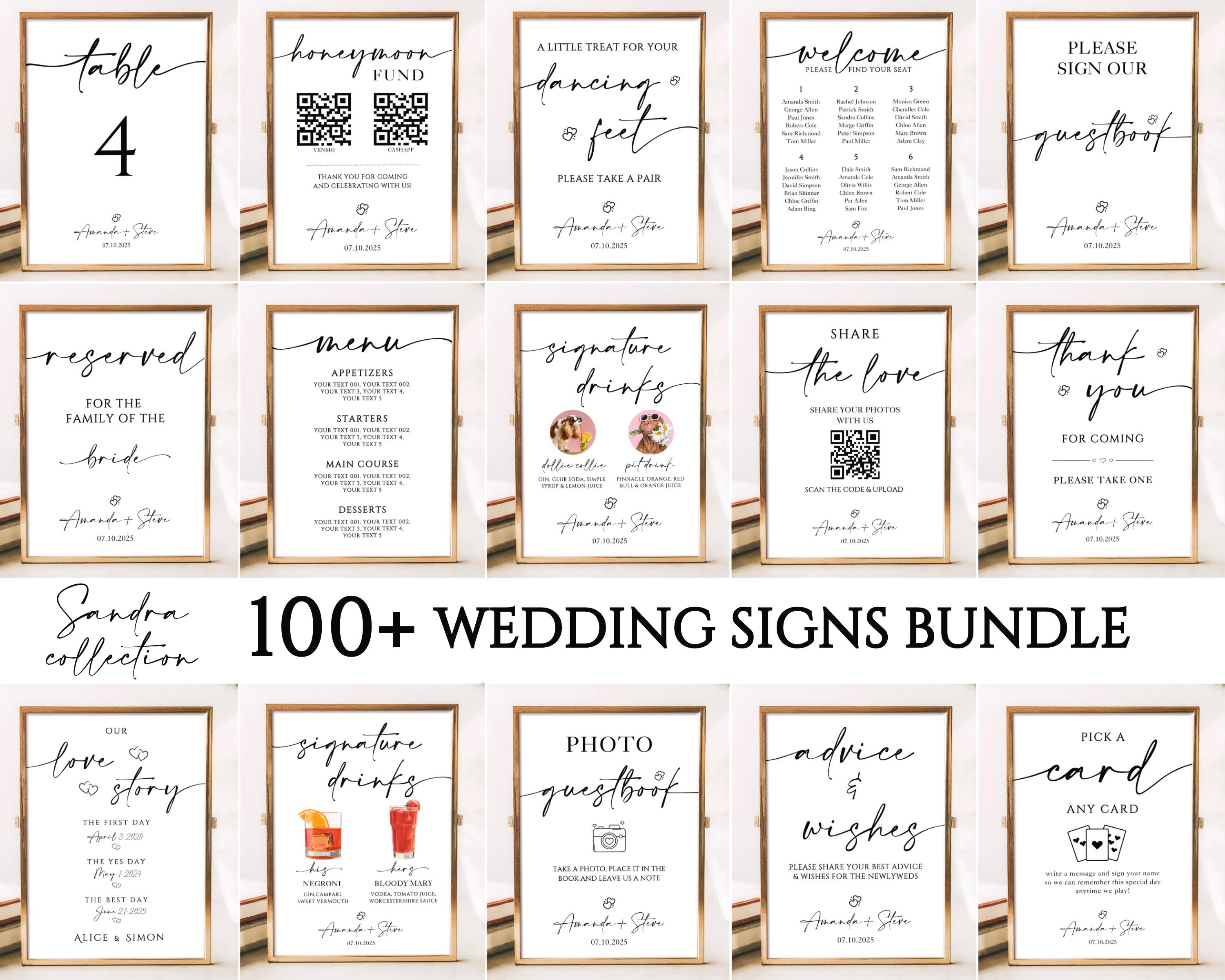
We recommend setting aside around 1% of your total budget for stationery, but couples consistently under-budget here by forgetting reprints, late guest list additions, and thank-you notes. Paper goods for a $10,700 wedding can easily run $500+. Track all of these quantity-based costs: save-the-dates and invites, RSVP cards and envelopes, postage for both invites and return cards, day-of signage and menus and place cards, and thank-you notes.
Want a quick budget lever? Swap to postcard save-the-dates or digital RSVPs to slash costs instantly. And add a dedicated postage line to your budget right now so you don’t have to steal from your peony fund later. Your future self will genuinely thank you.
100+ Editable Minimalist Wedding Signs
12. The Ceremony: Paying for the “I Do” (Not Just the Party)
Spent months obsessing over centerpieces but forgot about the paperwork that actually makes you married? It happens more than you’d think. It’s easy to get swept up in reception glitz and forget about the legal and logistical side of your wedding budget breakdown.
Plan to spend around 1% of your total on the officiant alone, so roughly $600 for a $19,000 micro-wedding. Beyond the person speaking, keep these essentials on your radar: marriage license and permit fees, ceremony sound and mics, unity ceremony items like candles or sand, and any required counseling or registration fees.
Want a massive budget lever? Hold your ceremony and reception at the same venue. You’ll slash costs for transport, rentals, and extra vendor hours in one move. Just confirm exactly what the venue package includes so chair or arch rental fees don’t sneak up on you. And if a friend officiates for free, you still need to pay for the license and local filing fees. Don’t let a clerical oversight crash the party.
13. Transportation & Parking: Nobody Wants to Be the Designated Driver
Ever watched your favorite aunt try to hail a rideshare in a cow pasture at midnight? Total vibe-killer. And beyond the aesthetics, transportation is genuinely about safety and keeping your schedule from imploding. We recommend setting aside about 2% of your budget for moving people, though remote venues often demand more.
Couples get creative here. Some spend around $700 on professional transport for a larger wedding, while others DIY a 15-passenger van with a hired driver for 40 guests for just $300. Your transport checklist should cover couple and wedding party shuttles, guest transport and valet fees, and driver tips and accessibility needs.
The best budget lever here? Pick a venue within walking distance of your hotel block and slash shuttle needs almost entirely. Always confirm the venue’s rideshare rules and end-time policies. Overtime fees for a late bus can be brutal, and you don’t want your getaway car turning into a pumpkin before the party is actually over.
14. Cake & Dessert: The Sweet Spot Between Tradition and Costco
Why buy a five-tier masterpiece when guests are busy doing the Wobble? It’s time to normalize the “stunt cake.” A small, gorgeous cake for the photos. Costco sheet cakes in the back for the actual eating. Nobody is sad about this arrangement. Nobody.
We suggest keeping dessert around 3% of your total budget, though if you bundle it with catering you may find it’s already accounted for. Cake spend varies wildly, from $60 for a mini cake and bulk sheet cakes at a micro-wedding to $565+ at a larger celebration. The thing to watch out for is the cake-cutting fee. Venues often charge $2 to $5 per slice to plate an outside cake, which can add hundreds to your bill without warning. Always ask your caterer whether outside dessert triggers these fees before you commit to a baker.
Your dessert checklist should include the display and cutting cake, sheet cakes for service, any dessert table variety, delivery and setup, cake-cutting fees, and a late-night snack station if that’s your vibe. If guests are dancing, they’ll eat what’s easy. Keep it simple unless dessert is your main event.
15. The “Surprise” Bucket: Fees, Tips, and Post-Wedding Costs
Ever signed a contract thinking you were done, only to realize you still owe thousands in “administrative fees” and tips? It’s the ultimate budget jumpscare. This is the bucket for everything that can and will surprise you, and trust us, things will surprise you.
Watch out for tricky contract language around gratuity. Some venues apply a mandatory service charge of 20%+ that is legally defined as an administrative fee, not a tip for the staff. The couple still owes their servers and bartenders a separate cash tip to be fair. These invisible costs are exactly why your wedding budget breakdown can suddenly feel like a math error.
And the spending doesn’t stop at the exit toss. Post-wedding costs are real: thank-you note postage and name-change fees, photo prints and heirloom albums, and dress preservation (professional cleaning can run $585, though $149 DIY kits are a great alternative). Set a buffer of 5% to 15% to cover these sneaky extras. It’s the only way to protect both your sanity and your bank account.
How to Build Your Own Fail-Proof Wedding Budget Breakdown
Stop treating your budget like a suggestion and start treating it like a boundary. If you want to avoid a nasty post-wedding debt hangover, you need a system that tracks every dollar before it leaves your hand. These six steps will turn your wedding budget breakdown into an actual working plan.
Step 1: Pick Your Hard Cap
This is your absolute “do not cross” line. Sit down with your partner and any contributors to decide exactly how much cash is actually on the table, and be specific about timing. Having $30,000 “eventually” is very different from having it in your checking account today. Clarify whether parent contributions are gifts or loans with strings, and note who is contributing and when. You’ll feel so much more grounded once you know your true limit.
Step 2: Choose Your Baseline Allocation
Start with our recommended baseline: 40% for venue and rentals, 23% for catering, 10% for photography, and 5% held back as your emergency buffer. Then move the remaining percentages to match your top three priorities. If you want a top-tier photographer, drop your floral allocation to make room. Watch your vision start to take a real mathematical shape.
Step 3: Build Your Master Wedding Budget Template
Open Google Sheets or grab our template below and create a document you will actually use. You need columns for Category, Line Item, Estimated Cost, Vendor Quote, Deposit Paid, Due Date, Actual Cost, and a “Paid” checkbox. Add a separate column specifically for fees. This is where you track service charges, taxes, and gratuity so they never sneak up on you in the final week.
Step 4: Turn Categories Into a Wedding Expenses Checklist
A category like “Attire” is way too vague for a real plan. Use the detailed breakdowns in sections 3 through 15 of this guide to build a granular wedding expenses checklist. Under Attire, list alterations, shoes, and gown preservation separately. Under Ceremony, list the marriage license and officiant fee as individual line items. This is how you prevent budget creep, those small unlisted items that slowly eat your lunch.
Step 5: Implement the “Quote Reality Check” Loop
Update your spreadsheet the second a quote arrives in your inbox. If a florist quotes you $2,000 more than your estimate, re-balance your percentages immediately. Either increase your total cap or find that $2,000 somewhere else. This loop keeps your wedding budget breakdown grounded in reality rather than wishful thinking, and you’ll always know exactly where you stand.
Step 6: Schedule Your Budget Audits
Consistency is the secret to a stress-free engagement. Schedule a 20-minute budget check-in once a month to review spending and upcoming due dates. Move to weekly check-ins during the final eight weeks before the big day. This prevents missed final payments and last-minute rental fee surprises. You will genuinely sleep better knowing the math is handled.
Wedding Budget Frequently Asked Questions
Got questions? Of course you do. Budget planning brings them out of the woodwork. Here are the ones we hear most often.
What percentage of a wedding budget should go to venue and catering?
We recommend aiming for 40 to 50% of your total spend on the “big two” combined. The split we use is roughly 40% for venue and rentals plus 23% for catering and drinks as a baseline, but if you have a large guest list, the catering slice will naturally balloon. See section 1 for the full breakdown.
How much should we set aside for hidden fees and a contingency fund?
Budget a minimum of 5%, but 10 to 15% is the sweet spot for real peace of mind. Think of it as sanity insurance. This covers unexpected delivery surcharges, rush shipping on a forgotten veil, or that extra hour of photography you realize you desperately need on the morning of your wedding. Always better to have it and not need it.
Are service charges the same as gratuity? Do we still tip?
In most cases, no, and you need to read your contract like a detective to be sure. It’s very common for venues to apply a mandatory 20%+ service charge that is legally defined as an administrative fee, not a tip for the actual staff. If the contract says the fee is not a gratuity, plan to tip your servers and bartenders separately in cash to be fair to the people who made your day run smoothly.
Can we actually do a wedding under $20K without it feeling cheap?
You absolutely can, especially with a micro-wedding approach. We’ve seen couples host 40 guests for $19,000 by being strategic with their splurges, skipping the expensive bakery for a Costco cake and using wholesale flowers while spending generously on a great jazz band. When the food is good and the music is great, nobody’s counting centerpiece petals.
What’s the easiest way to cut $5,000 fast?
Pull one of the three big levers. First, trim your guest list. Since catering is a per-head cost, cutting 20 people can save thousands instantly. Second, simplify your florals by leaning into greenery or seasonal blooms. Third, consider an off-peak date. Switching from a Saturday night to a Friday or Sunday can trigger a significant venue discount. Protect your top three priorities and cut everything else without guilt.