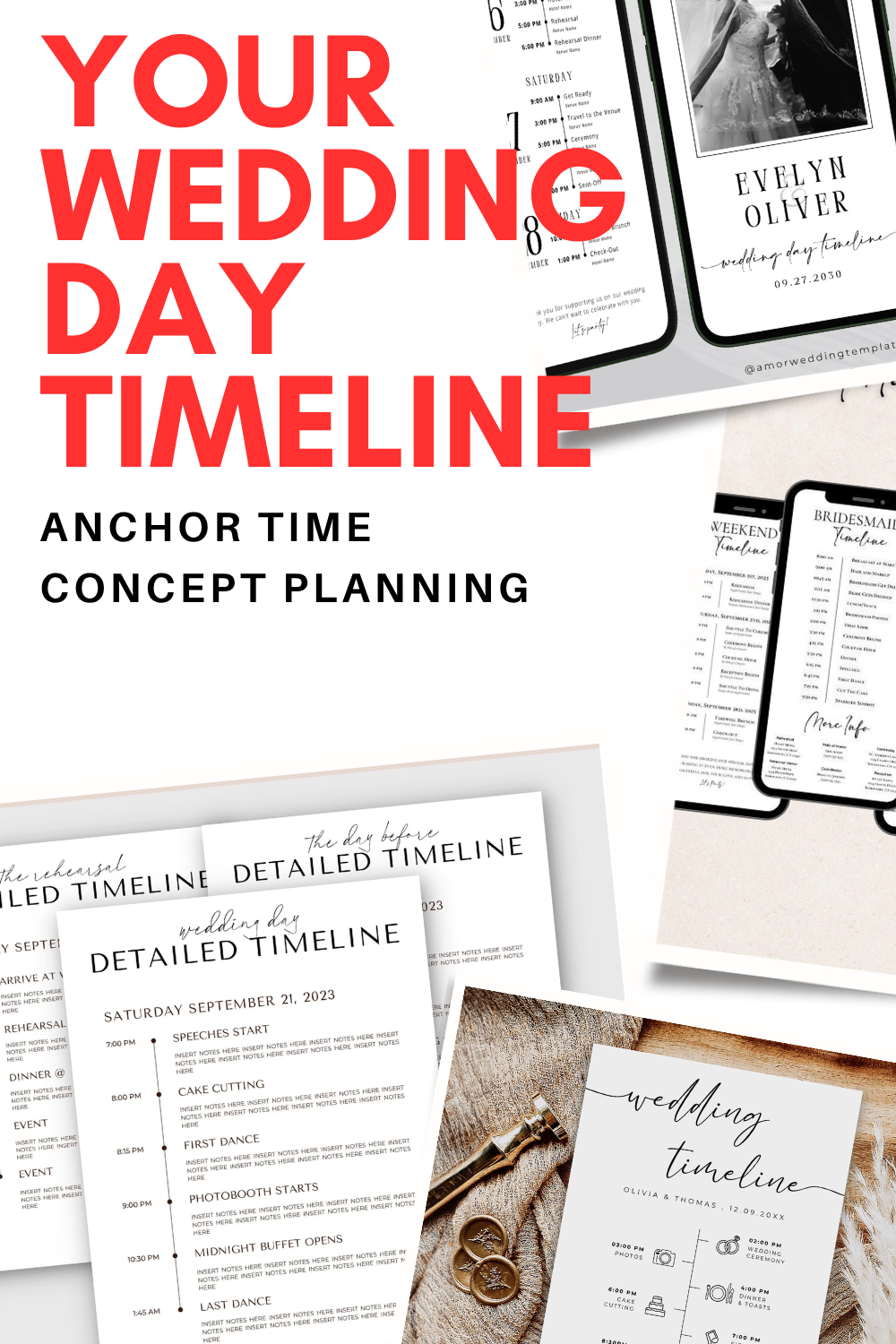
Your Wedding Day Timeline: What Every Couple Gets Wrong (And How to Fix It)
You found the most adorable wedding day timeline on Pinterest. It’s color-coded, it has little icons, and it looks completely manageable. Cute!
Real talk: that template will fail you by noon.
Not because you’re bad at planning. Because no single template accounts for your photographer’s buffer needs, your venue’s load-in window, your family’s spectacular talent for being in the wrong place at the wrong time.
That’s why we built this guide differently. You’ll get customizable templates for 3pm, 4pm, and 5:30pm ceremony starts — plus the actual logic behind why each one is structured the way it is. Because a template you understand is one you can actually fix when real life shows up. And it will.
Ready? Let’s build something that actually holds together.
The Single Most Important Concept: Anchor Time
Before you schedule a single hair appointment, you need one non-negotiable anchor: your ceremony start time.
Everything else — hair, portraits, cocktail hour, dinner — gets built in two directions from that moment. Work backward to schedule your morning. Work forward to map the reception.
Before you commit to a ceremony time, check these three things from your venue contract:
- Venue access windows: When can vendors actually arrive? Early access changes your entire morning.
- Sunset time on your date: This matters more than you think (more on that in a second).
- Hard end times and curfews: Some venues are very serious about these.
Once you have your anchor, everything else has a home. Without it, you’re just playing expensive Tetris.
Stress Free Wedding Planner Spreadsheet

The Buffer Rule Nobody Follows (But Everyone Needs)
Here’s the thing about wedding day timelines: they almost never fall apart during the ceremony. They collapse in the micro-transitions between the big moments.
The golden rule? If a task should take five minutes, budget twenty. Hunting for missing shoes, answering “where do I go next?” for the fifteenth time, loading twelve people into a shuttle — these are where schedules go to die.
The forgotten buffer zones that bite every couple:
- Getting ready to the dress: Moving from hair and makeup into your gown takes longer than it sounds, especially if you need to steam anything.
- Loading transportation: Herding well-dressed people into vehicles is, somehow, an Olympic sport.
- Room flips: Turning a ceremony space into a cocktail lounge doesn’t happen instantly.
- Dinner seating: Getting 150 guests to find their chairs and sit down is a slow-motion marathon.
For any block involving group movement, add at least 30 minutes. For smaller transitions, 10–15 minutes. If your schedule is back-to-back tasks with zero breathing room, you’ve written fiction — charming fiction, but fiction.
Classic Black And White Wedding Binder

The First Look Decision (It’s Actually a Timeline Decision)
People frame this as a tradition question. It isn’t. It’s a scheduling question with major ripple effects.
If you do a first look: You move couple and wedding party portraits to the morning. You can actually attend your own cocktail hour. You finish photos before the bar opens. The post-ceremony rush evaporates.
If you skip a first look: Budget at least 90 minutes after the ceremony for couple, family, and wedding party portraits. You will almost certainly miss a chunk of your cocktail hour. In fall and winter, you’re also racing a sunset — which in December might be 4:30pm, right as you’re finishing your vows.
The middle ground: Do individual wedding party shots separately before the ceremony without seeing your partner. You knock out a significant portion of photos and still get that emotional first look moment.
Ask yourself honestly: do you want to eat the appetizers you’re paying for? Do you need golden hour portraits? How complicated is your family when they’re hungry? Answer those questions and you’ll know what to do.
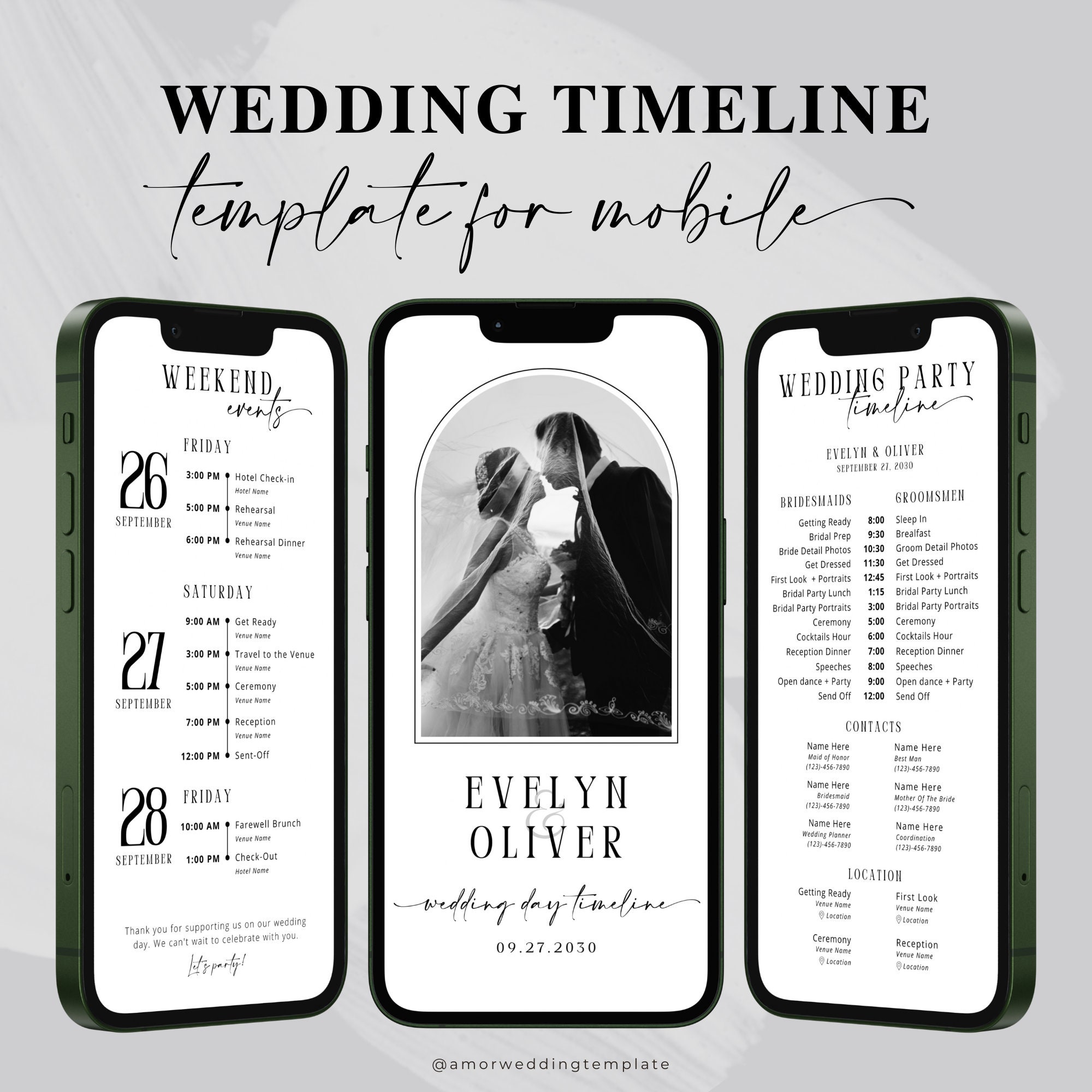
Minimalist Mobile Wedding Timeline Template
What Actually Goes Wrong in the Morning
The wedding morning is a vortex where minutes vanish, and most delays aren’t dramatic disasters. They’re “where is my…” scavenger hunts.
The hidden time-sucks that wreck morning schedules:
- Hunting for shoes, jewelry, or handwritten vows (stage everything the night before — all of it)
- Last-minute changes during hair and makeup (lock in the sequence and the look in advance)
- Steaming multiple bridesmaid dresses the morning of (do this the night before, or hire someone)
Set a hard “everyone dressed” time for your wedding party and build a 15-minute panic pocket into your schedule for whatever chaos you didn’t anticipate. There will be something.
And please, please eat. Future-you will be significantly less feral if you’ve had a non-messy lunch and stayed hydrated. Hangry brides are a real phenomenon and they show up in photos.
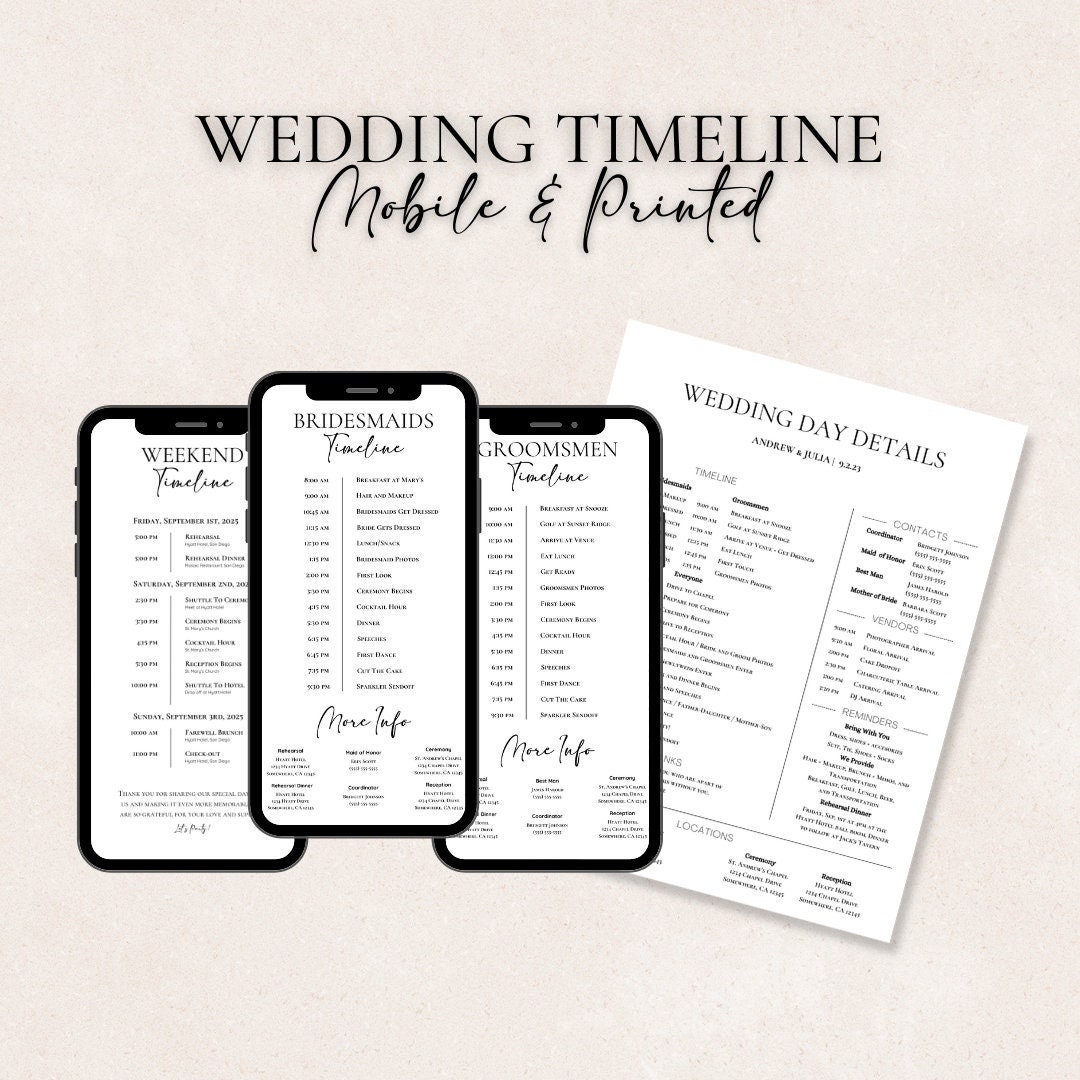
Mobile And Printable Wedding Timeline
The Family Portraits Trap
Why does photography take so long when clicking a shutter takes a millisecond? Because the actual photography is fast. It’s the human wrangling that eats your wedding day timeline.
Straightening ties. Fixing stray hairs. Locating Uncle Bob, who was just here, where did he go, someone check the bar.
Keep your family formals list tight and prioritize ruthlessly — not everyone needs their own permutation. Assign a wrangler who knows your family dynamics and has no problem being loud and bossy about it. That person should not be you. Choose one portrait location close to your venue so travel doesn’t add hidden time. And remember to schedule a 10-minute human break for yourself before the ceremony: water, snack, bathroom, breathing.
Editable Weekend Timeline Card
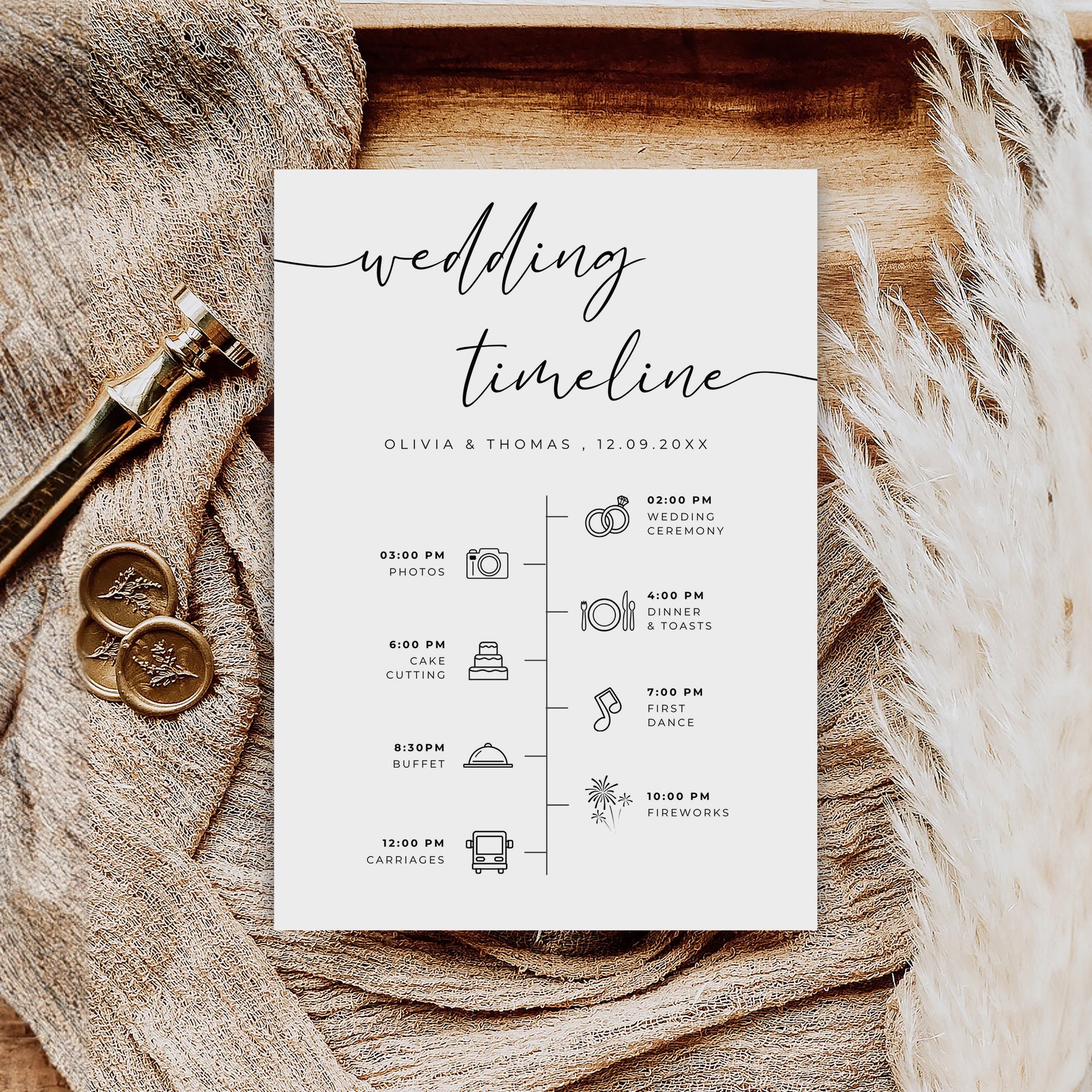
The 3pm Wedding Day Timeline: Not the Relaxed Start You Think It Is
A 3pm ceremony feels like a leisurely afternoon. It isn’t. The danger is what happens between “I do” and dinner.
If you marry at 3pm but don’t serve dinner until 7:30pm, you’re asking your guests to survive on a handful of cocktail hour bites for four-plus hours. Hungry guests are grumpy guests. Grumpy guests check their phones during your first dance.
Watch out for these 3pm pitfalls:
- Portrait bloat: “Just one more shot” swallows the cocktail hour while guests are wondering if food exists.
- The afternoon energy slump: Long gaps require expensive entertainment to keep the vibe alive.
- Empty stomachs: Asking people to party for hours without real food is a guest experience problem.
For a 3pm wedding day timeline, consider a heavy cocktail hour with substantial apps, keep your formalities tight so dancing starts before the caffeine wears off, and think seriously about moving dinner earlier to bridge the gap.
The 4pm Wedding Day Timeline Trap
Here’s the 4pm gotcha nobody warns you about: a 4pm ceremony often means an 8am call time for hair and makeup. Half your day is over before you’ve seen a mimosa.
The bigger danger is disappearing light. Depending on your wedding date, the sun could be setting right as you’re finishing your vows, which leaves you choosing between grainy flash photos or skipping your cocktail hour to chase the golden hour. Neither is great.
For a 4pm wedding day timeline, the fix is:
- Move couple and wedding party portraits to the morning (hello, first look)
- Verify venue access windows for early setup and getting ready
- Protect a full 60-minute cocktail hour — don’t let it shrink to a 20-minute sprint because the sun went down
The 5:30pm Ceremony: Worth It, But Be Strategic
Ah, the 5:30pm ceremony. Golden hour magic! Chic! Also: your guests won’t see a fork until 9pm if you’re not careful.
At this hour, your wedding day timeline is fighting two things: fading light and a ticking hunger clock. Skip the first look and you’ll spend your entire cocktail hour chasing the sun while your guests quietly rage.
The move for a 5:30pm wedding day timeline:
- Do the first look. Finish the bulk of your portraits before the ceremony so you can actually join the party.
- Keep pre-food formalities lean. Guests want to eat. They do not want to listen to a 20-minute toast while smelling the steak.
- Sneak away for sunset shots during dinner. A focused 15-minute escape during the salad course beats a wandering hour during cocktails.
You can absolutely have a romantic late-night vibe without starving your favorite people. The key is ruthless efficiency in your reception programming.
Editable Wedding Day Timeline
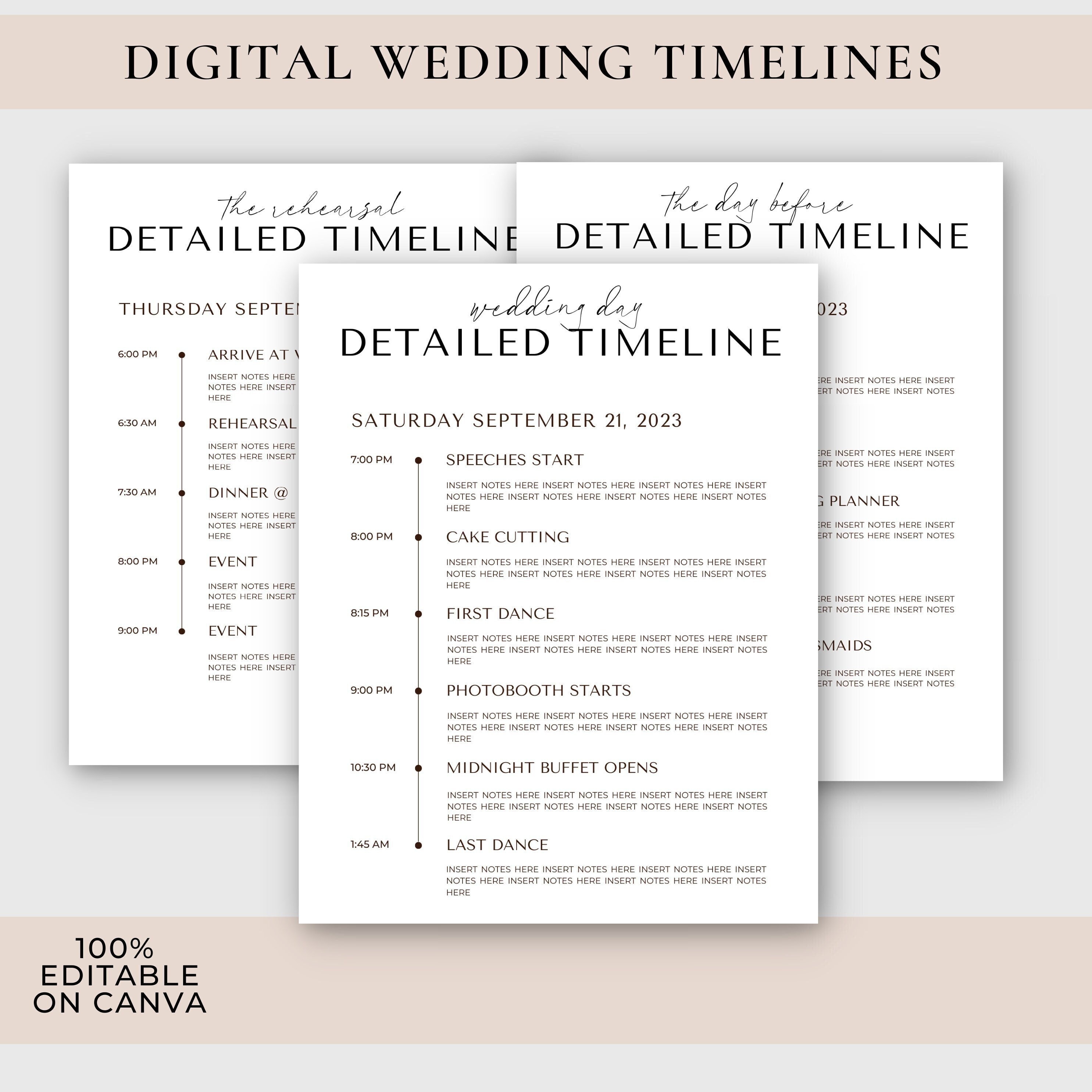
The Guest Experience Dead Zones
Your wedding day timeline isn’t a secret document just for your vendors. It’s a survival guide for 100+ people who have no idea what’s happening after you say “I do.”
When you forget to plan for the humans, you create dead zones: those awkward gaps where guests feel stranded, confused, and very aware that they haven’t eaten since that sad airport sandwich.
The transition killers to watch:
- The hunger gap: Anything more than 20 minutes between the ceremony and appetizers is dangerous territory.
- The seating shuffle: Without clear signage, guests will huddle by the bar in a confused clump until your coordinator has a quiet breakdown.
- The bottleneck: One narrow hallway or a single shuttle creates a human traffic jam that costs you 20 minutes you didn’t budget.
Solve the “wandering aimlessly” problem with guest-facing schedules on signage or programs. Something as simple as “Cocktails at 5:00, Dinner at 6:30” keeps the peace. Use clear announcements for dinner calls. Your guests genuinely want to do the right thing — they just need to know what it is.
The Speeches vs. Hunger Civil War
If your guests are eyeing the bread basket like they’re planning a heist, you’ve waited too long to feed them.
The real villain isn’t long toasts — it’s poorly timed ones. Speeches during cocktail hour while guests are standing and starving? No. A 10-minute entrance sequence before a fork is lifted? Hard no.
The rules for keeping the peace:
- Cluster formalities: Don’t sprinkle dances and toasts throughout the reception like confetti. Two tight, logical blocks, and done.
- Set time caps: Every speaker gets three minutes. Give your MC permission to be the bad cop who cues the music.
- Time speeches during courses: Guests need something to chew on while Uncle Bob is reminiscing. Schedule toasts between courses, not before them.
Keeping people fed and the program moving are the two biggest things standing between you and a night everyone actually remembers fondly.
The Vendor Logistics You’re Forgetting
Who actually runs your wedding? Not you. Your vendors do. And if you don’t schedule their invisible logistics, the machine breaks.
The “unsexy” blocks that belong on your master wedding day timeline:
- Load-in windows: When can the florist and rentals actually arrive? This is in your contract — check it.
- Sound checks: Mic tests must happen before the first guest walks in the door.
- Vendor meals: Decide when and where your team eats. A photographer who hasn’t eaten since 8am is not going to be at their best for your first dance.
- Strike time: When does the music legally stop so cleanup can begin?
Put these on your master schedule. You’ll avoid cold food, overtime fees, and the very specific awkwardness of a toast happening while the kitchen tries to serve 150 hot entrées simultaneously.
Multi-Location Logistics: The Math Doesn’t Work the Way You Think
If the GPS says your drive takes ten minutes, your timeline needs to budget twenty-five. Moving a wedding isn’t driving — it’s managing logistics chaos.
The hidden time costs:
- Loading everyone and their bags into transportation (yes, it takes that long)
- Parking and hiking in heels
- At least one guest who ignores directions and ends up somewhere exciting
- DIY couples who need to navigate load-in docks with boxes
Set a “latest depart” time for every move and share digital pin drops to specific entrances — not just the general address. Clear ceremony signage telling guests where to go next prevents mid-day disappearances and the frantic phone calls that follow.
Your Rain Plan Needs to Be a Full Timeline Rewrite
“We’ll move everything inside if it rains” is not a rain plan. It’s a rain idea.
A real Plan B isn’t just a location change — it demands more logistics than your outdoor dream did. Indoor-only variables eat minutes fast: guests shuffle slower through narrow hallways than across an open lawn, someone has to physically flip all the signage, and if your portrait location moves across the venue, budget extra time for the walk.
Before the clouds roll in, establish your audible checklist:
- The decider: Who makes the final call — you, your planner, or the venue manager?
- The deadline: When is the go/no-go time? Aim for four hours before the ceremony.
- The messenger: Who calls the vendors and updates the wedding website?
Add a 10-minute “soggy buffer” to your Plan B. Wiping wet floors and managing umbrella traffic takes time. Don’t let a little drizzle drown your entire wedding day timeline.
The DIY Decor Trap
Do you picture your wedding morning as silk robes and mimosas? Gorgeous. Now: are you also DIY-ing your centerpieces? Because eucalyptus and floral wire do not care about your Zen vibes.
The biggest threat to a DIY timeline is letting setup steal your getting-ready time. One extra hour wrestling a stubborn arch means your hair and makeup schedule slides, which means a late ceremony, which means a stressed bride in all the portraits.
The survival rules:
- Curate ruthlessly: If a project is high-stress, drop it or pay for delivery.
- Delegate hard: Assign specific zones to friends who aren’t in the wedding party.
- Enforce “tools down”: Set a non-negotiable deadline to stop working and start getting beautiful.
- If your bridesmaids are also your floral team: You’re short-staffed by definition. Hire a setup assistant or simplify the vision.
The Two-Timeline System (This One Is Genius)
Your vendors and your guests need completely different versions of your wedding day timeline. Aunt Martha does not need to know when the florist arrives. Your DJ absolutely does.
The Master Timeline is the granular bible: vendor arrivals, photo lists, ceremony cues, every logistical detail. Finalize this one month out and re-confirm one week before the wedding.
The Guest Timeline is just the hits: ceremony, cocktails, dinner, dancing.
The master copy goes to your planner, venue manager, catering lead, photographer, DJ/MC, and transportation team. Provide printed copies AND a shared PDF link. And here’s the critical rule: if you update one detail and only tell one person, it didn’t happen. Push every last-minute change to the entire team.
How to Actually Build Your Wedding Day Timeline
Okay, so you understand the logic. Here’s how to put it all together.
Step 1: Lock your non-negotiables first. Note your venue’s hard stops, noise curfews, and vendor access windows. Set your ceremony time as the anchor.
Step 2: Make the first look decision. Choose now — before you build anything else. It changes the entire morning structure.
Step 3: Map your people movement. For every location change, double the GPS estimate and add 15 minutes. Identify bottlenecks (narrow hallways, single shuttles) before they become emergencies.
Step 4: Break photography into segments. Detail shots first, wedding party second, family formals third. Assign a wrangler. Schedule a 10-minute human break for yourself.
Step 5: Reverse-engineer from dinner. Hot food is the priority. Fit your entrance, first dance, and toasts around the courses — not before all of them.
Step 6: Stress-test the whole thing. What happens if hair and makeup run 30 minutes late? Do you have a Plan B for every outdoor photo location? Did you schedule ten minutes alone with your new spouse before the party begins?
Frequently Asked Questions
How long is a typical wedding day timeline?
Most standard weddings run five to six hours for ceremony and reception combined. Push past six hours without a major energy shift — a band changeover, a late-night snack station, something — and your guests will start calculating their drives home. End on a high note before the room deflates.
How long should cocktail hour actually be?
Sixty minutes is the standard for a reason — it’s exactly enough time for a drink and a snack without losing momentum. If you have a lot of post-ceremony portraits or a long travel window between locations, extend to 75 or 90 minutes max. Any longer and guests start losing steam. If you need more portrait time, shift photos earlier in the day.
What’s the biggest mistake with a 4pm wedding day timeline?
Assuming the morning is relaxed. A 4pm ceremony often means an 8am call time. Couples consistently underestimate how long hair, makeup, travel, and portrait blocks actually take. Build generous buffers and move couple photos to the morning so you’re not sprinting to the altar with your veil still being pinned.
Can we do a 5:30pm ceremony without a super late dinner?
Yes, but you have to be ruthless with your reception programming. Keep pre-dinner toasts and dances extremely lean. A first look is basically non-negotiable at this ceremony time — it’s the only way to get portraits done before the ceremony so guests can move quickly from cocktails to their entrées.
When should we finalize and share the timeline?
Finalize your master timeline about one month out. Confirm all details with vendors one week before the wedding. And remember: two versions, always — the detailed master for your pro team, and the simplified guest version. Clear communication is the only thing standing between you and total logistical chaos on the big day.