
Wedding Invitations That Match Your Aesthetic, From ClassicCalligraphy to Handmade Suites
Your invitation lands in someone’s mailbox weeks before they ever set foot in your venue. It’s the first thing they touch, hold, and — if it’s a good one — actually keep. It’s not just announcing a date. It’s setting a tone, making a promise, and giving guests a preview of what kind of wedding this is going to be.
The problem is that “wedding invitations” covers an enormous amount of creative territory.
Classic calligraphy suites. Watercolor botanicals. Kraft paper and twine. Custom illustrated portraits of the couple.
They all work.
They don’t all work for every wedding.
Choosing a style without a framework is how you end up 47 tabs deep in Etsy at midnight, convinced everything is both beautiful and wrong.
This guide breaks down common invitation styles by aesthetic category so you can quickly identify which direction fits your wedding’s vibe, then go deep on the ones that actually make sense for you.
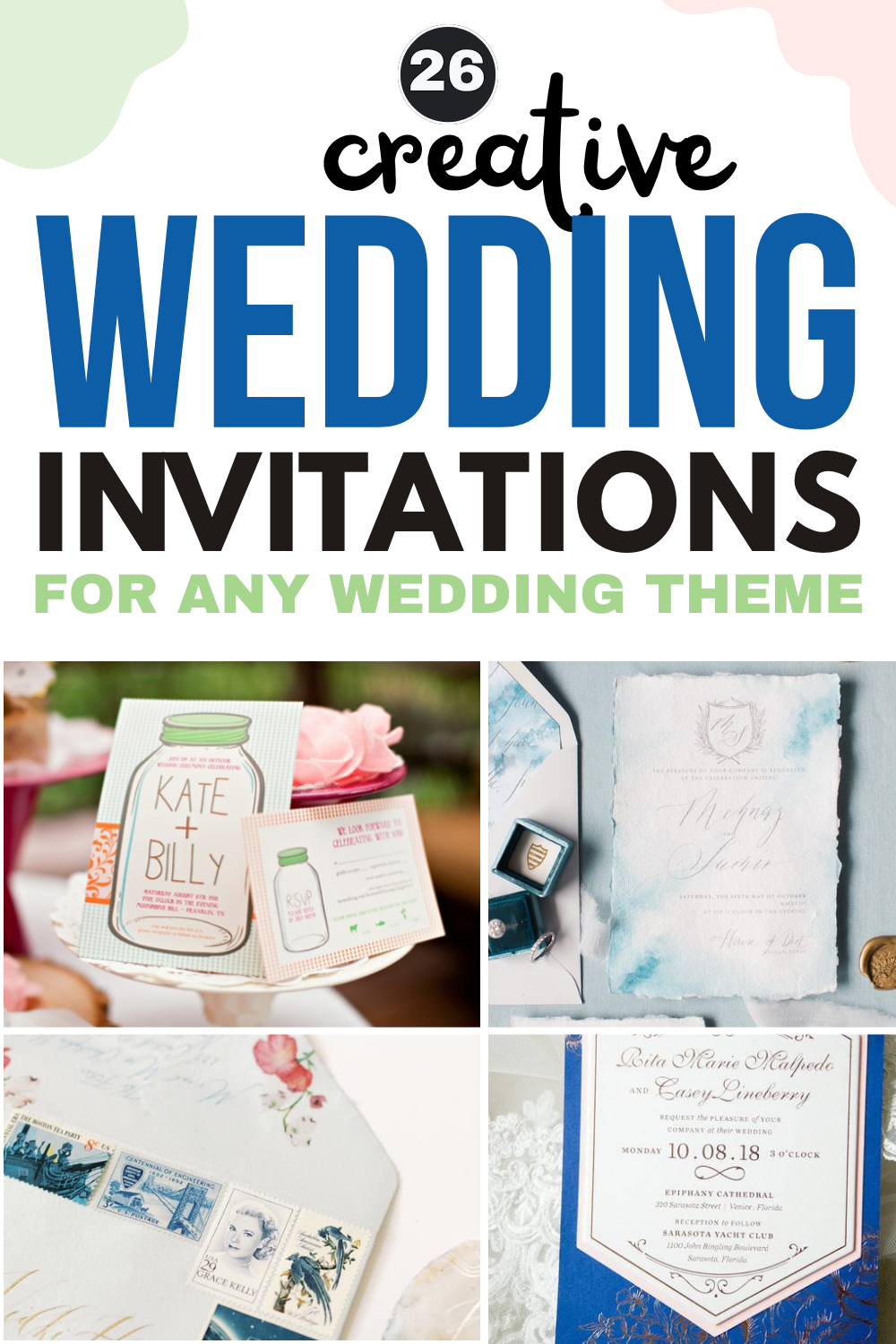
Timeless and Traditional
These are the invitation styles that don’t require context. A formal, classic suite tells guests everything they need to know before they even read the date — black tie expected, arrive on time, this is serious in the best possible way. They work because they follow a visual language that’s been refined for over a century. If your wedding skews formal, ceremonial, or just deeply elegant, this is where to start.
Classic Wedding Invitations
If your venue is a ballroom, a historic estate, or anywhere that involves a dress code, classic invitations are doing real work for you. We’re talking white, ivory, and cream cardstock with formal typesetting — spelled-out dates, traditional wording like “requests the honor of your presence,” restrained ornamentation. Gold wax seals with monograms. Rose gold foil frames on linen paper. Mixed calligraphy and serif typography that feels composed, not fussy.
Classic doesn’t mean boring. It means intentional. The couples who get this right understand that when everything on the invitation feels considered — the paper weight, the font pairing, the envelope liner — guests feel the care before they’ve read a single word. Our roundup features 26 real examples from navy suites to cream-and-burgundy to soft ivory with gold, all pulled from actual weddings.
See our classic wedding invitations guide →
Elegant Wedding Invitations
Elegant invitations share DNA with classic but lean harder into contrast and drama. Think silver embossing on deep navy. Gold script on black. A matching envelope liner that only reveals itself when the flap is opened — the stationery equivalent of a great lining in an expensive coat. These are invitations that communicate formality without stating it outright.
The defining quality of an elegant suite is restraint in service of impact. Nothing feels excessive; everything earns its place. A gold wax seal doesn’t need to compete with a foil border. One embossed detail does more than three competing flourishes. Our roundup covers the full range from dark and dramatic charcoal designs to quieter ivory suites where the polish is in the details you almost miss.
See our elegant wedding invitations guide →
Vintage Wedding Invitations
Vintage invitations are for couples who want history in the room. Deckled edges. Watercolor botanicals on soft peach-coral paper. Cranberry velvet ribbon wrapped across the center, held in place by a blush wax seal. Hand-drawn pen-and-ink peonies and roses in deep purple. The aesthetic signals nostalgia without pretending to be old.
These work especially well for garden weddings, estate venues, and anyone whose wedding Pinterest board skews romantic countryside. Our collection of 26 examples ranges from soft blush watercolor suites with deckled edges to dark burgundy florals with scrollwork borders and wax seal closures. Very different moods, same era.
See our vintage wedding invitations guide →
Nature-Inspired
These styles bring the outdoors in, but they cover more ground than “botanical.” Rustic reads earthy and grounded — you can almost smell the pine trees. Watercolor reads romantic and atmospheric, like early morning light through a window. Both work for couples with a genuine connection to natural settings, and both look completely different on paper. The choice usually comes down to how literal you want the nature reference to be.
Rustic Wedding Invitations
Rustic invitations work hardest when the setting earns them. A barn in Vermont, a vineyard, a forest ceremony, a mountain elopement — the invitation should feel like it belongs somewhere real. Kraft paper and twine, mason jar illustrations with gingham borders, vellum with copper calligraphy laid on real ferns and moss. These aren’t decorative choices for their own sake; they’re an invitation into a specific landscape.
One of the examples in our roundup does this especially well: a full mountain-and-lake panorama across the bottom edge of the invitation, with a crossed-arrows pine tree crest on the RSVP. Every piece in the suite references the same place. That’s what makes rustic work at its best — specificity, not just texture.
See our rustic wedding invitations guide →
Watercolor Wedding Invitations
Watercolor invitations have a reputation for being all-blush-floral-wreath, and that’s not entirely unfair. But when the technique is used well, it produces something that genuinely can’t be replicated by any other printing method — a softness and warmth that makes an invitation feel personal rather than produced. Guests often keep them.
Our collection of 26 examples goes well beyond the basics. A single oversized watercolor peony on blush paper paired with brush lettering calligraphy. A pale icy blue wash that reads like early morning light, with dark navy envelopes and hand-lettered addressing. Loose botanical greenery with soft white florals and navy accents that feel fresh and garden-ready. What unites them: they look like someone made them for you specifically.
See our watercolor wedding invitations guide →
Clean and Contemporary
Not every wedding wants wax seals and deckled edges. For couples who lean minimal — or whose aesthetic is more gallery opening than garden party — modern and simple invitations are the right territory. The distinction between the two is mostly a matter of degree: modern reaches for contrast and intention, simple reaches for clarity and quiet. Both are capable of being just as expressive as a heavily ornamented suite.
Modern Wedding Invitations
Modern invitations replace traditional ornamentation with intentional design decisions. A wide horizontal format instead of portrait. A teal geometric diamond monogram as the single focal point against generous white space. Charcoal paper with a lush illustrated floral arrangement in hot pink and coral, swept by calligraphy names. Illustrated icons replacing the standard checkbox RSVP. Every choice is doing something, and nothing is accidental.
The 26 examples in our roundup include both clean minimalist suites and bold dark-and-dramatic designs. The common thread across all of them: each invitation tells you something real about the couple before you’ve arrived at the wedding.
See our modern wedding invitations guide →
Simple Wedding Invitations
Simple invitations are not a compromise. They’re a statement. The couples who choose them understand that a single element done perfectly — an arch-top card silhouette, a bold landscape-format layout, clean calligraphy on white paper with no graphic elements at all — communicates more than a suite stuffed with competing details.
What separates a beautiful simple invitation from a flat one is intention. Pure typography with only font and spacing to carry the design can be just as expressive as a botanical illustration, if the font choice is right and the spacing is generous. Our roundup covers both pure typography-only designs and modern minimalist suites that rely on one deliberate focal point — and proves that restraint is its own kind of skill.
See our simple wedding invitations guide →
Handcrafted and Personal
These are the invitation styles that can’t be automated. Hand-drawn illustrations and handmade suites both require someone’s time and attention in a way that digital printing doesn’t, and guests can feel that when they open the envelope. The physical weight of the paper, the irregularity of a hand-painted edge, the knowledge that a real person drew this — it registers. If you want your stationery to feel like a gift in itself, this is where to look.
Hand-Drawn Wedding Invitations
A hand-drawn invitation is the most personal stationery decision you can make. Custom portraits of the couple rendered in black ink. Illustrated sketches of the actual ceremony venue. Watercolor roses that match the real flowers in your reception. None of these can be generated from a template. They’re made for one wedding.
Some of our favorite examples: a full suite where the invitation, rehearsal dinner card, and RSVP all carry the same hand-painted rose-and-foliage border — nothing feels mismatched when the whole thing arrives in the mailbox together. Another features a black ink portrait of the couple with calligraphy names below and a pink ribbon and twine tied around the card. It’s not just stationery. It’s a keepsake most guests will hold onto.
See our hand-drawn wedding invitations guide →
Handmade Wedding Invitations
Handmade invitations span more territory than you might expect. On one end: fully completed artisan suites using textured cotton paper, hand-drawn botanical illustrations, and wax seal closures — the kind that arrive looking like they belong in a museum. On the other: digital designs you print and assemble yourself, or material kits where the construction is part of the experience.
For couples who want the handmade feel without commissioning a custom illustrator, purchasing digital designs for personal printing hits a smart middle ground. You control the paper quality, the printing, and the personalization. For couples who genuinely enjoy the process, a full DIY kit turns invitation making into a weekend project — and gives the finished product a story worth telling when guests ask where they came from.
See our handmade wedding invitations guide →
Your invitation is the first impression, but it’s also a preview. Get the style right and guests arrive already knowing what kind of wedding this is — and that kind of clarity makes the whole day feel more intentional, from the moment they open the envelope.
Frequently Asked Questions
When should I send wedding invitations?
Send invitations 6–8 weeks before the wedding date. For destination weddings or holidays weekends, push that to 10–12 weeks. Save-the-dates go out 6–12 months in advance, and for most couples that’s actually the more urgent deadline — invitations can be printed quickly, but save-the-dates need to beat everyone’s travel bookings.
How do I choose a wedding invitation style?
Start with your venue and your wedding’s overall aesthetic. The invitation should feel like a preview of what guests are about to experience. A formal ballroom wedding and a barn ceremony both deserve invitations that match — not because there are rules, but because a mismatch creates confusion. Ask yourself: would a guest be surprised by the venue after receiving this invitation? If yes, recalibrate.
What’s included in a wedding invitation suite?
A full suite typically includes the main invitation, an RSVP card, a details insert for directions and accommodations, and envelopes for both cards. Some suites include an envelope liner for an added touch of polish. For destination weddings, couples sometimes add a weekend itinerary booklet or hotel information card. How many pieces you need depends on how complex your logistics are — not every wedding needs a five-piece suite.
How much do wedding invitations cost?
Printed suites for 100 guests typically run $300–$700 depending on paper weight, printing method, and customization. Letterpress and foil printing cost more than digital flat printing, sometimes significantly. Digital designs you print yourself start under $50 for the files. Custom hand-drawn illustrations vary widely by artist and complexity. The biggest budget variable is almost always the printing technique, not the design itself.
Do I need to match my invitation style to my wedding decor?
You don’t need to match exactly — the best invitations usually interpret the wedding’s aesthetic rather than replicate it. A rustic outdoor ceremony doesn’t require kraft paper invitations; it just benefits from something that feels grounded and warm. Think about tone and mood, not a checklist of matching motifs. The invitation should feel like it belongs in the same world as your wedding, not like it was pulled directly from your centerpiece.