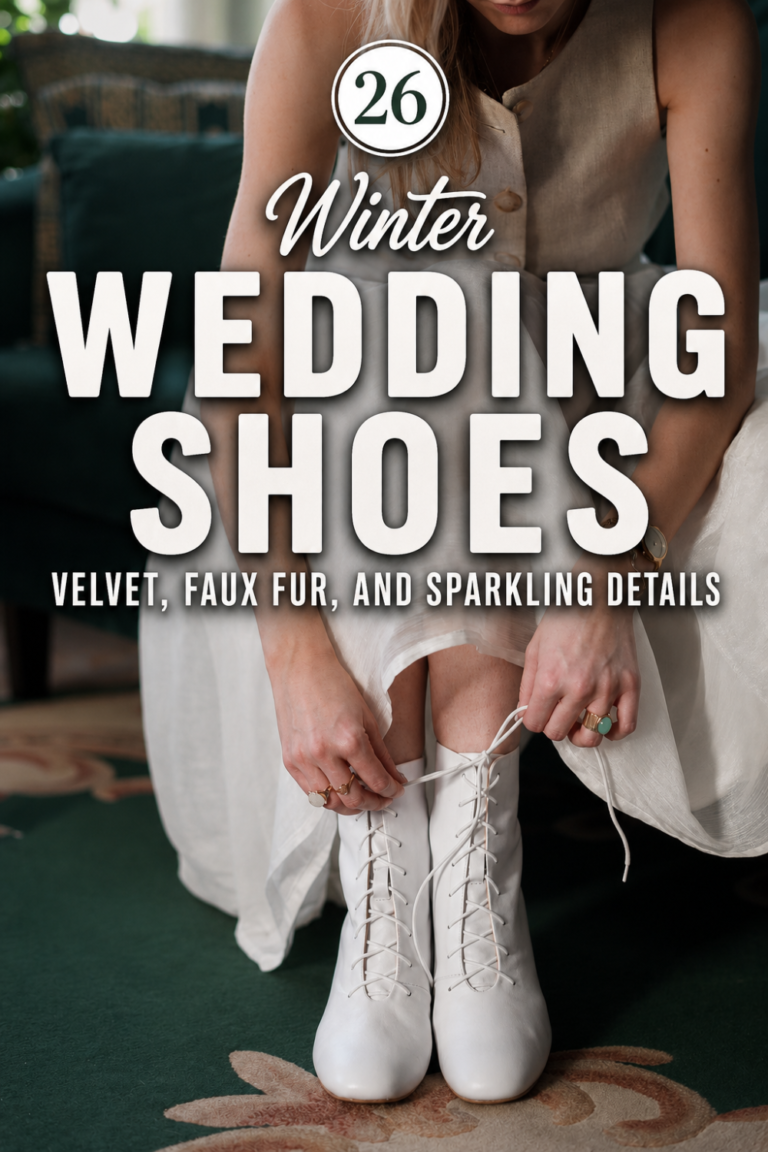
Start with real winter weddings. The shoes just below are what brides and their parties actually wore in the cold, from snow-ready boots to delicate flats, each one linked to the full day.
Then keep scrolling for the full guide to choosing your own: how to match the shoe to your venue and the weather, what to wear, and what to skip. It covers brides, guests, and bridesmaids together, because a cold venue and a long day are hard on every pair of feet in the room.
Winter Wedding Shoes from Real L&L Weddings
A handful of real winter weddings, each with its own answer to cold feet and a long day.
Aqua Fur-Trimmed Snow Boots

This bride skipped the cold-feet problem entirely and pulled on a pair of aqua fur-cuffed boots that match her palette exactly.
Her groom went right along with it in aqua sneakers. Two pairs of warm feet, one very committed color scheme, standing together in the snow at their Jackson Hole wedding.
See this Jackson Hole Winter Wedding →
Knee-High Brown Riding Boots

Here’s the whole crew lined up in the snow, and it’s a lesson in doing winter your own way. Brown leather riding boots, black ankle boots, patterned tights, a strappy heel for the brave one.
Nobody matched, everybody stayed warm, and the tulle skirts against the boots is the kind of contrast that only works this time of year.
See Kristin and Dan’s New Hampshire Winter Wedding →
Plum Suede Loafer Flats
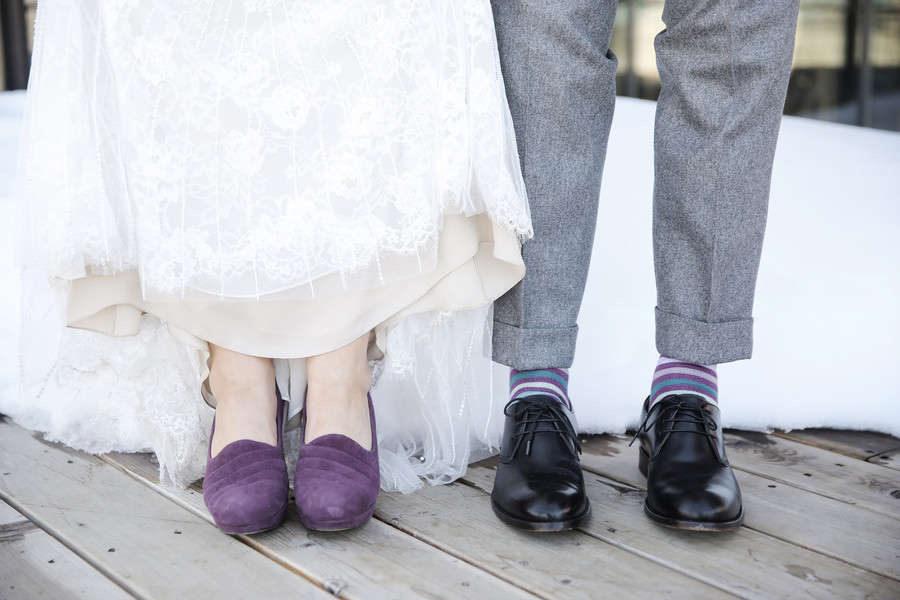
Plum suede flats, soft enough to look dressy and flat enough to carry her across a snowy deck without a second thought.
Brandon went for black oxfords and a pair of striped socks with a little color in them. There’s a snow bank right behind their feet, so you know exactly how cold it was at the distillery that day.
See Rhea and Brandon’s Park City Wedding →
Cream Lace-Up Duck Boots
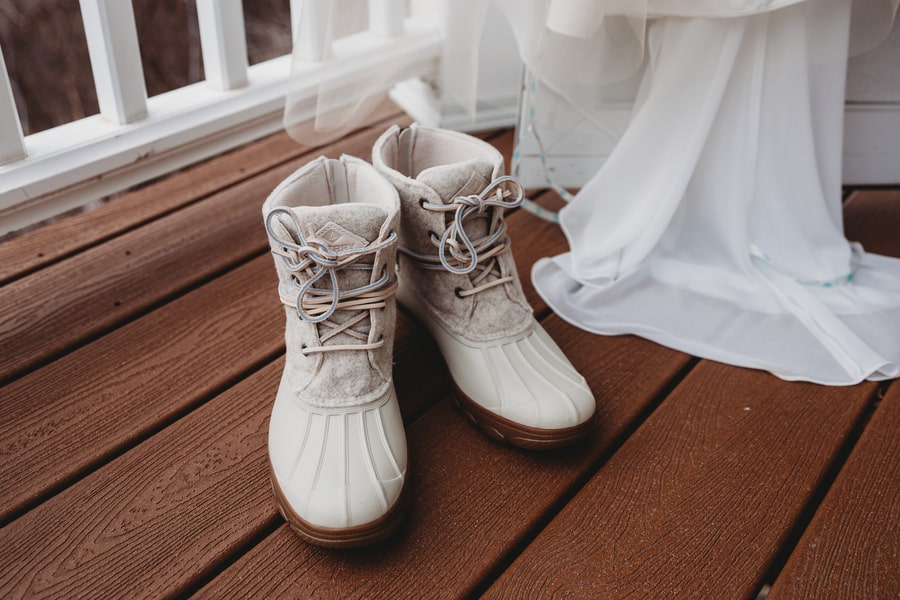
Duck boots at a wedding might sound like a stretch until you see them next to the dress. Cream wool up top, a waterproof rubber sole underneath, laces you can actually cinch.
This is the pair you wear for photos in a Wisconsin winter and never once regret. Practical, and prettier than you’d expect.
See Sandra and Neil’s Wisconsin Wedding →
White Satin Lace-Up Booties
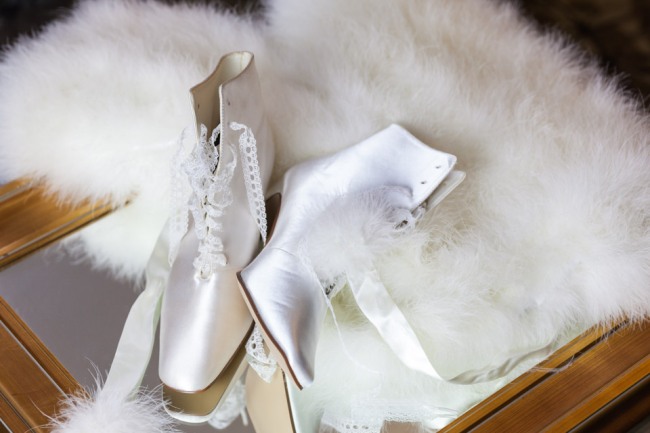
For a softer take on winter, these white satin booties lace all the way up the front with a row of tiny eyelets.
Set on a fluff of white feathers, they lean vintage and a little Victorian, which suits a whimsical winter wonderland theme. You get ankle coverage without the heavy boot.
See this Whimsical Winter Wonderland Styled Shoot →
Grey Suede Pointed-Toe Flats
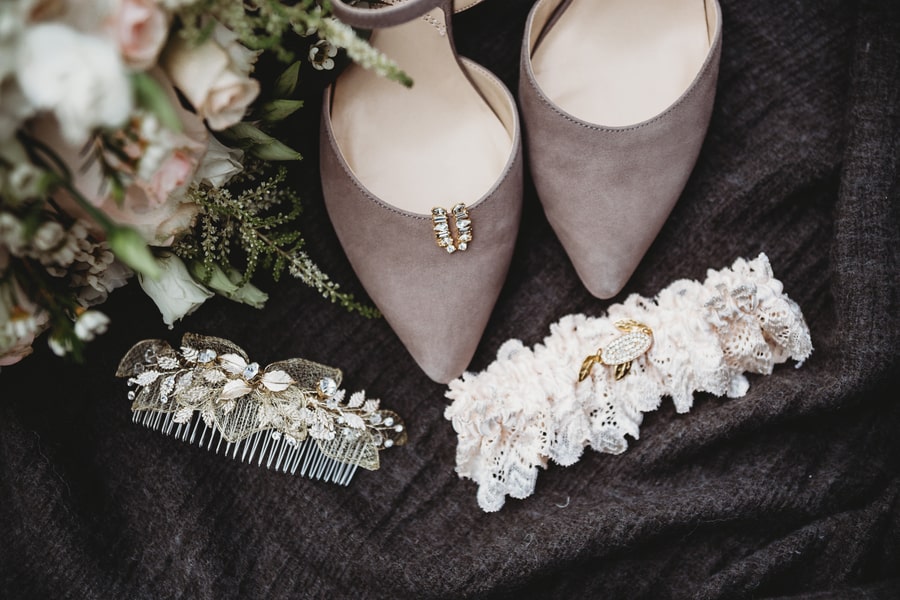
The same Wisconsin bride kept a second pair for indoors: grey suede flats with a pointed toe and a small gold crystal at the vamp.
Laid out on a chunky knit with the garter, the hair comb, and a blush bouquet, the whole flat lay reads cozy winter without a snowflake in the frame. A warm boot for outside, something delicate for the aisle.
See Sandra and Neil’s Wisconsin Wedding →
Decide by Where You’ll Actually Stand
Start with the ground, not the catalog. The right choice becomes obvious once you name your category honestly, including the walk from the car and the photo spot outside.
- Fully indoor on smooth floors. Heated ceremony and reception with no outdoor time beyond a covered entry. You have the most freedom here.
- Mixed with transitions. You will move between warm indoors and cold outdoors for photos, a ceremony doorway, or a venue change. If any part of your day does that, you are in this category.
- Genuinely outdoor. You will stand on grass, gravel, snow, or ice for more than a few minutes. Warmth, coverage, and stability matter more than height.
If you are torn between two categories, plan for the colder, rougher one. A shoe that handles a transition will still look right indoors, but the reverse is rarely true.
Shoe Types That Work for Winter
Think about winter shoes by what they can handle. That approach makes it easier to compare a dressy pump with a boot without losing track of formality.
- Closed-toe pumps. Full coverage keeps toes warmer and reads more formal in low winter light. Indoors, a pump works with almost any gown or guest dress. For mixed or outdoor surfaces, choose a block heel or mid height version for steadier footing.
- Ankle-strap heels. The strap adds security on polished floors that can be slick in winter. Good for brides who want height indoors or guests in midi dresses who want a little more hold.
- Slingbacks with full front coverage. Enclosed at the toe, open at the heel. A solid middle ground when you want a lighter look without exposing toes to cold air.
- Embellished flats. For intimate ceremonies, long receptions, or anyone who will be on their feet all day. A pointed flat with pearl or crystal detail looks intentional under a long gown and needs no break-in. Guests in wide-leg trousers or jumpsuits get a clean line without a heel.
- Block heels and low heels. The steadier base handles varied surfaces better than a narrow stiletto. If you know you will be on mixed floors or standing for photos outside, this shape is the practical default for bride, guest, and bridesmaid alike.
- Ankle boots. A legitimate winter wedding choice, especially for guests and bridesmaids. A sleek, heeled ankle boot in suede, velvet, or leather slips under a long dress and keeps the foot enclosed when you step out for photos.
- Over-the-knee suede boots. One option when leg warmth matters more than showing the shoe. Best under a long hem where the boot works as a warm base layer rather than the focal point.
Whatever your role in the day, where you’ll stand matters more than the style you start with.
What Not to Wear to Winter Weddings
These are the mistakes that turn a pretty pair into a regret by cocktail hour.
- Open-toe shoes in cold, snow, or evening chill. Closed-toe styles are the better choice in winter for warmth, coverage, and formality. Save the open toe for mild indoor receptions only, and even then bring a closed alternative.
- Thin stilettos on grass, gravel, cobblestone, or ice. They sink, wobble, and force you to shorten your stride. Reserve narrow, high heels for fully indoor smooth floors.
- Formal soles on wet or icy ground without a plan. Most dress shoes are not built for wet surfaces, and suede and silk mark easily. If there is any chance of rain, slush, or ice, plan a covered path to the entrance or a pair you can swap.
- Shoes sized too big. Feet can shrink a little in the cold and then shift as you warm up indoors, and a loose fit slips more when your foot is cold. Buy for a secure fit in the store and test with the thin tights or socks you will actually wear on the day. A loose fit is an easy miss, so check it before you commit.
- Untested shoes straight out of the box. A new heel, a new height, or a new strap placement can rub in a different way after two hours. Walk on hard floors at home and stand for a full hour before you commit.
Crep Protect Rain & Stain Shoe Spray
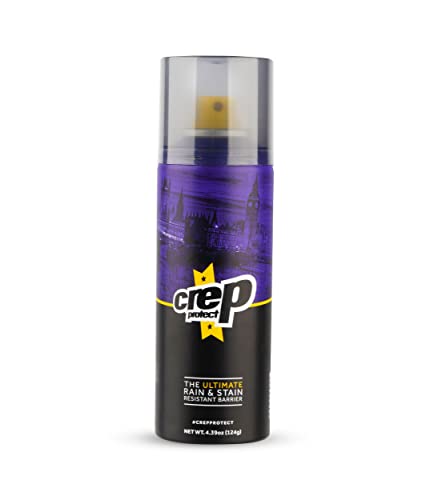
Treat delicate wedding shoes before the day to help repel rain, splashes, and stains. Especially useful for suede or pale shoes when the forecast is damp; spot-test first and let them dry fully before wearing.
Staying Warm Without Losing the Look
Warmth in winter comes from coverage and the right materials, not bulk. A few small choices add real heat without hiding the outfit.
- Choose winter materials. Velvet, suede, and leather feel warmer on the foot than thin satin or mesh and suit the season’s texture. They also photograph with more depth against jewel tones and candlelight.
- Keep the foot enclosed. Closed toes and a higher vamp cover more skin. If you love a slingback, keep the front fully closed.
- Add a thin layer. Sheer tights or thin socks that match your skin tone or your shoe add a surprising amount of warmth without showing. For boots, a thin merino sock stays warm and stays hidden under a long hem.
- Warm the inside, not just the outside. A thermal insole slips into almost any shoe, from a heel to an ankle boot, and adds a layer nobody sees. A shoe with a lined interior does the same job from the start.
- Think about the coat, not just the shoe. A wool cape, a tailored coat, or a faux fur wrap that leaves the dress visible keeps you warm between locations so your feet are not doing all the work. Match the coat tone to the shoe so the look stays cohesive in photos.
Gel Forefoot Cushions for Long Wedding Days
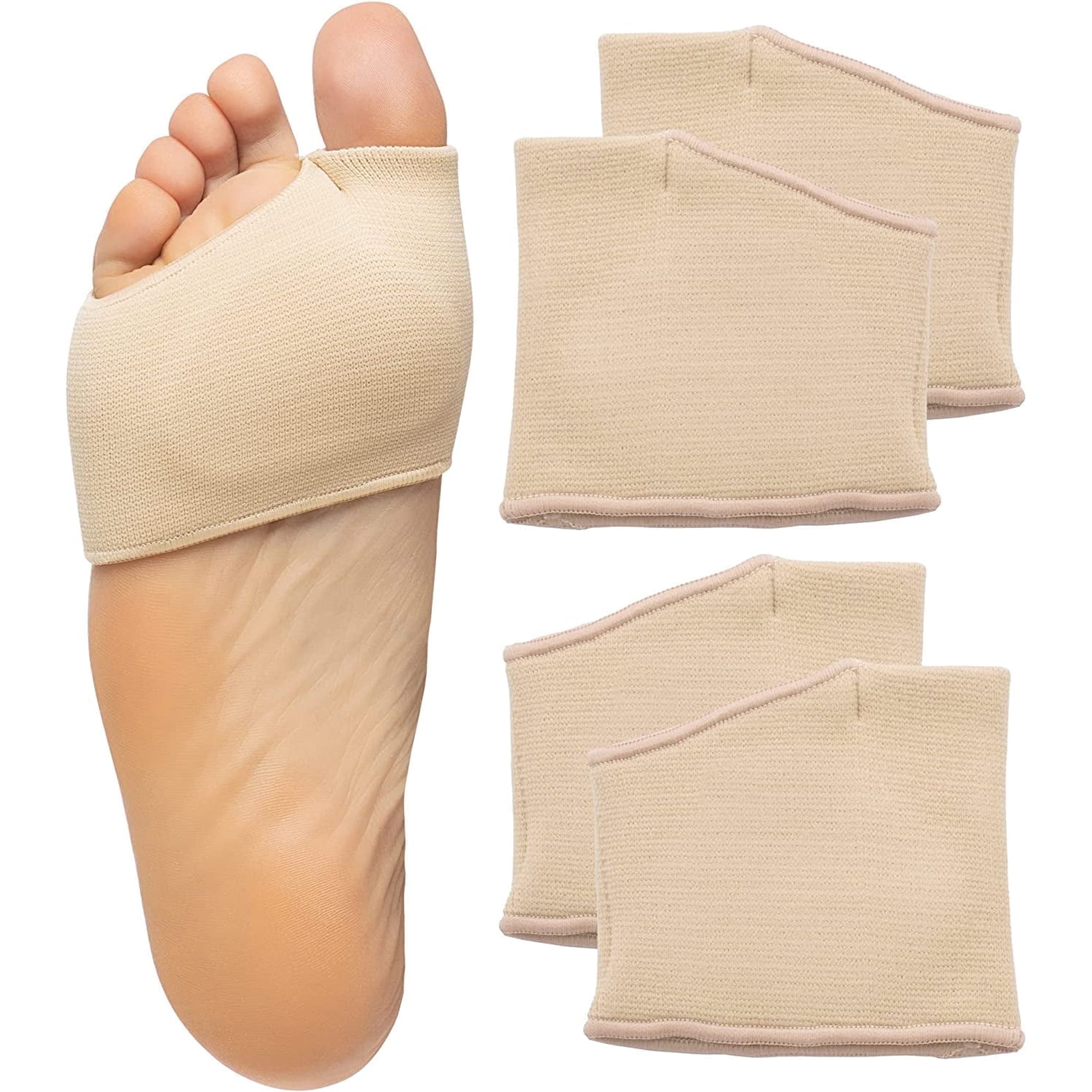
A useful addition to the second-pair kit when hours of standing and dancing start to show. These slim gel cushions sit under the forefoot to add shock absorption and help reduce rubbing without changing the look of the shoe.
Traction and Wet-Weather Reality
Here is the honest limit: no dress shoe recommended in this guide is being called waterproof, and no traction claim is rated or tested. Block and mid heels tend to feel steadier on mixed winter surfaces than thin heels, and a rougher sole may feel less slick, but ice and wet stone remain unpredictable.
Stick-On Rubber Sole Grips

A simple fix for smooth dress-shoe soles on polished indoor floors. Apply them to clean, dry soles before the event for extra texture; they do not make heels safe on ice, snow, or wet stone.
The safest move on wet or icy ground is to avoid it. Use a covered transition between outdoor and indoor spaces, keep dress shoes dry, and change before you step onto slush or standing water. If your venue involves an outdoor stretch, treat that as the moment for a second pair, since one pair rarely covers both jobs well.
Indoor, Outdoor, Day, or Evening
Use the surface rule above, then adjust for light and temperature.
- Fully indoor, daytime. Most options work. Neutral pumps, low heels, or embellished flats in ivory, black, or soft metallics suit bright, natural light. Comfort matters more here, since you will be on your feet longer.
- Fully indoor, evening. Darker, richer materials read more formal. Velvet or suede in deep tones, or a pump with subtle embellishment that catches chandelier light, fits the mood without going over the top.
- Mixed indoor-outdoor, daytime or evening. Favor closed-toe block or low heels, ankle boots, or flats. If you wear a delicate pair for the ceremony, plan where you will swap for the walk or photos.
- Genuinely outdoor. Prioritize coverage and stability. A closed-toe boot or sturdy block heel with tights or socks will serve you longer than a higher, thinner heel, day or night.
Colors That Work for a Winter Wedding
Winter invites deeper, cooler color than summer. Jewel tones fit the season and photograph well against white, cream, and evergreen decor.
For guests and bridesmaids, burgundy, berry red, navy, deep green, and midnight blue are reliable in winter. If you want red, winter leans toward burgundy or berry rather than bright cherry, which keeps the look grounded alongside fabrics like velvet and wool. Pair those shades with silver or gold jewelry and a bag in a nearby tone for a pulled-together finish.
For brides, ivory, champagne, black, and soft metallics carry the season without competing with the gown. A black T-strap or pearl detail can be a sharp, nontraditional bridal choice in winter, especially with a long-sleeve or high-neck silhouette. If your dress is pure white, check the shoe’s ivory against the fabric in daylight before you decide, since the two whites rarely match exactly.
Matching Your Dress, Coat, or Cape
The shoe and the dress should share a mood, not match stitch for stitch.
- Long-sleeve or high-neck gown. Let the dress carry the structure. A simple closed pump with a small pearl or crystal detail gives a refined finish at the hem without fighting the neckline.
- Cape or wrap. A crystal detail at the toe catches light when the cape moves. An ankle strap adds structure that balances the drama of the outer layer.
- Classic ball gown. A slightly higher heel or an embellished toe helps when the skirt lifts briefly for walking. Formality should line up, so a fully beaded gown pairs better with a polished pump than a matte flat.
- Minimalist winter silhouette. An uncluttered silk pump or pointed flat keeps the palette restrained. Simplicity reads as intentional here, not underdone.
- Guest jumpsuit or suit. A pointed flat or low block heel lengthens the line without forcing height. Closed toes keep the tailoring sharp and the foot warmer.
Add the coat or cape to the same decision. A tailored wool coat, a cape, or a clean trench that picks up the shoe color makes the walk between locations feel like part of the outfit, not a cover-up.
Bring a Second Pair
You do not need one shoe that does everything for ten hours on every surface. The winter move worth planning for is a swap, and it follows straight from the surface and warmth logic above: two pairs, each right for one job.
- Pair one: ceremony and photos. Your most formal, photogenic shoe for indoor moments when you are standing still and the floor is dry. This is the moment for a higher pump or a delicate embellished flat.
- Pair two: movement and warmth. A block-heeled pump, a cushioned flat, or a sleek ankle boot for outdoor photos, transitions, and dancing. Keep the second pair in a dust bag near the entrance so the change is quick.
Stash thin tights, a small towel, and blister pads with the second pair. The towel lets you dry a damp sole before you step back onto a polished floor.
What Bridesmaids Should Wear
Bridesmaid shoes for a winter wedding sit between bridal and guest needs. You will stand for photos in the cold, walk with the bride, and then spend the night on the dance floor, often in a long dress that covers most of the shoe.
Start with the surface category from section two, then filter by comfort and palette. A closed-toe block heel or an embellished flat in the wedding’s color story, often burgundy, navy, berry, or a soft metallic, suits most winter palettes without pulling focus. Ankle boots in a tonal suede or leather can work when the hem is long and the venue involves an outdoor photo set, while a low block heel is easiest on your feet for a full day.
Keep the whole party in the same formality lane rather than insisting on an exact matching shoe. A single instruction like “closed-toe, mid or low block heel, in deep berry, navy, or black” lets each person find a secure fit while the line looks uniform in photos. Confirm the choice in the material you will wear on the day, including tights, and walk the venue floor if you can.
Winter weddings reward a little planning. Name your surface, pick the shoe that fits it, steer clear of the cold-weather misses, and give yourself the option to swap. You will stay warm, stay steady, and still get the photo you wanted without bargaining with your feet all night.
FAQs
Can you wear open-toe heels to a winter wedding?
You can, but know what you’re signing up for. Open-toe heels look lovely in close-up detail shots and feel miserable the second you step outside in January. If you love the look, save them for indoors and keep something warmer for the snowy part of the day.
How do you keep your feet warm at a winter wedding?
Layer like you would anywhere else in winter. Warm socks or fleece-lined tights under a boot go a long way, and a sturdier, water-resistant sole helps keep the cold and wet out. If you’re set on a thinner shoe, limit your time outside and change back into it once you’re indoors.
Do brides really wear boots at winter weddings?
All the time, and it photographs better than you’d think. Fur-cuffed boots, lace-up booties, even classic duck boots all show up at winter weddings. Under a long gown you mostly see a peek of them anyway, so you get the comfort and give up almost nothing.
Don’t forget to pin this to your Wedding Shoes Board for later!