When you love someone more than anything in the world, you want to find unique ways to show them. What better way than a wedding band crafted of materials not from this world?
Best Meteorite Wedding Bands
We’ve long searched for a jewelry design company who caters exclusively to men, and manlybands.com blew us away with its selection of gorgeous, masculine designs.
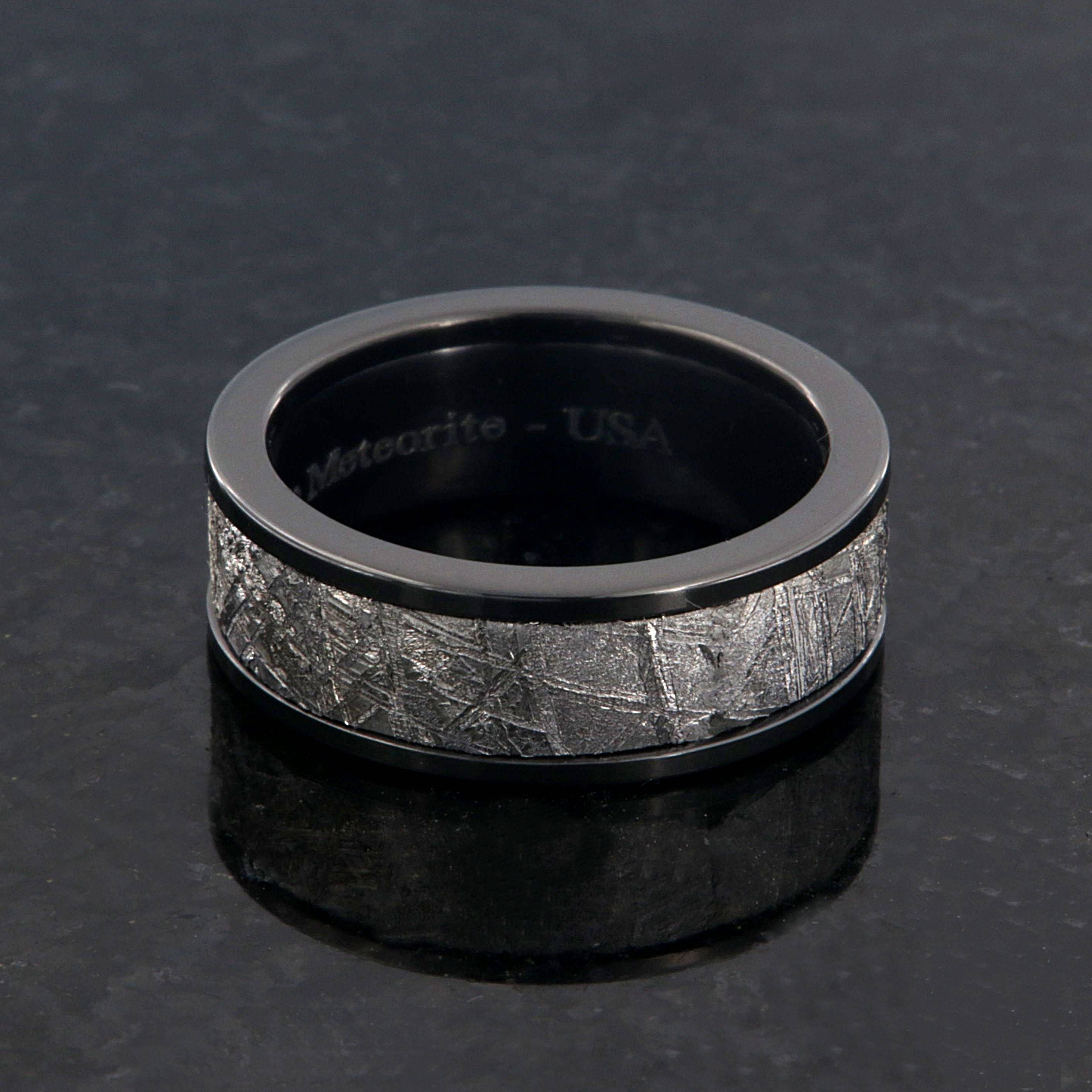
7mm Black Zirconium Gibeon Meteorite Ring
Gibeon Meteorite Ironwood Ring
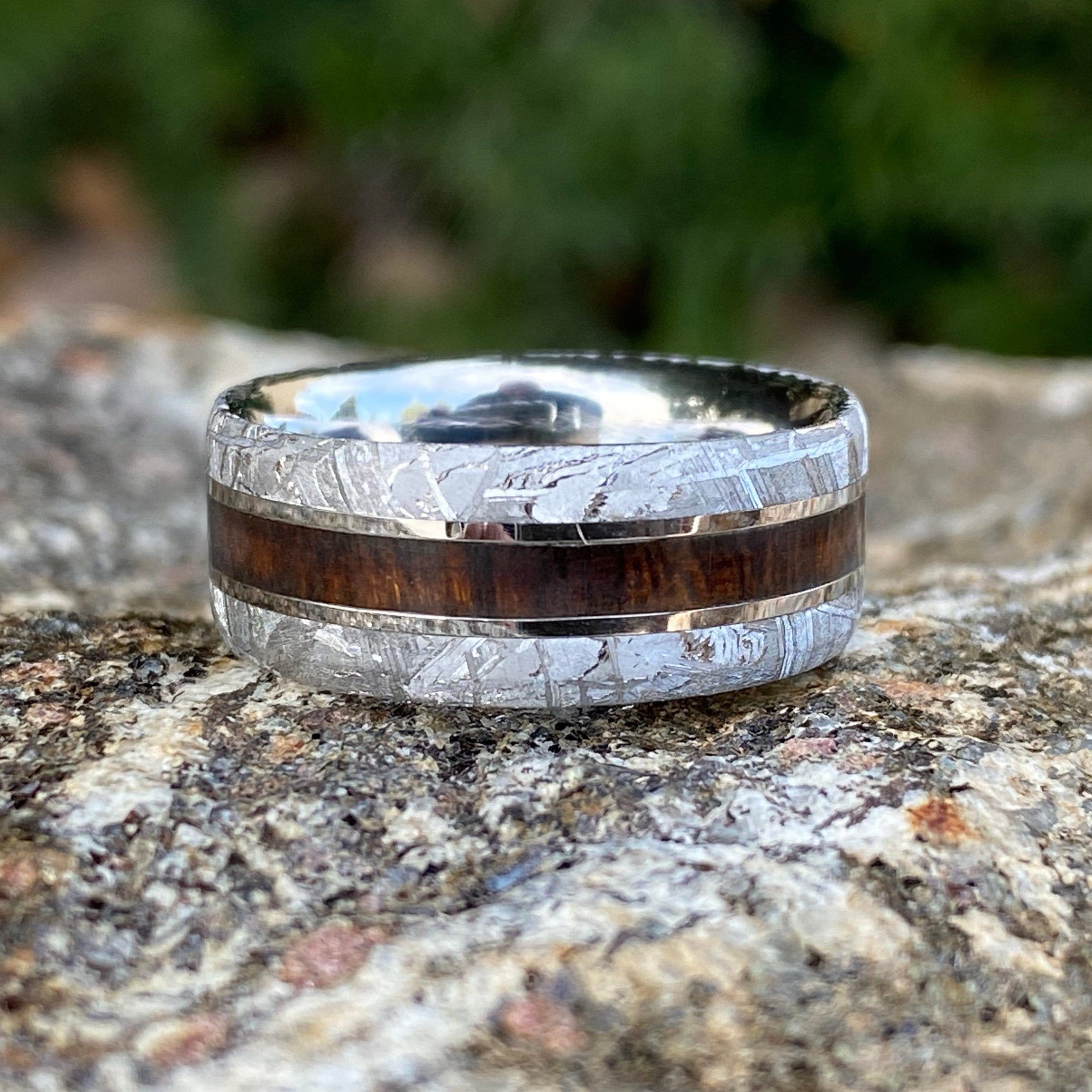
An ironwood core wrapped in Gibeon meteorite, actual fragments from outer space. The Widmanstätten pattern etched across the meteorite surface is nature’s own fingerprint, formed over billions of years as iron and nickel crystals cooled in the void. No two sections of Gibeon meteorite look the same, so the ring your partner wears exists nowhere else on earth.
The combination of ironwood and meteorite gives this band real weight, visually and physically. It reads masculine without being blunt about it. The wood grain running beneath the metallic surface softens what could otherwise be a very stark piece, and the contrast between organic and cosmic materials is genuinely striking in a way that most wedding bands simply are not.
Gibeon meteorite fell over Namibia thousands of years ago and has been prized by jewelers for its rarity and its patterning since the 19th century. Wearing it on your hand every day is a strange and satisfying thought. If your partner is the kind of person who finds conventional jewelry a bit dull, a ring built from ironwood and billion-year-old space metal is a fairly convincing argument for something better.
Gibeon Meteorite Matching Bands

Meteorite And White-Gold Damascus Ring
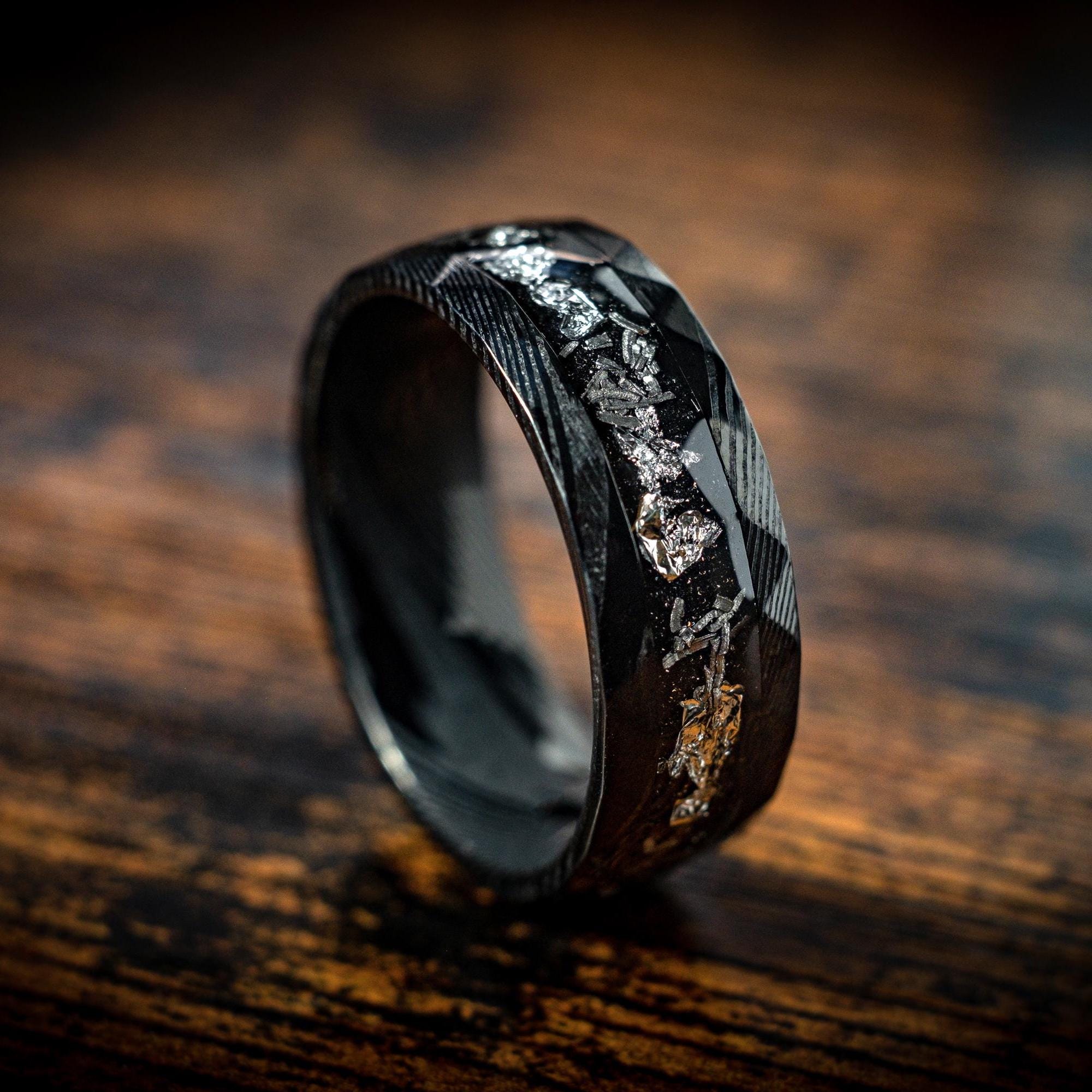
Meteorite fragments set into white-gold Damascus steel: this ring is exactly what it sounds like, and that’s the whole point. The Damascus core gives each band a distinct swirl pattern, so no two are identical. Not a marketing line. Actual metallurgy. The meteorite inlay is older than the planet you’re standing on, which puts most jewelry in a fairly humbling context.
The construction pairs Damascus steel with white gold, balancing the industrial with the precious. Because the Damascus patterning forms naturally during the forging process, the ring one person receives will never match another. That kind of individuality is baked into the material, not applied after the fact.
If you’re going to mark something permanent, cosmic debris and warrior steel make a reasonable argument. This is the ring for someone who finds “timeless” too modest a word and wants their band to have genuinely traveled through space before landing on their finger. Classier than an alien invasion, and considerably more romantic.
Meteorite Opal Ring Set
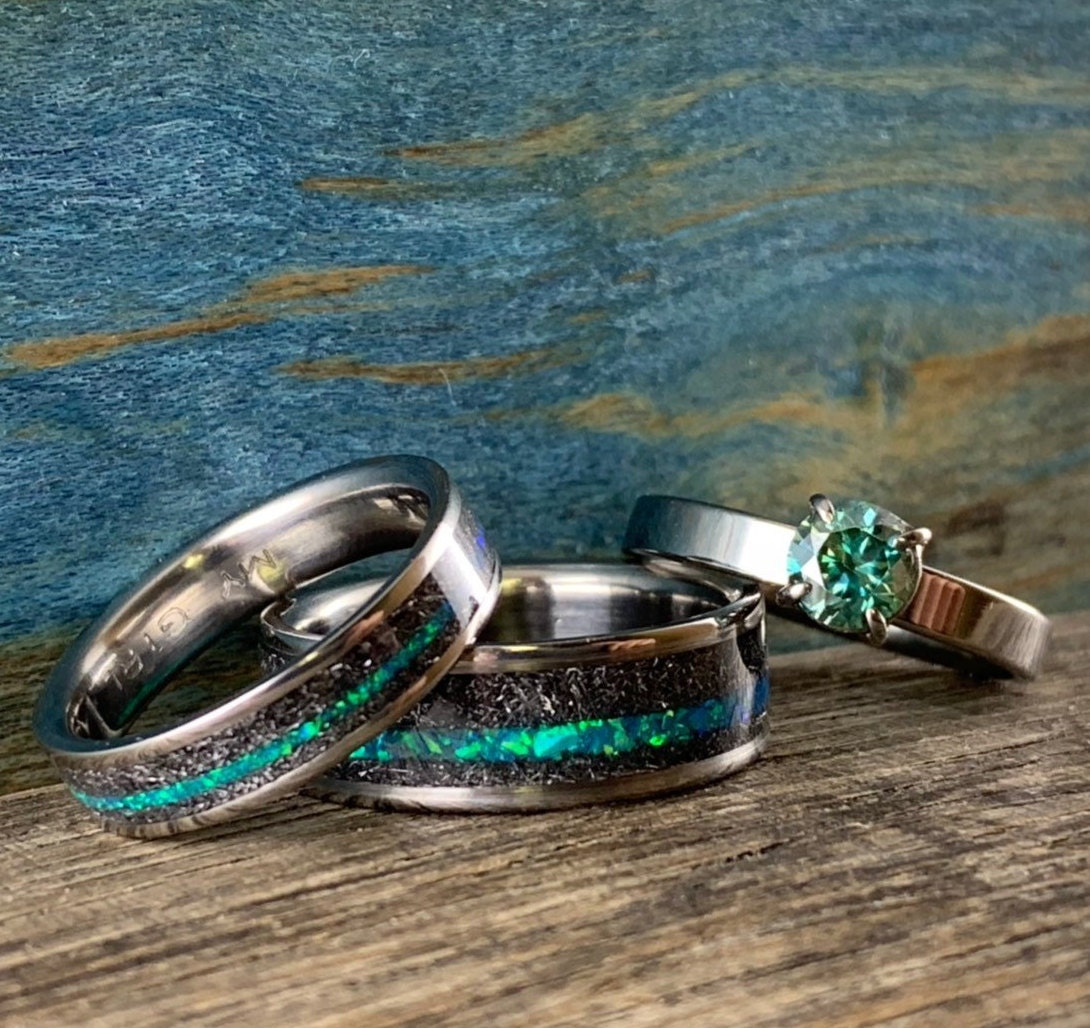
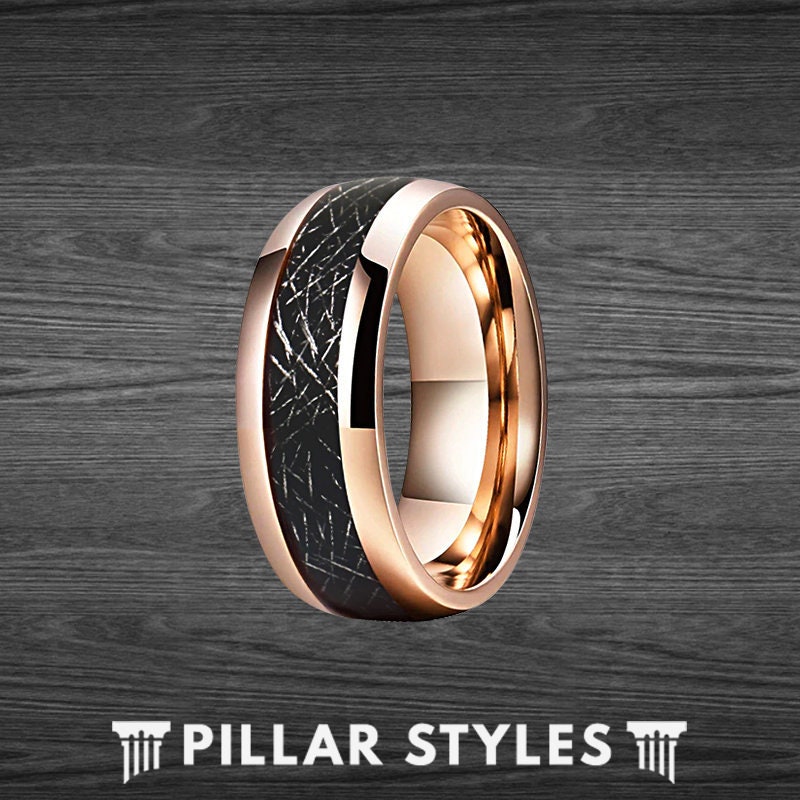
Rose Gold Tungsten Meteorite Ring
Whiskey Barrel Oak Meteorite Band
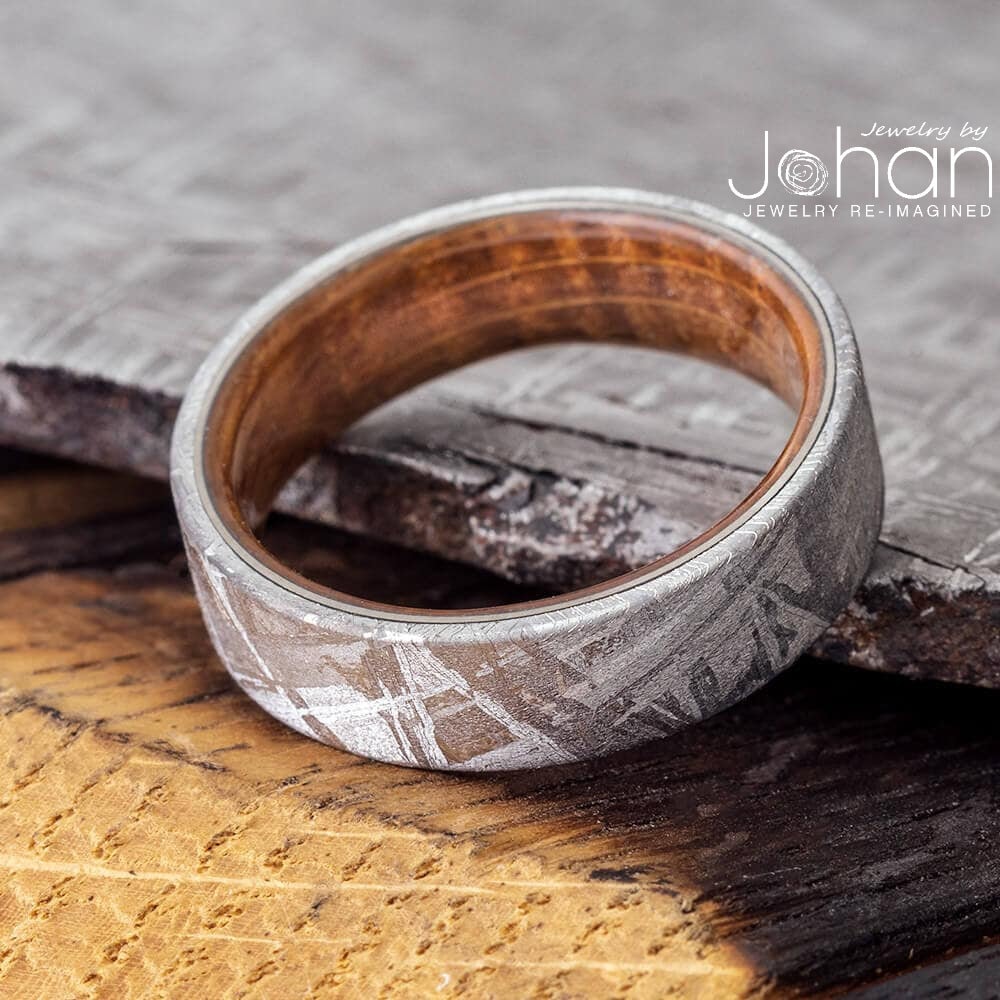
Genuine whiskey barrel oak and meteorite, combined in a single band. The oak comes from actual charred barrels, so the wood carries that darkened, smoky grain you’d expect from something that spent years holding bourbon. The meteorite slice sits alongside it with a texture that looks exactly like what it is: a fragment of something that traveled a very long distance to end up on your finger.
The contrast between the two materials does most of the talking. Warm, earthbound wood against cold, extraterrestrial metal. It reads as rugged without trying too hard, and the craftsmanship keeps it from tipping into novelty territory. This is a ring people will actually ask about.
If you want a wedding band with a backstory that goes beyond “I picked it up at the mall,” this one covers both ends of the spectrum. Space debris and bourbon heritage, on one hand, worn daily. The materials are as genuine as the story behind them.
Domed Titanium Meteorite Ring

The meteorite-pattern inlay running through this domed titanium band isn’t just cosmic styling — it’s actual Gibeon meteorite. As in: exploded in space, crash-landed in Namibia, now orbiting your boyfriend’s finger. No big deal.
Wrapped in lightweight, aircraft-grade titanium, this ring balances out the drama of extraterrestrial iron with a domed, comfort-fit shape that won’t fight his knuckles. It’s both sci-fi and low-key, which is probably how he sees himself when he’s loading the dishwasher in his NASA sweatshirt. And unlike stars that burn out, this one won’t tarnish, warp, or scare easily.
So if you’re aiming for a ring that’s rare, durable, and just the right amount of nerdy, you’ve landed in the right galaxy. No diamonds. No fuss. Just a piece of the universe saying “I do.”
Hammered Tungsten Meteorite Ring
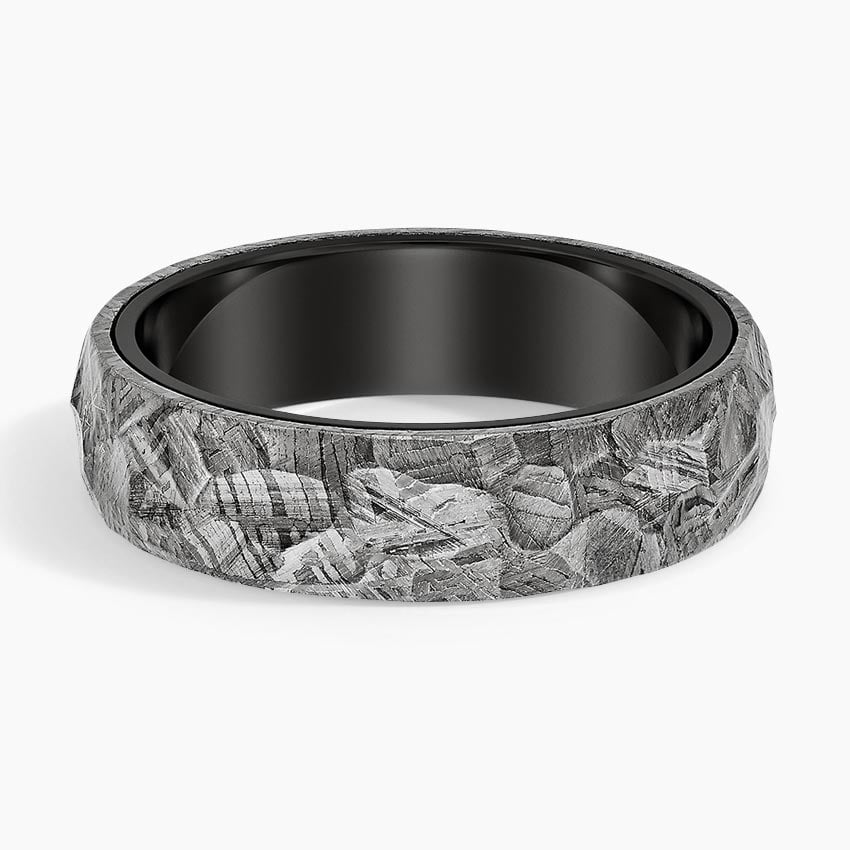
Hammered tungsten and actual meteorite — as in, forged-from-a-space-rock meteorite. The surface texture is no accident either; it’s been hand-hammered to guarantee zero resemblance to anything you’ve seen at a mall jewelry counter.
This is the ring equivalent of saying, “Yeah, I took vows — but I still like cool stuff.” It’s unapologetically tough (thank you, tungsten), but it also has a surprising sense of depth. The genuine meteorite inlay adds a literal cosmic layer to an already solid commitment. Science meets symbolism, and you get bragging rights forever.
So if the guy you’re marrying is the sort who’d absolutely appreciate that his wedding band includes part of a celestial body that’s older than your hometown—and sturdier than your relationship arguments—this one nails it. It’s not flashy, it’s not precious. It’s just endlessly solid, stylishly rugged, and quietly profound. All the things you’re betting on in him, basically.
Forged Damascus Meteorite Ring
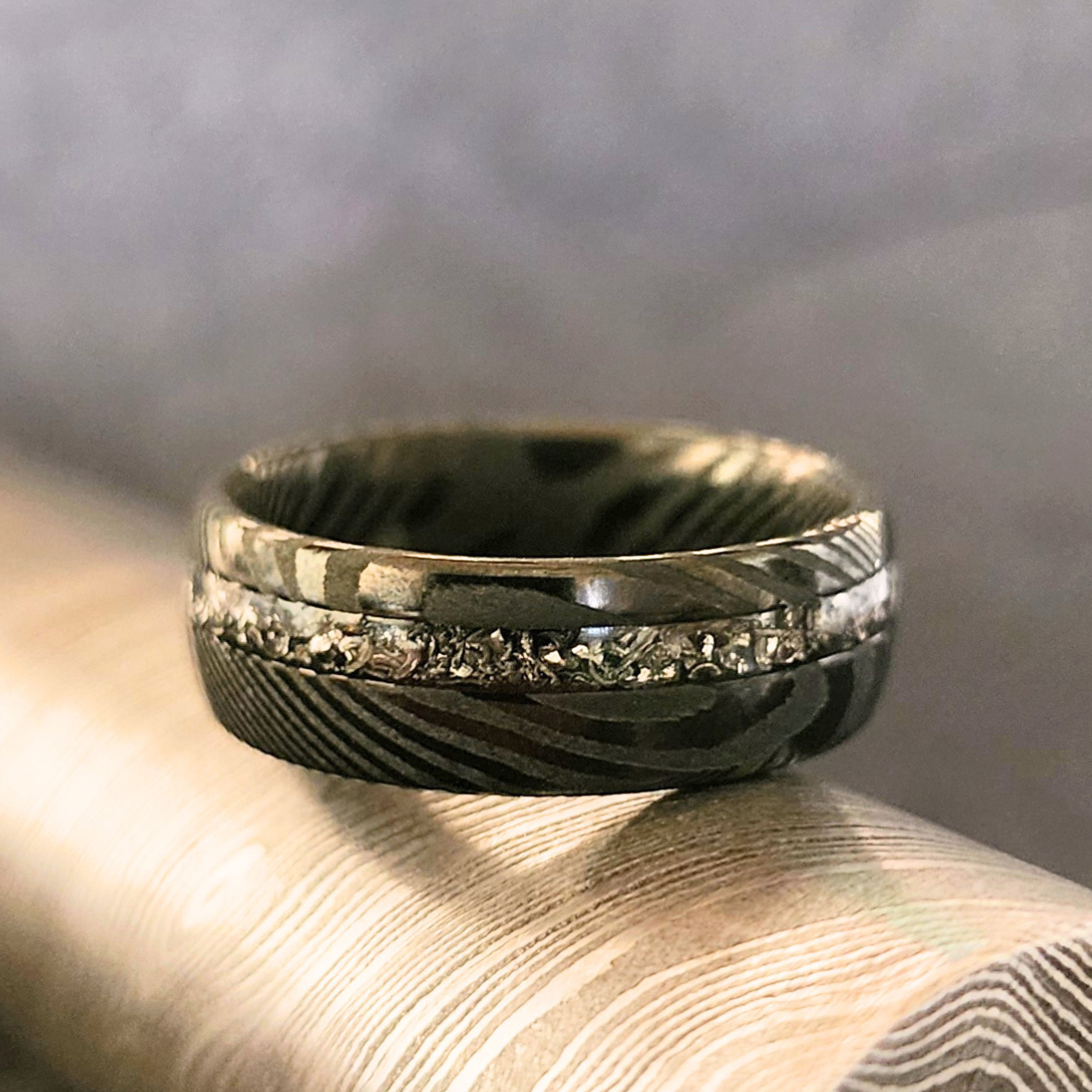
Forged from actual chunks of meteorite and patterned Damascus steel, this ring didn’t just fall from the sky — but part of it did. The meteorite used in these is Muonionalusta, over four billion years old, which means yes, it’s technically older than the dinosaurs — and your marriage. Barely.
Each band is handmade, with visible Damascus waves running through steel layered like geological time. The meteorite strip adds a silvery shimmer that’s subtler than diamonds but roughly a thousand times cooler. It’s the kind of ring that quietly flexes: rare metal, forged by fire, worn without fuss.
If your partner is the type who’d rather get a space rock than roses, this is your 11th anniversary win. Bonus points if he’s already mentioned his childhood astronaut phase. Or his adult one. Either way, it’s steel — with extra space cred.
Main Types Of Meteorites
We’ve done a little homework about meteorite wedding bands, and there are definitely things you should know in order to make an informed buying decision.
Not just any ol’ type of meteor makes up a quality wedding band. It takes a certain classification. Let’s have a quick science lesson on the main types of meteorites:
Stony Meteorites
These are made up of mostly silica (here on Earth, you’ll find silica most commonly in quartz), and are the most common meteorites.
Iron-Nickel Meteorites
Considerably less common than stony meteorites, metallic meteorites represent less than 10% of what comes to Earth. These are made almost exclusively from nickel-iron, but also sometimes contain small amounts of sulphide and carbide minerals.
Stony-Metallic Meteorites
There are two types of stony-metallic meteorites: pallasites and mesosiderites.
Pallasite meteors are widely coveted for their beauty, as they contain a form of magnesium-iron silicate called olivine embedded within the metal.
Olivine is gorgeous when polished, making stony-metallic meteorites the most coveted when it comes to jewelry making.
While shopping around, you’ll probably notice Gibeon and Seymchan meteorites are the most commonly found in jewelry (made from metallic meteorites). These are chosen for their reasonable availability, and sturdiness. They’ll resist rust better than other more iron-heavy metals as well.
Real Meteorite vs Artificial
There are a few ways you can tell the difference between real meteorite, and artificial:
- The first (and most obvious) way to tell if a meteorite wedding band is real is to make sure it comes with a certificate of authenticity.
- Acids such as nitric acid and sulfuric acid will easily damage genuine meteorite. Not that we’re advocating that you put your ring to the test this way, but it’s good to know just in case.
- Real meteorite is magnetic because of it’s high metal content. If your ring isn’t attracted by a magnet, it’s probably not real meteorite.
- Meteorite rusts easily because of it’s high iron content. Of course, this doesn’t mean that some imitation rings don’t rust either, but it’s a hallmark of a real meteorite ring.
Pros And Cons
As with every major important purchase, you need to know the pros and cons behind purchasing a meteorite wedding band. After all, this is going to be forever.
Pros
- Unique and modern, each ring is different and really cool
- Super symbolic beyond the traditional diamond
- Surprisingly reasonably priced compared with other materials
- Works well with others (metals)
Cons
- Due to their high iron content, they can be prone to rust
- They can be pretty complicated to care for, including requiring intermittent re-etching to remove rust and reveal its natural pattern again
- The selection of styles is limited compared to traditional bands
A Final Word On Meteorite Wedding Bands
If you’re looking for a wedding band that is really different and makes a statement, a meteorite ring does just that. Because of the nature of the materials, no two pieces are alike. Giving the one you love a ring that was made just for them, can never be replicated, and comes from the far reaches of the galaxy, it doesn’t get much more romantic than that!