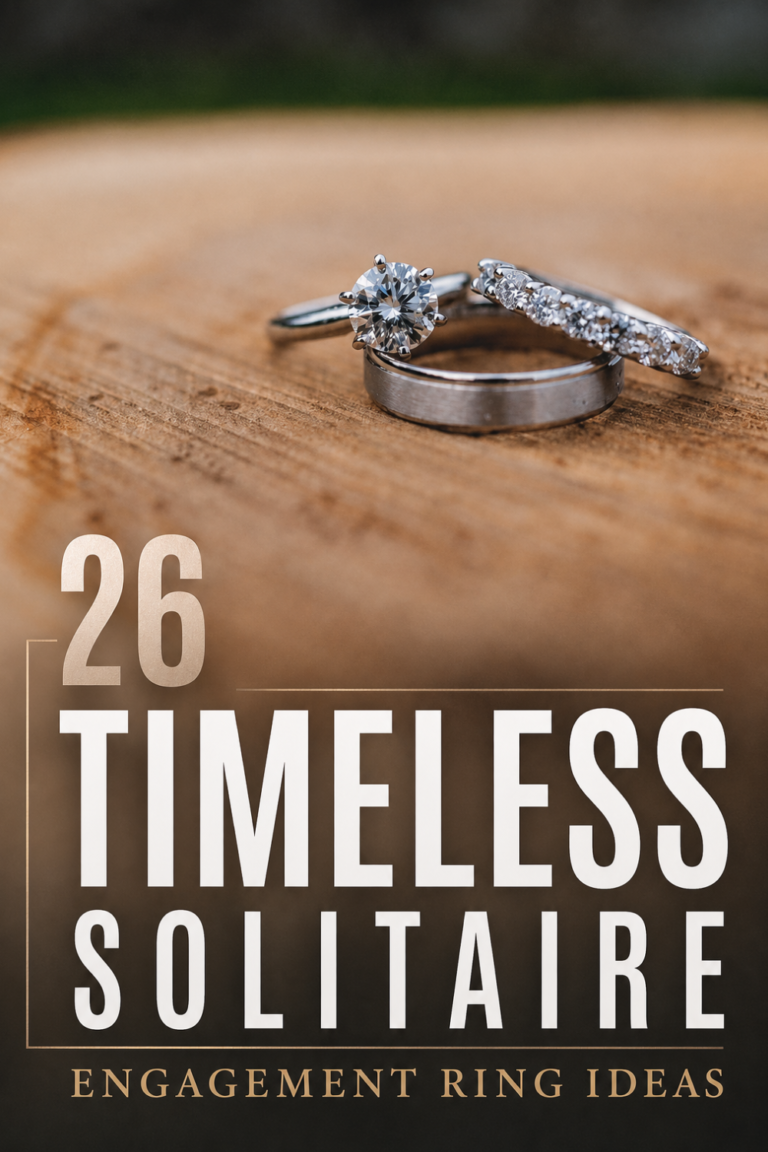
A solitaire engagement ring narrows things down fast: one stone, one setting, nothing competing with the diamond. Which means the cut, the prong count, and the metal are the three decisions you actually need to make before anything else. Round brilliant is the default for a reason, but it’s not the only option that works.
Whether you’re leaning toward a classic round, a more elongated oval, the sharp geometry of a princess cut, or the dramatic facets of a radiant, we’ve pulled real solitaires from real L&L weddings to show you each style in actual use. Click through any link to see the full wedding. For even more inspiration, browse our Real Weddings directory.
Our Favorite Solitaire Engagement Rings
First up: solitaire engagement rings spotted on real L&L weddings. Click any link to see the full day. Scroll further for shoppable options.
Four-Prong Round Brilliant Solitaire
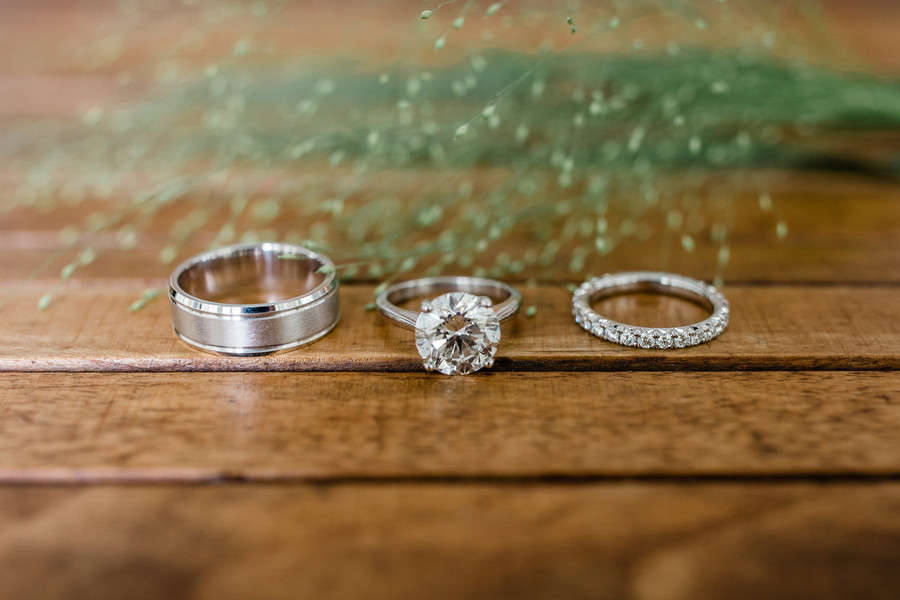
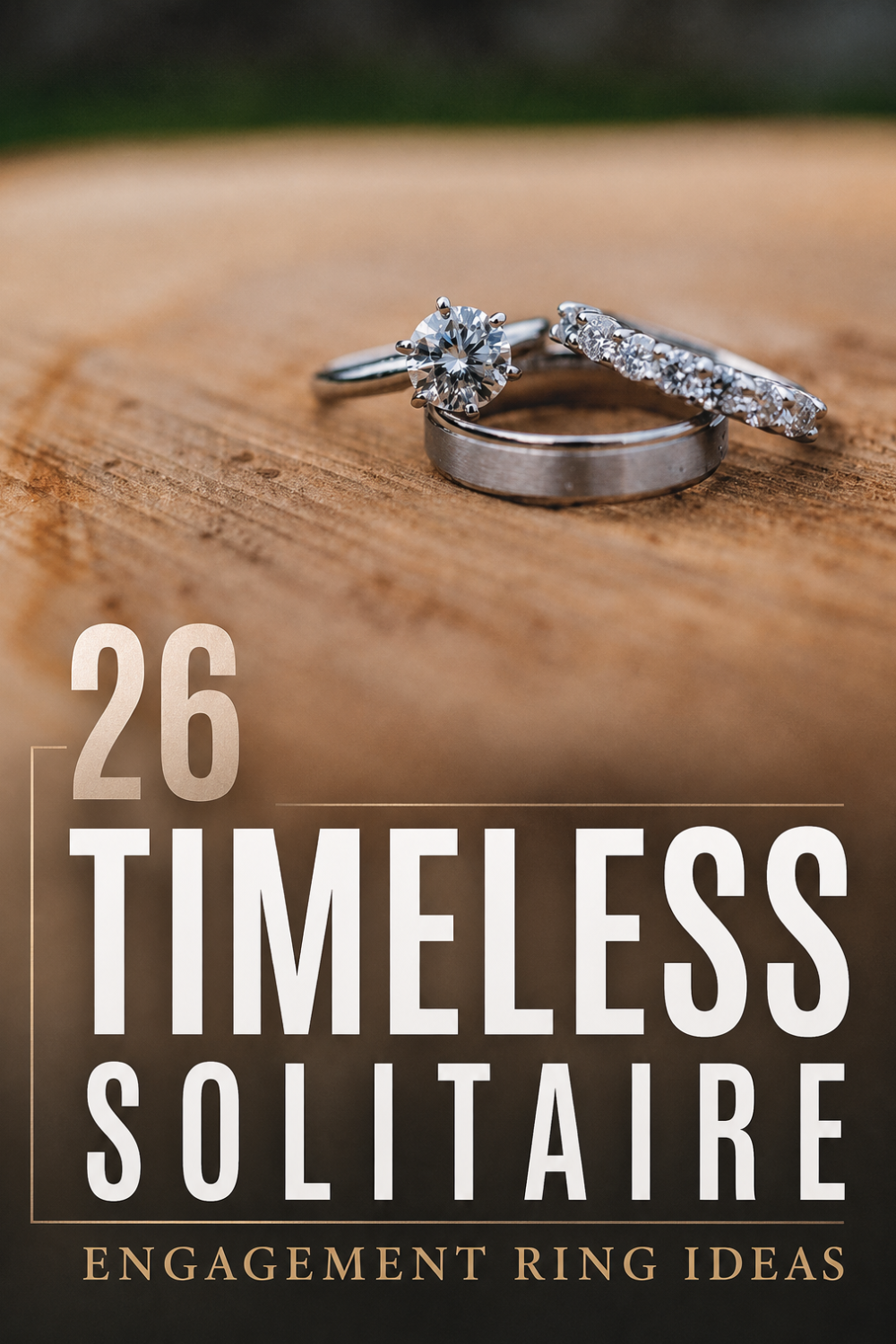
A round brilliant in a four-prong platinum setting with a plain band, photographed on wood with Sarah’s diamond eternity band and Rich’s men’s band alongside it. Nothing competing with the stone here. The four-prong setting leaves more of the diamond’s girdle exposed than a six-prong, and the plain shank means all the visual weight sits on the center stone, exactly where it should.
See Sarah and Rich’s Maine Island Wedding →
Radiant-Cut Solitaire in Yellow Gold

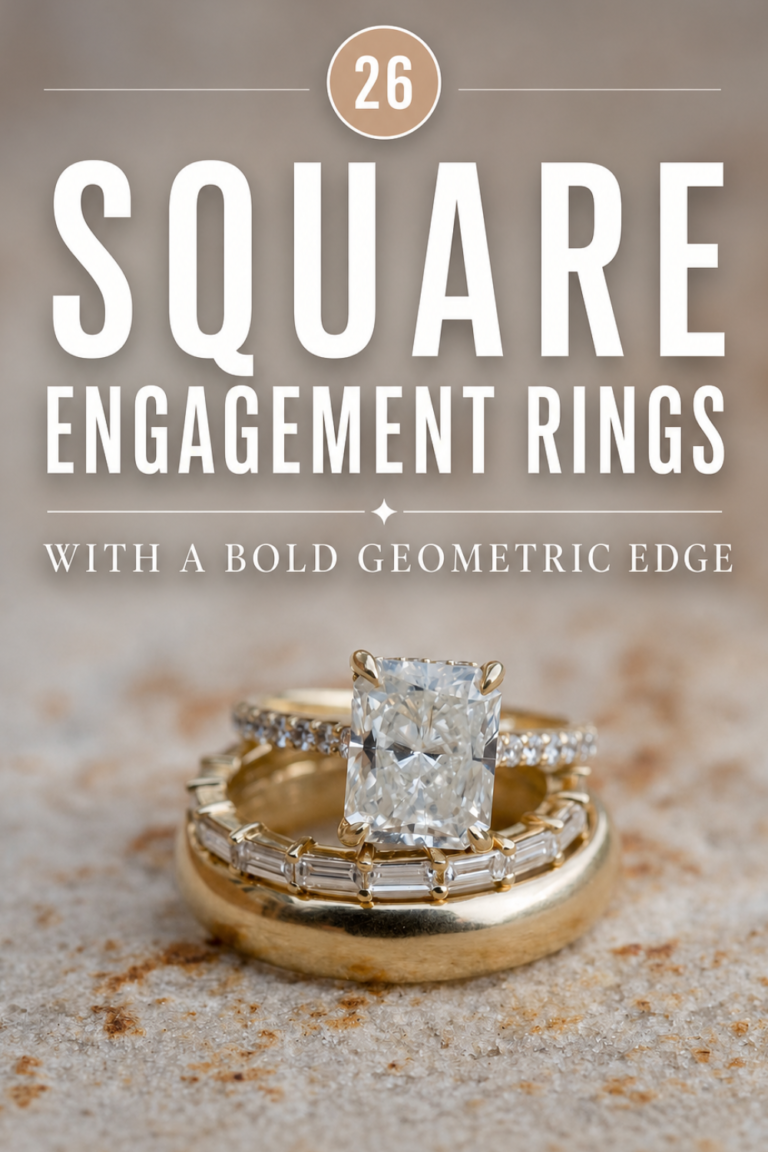
The radiant cut is what you get when a princess cut and a round brilliant cross-breed: a rectangular body with cut corners, and a facet pattern that produces serious sparkle. Elizabeth’s ring shows it in yellow gold, which pairs well with the cut’s slightly warmer diamond since the warm metal echoes rather than fights it. Stacked here with a diamond eternity band and Ken’s band, but the center stone is unmistakable.
See Elizabeth and Ken’s Vail Wedding →
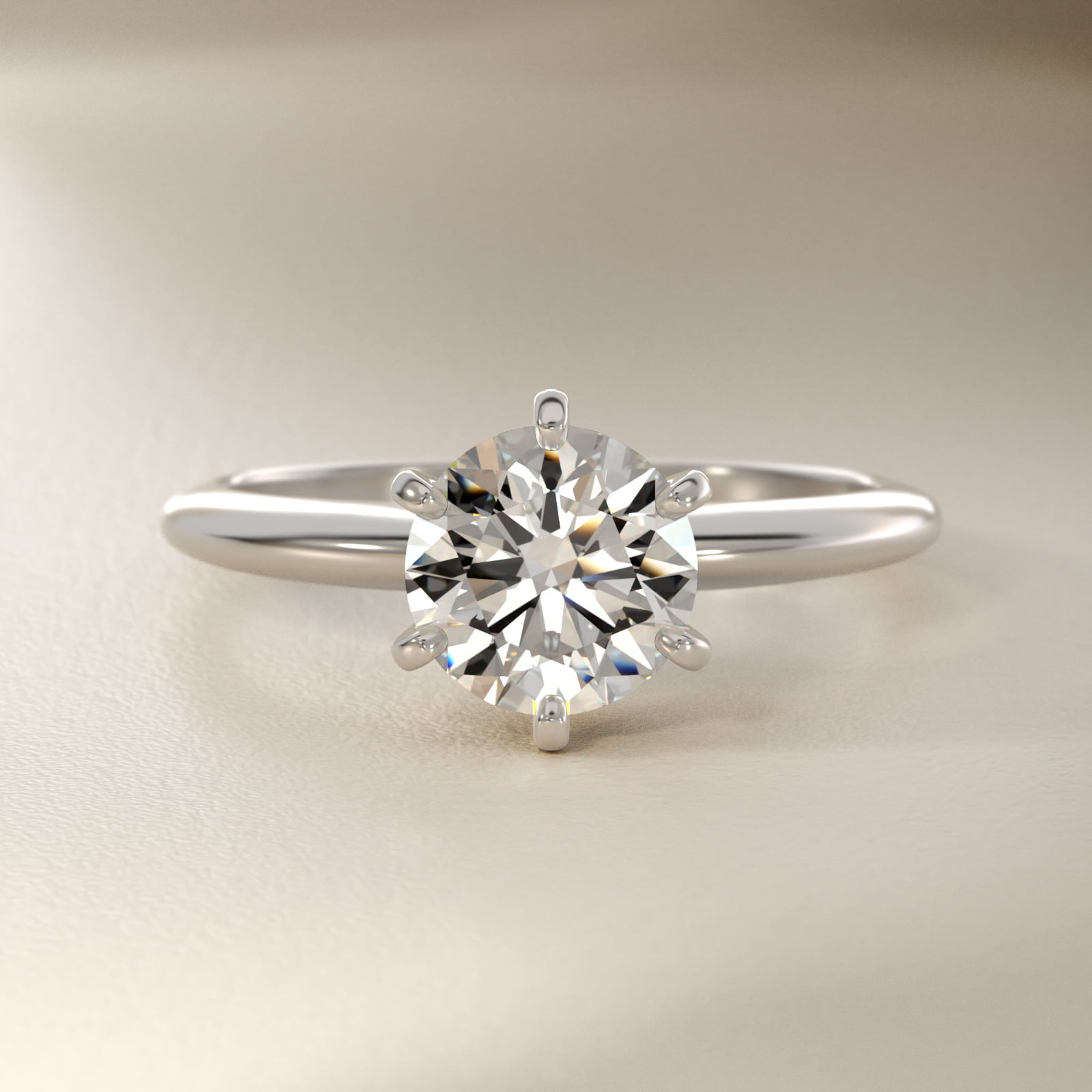
Six-Prong Round Brilliant Solitaire

The six-prong Tiffany-style setting has been the reference point for round brilliant solitaires for over a century, and this shot shows you exactly why it holds up. The prongs hold the diamond high and let light in from underneath, which is a large part of why the stone sparkles the way it does. Photographed on wood with a diamond eternity band alongside it, the round brilliant’s symmetry is clear from above: six evenly spaced prongs, a perfectly round stone, no ambiguity.
See Alicia’s New Hampshire Backyard Wedding →
Round Brilliant in a Blush Velvet Ring Box
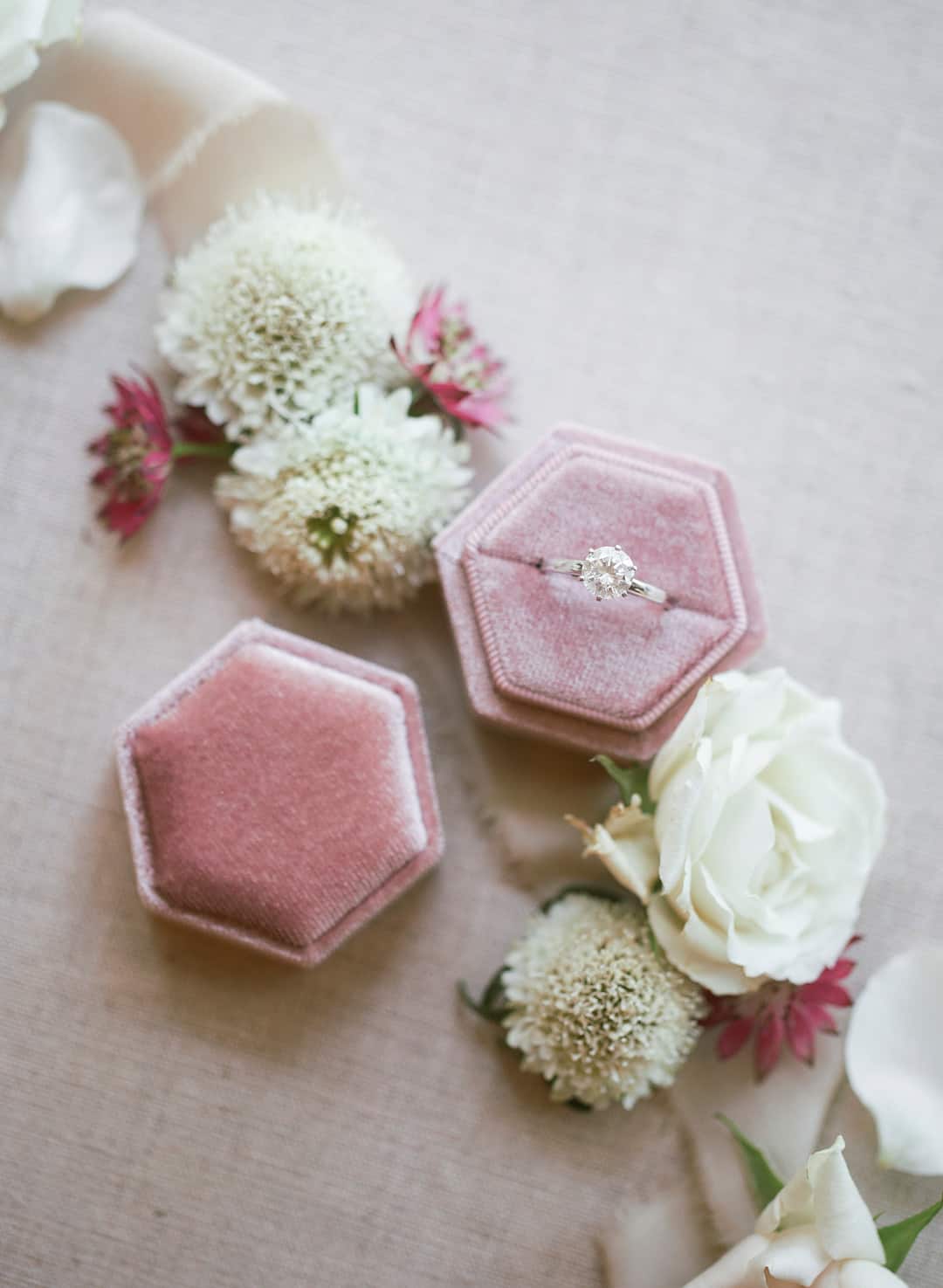
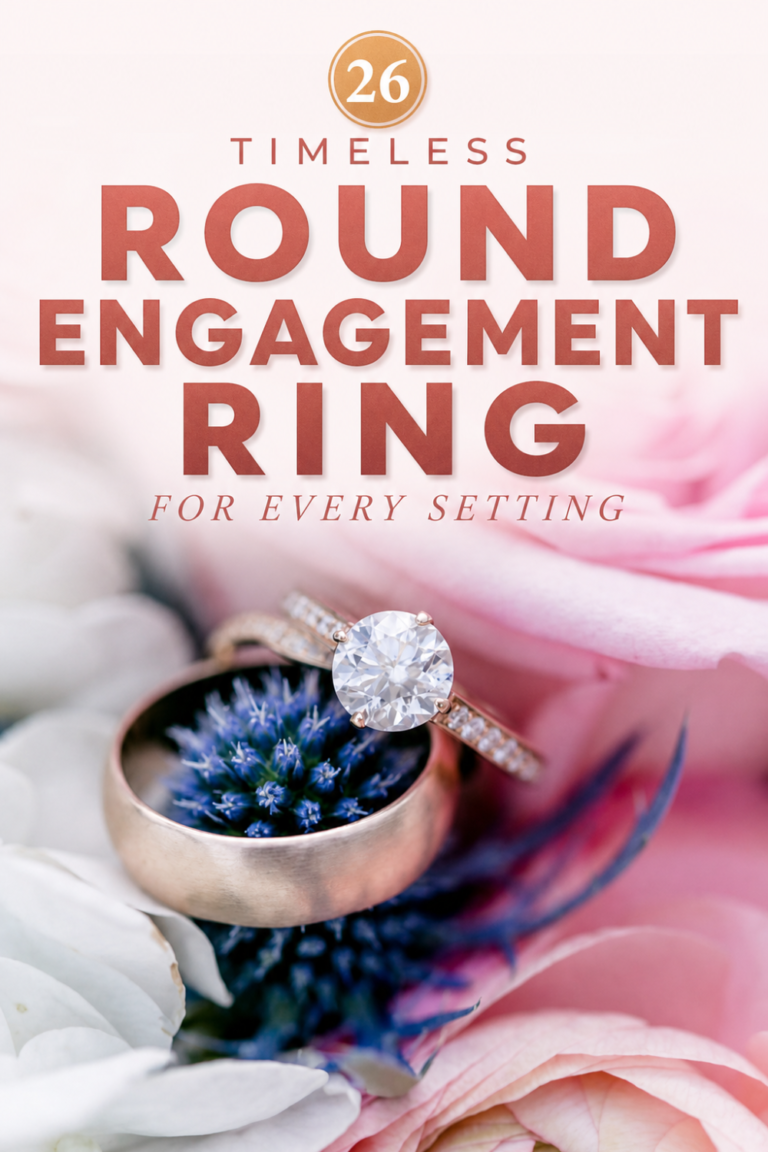
Alicia’s round brilliant sits in a blush hexagonal velvet box surrounded by white and blush garden roses. The stone is set in a thin platinum prong setting, and the blush velvet does it no disservice. This is also a good reference for anyone trying to visualize what a classic round brilliant looks like from directly above: the facet pattern, the crown proportion, the way the stone fills the box without overwhelming it.
See Alicia and Gary’s California Country Club Wedding →
Round Brilliant on a Fuchsia Peony

White diamond against deep fuchsia peony: the contrast makes the stone look impossibly bright. Maggie’s round brilliant sits in a warm gold setting with a matching eternity band, both resting on a peony from her bouquet. Vivid backdrops like this are a photographer’s shortcut for making a colorless stone read with full presence in a photo, and it works.
See Maggie and Sam’s Memphis Wedding →
Rose Gold Round Brilliant Solitaire

Rose gold brings warmth to a round brilliant without the formality of yellow gold. Kelsey’s solitaire is set in a slim rose gold band, photographed close against Matt’s dark jacket, which gives the ring a clean contrasting background. The prong setting is simple and the stone sits at a comfortable height. If you’re going back and forth on metal color, this is the reference for how rose gold’s specific warmth reads against skin in natural light.
See Kelsey and Matt’s Bay Area Farm Wedding →
Round Brilliant Solitaire on Pink Hydrangeas

Michelle’s round brilliant sits in coral and pink hydrangea petals alongside her wedding stack. The soft flower petals diffuse the background entirely, so the diamond reads sharply against an all-organic backdrop. This kind of shot shows how a round brilliant still commands the frame even when it’s not on a neutral surface — the stone’s facets hold up against color.
See Michelle and Patrick’s Portsmouth Wedding →
Round Brilliant Solitaire in a Cream Velvet Box
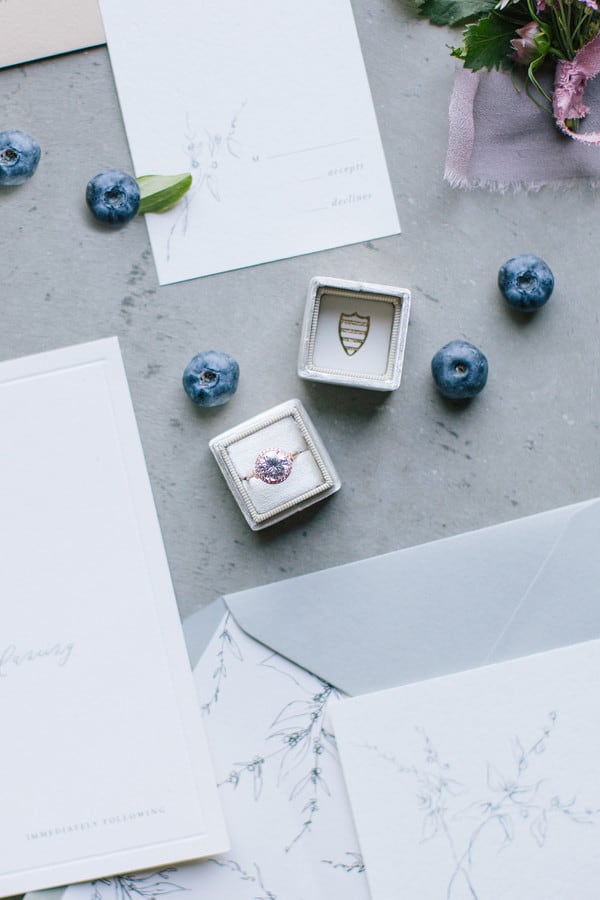
From a Maine harvest styled shoot: a cream velvet ring box, a round brilliant in a thin rose gold setting, and fresh blueberries scattered on a stone surface with clean invitation stationery behind it. The square box keeps the focus entirely on the ring. A good reference for what a delicate rose gold solitaire looks like when photographed with intention rather than impulse.
See this Maine Harvest Styled Shoot →
Round Brilliant Solitaire on a Blush Peony

Maggie’s round brilliant in a thin silver setting rests on a blush peony from her bouquet, with coral and yellow roses at the edges. The ring is simple and the stone is the point: the pale pink petal makes a soft neutral backdrop that still has more visual interest than a tabletop. A good example of how a classic solitaire holds its own in a bright, colorful setting.
See Maggie and Mark’s Wedgewood Wedding →
Round Brilliant Solitaire with a Plain Gold Band
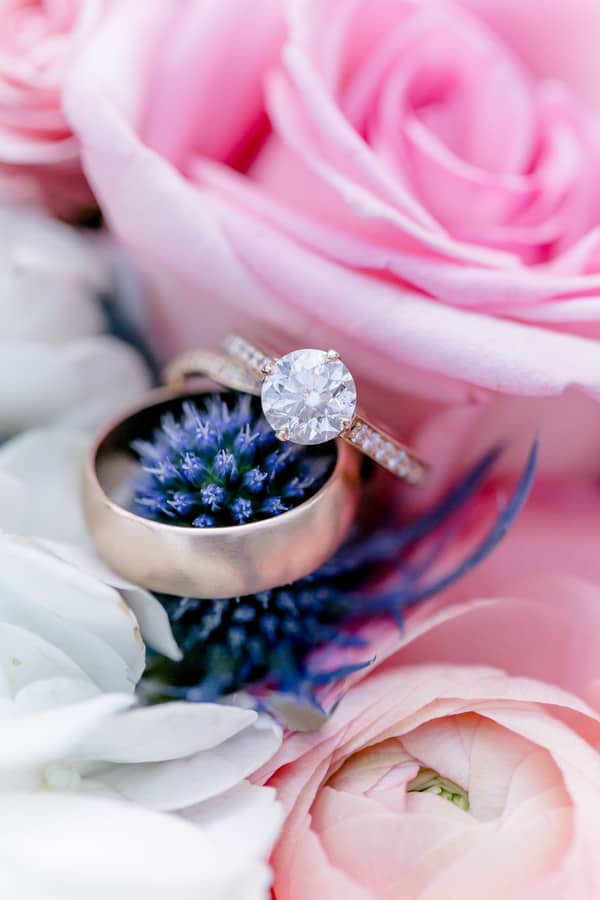
Becca’s round brilliant solitaire in a warm gold setting rests on a cluster of soft pink roses alongside Sean’s plain gold band. The two-ring pairing shows the engagement ring without the visual competition of a full wedding stack. The warm metal and the soft roses read as cohesive without being matchy, and the center stone still holds its own as the focal point.
See Becca and Sean’s Virginia Wedding →
Oval-Cut Solitaire in Rose Gold

Mindi’s oval-cut solitaire sits in a delicate rose gold band, stacked with a rose gold eternity band and additional bands in this portrait shot. The oval cut’s elongated shape is clear from this angle: noticeably longer than a round stone of the same carat weight, and that length covers more finger surface, which is why oval solitaires tend to read as larger than they actually are. The rose gold softens the look without making it fussy.
See Mindi and Jay’s Colorado Mountain Wedding →
Princess-Cut Solitaire in White Gold

The princess cut is square with sharp corners and a facet pattern that produces strong light return for a fancy shape. Amy’s ring sits in a clean white gold four-prong setting, photographed in a flat-lay on a printed wedding invitation with a rose blossom and eucalyptus leaf alongside the full ring stack. The square geometry of the princess cut is clearest when photographed from directly above, which this shot delivers.
See Amy and Charlie’s Arizona Wedding →
Round Brilliant in a Ring-Within-Ring Portrait
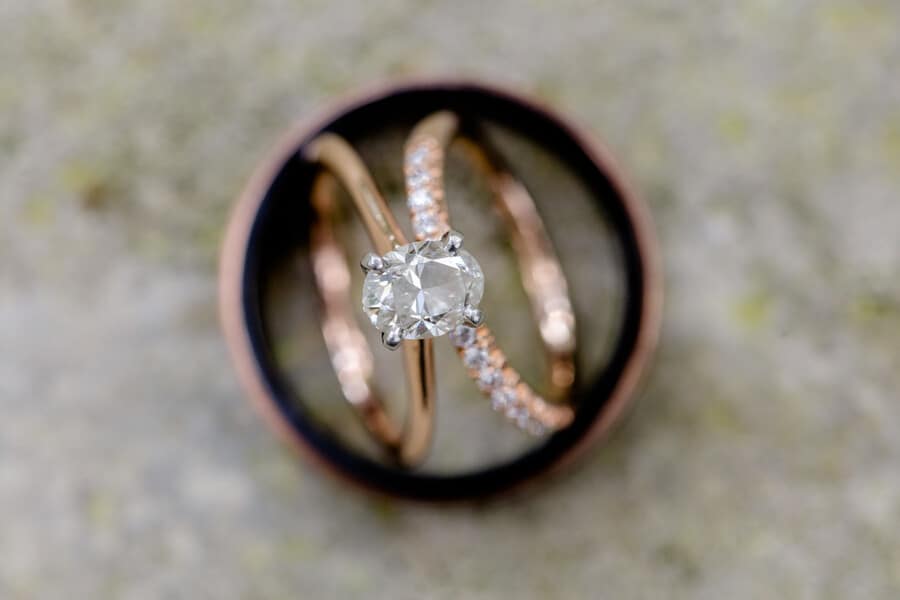
The ring-within-ring portrait shot frames the engagement ring inside the groom’s wider band, with rose gold eternity bands visible in the background. The composition draws the eye directly to the center stone. This framing technique is popular for a reason: placing a smaller ring inside a larger one creates natural, immediate focus. The round brilliant reads clearly from this overhead angle.
See this Austin Spring Wedding →
Round Brilliant Solitaire in a Stacked Ring Portrait
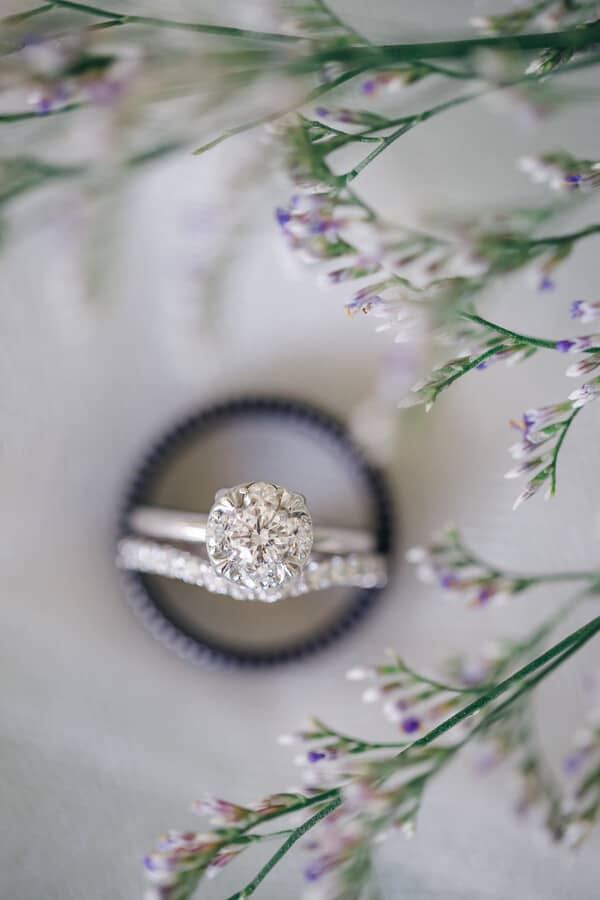
Lydia’s round brilliant solitaire is centered in a stacked ring portrait, the wedding bands arranged around it to frame the composition. The center stone sits in a delicate setting, and from this angle the round brilliant’s symmetry reads cleanly without distraction. Stacked portraits like this are useful for showing how the engagement ring relates visually to the rest of the set.
See Lydia and Josh’s Mountain Wedding →
18K Yellow Gold Platinum Prong Solitaire
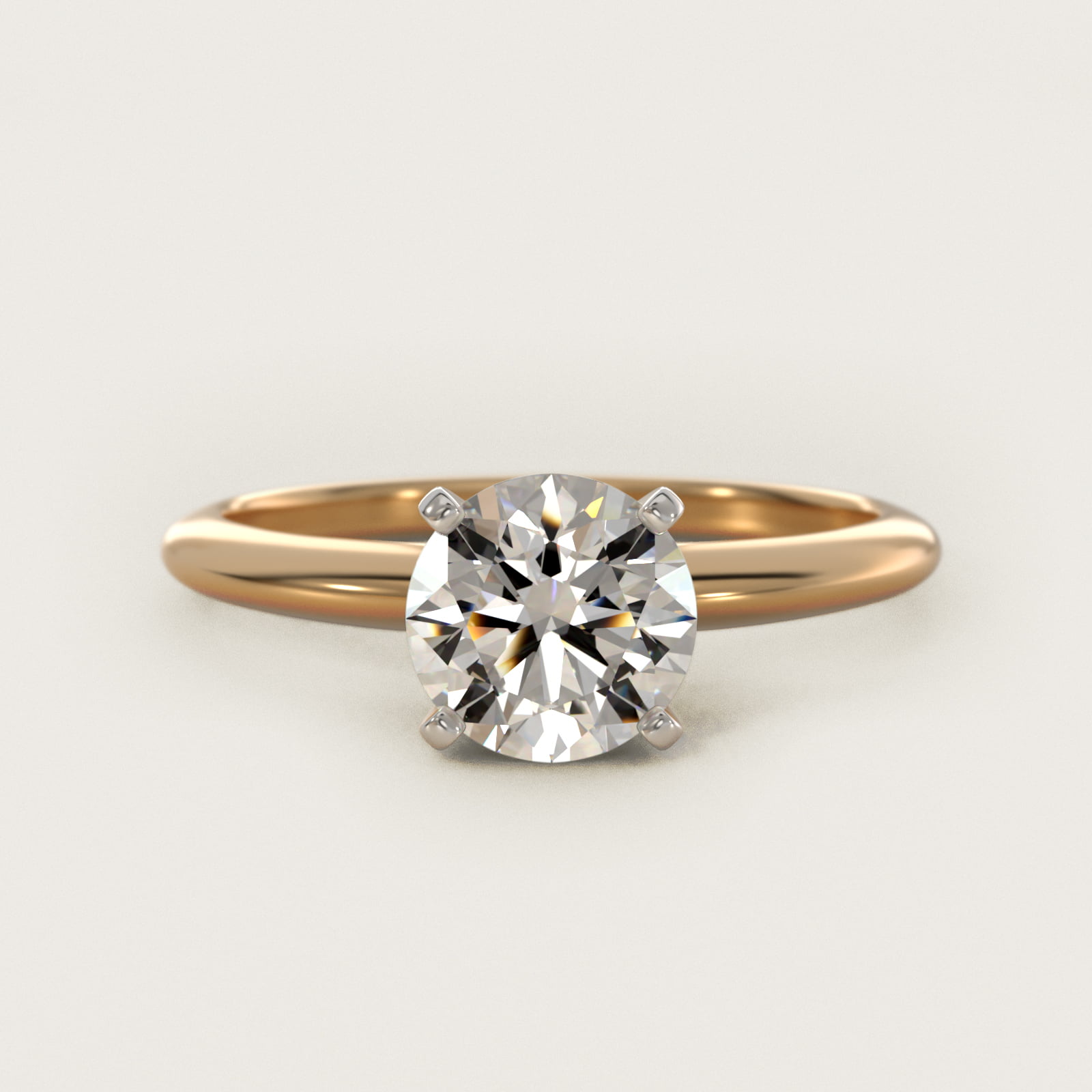
Petite 14k Yellow Gold Solitaire Ring

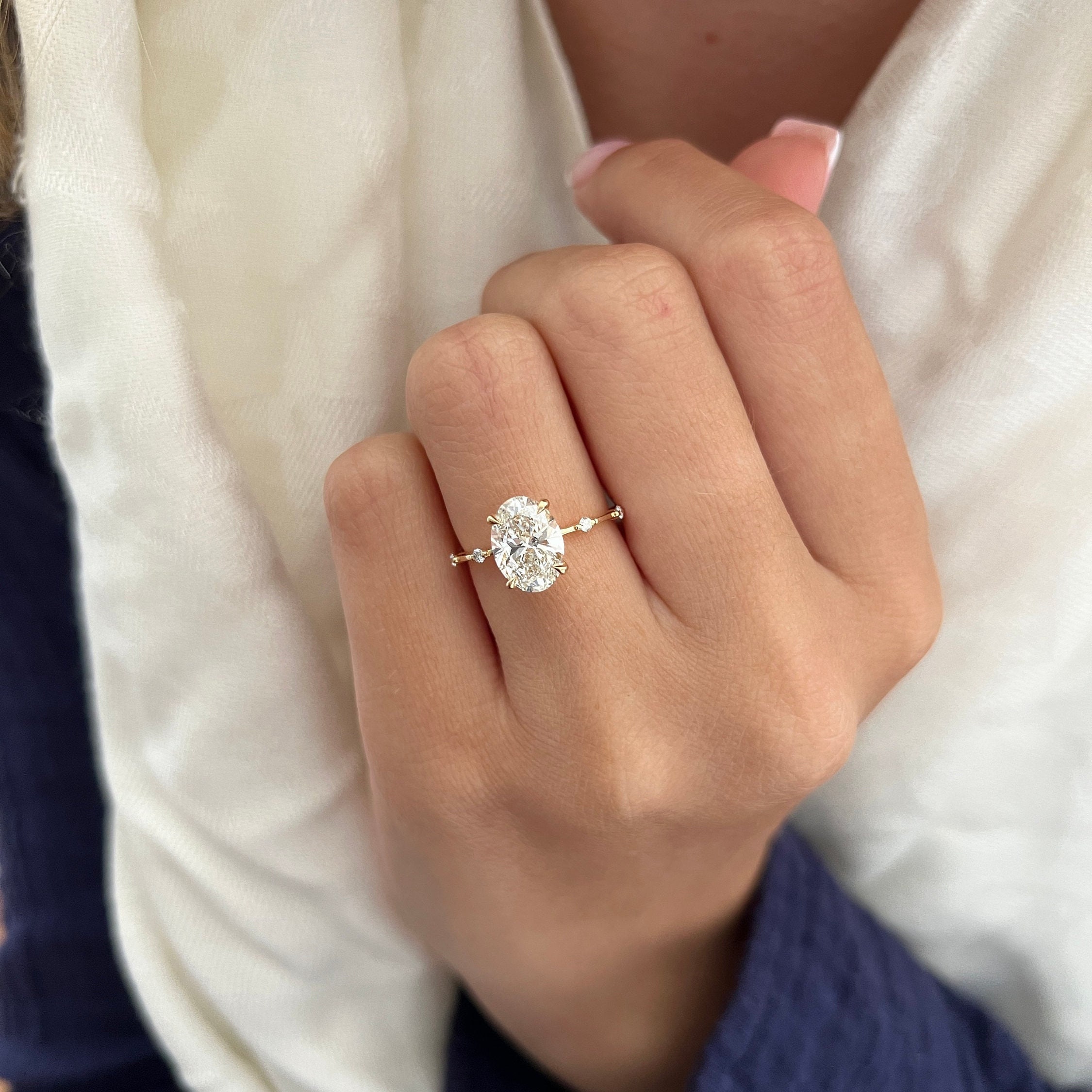
Curved Oval Platinum Ring

Thin, delicate, and yes, surprisingly powerful, the Curved Oval Platinum Ring brings the elegance you didn’t know you needed. Crafted in platinum, this ring isn’t calling attention to itself with blingy distractions. Nope, it’s all about that smooth curve and understated grace.
Imagine the way the soft curve sits comfortably against the skin. That’s right, no poking, prodding, or catching on your favorite cashmere sweater. It’s perfect for the one who wants their jewelry to be as effortless as their style.
The platinum finish whispers luxury while its unique curvature catches the eye just enough. It’s the kind of ring that’ll sit quietly on their finger, but when someone does notice—and they will—it gets the “Ooh, what’s that?” treatment. Not everything has to shout to be heard.
Low Set Marquise Lab Grown Ring
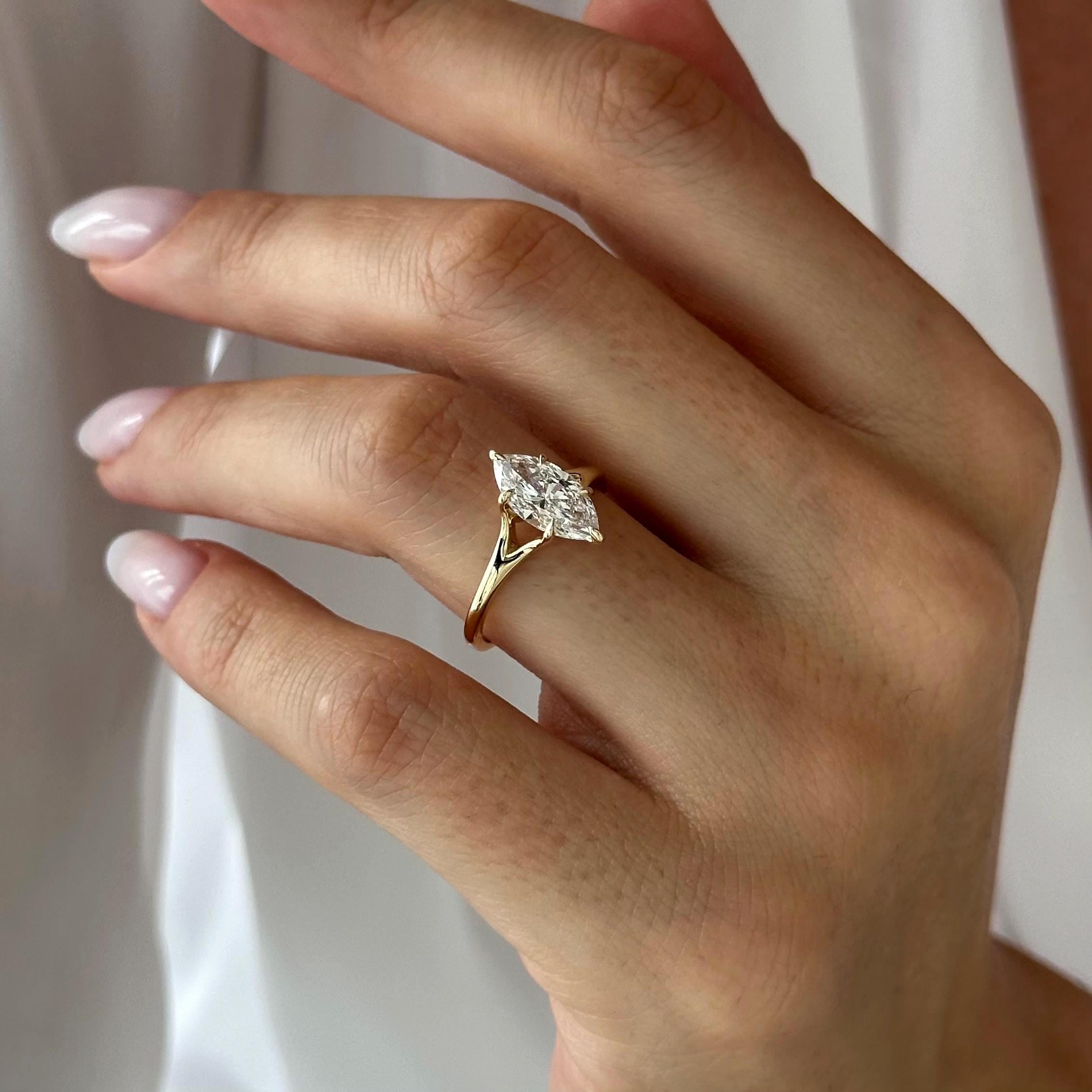
Low set and lovely, this marquise-shaped ring is crafted with a lab-grown diamond that meets modern science with classic elegance. Nestled close to the band, this marquise beauty won’t snag on sweaters or get caught in your hair. Why live in fear of your jewelry?
Lab-grown diamonds are practically the future waving hello, asking why you’re still messing around with mined stones. Same sparkle, less guilt – sounds like a win. That marquise cut elongates the finger, making even a case of keyboard claws look like elegant digits. In a world full of ordinary rings, this one’s not just whispering sophistication – it’s shouting it from the rooftops.
Making a statement with subtlety isn’t easy, but this ring pulls it off like a charm. Pair it with anything, or let it stand alone – it’s versatile enough to play the part you choose. Because in the end, isn’t it nice when your jewelry is as adaptable as you wish you could be?
Marquise Solitaire Cigar Band Ring

The Marquise Solitaire Cigar Band Ring – bold, sleek, and effortlessly sophisticated. This ring’s standout feature is its broad band that juxtaposes the classic marquise cut, creating an unexpected contrast that demands attention. The elongated marquise stone perched on its regal cigar band makes a statement without uttering a peep.
Why does this matter, you ask? A marquise cut is all about maximizing presence, stretching the stone’s brilliance across your finger and giving you that coveted lengthening effect, because who doesn’t want elegant, runway-ready fingers?
In a sea of more-is-more designs, this minimalist powerhouse says more by doing less. It’s for those who understand that sometimes the loudest statement is made in subtlety. Whether teamed with a vintage ensemble or a modern get-up, this ring is a versatile companion. Go on, let this sparkler catch the light—and maybe even a few admiring glances. You deserve jewelry that can keep up with your high-octane life.
Oval Lab Grown Diamond Ring

Platinum Cathedral Oval Engagement Ring

Platinum never looked so dignified. This Cathedral Oval Engagement Ring captures the elegance of old-world architecture with its sweeping arches, effortlessly elevating the central oval diamond. The choice of platinum? A nod to timelessness and strength, because your love deserves a solid foundation without all the fuss.
The cathedral setting isn’t just there for drama—it’s the perfect showcase for the oval center stone, making it look like a masterpiece in a museum. Pair this with a pavé-set band that whispers sparkle without shouting, and you’ve got yourself a ring that catches the light in every room you walk into.
If you’re after a ring that balances classic design with a hint of modern flair, this piece stands as a testament to both style and substance. It’s not just a ring; it’s a statement that says your commitment is as polished as its platinum band.
Platinum Compass Ring

A platinum compass ring that cleverly aligns with the four cardinal points – because why should navigation be reserved for maps? This isn’t just a ring; it’s a conversation starter.
The compass design symbolizes direction and purpose, making it meaningful for anyone at the crossroads of life. Whether it’s a reminder of a shared journey or a personal milestone, this ring subtly captures the essence of seeking one’s true path.
Crafted in durable platinum, it’s the metal’s luster that complements its symbolic weight. Ideal for both style gurus and those who appreciate deeper significance in their accessories. Wear it as a stylish declaration that you know where you’re headed – even if you’re still figuring out the map.
Platinum Oval Engagement Ring

Yellow Gold Lab-Grown Marquise Ring
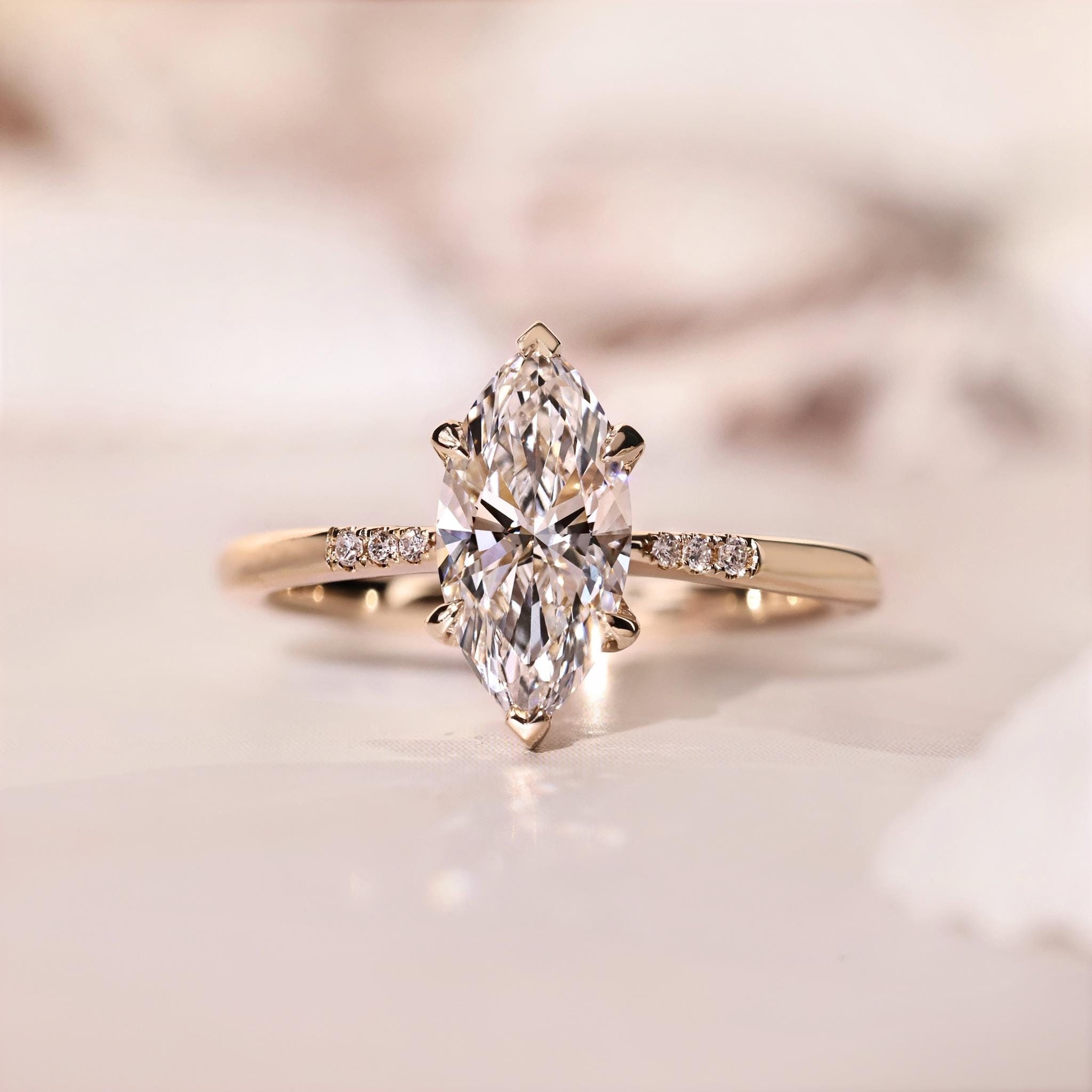
There’s something undeniably sleek about lab-grown diamonds, and this Yellow Gold Lab-Grown Marquise Ring is no exception. With its elongated, organic shape, it takes the unconventional marquise cut and turns it into a bold statement piece. Imagine the light-catching brilliance every time you move your hand – it’s the kind of sparkle that makes you accidentally-on-purpose wave more than usual.
As if being eco-friendly and conflict-free weren’t enough, the yellow gold band gives it that traditional warmth that makes the stone look even brighter. In a world where classic meets contemporary, this ring dances cheekily between both realms. It’s for those who know their style and aren’t afraid to showcase it.
Perfect for anyone wanting to stand out from the pavé-covered crowd, this ring’s unique character makes it a conversation starter. Give it the spotlight it deserves, and let it take your everyday elegance up a notch – effortlessly.
14K Gold Heart Moissanite Ring
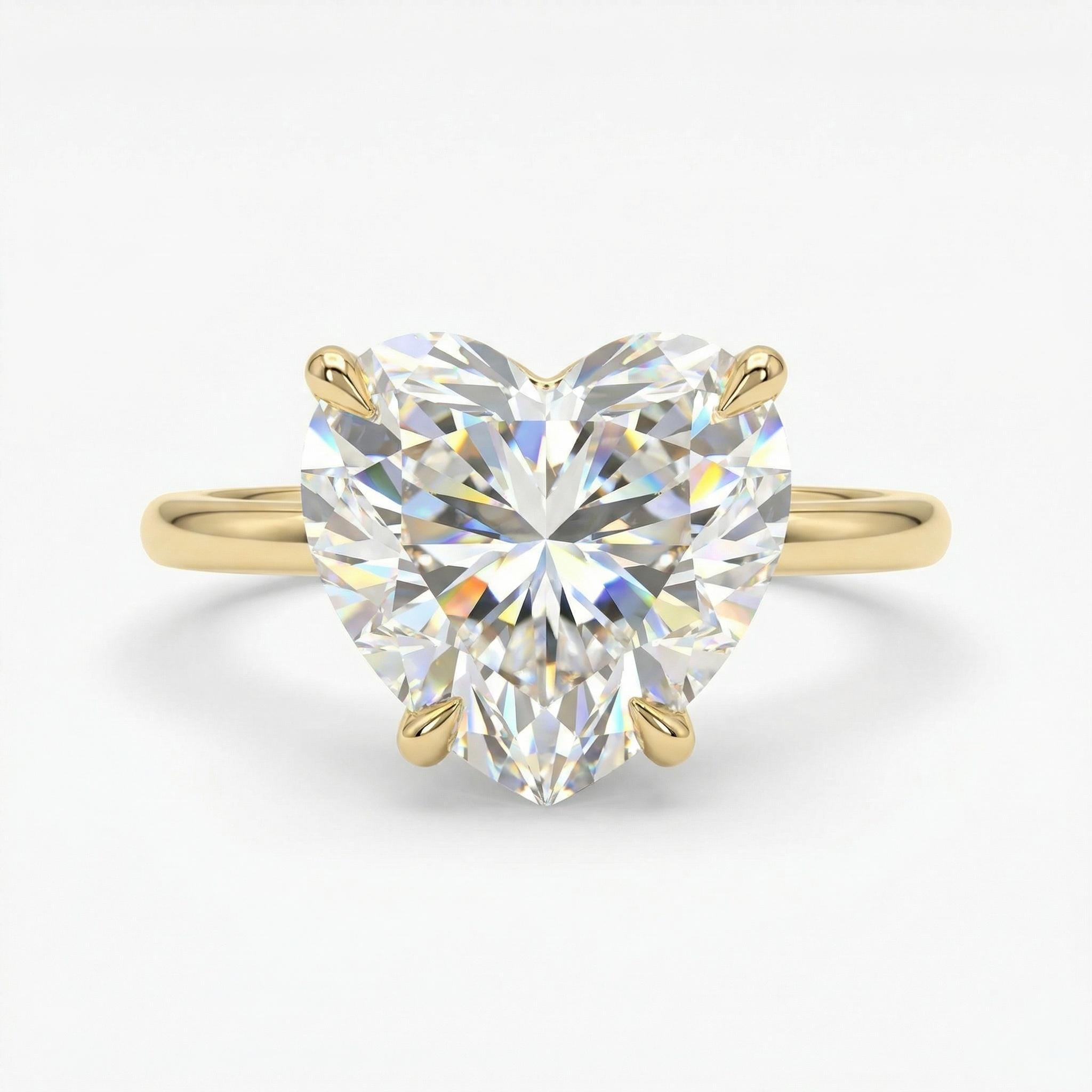
2 Carat Lab Grown Oval Ring
Asscher Lab-Grown Solitaire With Fishtail Prongs
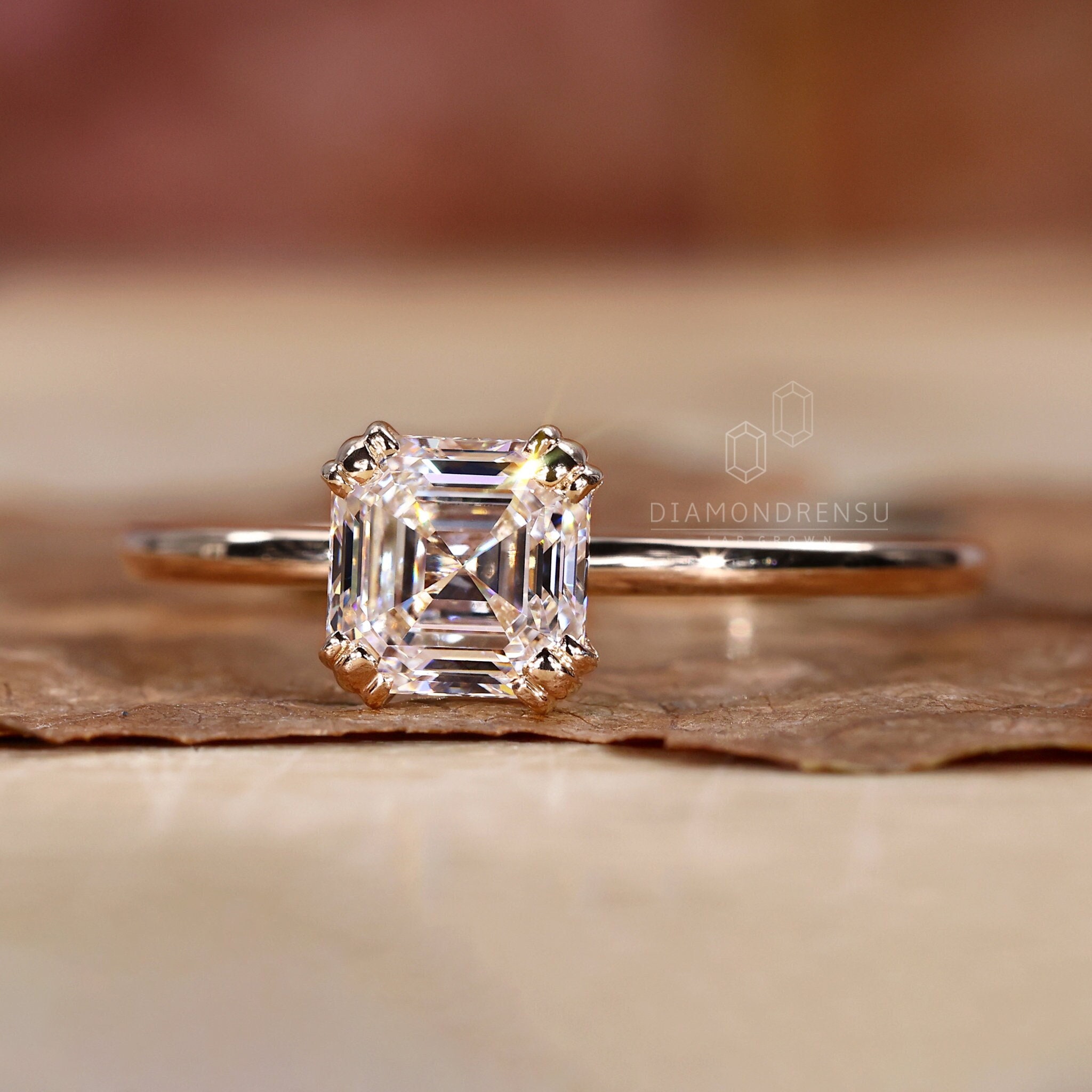
Fishtail prongs are more than a quirky name—they’re a design choice that ensures this Asscher cut lab-grown solitaire shines bright like a spotlight in the night. Those sleek edges and the almost hypnotic stair-like facets are working hard, refracting light like it’s going out of style. So, if you’ve decided that shimmer isn’t just for special occasions, this ring deserves some serious consideration.
Choosing lab-grown doesn’t mean you’re missing out; you’re just thinking smart while saving a chunk of change. The Asscher cut is pure vintage glam, ideal for those who love a bit of old-school charm wrapped in the intelligence of modern design. It’s the kind of ring that makes you feel like you’re living in an F. Scott Fitzgerald novel—minus the prohibition.
So, step away from the conventional and give the round diamonds a break. This ring is for someone who’s not afraid to embrace the direct, geometric allure of something truly different. Wear it yourself, or gift it to someone whose taste is as discerning as yours. Either way, this one’s a head-turner.
Green Jubilee Cut Solitaire Ring
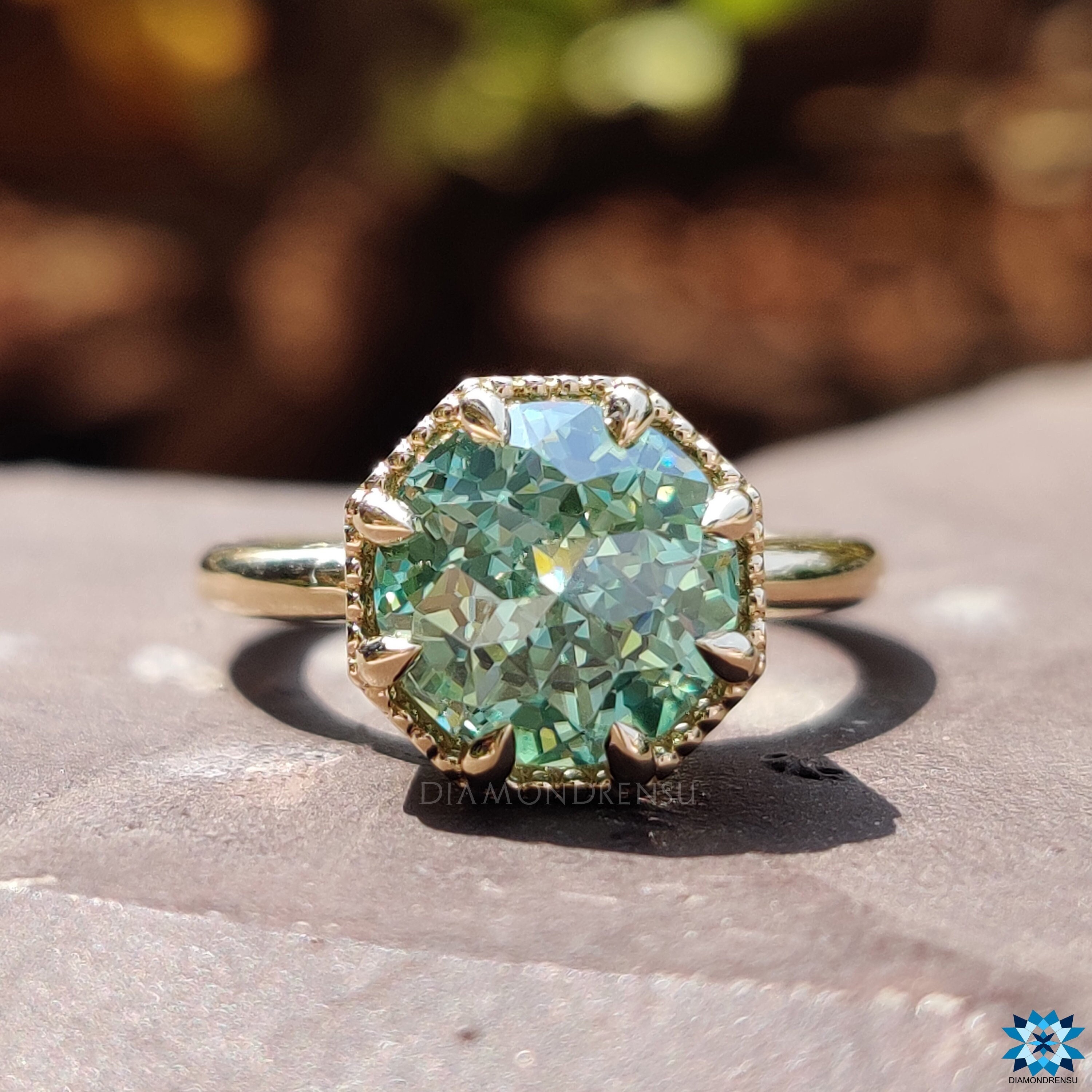
A Jubilee cut in green moissanite is not your average gemstone choice, and that’s precisely why it works. This ring flirts with tradition while dodging the ordinary, delivering a pop of color that feels both unexpected and refreshingly right.
The Jubilee cut has more facets than a standard round, so the stone catches light from angles a conventional cut misses entirely. Paired with that deep green, the result is a play of sparkle and depth that stops people mid-sentence. Wear it and expect questions.
This solitaire holds its own without tipping into garish. It suits a unique engagement as well as a straightforward self-purchase, and it sits firmly in neither-too-much nor too-little territory. A green moissanite Jubilee cut is a clear statement of individuality, made with a stone that outperforms mined diamonds on brilliance at a fraction of the price.
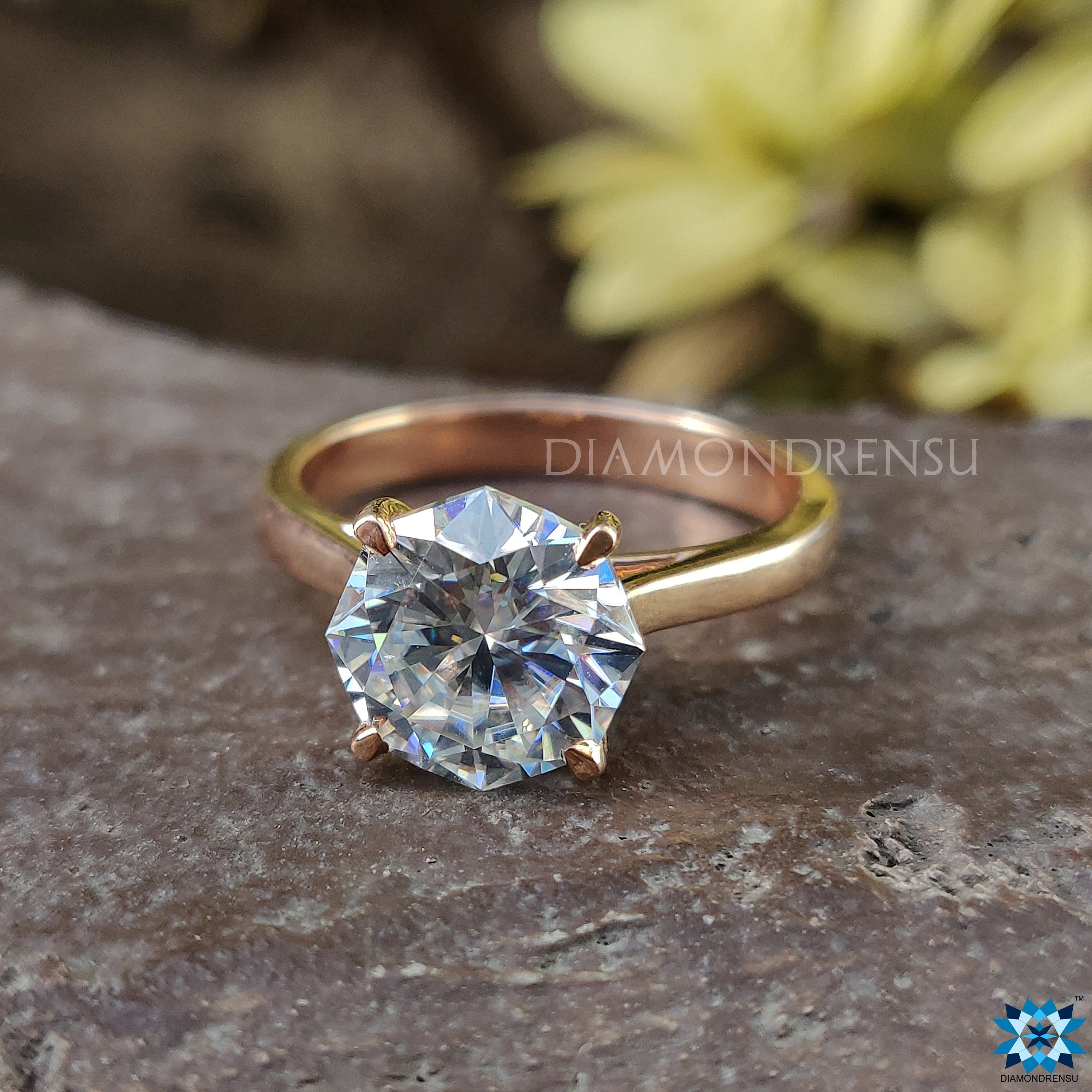
Octagon Solitaire Ring With Hidden Infinity
Pavé Halo Lab Diamond Ring

Lab diamond, not lab coat. The Pavé Halo Lab Diamond Ring is here to bring some sparkle to your science experiment. You got one carat of lab-grown brilliance surrounded by an entourage of pavé diamonds. And let’s be real – who needs a streetlamp when your finger can illuminate the night?
The beauty of lab diamonds? You get all sparkle, no guilt. It’s like having your cake and eating it too, except here you’re wearing it as a stunning piece of art. Wrapped in 18K gold, this ring doesn’t just whisper elegance – it yells it from every rooftop. It’s sustainable, dazzling, and ready for its close-up.
This is not just a ring; it’s a conversation starter. With its modern appeal and classic design, it’s perfect for someone who enjoys the finer things without leaving a carbon footprint bigger than a stiletto heel. So, let’s skip the old-school diamond and get straight to this ethical masterpiece.
Platinum Six Prong Solitaire Ring
FAQs
What’s the difference between a four-prong and six-prong solitaire setting?
Prong count changes how the diamond sits and how much of it is visible. A four-prong setting exposes more of the diamond’s girdle and gives a round brilliant a very slightly squarer look from above. A six-prong setting (the classic Tiffany style) holds the stone a bit higher, protects it from more angles, and gives the round brilliant that clean circular crown appearance most people picture when they think “solitaire.” Four prongs: more diamond showing. Six prongs: more classic silhouette. Neither is objectively better; it’s a visual preference.
What’s the most popular solitaire engagement ring cut?
Round brilliant, by a wide margin. It’s been the standard for over a century because the cut was designed specifically to maximize light return, meaning it out-sparkles virtually every other shape in most lighting conditions. Oval is the most popular alternative for people who want something slightly less expected. Princess and radiant cuts appeal to buyers who want sharper, more geometric lines.
Does a solitaire engagement ring stack well with a wedding band?
Yes, and a solitaire paired with a diamond eternity band is one of the most classic ring stacks there is. The plain solitaire lets the eternity band add texture without the two competing. The one thing to confirm before buying both: whether your solitaire’s setting allows a band to sit flush against it. Some cathedral or high-set solitaires need a contoured wedding band to nest properly. Ask your jeweler before committing to both pieces separately.
Is a solitaire engagement ring still in style?
It never went out of style. The solitaire is the reference point that every other engagement ring style gets measured against. Halo settings, three-stone rings, and cluster designs all have their moments, but none of them have displaced the solitaire as the default choice for couples who want the diamond to do all the work. It’s also the style most likely to look right in 30 years without feeling like a specific era.
What metal works best with a solitaire diamond?
Platinum and white gold make a colorless diamond appear brighter because the cool metal doesn’t add competing warmth. Yellow gold is the traditional choice and pairs especially well with radiant, cushion, or oval cuts, where the warm metal echoes the stone’s slightly warmer character. Rose gold has been a consistent choice for over a decade and pairs well with both round and oval cuts. All three are genuinely good options. The choice usually comes down to skin tone and personal preference more than anything else.
Don’t forget to pin this to your Rings Board for later!