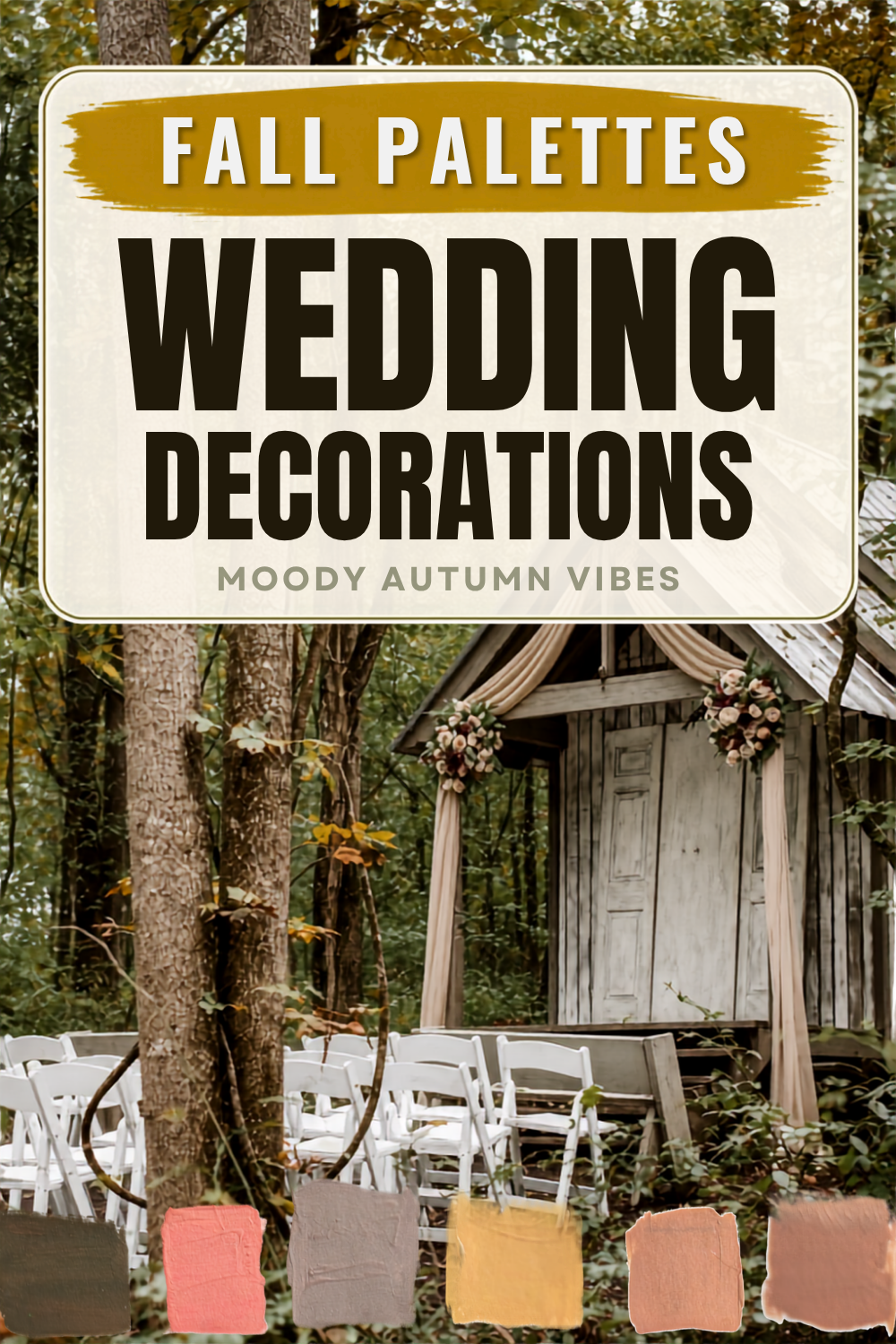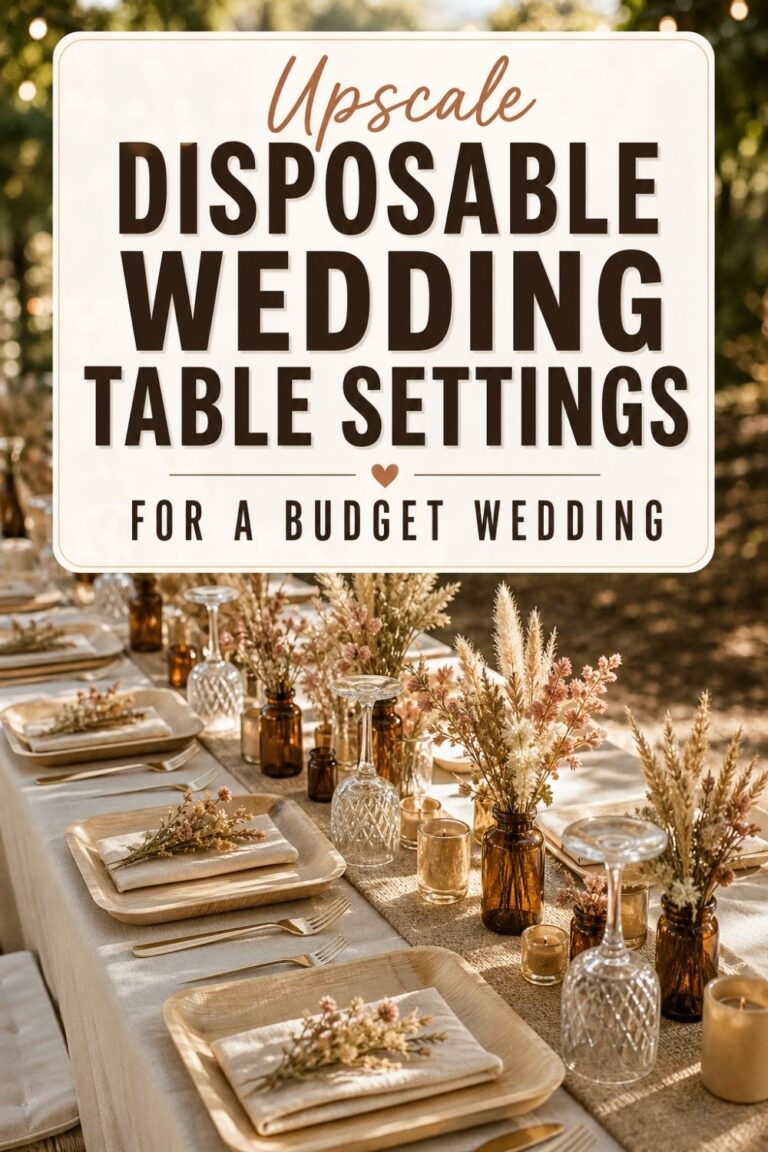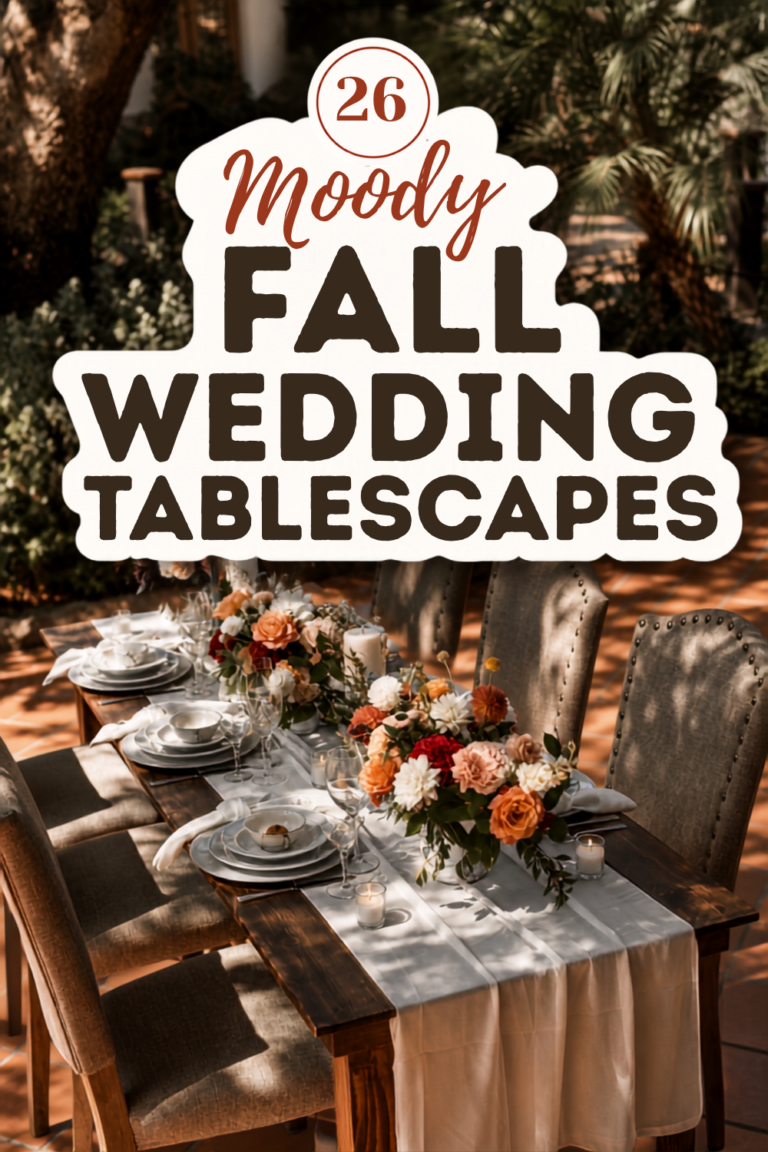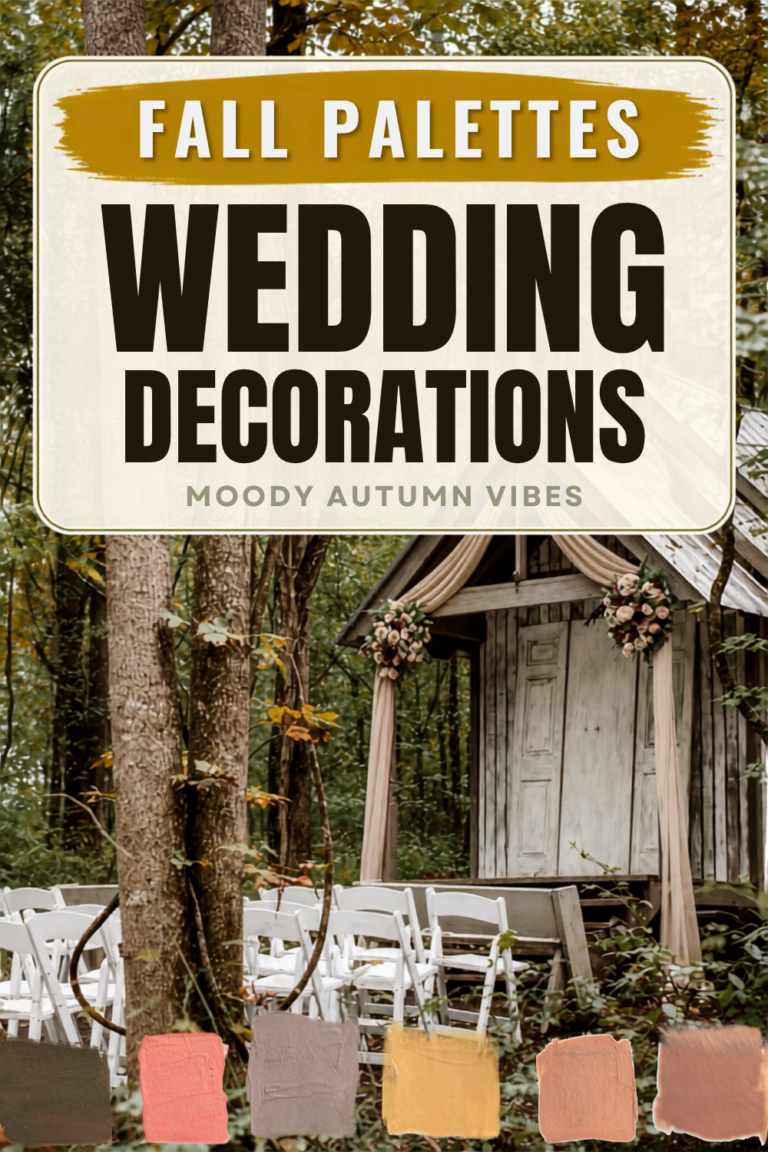
In this article, we’ve pulled our favorite fall wedding decor from real Love & Lavender weddings, the ones that got the palette and the details right. Browse our real fall weddings → for even more ideas.
What Makes Decor Look Like Fall
Before you buy a single stem, it helps to know what you’re going for. Fall decor is not a checklist of objects you tick off. It’s a mood, and the mood comes from three levers.
Most of the look comes from the colour palette. Warm and slightly moody: rust, burgundy, copper, terracotta, mustard, plum, with sage or dusty green to keep it from getting heavy. You do not need all of them. Pick two or three and repeat them everywhere.
Texture is the part people often skip. Fall reads as fall when things look touchable. Velvet runners instead of shiny satin. Dried grasses next to fresh blooms. Raw wood, aged brass, matte ceramic, candle wax. Autumn is a matte season, not a glossy one.
Then there’s the natural material, the stuff that looks gathered rather than shipped from a warehouse. Branches still holding their leaves. Wheat. Foliage. A few pieces of fruit. This is where fall decor either looks rooted in the season or looks like a theme party, and the difference is almost always restraint.
The Ceremony Backdrop
The arch is the biggest single canvas you get, and in fall it’s also the easiest to get right. Half your styling is already growing on the trees behind it. One good asymmetric cluster on a bare wood frame, and you’re most of the way there.
Our favorite fall arches almost never cover the whole frame. Think a hexagonal wood arbor with a single rust, burgundy, and mustard cluster tucked into one top corner, set inside a eucalyptus grove. Or a round metal arch wound top to bottom in orange and red leaf garland with no gaps at all, basically a full autumn wreath the size of a doorway. One real wedding staged a dark wood circle strung with marigolds and trailing greenery out in an open meadow, with the North Cascades behind it. Same season, three completely different moods.
See our fall wedding arch guide →
The Reception Tables
If the arch is where guests stop, the tables are where they sit for four hours, so this is where fall decor has to hold up. The good news: you can do a lot with candlelight and very little else.
Low and warm beats tall and formal for most fall weddings. Clusters of taper and pillar candles down the center of a wooden table will carry a room further than any single centerpiece. Add a runner with some texture, a few low blooms in your palette, maybe one pale pumpkin per table, and then stop. Restraint reads as expensive. A pile of everything reads as the craft store.
The centerpieces we come back to are the ones built around one clever idea. A tall clear trumpet vase filled with mini gourds inside the glass, topped with white hydrangea, orange dahlias, and amaranthus spilling over the edge. A hollowed-out pumpkin used as the actual vase, holding sunflowers and red dahlias, for about four dollars of pumpkin. Or a moody, near-gothic mix of marigold, celosia, blue thistle, and purple sedum, for couples who want fall without a single warm orange in sight.
See our fall centerpiece guide →
Fall Flowers and Foliage
Flowers are how the palette shows up on the day, so it’s worth knowing which ones hold up in fall. Most autumn bouquets are built around a handful of blooms.
Dahlias are the hero, blush to nearly black burgundy, some as wide as a dinner plate. Garden mums, garden roses, and ranunculus fill in around them. Amaranthus and celosia add the trailing, textured, slightly strange element that makes an arrangement look designed instead of grabbed from a grocery bucket. Sunflowers and anemones give you contrast, dried elements give you the pieces that last. One warning worth repeating: dahlias won’t survive a frost, so a late-November date is a gamble. Book early, and name a backup bloom.
Our full flower guide breaks these down bloom by bloom, with peak-timing notes and honest advice: what actually survives an outdoor ceremony in October, which greenery reads as fall and which just reads as summer, and how to build a palette that doesn’t fight itself.
See our fall wedding flowers guide →
Working In Natural Elements Without Going Full Pumpkin Patch

This is the section where fall weddings usually go off the rails. Natural, seasonal elements are what make the whole thing look real, right up until there are forty pumpkins and a hay bale by the sweetheart table. A few rules keep you on the right side of the line.
Pumpkins, yes, but choose them like you’d choose a neutral. Pale, white, and heirloom varieties look styled. Big orange carving pumpkins look like October fifth. One or two per area, not a patch.
Dried grasses and wheat do a lot for very little. Pampas, bunny tail, wheat stalks, a few bare branches. They add height and movement, and they never wilt, which is a gift on a long day.
Foliage is the cheapest upgrade there is. A garland down the center of a table, a few loose leaves scattered around the candles, real maple or oak if you can get it. Fall foliage is basically free decor lying on the ground for six weeks a year.
Fruit is the underused one. Figs, grapes, pomegranates, a few apples tucked into an arrangement or lined down a table. It looks abundant and a little old-world, and it doubles as a snack, which we respect.
Match Your Decor to the Month
Fall is not one look, it’s three, and which one you get comes down to your date. The same rust-and-candlelight setup reads completely differently in September than it does in November, mostly because of what’s happening outside the window. If you want your decor to look like it belongs, match it to your date. Our seasonal galleries are sorted the same way, so you can see the full fall wedding collection or jump straight to your month.
September Weddings (Early Fall)
September still has one foot in summer. The trees are mostly green, the light runs soft and long, and the palette stays lighter: warm neutrals, dusty greens, blush, the first hints of gold. Dahlias and sunflowers are at their best. This is fall for couples who want the warmth without the heaviness. Keep it light, and a few notes of gold and rust read as the season without turning the room into a harvest festival.
Browse September fall weddings →
October Weddings (Peak Fall)
October is the postcard. Peak foliage, the richest color of the year, and the deepest version of every fall palette. This is when rust, burgundy, copper, and orange all show up at once and somehow work, because outside the window everything has turned the same colors. If you picture a fall wedding, you’re picturing October. It’s one of the two most-booked wedding months, neck and neck with September, and the light in the back half of the month is the best of the year.
Browse October fall weddings →
November Weddings (Late Fall)
By November you’re decorating for the edge of winter, and honestly, lean into it. The palette goes deep and moody: oxblood, plum, chocolate, evergreen, all of it glowing by candlelight against bare branches. This is the most dramatic fall look there is. Just watch the frost, book hardier blooms and plenty of dried elements, and don’t be surprised when your late-November wedding starts looking a little like a winter one.
Browse November fall weddings →
Fall makes it easy, which is exactly why it’s easy to overdo. Pick your palette, lean on candlelight and texture, bring in a little of what’s growing outside, and stop. That’s already a fall wedding. The prettiest ones we’ve seen were never the ones with the most stuff on the table. They were the ones where someone knew when to stop.
Frequently Asked Questions
A few things couples ask us most about pulling fall decor together.
When does a wedding start to look like fall?
It’s less about the date and more about the palette and the light. A September wedding in warm neutrals and gold reads as early fall even when the trees are still green. Push the colors deeper and add candlelight and you can make October or November land the moment guests walk in. You set the season with your decor more than the date does.
How do I do fall decor without it looking like Halloween or Thanksgiving?
Skip the cartoon version of the season. No bright plastic gourds, no scarecrow-and-hay-bale staging. Lean on the moodier end of the palette, burgundy, plum, and copper over bright pumpkin orange, and keep your natural elements pale and real. Restraint is the whole trick. One heirloom pumpkin looks elegant, and twelve of them look like a porch.
Do I need real pumpkins?
Not at all. Plenty of the fall weddings we love don’t use a single one. Deep flowers, dried grasses, candlelight, and foliage are plenty on their own. If you do want pumpkins, choose pale or white heirloom varieties and use them sparingly, more as a quiet accent than a centerpiece.
What’s the cheapest way to make a wedding look like fall?
Candles and foliage. A dense run of taper candles down a wooden table and a garland of real leaves will do more for the mood than an expensive floral order. Fall foliage is genuinely free for about six weeks a year, so use it. Then commit to a tight two or three color palette and repeat it everywhere, and the whole thing looks intentional for almost nothing.
Don’t forget to pin this to your Wedding Decor Board for later!