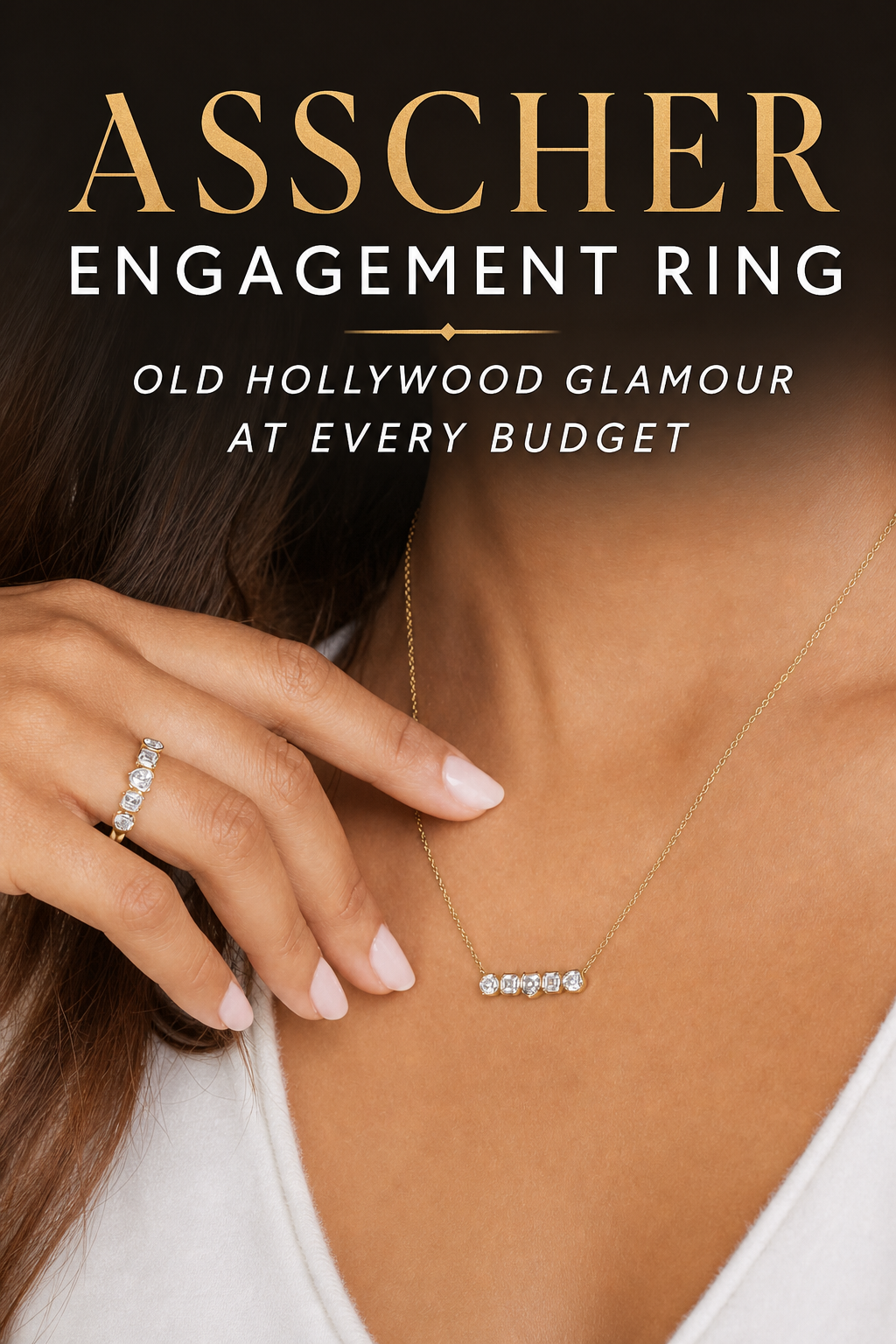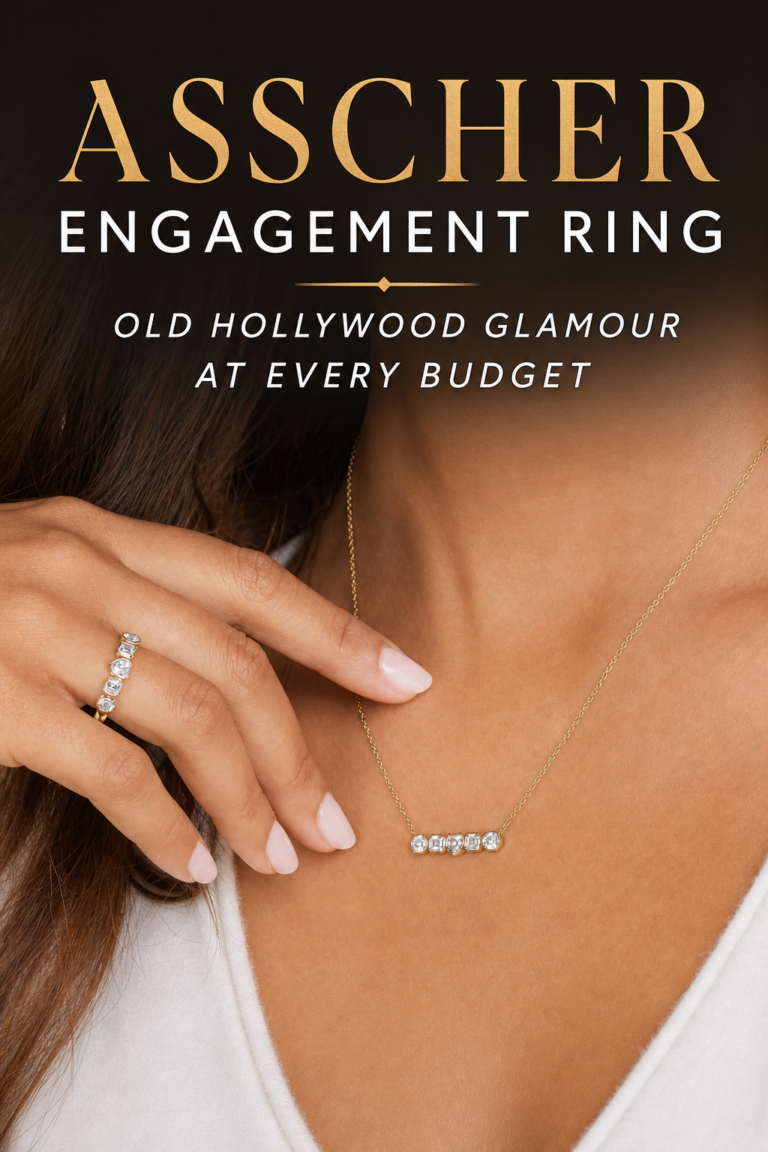
Why an Asscher Cut Ring?
Asscher cut rings have a special sophistication and vintage-come-retro feel to them that we think you will just love. Despite being unique, many rings are understated and elegant.
The original Asscher cut was developed and established by the Asscher family in 1902. It was created at the time of the First World War as well as the Art-Deco period, which helps to explain the retro feel.
What is an Asscher Cut Ring?
It has 58 facets and an octagonal shape. After relatives of the original creators realized the cut was still popular in the United States, they redeveloped it by adding 16 extra facets. This more recent model is known as the Royal Asscher cut, and still keeps its angular shape.
An Asscher cut ring tends to indicate the wearer is feminine and meticulous. If that sounds like your partner, maybe you should add this ring style to your list of potential engagement rings to buy.
Asscher Cut Engagement Rings
Has the Asscher cut tickled your fancy?
Read on to discover our top picks.
1 Carat Lab Asscher Pavé Ring
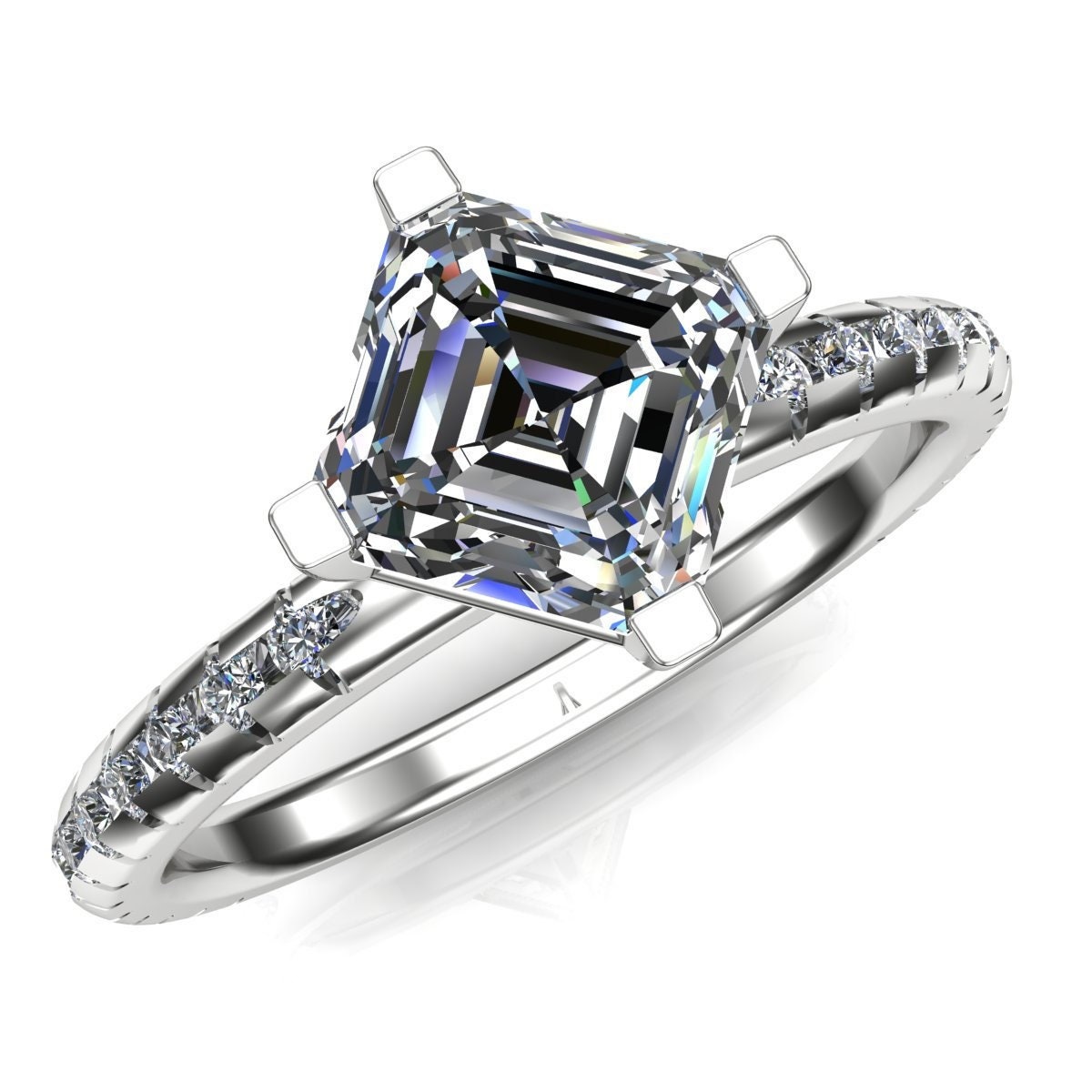
14K white gold, 1 carat, lab-grown Asscher cut, pavé setting. The Asscher cut has 58 facets arranged with the kind of geometric precision that makes other cuts look like they were freestyling. It was designed by the Asscher family, it has a direct line to Art Deco, and it throws light in a way that stops people mid-sentence.
The pavé band keeps things in proportion: small stones set close, minimal metal showing, maximum effect without tipping into excess. This is a ring for someone who notices when corners are square and cares that they are.
The lab-grown stone is chemically and optically identical to mined diamond, just without the supply chain baggage. So you get the cut, the clarity, the white gold setting, and the history of one of jewelry’s most distinctive silhouettes, all without the ethical asterisk. Old Hollywood geometry, cleaner origin story.
2 Carat Art Deco Asscher Ring
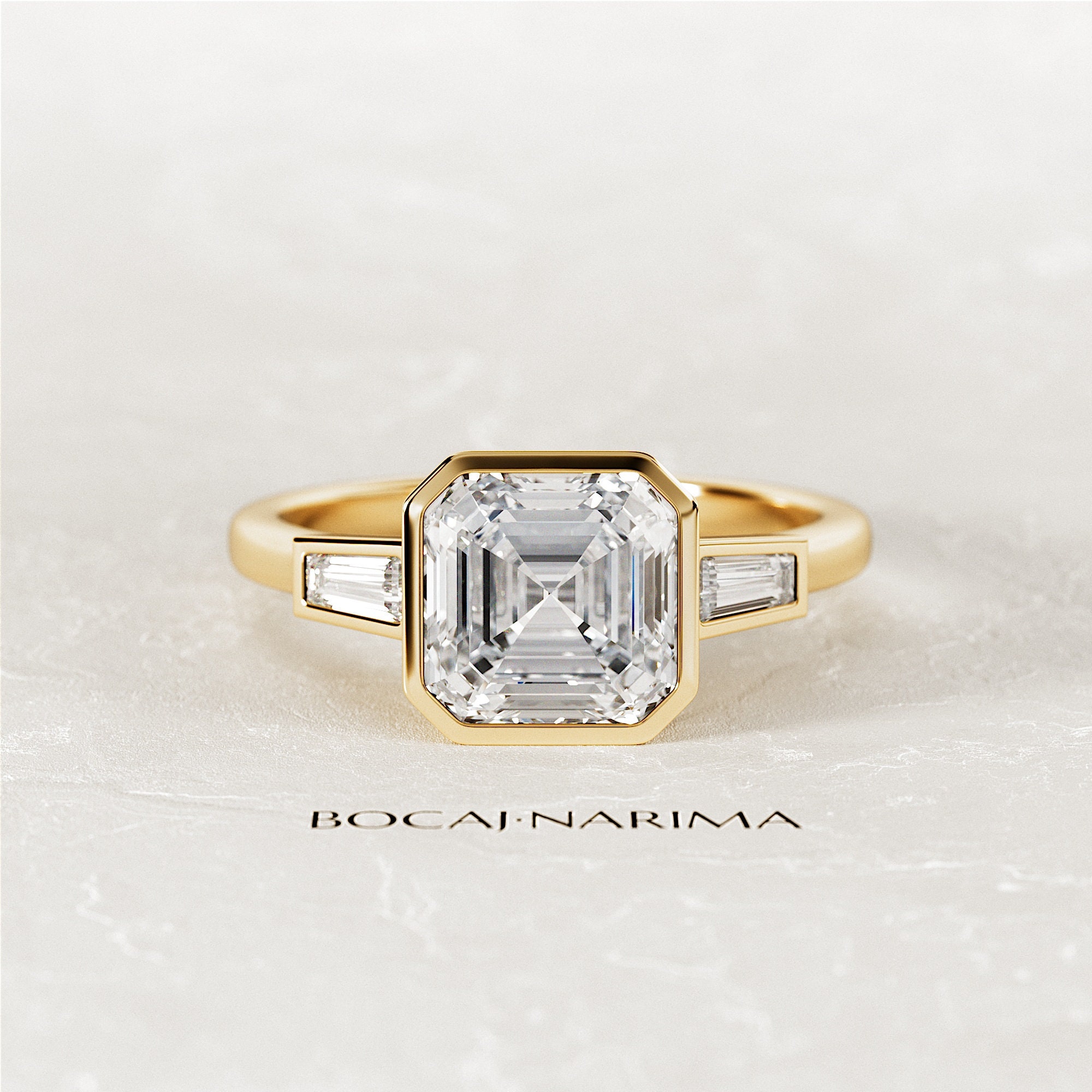
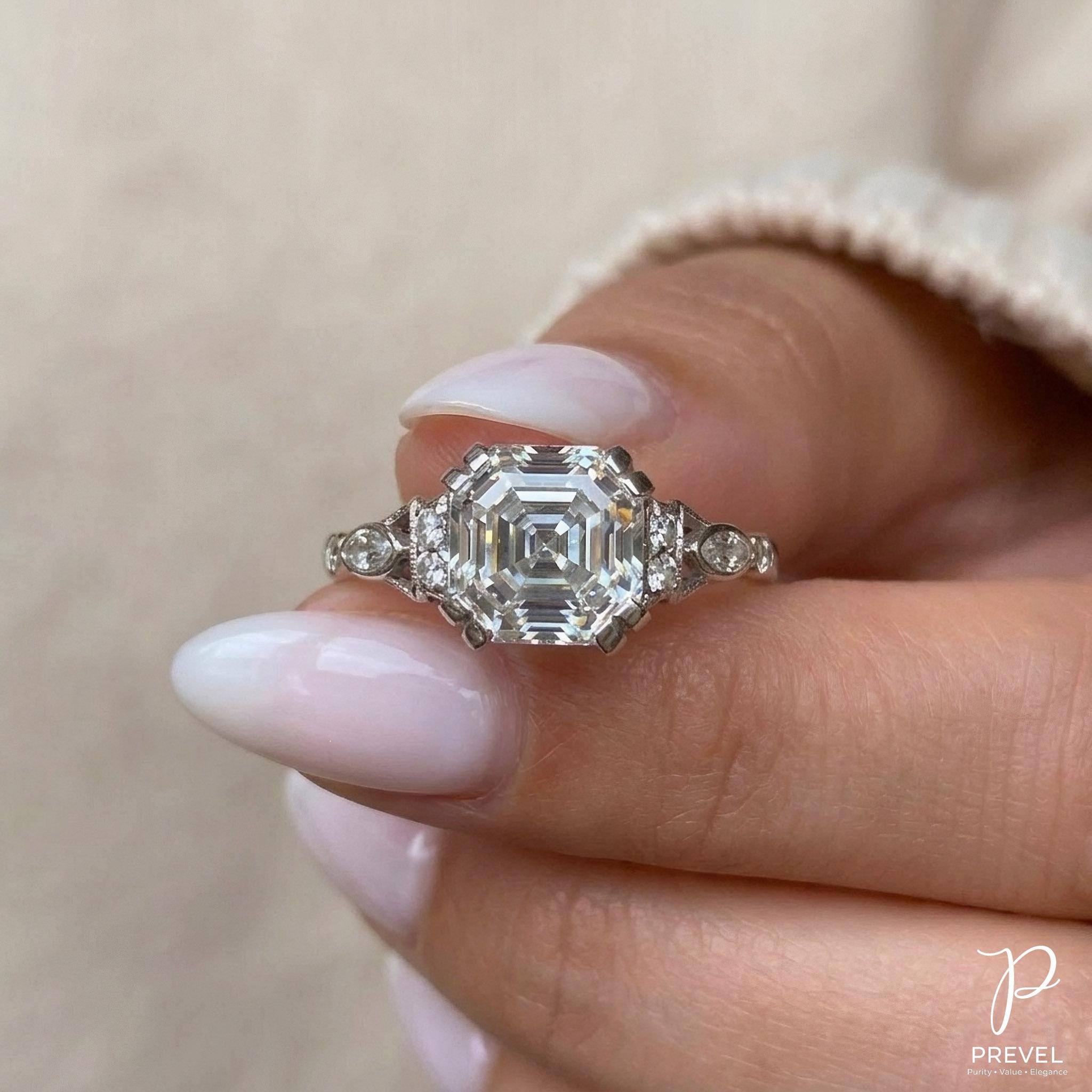
Two carats of Asscher-cut diamond, set in an Art Deco cathedral mounting that pulls directly from the geometry of the 1920s. The step-cut facets sit in precise symmetry, and the whole thing is sharp enough to stop a conversation. This is vintage glamour with the volume turned up, not down.
The kite-style prongs are the detail that separates it from the usual period-inspired fare. They push the silhouette into something more current without undercutting the throwback feel. The result is a ring that reads as both considered and confident, the kind of piece someone notices and then asks about.
If your partner has strong opinions about design and even stronger ones about being handed something generic, this is worth serious attention. Two carats of Asscher-cut brilliance in a cathedral setting is already a statement. The Art Deco architecture just makes sure it lands.
2-Carat Lab-Grown Asscher Solitaire Comet Prongs
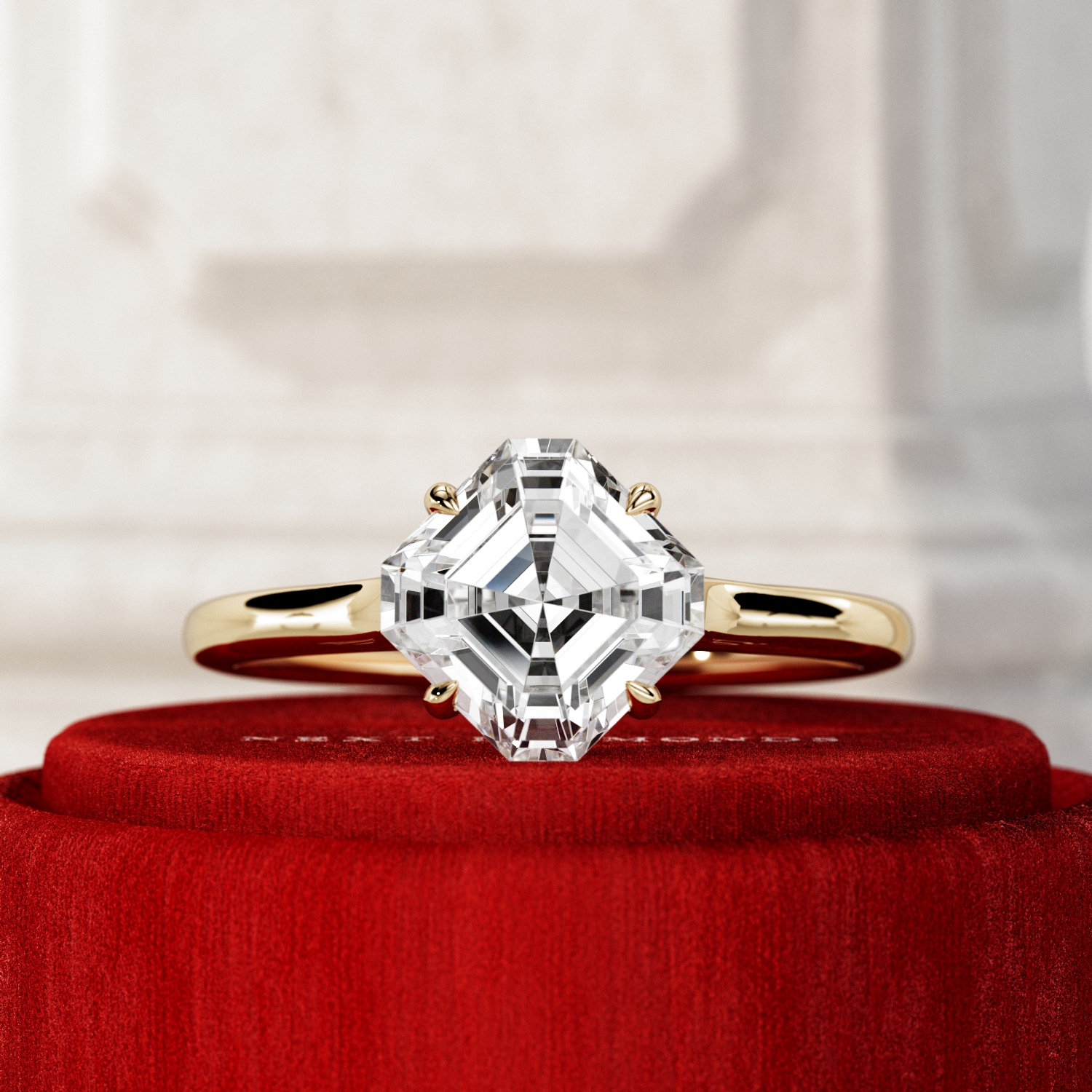
The 2-Carat Lab-Grown Asscher Solitaire Ring with Comet Prongs skips the mine entirely. Lab-grown means the stone is chemically identical to mined diamond, just without the supply chain headache. Same sparkle, cleaner conscience, no compromise on the carat weight.
The Asscher cut runs 58 facets in that signature stepped, square geometry. It catches light differently than a round brilliant, more deliberate, almost architectural. The comet prongs are the detail worth noticing: shaped to echo movement, they hold the stone securely while doing actual design work rather than just sitting there being functional.
This is the ring for someone who wants classic proportions with a cut that reads as considered rather than default. Two carats in an Asscher is a serious stone. The comet prong setting keeps it from feeling like a standard solitaire off the shelf. If you are proposing and want the ring to have a point of view, this one does.
3.15 Carat Asscher Moissanite Eternity Band
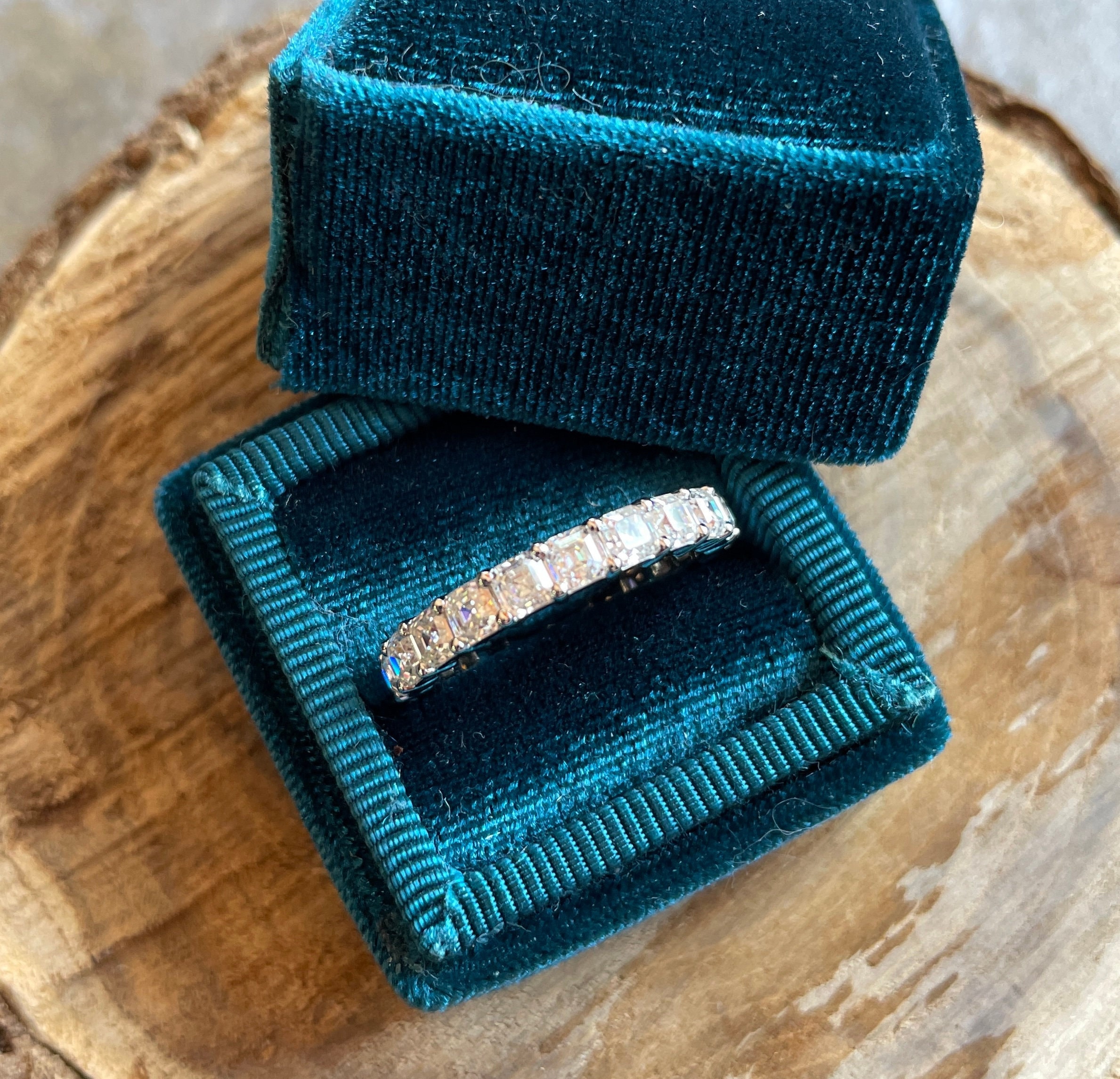
The 3.15 Carat Asscher Moissanite Eternity Band is loaded with lab-grown moissanite stones set in a continuous circle around the band. Moissanite throws more fire and brilliance than diamond, costs a fraction of the price, and skips the ethical headaches of mined stones. The Asscher cut brings step-like facets that create a deep, hall-of-mirrors effect you don’t get from a round or cushion cut.
That geometric, almost architectural facet pattern has strong art deco roots, so the ring reads vintage without being precious about it. An eternity band means stones run the full circumference, no blank metal on the underside, which matters both visually and as a symbol if you’re buying this for a milestone.
The combination here is hard to argue with: a cut that has genuine history, a stone that outperforms on optical metrics, and a format that never goes out of circulation. Wear it solo or stack it. Either way, it pulls attention without asking for it.
Art Deco Asscher Aqua Ring
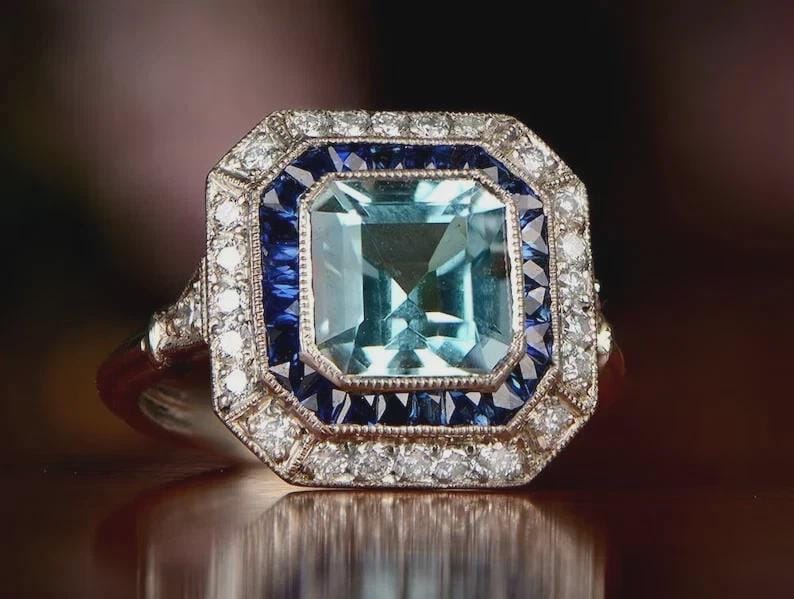
A 3.40-carat Asscher-cut Santa Maria aquamarine sits at the center of this 1930s Art Deco ring, the stone’s color so saturated it borders on surreal. Six French-cut sapphire accents frame it, and the whole thing is a clinic in geometric precision. Art Deco did this kind of thing well, and this piece is one of the better examples of why that era still has a hold on people.
The Asscher cut was practically built for Art Deco. Its stepped facets and clipped corners pull every bit of depth out of a stone like this aquamarine, and pairing it with the cool blue of French-cut sapphires keeps the palette tight and intentional. The result is a ring that reads as bold without trying too hard.
Vintage pieces from the 1930s at this quality level are genuinely hard to come by. The aquamarine alone would turn heads, but the sapphire accents and the overall geometry give it a coherence that a lot of modern rings spend a lot of money failing to achieve. Wear it if you want people to ask about it, because they will.
Art Deco Asscher Moissanite Ring
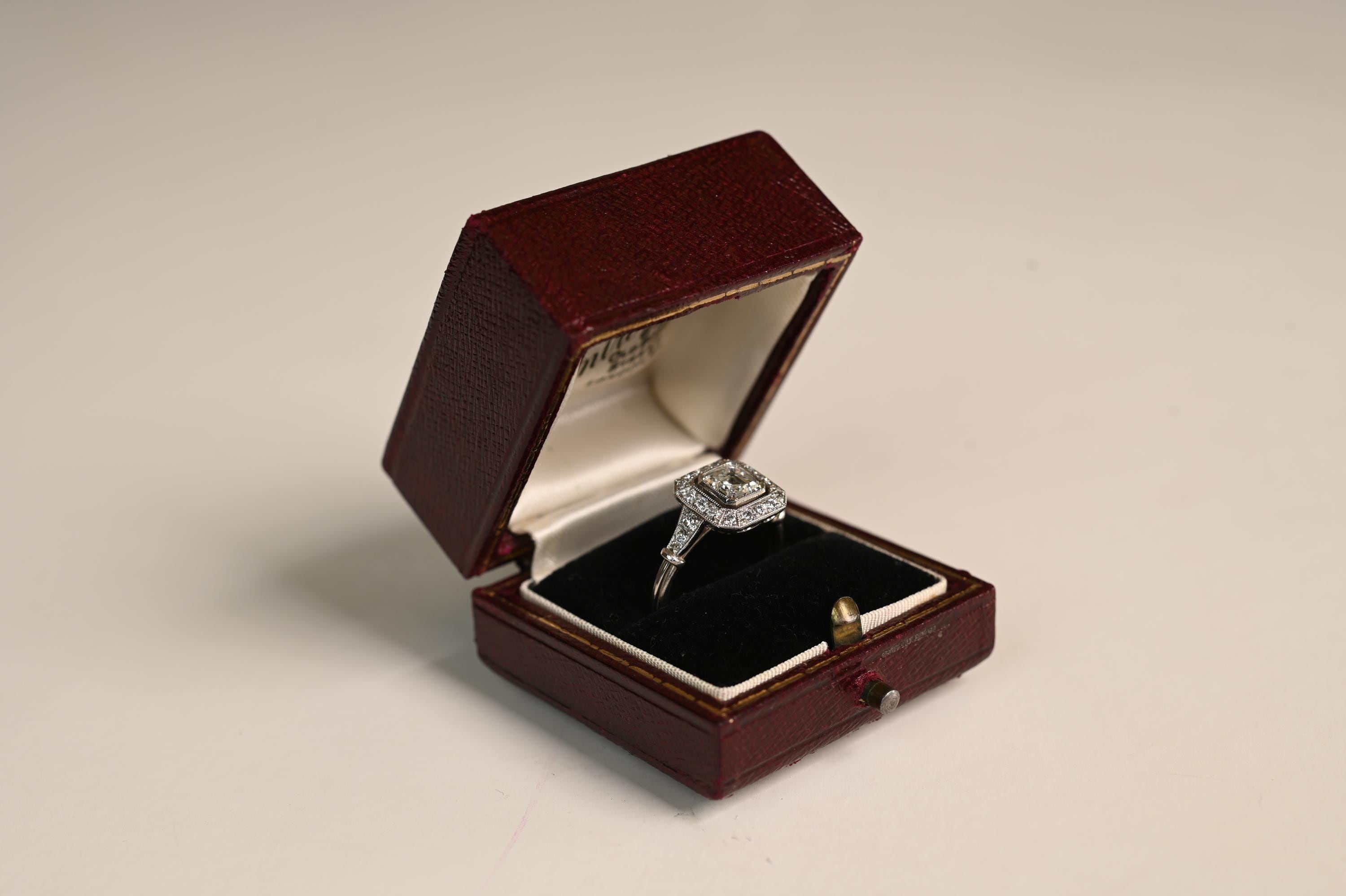
An Asscher-cut moissanite sits at the center of this Art Deco halo ring, and the geometry alone is worth stopping for. The step-cut facets pull light into deep, mirrored flashes that diamonds rarely match, and the surrounding halo amplifies that without tipping into excess. Hard lines, square symmetry, Old Hollywood bones.
The structural design does real work here. Art Deco rings live or die by their proportions, and this one gets them right: the angular silhouette frames the center stone cleanly instead of competing with it. It reads vintage without the vintage-store asterisk, and the moissanite origin means you get that depth of brilliance without the ethical headache that comes with mined stones.
Moissanite is also genuinely hard (9.25 on the Mohs scale), so this is a ring built to be worn daily, not stored. If your partner gravitates toward pieces with architectural weight and a bit of history baked into the design, this one delivers. The fire is real, the geometry is sharp, and it will not blend into the background.
Art Deco Asscher Ring
A 3.40-carat Asscher-cut Santa Maria aquamarine sits at the center of this Art Deco ring, flanked by six French-cut sapphires arranged in the kind of geometric precision that defined 1930s jewelry at its most disciplined. The cut alone is worth noting: Asscher cuts were engineered for depth and symmetry, and a Santa Maria stone brings an intensity of blue that most aquamarines simply don’t reach.
The sapphires aren’t decorative afterthoughts. French-cut stones have flat, angular facets that play off the Asscher’s hall-of-mirrors interior, so the whole composition reads as a single graphic object rather than a center stone with accessories bolted on. It’s period-correct geometry, not a loose interpretation of the era.
This is the ring for someone who finds modern solitaires boring and vintage reproductions unconvincing. The aquamarine’s cool blue against the deeper sapphire tones gives it enough contrast to read across a room, while the overall silhouette stays tight and architectural. Wear it as an engagement ring or a right-hand statement piece. Either way, it holds its own.
Art Deco Green Sapphire Engagement Ring
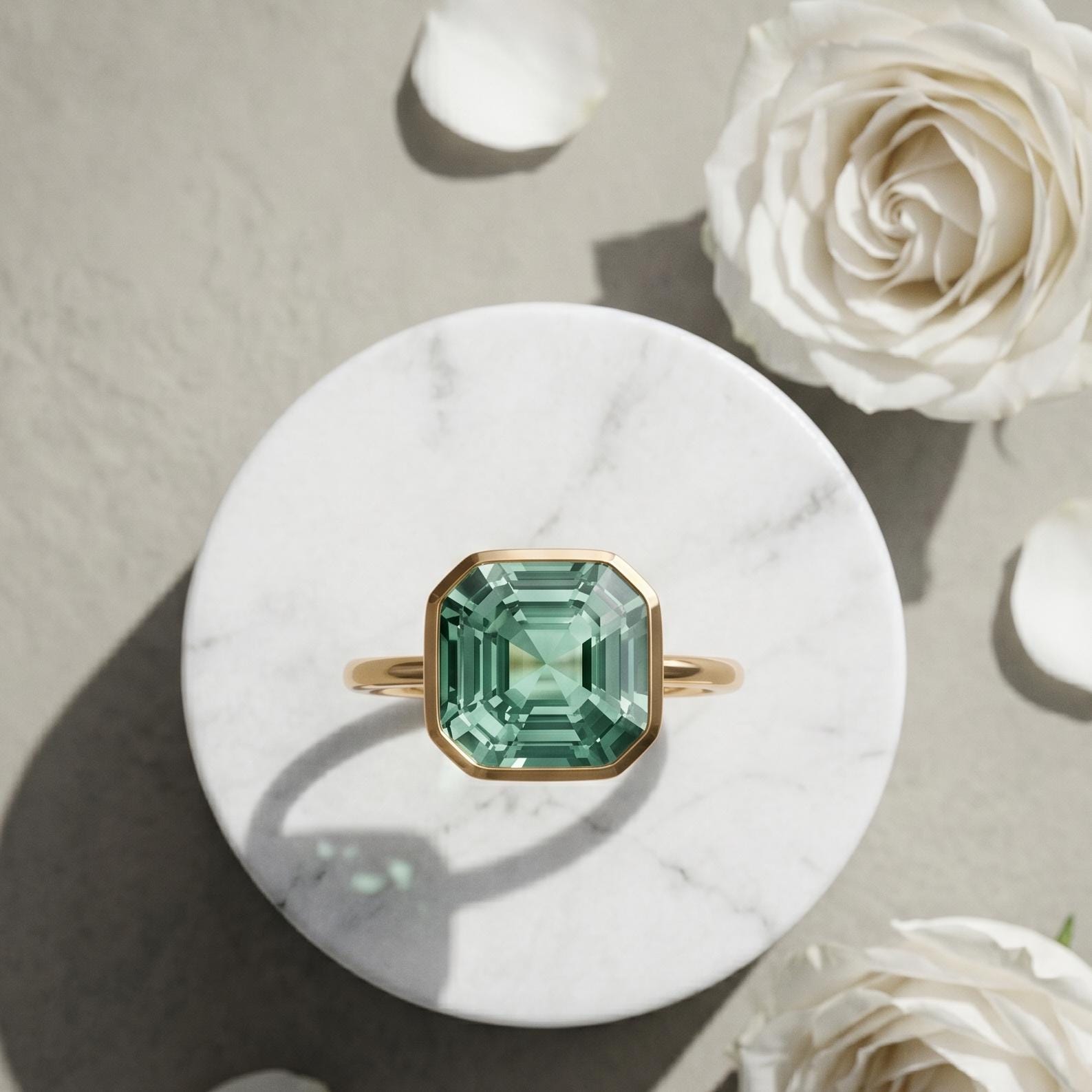
A 4-carat green sapphire in an Asscher cut, set in platinum, is the kind of piece that reads sophisticated without trying too hard. The Asscher cut is all geometry and depth, and on a green stone it looks less “garden party” and more genuinely serious.
The sapphire comes in at VVS1 clarity, so the color comes through clean with no cloudiness getting in the way. You choose the metal: 10K, 14K, or 18K solid gold in white, yellow, or rose. That flexibility matters when you’re buying something meant to last decades, not just a season.
Green sapphires sit in an interesting spot. They carry the durability of corundum (second only to diamond on the Mohs scale) with a color that reads more unusual than the standard blue. This ring leans into that. It has the bones of an heirloom and the personality to back it up.
Art Deco Hand Engraved Asscher Ring
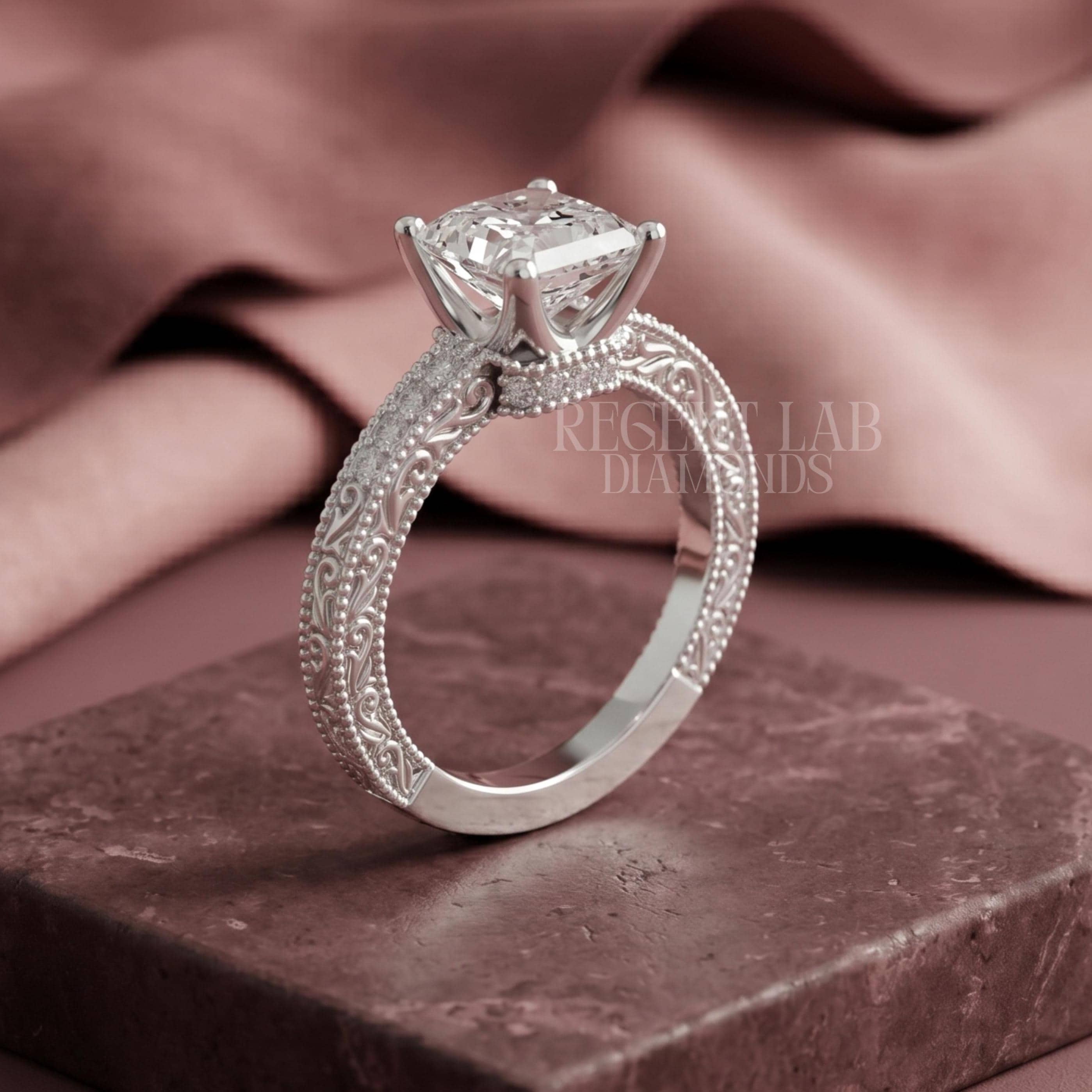
Hand engraving and an Asscher cut in the same ring. This Art Deco piece has a hand-engraved band with unmistakable 1920s character, the kind of detail you’d expect from a jeweler who took their time. No shortcuts, no shortcuts hiding behind flash.
The Asscher cut diamond at the center is all step-cut facets, which means depth over sparkle, geometry over glitz. It reads as deliberate. The engraved band around it ties the whole thing to a specific era without feeling like a costume piece. Old-school craft, worn on a real hand in the present day.
This is the ring you buy when you want something with actual history baked into its design. Pop the question with it, wear it yourself, or just hold it and feel smug about your taste. The 1920s had genuinely good ideas about jewelry, and this ring is proof of that.
Asscher Alexandrite Leaf Ring
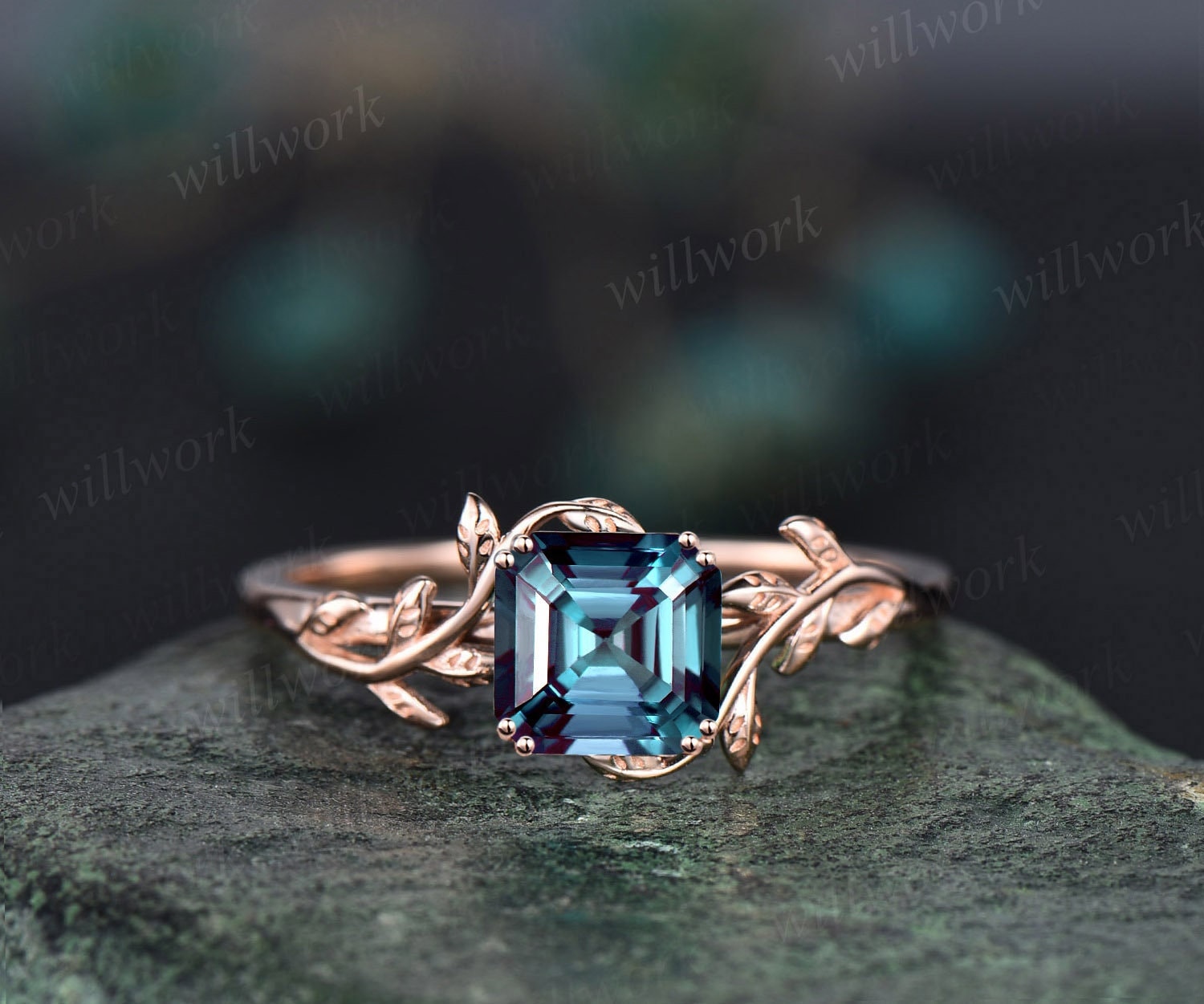
An Asscher cut alexandrite set in a twisty rose gold band, flanked by diamond sidestones. The Asscher cut is a natural match for alexandrite: its deep pavilion and geometric facets pull out the stone’s color-change in a way a round or oval simply cannot. Green in daylight, purplish-red under incandescent light, and always a little surprising.
The rose gold band does real work here. Its warm tone sits well against alexandrite’s cooler green face, and the twisted silhouette keeps the setting from reading as too traditional. This is an engagement ring with a point of view, not just a safe choice dressed up in a trendy metal.
Alexandrite is already rare enough to warrant a conversation. The Asscher cut and the sculptural band mean there is nothing generic about how it is presented. If the person you are buying for pays attention to how things are made, this ring will hold up to scrutiny.
Asscher Cut Double Edge Halo Ring
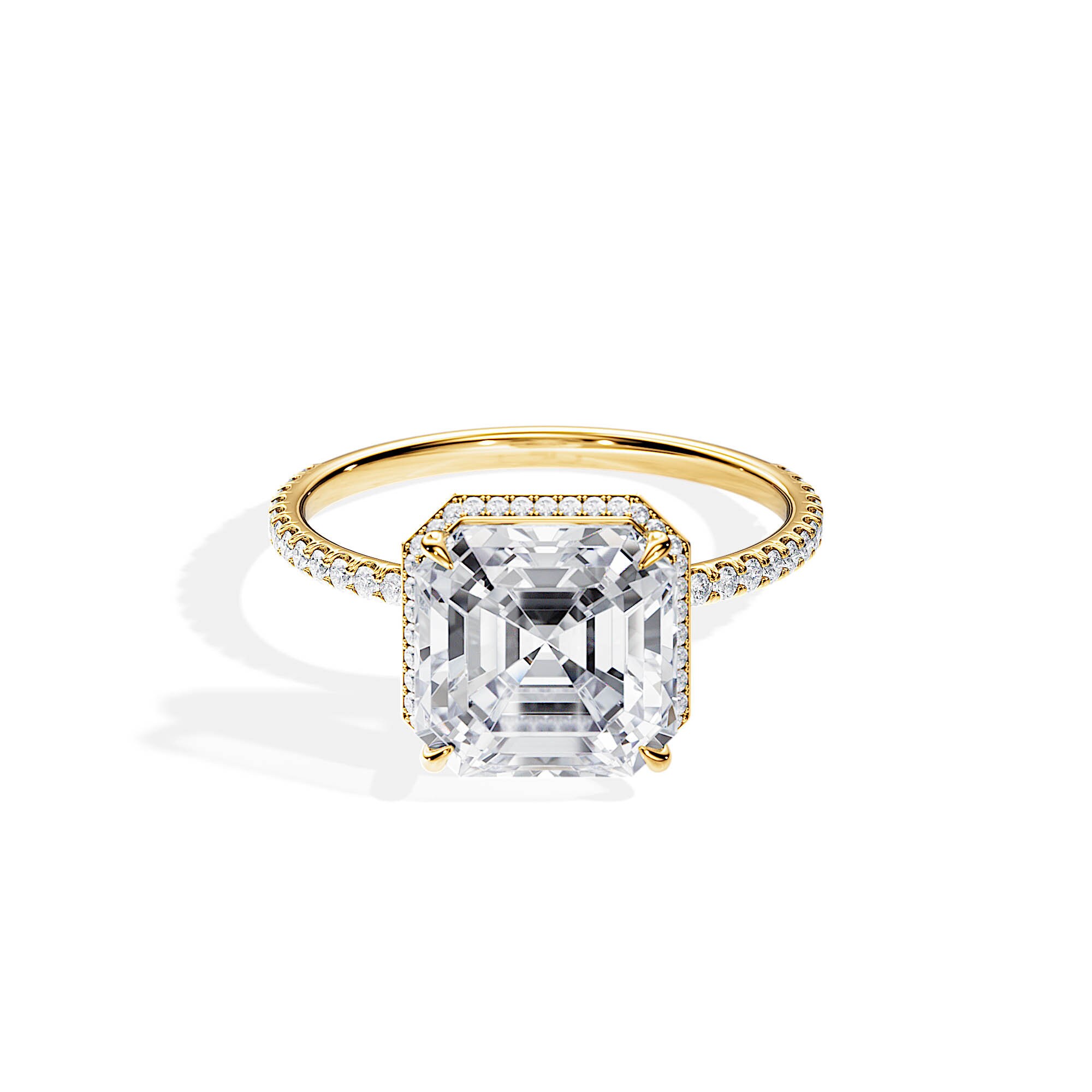
Three carats, Asscher cut, double-edge halo, lab-grown diamond. That combination does a lot of work in a small package. The Asscher cut brings a geometric precision that round brilliants simply cannot replicate: 58 facets arranged to pull light straight through the center in long, mirror-like flashes rather than scatter it outward.
The double halo tightens the whole composition, framing the center stone so it reads larger than the carat weight already suggests. Available in white, rose, or yellow gold, so the metal choice can shift the mood from cool and architectural to warm and romantic without changing a single thing about the stone itself.
Lab-grown here means the diamond is chemically and optically identical to mined, just without the supply chain baggage. For a three-carat stone at this price point, that tradeoff is genuinely hard to argue with. If you want something with visual weight, a cut that rewards close inspection, and a halo that frames it properly, this ring delivers all of that without requiring a second mortgage.
Asscher Engagement Ring With Trillion Accents
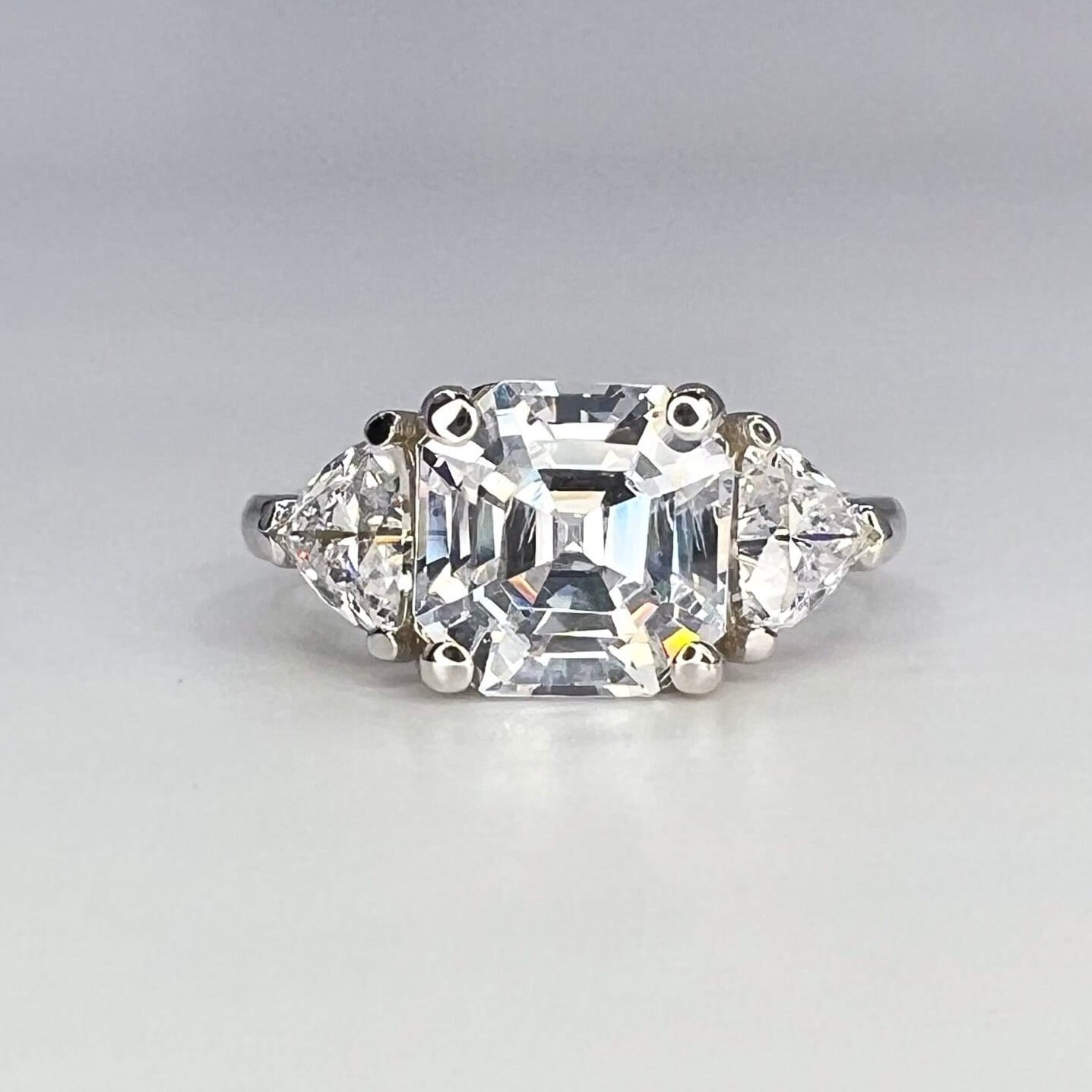
Emerald-green geometry at its most deliberate: this Asscher Engagement Ring pairs a 2-carat Asscher-cut diamond with trillion-cut side stones on each flank. The Asscher’s deep, hall-of-mirrors faceting sits in sharp contrast to the pointed drama of the trillions, and the whole thing is set in platinum. It’s a combination that reads as vintage without being fussy, and modern without trying too hard.
The layout works because the tension is built in. That square step-cut center pulls the eye straight down into the stone, while the trillions angle outward like they’re mid-argument with it. The result is a ring that has actual visual movement rather than just sitting there looking expensive. Platinum keeps the metal from competing with the stones, which is the right call here.
This is the ring for someone who finds a round solitaire a little too obvious but still wants serious presence on the finger. The Asscher cut has a long history in Art Deco design, and pairing it with trillion accents updates that lineage without apologizing for it. Sharp facets, strong geometry, platinum setting. It knows exactly what it is.
Asscher Grey Moissanite Ring
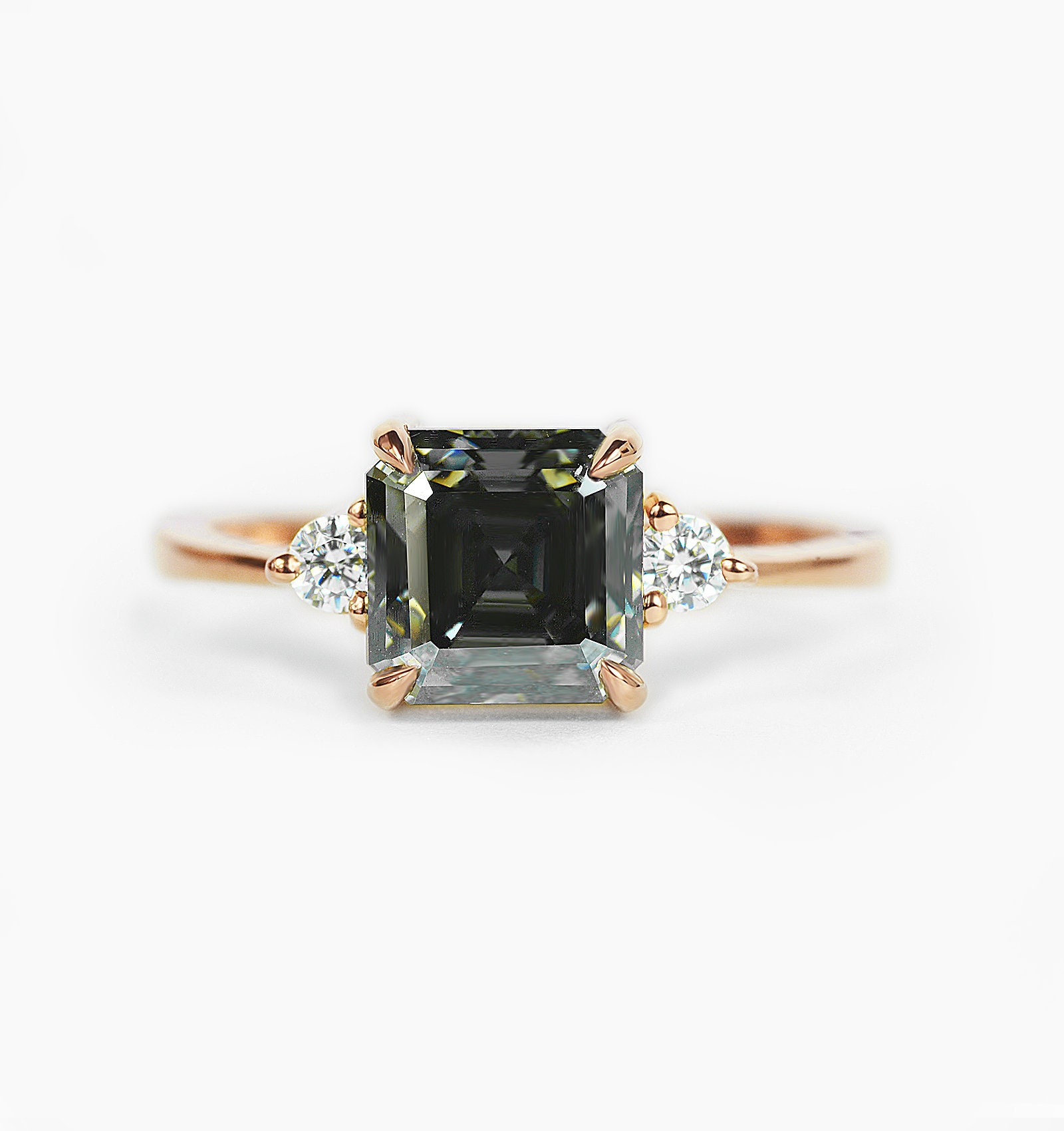
Gray moissanite on an engagement ring: that’s a conversation starter. This Asscher cut takes center stage with its smoky tone, leaving traditional diamonds in its shadow. Crafted with precision, it gleams with the kind of confidence that says, “Yeah, I’m different, and I know it.”
The Asscher cut has step-cut facets that produce a controlled, hall-of-mirrors sparkle rather than the scattered flash of a brilliant cut. It reads vintage without being fussy, and the gray body color deepens the whole effect. A little Art Deco on your finger, basically.
This stone pairs with a range of bands, though it holds its own as a solitaire. Gray moissanite sits outside the usual engagement ring playbook, which is exactly the point. For the partner who already knows their taste and has no interest in wearing what everyone else is wearing, this one lands.
Bezel Set Mixed Cut Ring
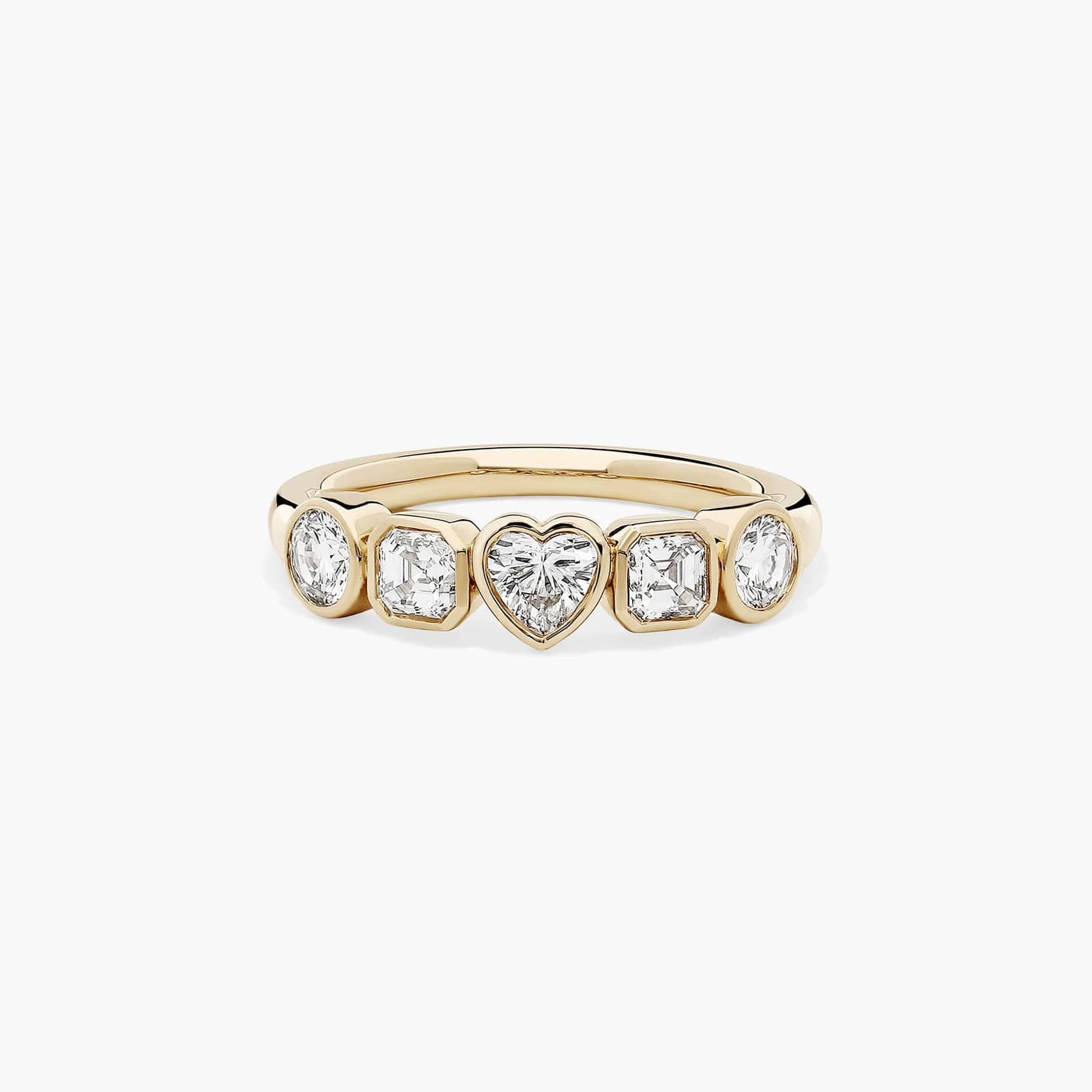
14K yellow gold sets the base for a ring that combines three diamond cuts: round, Asscher, and heart-shaped lab-grown stones, each held in a bezel setting. That last detail matters. Bezel settings protect the girdle of the stone on all sides, so the ring holds up through daily wear without sacrificing the look. F-G color and VS1-VS2 clarity across the board means the diamonds read clean and bright to the naked eye.
The lab-grown origin keeps the ethical side covered without any compromise on the optical properties. These stones are graded to the same standards as mined diamonds, and at F-G/VS1-VS2, they sit comfortably in the near-colorless, eye-clean range. The mix of Asscher geometry, round brilliance, and a heart shape gives the ring a playful structure that still reads as polished rather than costume.
This is a good pick for someone who wants serious stones in a setting that can actually keep up with them. The bezel construction means no prongs to snag, no delicate claws to bend back at the gym or the keyboard. Three cuts, one band, zero fuss about the sourcing. That combination is harder to find than it should be.
Flawless Sterling Asscher Solitaire Ring
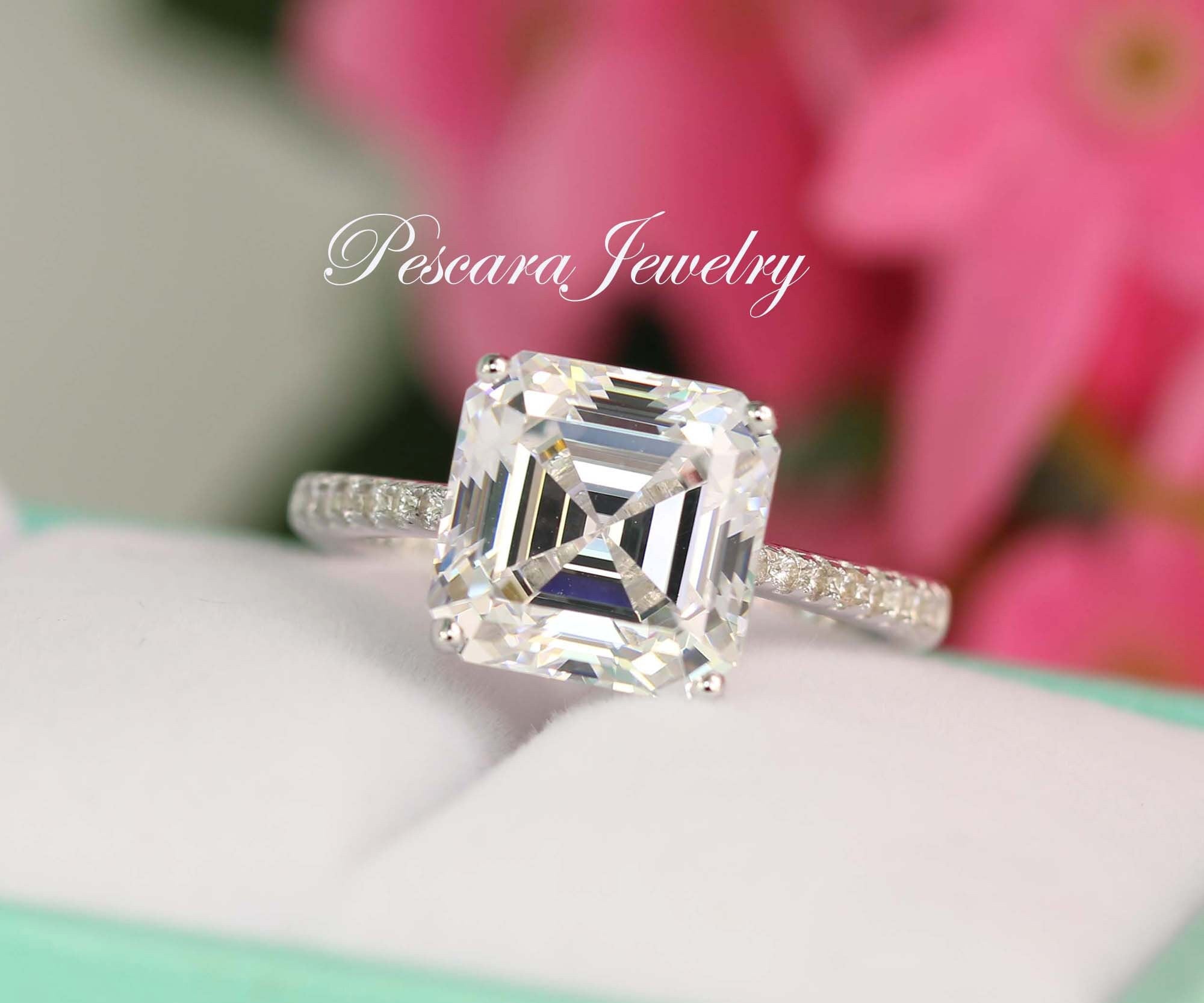
Sterling silver and an Asscher cut: a combination that has no business looking this good and yet here we are. The octagonal silhouette is bold without trying too hard, and that step-cut geometry throws light in a way that’s genuinely hard to ignore. This is vintage-influenced design done with a straight face, not a costume.
The Asscher cut rewards close inspection. Those parallel facets create depth rather than flash, which suits people who find the average round solitaire a bit too obvious. The sterling silver band keeps things clean and current without competing with the stone.
It works as an engagement ring, a right-hand ring, or a deliberate treat-yourself purchase. The proportions are classic enough to age well and specific enough to feel considered. If the person you’re buying for has strong opinions about jewelry, this is the kind of piece that confirms you were paying attention.
IGI-Certified Lab-Grown 3-Carat Asscher Halo Ring
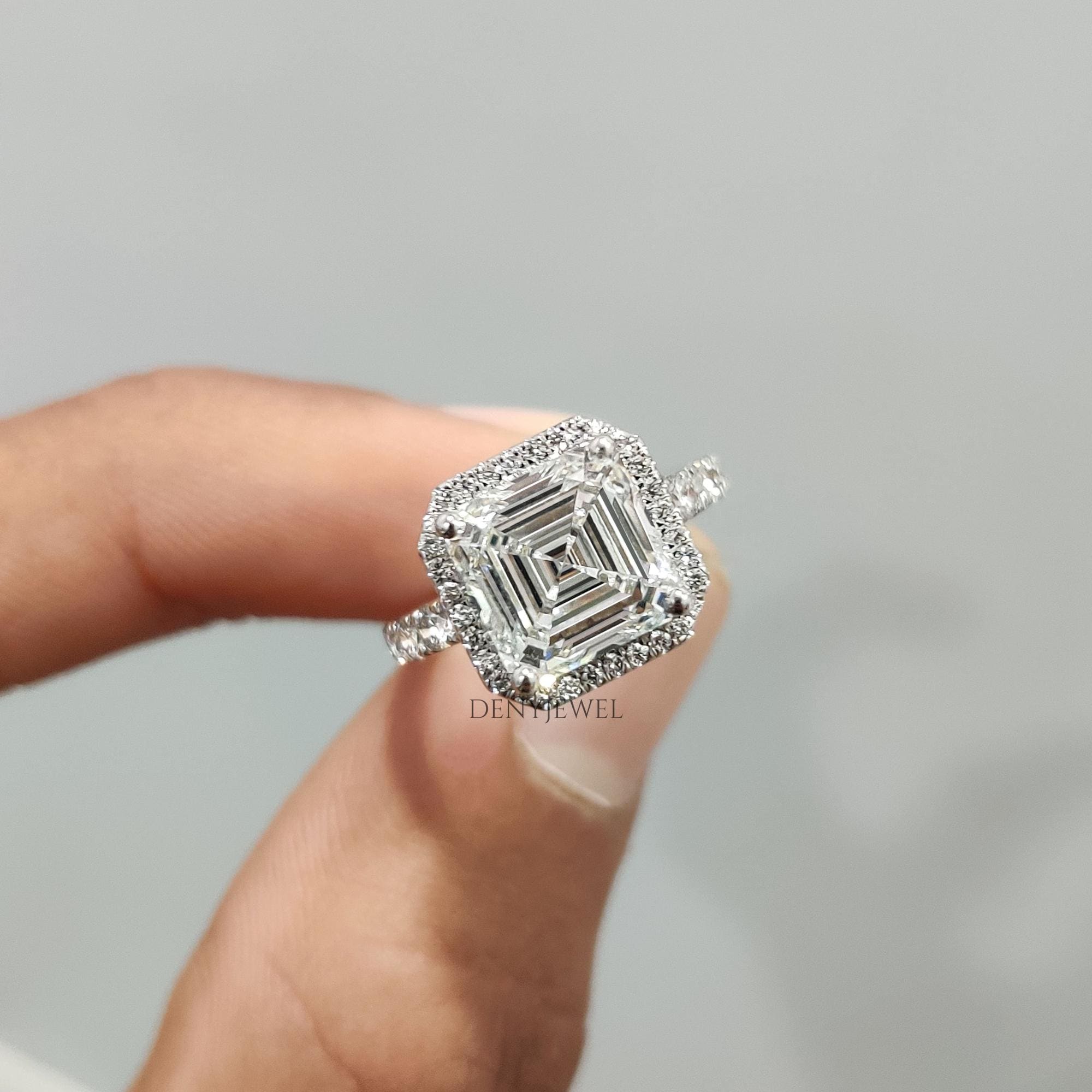
Three carats, IGI-certified, and cut in the Asscher style: step-cut facets, a square silhouette, and that characteristic hall-of-mirrors depth that round brilliants simply cannot replicate. The stone sits in a halo setting that tightens the overall look while pushing the perceived size well past what three carats suggests on paper. All diamonds are lab-grown, so the provenance is clean and the price is considerably more honest than the mined equivalent.
The Asscher cut has a vintage pedigree going back to early 20th-century Art Deco jewelry, and it reads distinctly different from the cushions and ovals currently saturating the engagement ring market. If you want something that photographs with geometric precision and turns heads for the right reasons, this cut delivers that without requiring any explanation to pull it off.
IGI certification means the stone’s cut, color, clarity, and carat weight are independently graded and documented. That paperwork matters when you’re spending real money, and lab-grown or not, a certified stone is a protected investment. The halo setting is the detail that ties it together: it frames the Asscher geometry without competing with it, keeping the whole ring cohesive rather than busy.
Joined Pear And Asscher Pavé Ring
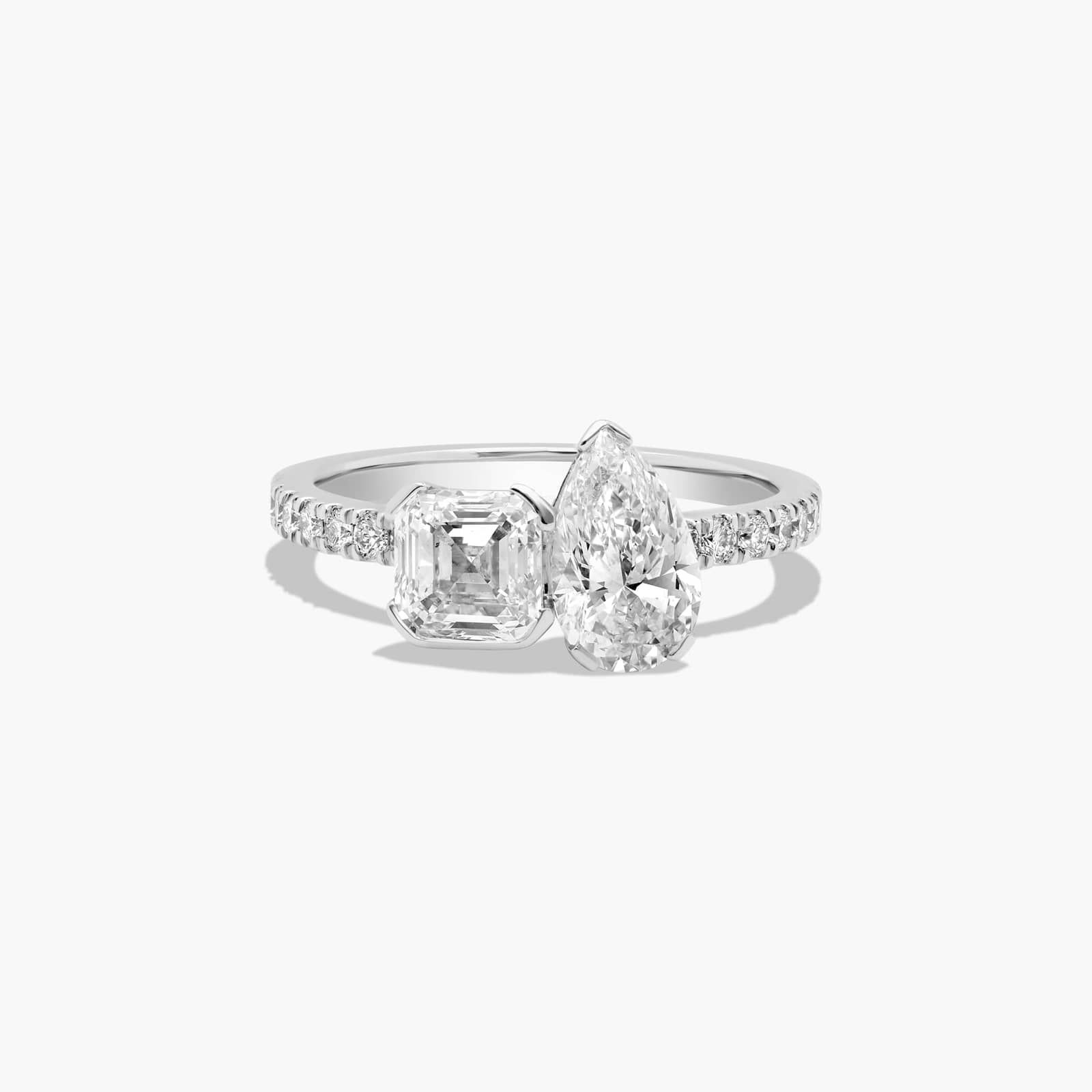
14K white gold, two cuts that have no business looking this good together, and yet here we are. The Joined Pear And Asscher Pavé Ring puts a romantic pear stone directly beside a geometric Asscher cut, both set into a pavé encrusted band that catches light from every angle. The combination should feel chaotic. It doesn’t.
The pear brings softness. The Asscher brings architecture. The pavé band ties them together without flattening either one into a supporting role. It reads as intentional rather than maximalist, which is a harder balance to pull off than most ring designers bother attempting.
This is the kind of piece that works as an engagement ring if you want something genuinely distinctive, or as a right-hand ring for someone who has already decided that conventional solitaires are not for them. The 14K white gold keeps the metal cool and clean, letting the two center cuts do the actual talking.
Lab Grown Asscher 2 Carat Ring
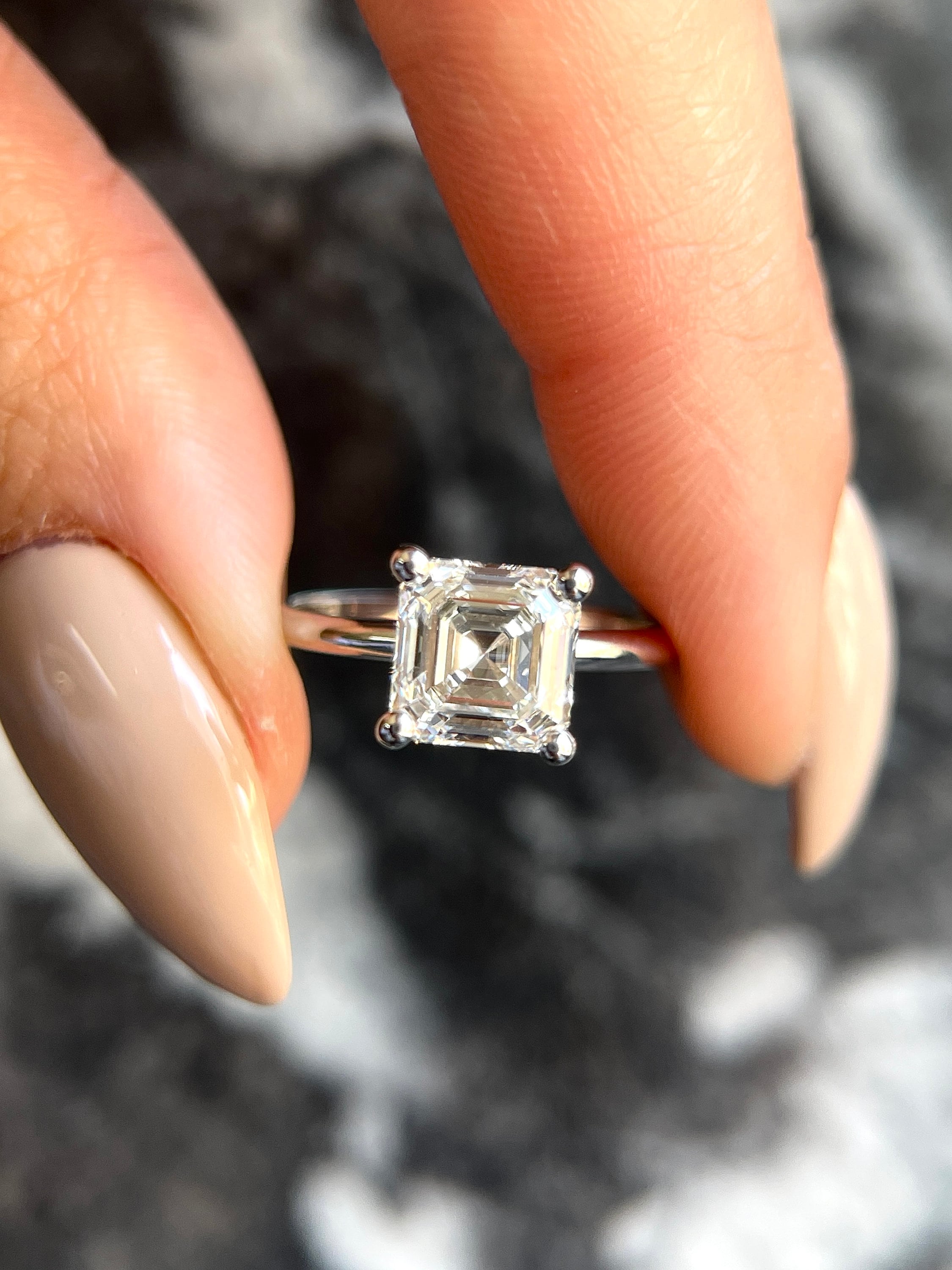
A 2-carat lab-grown Asscher-cut diamond in a cathedral solitaire setting. The Asscher cut is all geometry: a deep octagonal step-cut that throws light in clean, mirrored flashes rather than the scattered sparkle of a round brilliant. It reads vintage without being fussy, and at 2 carats it has genuine presence on the hand without crossing into absurdity.
The cathedral setting lifts the stone high enough to catch light from every angle, and the specs back up the looks: F+ color and VS1+ clarity mean you are getting a stone that is, by any grading standard, excellent. Lab-grown gets you there without the supply-chain baggage of mined diamonds, and at a price point that leaves room for, say, an actual honeymoon.
Asscher cuts have a devoted following for good reason. The cut demands precision, so a lab-grown stone at this clarity grade is arguably better suited to it than a mined one with inclusions hiding in the corners. Understated from across the room, genuinely impressive up close. That is a hard combination to pull off, and this ring does it.
Lab-Grown Asscher Bezel Ring
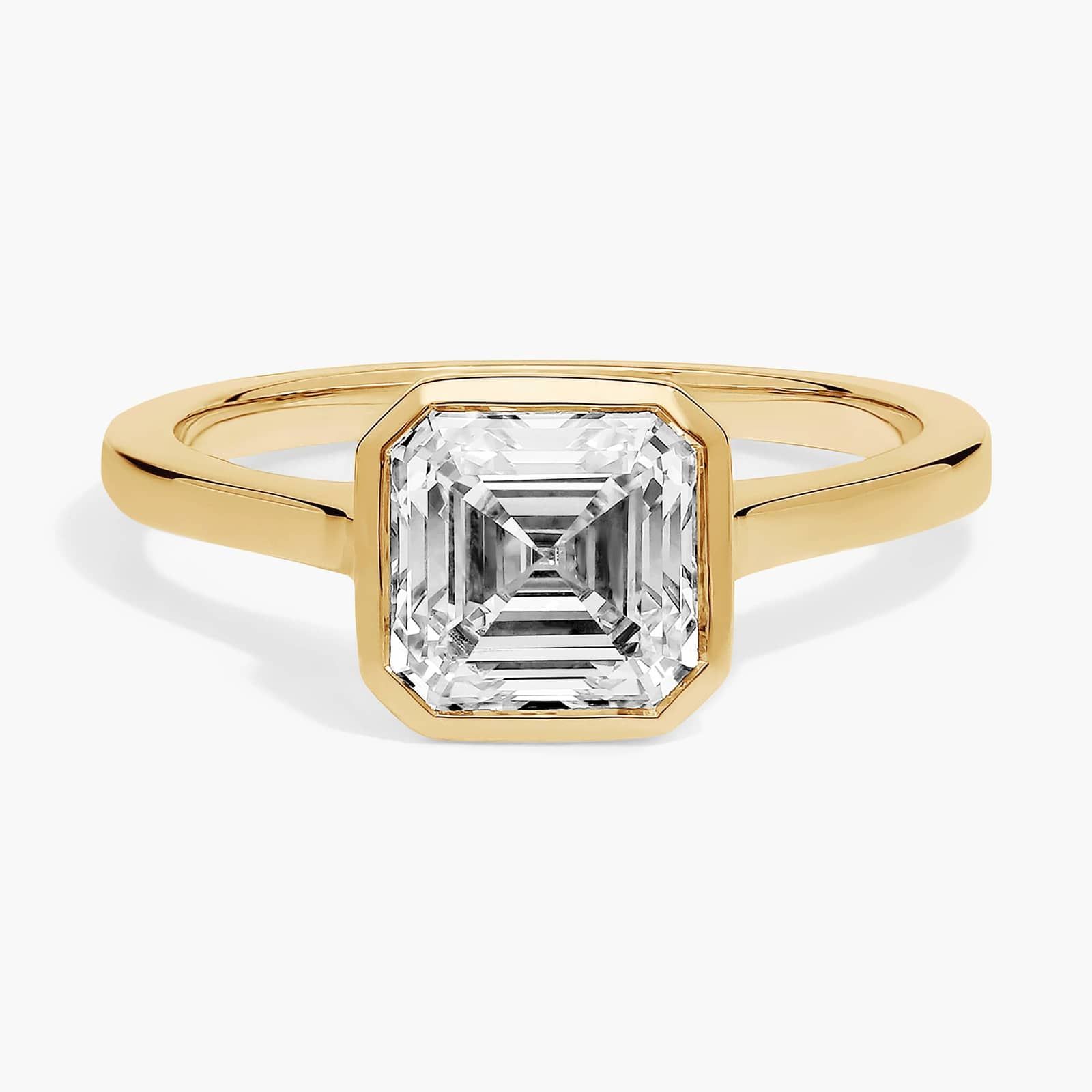
An Asscher-cut lab-grown diamond, 2 carats, set in a full bezel of 18K yellow gold. The geometry here does the heavy lifting: those stepped, square facets catch light in a way that feels architectural rather than flashy, and the yellow gold wrapping ties the whole thing into something genuinely modern without trying too hard.
The bezel holds the stone flush and secure, which means it wears well day-to-day without sacrificing anything on the dressy end. Lab-grown also means you skip the ethical headache of mined stones while getting the same physical and optical properties. Clean conscience, cleaner lines.
This is the kind of ring that reads as an engagement piece or a serious self-purchase depending entirely on who’s asking. The Asscher cut has been around long enough to outlast every trend cycle, and pairing it with a bezel instead of prongs keeps it from looking like every other solitaire on the market. Solid craftsmanship, a silhouette that holds up over time, and a stone that doesn’t cost the earth literally or figuratively.
Pink Asscher Morganite Ring
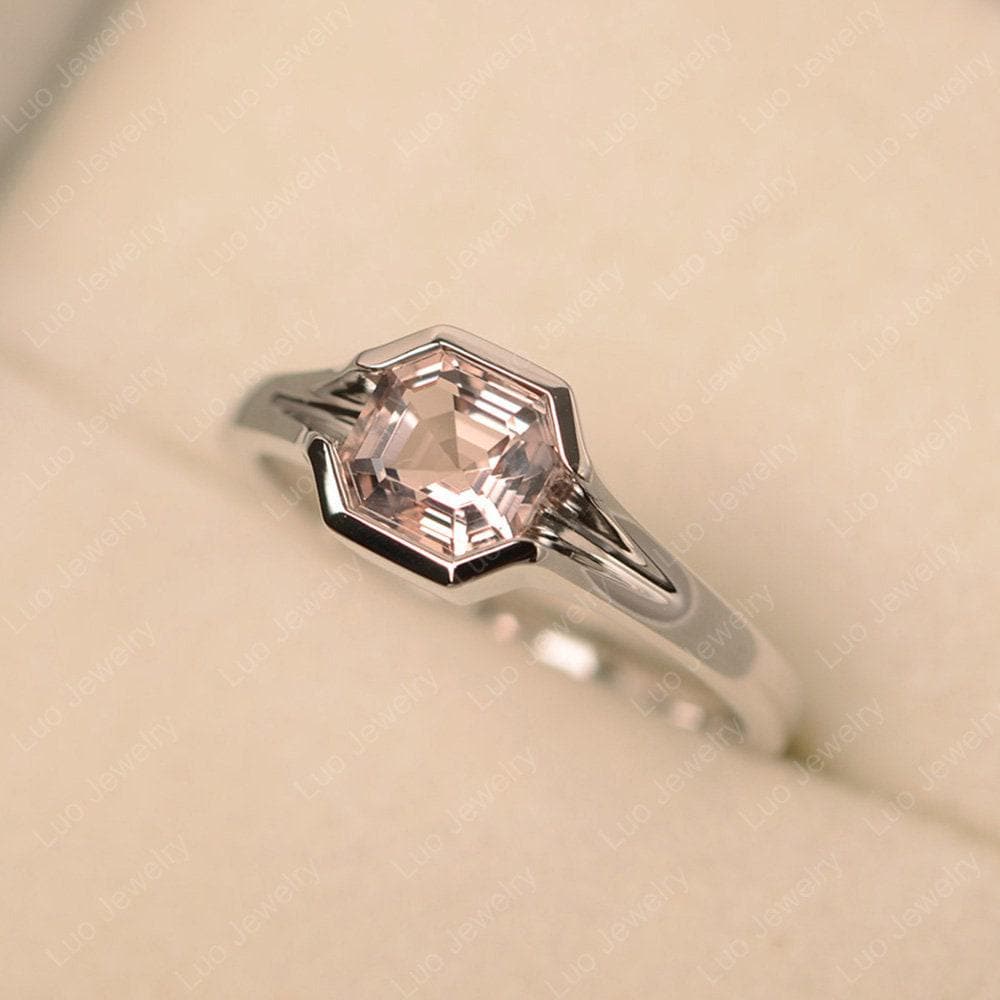
Blush pink morganite in an Asscher cut, framed by art deco geometry. This ring pulls its references from Old Hollywood without tipping into costume territory. The stone’s soft rosy tone reads warm and feminine without going saccharine, and the vintage-cut shape gives it real visual weight on the hand.
The pairing of morganite with art deco lines works because both lean into the same era. Clean angles, a little drama, nothing fussy. If you find traditional diamond solitaires a bit predictable, this is the kind of ring that still reads as serious jewelry while doing something genuinely different.
Morganite has been having a long moment in engagement ring circles, and this cut shows why. The Asscher’s stepped facets suit the stone’s soft color better than a brilliant cut would, letting the hue do the work rather than competing with it. For anyone who wants an engagement ring with a point of view, this one has one.
Sculptural Rose Gold Asscher Solitaire
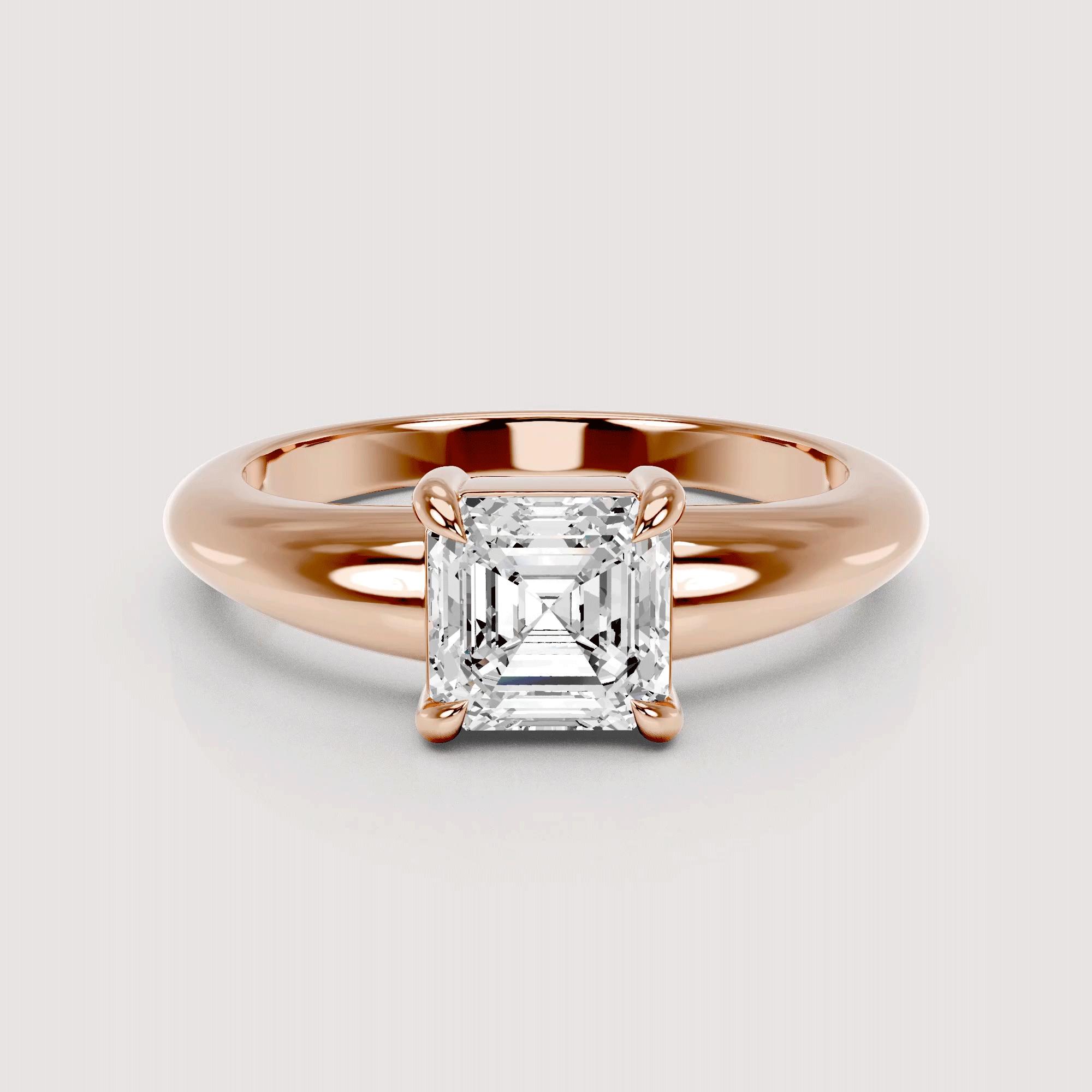
Rose gold and an Asscher-cut diamond is a combination that earns a second look. The Sculptural Rose Gold Asscher Solitaire plays it clean on the surface, then hits you with those deep, step-like facets that pull light in from every angle. It has the energy of that little black dress: deceptively simple, quietly impossible to ignore.
The Asscher cut traces back to early 1900s craftsmanship, and the geometry still holds up. Those concentric squares catch light differently than a brilliant cut does, more deliberate, more architectural. The band is substantial enough to carry the stone without competing with it.
This is the kind of ring people notice across a room and then ask about up close. It reads as a serious piece without being stiff about it, which is a harder balance to pull off than it looks. If you want something that carries a bit of history without feeling like a museum artifact, this one does the job.
Toi Et Moi Emerald Asscher Ring
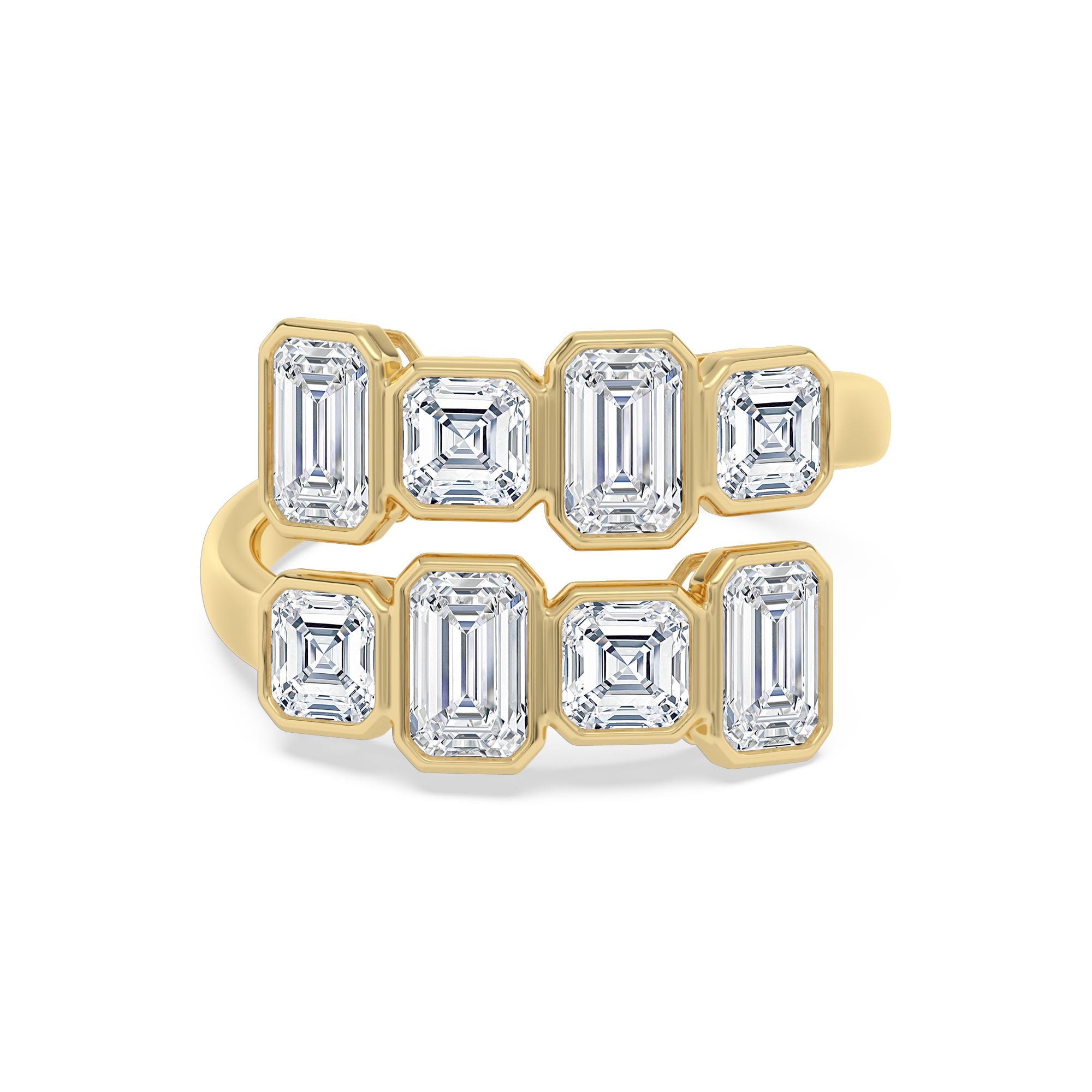
Emerald and Asscher cuts in a single ring, set in 14K yellow gold. The Toi Et Moi format puts two stones side by side rather than one on a pedestal, and the pairing works because the cuts are related but not identical. The emerald brings long, clean lines; the Asscher brings that squared-off, geometric depth. Together they pull in opposite directions just enough to be interesting.
The open setting keeps the focus on the stones, and the overall silhouette reads as both vintage and current without committing hard to either. This is the kind of ring that reads as intentional from across a room, not just up close.
It works as an engagement ring if you want something outside the solitaire default, and it works just as well as a right-hand piece for someone who has simply decided they deserve it. The two-stone format has a long history in fine jewelry, and this version in 14K yellow gold hits the sweet spot between accessible and genuinely special.
Vintage Asscher Leaf Shoulder Ring
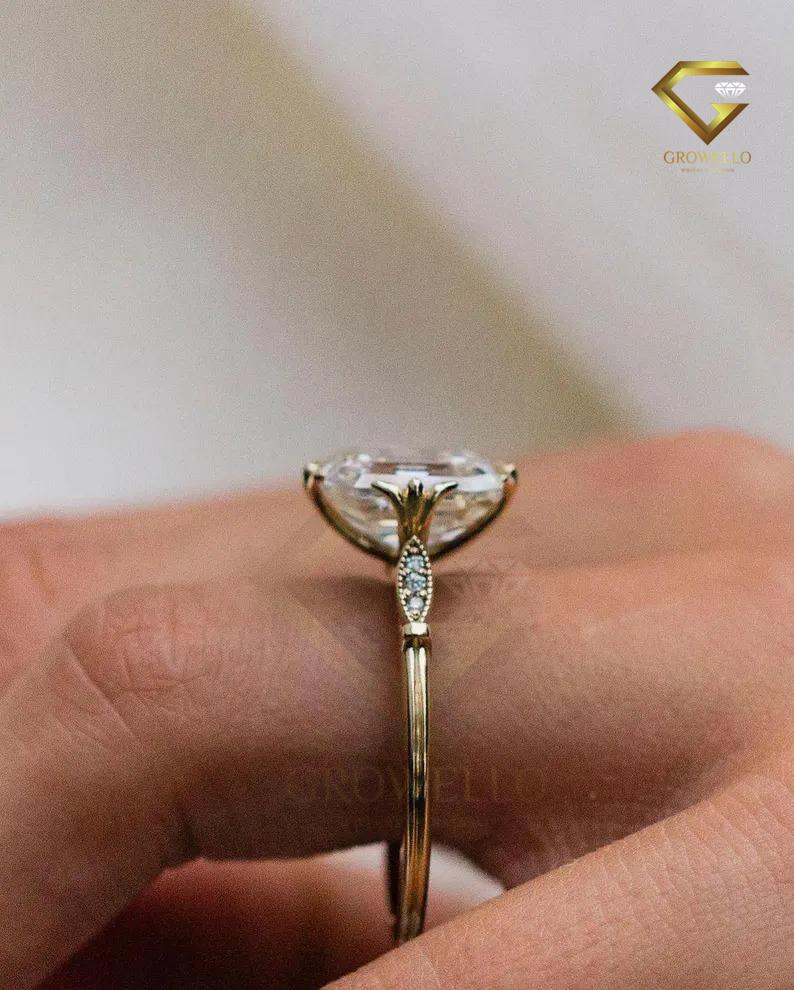
The Vintage Asscher Leaf Shoulder Ring puts an Asscher-cut center stone at the center of a leaf-detailed band that leans hard into Old Hollywood glamour without taking itself too seriously. The Asscher cut has been turning heads since the 1900s, and for good reason: 58 facets arranged in a geometric step pattern catch light in a way that feels less like sparkle and more like depth.
The band itself is carved with a leaf motif that frames the center stone on both shoulders. It’s a small detail that does a lot of work, giving the ring a botanical, almost art deco quality that sets it apart from the usual solitaire. The kind of thing you notice up close and can’t stop noticing after that.
If your partner has a weakness for vintage-inspired design and the kind of ring that rewards a second look, this one earns it. The combination of the Asscher cut and the leaf shoulders is specific enough to feel personal, which is exactly what an engagement ring should be.
Vivid Lilac Spinel Orchid Ring
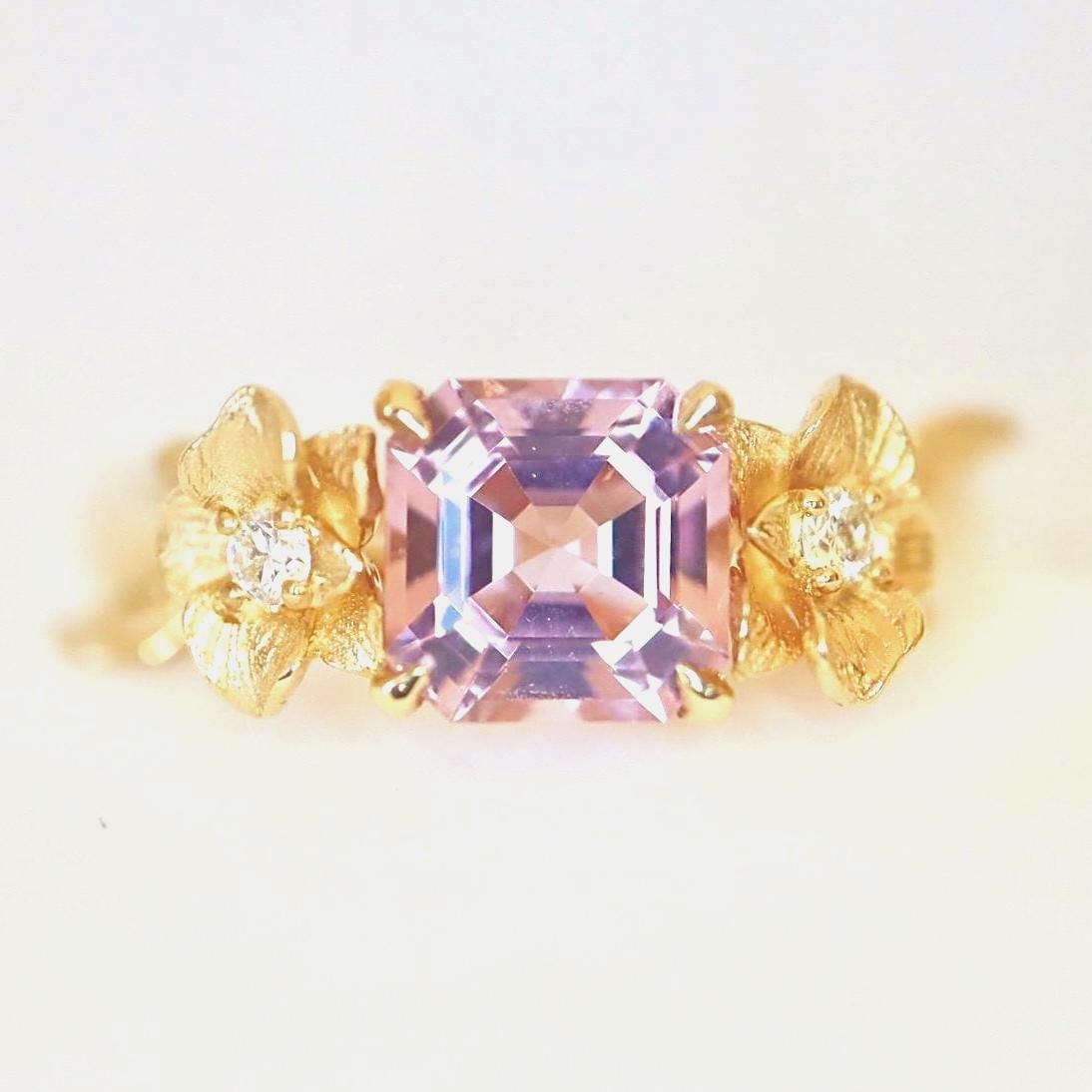
Set in 14K yellow gold, the Vivid Lilac Spinel Orchid Ring puts a 1.1-carat Asscher-cut spinel front and center. That lilac color reads almost violet in certain light, and spinel being a semi-precious stone does nothing to dull the effect. It’s the kind of color people ask about.
Diamond accents run through the floral setting, giving the piece genuine sparkle without overwhelming the spinel. The orchid design nods to nature without going full garden-party excess. The setting itself is built for daily wear, not just the occasional outing where you remember you own nice things.
This ring works best on someone who wants a conversation piece that still has restraint. The soft lilac against bright diamonds and warm yellow gold creates real contrast, and the Asscher cut keeps the whole thing grounded in geometry rather than fussiness. It arrives ready to wear and hard to ignore.
Asscher Lab-Grown Solitaire With Fishtail Prongs
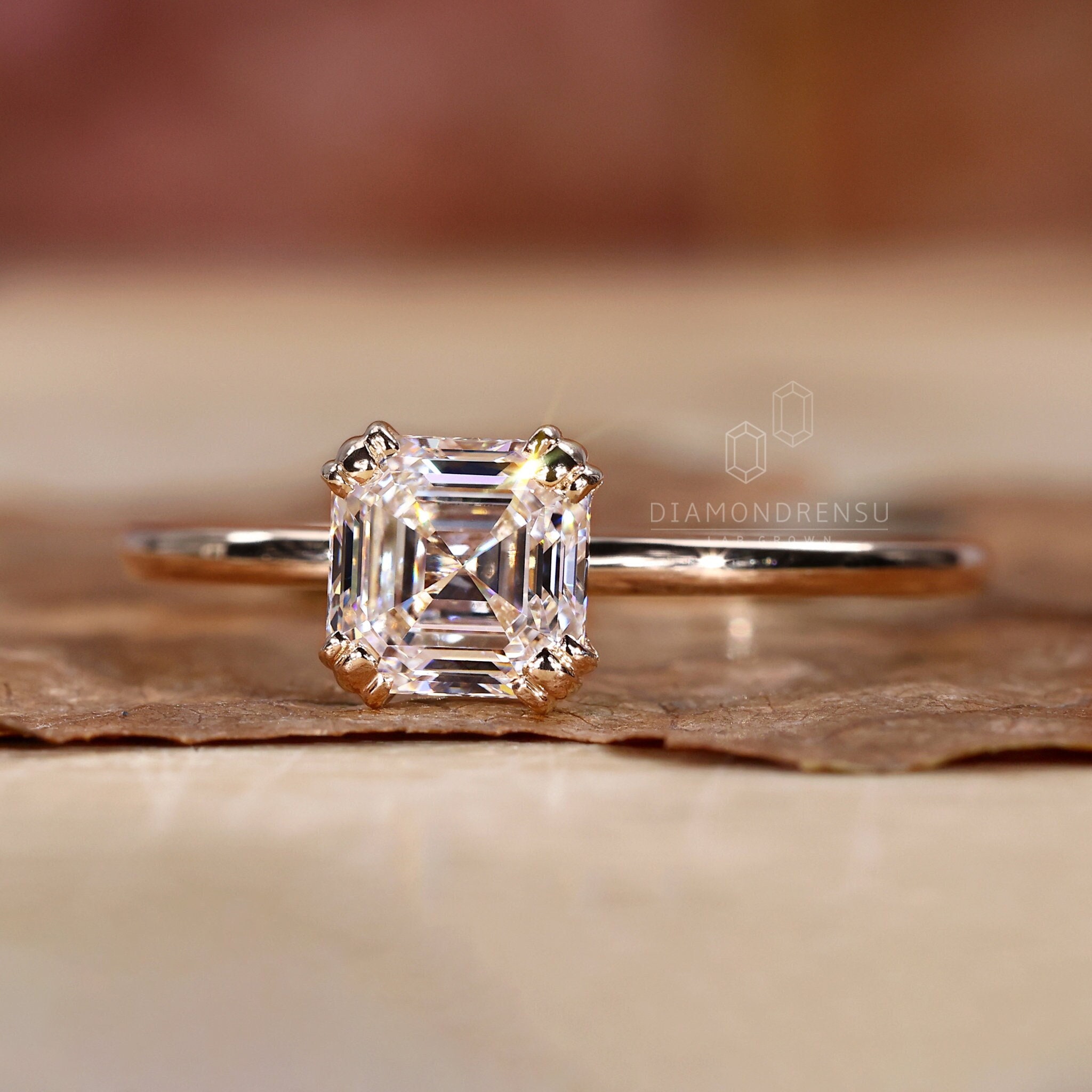
Fishtail prongs are more than a quirky name—they’re a design choice that ensures this Asscher cut lab-grown solitaire shines bright like a spotlight in the night. Those sleek edges and the almost hypnotic stair-like facets are working hard, refracting light like it’s going out of style. So, if you’ve decided that shimmer isn’t just for special occasions, this ring deserves some serious consideration.
Choosing lab-grown doesn’t mean you’re missing out; you’re just thinking smart while saving a chunk of change. The Asscher cut is pure vintage glam, ideal for those who love a bit of old-school charm wrapped in the intelligence of modern design. It’s the kind of ring that makes you feel like you’re living in an F. Scott Fitzgerald novel—minus the prohibition.
So, step away from the conventional and give the round diamonds a break. This ring is for someone who’s not afraid to embrace the direct, geometric allure of something truly different. Wear it yourself, or gift it to someone whose taste is as discerning as yours. Either way, this one’s a head-turner.
So there you have it, our top picks for Asscher cut engagement rings. Now get searching for the perfect ring and be sure to let us know in the comment section what you end up buying!
Don’t forget to pin this to your Rings Board for later!