This guide runs through what each color signals, who it tends to flatter, and the small styling traps that catch people out. We’ll start with the whites, since most gowns still live somewhere in that family, then get into real color.
Fair warning: “white” is at least three different colors, and the camera can tell them apart even when your eye can’t.
Pure White
Pure white is sharp and high-contrast. Pure white has left the old symbolism behind for a cleaner, high-fashion kind of minimalism. It’s crisp and graphic, and it makes a strong impression in the right room.
Best For
Pure white belongs in modern venues: art galleries, city lofts, hotel rooftops. It pairs well with clean fabrics like heavy crepe, structured mikado, and smooth satin, and it holds its own next to a sharp black tuxedo, a dark lip, and a sculptural bouquet.
Watch-Outs
Pure white reflects a lot of light. In bright sun or under direct flash, it can throw off a cool, slightly blue tint. It also clashes with warm rooms. If your venue runs on amber candlelight, exposed wood, and ivory linens, a stark white gown makes the decor around it look yellow by comparison.
How to Style It
Match your whites. Your veil, shoes, gloves, and your partner’s shirt all need the same cool undertone as the gown. Put a cream or off-white shirt next to a bright white bodice and the camera catches the mismatch in the first frame.
If you want a clean editorial look with maximum contrast, pure white does exactly that.
Diamond White
Diamond white is the softer everyday white. Most of the “white” gowns you see in bridal magazines aren’t stark white at all. They’re diamond white, which also goes by silk white or bright white. It’s the traditional bridal look without the blinding glare, soft enough to suit real skin tones and photograph cleanly in daylight.
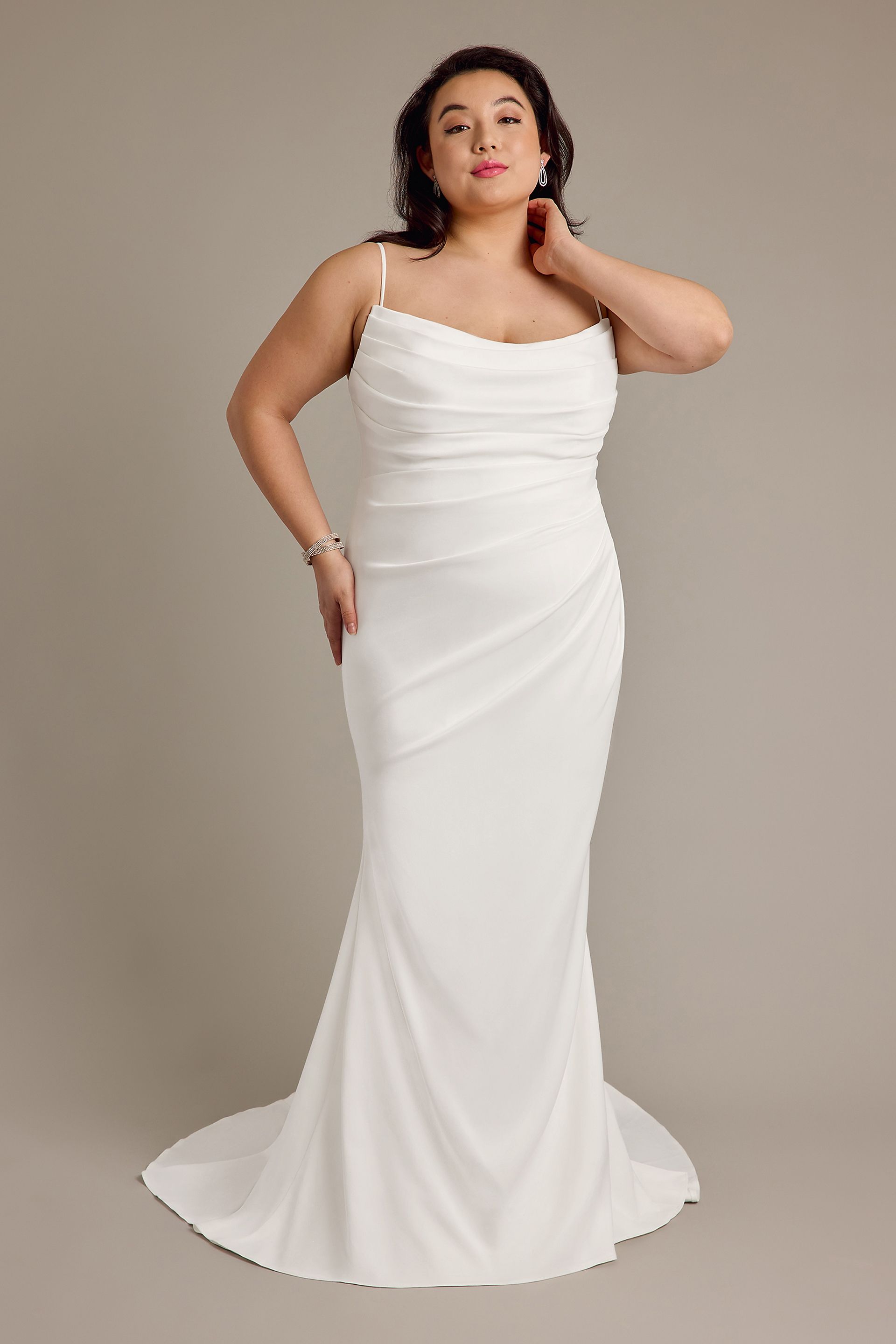
Galina Signature Draped Satin Mermaid Wedding Dress — Diamond White
Best For
Diamond white fits anyone who wants a classic white dress without looking washed out in photos. It works beautifully with light-reflective fabrics like satin and mikado, giving them a clean glow instead of a harsh shine.
Watch-Outs
It’s still a crisp shade, so it clashes with warm accessories. Pair a diamond white gown with a cream veil, champagne shoes, or yellow-gold hairpieces and the undertones fight the second you step into natural light.
The Shopping Move
When a consultant calls a dress white, ask whether they mean pure white or softened white. Then hold a true-white veil or a sheet of printer paper against the fabric. The undertone shows up right away, and you can see exactly how the softer shade sits against your skin.
Ivory
Ivory is the one most brides land on, and for good reason. That slight cream tint makes it noticeably warmer and softer than stark or diamond white, which is why it reads well on so many people.
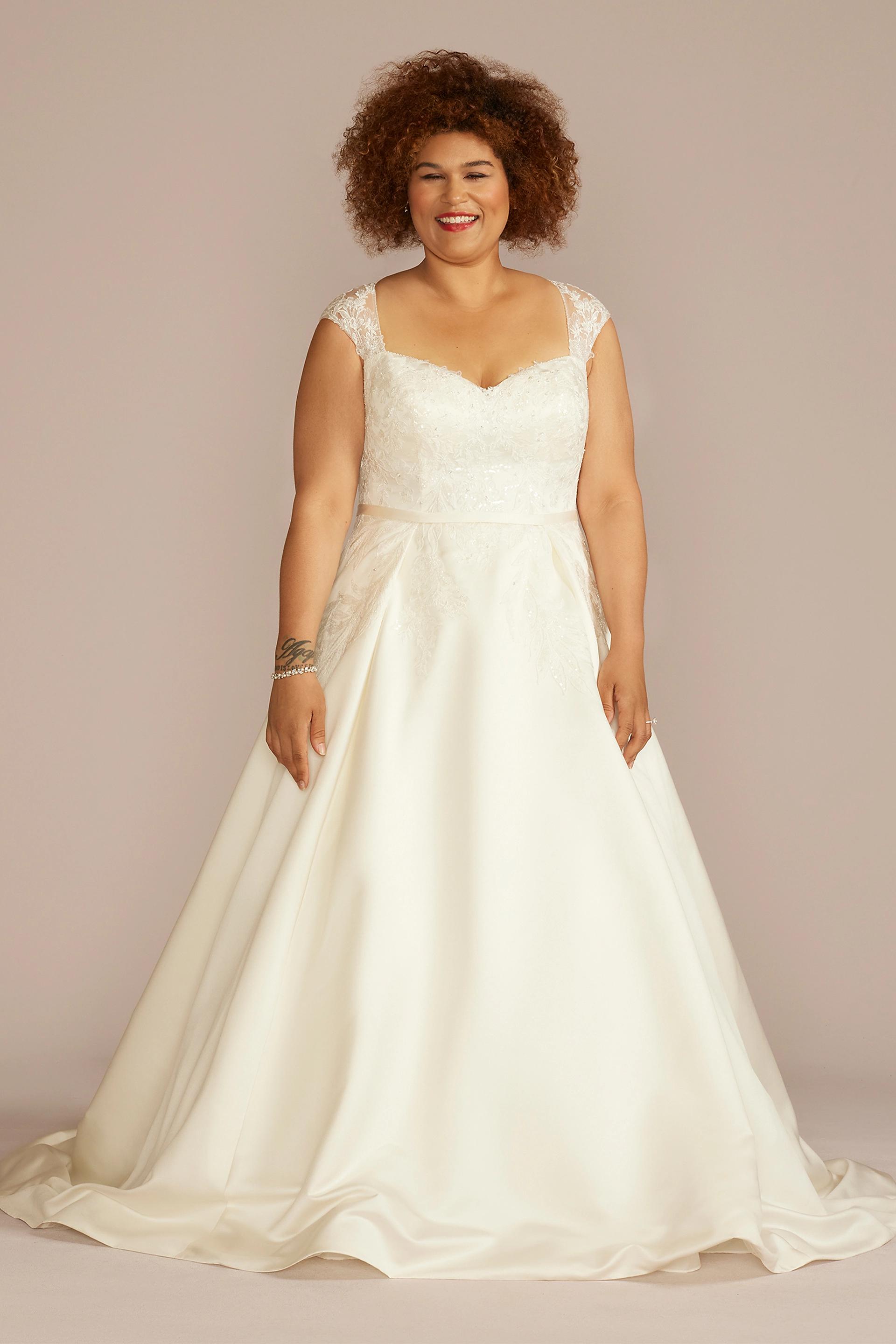
Oleg Cassini Lace Appliqué Satin Wedding Dress — Ivory
Best For
Ivory flatters almost every skin tone, especially if pure white washes you out. It’s at its best with textured lace, 3D florals, and layered tulle, where the detail stands out against a warmer base. It also suits candlelit ballrooms, historic venues, garden settings, and any earthy or muted palette.
Watch-Outs
Watch your lighting. Heavy amber or yellow indoor bulbs can pull ivory much more yellow in photos than it looks in daylight. It also clashes with cool whites. Pair an ivory gown with a stark white veil, or stand next to a partner in a bright optic-white shirt, and your dress can look dingy next to it.
How to Style It
Coordinate the whites around you. Keep your veil, shoes, and your partner’s shirt in the ivory or off-white family. Aim for the same warm undertone rather than an exact dye match.
If you want a traditional look without the glare of bright white, start here.
Champagne
Champagne is for anyone who wants a little more personality in their bridal look. It brings warmth into the room while staying classic enough for a traditional venue. The golden and beige undertones give the fabric visible depth, so lace overlays, embroidery, and beading stand out instead of flattening against plain white.
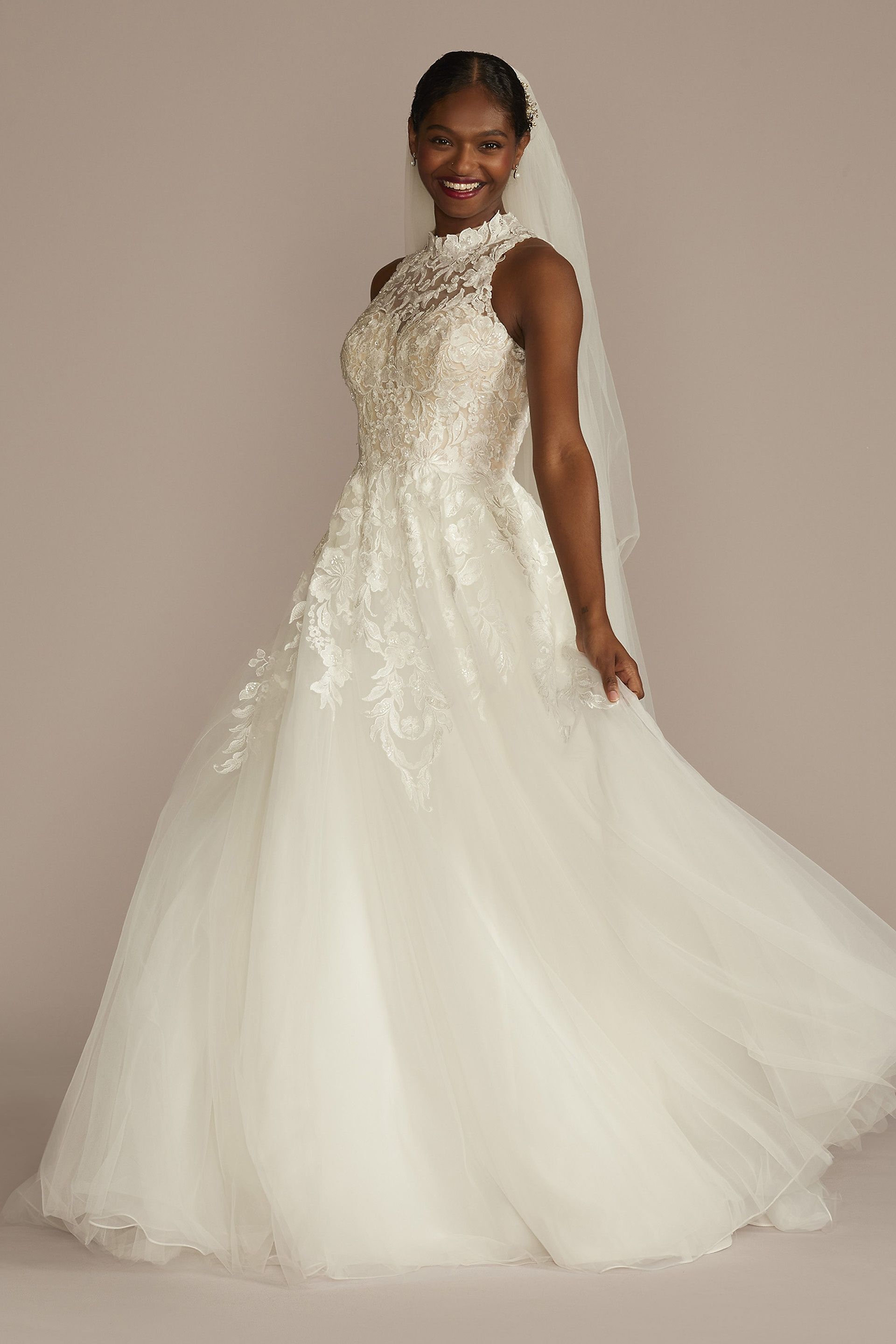
Oleg Cassini Lace Appliqué Tulle Wedding Dress — Soft White / Dark Champagne
Best For
Champagne shines at evening receptions, historic venues, and grand ballrooms. It suits warm palettes built on amber lighting, velvet, and rich neutrals, and it’s the natural pick if you wear gold, bronze, or rose gold jewelry.
Watch-Outs
Champagne shifts with the light. In cool daylight it leans toward a warm ivory. Under indoor chandeliers the gold tones come out fast. Get a fabric swatch ahead of time and check it in both day and evening lighting.
How to Style It
Stick with warm accents. Match the dress to gold jewelry, florals in cream or terracotta, and shoes with warm undertones. Most importantly, match your veil to the dress. A pure white veil clashes immediately.
If your reception has low candlelight and a champagne tower, this color fits right in.
Blush and Nude
Want a touch of color without committing to a full pastel gown? This is the middle ground. Blush and nude undertones give you something soft and romantic without going dramatic.
The setup is simple. You rarely wear a solid pink dress. Instead, a subtle blush, sand, or nude lining sits under layers of ivory lace or tulle. That underlayer creates instant contrast, so lace patterns, floral appliqués, and beadwork show up in photos rather than washing out against solid white. From down the aisle the dress reads as classic white. Up close, the extra depth shows.
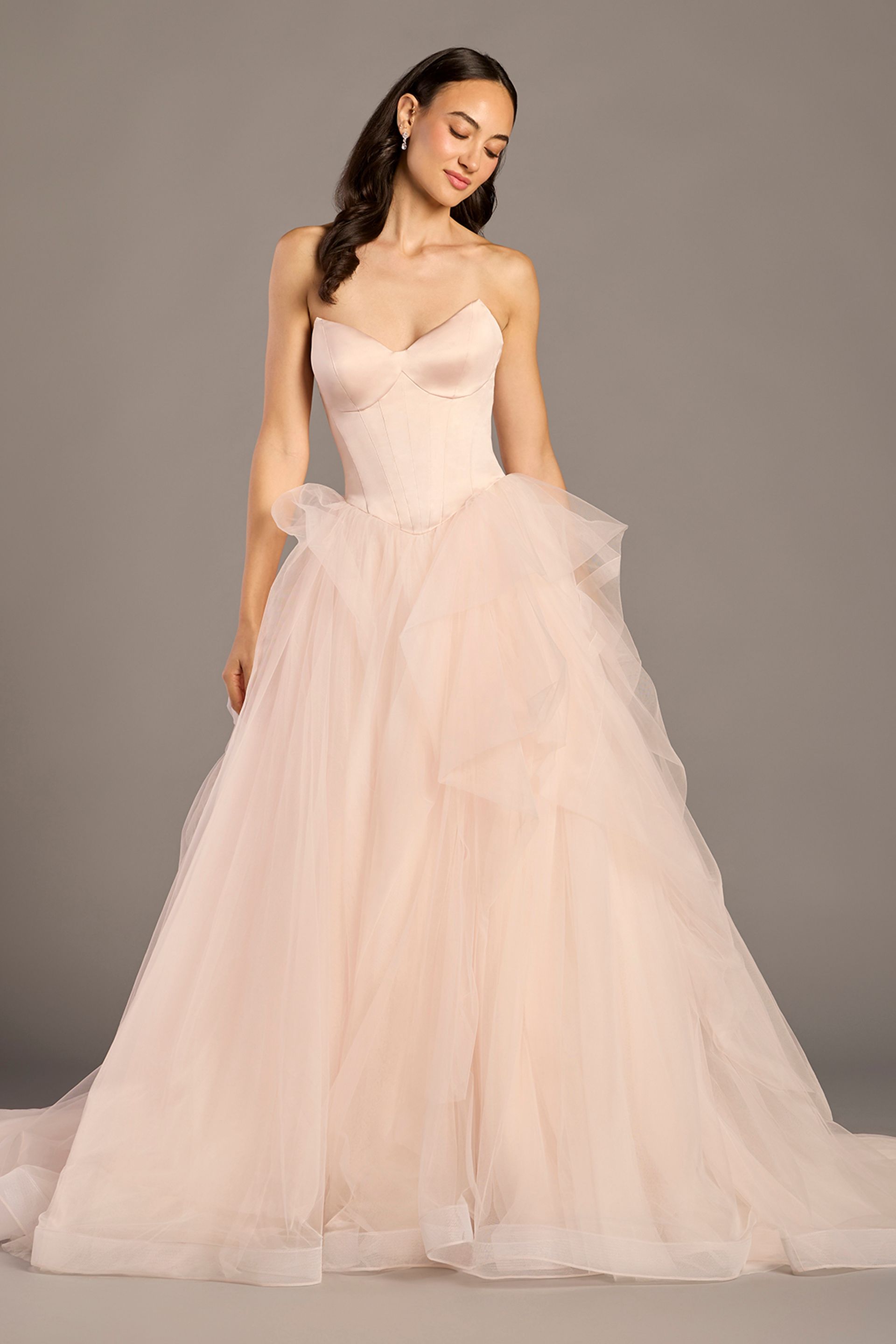
Galina Signature Sweetheart Tulle Ball Gown — Blush
Best For
Blush and nude undertones suit lace-heavy gowns and textured 3D appliqués that need a contrasting base to show their detail. They also work for garden venues, vineyards, and soft spring or summer palettes, and for anyone who wants a modern twist while keeping a traditional look from a distance.
Watch-Outs
Underlayers shift color depending on the light. Warm indoor fixtures and sunset golden hour can pull strong pink or peach tones on camera. Test your fabric swatch in bright natural daylight and under warm indoor bulbs so you know how it reads everywhere.
How to Style It
Echo the undertone in one small detail. A muted nude-pink lip, blush velvet shoes, or a silk ribbon tied around your bouquet makes the palette feel deliberate instead of accidental.
If you’re tempted to skip white altogether, our roundup of non-white wedding dresses covers the bolder end.
Pink
Pink covers everything from a faint blush lining to an all-out magenta gown. It reads warm, cheerful, and unmistakably romantic, whichever end of the scale you land on.
Azazie Kieryn Blushing Pink Wedding Dress
Best For
Pink suits garden ceremonies, outdoor venues, city hall elopements, or a second look for the reception. It plays nicely with textured lace, layered tulle, and plenty of flowers.
Watch-Outs
Baby pink can look dated fast if your styling gets too sweet and matchy. At the other end, bright hot pink takes over the whole frame if the rest of your outfit is loud too. Pick a lane and let one thing be the star.
How to Style It
Pick a direction and commit to it:
- Soft blush calls for classic romance. Think pearls, a raw-edge veil, and light dewy makeup.
- Saturated magenta wants clean sharp styling. Think sleek hair, architectural earrings, and minimal accessories.
Decide early: soft rom-com or full runway, before you start ordering swatches.
Want to see the full range? Our roundup of pink wedding dresses runs from baby blush to bold magenta.
Peach
Peach works as a modern neutral. It’s softer and earthier than standard blush, warm without feeling formal. Picture golden-hour light mixed with sunset tones.

Irma Haroon Peach Bridal Gown
Best For
Peach is happiest in natural light. It suits outdoor ceremonies, desert venues, and golden-hour photos where the fabric catches the low sun. It also pairs well with bohemian styling, textured lace, flowing chiffon, and warm floral palettes built on terracotta, coral, apricot, and dried grasses.
Watch-Outs
Keep a close eye on indoor lighting. Under some incandescent bulbs or direct flash, soft peach turns heavily orange on camera. Test your fabric swatch under warm indoor fixtures and flash before you settle on the final shade.
How to Style It
Stick to natural warmth. Pair the dress with yellow gold or bronze, plus organic textures like woven fibers or raw-edge ribbons. Keep your makeup grounded with warm nudes and a defined eye or lip so the soft tone doesn’t wash out your features.
Peach is the pick if you want color without making it the whole conversation.
See how it plays out on real gowns in our peach wedding dresses roundup.
Blue
Blue stands for loyalty and calm, and wearing it turns the old “something blue” tradition into the whole look. The range runs from airy powder blue to deep navy, and each end reads completely differently.
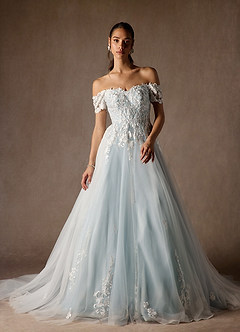
Azazie Rowe Cloudy Blue Wedding Dress
Best For
Soft breezy blues suit beach and coastal venues where they echo the water. Deep navy, slate, and midnight blue suit winter ceremonies, where they set up sharp contrast against a cold-weather backdrop. Sleek modern cuts let a blue gown carry the color without heavy embellishment.
Watch-Outs
Pale baby blue can drift into prom territory if you pile on glitter and sparkle. On the darker end, navy soaks up light and can pass for standard formal eveningwear. Keep a dark blue gown clearly bridal with high-contrast bouquet florals and a crisp white veil.
How to Style It
Repeat the shade in small deliberate details. A matching silk ribbon on your bouquet or a touch of the same blue on your stationery ties the look together.
For more from powder blue to midnight navy, browse our blue wedding dress ideas.
Green
Green is the color of growth and renewal, and shades like sage, moss, and olive feel earthy and modern at once. If you want an outdoor-ready alternative to white, green lets you stand out without fighting your backdrop.

Cocomelody EMME Green Wedding Dress
Best For
Green suits outdoor ceremonies and earthy palettes. It’s at its best in garden, greenhouse, and forest venues where the dress sits naturally in the scenery, and in minimalist weddings where clean decor lets the gown provide the one pop of color. It’s the obvious pick if you love botanical motifs, textured foliage, and organic styling.
Watch-Outs
Watch the saturation. Electric neon greens clash with the actual plants and take over your photos. Muted shades like eucalyptus, sage, and deep olive are far easier to wear and hold up well in natural light.
How to Style It
Be deliberate with your flowers. For a crisp simple look, stick to dark greenery and white blooms. For something softer, bring in blush, dusty peach, or warm champagne florals.
Green is the color that makes you look completely at home in an outdoor setting.
Sage, moss, and olive look their best on real brides, and our green wedding dresses roundup has plenty.
Red
Red has deep roots in bridal fashion. Across many South Asian, East Asian, and Middle Eastern traditions, it stands for good fortune, joy, and celebration. In a modern Western wedding, a red dress reads as bold and confident. Your cultural context and your own taste shape how it lands.

East Meets Dress Wine Red Marilyn Wedding Dress
Best For
Red is right for ceremonies where it’s the honored tradition, and for fall and winter dates that suit rich deep tones. It also loves a venue with character: a historic theater, a candlelit hall, an industrial loft. Above all, it’s for anyone going for a bold high-energy look.
Watch-Outs
Red is the first thing anyone notices in the room. If all your reception decor matches the dress, the whole space gets overwhelming. Balance the gown with crisp neutrals, soft metallics, or muted greenery. Keep an eye on your partner’s outfit too. A classic black tux or navy suit gives clean contrast, while clashing patterns or a mismatched boutonniere pull focus in photos.
How to Style It
Nail down your exact shade family early. True scarlet, deep burgundy, and warm terracotta have completely different undertones. Once you pick the dress, match your florals, lipstick, and jewelry to that specific warm or cool base so everything feels cohesive.
See scarlet, burgundy, and everything between in our red wedding dresses roundup.
Black
A black wedding dress is a deliberate choice, and it looks it: modern and moody rather than gloomy. If you’d rather skip the standard bridal script entirely, this is where you go.
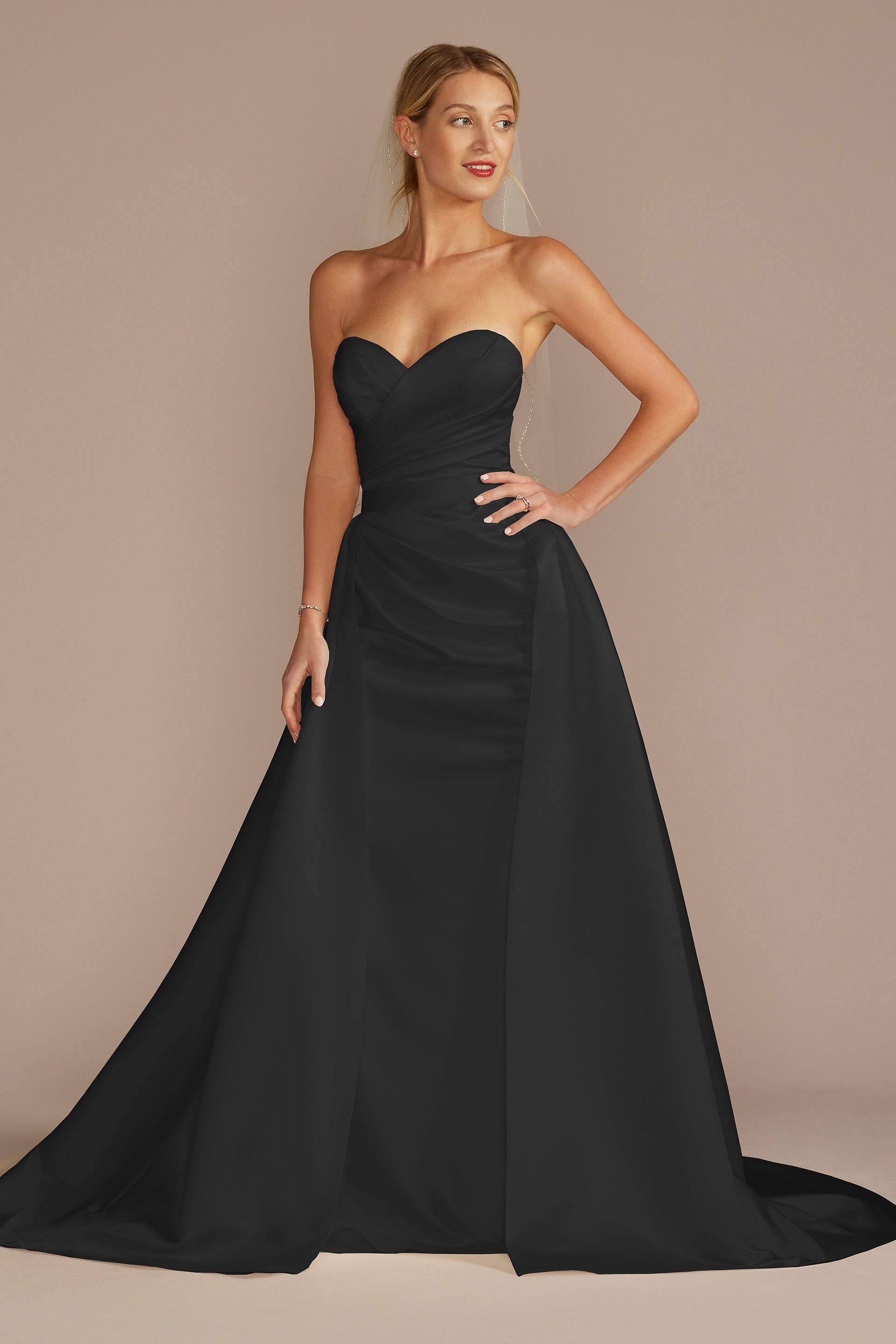
DB Studio Satin Ruched Wedding Dress with Overskirt — Black
Best For
Black belongs in contemporary settings: evening events, sleek city lofts, modern museums, and art galleries. It’s made for high-contrast photography against clean architectural backdrops, and it’s the pick for anyone who wants a strong silhouette over tradition.
Watch-Outs
Solid black fabric soaks up light. In a dim reception space or a flash photo, a flat matte fabric can lose its definition. Keep the detail visible on camera by choosing distinct textures: layered tulle, corded lace, tonal embroidery, or subtle beading.
You may also get a few unsolicited opinions from more traditional family members. It’s your celebration, so wear what you want.
How to Style It
Build in deliberate contrast. Pair a black gown with an ivory or blush bouquet, bright diamond or crystal jewelry, and a sheer ivory or embroidered black veil. Lighter focal points keep the dark fabric crisp and clearly bridal.
For more moody inspiration, take a look at our black wedding dresses roundup.
How to Choose Your Wedding Dress Color
Dress color is never an isolated choice. It ties directly to your skin undertone, your venue lighting, your fabric texture, and whatever other whites end up in the frame. When those line up, your photos look great. When they clash, the camera catches it right away. If you want the bigger picture beyond color, our guide on how to choose a wedding dress covers fit, silhouette, and budget too. Here’s a low-stress way to land on your shade.
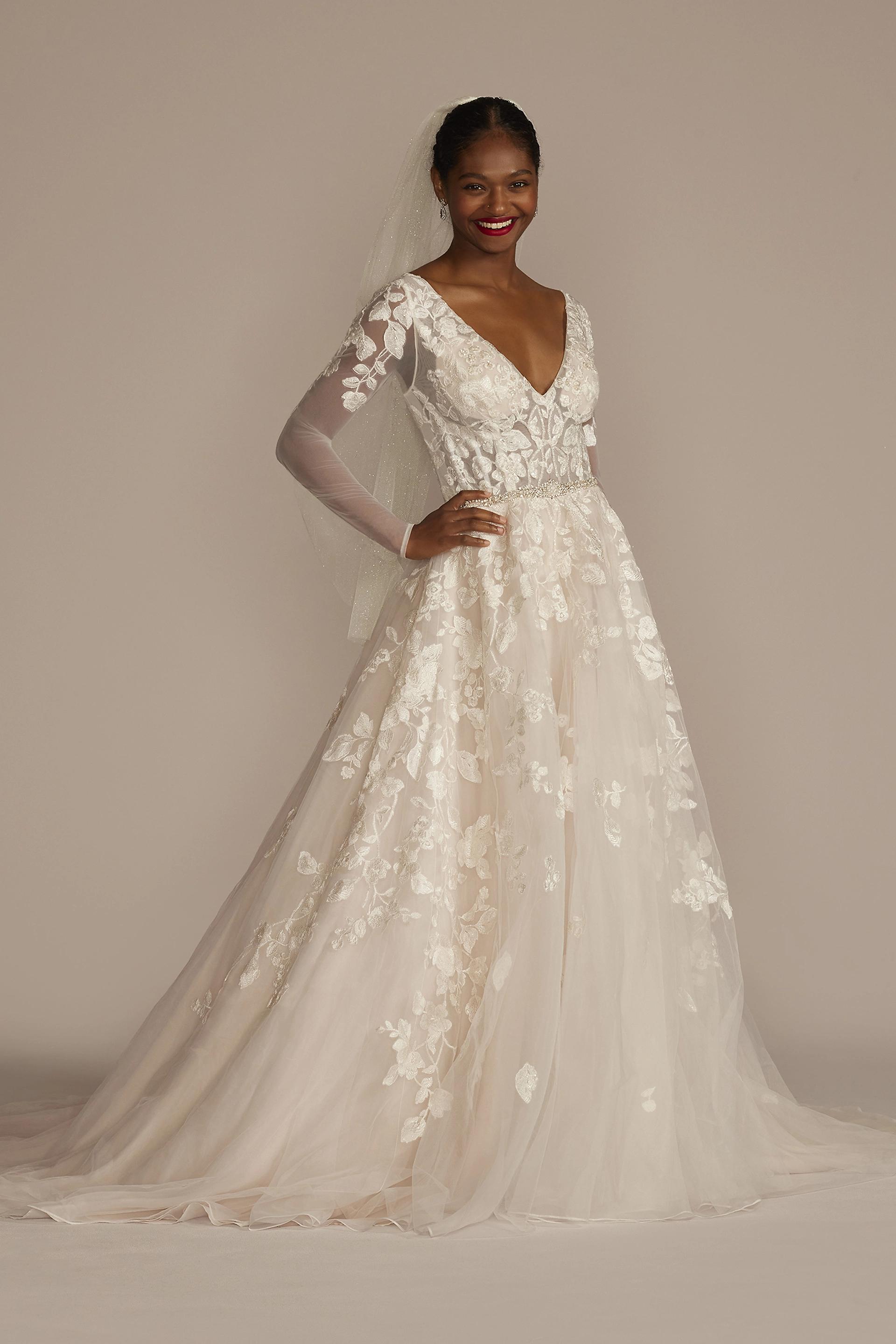
Galina Signature Illusion Long Sleeve Wedding Dress — Ivory/Cashmere
Start With Your Undertones
Check the inside of your wrist in natural daylight by a window. Your vein color gives you an instant baseline:
- Blue or purple veins point to cool undertones. Pure white and diamond white give you crisp clean contrast.
- Greenish veins point to warm undertones. Ivory, champagne, and soft peach bring out the warmth in your skin.
- A mix of blue and green points to neutral undertones. You can wear pretty much any shade.
Use jewelry as a quick tie-breaker. If silver makes your skin pop, lean cooler. If yellow gold looks better on you, stick with warm ivory or champagne.
Try the Gown in Two Lightings
Boutique spotlights make gowns sparkle, but they rarely match real wedding lighting. Don’t pick a color on the strength of the dressing room alone.
Take the dress to a window with daylight, then check it under regular indoor bulbs. Snap phone photos in both spots with the flash off. Your brain adjusts for color automatically when you look in a mirror, but your phone camera shows the real contrast and color cast.
Coordinate Your Nearby Whites
This is the detail most bridal guides skip, and it lands straight in your portraits. The eye judges white against whatever sits right beside it.
- Match your veil undertone to your dress. A stark white veil over an ivory dress makes the dress look dingy. Our guide to wedding veil lengths helps you pick the right one to pair with it.
- If you’re in ivory, don’t put your partner in an optic-white dress shirt. Go soft white or off-white so the two don’t fight in close-ups.
Let the Fabric Settle the Rest
Fabric weave changes how a color reads on camera, and so does the cut. Shiny smooth fabrics like silk satin, mikado, and taffeta bounce light away, making colors look brighter and cooler. Textured fabrics like corded lace, crepe, and tulle absorb light, so warmer undertones and subtle contrasts come through. If you’re weighing silhouettes alongside color, our wedding dress styles guide breaks down which cuts suit which frames.
Sanity-Check With Your Venue and Photographer
Keep your photo locations and timing in mind:
- Midday sun cools down fabric tones and can blow out a bright white dress.
- Sunset light throws warm gold over ivory, champagne, and blush.
- Ballrooms with amber chandeliers pull yellow tones fast.
Ask your photographer how they handle white balance in editing. Tell them your dress color and venue lighting ahead of time so they can plan their flash setup.
Balance the Look if You Want Color
If you want color but worry about keeping things classic, our guide to non-white wedding dresses walks through practical styling.
You can also split the difference between the ceremony and the party. Wear ivory or diamond white for the ceremony and formal portraits, then change into color or pastels for the reception.
Your Game Plan
Pick one or two shades based on your undertones, get fabric swatches, and hold them next to your partner’s suit in daylight. The right color brightens your skin, matches your accessories, and looks right on camera without any fuss.
Wedding Dress Color Questions Brides Ask Often
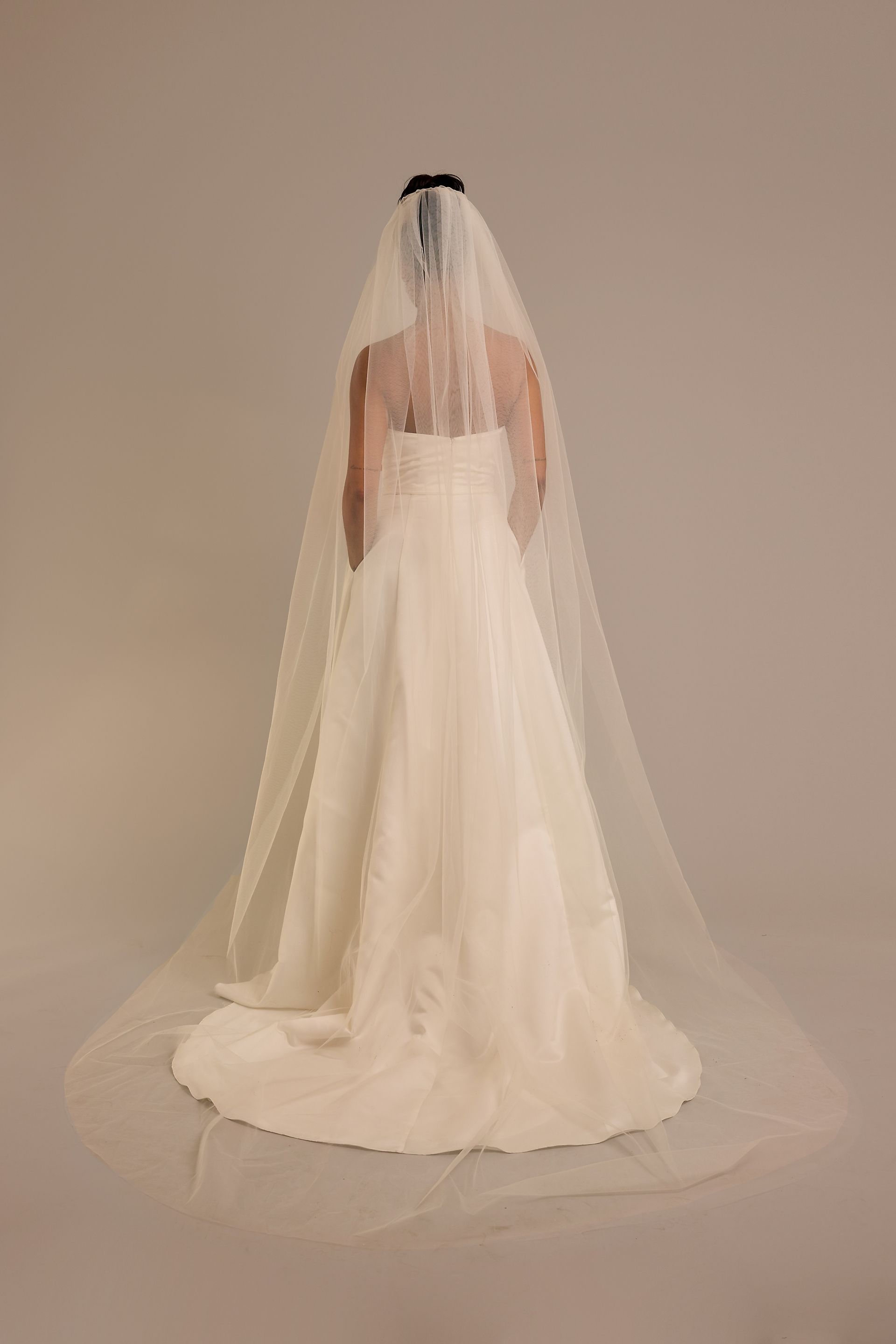
DB Studio Raw Edge Tulle Chapel Veil — Ivory
Color decisions cause plenty of late-night second-guessing. Here are straight answers to the questions we hear most when brides are picking their shade.
What is the difference between white and ivory wedding dresses?
Pure white has no undertones, so it looks bright, crisp, and stark in direct sun. Ivory has a subtle cream base, which softens the look and flatters more skin tones. On its own, ivory reads as a classic white dress. Put it right next to a stark white shirt, veil, or tablecloth and the difference jumps out. Cameras catch and exaggerate those tone differences fast.
Is there a wedding dress color you shouldn’t wear?
No color is off-limits. Modern bridal fashion comes down to personal taste and venue setting, not old superstitions. The one real exception is cultural or religious tradition. If your venue has specific customs around sacred or taboo colors, check those first. Otherwise, wear whatever makes you feel great.
How do I match my veil to my dress color?
Match undertones instead of chasing an exact dye match. Cool-toned gowns like pure white or diamond white want a cool veil. Warm-toned gowns like ivory, champagne, or blush pair best with ivory or warm off-white. To check, hold the veil against the bodice near a window in natural light and take a quick phone photo. If the veil looks dingy or flashes bright blue on screen, swap the undertone.
Will my dress look different in photos than in the mirror?
Yes, and that’s normal. Your eyes adjust to color automatically, but a camera sensor records the exact color temperature of the room. Direct sunlight and flash make gowns look cooler and brighter, while indoor chandeliers bring out yellow, cream, and gold. Snap test photos of your fabric under different lighting during your fittings, and tell your photographer your exact shade beforehand so they can set their white balance for portraits.
I want a non-white dress. Where do I start?
Start with the mood you want to set:
- Romantic and soft: blush, powder blue, peach
- Moody and dramatic: black, midnight navy, emerald
- Bold and celebratory: scarlet red, bright magenta
- Natural and grounded: sage green, terracotta, champagne
Then pick the intensity. You might layer a subtle tinted lining under ivory lace, or go fully saturated from top to bottom. Our guide to non-white wedding dresses has styling ideas and real bride examples to get you started.
Don’t forget to pin this to your Wedding Dresses Board for later!