The trick that actually works is simple, and it holds from November through February whether the wedding is in a city ballroom or a barn with space heaters. Pick a warm fabric with a bit more coverage, in a deep winter color, then match the length and polish to the dress code. If you can name the fabric, the coverage, and the dress code in one sentence, you have an outfit you can wear all night. Here are the ideas that do exactly that, plus how to choose the right one for your invite.
Jewel-Tone Velvet Dress
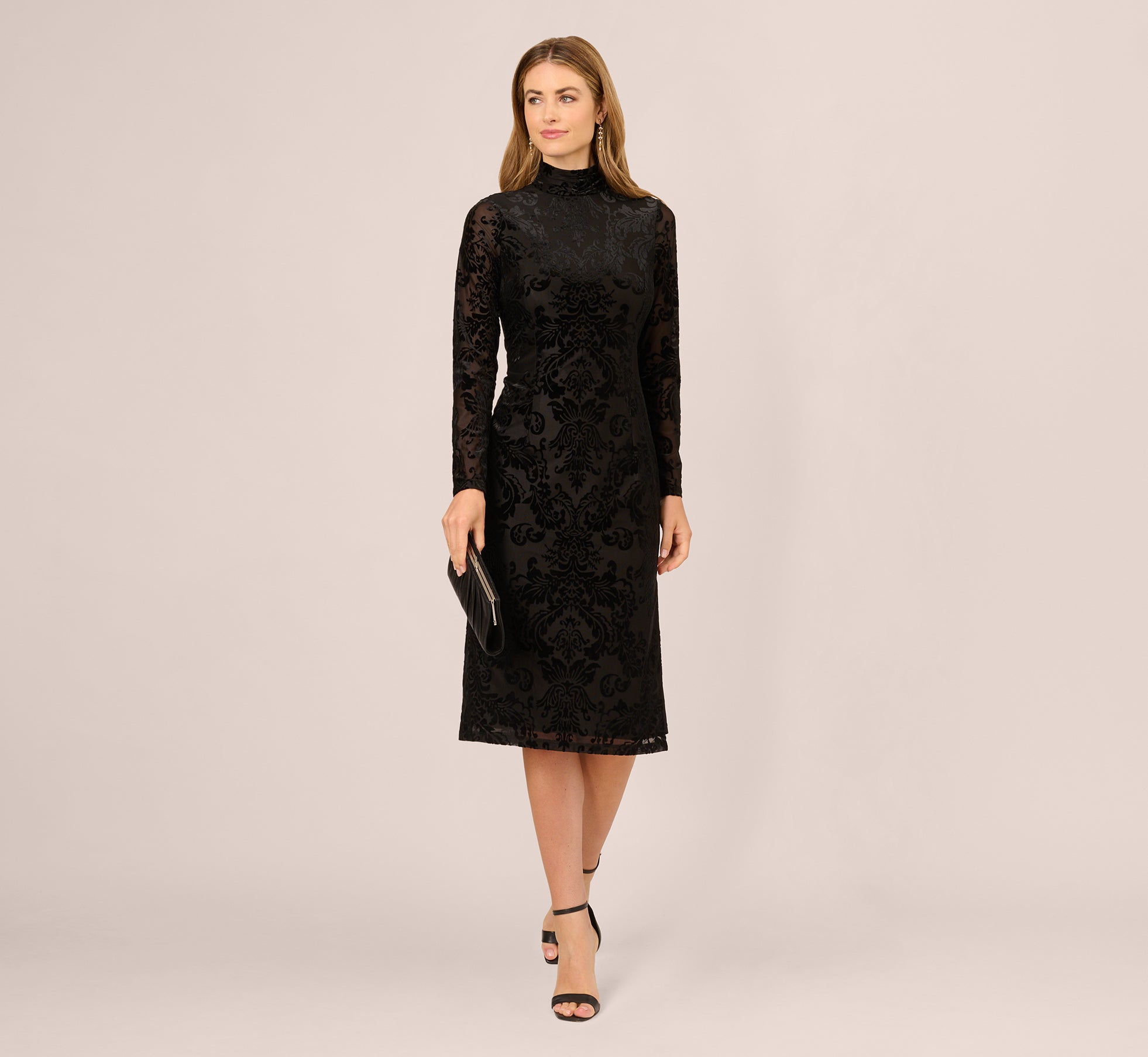
This is the anchor for a winter wedding guest outfit. Velvet has weight and a dense pile, so it holds heat where a thin dress gives it all up. It also photographs richly in low winter light, and it reads formal without any effort from you.
Look for emerald, sapphire, ruby, or wine. A midi or maxi length covers more leg than a chiffon slip and lets you slip black tights underneath without anyone noticing. It suits formal and cocktail dress codes, and it handles the common winter setup where a cold ceremony moves indoors for the reception. The one thing to watch: velvet is warm, sometimes too warm. If the venue runs hot and the dancing runs late, pick a version with a lighter lining so you are not overheating by the second song. This is the safe first pick if you only buy one thing and want it to work for most invites.

Long-Sleeve Sequin Cocktail Dress
You get sparkle and sleeves in one dress, which is the whole point in December. The sleeves keep your arms covered through a drafty ceremony, and the sequins catch the holiday light so you need almost no extra jewelry to finish the look.
Go for a knee-length or midi cut in midnight navy or burgundy. Deep sequins read more grown-up than a bright silver party dress, so the same dress works for cocktail and a lot of formal weddings. For a strict black-tie invite, keep the hem at midi and the neckline a little higher so it stays elegant rather than club. Sequins do add texture and a bit of scratch, so a smooth lining matters if you plan to wear it all night. It’s the move when the wedding lands near the holidays and you want to look festive without wearing an actual gown.

Deep-Tone Satin Slip Dress
A satin slip drapes beautifully and layers cleanly under a coat, but it is honest to say it is the riskiest winter pick if you do not plan for warmth. Thin, unlined satin looks gorgeous and leaves you cold. So the winter version starts with the fabric: choose a lined satin with some weight in wine, chocolate, or forest green, not a flimsy version you can see light through.
This one is best for cocktail. Add a structured wrap or a cropped jacket for the walk in, and wear a closed-toe heel so your feet are not bare on a cold floor. Because a slip shows the line of everything under it, smoothing layers help more here than tights. If any part of the day is outdoors, plan a coat you are happy to be photographed in, because you will have it on through the ceremony and the group shots. An indoor cocktail reception is the best setting for this one, since you can check the coat at the door and let the dress carry the whole look.

Floor-Length Satin or Velvet Gown
When the invite says black-tie, length is the assignment. A floor-length gown in satin or velvet meets that expectation and, as a bonus in winter, gives you the most coverage of anything on this list.
Go for midnight navy, emerald, or classic black in an A-line or a soft ball shape. Long sleeves or a high back keep you comfortable through a long dinner and a cold walk to the car. Velvet is the warmer of the two fabrics; a heavier satin holds heat better than the thin, shiny kind. This is the pick for a snowy evening venue or a New Year’s wedding where the party runs past midnight and nobody is leaving early. Pair it with a tailored long coat that clears the hem and closed-toe heels, and you have a look that survives the whole night without a single shiver. Save it for genuine black-tie and formal invites; it will read like too much at a casual afternoon wedding.

Jewel-Tone Midi With Tights
A midi hits at mid-calf, which makes it the easiest length to winter-proof. That gap between hem and shoe is exactly where opaque or lace tights do their quiet work, adding real warmth with no bulk and no fuss.
Pick a crepe or satin midi in a jewel tone, then add black opaque tights and a low heel or a sleek dressy boot. It fits cocktail and formal, and it is especially good when you know you will be walking between the ceremony and reception or standing outside for photos. Lace tights read a touch dressier than plain opaque if you want the detail to show. A midi also flatters a wide range of heights and shapes, so it is a forgiving choice if you are buying without much time to try things on. Think of it as the practical everyday winter-guest look: warm, appropriate, and comfortable enough to actually enjoy the night in.

Velvet or Satin Jumpsuit
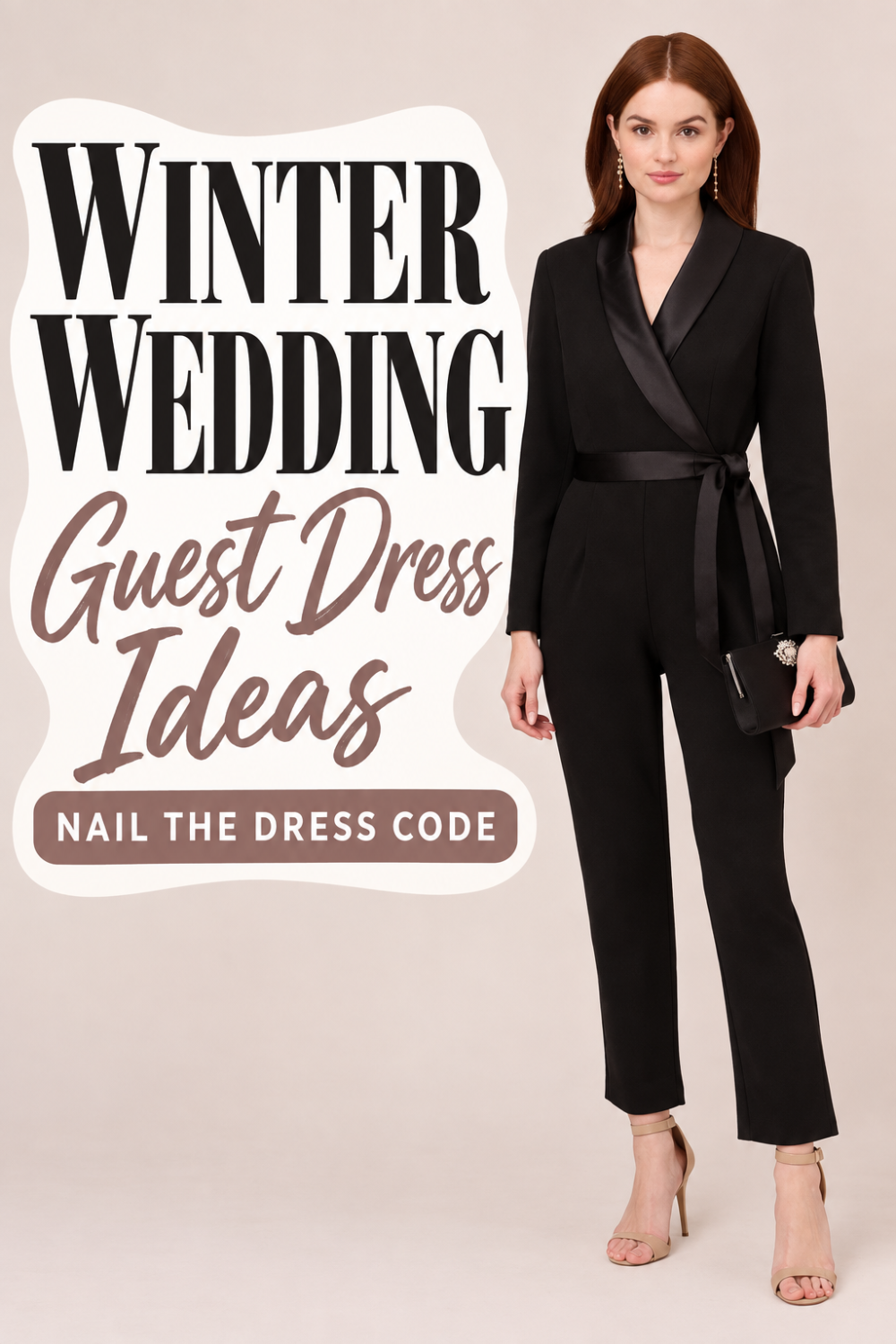
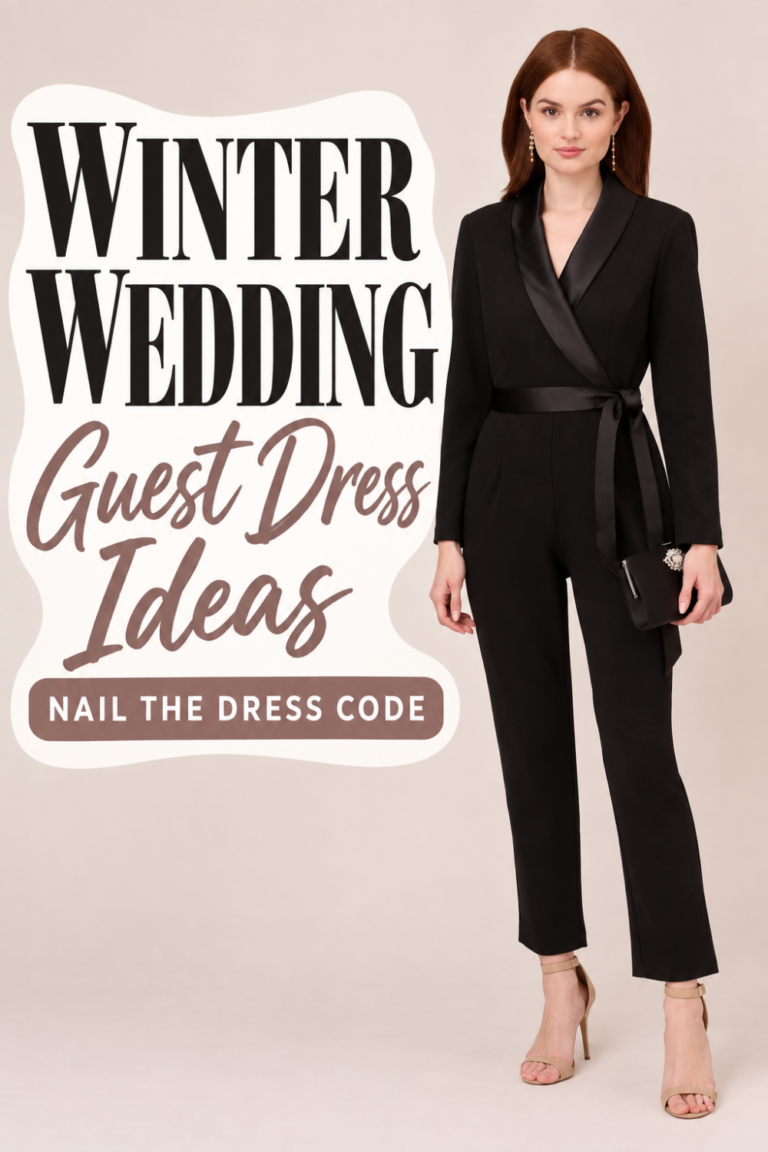
If you do not want a dress, a jumpsuit is the cleanest trouser option going. Think of it as a modern little black dress with legs: one piece, no hem to worry about, no tights required.
A tailored velvet or satin jumpsuit in black, navy, or burgundy reads formal and feels effortless once it fits right. Long sleeves make it warmer and more appropriate for an evening wedding. It suits cocktail and formal, and it is a smart pick if you run cold, hate tights, or just want to move and dance without managing a skirt. The fit is the whole game here, so a jumpsuit that skims and hits the floor at the right length is worth a quick tailor visit. Add a heel and a real earring and it holds its own next to any gown in the room. Go for it when you want the polish of a dress with none of the leg-coverage math.

Cape Dress With Built-In Coverage
A dress with an attached cape is one of the smartest cold-weather guest looks, because it gives you coverage that looks deliberate instead of like you threw a coat over a party dress. The cape drapes over your shoulders and arms for the ceremony, then moves out of the way when you dance, so you are not carrying or checking an extra layer all night.
Choose crepe or velvet in a deep tone like emerald, wine, or midnight for warmth and a formal finish. A cape covers the exact spots that get cold first, the shoulders and upper arms, which is why it works so well for an outdoor ceremony or a long, drafty church without a coat in every photo. It reads well from cocktail through black-tie optional depending on the length: a midi cape dress for cocktail, a floor-length one for a dressier invite. The tradeoff to know going in is movement. A heavy cape can feel like a lot on a warm dance floor, so if the reception is indoors and toasty, it helps to pick a dress that still looks complete once the cape is off your shoulders. It suits the guest who wants one finished outfit that handles cold ceremony photos and a formal dress code with no styling on the day.

High-Neck Dress
A high neckline is the quiet fix for a church ceremony or a traditional venue where a plunging neckline feels wrong for the room. Covering the collarbone reads as deliberate and polished, not like you bundled up at the last minute.
Look for a mock neck or a soft turtleneck in velvet, crepe, or jersey, paired with a midi or maxi hem so the coverage carries through the whole outfit. The higher neckline also blocks wind at the collar, which matters if you are walking into the ceremony from a cold parking lot. It suits formal and cocktail dress codes and reads especially well at a religious or traditional wedding where more skin coverage is expected. The tradeoff is temperature indoors: a fitted turtleneck can feel tight and warm once the reception heats up, so choose a lighter jersey or crepe version if you run warm and save the heavier velvet for a genuinely cold room. Reach for it when the venue calls for more coverage than a standard neckline gives you, without looking like you compromised on the dress code.
Coat-and-Dress Look Styled Together
Instead of treating your coat as the thing you shed at the door, make it part of the outfit. For a cold-weather wedding, this is one of the most reliable moves there is, because your coat is what shows up in every arrival and ceremony photo.
Try a wool or faux-fur-trimmed coat in camel, charcoal, or midnight that works with your dress and is cut long enough to cover the hem, so nothing peeks out awkwardly. Wear it for the ceremony and the photos, then check it or drape it over your chair for dinner. It suits any dress code, as long as the coat is tailored and the dress underneath meets the formality: a dressy coat over a cocktail dress for cocktail, a long coat over a gown for formal. The trick is planning the two pieces together rather than grabbing whatever winter coat you own on the way out. Choose this when the ceremony or photos are outdoors and you refuse to be either cold or badly dressed in the pictures.

Winter Little Black Dress With Color
A little black dress still works in winter; you just change the fabric and let color come in through the details. A summer LBD in thin crepe or chiffon will leave you cold, so the winter version starts with a black velvet or a long-sleeve crepe that has some weight to it.
Keep the dress itself simple, then bring in color with jewelry, shoes, or a clutch in emerald, ruby, or sapphire. That one shift is what keeps an all-black look from reading like the outfit you wear to the office, which is the usual worry with black at a wedding. Length and fabric decide the dress code: a midi velvet with sleeves stretches to formal, while a shorter cut sits comfortably at cocktail. The thing to avoid is a short, unlined black dress, which manages to be both cold and a little underdressed at once. It’s a strong pick if you already own a good black dress and would rather spend on accessories than a whole new outfit, or if you simply feel most like yourself in black. Add opaque tights and a wrap and it carries a full winter evening with room to spare.
Dressy Wide-Leg Trousers and Top
Separates can be every bit as formal as a dress when both pieces are genuinely dressy, and in winter they give you something a dress cannot: full-length leg coverage without tights. Wide-leg trousers skim over warm layers and keep moving as you walk, sit, and dance.
Pair wide-leg trousers in crepe or satin with an embellished top or a satin blouse, and add a blazer if the room or the dress code calls for it. A matched pantsuit or tuxedo-style set in the same fabric works too, and it reads a touch more formal than mixed separates if that is the direction you want. Keep the whole palette deep and the fabrics smooth so the look reads evening rather than office; a burgundy or midnight set does more work here than separates in an obvious work color. This is best for cocktail and formal weddings, not black-tie, where a floor-length gown or a very polished jumpsuit is still the safer call. The upside is comfort and warmth without looking casual, plus the flexibility to wear the trousers and the top again on their own. It’s worth choosing if you would rather skip a dress, want to stay warm from the waist down, and like the idea of two pieces you will actually use again.

Sequin Two-Piece Set
For a Christmas or New Year’s wedding, a sequin two-piece feels right at home without the commitment of a full gown. It is festive, it photographs beautifully under string lights, and a set is genuinely easier to move and dance in than a fitted floor-length dress.
Look for a long-sleeve sequin top with a matching midi skirt in gold, silver, or deep green, or mix a sequin top with a velvet skirt for a warmer, less shiny finish. If sequins feel like too much shine for your taste, a quieter version, a long-sleeve top with a plain midi skirt, keeps the same warm two-piece structure without the sparkle. The two-piece cut is the winter advantage: the top and skirt together keep you warmer than a slip, and because they are separate pieces you can adjust your layers or swap in a heavier skirt. Long sleeves on the top do a lot of the heat work, so you may skip a wrap entirely. Keep it to cocktail or a festive formal wedding; a sequin set can tip into party-dress territory at a strict black-tie affair, and it would feel like too much at a casual daytime one. Go with this one when the invite lands in the holiday stretch and you want to look celebratory rather than solemn.

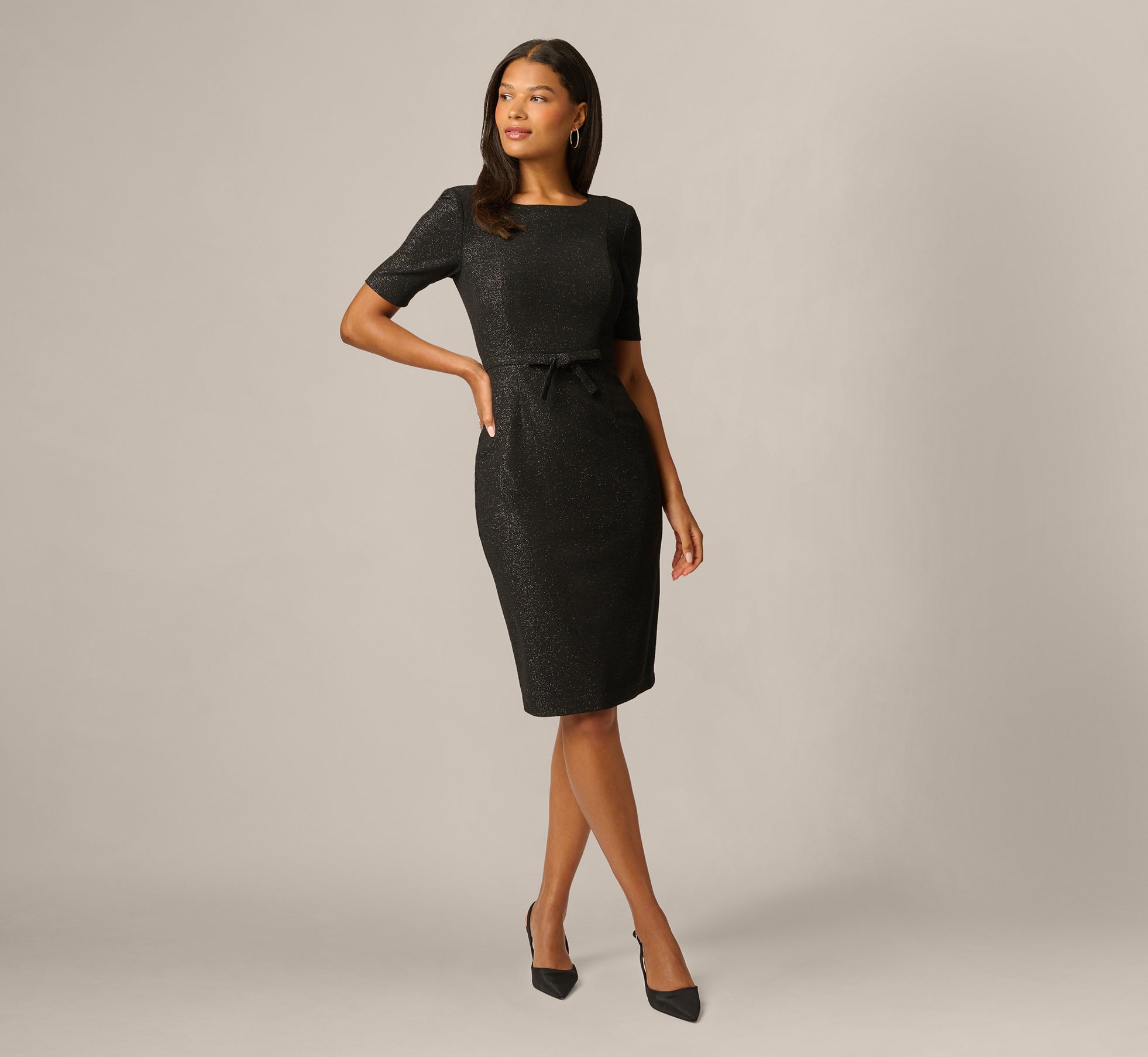
Faux-Fur Stole Over Simple Sheath
Sometimes the smart move is to let the topper be the statement. A simple sheath dress with a faux-fur stole or a structured wrap adds real warmth without hiding the whole outfit, and it gives you a layer you can drape for photos and slip off at dinner.
Start with a sheath in navy, wine, or black in crepe or satin, then add the stole to make it winter-ready with a single piece. The advantage over a coat is that a stole is easy to carry, easy to check, and does not swallow the dress in pictures. It suits cocktail and formal, and it is a good choice if you want to buy one warm layer you can restyle over other outfits later. The limit to know: a stole warms your shoulders and not much else, so on a truly cold night you will still want tights and closed-toe shoes underneath. It’s best when the ceremony is indoors or brief and you want a bit of glamour rather than head-to-toe bundling.

Long-Sleeve Wrap or Ruched Dress
A wrap or ruched jersey dress is the comfortable, forgiving option for a long winter day. The fabric has some stretch and weight, and the shape adjusts as you sit through dinner, so it is the dress you can wear from a morning ceremony to the last dance without fighting it.
Choose a long-sleeve version in a rich tone with a midi hem. Jersey holds heat better than a thin woven, and it layers cleanly over tights and under a wrap. A wrap style also flatters a lot of body shapes because you control the fit at the waist, which makes it an easy choice when you are buying online without time to send things back. It works best for cocktail and casual daytime winter weddings where you want to look pulled together but not stiff. It is not a black-tie dress, and a very casual jersey can read too everyday, so lean toward a version with a clean drape and a defined waist. Pick it when comfort over a long day matters as much as the photos.

Dressy Knit Sweater Dress
For a relaxed daytime winter wedding, a sweater dress can work well, as long as it is the dressy kind and not the one you wear to run errands. The whole thing rides on fabric weight and finish.
Pick a fine-gauge knit in a deep color with a clear waist and a midi length, then add dressy boots and a statement earring to lift it out of casual territory. Fine-gauge means a smooth, close knit rather than a chunky ribbed or oversized one; the tight knit reads polished and, conveniently, blocks the wind better too. A belt or a defined waist keeps it from looking shapeless, which is the main way a sweater dress goes wrong at a wedding. This is genuinely warm without a single extra layer, which makes it a comfortable pick for an outdoor daytime ceremony or a barn with space heaters. Keep it to casual daytime invites; a knit dress will read underdressed at a formal evening wedding no matter how nice the sweater. This is the pick when the wedding is low-key, the weather is cold, and you would rather be warm than fussy.

Cold-Weather Crepe or Velvet Maxi
If your invite mentions an outdoor ceremony, a heated tent, or a long cocktail hour in the cold, you need a maxi built for the temperature rather than one that only looks the part. Crepe and velvet both hold heat far better than unlined chiffon, and the full length keeps your legs covered when the wind picks up.
Look for a heavier maxi with long sleeves and a higher neckline in forest green or midnight. This is less about black-tie polish and more about staying warm through a ceremony that keeps you outside longer than you would like. It works for formal and some black-tie-optional settings, and it pairs naturally with closed-toe heels and a tailored coat you can wear over it. Where the black-tie gown is chosen for the room, this maxi is chosen for the walk, the wait, and the photos in the cold. Reach for it when the day includes real time outdoors and you want one dress that handles all of it without a costume change.

Elegant Look for Guests Over 50
You do not need a separate rulebook after 50, just a few details that make a long night easier and more comfortable. Coverage, refined color, and a fit you can actually move in do most of the work.
A long-sleeve midi or maxi in a jewel tone, with a structured wrap and a low, closed-toe heel, looks polished and feels secure on a cold or slippery walk in. A subtle sequin or lace detail adds interest without tipping into costume. Sleeves are the quiet hero here: they keep you warm and give real coverage while still reading formal. This suits cocktail, formal, and the mother-of-the-couple-adjacent events where you want to feel confident and put-together through a full celebration rather than tugging at a hemline all night. It is also an easy brief to shop for, since the same warm fabrics and deep colors that work everywhere else on this list are exactly what works here. Choose this when you want elegance and comfort in equal measure, with nothing to manage once you are through the door.

How to Match Dress Code and Weather
Here’s what those dress code words actually mean, decoded into an outfit direction and a way to stay warm.
| Dress Code | What It Means | Outfit Direction | Warmth Move |
|---|---|---|---|
| Black-Tie | Most formal, evening dress code: floor-length gowns expected, tuxedos for men | Floor-length gown in velvet or lined satin, long sleeves or a higher neckline, polished accessories | Longline tailored wool coat in your dress color, closed-toe heels, keep shoulders covered |
| Formal or Black-Tie Optional | Formal but with room to choose: floor-length or an elegant midi both work | Jewel-tone gown, long-sleeve midi, or a tailored jumpsuit in crepe, satin, or velvet | Structured wrap or coat that matches the outfit, opaque tights with a midi |
| Cocktail | Dressy and a little playful: knee-length to midi, festive | Midi or knee-length dress, slip dress with a blazer, jumpsuit, or dressy separates in satin, sequin, or crepe | Tights, a cropped jacket or blazer, closed-toe pumps or heeled boots |
| Casual or Daytime | Relaxed and often daytime or rustic, but still a wedding | Sweater dress, knit midi, or two-piece separates in knit, crepe, or heavier jersey | Tights and boots are fine, lean into cozy knit or crepe textures |
Judge warmth separately from formality. Velvet, lined satin, crepe, and fine knit hold heat. Thin, unlined chiffon or silk will look pretty and leave you cold. Sleeves, tights, a structured wrap or faux-fur stole, a coat you plan as part of the look, and closed-toe heels or dressy boots keep you warm without looking bundled.
Also check the venue and timing. An indoor ballroom lets you get away with a slip and a wrap. A church with a long ceremony, a tent, or photos outside calls for heavier fabric, sleeves, and a real coat plan.
If the winter wedding is at a warm-weather destination, flip the fabric. You will still want the winter color palette for photos, but choose a lighter-weight satin or crepe and skip the tights.
Frequently Asked Questions
What colors should I avoid as a wedding guest in winter?
Skip anything that could read as bride-white in photos: white, cream, ivory, and very pale blush. That courtesy holds all year. In winter you have so many better options anyway. Deep red and all black are generally fine for a guest now. If you wear red, keep the shape formal. If you wear black, choose a winter fabric like velvet or add a jewel-tone accessory so it does not feel like a work outfit.
Can I wear pants or a jumpsuit to a winter wedding?
Yes, when they are dressed up enough for the dress code. A tailored velvet or satin jumpsuit, or dressy wide-leg trousers with an embellished top, works beautifully for cocktail and formal weddings. For black-tie, stick to a floor-length gown or a very polished jumpsuit in a luxe fabric with dressy shoes and jewelry. Check the invite wording: if it says casual, trousers fit more easily. If it says black-tie, keep the look long and refined.
How do I stay warm without ruining my outfit?
Plan warmth as part of the outfit, not as an extra. Bring a tailored wool coat, a faux-fur stole, or a structured wrap that matches your dress so it looks intentional in photos. Opaque tights under a midi add a lot of heat with no visual cost. Closed-toe heels or sleek dressy boots keep feet warm on cold floors. If there is a coat check, you only need to love the coat for the walk in and the photos outside.
You have enough now to picture one outfit all the way to the venue door, coat and shoes included. Pick the one you can see yourself keeping on after the first song, and you will be the guest who actually enjoyed the party.
Don’t forget to pin this to your Wedding Fashion Board for later!