Well, good luck with that last part.
The bride and groom gift exchange is one of those wedding traditions that can be as sentimental, funny, extravagant, or wonderfully low-key as the two of you. Some couples swap keepsakes on the morning of the wedding, others go for personalized gifts they’ll use for years, and plenty would rather spend their money on an experience they can enjoy together after the confetti settles.
And no, you don’t need to casually produce a luxury watch just because you’re getting married.
The best wedding gift for your bride or groom is one that feels like them – and like the relationship you’ve built together. That might mean something romantic and personalized, something practical they’ve secretly wanted forever, or an inside-joke gift that would make absolutely no sense to anyone else.
We’ve gathered our favorite bride and groom gift exchange ideas for different personalities, budgets, and levels of sentimentality, so you can find something worthy of the occasion without turning one more wedding decision into a full-time job.
Bride and Groom Gift Exchange Etiquette
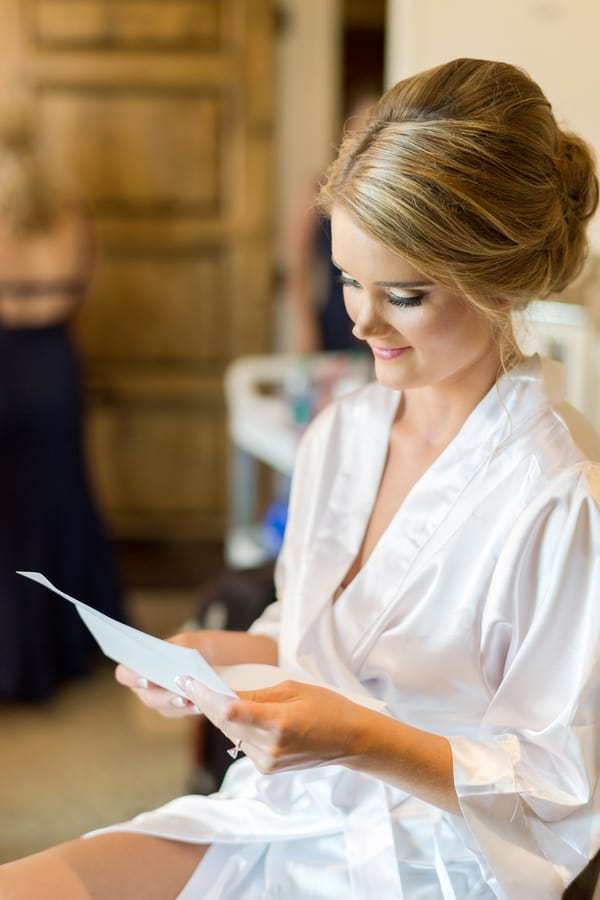
Make the decision together before either person buys anything. Discuss whether you are giving gifts, whether the presents will be surprises, and when you will hand them over. One sided giving can feel awkward when the other person didn’t know to expect a gift.
Treat the exchange as both partners giving or neither giving unless you’ve agreed on another arrangement. If one partner gives a present while the other has nothing prepared, the handoff can feel uncomfortable. A conversation early in the planning process gives both people time to choose the same format.
You don’t need an exact matching amount. Agree on a rough spending level that feels comfortable for both of you, then choose gifts within that range. This keeps one person from planning an expensive surprise while the other expects a small note or no present.
A letter can be the entire exchange. Each partner can write about the relationship, the wedding day ahead, or the promises being made. This format also works when one person has more room to spend than the other because neither partner needs to buy a physical gift.
If your partner says they don’t want gifts, respect that answer. Don’t buy something anyway and present it as a decision already made. You can skip physical presents and put the money toward the honeymoon, travel, or another shared wedding expense.
Give your partner time to decide whether they want the exchange, a smaller format, or no gifts before ordering anything or involving friends in a secret plan. A surprise works only when the basic agreement is already clear.
A second marriage or a birthday close to the wedding date can make the conversation more complicated. For one bride to be planning a second marriage, her fiancé’s birthday was six days before the wedding, which made the gift question awkward to raise. Decide whether the birthday and wedding gifts will be separate, combined, or skipped.
Anything meant to be worn on the wedding day needs advance coordination. Cufflinks, earrings, necklaces, watches, and other accessories may already be part of the outfit. If the gift is supposed to appear in the ceremony or first look, tell your partner early enough for them to account for it.
History

Earlier customs show gifts passing between spouses or sweethearts in different forms. These customs involved gifts between couples in ways that differed from the private exchange some couples plan today.
In Anglo Saxon England, a law code from the reign of King Æthelberht of Kent, dated around 602 or 603, referred to a morgengifu, or “morning gift.” It was a payment made to the bride after the wedding and was separate from the bride price paid to her family. The custom continued through the Anglo Saxon period.
A tenth century letter describes a woman selling land because it was her morgengifu from her marriage. The land belonged to her, and she had the right to sell it. The morning gift was therefore treated as the wife’s property.
Traditional German law had a related custom called the Morgengabe. The husband gave it to the wife, and the name came from the practice of handing it over on the morning after the wedding night. The timing was not fixed in every place. The gift was for her personal use and was separate from the Mitgift, or dowry, which the bride brought into the marriage.
In a motion filed on June 6, 2008, Austria’s parliament called for the removal of the Morgengabe while it remained in the civil code. It was reportedly removed at the end of 2009. The morning gift went from husband to wife, while the dowry came into the marriage from the bride’s side. There is no record connecting today’s exchange to the dowry or the morning gift.
In the 1840s, a bride sometimes gave the groom a wedding gift she had made herself. An embroidered waistcoat was fashionable in men’s wedding clothing, and the Merchant’s House Museum records that it was occasionally worked by the bride and presented to the groom as a wedding gift. An 1846 etiquette manual said a bride should wear no ornaments except those her intended husband or father presented for the occasion.
Welsh lovespoons belong to courtship rather than the wedding ceremony. Young men traditionally carved them from one piece of wood as love tokens for their sweethearts. The Museum of Wales has a dated example from 1667.
Emily Post’s 1922 etiquette book described the groom’s present to the bride as something she should wear. It listed pearls, a pendant, brooch, bracelet, bangle, or charm as examples. The same book described a present or wedding ring from the bride to the groom as optional, calling it “not necessary nor even customary.”
The older book treated the bride’s gift to the groom as optional, while the current Emily Post Institute lists gifts in both directions among wedding expenses and notes that traditional divisions can vary with the circumstances of the wedding. Neither tradition establishes the origin of the private exchange.
Gifts Between Bride and Groom in Other Traditions

Religious and cultural wedding customs involving gifts or objects between the couple have their own meanings. They should not be treated as interchangeable versions of a private wedding day present.
In Spain, parts of Latin America, and the Philippines, las arras are traditionally thirteen coins given by the groom to the bride during a Christian wedding ceremony. The coins may be carried in a box, chest, basket, or pouch. They can represent the twelve months and the poor, or Jesus and the twelve apostles. The ceremony connects the groom’s promise to provide for the family with the bride’s trust in that responsibility. The origin of the custom is debated.
In many regions connected with Hindu weddings, the groom may tie a mangalsutra around the bride’s neck during a ceremony called Mangalya Dharanam, or “wearing the auspicious.” The necklace usually has black beads on black or yellow thread, and the bride wears it for the rest of the marriage. The practice is not universal among Hindu communities and also appears in some non Hindu communities.
In a Jewish wedding ceremony, the groom traditionally gives the bride a ring or another object with monetary value. Many Jewish couples now use a double ring ceremony in which each partner gives the other a ring.
In an Islamic wedding, mahr is a required marriage gift from the groom to the bride. It can be money or property, including jewelry, household goods, land, or the teaching of Quran verses. The terms are set in the marriage contract. Part may be paid when the contract is signed, with the rest deferred. The mahr belongs to the bride, not her parents.
Timing and Delivery
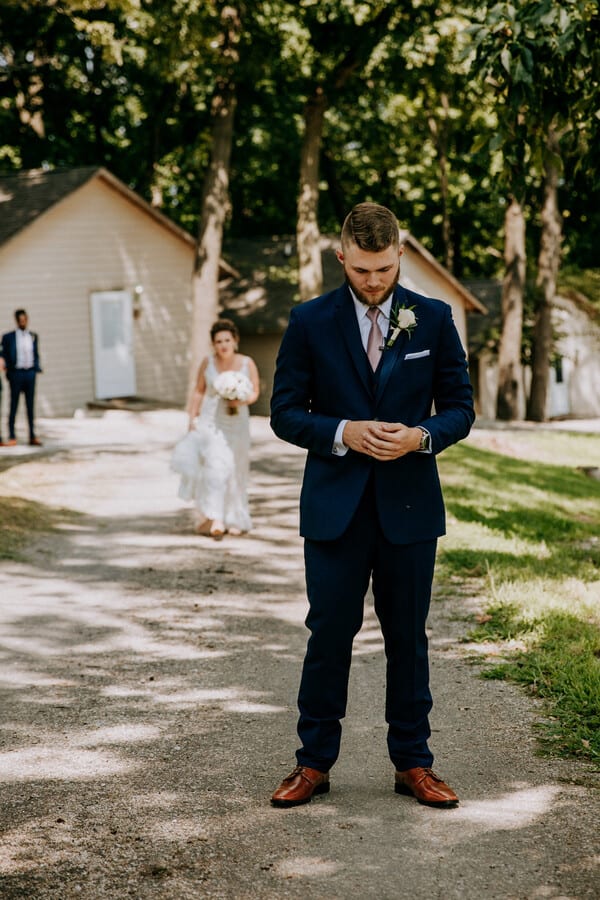
Choose the handoff time after looking at the wedding schedule. A gift that needs privacy, extra time, or photography needs a clear place in the plan.
| Moment | Who carries it | Photos | Works best for |
|---|---|---|---|
| Night before or rehearsal dinner | You exchange gifts yourselves | Photograph it if you want | An early exchange |
| Getting ready | The maid of honor or best man delivers it with a note | Tell the photographer if you want the opening photographed | Partners who aren’t seeing each other before the ceremony |
| First look | You exchange gifts yourselves | Tell the photographer in advance | A planned photo exchange |
| After the ceremony before the reception | You exchange gifts yourselves | Photograph it if you want | Time between the ceremony and reception |
| Wedding night or honeymoon | You exchange gifts yourselves | Keep the handoff private if needed | A boudoir album or another private gift |
The night before the wedding or the rehearsal dinner gives both partners time to exchange gifts before the wedding morning begins. It also places the handoff outside the getting ready schedule.
If you aren’t seeing each other before the ceremony, give the delivery job to the maid of honor or best man. Include the task in the wedding day timeline and add a note to the gift so the handoff is clear.
A first look can include the exchange when photographs are part of the plan. First looks are time sensitive, so tell the photographer in advance and place the exchange in the timeline.
You can also exchange gifts between the ceremony and the reception. Check that the schedule leaves enough time for the handoff and for any reaction you want photographed. An intimate gift may be easier to give on the wedding night or during the honeymoon.
A boudoir album can be handed over the night before, on the wedding night, or during the honeymoon. Skip the camera if you don’t want the gift or the reaction shared with other guests.
Modern Variations

In a letters only exchange, both partners write a letter for the wedding morning, the night before, or a private moment after the ceremony. The letters can be the only gifts, or you can exchange them alongside physical presents.
You can also agree to skip gifts entirely. Some couples put the money toward the honeymoon, travel, or another shared part of the wedding. Both partners need to agree before either person changes the plan.
A shared experience can replace a physical gift. Concert tickets, a cooking class, a couples massage, or a trip give you time together. Decide whether the experience will happen before the wedding, after it, or during the honeymoon.
A double ring ceremony is another two way format. Many Jewish couples use a ceremony in which each partner gives the other a ring. The exchange takes place within the wedding ceremony rather than as a separate private present.
Bride and Groom Gift Exchange Ideas

The gift should match the format you agreed on and the recipient’s usual preferences. A letter, wearable accessory, private album, or small personal item can all work when the timing is clear.
A Letter

A handwritten letter can be the only gift. Write about the relationship, the wedding day ahead, or the promises you are making. You can also exchange letters with a physical gift.
Letters suit couples with different budgets because each person writes instead of buying presents at a similar price. They also give both partners the same format when one person prefers a smaller exchange.
Jewelry for Her
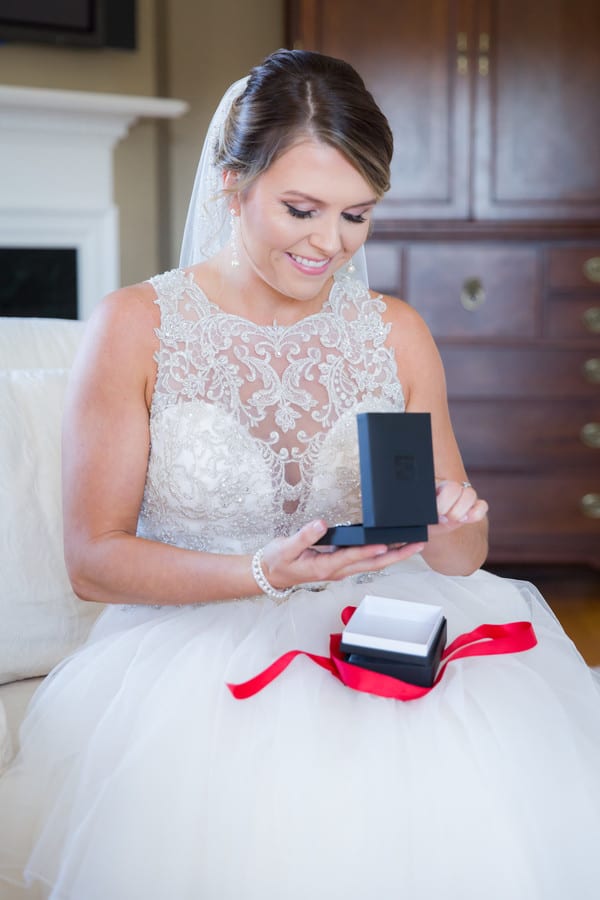
A necklace, bracelet, or pair of earrings can suit a bride who already wears jewelry. Choose a piece that fits her usual style and check whether she has already selected accessories for the wedding.
If she plans to wear it on the day, coordinate that choice ahead of time. You can choose a piece connected to the engagement or another detail in the relationship.
A Watch or Engraved Bracelet for Him

A watch suits a groom who already wears one or has a clear preference. You don’t need to turn the exchange into a luxury watch ceremony, either. A pocket watch is another option, and some designs can carry his initials, your wedding date, or a short message. If you aren’t sure what he likes, involve him in the choice or ask the best man to find out what he wears and prefers. Sneaky, but useful.
An engraved leather bracelet is the same idea, smaller. He can wear it on the wedding day and keep wearing it long after the confetti is gone, at a much smaller spend than a luxury watch. This braided leather bracelet has several beads for engraving, so you can go beyond initials. Try your wedding date, your initials, coordinates for where you met or got engaged, or a word only the two of you use. A tiny phrase from a song or private joke works too. Since it’s made to order, don’t leave it to the last week.
A Boudoir Album
A boudoir album is an intimate gift from one partner to the other. Plan the handoff for a private moment, such as the night before, the wedding night, or the honeymoon.
Don’t place it in a crowded getting ready room if you don’t want other people to see it. Tell the photographer to skip this exchange, even if other gifts are part of the photo timeline.
A Small Personal Gift
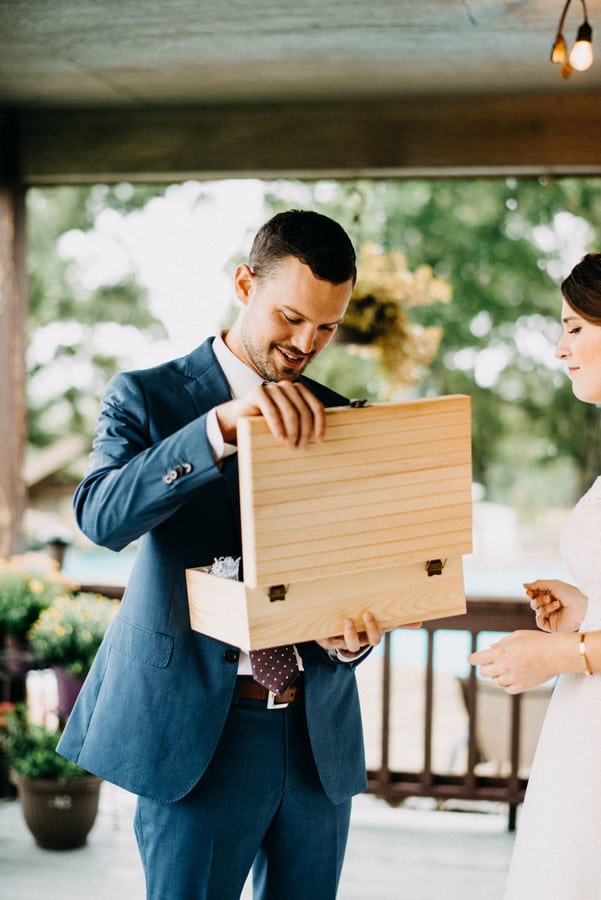
Choose a small item connected to something your partner has mentioned more than once. It could relate to a hobby, a favorite product, or a long standing interest.
A remembered detail gives you a clear reason for choosing the item. The gift can be inexpensive if it relates to something your partner already enjoys.
If you can’t agree on the format, skip the exchange and put the money toward another wedding expense. A clear decision gives both the bride and groom the same expectation for the wedding day.